

Early 23rd Century

|
Advanced
Starship Design Bureau Early 23rd Century |
||
|
|||
| Starships | Shuttles | Equipment | Technology | History | Other | New | Submit | |||
 History
21st Century, 22nd
Century, Early 23rd Century, Late 23rd Century, Early
24th Century, DY Starship Family
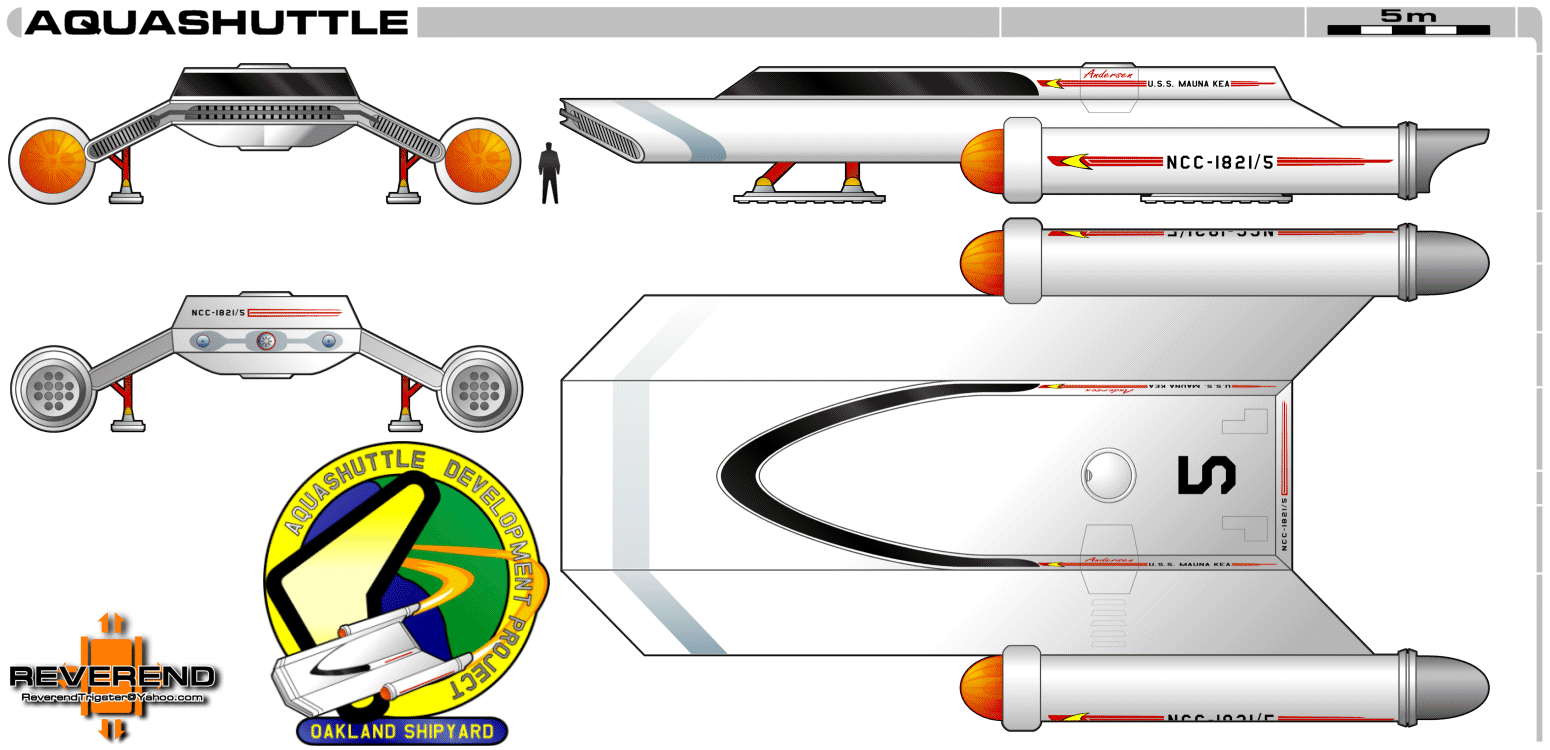
Aquashuttle
 Design by Kris, ASDB
Member
Design by Kris, ASDB
Member
No specs available
The Aquashuttle is based on a design from the TAS episode "The Ambergris Element".
Archipelago Class
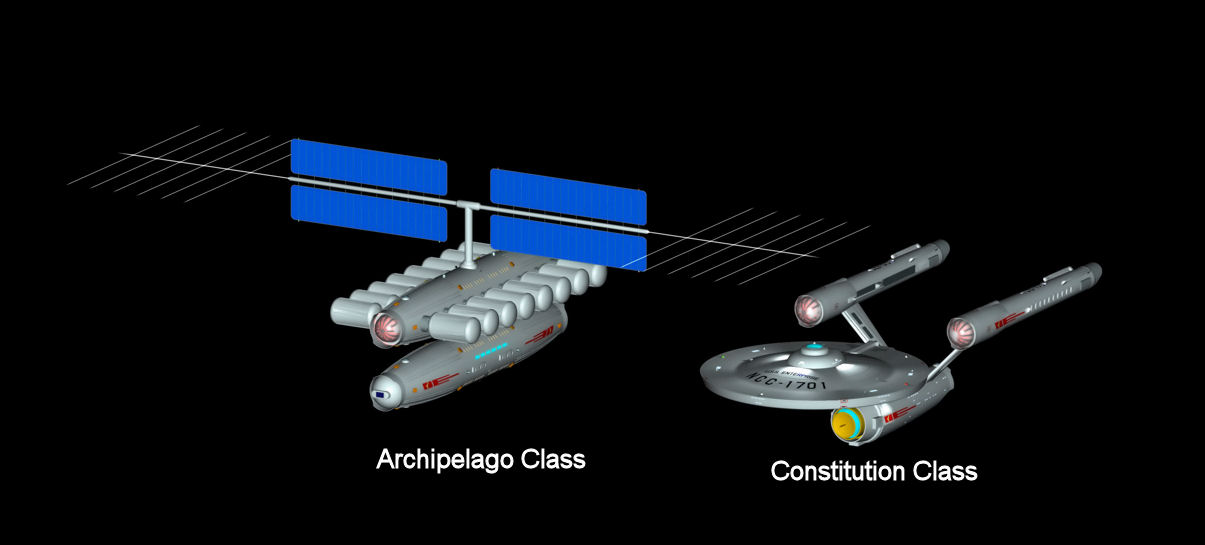
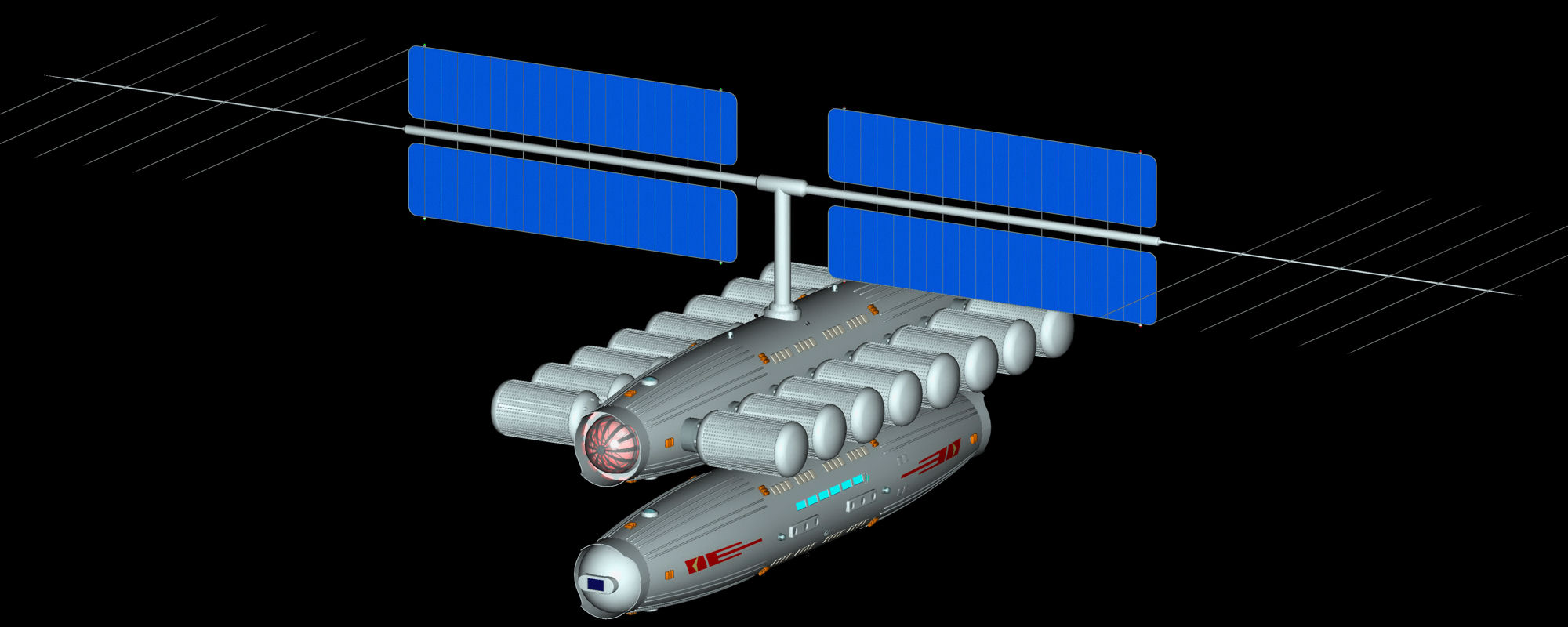 Design by Robert Heckadon
Type: Antimatter refinery
First commissioned: 2229
Length: 197m
Width: 45m
Height: 127m
Decks: 22
Complement: 35 officers + 215 crew
Armament: 2 - 20 megawatt; 120 megavolt phase modulated hyper-electron particle beam discharge canons; AKA laser
cannons
Defense: Magnetic shields; cast rodinium shields
Embarked craft: Personnel shuttles
“You can settle for less in ordinary life, or do you feel you were meant for something better? Something special.” - Captain Christopher Pike
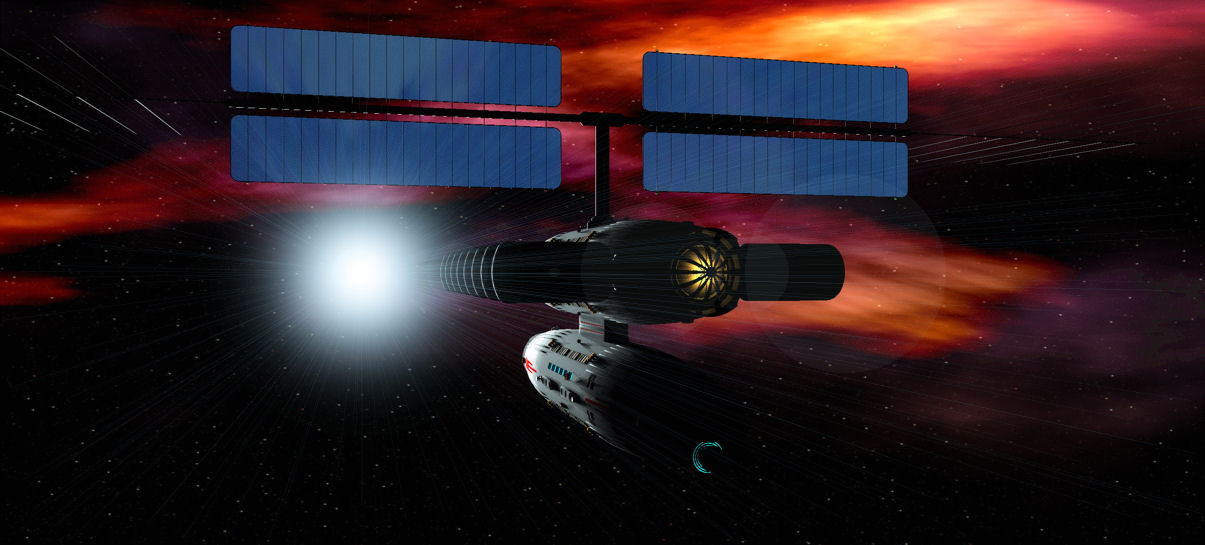
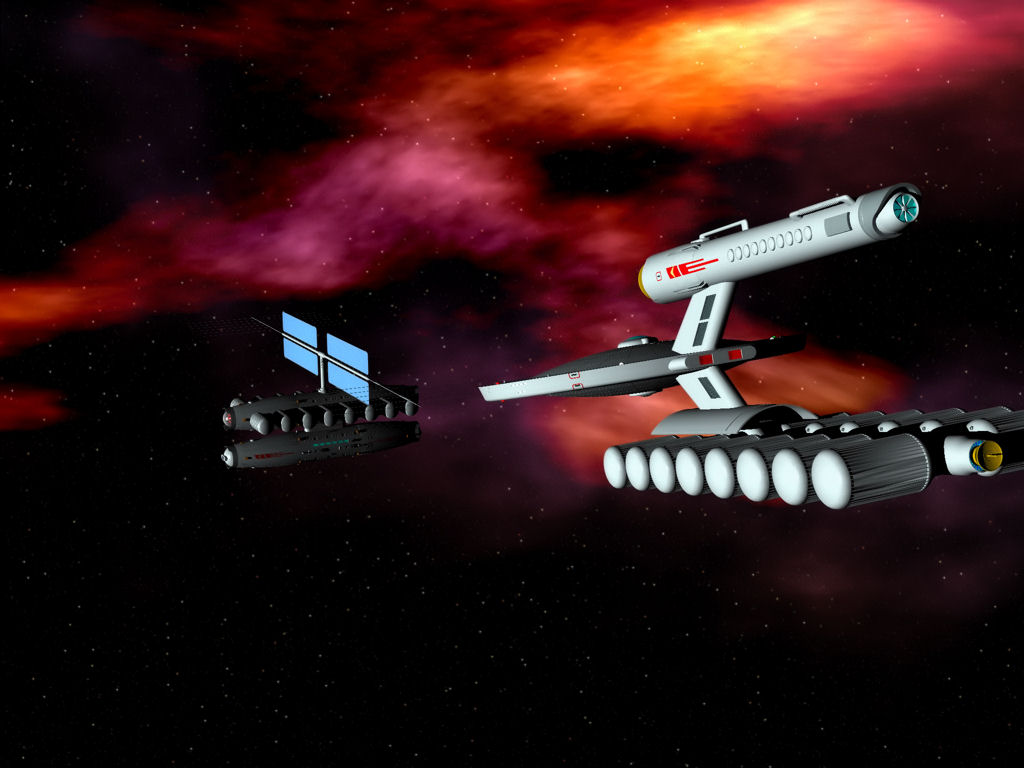
The Archipelago class is an antimatter fuel refinery built to replace the aging Arrakis class refinery first built in the late 21st century. To generate antimatter, the space station uses a quantum charge reversal device to replace the 470 megavolt electron fusion and verteron catalyst techniques used on
Arrakis. The 40 metre long, 15 metre diameter unit located in the refinery section on the upper hull reverses the quantum charge of hydrogen. Replacing the positive charge in the nucleus with a negative charge found in electrons. The unit is capable of generating 7.2 cubic units of antimatter per hour.
The antimatter is stored in 16 detachable storage bottles on either side of the refinery section. In the event of a breakdown of the bottle’s magnetic shield, standard procedure calls for transferring the antimatter into an empty bottle and allowing the defective bottle to be repaired. If the breakdown is eminent, the bottle can be ejected and propelled away by rockets on the bottle before the shielding breakdown. In the event of a catastrophic failure of the entire antimatter system, the habitat section located below the refinery separates from the refinery and escapes using an antiproton enhanced impulse engine.
Altogether, the Archipelago class is powered by solar energy. 2 pairs of photovoltaic collectors (solar panels) over the refinery section collects photonic energy from the sun to power the station’s life support systems, artificial gravity, and other primary systems. The refinery systems is fuelled by plasma energy expelled from the sun.
The Archipelago class collects the plasma with a modified Bussard ramscoop and stores them in a fuel cell, inspired by the Xindi fuel refineries. Spears on the solar collectors gathers the electrons expelled from the sun through electrostatic attraction. When the electrons through the spikes flows towards the fuel cell, they generate electric current. When the electrons reaches the fuel cell, they de-ionize the plasma release photoelectric energy.
The de-ionized fuel is then vented at the back of the refinery module. The pressure of the venting then spins a series of turbines to generate additional power for the antimatter generator. Since the amount of energy released from plasma fuel cells is only 5 times greater than hydrogen fuel cells, the station collects and processes an average of 20 times its volume of solar plasma per minute. This also requires the space station’s orbit to be relatively close to its star.
Rather than using an external heat exchanger to cool the station, the Archipelago class uses a series of internal heat exchangers to remove the heat generated by both the sun, power generators and other sources and transfers them to the plasma venting system which heats up the de-ionized plasma, increasing the pressure to generate more power from the venting system. Though the added thermal energy to the venting releases barely enough to power the heat exchangers, it is enough to keep the space station cool.
Based upon the hybrid lights of the 21st century, a series of parabolic mirrors focuses the sun’s light into a series of optical cables which distributes the sun’s light throughout the station. Concave mirrors on the habitat section focuses the sun’s light directly into the station’s greenhouse, which recycles the station’s air and produces food.
With the high value of antimatter, the refinery is defended by a pair of 20 megawatt, 120 megavolt phase modulated hyper-electron particle beam discharge cannons, commonly known as laser cannons, on the habitat section. The lasers uses 120 megavolts to accelerate electrons so close to the speed of light, their mass increases by 234 times due to relative physics, thereby increasing the kinetic energy level of the particle beam. The electrons are then designated as hyper-electrons. Though much of the damage is caused by the physical impact of the particle beam, secondary damage is caused by the deceleration of the electrons from the impact releasing their kinetic energy storage in the form of a coherent beam of X-rays, or an X-ray laser from which the particle cannon’s common name is derived from.
Though an electron beam can be diverted by a magnetic field, the amount they are deflected is largely based upon the both the momentum of the particle beam and the intensity of the magnetic field. The station’s plasma collectors protects the habitat section from intense radiation from the star.
The station is protected by a powerful magnetic shield for plasma based weapons and cast rodinium shields for other particle weapons and projectiles. Power for the shields and weapons comes from a single nuclear fusion reactor in the habitat section.
The space station’s appearance has changed over many decades through refit and commissioning of new refineries, but the overall design remains the same and retaining the class name of Archipelago. Many of the changes ranges from replacing the laser canons with phasers, ramscoop design, and so forth. During the Dominion War, these stations have been targeted by the Jem’Hadar to cripple the Federation. With the war over, only 27% of these stations survived and are among the highest priority list for rebuilding. And during that time, the Rigel Iota antimatter fuel refinery was built in a secured location in orbit around Rigel to supplement the antimatter supply until the restoration is completed. The rebuilding of these stations were further hampered by the Borg’s blitzkrieg in 2381.
Attucks Class
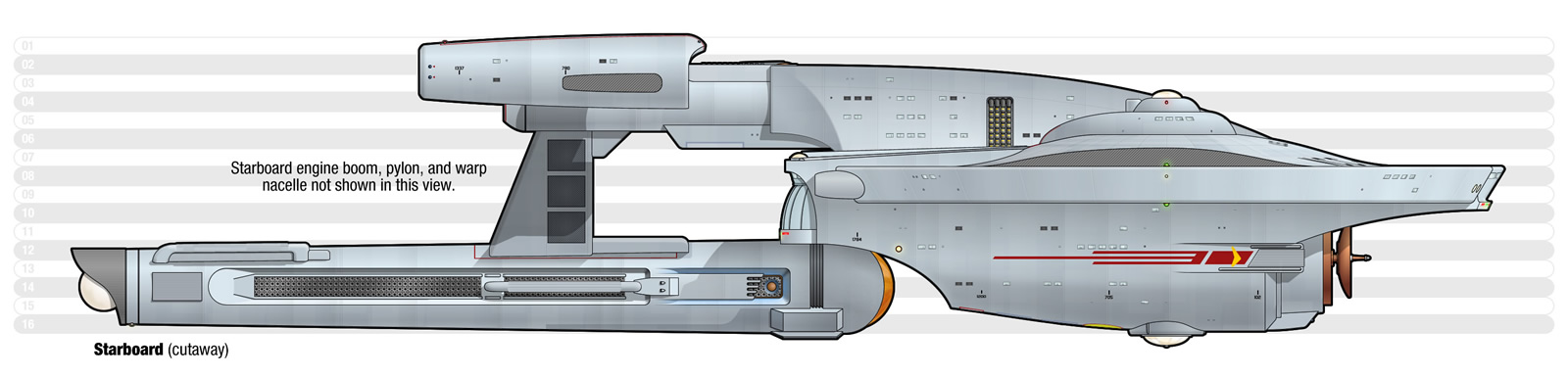
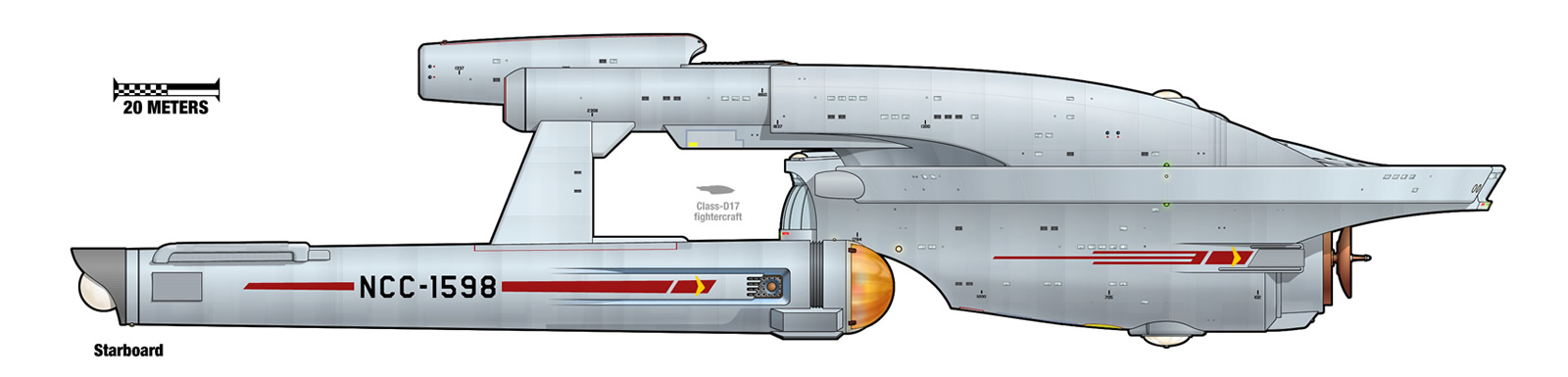
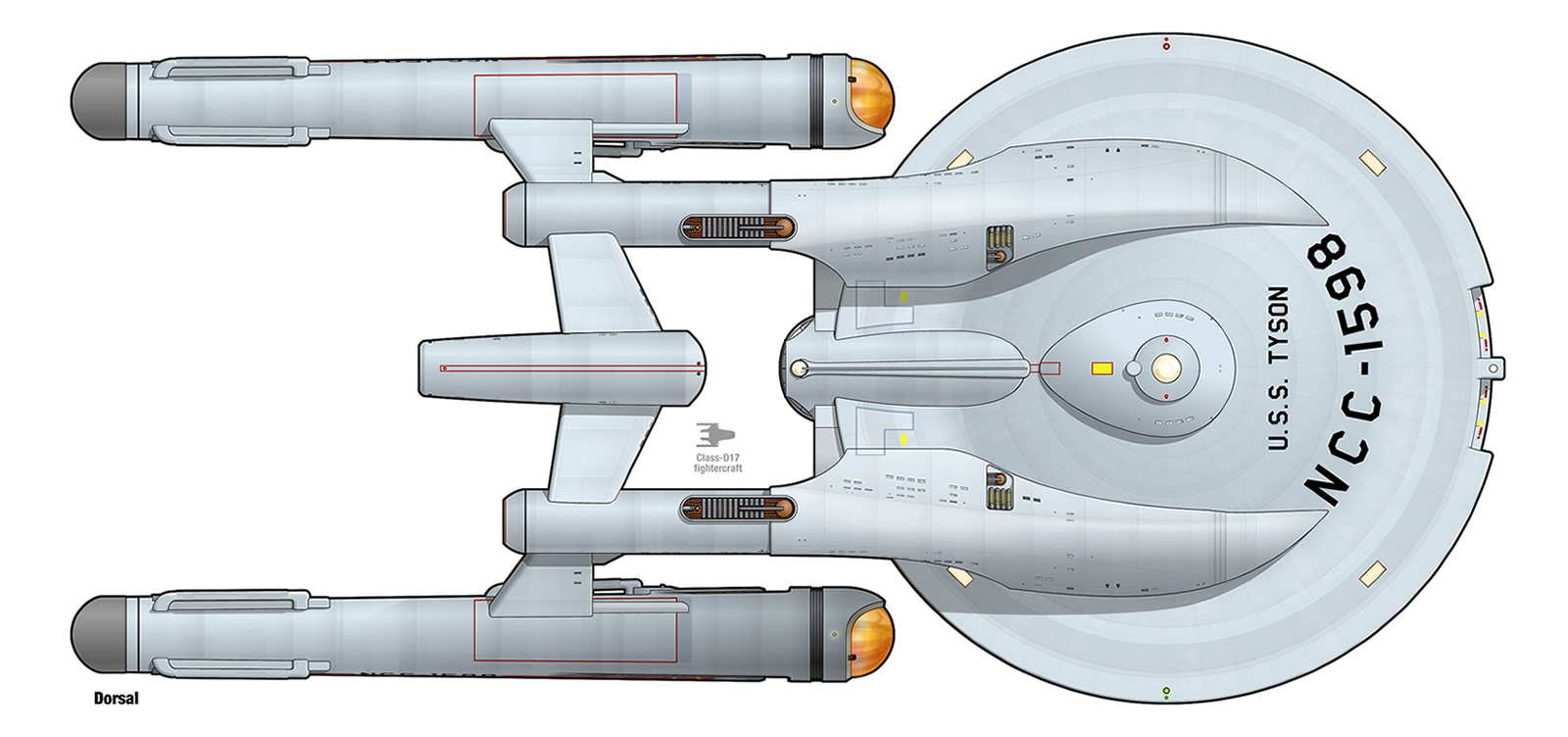 Design by M. Christopher Freeman
Type: Cruiser-carrier
First commissioned: 2236
Length: 269.5m
Width: 127.0m
Height: 59.8m
Decks: 16
Displacement: 1118000t
Complement: 97 officers + 386 crew
Speed: Warp 6 (cruise), Warp 9 (max.)
Sublight speed: 0.75c (max.)
Armament: 6 phaser banks (2 emitters each), 4 photon torpedo launchers (2 forward, 2 aft)
Defense: Deflector shields
Embarked craft: 6 Class-F shuttlecraft, 14 Class-D17 fightercraft
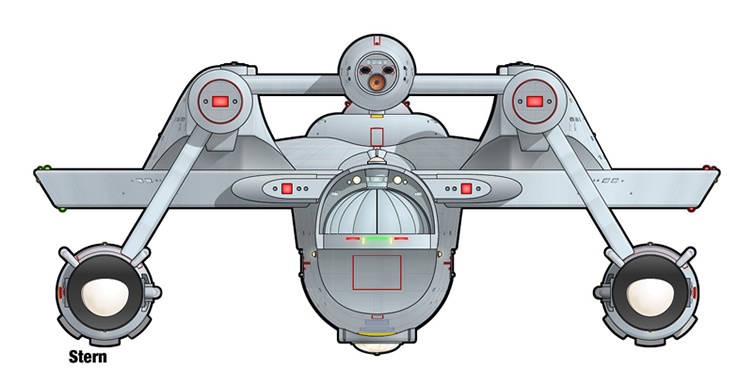
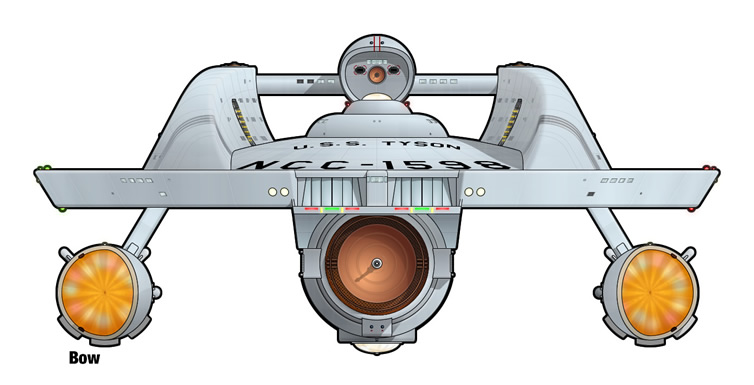 Named for 21st century astrophysicist Neil deGrasse Tyson and commissioned in 2237, the U.S.S. Tyson – and the entire Attucks class of cruiser-carriers – serves a dual role in Starfleet. Though currently used primarily in an exploration capacity this class was originally conceived for deep space fleet combat in the event of open conflict with the Klingon Empire. To that end, the Tyson is more heavily armed than most ships her size. And in addition to her compliment of shuttlecraft she also carries 14 fightercraft in an expansive hanger bay that runs the full length of the primary hull and features two bay doors on the bow of they vessel.
Thankfully, full-scale war with the Klingon Empire has never been realized, however vessels of the Attucks class have performed admirably in many minor skirmishes involving Klingon adversaries. The Tyson has served in the Battle of Donatu V in 2245 and provided orbital patrol and fightercraft escorts during the colonization of Archanis IV after it was ceded to the Federation by the Klingon Empire. It was also involved in several minor skirmishes during exploration and mapping missions near Klingon space between 2249 and 2264 and sustained heavy damage at Caleb IV in 2267 when caught in the trap set by Klingon captains Kang and Kor. The Tyson is slated for a major refit following completion of her current five year mission.

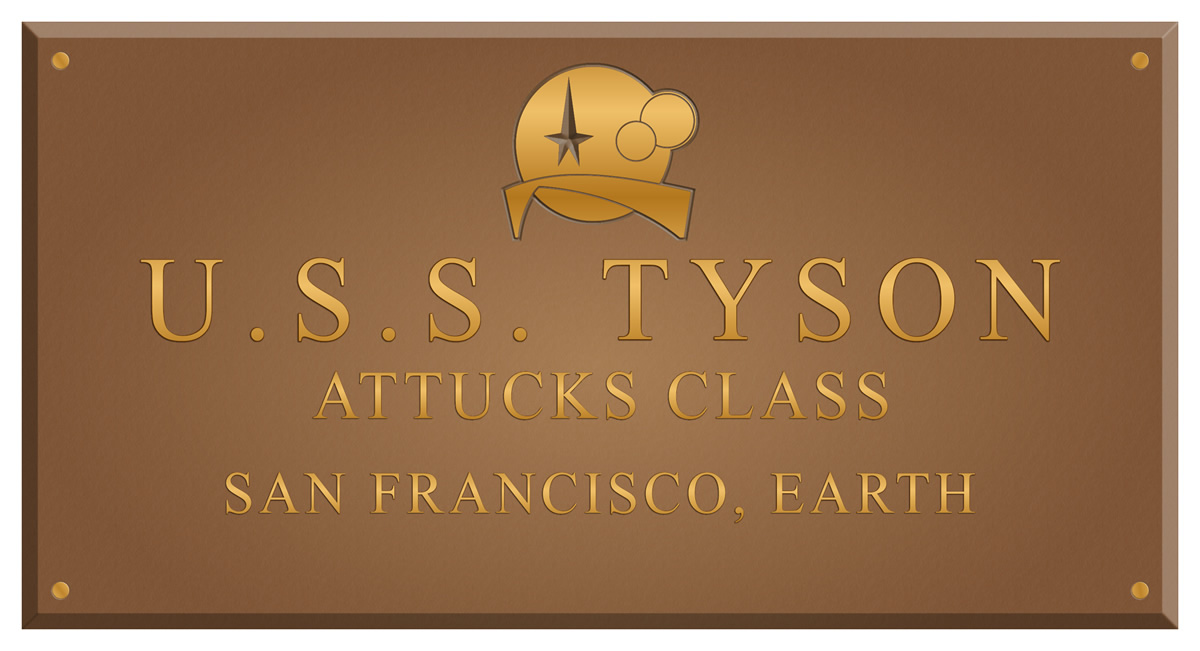 Lineage of the Attucks Class
NCC-1597 U.S.S. ATTUCKS (Commissioned 2236)
NCC-1598 U.S.S. TYSON (Commissioned 2237)
NCC-1599 U.S.S. COLTRANE (Commissioned 2237)
NCC-1600 U.S.S. DU BOIS (Commissioned 2237)
NCC-1601 U.S.S. JEMISON (Commissioned 2238)
NCC-1604 U.S.S. PARKS (Commissioned 2238)
NCC-1605 U.S.S. CARVER (Commissioned 2238)
NCC-1610 U.S.S. GARVEY (Commissioned 2238)
NCC-1612 U.S.S. KING (Commissioned 2239)
NCC-1613 U.S.S. WALKER (Commissioned 2239)
NCC-1619 U.S.S. WHITNEY (Commissioned 2239)
NCC-1624 U.S.S. DOUGLASS (Commissioned 2240)
NCC-1625 U.S.S. POINTIER (Commissioned 2240)
NCC-1631 U.S.S. TUBMAN (Commissioned 2241)
NCC-1632 U.S.S. THAXTON (Commissioned 2241)
NCC-1633 U.S.S. AQUIANO (Commissioned 2242)
Cardinal Class
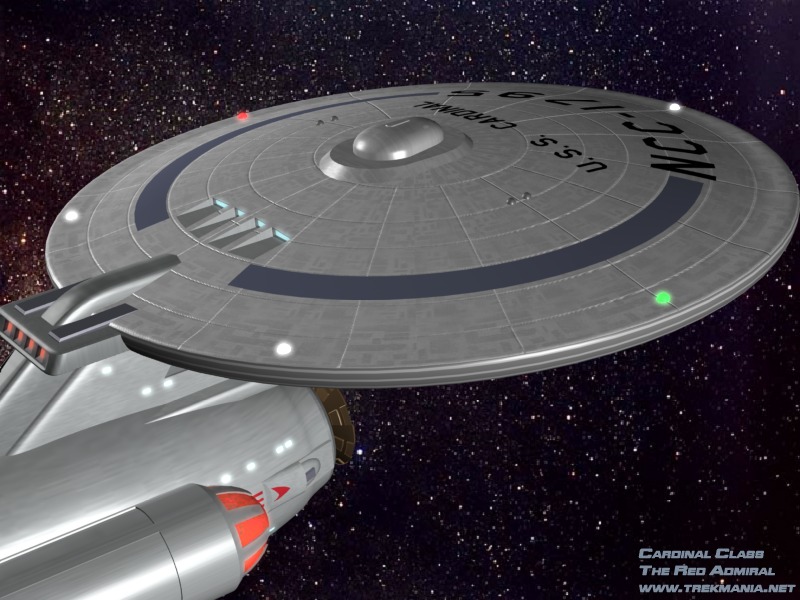
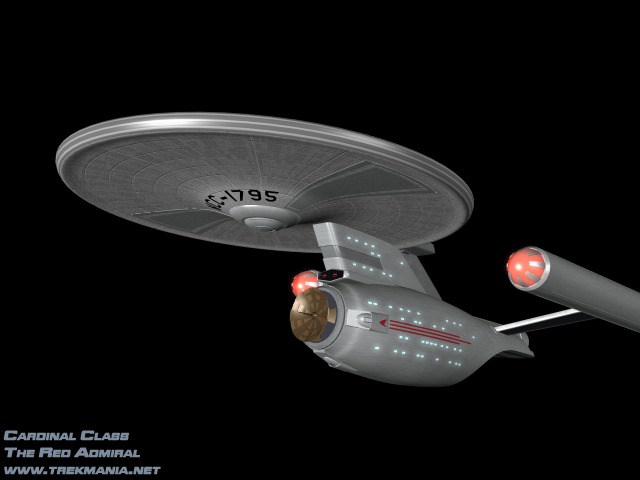 Design by
Mark, ASDB
Member
Design by
Mark, ASDB
Member
Type: Medium cruiser
Commissioned: 2256-2309
Length: 258m
Decks: 15
Mass: 881,500mt
Crew complement: 310
Speed: Warp 7.2 (max. cruise)
Commissioned about a decade after Constitution, this class is designated as a medium cruiser. It shares a few similar design elements to Constitution.
Cavalier Class
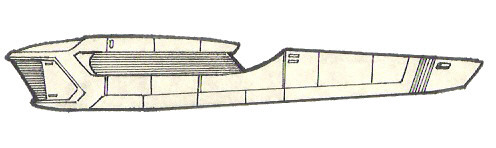
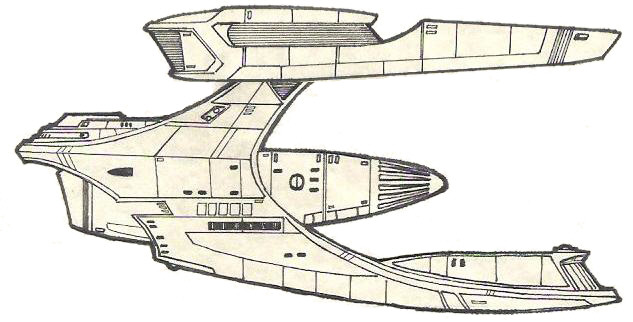
 Design by Atolm
Type: Multi-mission support ship
First commissioned: 2248
Length: 180m
Width: 200m
Height: 110m
Complement: 40 officers + 60 crew
Speed: Warp 7 (cruise), Warp 8 (max.), Warp 9 (max. emergency)
Armament: phasers: 12 (6 paired) phaser turrets, torpedoes: 2 forward facing photon torpedo tubes
Defense: Shields
Embarked craft: 2 shuttle pods
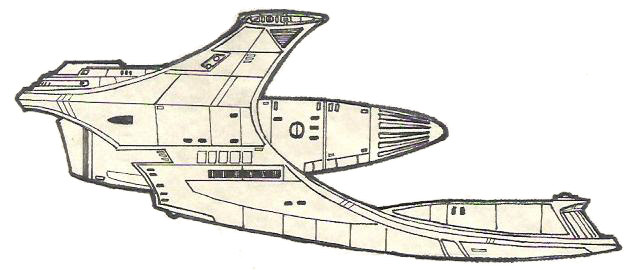
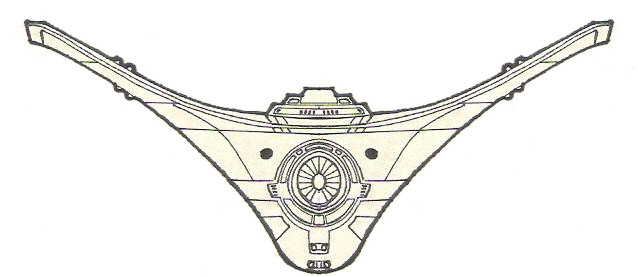
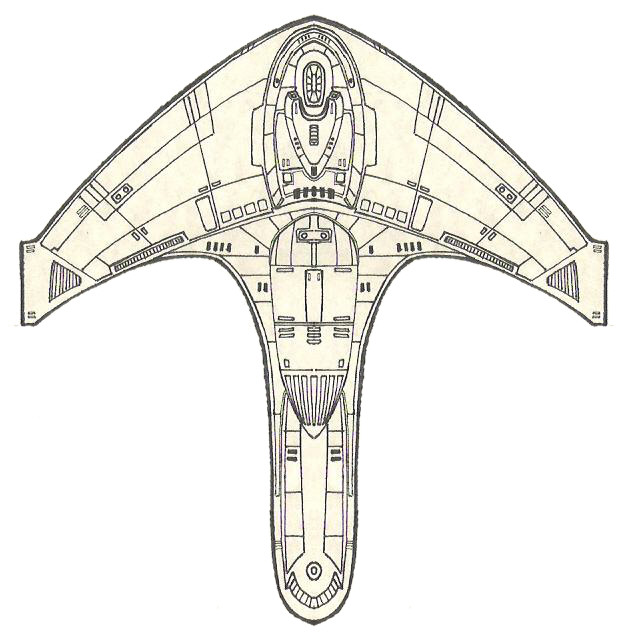
During the 23rd century, Starfleet's core of engineers were pooled together to come up with an answer for the Federation's need for a small, versatile multi-mission vessel, the Cavalier sported a small, rugged design with a very fluid look that appealed to many of the Fleet's captains. The mission profile for the class was envisioned as a patrol vessel that would be accessible for Federation colony worlds to serve a number of needs such as:
Being such a small design, Starfleet saw it as an inexpensive way to protect the outer worlds on their ever expanding borders, as well as defend and fortify the core worlds. Starfleet also used them as follow-up vessels to the more adventurous and famed Constitution-Class. As the Connies would venture further and further into deep space, these ships would be deployed or even built at the newly discovered worlds for them to fortify, thus re-leaving the Connies to their primary mission of deep space exploration.
Ultimately, the Cavaliers became so successful that they have continued to be refitted and their design updated well into the 24th century. The particular vessel pictured here is the TMP variant circa 2275.
Thanks to Walter Matt Jefferies, and every other Trek artist and dreamer to come after.
Class D Observatory
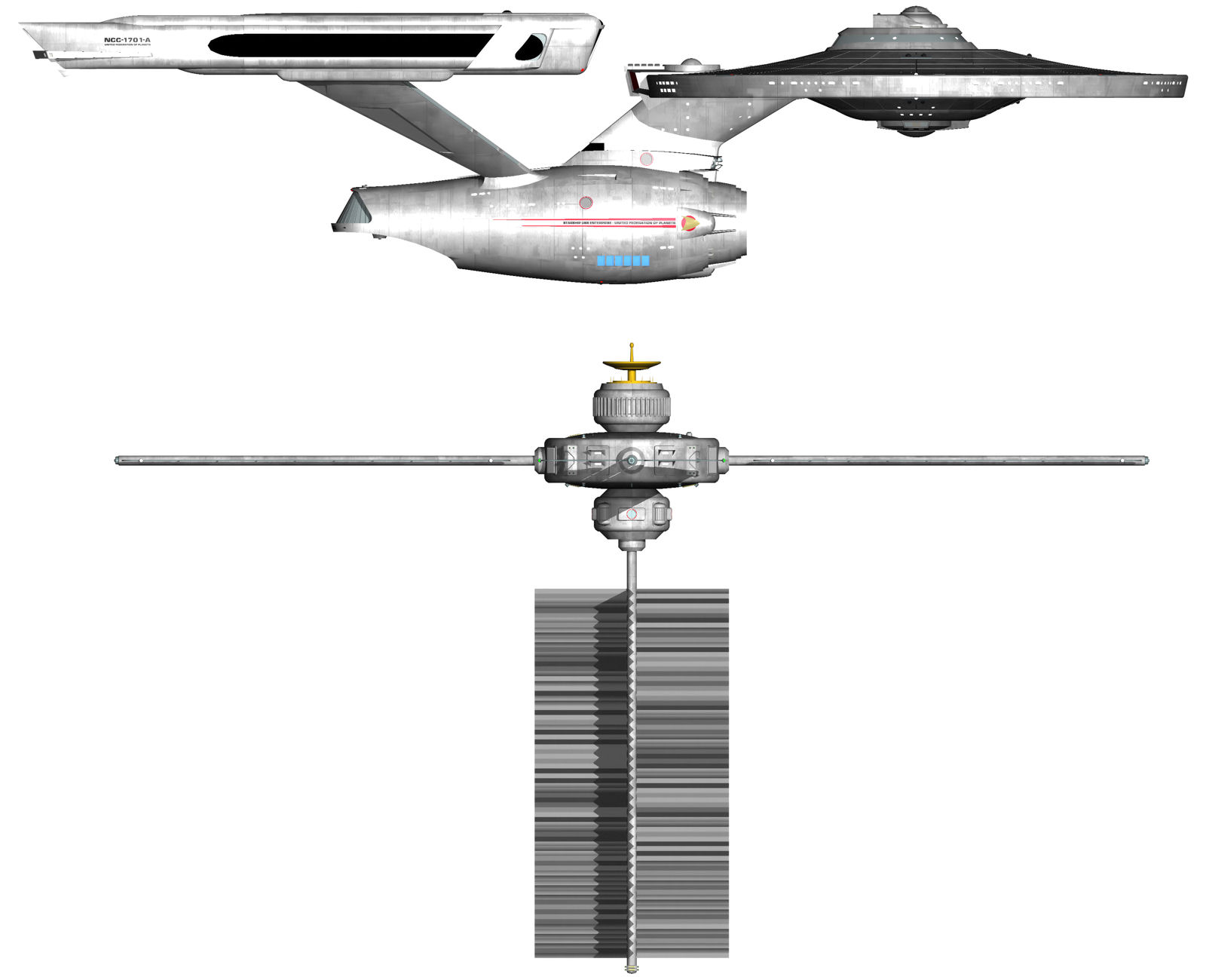
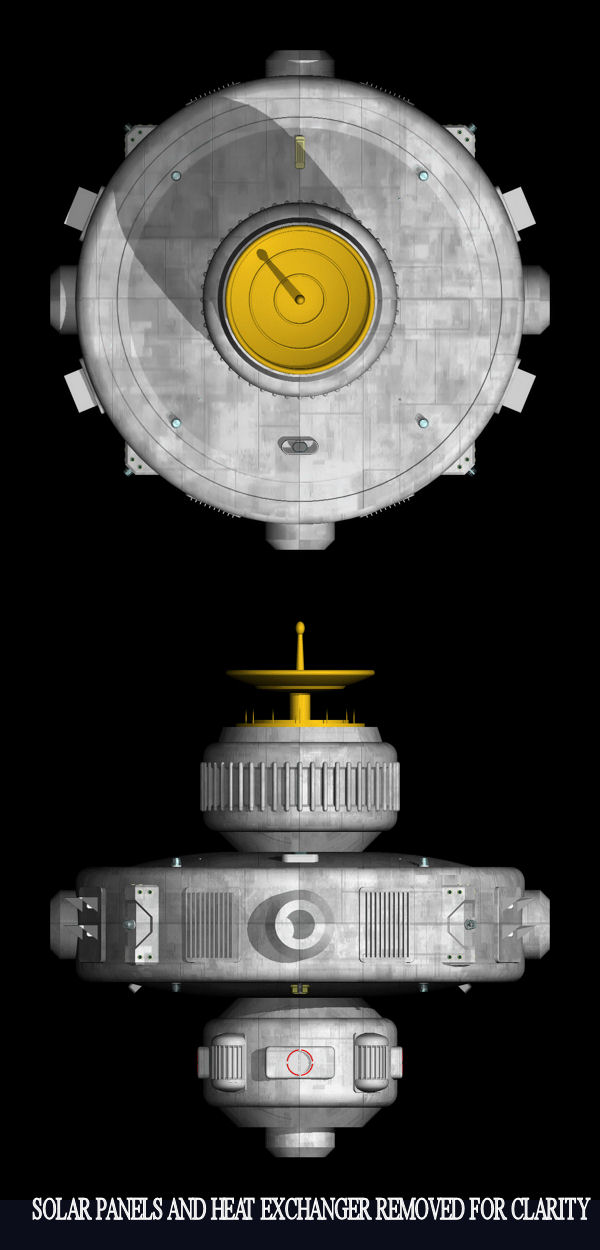
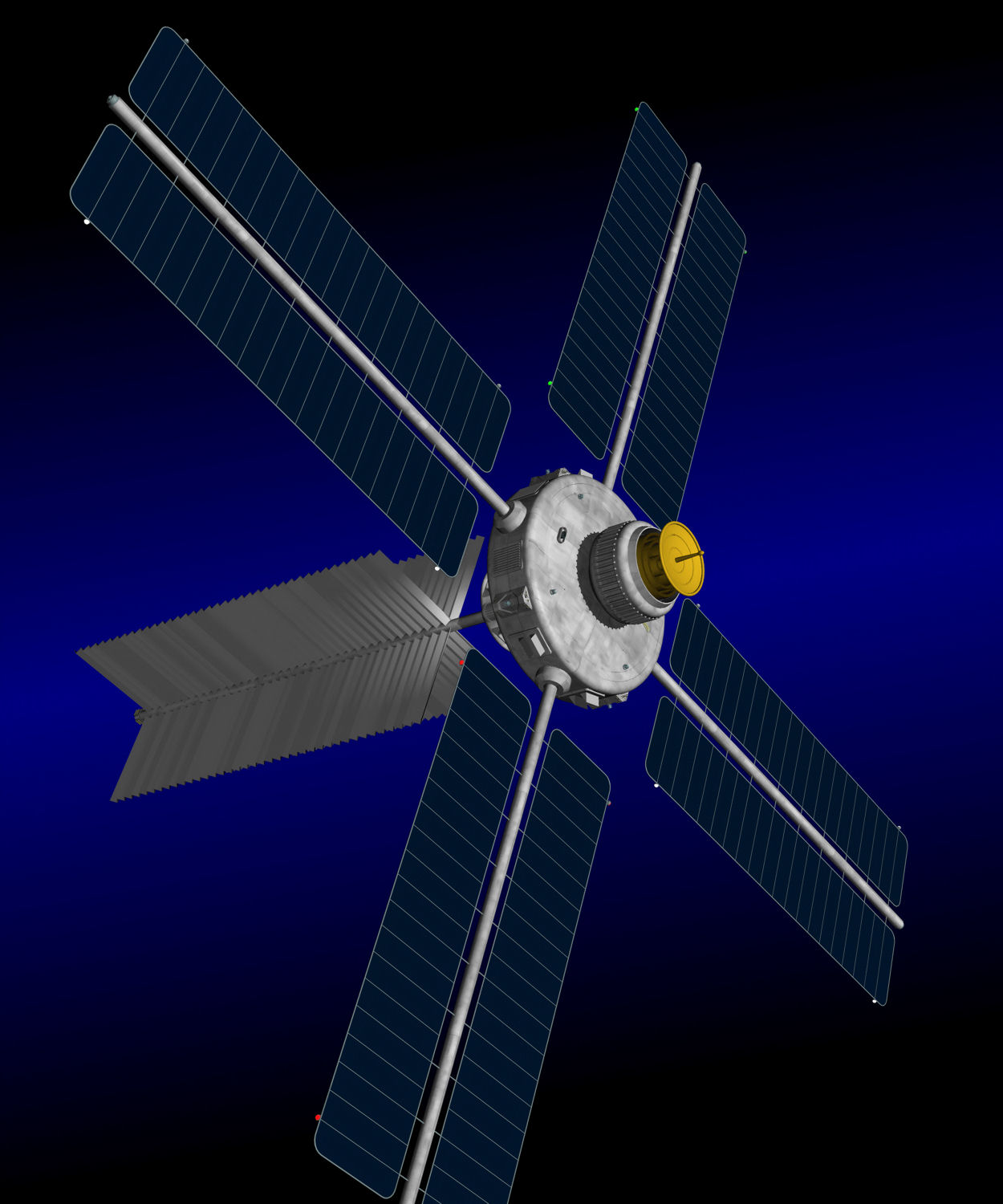 Design by Robert Heckadon
Type: Solar observatory
First commissioned: 2238
Length: 266m
Width: 266m
Height: 162m
Decks: 10
Displacement: 80000t
Complement: 5 officers + 25 crew
Sublight speed: 0.01c (max.)
Armament: none
Defense: Magnetic radiation shield, polarized hull plating
“All of this got me thinking about the history of the westward expansion, and got me to wondering how the exploration of the Solar System would be changed if there were an indigenous presence out there.” – Sarah Zettel
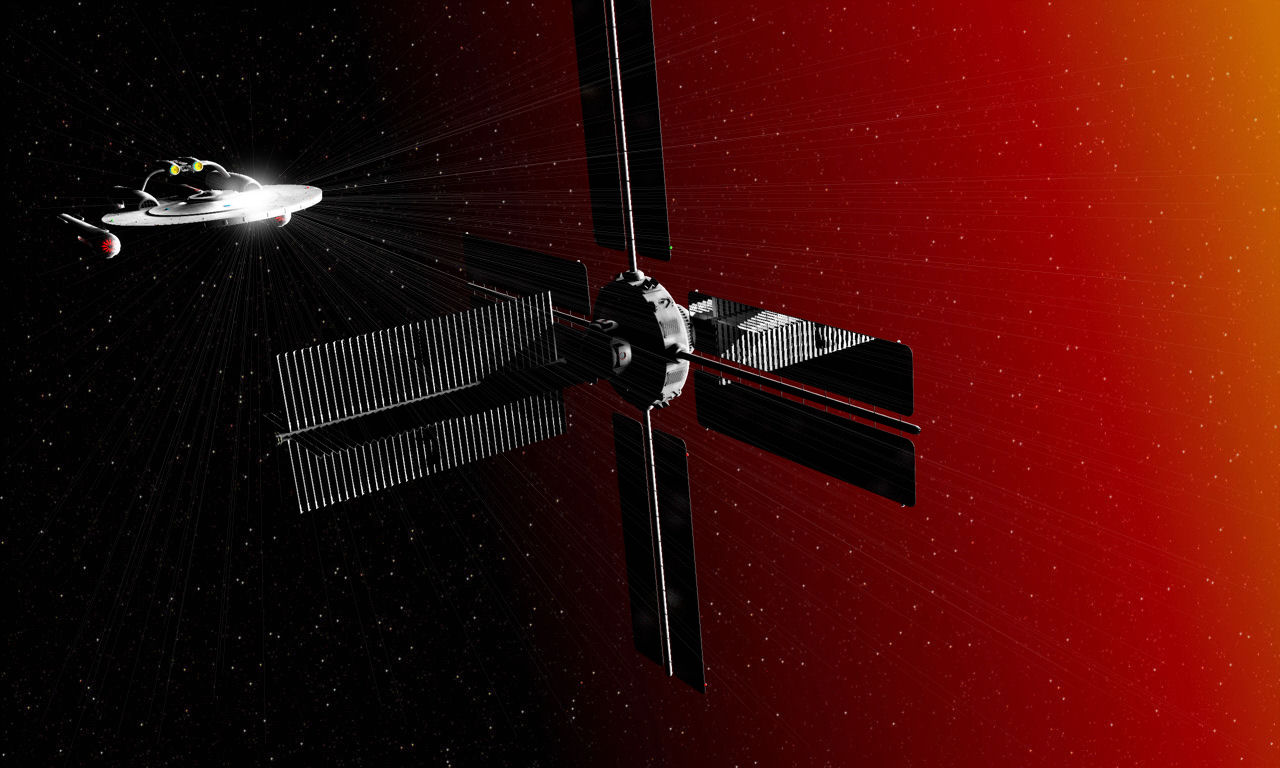
First commissioned in 2238, the Class D solar observatory is designed and built to orbit a star at a relatively close distance and scans 10,000-20,000km below the star's photosphere. It uses a modified navigational deflector dish on top of the space station to emit tachyons to penetrate the photosphere and the rebounding signal acts like ground penetrating radar. The habitat module uses a probe launcher to send solar probes into the star for a more detailed scan, and probes filled with veridium powder to study the fluid dynamics of the star.
The station's hull is made of a triple layer of corrugated tritanuim, 30cm thick, with trisilicate aerogel filling the corrugation spaces. Aside from adding rigidity and strength to the tritanium's carbon nanotube structure, the aerogel is also used for micro-meteor protection and, more importantly, thermal insulation. Starships typically use a 20cm thick dual layer of corrugated tritanium, and space stations of the observatory's size class uses a single layer.
Starships and space stations typically transfers excess heat and thermal energy waste to a series of borite crystals which recycles 70% of the waste energy back into electrical energy for primary systems. However due to the amount of thermal energy the station receives from the sun, the excess heat is transferred to the primary heat exchanger on the bottom of the station and vents the thermal energy in the form of infrared radiation.
Critics were very harsh over the observatory using an environmentally hazardous refrigerant, specifically ozone depleting, for the station's thermal regulation systems, citing accusations of cost cutting measures in favour of the military budget. The designers defended the decision since the station orbits a star, not a planet. As well even worst case scenario, the likelihood of the refrigerant even reaching a planet is extremely improbable even with a catastrophic rupture. Plus it would take more than 1000 observatories orbiting a single class M planet to cause any significant damage to the planet's ozone layer.
Cost cutting rumours have also stated that instead of using conventional gravity generators, the observatory actually uses an ion turbine to create a vacuum effect to pull the crew down to the deck plate.
Though a variation of this method of mimicking gravity without centrifugal forces has been used before during the late 21st century, the rumour was easily dismissed because installing this archaic form of artificial gravity would in reality increase the cost of the station substantially.
Though the Class D solar observatory has mostly been replaced with other observatories, including the type used at Amargosa, Earth considered recommissioning one of the Class D observatories for the star in the Romulan Empire known as Hobus when in 2387, long range observations indicated that not only the star showed the signs of going nova, but that the nova may produce what was archaically known as a white hole, sometimes referred to as a miniature big bang, which the explosion may have the potential of traveling faster than light.
Despite a new relationship with the Romulans, Earth was not granted permission to post an archaic observatory in Romulan space.
Class-D17
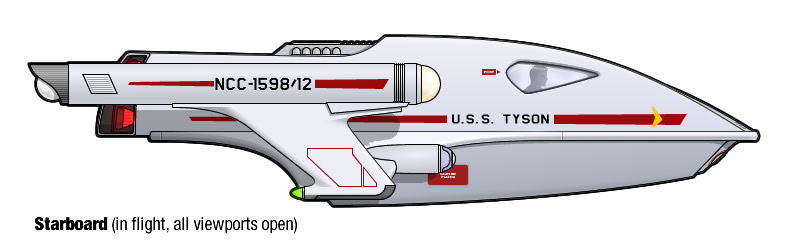
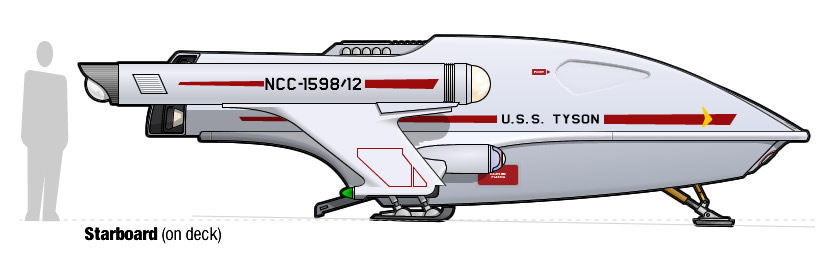
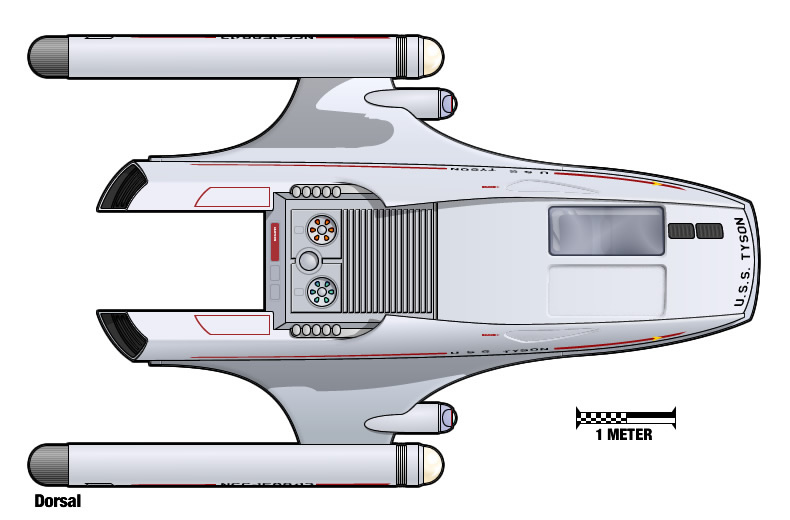 Design by M. Christopher Freeman
Type: Fightercraft
First commissioned: 2236
Length: 7.3m
Width: 4.5m
Height: 1.7m
Complement: 2 officers + crew
Speed: Warp 2 (max.)
Sublight speed: 0.4c (max.)
Armament: 2 phaser emitters, 1 photon micro-torpedo launcher
Defense: Deflector shields
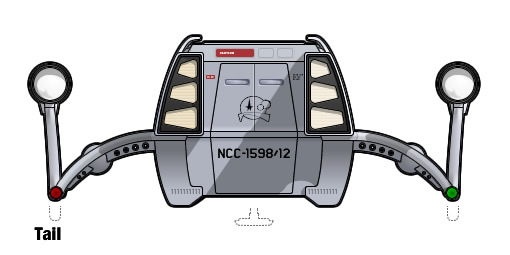
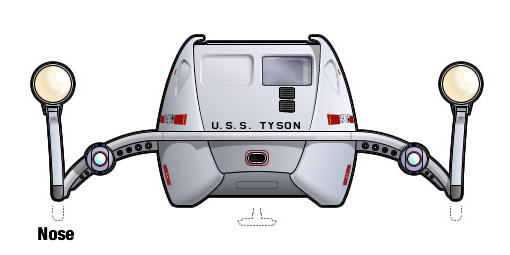 The Class-D17 is a radical reconstruction and repurposing of the aging Class-D shuttlepod space frame. The Class-D provided the perfect platform on which to build an agile mobile weapons craft for both starbases and the new Attucks class cruiser-carriers. A streamlined hull design has reduced crew capacity from four to two, a flight officer and weapons officer. And with the addition of phaser and micro-torpedo systems as well as modernization of the engine systems the craft is a match for any Klingon equivalent.
The dual phasers emitters are swivel-mounted to provide a wide forward firing arc and the micro-torpedo launcher provides a little more bite than most existent Starfleet fightercraft. In hazardous environments or to protect from hostile return fire all viewports are equipped with retractable duranium covers.
The fightercraft's main propulsion units are compact twin impulse engines. The craft is also capable of short-range warp flight. Warp travel, however, burns through its limited fuel reserve quickly and is generally used for quick jumps in combat situations.
Class T
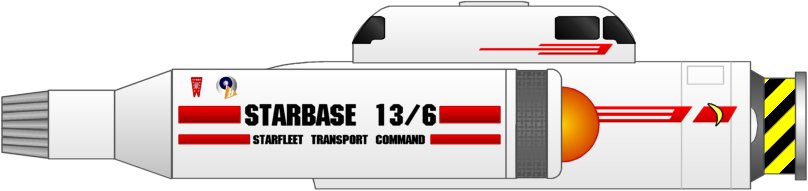
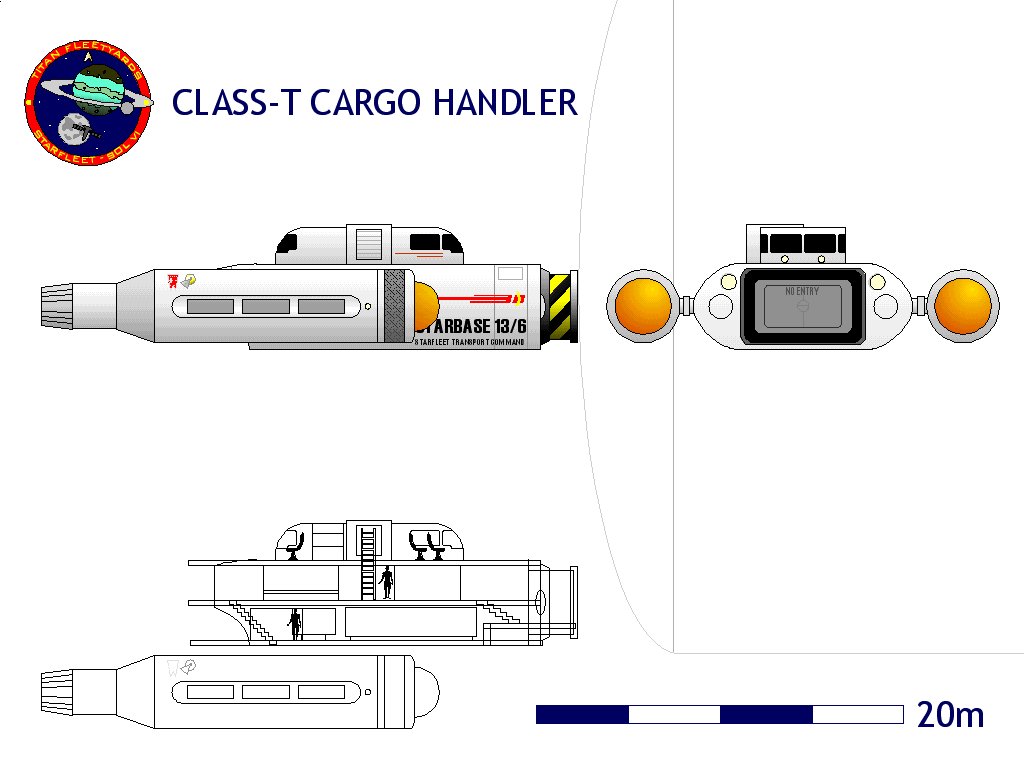 Design by Harry, ASDB Member
Second 2D drawing by Kris, ASDB Member
Type: Cargo handler
This vehicle moves containers and other large cargo in starports and drydocks in the TOS era. It is restricted to sublight propulsion.
Hayes Class
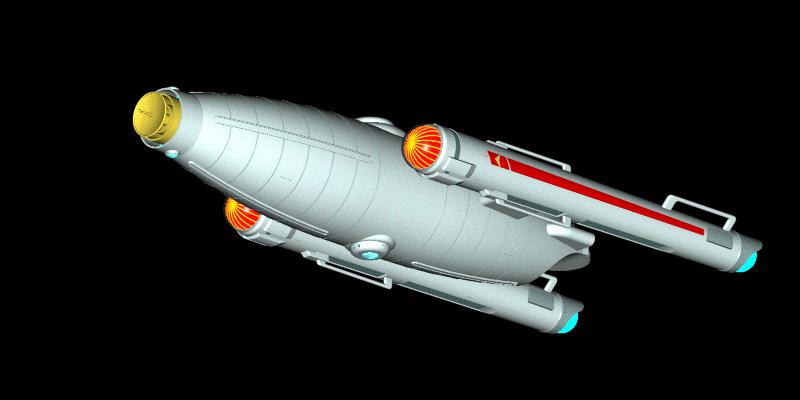
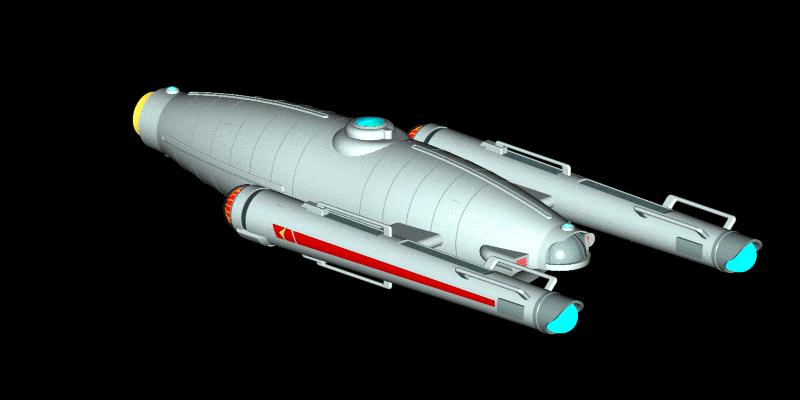 Design by Robert Heckadon
Type: Battleship
First commissioned: Stardate 6313.3
Length: 235m
Width: 97m
Height: 47m
Decks: 16
Displacement: 420000t
Complement: 30 officers + 220 crew
Speed: Warp 5 (cruise), Warp 8 (max.), Warp 8.6 (max. emergency)
Sublight speed: 0.9c (max.)
Armament: 5 phasers, 2 banks each; 4 photon torpedoes
Defense: Cast rodinium deflector shields
Vice Admiral Rittenhouse is dead. And with him, his plans against the Federation. The Star Empire, the first Federation class dreadnought, which was both Rittenhouse’s ultimate weapon and the instrument of his downfall, has been decommissioned and recycled. And from the advise of Captain James T. Kirk, Commodore Stephen Harper was “asked” to resign from Starfleet, for he urged the Federation council to use Vaughan Rittenhouse’s dreadnoughts as powerful military deterrents, that would instead spark an intergalactic “cold war.”
The Federation class dreadnought program was then cancelled with the 3 partially completed dreadnought being “disarmed” and converted to extremely long range exploration cruisers. Replacing the heavy artilleries and shields with science labs, fuel refineries, and cryogenic sleeping chambers. Though being able to travel to parts of the galaxy where the Constitution class can’t, it is no longer combat effective.
But some increasing tensions between the Federation and the Klingons convinced Starfleet to commission ships that would double as MACO transport ships and as battleships that were as combat effective as the Constitution class, but also with the intent that the ship would not accidentally spark a conflict it was meant to stop. Thus brings forth the introduction of the Hayes class battleship.
The Hayes class battleship was named after Major Joshua Hayes, who commanded the MACO team assigned to the NX-01 Enterprise during the mission in the Delphic Expanse more than 100 years before. First constructed on star date 6313.3, the 5 Hayes class ships in service were named after MACOs and Starfleet personnel killed in action during that mission, including Major Hayes himself.
U.S.S. Hayes NCC-1925
U.S.S. Hawkins NCC-1926
U.S.S. Fuller NCC-1927
U.S.S. Taylor NCC-1928
U.S.S. Ramira NCC-1929
The ship has 5 phasers, 2 banks each, as well as 4 photon torpedo launchers. However the total firepower of this battleship is only equal to that of the Constitution class. Rather than the triple layered shields that were part of the dreadnoughts specifications, the Hayes class has standard shields, but due to its smaller size it can withstand strikes longer than the Constitution class.
The battleship was designed for a standard compliment of 30 officers and 220 crew. But the interiors are easily adjustable to handle 30 officers, 170 crew, and over 200 MACOs. There are very few recreation centres on the ship since it was not built for long range tactical operations.
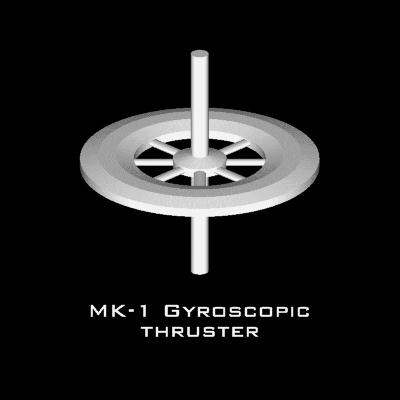
The ships impulse and warp engines are nothing spectacular. Standard FWF-4 warp drive units with a maximum speed of warp 8.6, and an impulse acceleration factor equivalent to the Constitution class. As with most Starfleet vessels, including the Constitution class, the Hayes class uses a series of gyroscopic thrusters to allow the ship to yaw, pitch and roll without using exhaust or propellants. But they differ to other gyroscopic thrusters that are used by the Constitution class and other starships. They are designed to spin 4 times faster for greater thrust, but as a result, the thrusters tritanium structure contains 40% more carbon nanotubes than normal in order to handle the stress.
Often these 5 ships are seen patrolling the Klingon and Romulan boarders, and still have yet to be used as MACO transport ships. After the U.S.S. Ramira, no more Hayes class starships were constructed, nor had any gone under any significant refitting outside of upgrading the photon torpedoes. The last of the Hayes class was decommissioned on star date 9821.1.
The name “Joshua” for the confirmed J. Hayes is just a random name. Not to be declared canon.
Hellas and Roberts Class
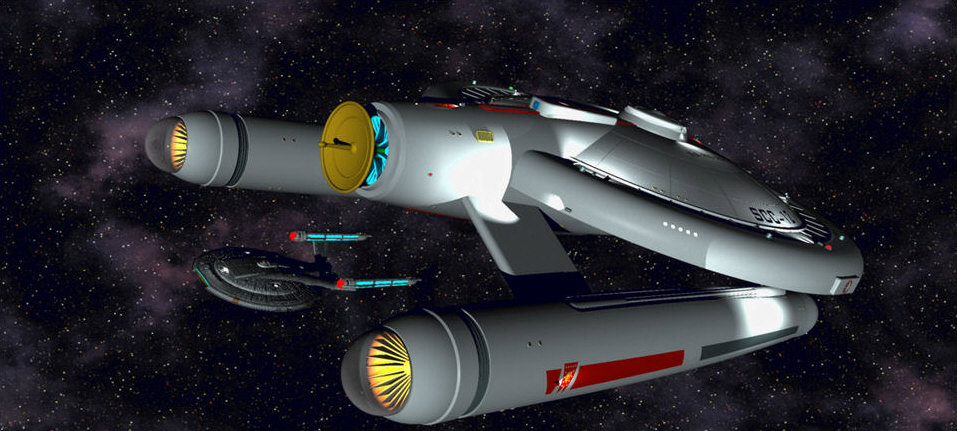
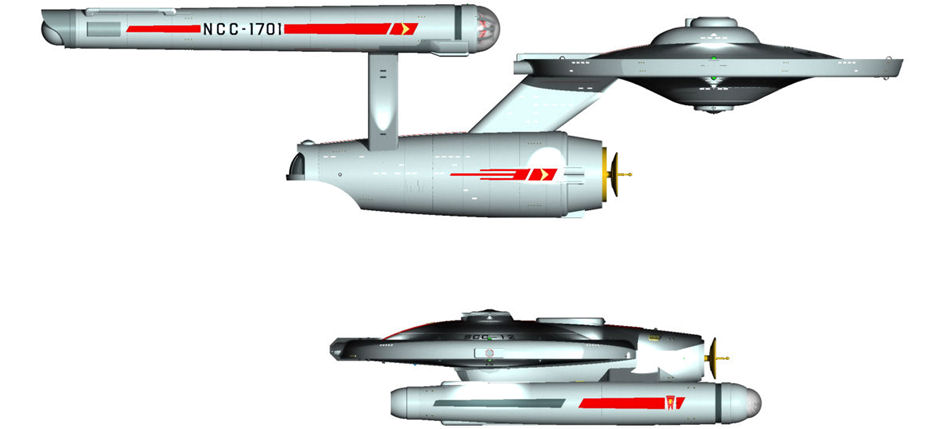
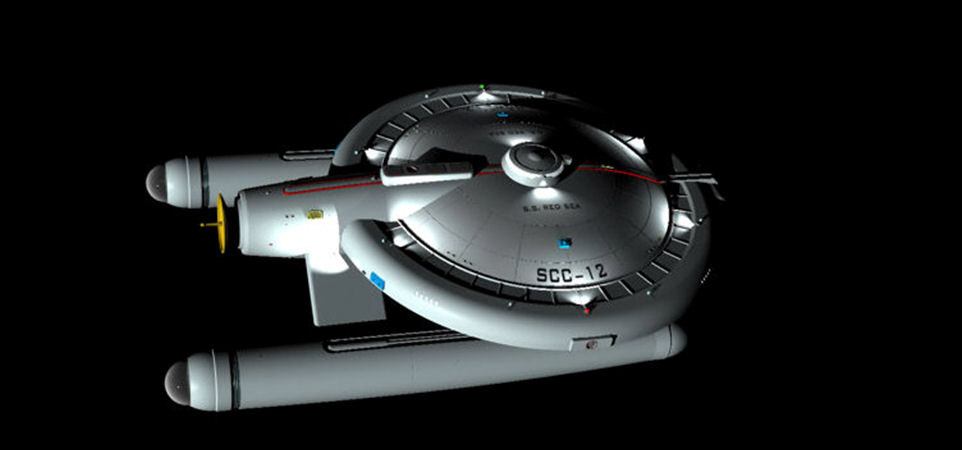
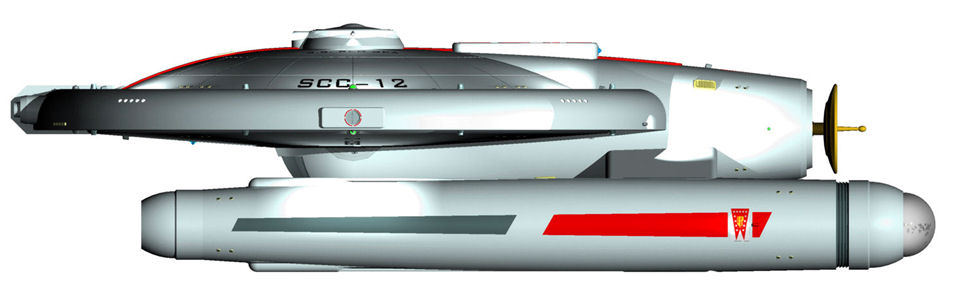 Design by Morgan Smiley
Type: Colony ship/security cutter
First commissioned: 2200
Length: 145m
Width: 101m
Height: 39m
Decks: 9
Displacement: 180000t
Complement: 5 officers + 16 crew, evacuation limit: 200
Speed: Warp 1 (cruise), Warp 1.5 (max.), Warp 1.65 (max. emergency)
Sublight speed: 0.1c (max.)
Armament: 2 lasers (1 fore, 1 aft)
Embarked craft: 6 large-capacity cargo shuttles
Hellas
Federation Office of Colonization
First launched: 2200
Retired from service: 2228
Crew: 21
Passenger
complement: 200
Defensive systems: 2 laser guns
Engines: Generation 1 warp field generator
Cruising speed: time/warp factor 1
Max speed: time/warp factor 1.5
Shuttles: 6 large-capacity cargo shuttles
Numbers built: 8
Designed to carry Federation colonists and enough material for housing, research, agriculture, mining, & transportation to last 6 months.
Operated under the UFP Office of Colonization. Built under the Standard Construction Contract (SCC) for non-Starfleet use.
Roberts
Starfleet
First launched: 2226
Retired from service: 2270
Crew: 85
Emergency passenger
complement: 200
Defensive systems: 2 forward laser guns, 2 aft laser guns, 2 proton torpedo launchers
Engines: Generation 1A warp field generator
Cruising speed: time/warp factor 1
Max speed: time/warp factor 2
Shuttles: 3 standard 8-passenger shuttlecraft
Numbers built: 37
Using the basic design of the Hellas class ships, Starfleet adopted, modified, and improved the design in order to deploy a rugged yet reliable ship to monitor and protect star systems along borders with unknown or unsavory neighbors as well as patrolling well-travelled spacelanes.
Operated under the auspices of Starfleet & modified under the Naval Construction Contract (NCC).
Illustrious Class
(2)
 Design by Nixon's Head
Type: Through-deck cruiser
First commissioned: 2248
Length: 240m
Width: 129m
Height: 56m
Decks: 16
Complement: 70 officers + 680 crew, evacuation limit: 3250
Speed: Warp 6 (cruise), Warp 7.5 (max.), Warp 7.8 (max. emergency)
Sublight speed: 0.5c (max.)
Armament: 3 phaser banks of 2 turrets each, capable of 850 kW maximum single emitter output. One photon torpedo launcher in the forward firing arc.
Defense: Defensive shield systems to exceed 3.5 x 10⁴ kW primary energy dissipation rate.
Embarked craft: 15 Sparrowhawk fighters, 8 standard personnel shuttles, 4 cargo shuttles (nominal air wing c.2255)
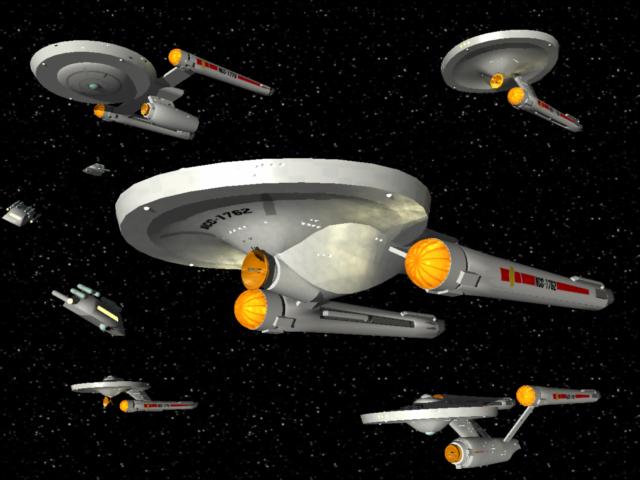
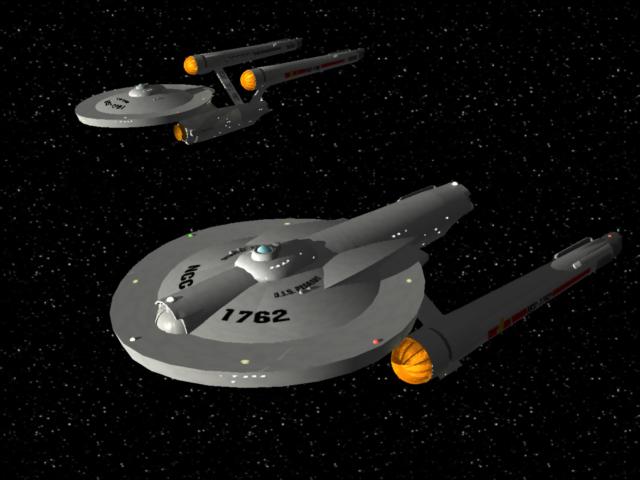
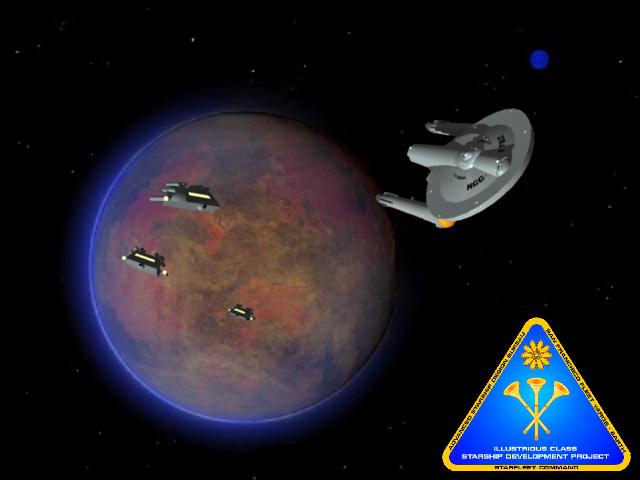
Although many studies had been produced by Starfleet’s Advanced Starship Design Bureau over the years for potential missions for small, stealthy, torpedo-armed spacecraft, up to the 2240s reactor limitations had prevented the realization of these theoretical studies. Once such reactors became, Starfleet decided to test the space fighter concept, with a new "through-deck cruiser" design chosen for development as a base ship.
Initial authorisation was for three ships only (in keeping with the class’ role as a proof-of-concept testbed), making use as far as possible of the tooling and dockyard facilities developed as part of the Constitution-class starship development project. The first ship of the new class, USS Illustrious, NX-1760, launching from the San Francisco Orbital Yards in late 2248.
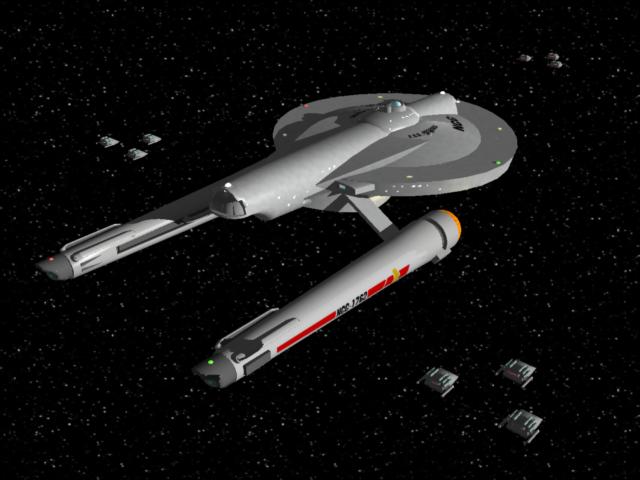
The main feature of the Illustrious-class is her long, capacious hanger deck. A half-cylinder in cross-section, the deck stretches the length of the ship, resting for much of its length along the dorsal surface of the primary hull, with large hanger bay doors at fore and aft. The deck is unobstructed along its length, allowing embarking craft to "wave-off" a hazardous approach and "abort-to-space" by flying straight through the ship to egress through the bow doors.
The ship's primary hull features a large ventral 'bulge' containing hanger and repair facilities for an air-wing of up to 15 fighters and other auxiliary spacecraft, as well as sufficient munitions and fuel for a nominal tour-of-duty of up to 2 years un-replenished, or 10 weeks of intensive (wartime) operations.
The warp reactor was also housed in the bulge, feeding two nacelles. In addition to her pioneering role as a space carrier, Illustrious also had the distinction of being the first ship to be fitted with the up-rated unified-field space energy/matter matrix warp nacelles, which would be retro-fitted to the Constitution-class in the 2250s. Her impulse engines were located at the rear of the primary hull, split either side of the landing deck.
Initial trials of the Illustrious-class were promising, with the ships exceeding almost all of their original performance requirements, and demonstrating an unprecedented ability to support large numbers of auxiliary spacecraft sorties. Illustrious, Concordia, and Pegasus were all commissioned into active service in the early 2250s, and were well-liked by their crews. Unfortunately, the weak link in the concept proved to be the fighters.
Illustrious’ initial air wing had consisted of 15 "Sparrowhawk" star-fighters. Little more than a modification of Starfleet's standard two-person shuttle-pod of the time, the Sparrowhawk was designed to attack over ranges of a few light-years at warp 5 or better, mounting six modified photon torpedoes and a single forward-facing phaser. It quickly became apparent that they were underpowered and under-armed for a space-to-space engagement against enemy warships, and also proved terribly vulnerable to beam weapons, with their compact shield generators unable to withstand more than a few seconds of fire from a cruiser-class ship. They did perform better against ground targets, where their small size and ability to operate in an atmosphere enabled them to sneak up on enemy facilities, flying beneath any anti-starship defences that might be deployed to hit the target with a hypersonic pass. However, this type of engagement was not widely undertaken by Starfleet, and the limited requirement that did exist could easily be met by the three hulls already in service. Therefore Starfleet decided against procuring more ships of the Illustrious-class.
With the failure of the Sparrowhawk, Starfleet largely abandoned the "space carrier" concept after this point, preferring to concentrate resources on a succession of powerful multi-role cruisers that were equally adept at defence and scientific missions.
The Illustrious-class were retired from Starfleet in 2295 and sold into civilian service as freighters. The final surviving ship, SS Coridan Star (ex-USS Pegasus, NCC-1762), was finally scrapped at Vulcan in 2361.
Jefferies-Type Shuttle
 Design by
Matt Jefferies and Kris, ASDB Member
Design by
Matt Jefferies and Kris, ASDB Member
No specs available
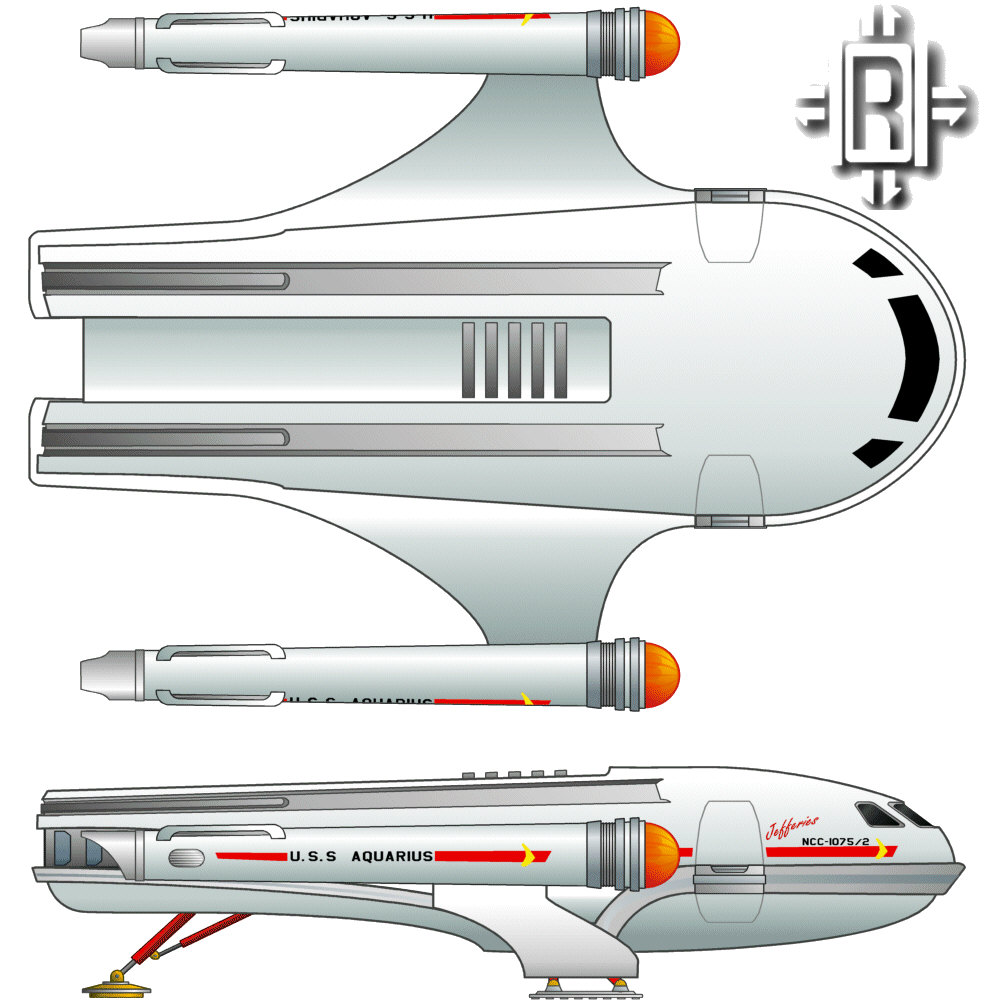
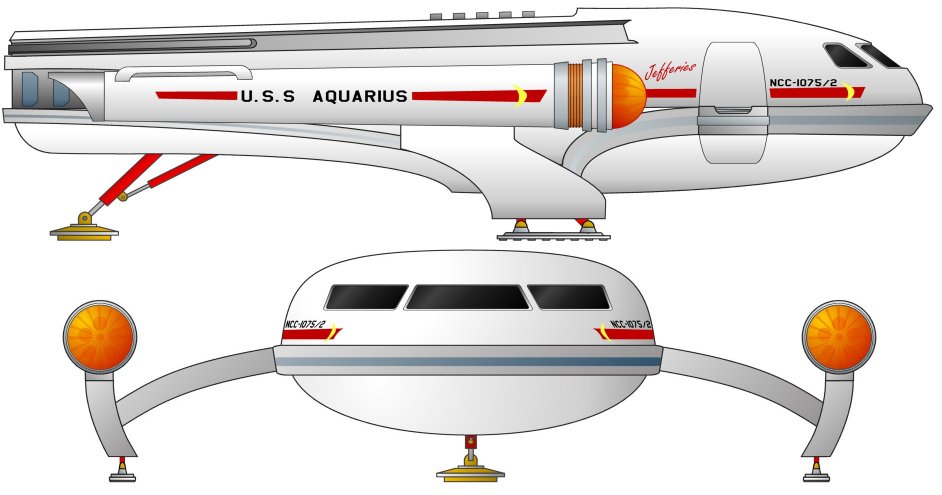
The shuttle "Jefferies" is closely based on Matt Jefferies' sketches for a shuttle that was never built (because the curved shape would have been too expensive).
Kaneda Class
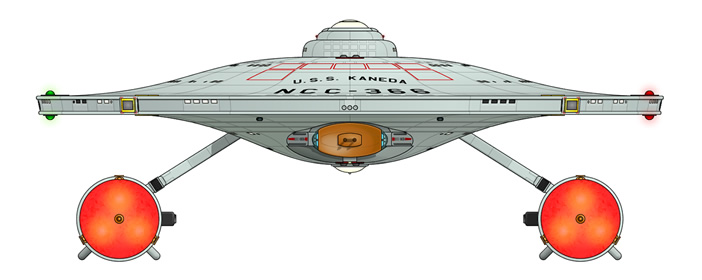
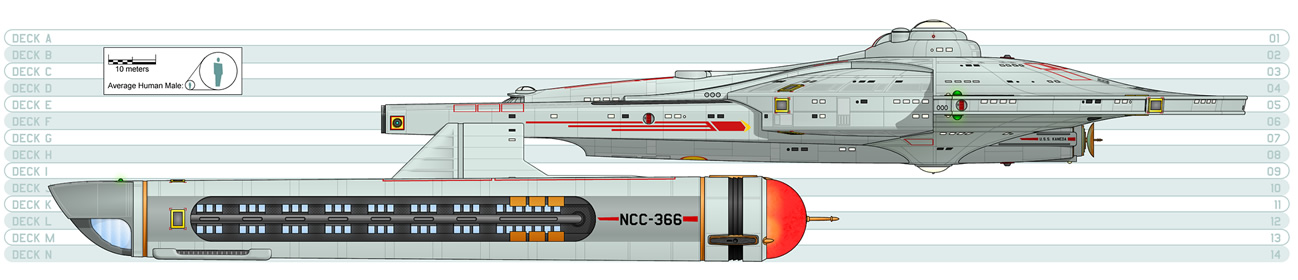
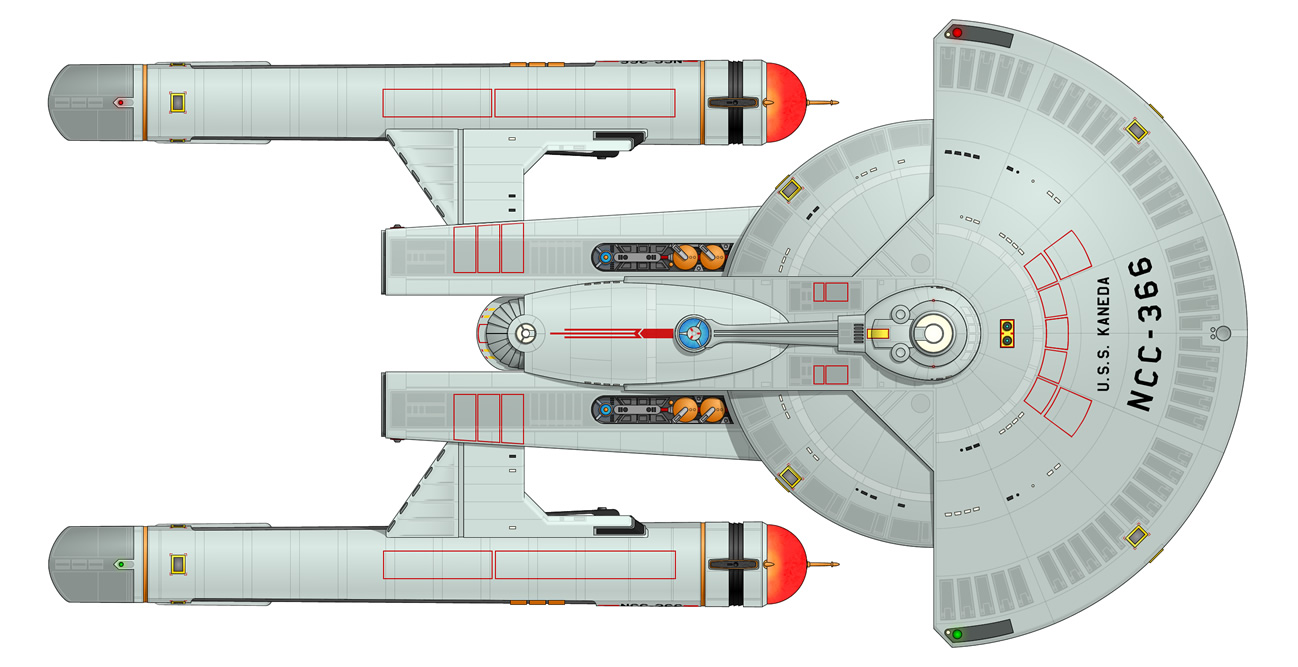 Design by M. Christopher Freeman
Type: Destroyer
First commissioned: 2204
Length: 252m
Width: 132m
Height: 53m
Decks: 14
Displacement: 680000t
Complement: 30 officers + 180 crew
Speed: Warp 5 (cruise), Warp 7 (max.), Warp 8.5 (max. emergency)
Sublight speed: 0.5c (max.)
Armament: 2 dual-mounted dilithium-focused laser cannon banks (1 forward dorsal, 1 forward ventral), 2 single-mounted dilithium-focused laser cannons (1 portside aft, 1 starboard aft), 2 photon torpedo tubes (forward ventral side)
Defense: Deflector shield array
Embarked craft: 6 Type-D3 shuttlecraft
Development notes A fleet workhorse of the early 23rd century, the Kaneda class destroyer was designed and built as a small, fast, escort vessel for larger ships or for use in Starfleet battle groups. But also due to its speed and size it was ideal for scout or picket missions.
Though mostly assembled from tested and well-established Starfleet parts and design standards of the time, the Kaneda class had a couple of features that were considered revolutionary; the warp core output injectors and the first field ready dilithium-focused laser cannons. Warp core output injectors – a later version of the NX class warp core output transfer junctions – along the twin engine fairings were designed to constrict and accelerate the plasma flow coming from the warp core to increase the efficiency of the drive. In field tests it was also found that they allowed the engineering team on board much more control over the regulation of the plasma flow.
Kaneda was the first Starfleet vessel armed with dilithium-focused laser cannons. These lasers use a polished dilithium crystal to refocus and amplify the beam fired from a standard high-energy laser. The amplification creates a much more powerful beam than previously used before the advent of plasma and early phased energy weapons. Early tests showed dilithium to be too unstable when exposed to laser light but it was discovered that by modulating the frequency of the laser at very specific wavelengths a stable beam could be established through the dilithium crystal matrix. These lasers replaced the standard phase cannons of previous ships. This technology would be adapted and used for all Starfleet beam weapons until they were eclipsed by the phaser, an evolutionary merging of the early phase weapon technology and the dilithium-focused laser.
Kaneda class vessels served in Starfleet until 2265.
Lineage of the Kandea
class The Kaneda class had an initial construction run of 13 ships. The space frame was designed to last upward of 35 years (or more), and expected to be refit at least once. The last surviving Kaneda class vessels, the U.S.S. Watanabe, U.S.S. Kaori, and U.S.S. Yamagata, were decommissioned in 2265.
NCC-366, U.S.S. KANEDA (2204)
NCC-367, U.S.S. TETSUO (2205)
NCC-368, U.S.S. AKIRA (2205)
NCC-371, U.S.S. KIYOKO (2207)
NCC-373, U.S.S. MASARU (2208, refitted 2212)
NCC-378, U.S.S. TAKACHI (2210, refitted 2220)
NCC-379, U.S.S. KEI (2210, refitted 2220)
NCC-385, U.S.S. RYUSAKU (Kaneda II, 2213)
NCC-387, U.S.S. MIYAKO (Kaneda II, 2213)
NCC-390, U.S.S. WATANABE (Kaneda II, 2217)
NCC-399, U.S.S. NEZU (Kaneda II, 2219)
NCC-402, U.S.S. KAORI (Kaneda II, 2223)
NCC-403, U.S.S. YAMAGATA (Kaneda II, 2224)
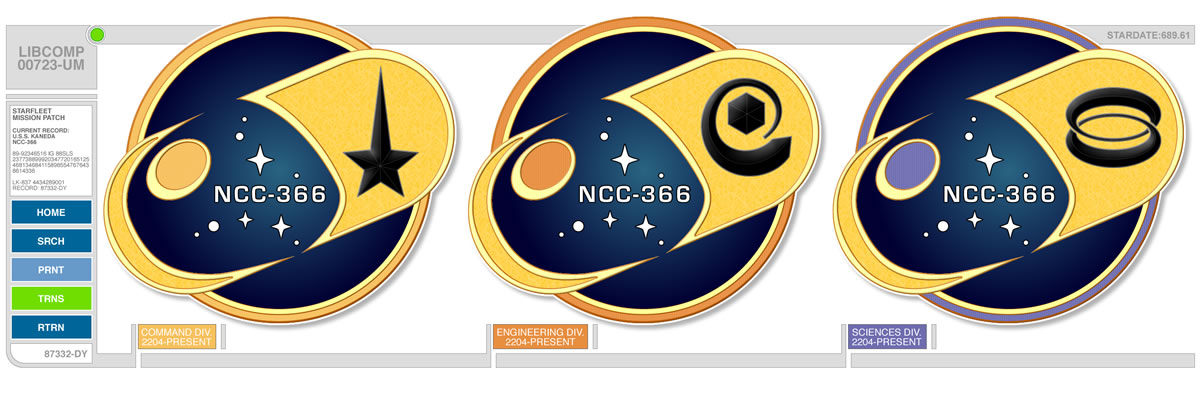
Designer's notes The Kaneda is a play on the Akira class, a design which I really like. It started as a funny little distraction to kill time in a very strange temporary living situation after I'd evacuated from New Orleans preceding Hurricane Katrina. For anyone not familiar with the movie Akira, for which the Akira class takes its name, Kaneda is Tetsuo/Akira's best friend. The Kaneda class symbol on the mission patch is a stylized version of the pill image on the back of Kaneda's jacket.
Khams Class
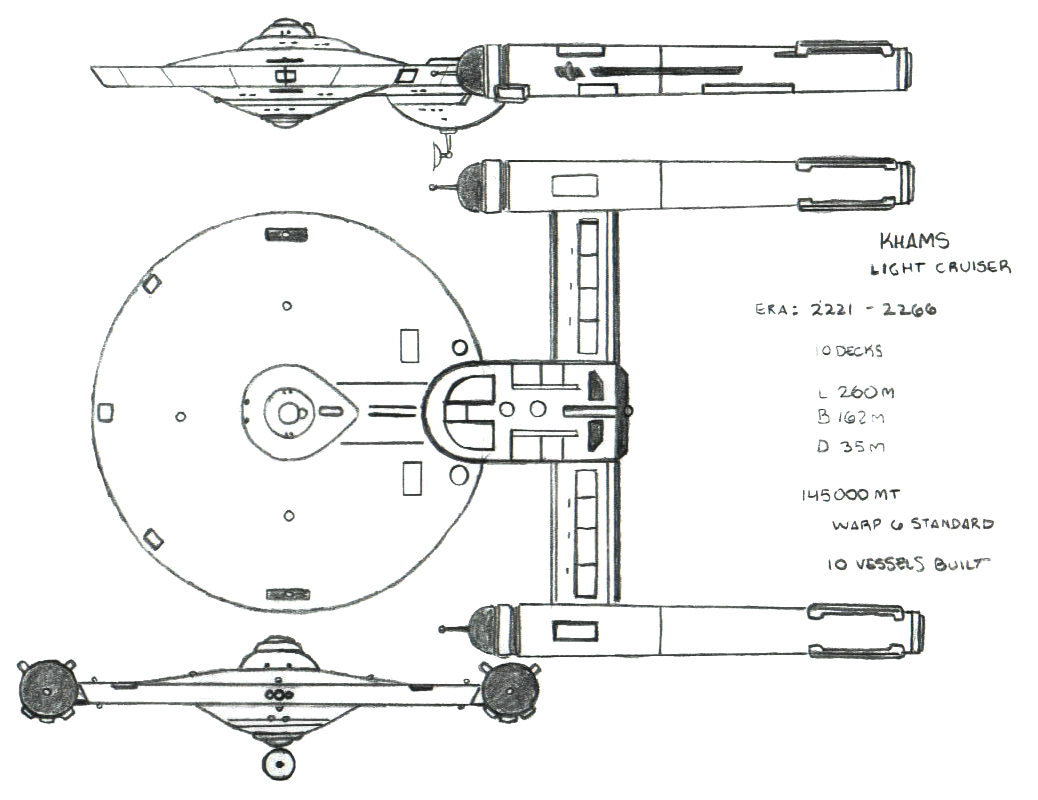 Design by James Donovan
Type: Light cruiser
10 vessels built
In service: 2221-2266
Length: 260m
Beam: 162m
Height: 35m
Decks: 10
Mass: 145,000mt
Speed: Warp 6 (std.)
No description
Kobayashi Maru
 First design by Harry, ASDB Member
Second design by Kris, ASDB
Member
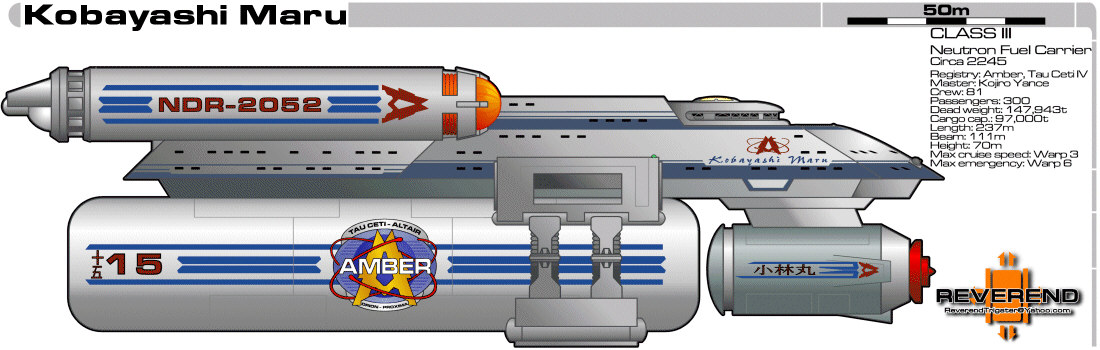
Type: Class III neutron fuel carrier
Registry: Amber, Tau Ceti IV
Master: Kojiro Yance
Crew: 81
Passengers: 300
Dead weight: 147,943t
Cargo cap.: 97,000t
Length: 237m
Beam: 111m
Height: 70m
Max cruise speed: Warp 3
Max emergency: Warp 6
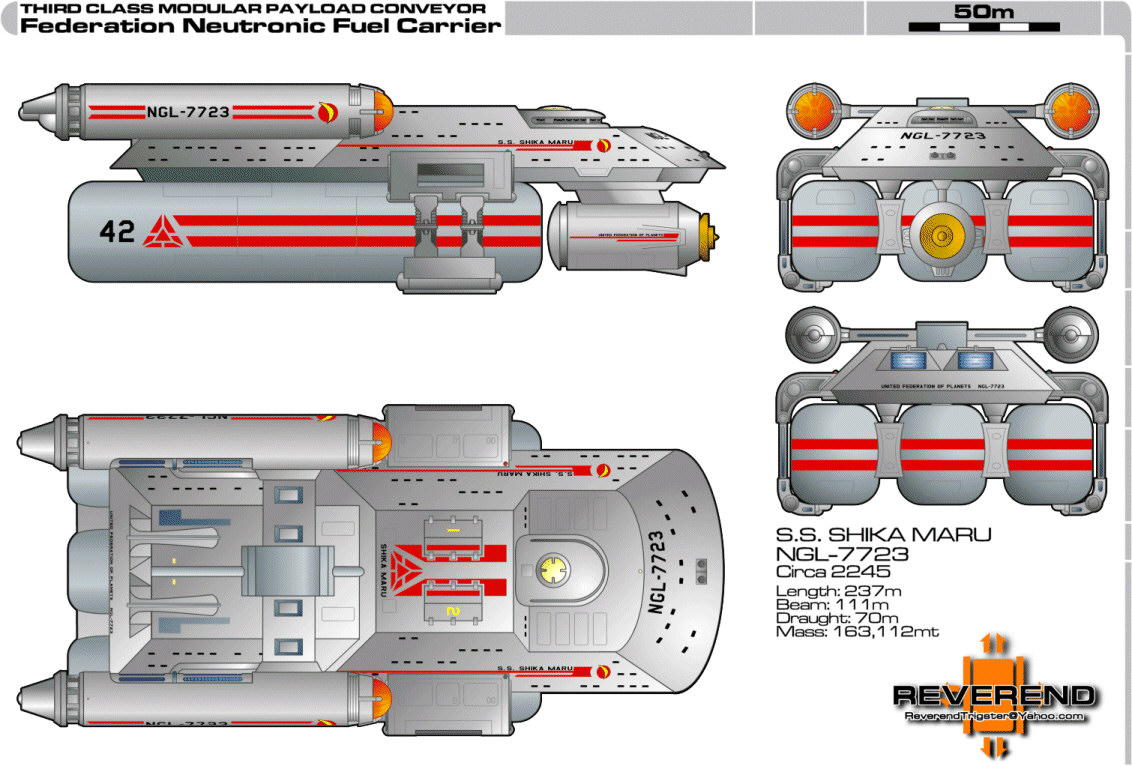
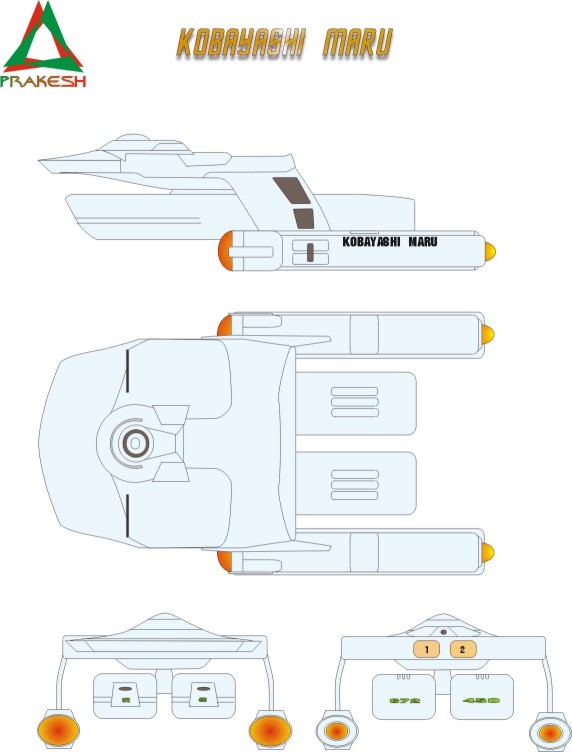
The famous Kobayashi Maru from "Star Trek II" was never seen on screen (at least not in the Prime Universe), although we may assume the ship exists. It is probably not a Starfleet vessel, but a private-owned tanker. The specs are taken from the movie, the design is a modification of a drawing by Roger Sorensen (later published in Jackill's Starfleet Reference Manual, Vol. III). The Shiku Maru, mentioned in TNG: "Darmok", may be of the same design.
Kubrick Class
 Design by Robert Heckadon
Type: Mobile observatory
First commissioned:
Stardate 6122.5
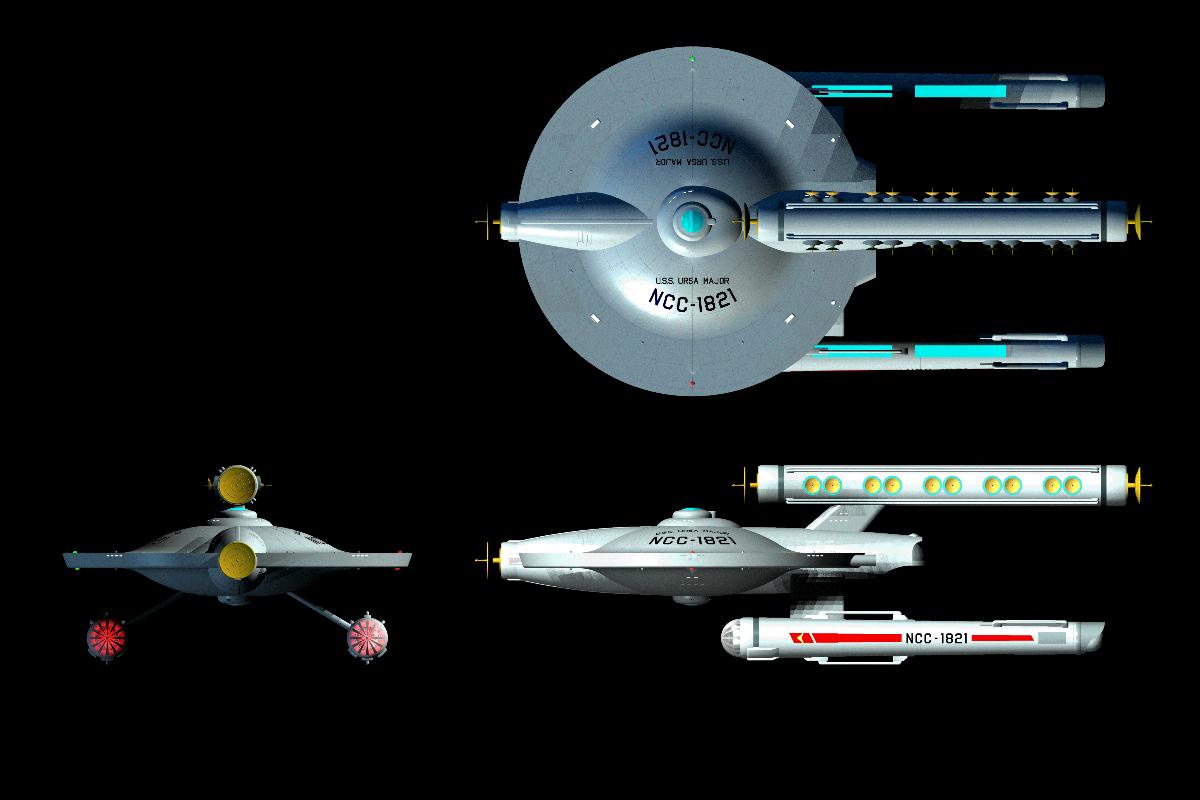
Length: 271m
Width: 140m
Height: 80m
Decks: 19
Displacement: 1100000t
Complement: 35 officers + 215 crew, evacuation limit: 200
Speed: Warp 6 (cruise), Warp 8 (max.), Warp 8.5 (max. emergency)
Sublight speed: 0.2c (max.)
Armament: 4 paired phased proton canons, 4 photon torpedo launchers
Defense: Cast rodinium shields
Embarked craft: Standard shuttlecrafts
“Someday, the children of the new sun will meet the children of the old. I think they will be our friends.” - Dr. Heywood Floyd
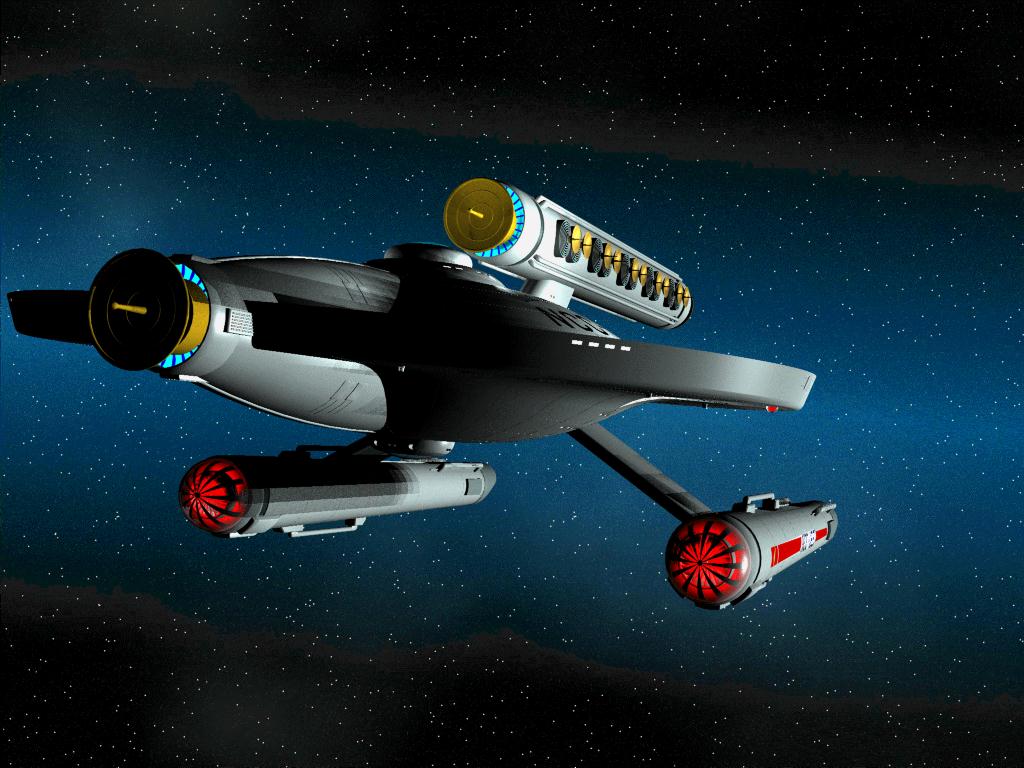
The Milky Way galaxy, home to 400 billion stars. So fast that if a ship were able to travel instantly from one star system to another and remain in that system for only 1 second, it would take over 12000 years to visit every single star in the galaxy. To coordinate the mission of exploration and maximize resources, Starfleet uses as its tool, the Kubrick class starship.
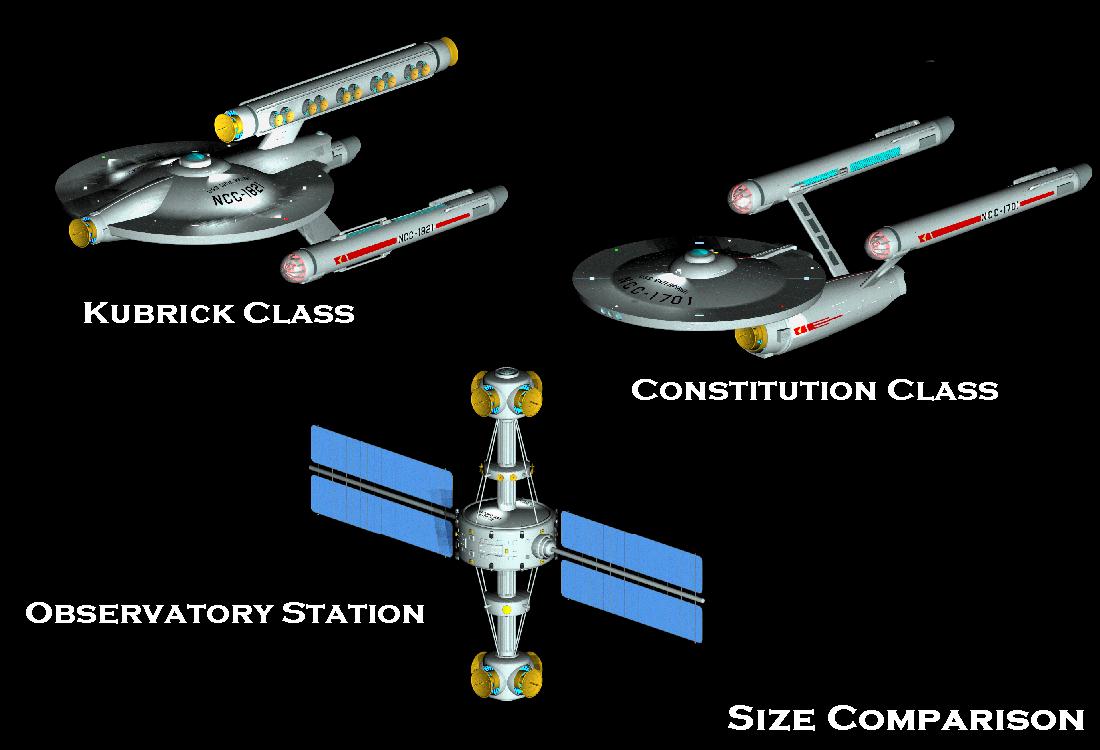
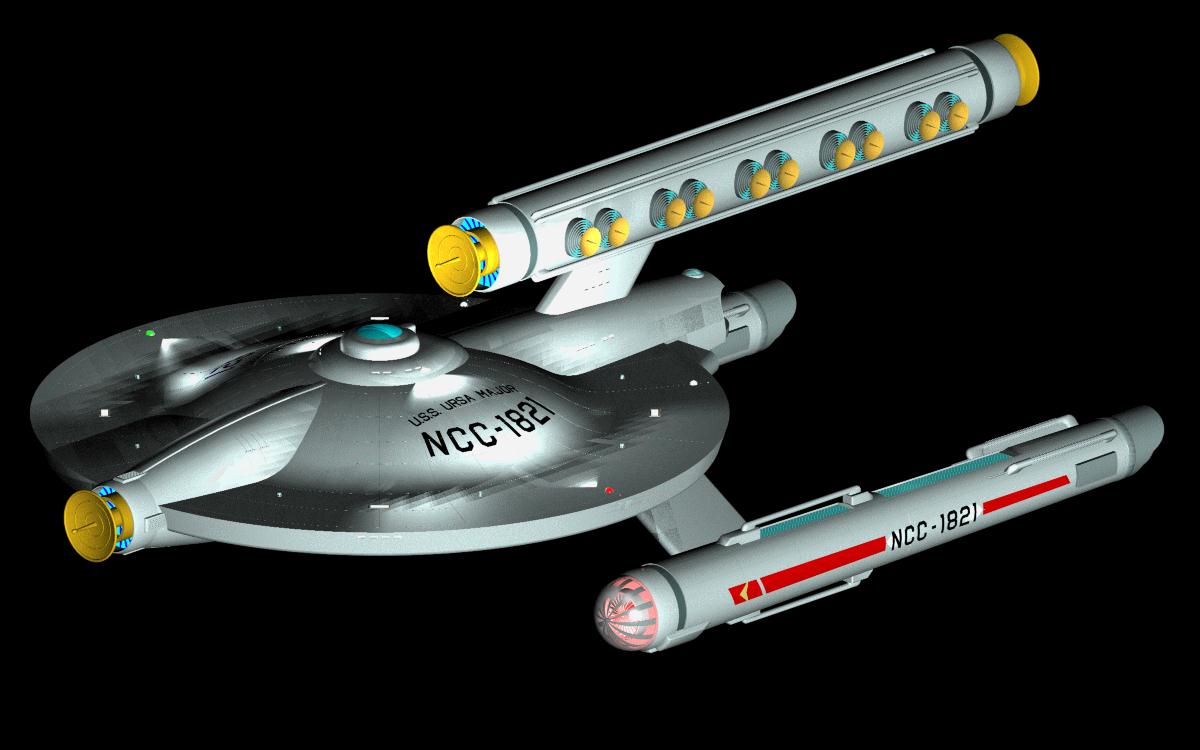
The Kubrick class is a mobile observatory that travels through space and scans the cosmos at different vantage points with incredible detail. The ship scans the cosmos with an observatory nacelle located atop of the ship. Aside from stellar phenomenon and oddities, the Kubrick class typically scans for water and M-class environments, valuable minerals and resources such as dilithium, and most importantly radio and subspace radio signals that typically indicates the presences of intelligent life. They then send their findings to Starfleet Command who then sends a ship for a more detailed analysis.
The Kubrick class explores Earth’s constellations, traveling to the stars in those constellations as seen from Earth. Meaning if a ship were exploring the constellation of Ursa Major, also known as the Big Dipper, then the ship travels to the stars that make up the Big Dipper from nearest to Earth to farthest from Earth. With the exception of the prototype ship, the USS Kubrick, the Kubrick class ships are named after Earth’s constellation, and those ships explore the constellations that they are named after. The USS Ursa Major explores the constellation of Ursa Major.
Though having enough room for more than 400 people, the ship has a crew complement of 250. This is because that though it has the same range as the Constitution class starship, but it has less opportunities to reach a safe harbour and layover. The added space is then used for more spare parts, fuel, extra room for crew privacy, and a larger oxygen and vegetable gardens than those used on most starships. As well as room for a nursery, based upon the boomer ships of the 21st and 22nd centuries. Though structurally capable, the ship is not designed for long term combat.
The mobile observatory concept was first tested out with after the death of Admiral Rittenhouse and his failed attempt to take over the Federation with the Star Empire, Starfleet’s first Federation class dreadnought. To ease public concerns, the remaining dreadnoughts which were largely completed were then heavily refitted with the removal of most of its heavy artilleries, and the replacement of its tertiary nacelle with an observation module. But with the Federation class coming under fire from the public and critics even after the refit, Starfleet decided it was best to build a whole new ship, and then commissioned the Kubrick class, named after Stanley Kubrick, the director of the space epic 2001: A Space Odyssey.
These ships were then replaced with the newer Constellation class starships.
To Arthur C. Clarke, best of hopes to you in your final journey.
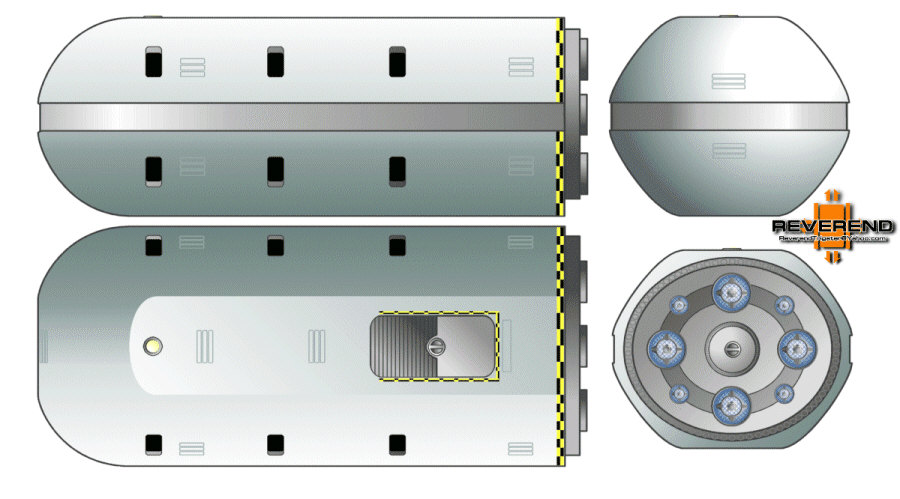
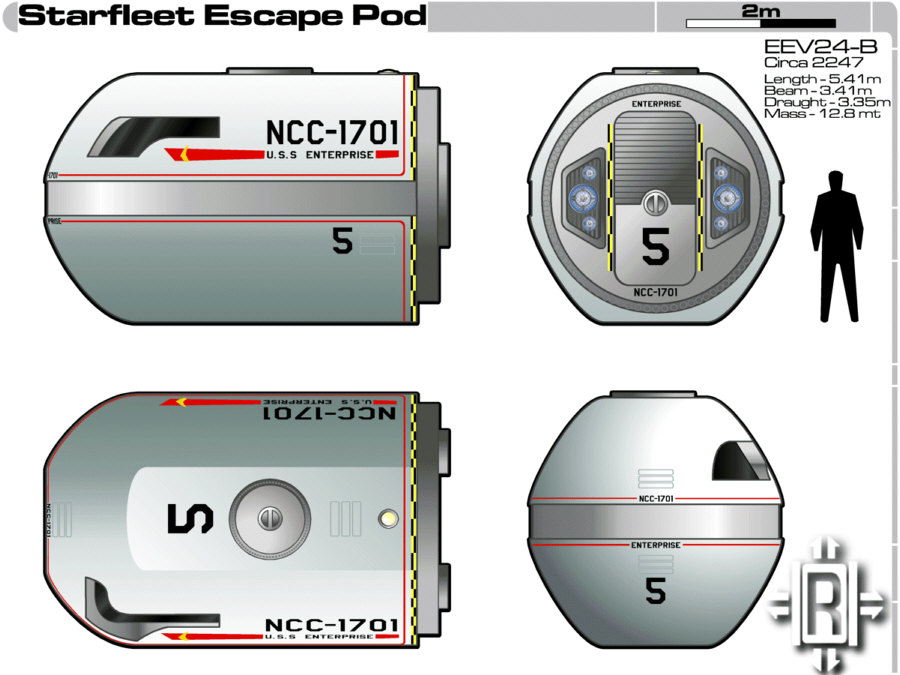
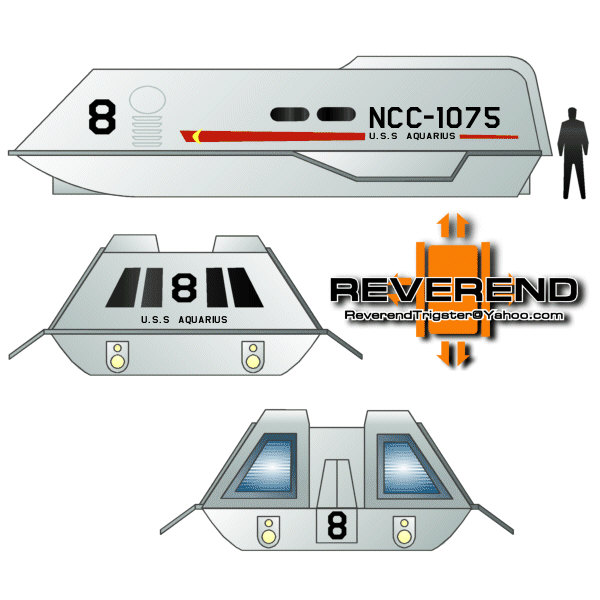
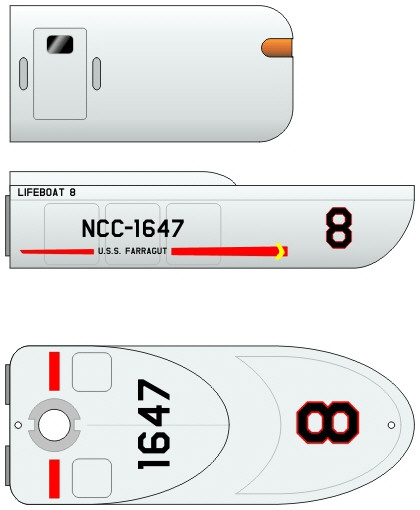
Lifeboats
 Designs by
Harry
and Kris, ASDB
Members
Designs by
Harry
and Kris, ASDB
Members
No specs available
TOS-era ships supposedly had lifeboats. Here are possible designs.
Madison Class
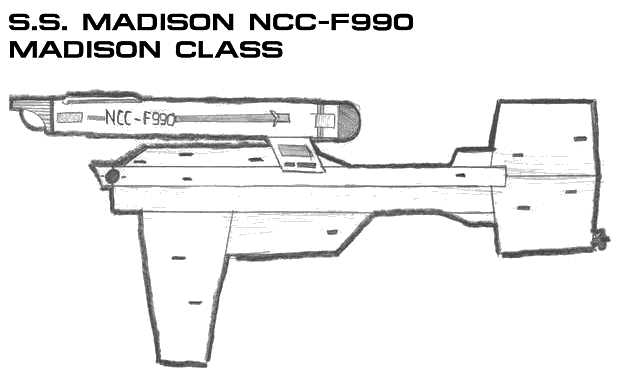 Design by Harry, ASDB
Member
Design by Harry, ASDB
Member
No specs available
This is a freighter from the 23rd century, inspired by the TAS style.
Monarch (refit) Class (2)
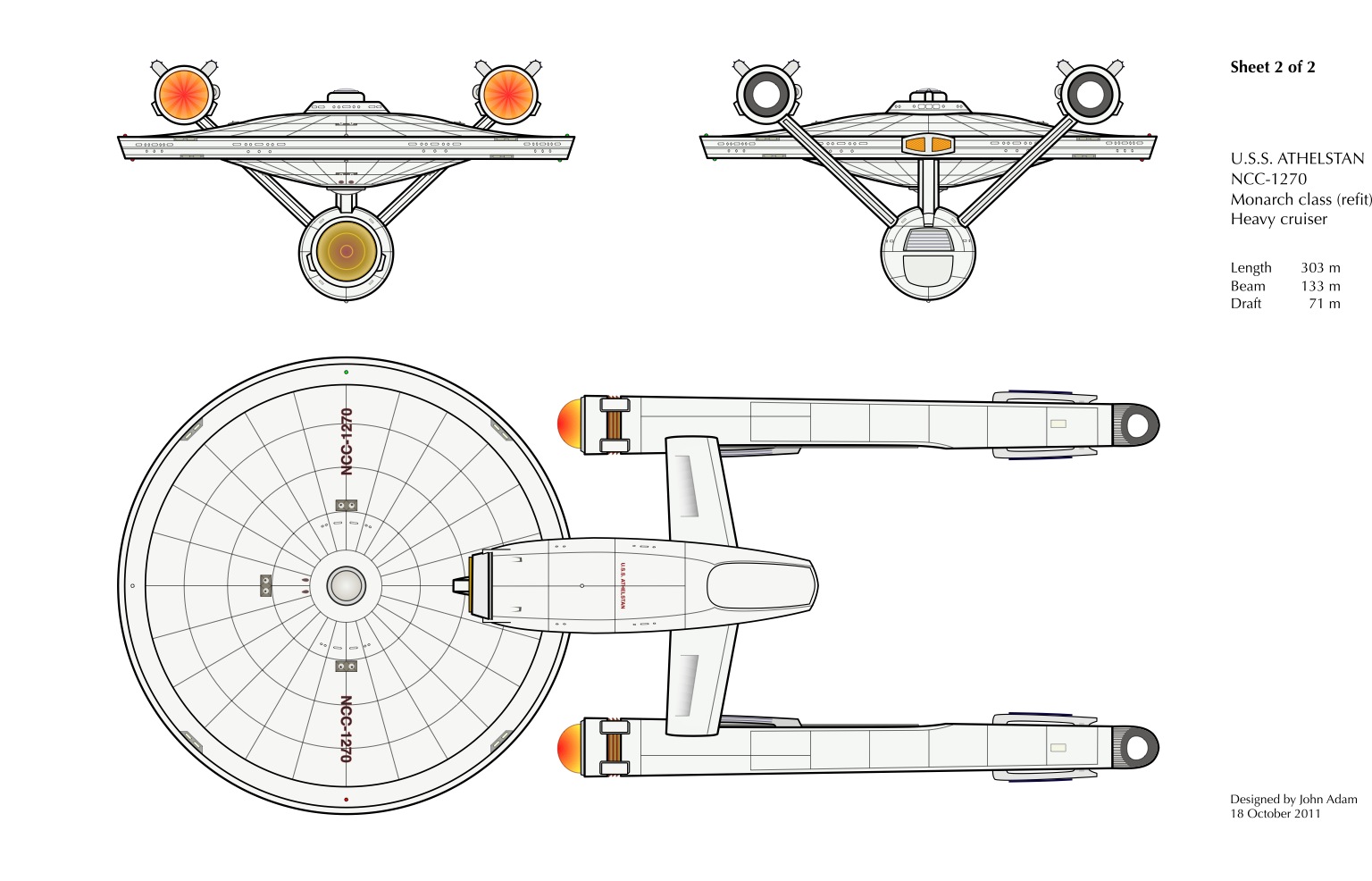
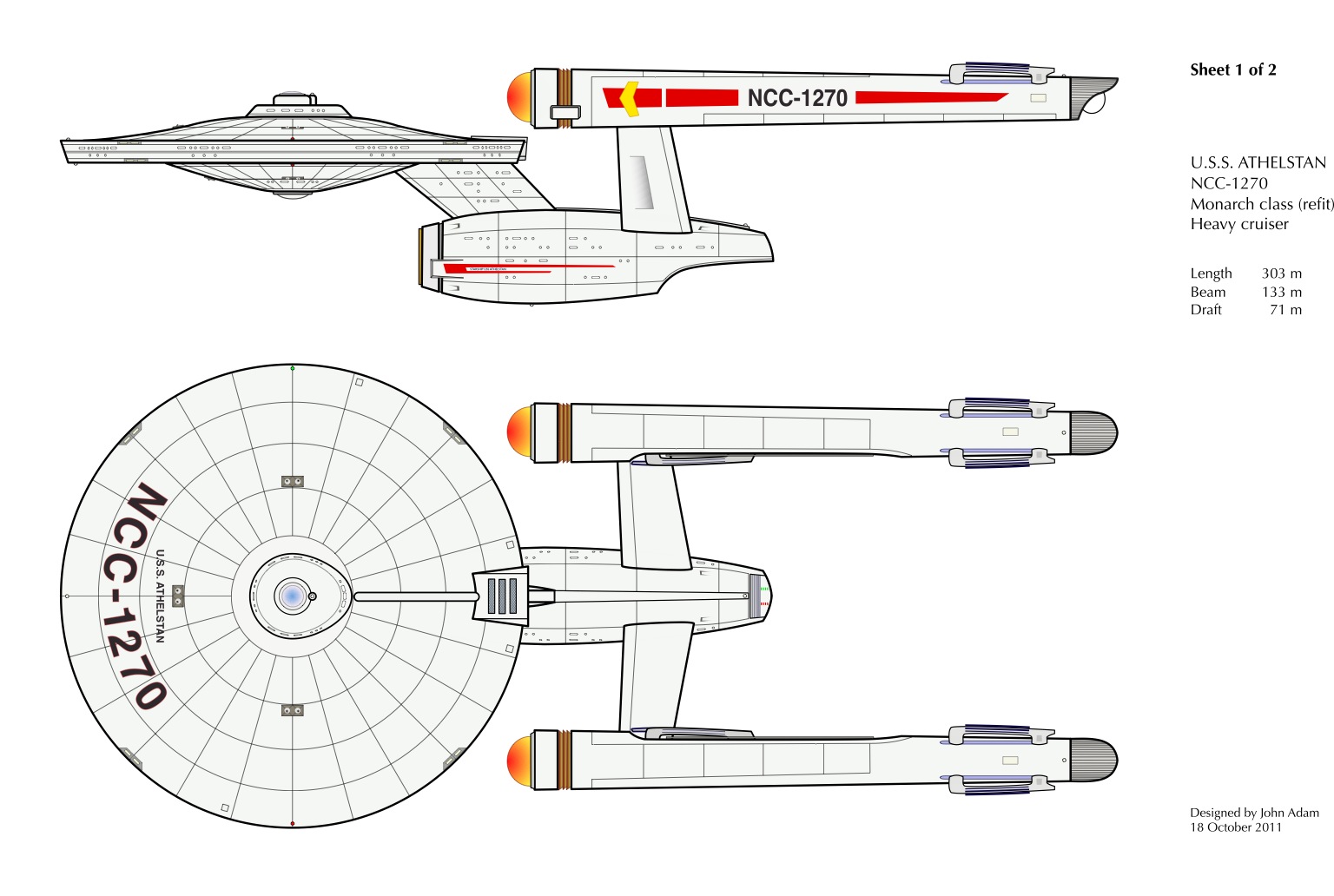 Design by John Adam
Type: Cruiser
First commissioned: 2242
Length: 303m
Width: 133m
Height: 71m
Decks: 26
Displacement: 250000t
Complement: 46 officers + 237 crew
Speed: Warp 5 (cruise), Warp 6 (max.), Warp 8 (max. emergency)
The Monarch-class cruiser went into service in the first half of the twenty-third century. A predecessor of the Constitution class, it served primarily as a deterrent along the Klingon border. Lessons learned from USS Monarch and her sister ships' performance in the field led directly to modifications and innovations that were incorporated into subsequent designs.
In 2267 the USS Athelstan, one of three remaining out of the original 16 of the class underwent a refit to serve as a testbed for systems advances, many of which were later incorporated into other classes, including a new deflector grid configuration, impulse engines, phaser banks, and navigational deflector. The ship's frame and internal configuration were not suited to handle the new warp engine system that was fitted onto the USS Enterprise a few years later, so it received an upgraded variant of the more common nacelle design. Athelstan continued to serve as a training and testing vessel for another decade before being decommissioned.
MR7 Class
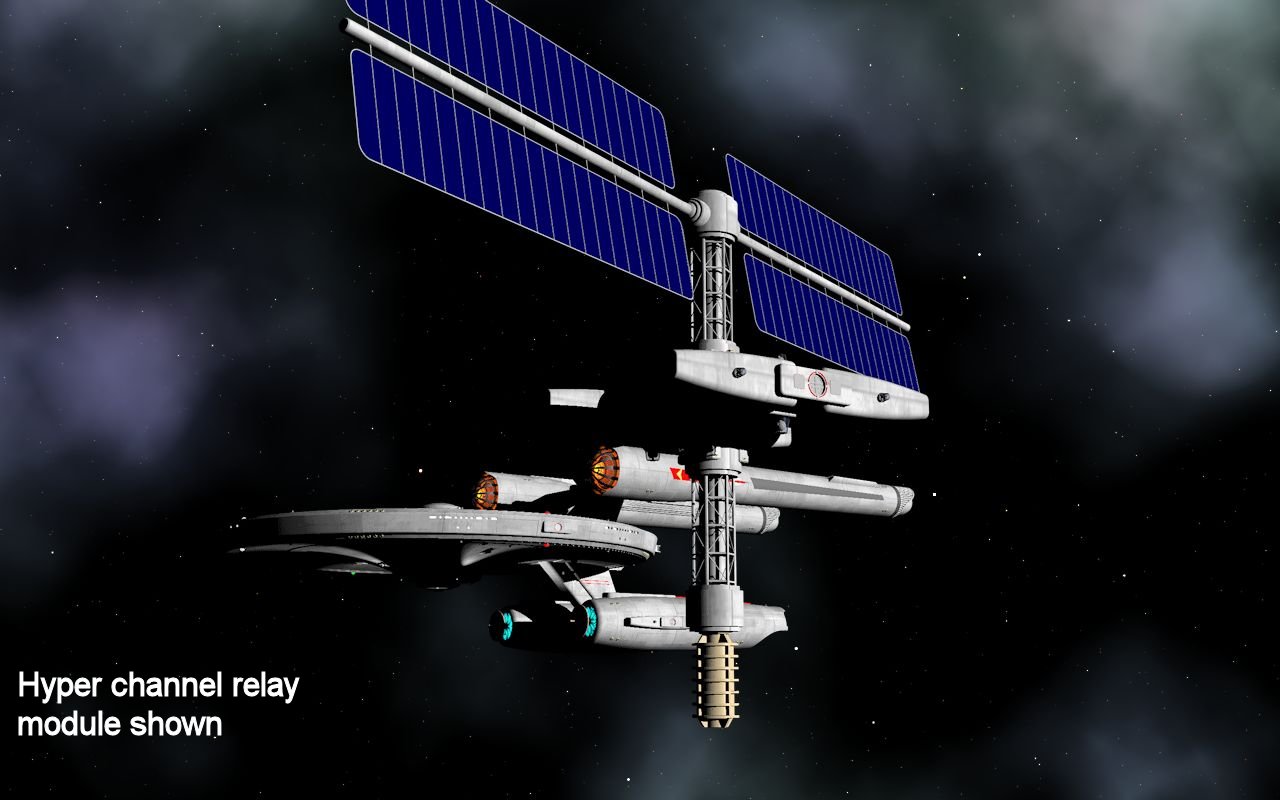
 Design by Robert Heckadon
Affiliation: Starfleet (alternate universe)
Type: Multirole outpost
First commissioned: 2241
Length: 35m
Width: 43m
Height: 52m
Decks: 1
Displacement: 16000t
Complement: 1 officers + 7 crew, evacuation limit: 0
Sublight speed: 0.001c (max.)
Armament: none
Defense: Magnetic radiation shields, polarized hull plating
Embarked craft: none
“We don’t take no sh_t from a machine.” – Bruce Campbell, 1989
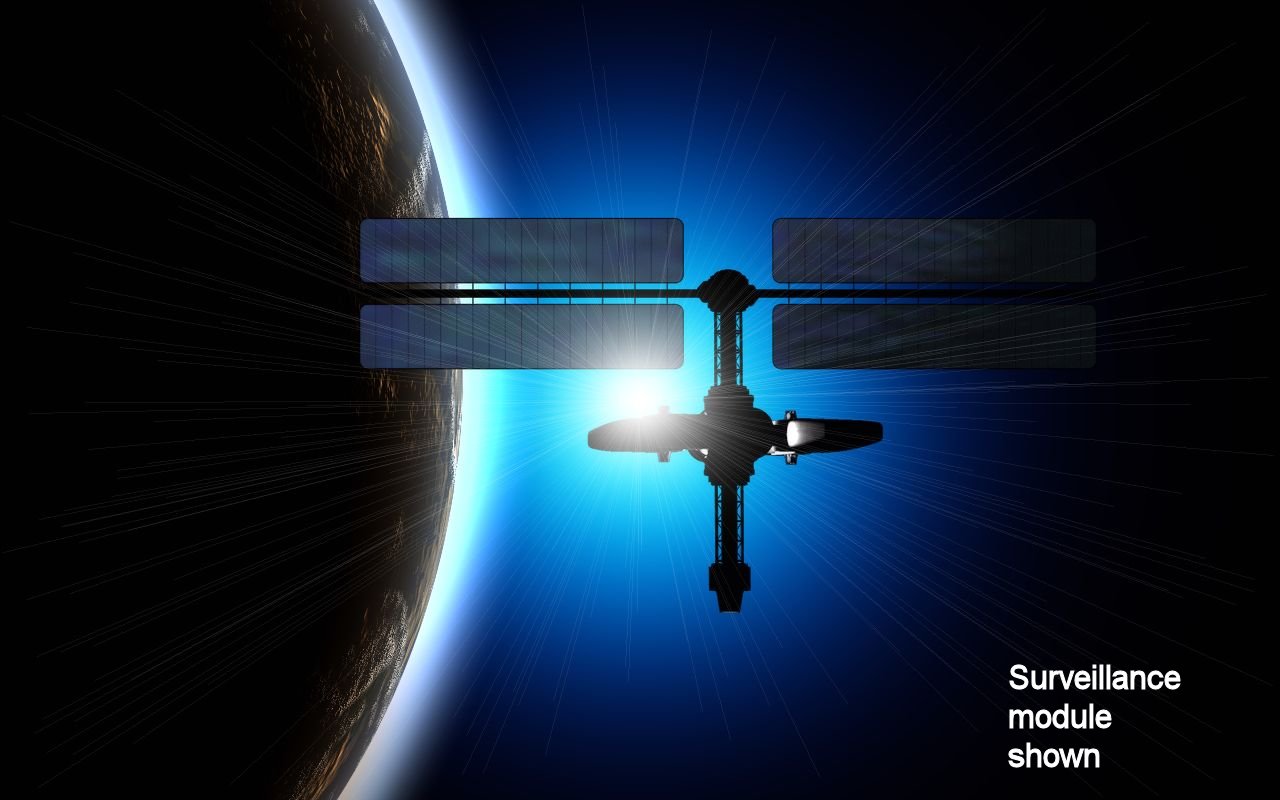
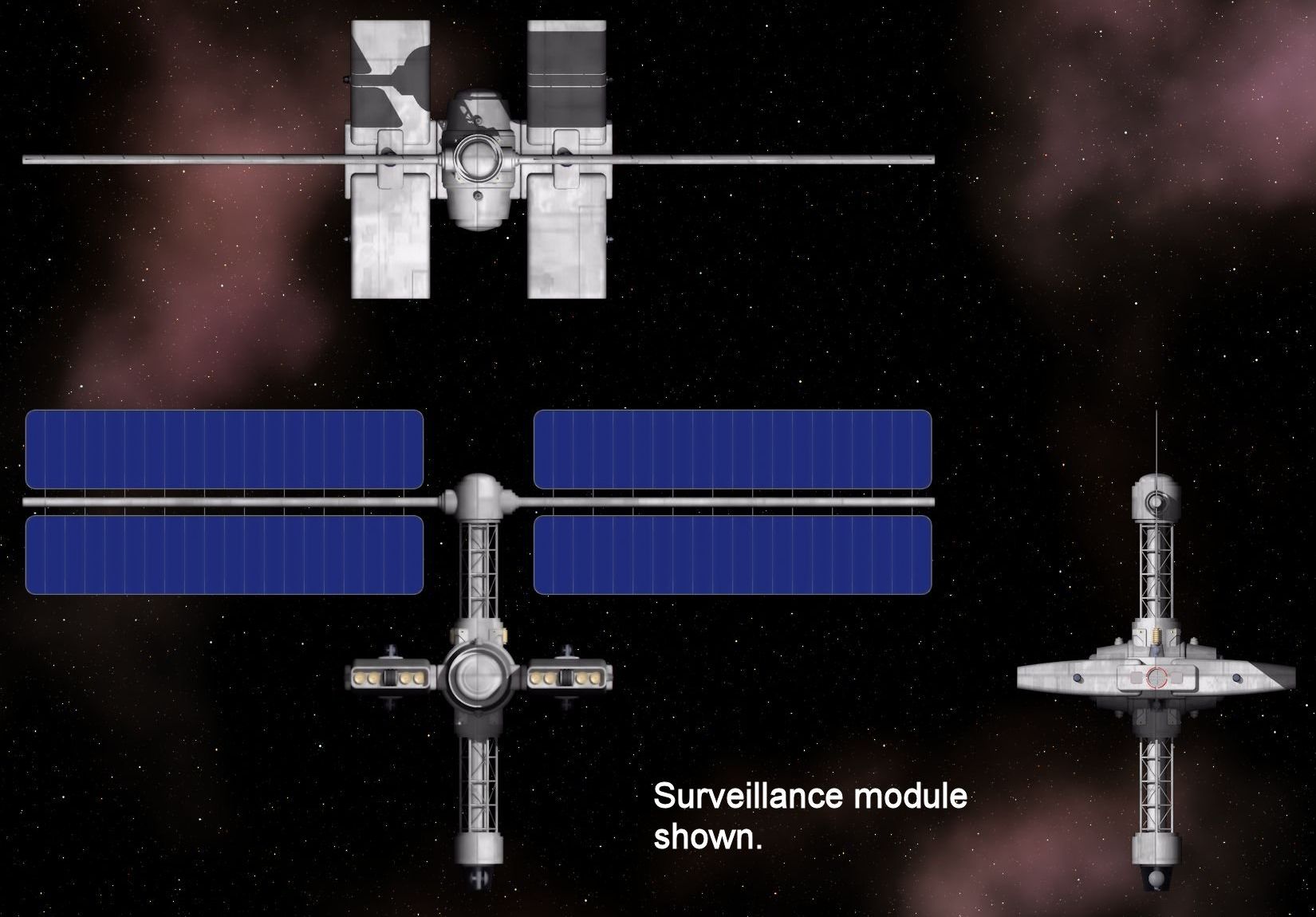
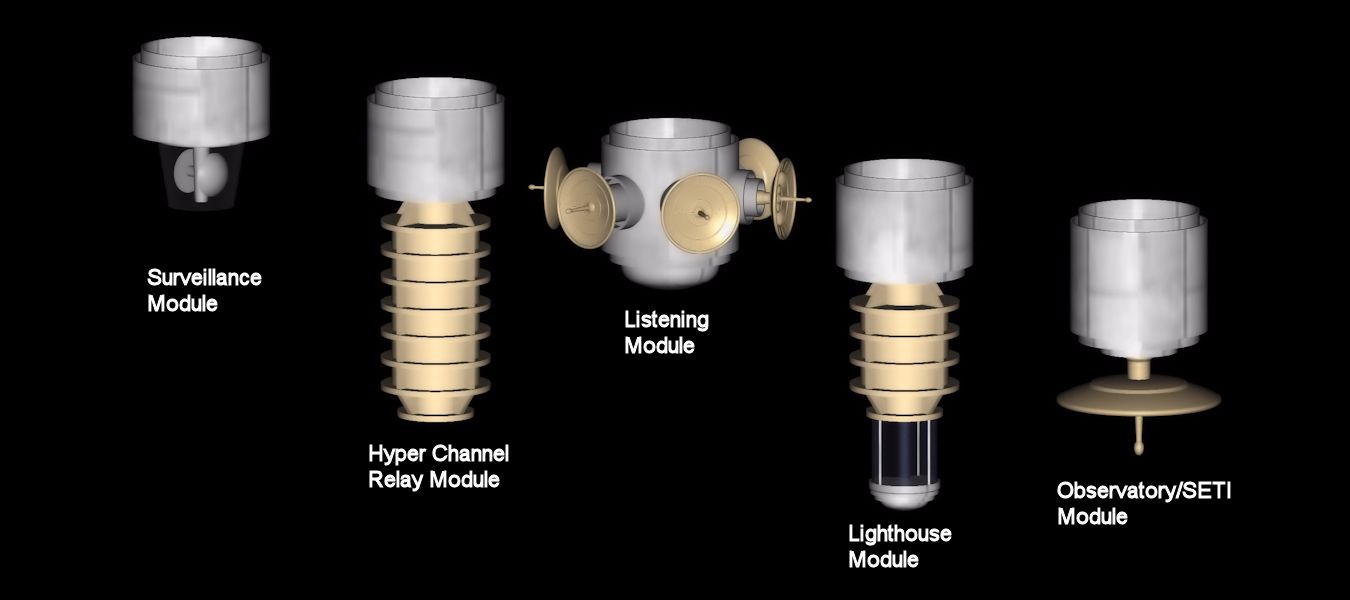
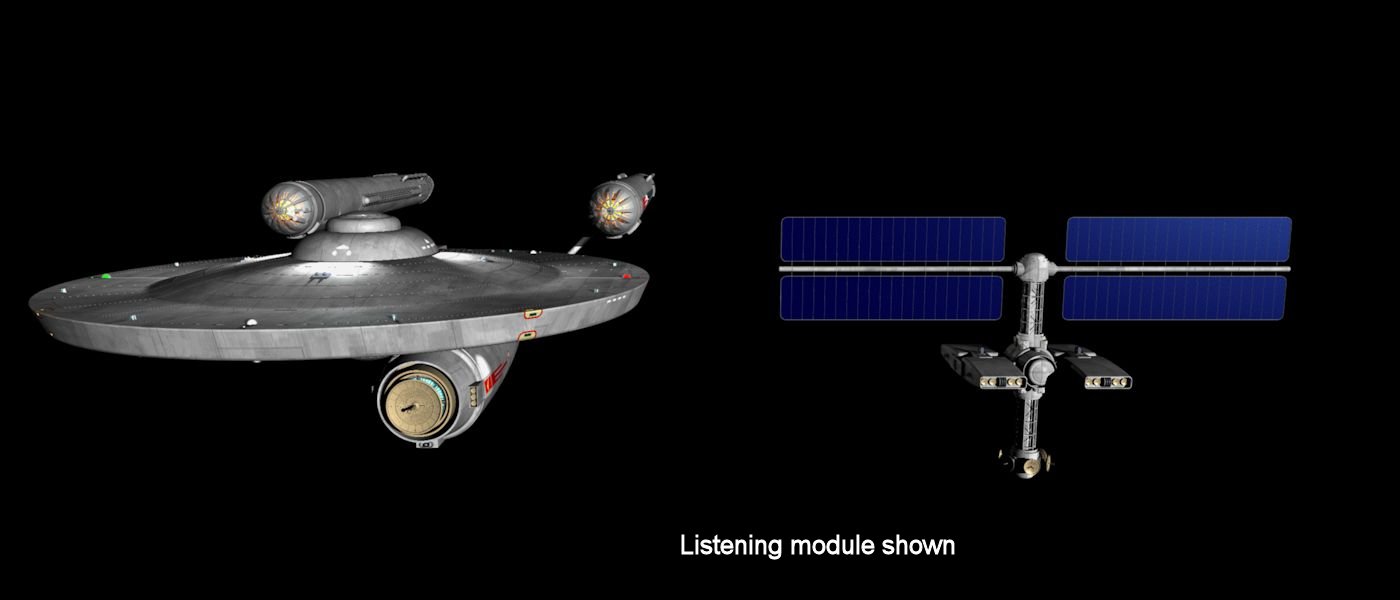
First built in 2241, the MR7 class outpost is a multirole modular outpost that can serve different functions depending on the equipment attached on the lower shaft. This includes functions as a listening station, surveillance outpost, observatory, hyper channel** relay station, and lighthouse.
The station is divided into 5 different sections or modules.
Aside from solar energy, the outpost is also powered by 12 – element 115*** “antiproton” atomic batteries, commonly known as neutronic fuel cells. 6 of the fuel cells are located up in the solar array housing while the other 6 are located in module 3. Depending on the mission, additional fuel cells may be installed with the module below.
It was declared early on that the station is too small to carry a turbolift system so designers were debating the best access to reach the solar controls and lower module. A ladder up and down the shafts were eliminated at once because of the complexity of developing a relatively uniform graviton wind “gravity push” system just for the ladders. It was also considered just to leave the shafts as zero gravity, but it was finally decided that the shaft’s gravity would be perpendicular to the rest of the station. This then allows the crew to walk up and down the shafts with ease along with a zero gravity access port.
Originally the station was to use LED strings that lined the outline of the station at night for visibility instead of flood lights, and later using glow in the dark paint on the hull. But this was nixed heavily due to criticism that both options made the space station look like it came from the movie "Tron". As well the lack of flood lights made it difficult for the astronaut to see in the darkened areas of the station in the event of EVA manoeuvres.
Many of the MR7 outposts were fitted to be used as hyper channel relay stations, lighthouses and observatories. But when it was revealed that Alexander Marcus tried to start a war with the, and an entire platoon of Klingon soldiers was reported to have been massacred by a Starfleet strike team to retrieve a man named John Harrison, the number of surveillance stations and listening outposts increased almost literally overnight.
*The station’s dimensions omit the solar collectors and the height uses the surveillance module.
** Hyper channel was mentioned on "Star Trek 2: The Wrath of Khan".
*** Regarding element 115 - http://www.gravitywarpdrive.com/Element_115.htm
Paladin Class
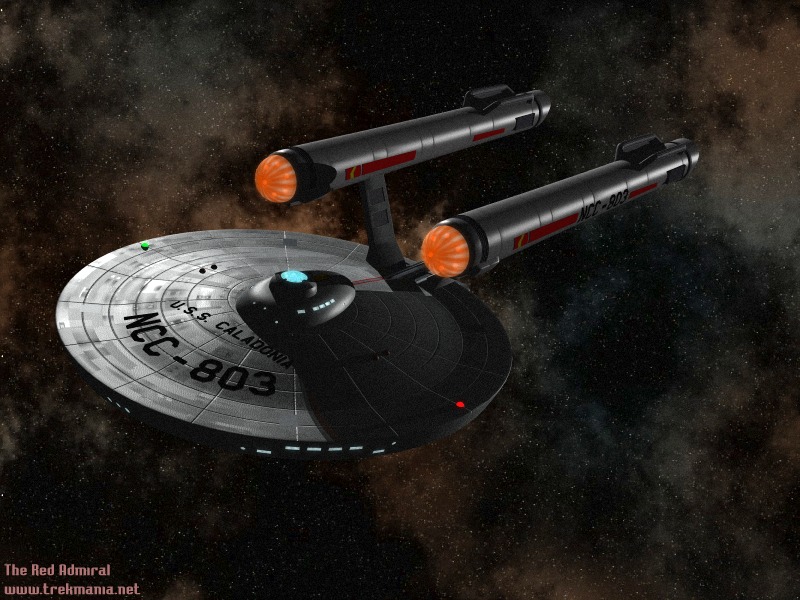
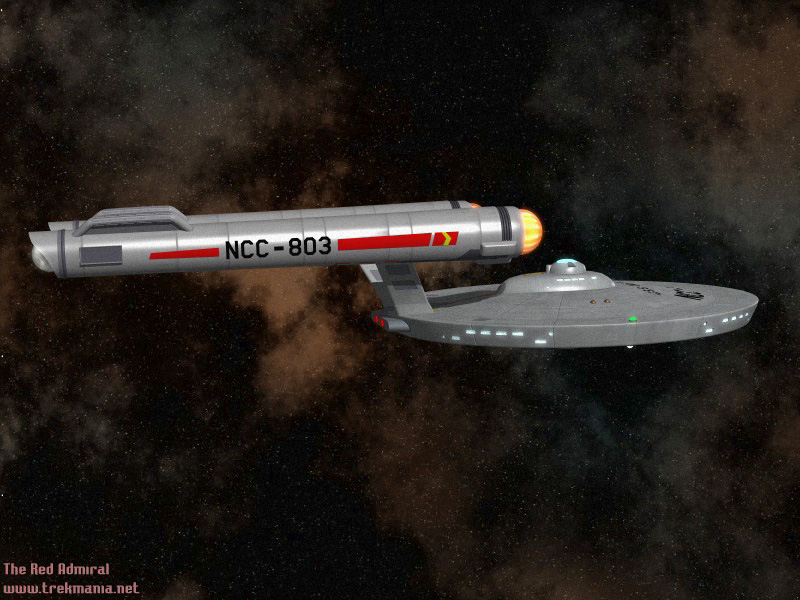 Design by Mark, ASDB
Member
Design by Mark, ASDB
Member
Type: Scout
Commissioned: 2206-2274
Length: 224m
Decks: 8
Mass: 119,000mt
Crew complement: 200
Speed: Warp 6.2 (old scale)
This class of ship replenished the somewhat lacking coverage of the Romulan Neutral Zone border in the early 23rd century. Stationed at Outposts along the Federation side of the Zone, Paladin-class ships covered a wide area as sensor and patrol networks, monitoring the safety of the Zone, and any illegal Romulan activity inside.
Phlox Class
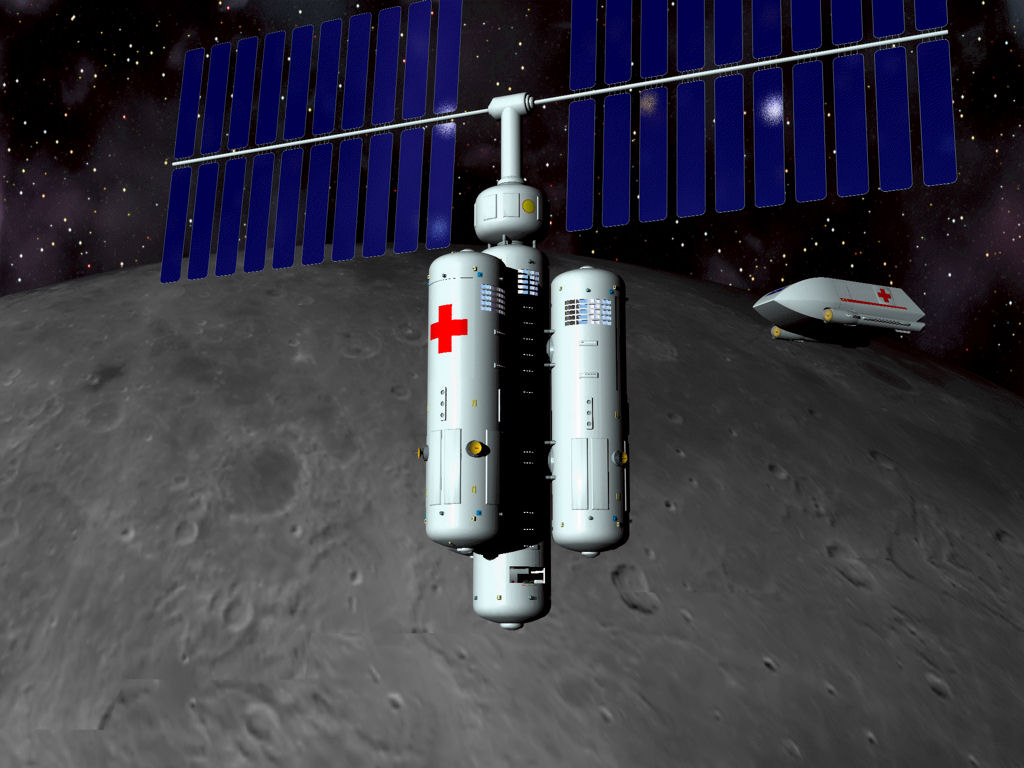
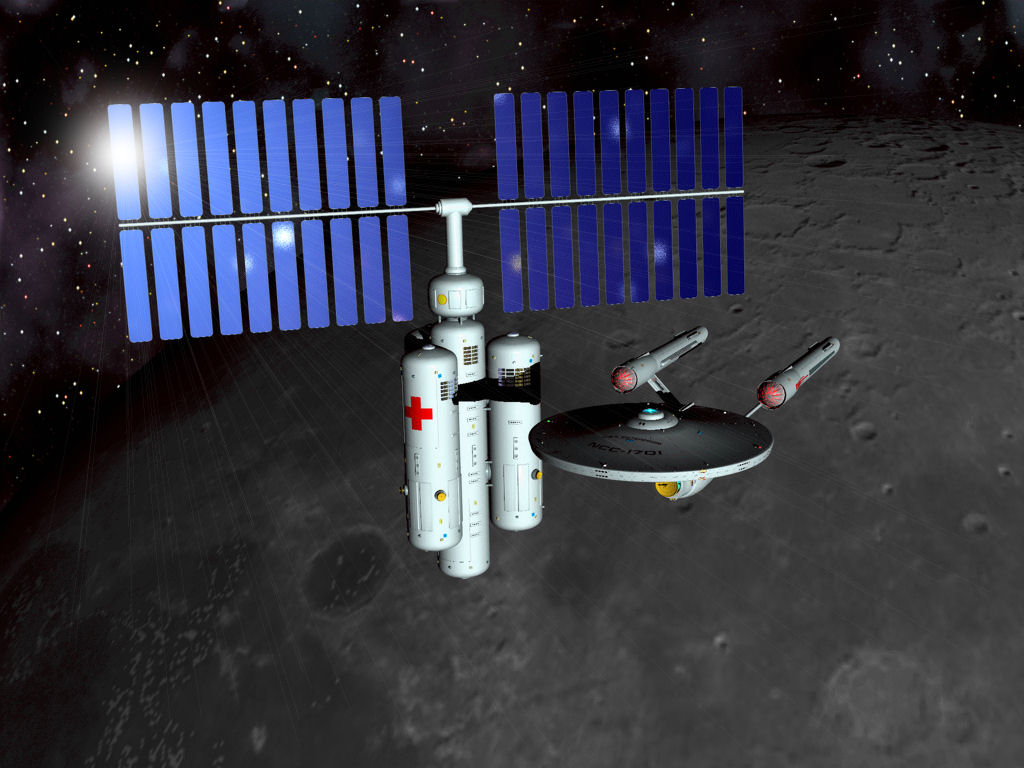
 Design by Robert Heckadon
Type: MASH station
First commissioned: 2249
Length: 121m
Width: 108m
Height: 290m
Decks: 80
Displacement: 900000t
Complement: 350 officers + 250 crew, evacuation limit: 2000
Armament: 12 phaser cannons, 2 rotating photon torpedo launchers
Defense: Cast rodinium deflectors, magnetic radiation shields
Embarked craft: 8 medical shuttles, 4 combat shuttles
“Space is disease and danger, wrapped in darkness and silence.”
- Dr. Leonard H. McCoy
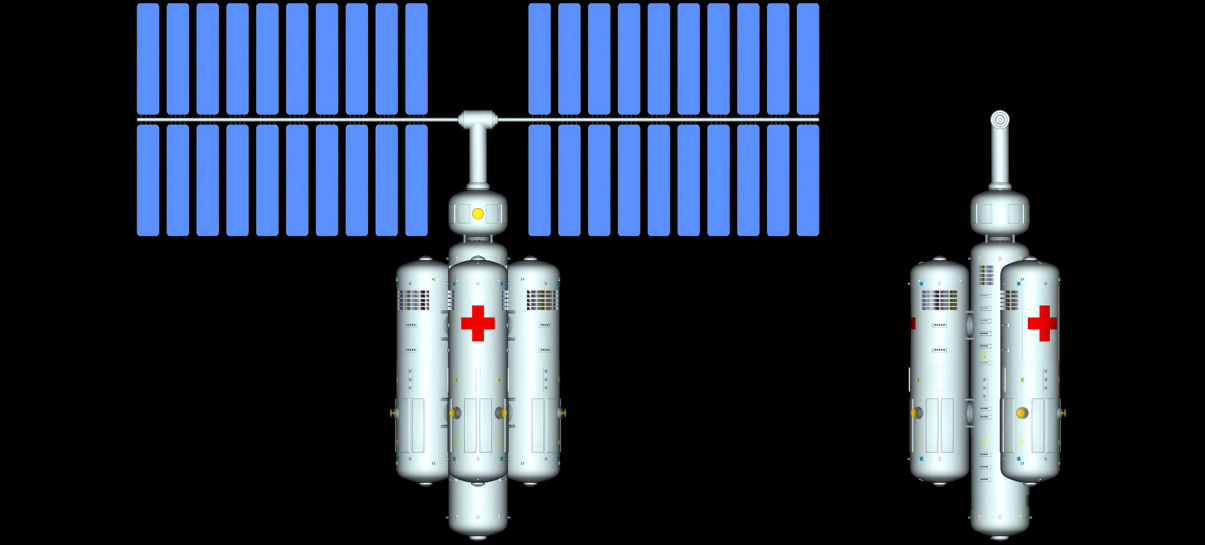
The Phlox class space station is a mobile hospital station, referred to as a MASH. It takes its name from the Mobile Army Surgical Hospitals first used in the Korean War on Earth, and made popular by the television series of the same name.
The Phlox class is composed of 1
- 200 metre high, 40 metre diameter command module, 3 - 150 metre high, 40 metre diameter hospital modules, and an engineering section with solar array. The space station, which was also based upon the Space Island class starbase, is designed to be transported by conventional transport/tug ships to a sector of space where the space station is needed.
Its primary function is to provide medical care for victims of planetary disasters, as well as to be used as a frontline medical facility for conflicts and wars. In most cases, for planets within Federation space, but not within Federation territory. Critics have stated that this function of the Phlox class violates the
Prime Directive. However Starfleet Judge Advocate General (JAG) stated that providing medical attention to space faring civilizations does not infringe upon a planet’s customs or laws, and does not impose Federation or Earth values onto another civilization. As well the usage of the medical facilities are not forced onto anyone, thereby concluding the prime directive is upheld.
Despite its mission of mercy, the Phlox class is heavily armed. The weapons are intended to be used to defend the station in the event one warring faction sees the station as a legitimate target, but are often used to fire upon pirates, often Orions, who wants to use the pharmaceuticals on board for their narcotic trade. The station’s hydroponic gardens are heavily guarded because many of the pharmaceuticals grown can be either addictive or toxic, depending on the species.
Out of the 600 personnel on board the Phlox, more than 300 of them are doctors and nurses, most of them not of Starfleet, but are given honorary officer commissions during the mission. Depending on the species, the Phlox is capable of supporting more than 1500 patients and a wide variety of treatments. But can reach up to more than 2000 if the situation demands it. The station is often supported by a Hope class hospital ship or a Ptolemy and Fisher class transport with a medical transport container.
In 2261, when the planet Vulcan was destroyed by Nero, a renegade Romulan from the year of 2387, 6 of the Phlox class stations were deployed around the planet T’Khut, which was in a Trojan orbit with Vulcan. Those space stations treated the 10000 survivors from the lost planet.
Prince Edward Island Class
 Design by Robert Heckadon
Type: Lighthouse
First commissioned: 1124.1
Length: 279m
Width: 52m
Height: 169m
Decks: 10
Complement: 10 officers + 40 crew
Sublight speed: 0.001c (max.)
Armament: none
Defense: Magnetic radiation shields
Embarked craft: 1 docking shuttle
“All that we see or seem, Is but a dream within a dream?” - Edgar Allen Poe
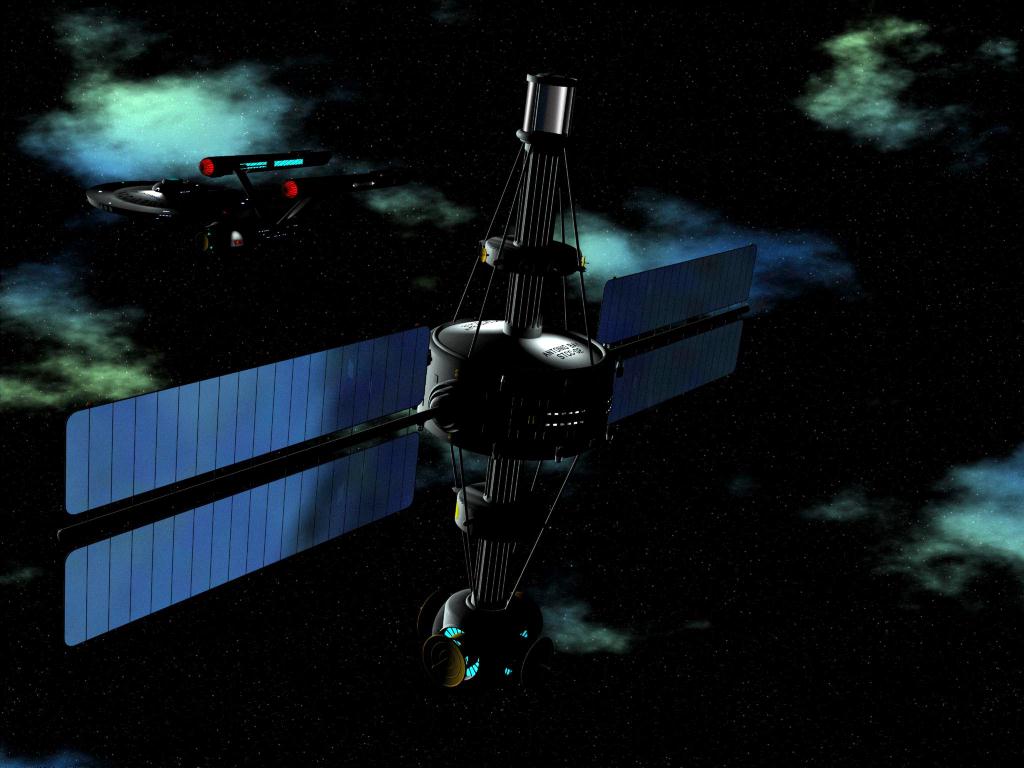
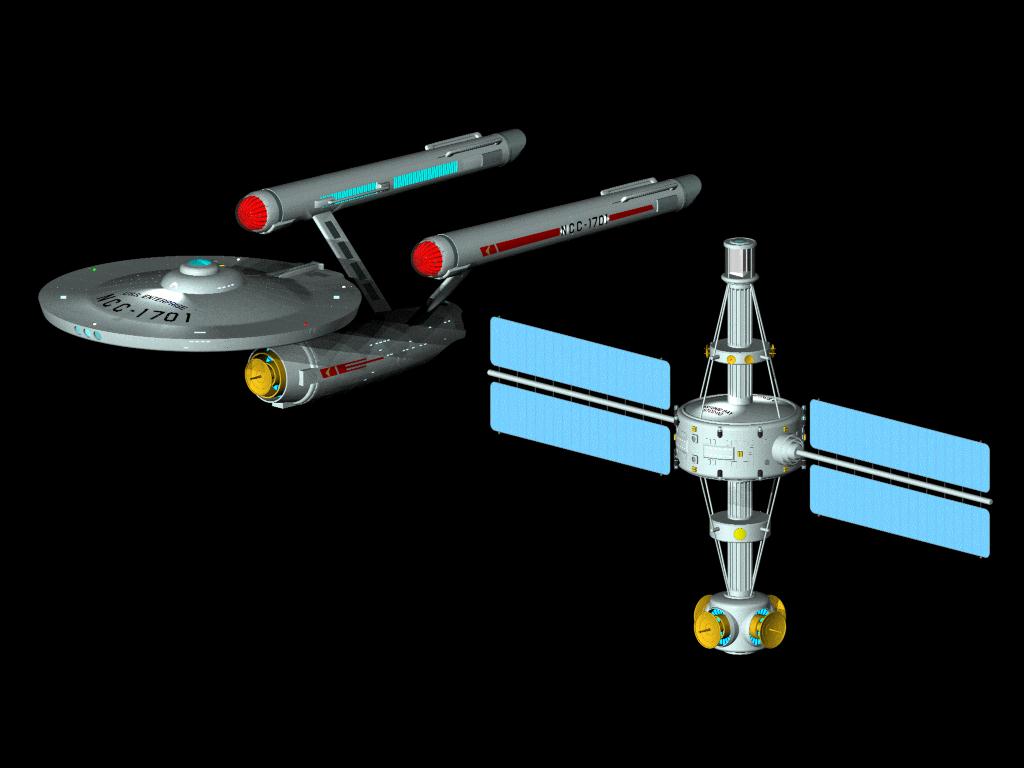
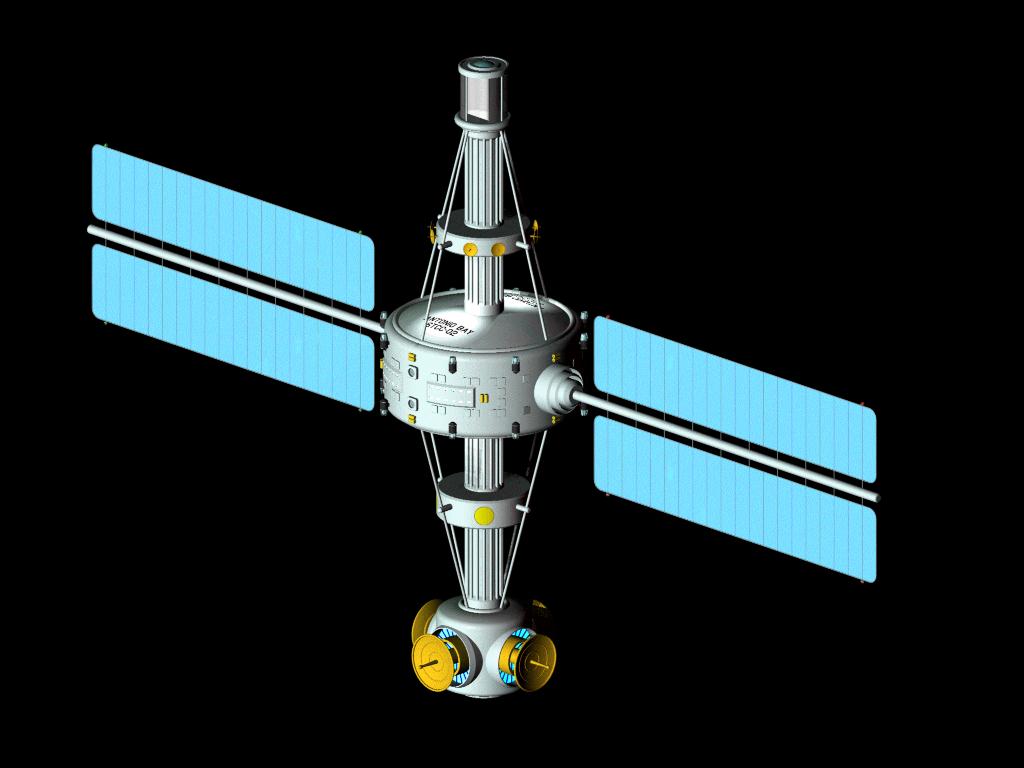
Inspirations for mysteries and ghost stories, lighthouses have been guiding sailing ships to safe harbours for many years. Over time, lighthouses have been replaced with radio beacons and then with the global positioning system (GPS). But lighthouses have been making a comeback in the mid 23rd century to bring transport ships and civilian vessels to save harbour, all beginning with the Prince Edward Island class.
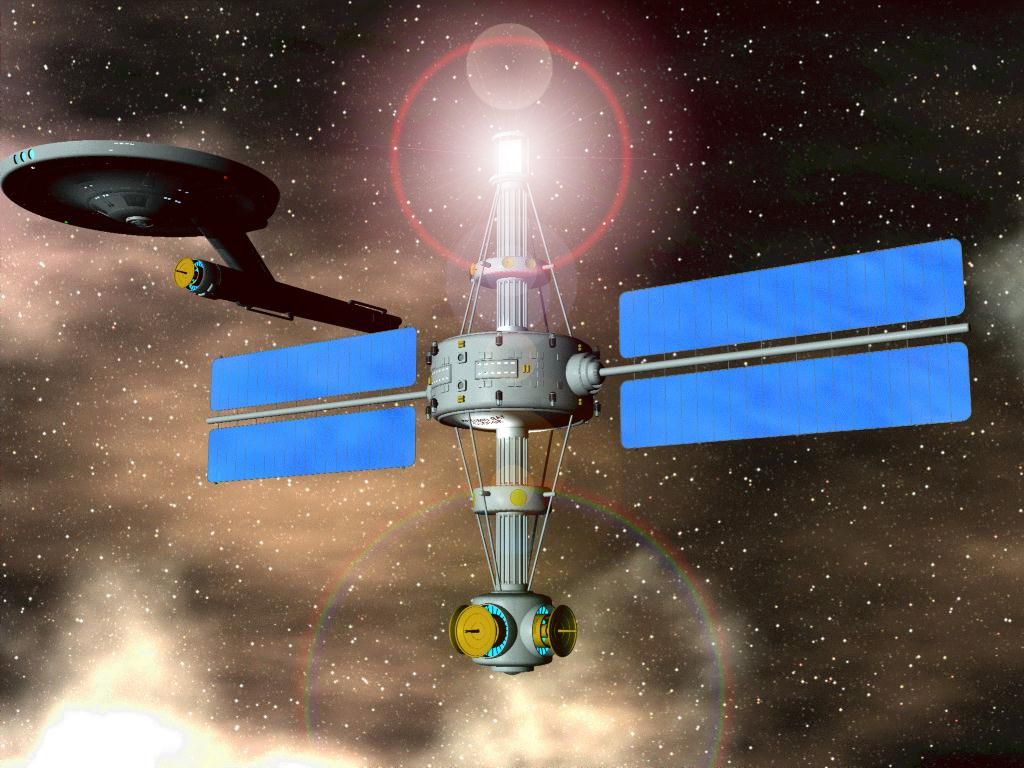
The Prince Edward Island class space station is both a space traffic control centre and a subspace navigation beacon transmitter station. With the use of 4 large subspace radio transmitters at the bottom of the station, it emits a homing signal for warp capable starships to follow back to the station’s home star system. This is useful since unlike Starfleet exploration vessels, such as the Constitution class, most civilian and transport ships rely upon tachyon sonar, visual sensors, and subspace radio for navigation.
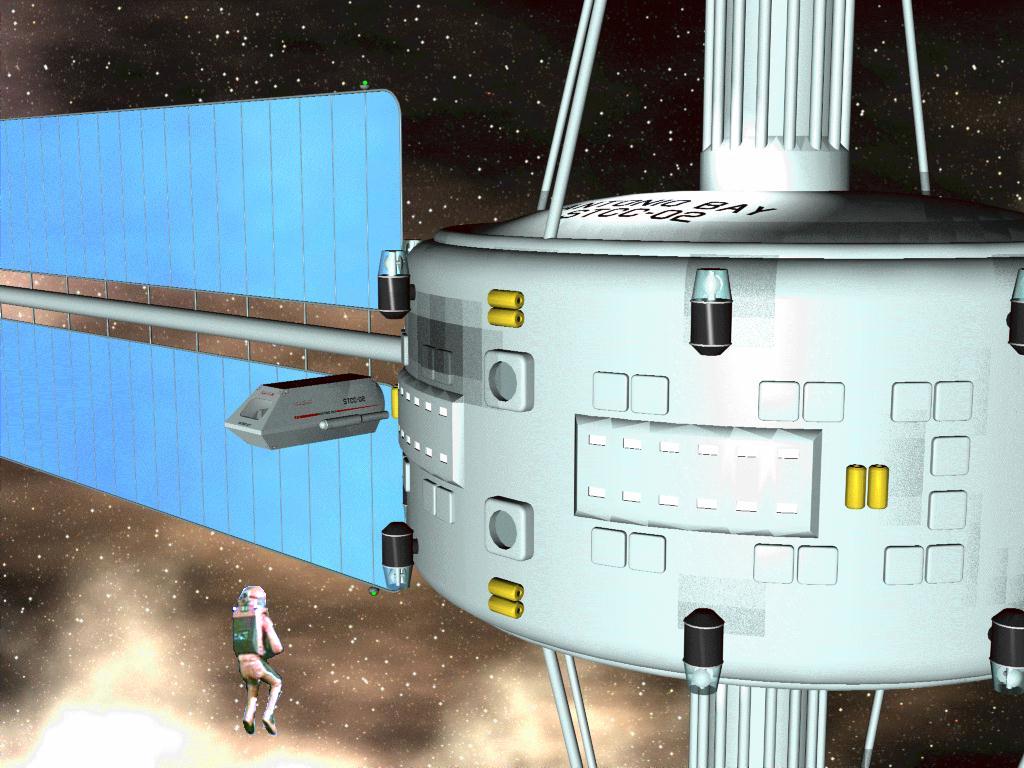
The station's transmitters are powered by 4 nuclear reactors located in a circular structure above the transmitters, with the deuterium fuel supply located in the stations vertical shafts. Though quite capable of tapping fusion energy from the reactors, the stations primary systems, such as life support and gravity, are primarily powered by solar energy which is collected by 2 pairs of photoelectric panels on either side of the stations habitat section.
Atop of the station is a rotating mirror. Mostly for nostalgic reasons, and for the reason the station is called a lighthouse, the mirror reflects sunlight to give it visually appealing pulses of light. The mirror’s rotation is maintained by a device once referred to as a flywheel and kept spinning by inertia.
Lacking a shuttle bay, the space station has 4 docking ports with one docking port manned at all times by an impulse docking shuttle. Another docking port is actually an umbilical connection used by supply ships to replenish the station’s resources. This includes atmosphere, water, and fuel.
The range of the station’s navigation signal depends on the ships receiving the signal. According to Starfleet regulations, the lighthouse’s navigational signal must be strong enough for civilian and transport ships to detect it 30 lightyears away. With the same intensity, military ships can detect the signal 50 lightyears away. Heavy cruisers and explorers at 120 lightyears. And dedicated science vessels at almost 200 lightyears.
Critics of the lighthouse have said that a nuclear powered subspace navigational beacon or a solar powered radio beacon would be just as effective over a manned space station. Though many star systems do use solar and nuclear powered beacons, the lighthouse is a space traffic control centre that both guides and coordinates space traffic throughout the Federation.
After over a hundred years, though new stations have been built, even in the 24th century these stations are indispensable for people traveling within the Federation.
Ranger Class
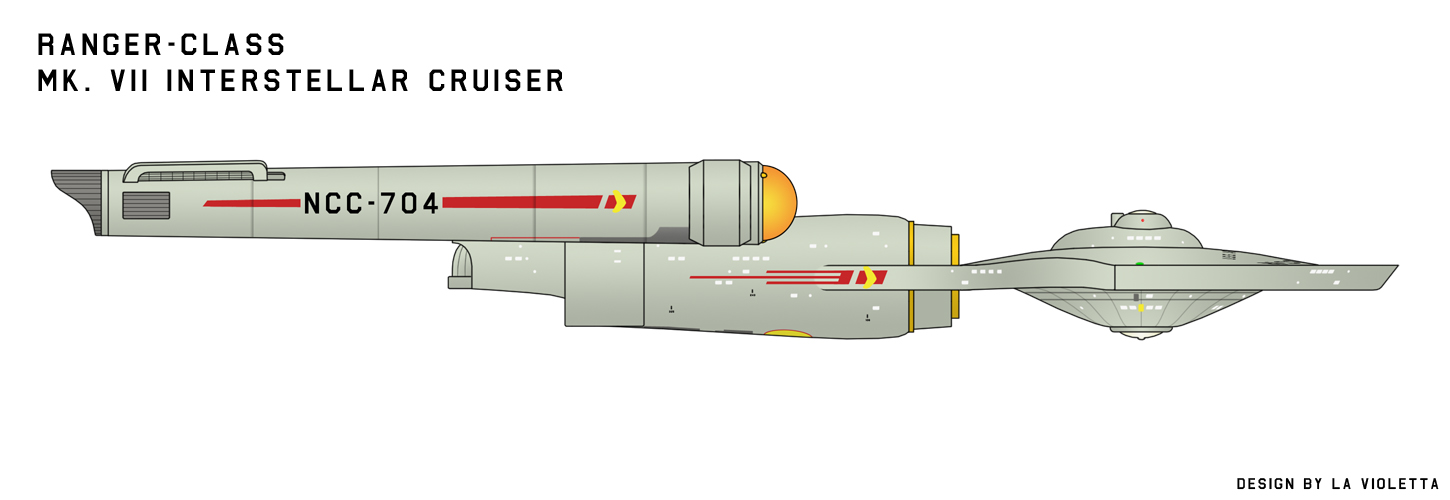
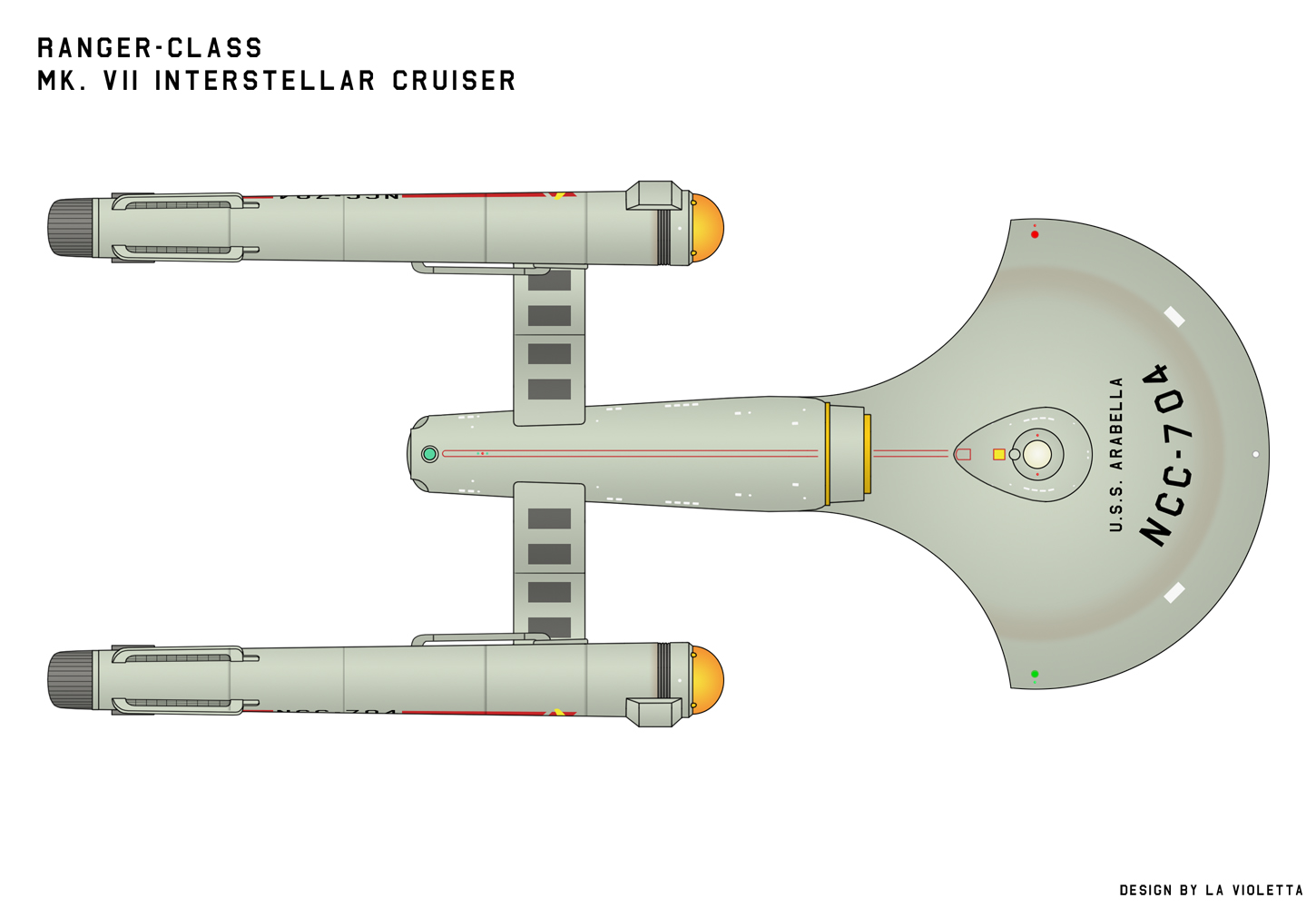 Design by La Violetta
Type: Mk. VII interstellar cruiser
First commissioned: 2248
Length: 337m
Width: 149.5m
Height: 46.8m
Decks: 10
Displacement: 976000t
Complement: 56 officers + 226 crew
Speed: Warp 5 (cruise), Warp 8 (max.), Warp 9 (max. emergency)
Armament: Primary phaser (forward arc, paired beams), secondary phaser (aft arc, paired beams), photon torpedo launcher (forward)
Defense: Mk. 4a meteoroid beam, navigational deflector screen, combat defense shields
Embarked craft: 4 Class-F shuttlecraft, 1 cargo skiff, 1 heavy shuttlecraft
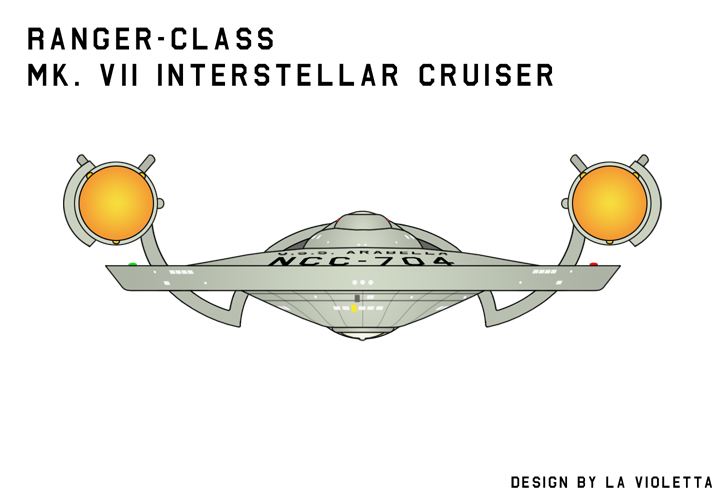
With a perceived need to maintain a presence in systems of importance to the Federation, Starfleet laid out requirements in 2242 for a new cruiser which could not only cruise at warp factors beyond the recently broken time barrier but was also capable of being deployed to distance stars for extended objective missions. A design submitted by the Vautour-Ninsuss Design Bureau ultimately won approval, and in 2245 the keel was laid for a demonstration vessel designated NX-C001, USS Ranger. Trials continued for the cruiser-to-be into the fall of 2247 when an order left the Office of the Secretary of the Space Service to commission the class as well an additional order to deliver four more ships no later than February of 2249.
Working tirelessly at dockyards at Earth, Mars, and Annon, construction crews were able to bring USS Ranger into full operational status while her sister ships took shape. The official commissioning ceremony for USS Ranger took place on January 16, 2248, and she received the designation NCC-700. Beating the deadline by three months, the final vessel of the original order, USS Arabella NCC-704, was delivered in mid-December of the same year.
By the end of the production run, Starfleet had ordered a grand total of fifteen of the cruisers. Though exact specifications vary from ship to ship due to the changing demands of the fleet, each of them relies on automated systems to keep the necessary crew to a minimum and allow for longer deployment in a target star system.
The production run was as follows:
Rawalpindi Class
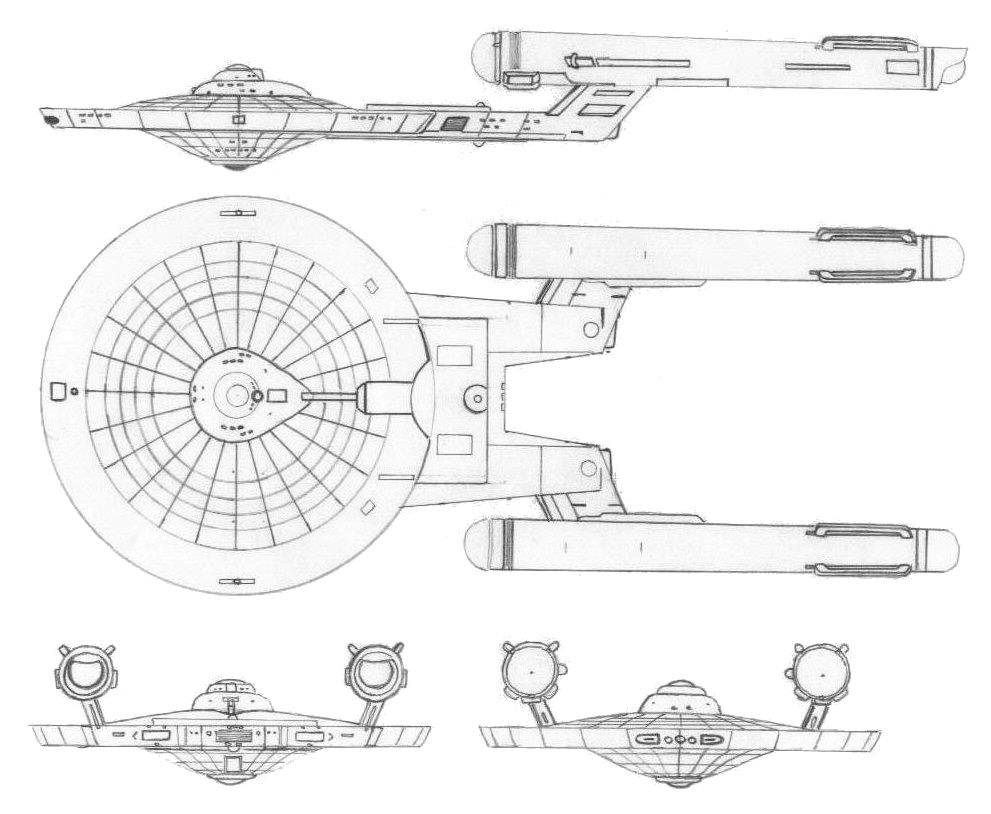 Design by James Donovan
Type: Light cruiser
In service: 2255-2290
Length: 300m
Beam: 125.7m
Draft: 48.5m
Mass: 170,000 t
Decks: 11
Speed: Warp 6 (std.), Warp 8 (max.)
Crew complement: 180
No description
Somalia Class
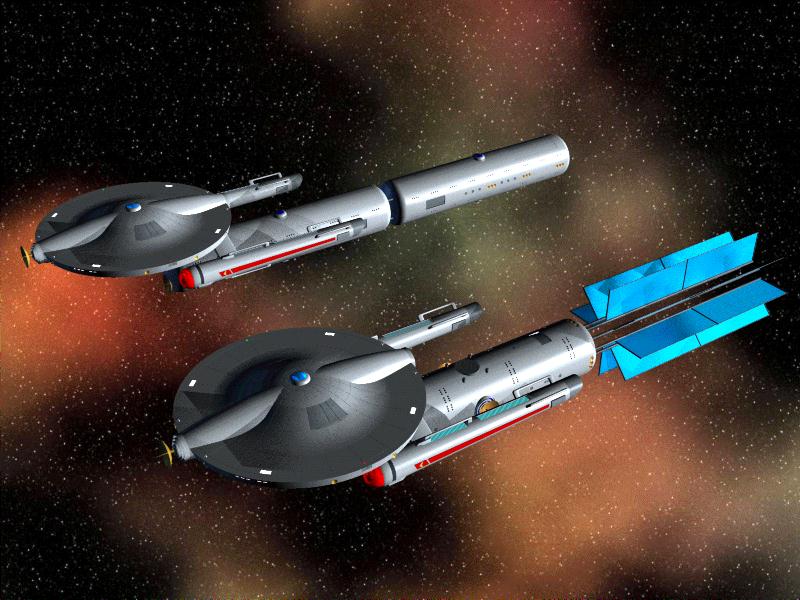
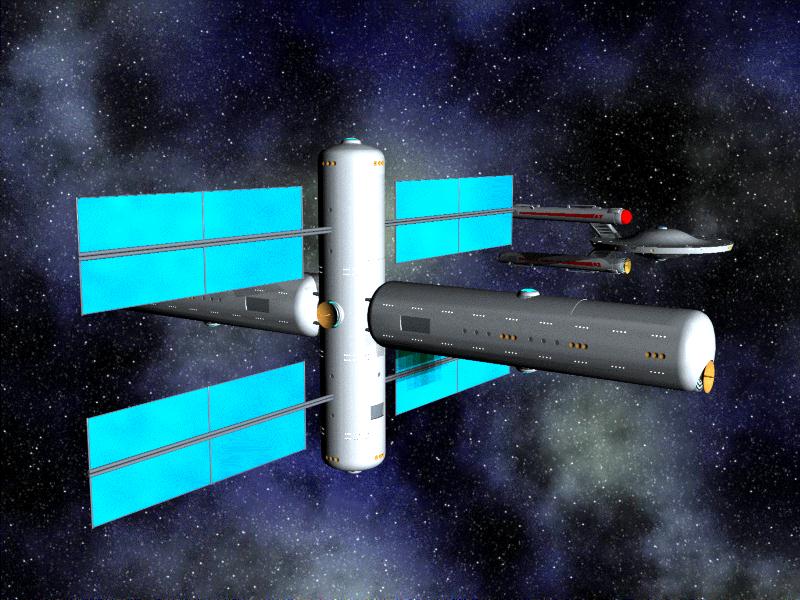
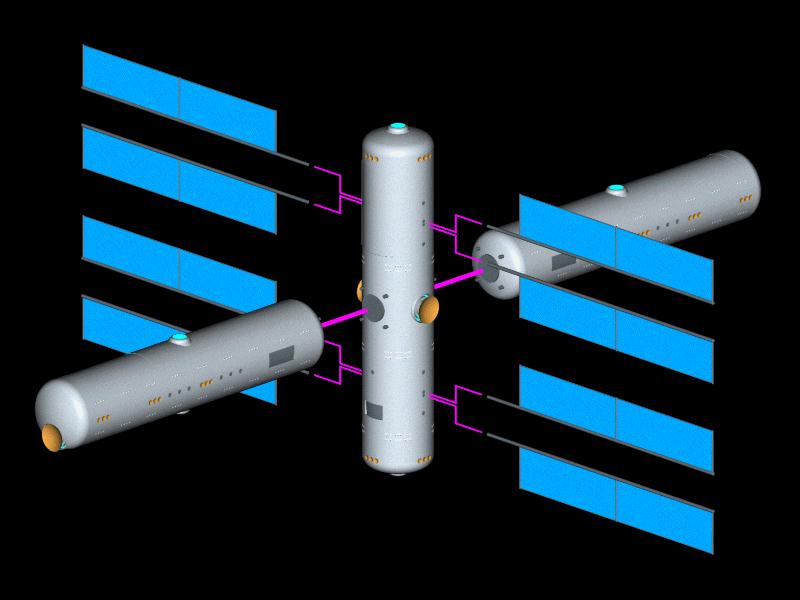 Design by Robert Heckadon
Type: Famine relief station
First commissioned: 2251
Length: 451m
Width: 391m
Height: 206m
Decks: 65
Complement: 50 officers + 450 crew
Armament: 12 phasers, 2 photon torpedo launchers
Defense: Level 7 deflector shields.
Embarked craft: 7-person shuttles and cargo shuttles
“We don’t need another hero.” - Tina Turner
Even in the 23rd century, where poverty, disease and war on Earth became all but extinct for over 150 years, ravaged by global wars or massive natural disasters, famine still exists on other planets in the galaxy. In order to feed 100 million people, it would require over 50,000 metric tonnes of food per day, depending on species. Rather than sending in large scale shipments of food to the starving planets, it was deemed better for both security and economic reasons to have a space station orbit the planet to feed the starving millions below. In 2251, the first of 10 famine relief stations were built.
As with many deep space outposts, the retro looking space stations were based upon the Space Island Projects prior to the Eugenics wars. The famine relief stations were constructed well within Federation space and transported by tug ships to bring them to the planet and assembled. And later disassembled when the mission is over. The station is composed of 3 modules. The vertical module is the stations command module. It is here where the command centre, living quarters, personal transporters, primary life support, and primary solar collectors are located. The 2 horizontal modules are the manufacturing facilities were food is made and water is recycled.
Even if significant bodies of water are available, during a famine, the water is usually undrinkable cause of bacteria, biohazardous material, and other pollutants. After being beamed up, fresh water is extracted by electrolysis. Breaking water down into hydrogen and oxygen. The hydrogen and oxygen are then reformed into distilled water in fuel cells that also provides additional energy to the electrolysis systems. Thereby saving energy for transporters and food processors. The remaining material is then sterilized by intense X-rays, and separated into organic and non-organic groups. The organic now sterilized are then sent to the food processing areas of the module while the non-organic are then recycled on spot.
The stations manufactures food by first of all, searching and gathering dead or expendable bio-matter, such as grass clippings, twigs and dead leaves, from the surface of the planet. Then this bio-matter is beamed up to the station where they are non-chemically converted into foodstuff using protein resequencers, and beamed back down to the surface to feed the millions. Protein resequencers can manufacture many forms of fruits, vegetables, meat, nuts and so forth depending on the diet of the species. But due to lack of time and power, everyone receives the same food at each delivery, and often adds some variety to the meals.
Due to strict environmental regulations, the planet below must have a stable ecosystem and expendable bio-matter, since the station is not capable of generating bio-matter, just converting it into foodstuff. Since methods such as mass deforestation is not an option. That would cause more harm in the long run. Starships and space stations uses hydroponics and chemosynthesis to generate food stuff and oxygen. But in order to generate that much for millions, nearly a dozen space stations are required, along with an enormous solar array to power the transporters to beam up the tonnes of water and carbon dioxide from the atmosphere. This is one of the reasons why the space station wasn’t used on Earth colony Cygnia Minor when it was threatened with famine in 2266.
One of the reasons why a space station is a better choice is because of security. Large scale shipments of food can be intercepted by aliens, rogue governments, or pirate that may benefit from the starving populations. Even on a humanitarian mission, the station is heavily armed and shielded, almost equivalent to a Constitution class starship, to protect itself. And the station also is more economically viable for savings on fuel and transportation costs.
The station has been labelled as being very cramped and uncomfortable. Often averaging one toilet for every 5 crew members and 1 shower for every 10. But often that is one more shower and toilet more than what the famine victims have. Finding crews for the stations surprisingly has not been a problem with many of them being from organizations outside of Starfleet. This include the Kir’Shara group of Vulcan, the Vaz’Xolraz of Denobula, and UNICEF of Earth.
Critics have questioned as to why keep the space station in orbit instead of putting the facilities on the ground. One reason is also a security issue, terrorism. Though a high 90%, often reaching 99%, are grateful for having a meal and drinking water, there is a small percentage that views the Federation with suspicion. And a few extremists willing to allow their people to die of starvation instead of having them “roll over and play dead” for the Federation.
Another reason is access to bio-matter. If one side of a planet whose economy and ecology has collapsed, while the other side of the planet has more then enough bio-matter to sustain them, it makes more sense for a space station to orbit a planet every 2 hours, depending on the size and conditions of the planet, to beam up the material while the station is overhead and beam down the food that has been process while over the population, rather than using up resources and time to shuttle bio-matter from one side of the planet to the other.
The station can synthesise many common pharmaceuticals ranging from Hyronalin, an anti-radiation medicine, to Retnax 5, a common eye-lens softener for the treatment of Presbyopia. Which can be grown in the station’s limited hydroponics bays.
Over their 150 year life span, the space stations were upgraded on a routine basis. Replacing the old protein resequencers with replicators, and adding on a holodeck for the exhausted crew members.
Prior to the Dominion war, the famine relief stations have only seen action once. A rogue Klingon D7 battle cruiser attacked the station and was destroyed by a standard patrol ship that are constantly seen with the stations. However, during the Dominion wars, 5 of these 10 stations were attacked and destroyed. Now the wars are over, Starfleet is not only replacing the 5 destroyed stations, but are also building 10 more to combat the aftermath of the war.
http://www.beyondtomorrow.com.au/stories/ep31/babyboomer.html
http://www.spaceislandgroup.com/home.html
http://www.unicef.org/
http://www.pmel.noaa.gov/vents/nemo/explorer/concepts/chemosynthesis.html
Space Island Class
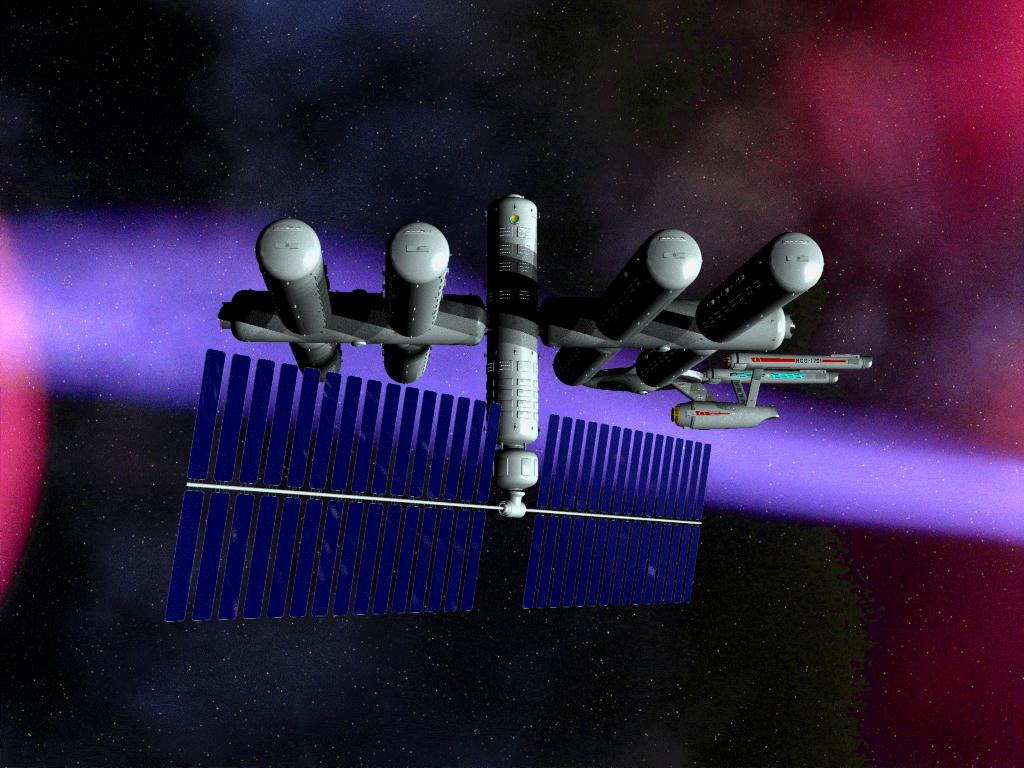
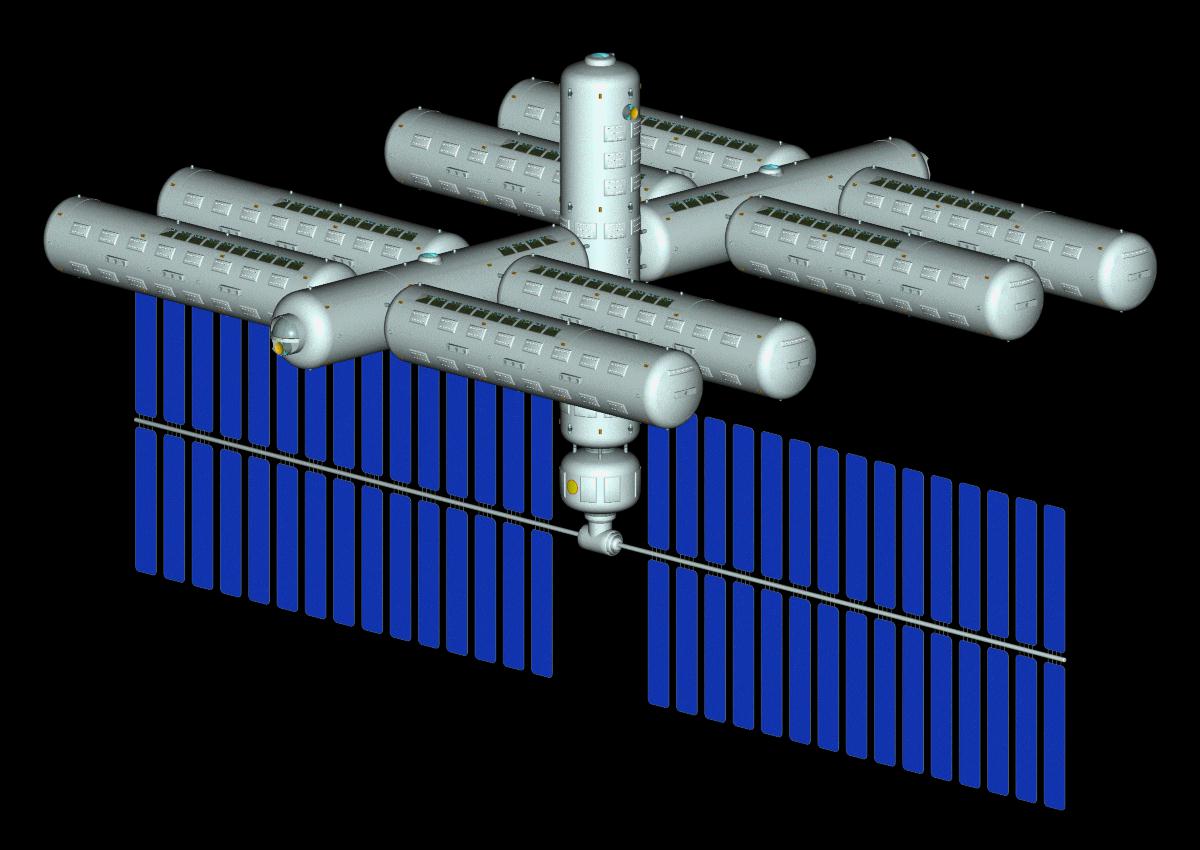 Design by Robert Heckadon
Type: Peace keeping starbase
First commissioned: 2241
Length: 459m
Width: 658m
Height: 330m
Decks: 83
Displacement: 2100000t
Complement: 125 officers + 1125 crew, evacuation limit: 6000
Speed: Warp (cruise), Warp (max.), Warp (max. emergency)
Sublight speed: 0.001c (max.)
Armament: 12 phasers, 2 banks each; 4 photon torpedo launchers, 250 photon torpedoes.
Defense: Cast rodinium shields, magnetic radiation shields
Embarked craft: 10 standard shuttles, 4 cargo shuttles
“For he is a man who can stop the world from blowing up, but it is up to the people to keep the world from blowing up.” - Why The World Needs Superman by Lois Lane
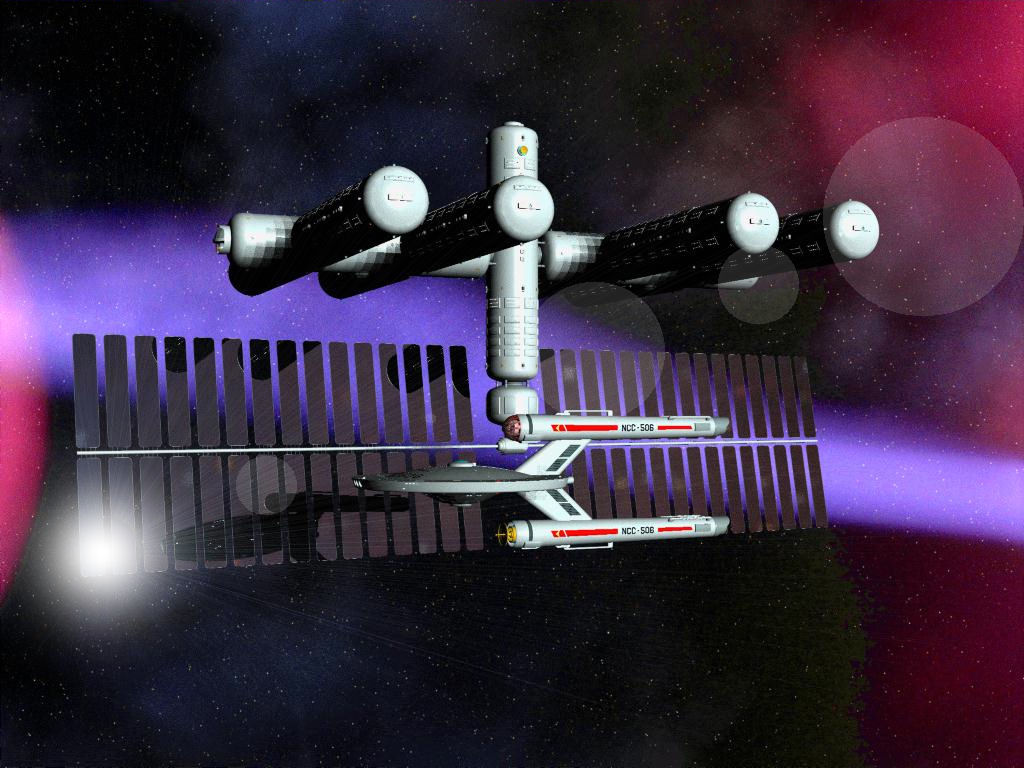
In the early to mid 21st century, the Space Island Project used the external fuel tanks of space shuttles to construct relatively large scale space stations in Earth’s orbit. In the mid 23rd century, this concept of a new class of fully manned space stations that are needed to stabilize a region of space, but the region of space is deemed too unstable to risk a fully manned space station. Thus enter the Space Island class starbase.
First introduced in 2241, the Space Island class is a modular space station designed to stabilize a region of space by giving different worlds a place to work out their differences peacefully. Aside for being a home for 1250 officers and crew, and over 1000 diplomats, businesspersons, and explorers, it is designed to be transported in separate modules by standard tug/transport ships and assembled within a matter of days. And in the event that the situation goes so critical that it is totally unsafe for a Starfleet presence, the space station can be disassembled and returned to Federation space in a matter of days.
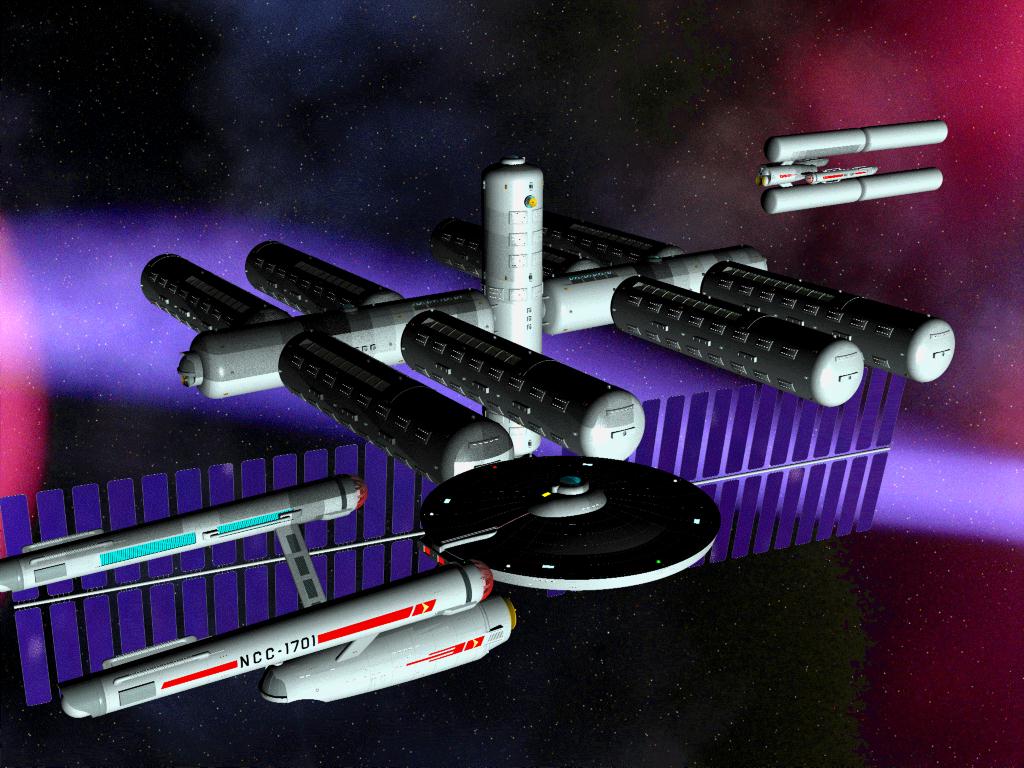
The Space Island class is divided up into 12 modules, which are constructed safely in Federation space and transported to their destination outside of Federation space by standard tug/transport ships, including the Ptolemy class, Sachsahuaman class and Fisher class transport ships. Once there, they only require as little as 6 days to set up the starbase. Assembling the modules into the space station takes only 24 to 48 hours, often averaging 37.7 hours. And the remainder of the 6 days is spent bringing the station’s 2 matter/antimatter reactors online, full diagnostics of all key systems, crew orientation, current situation analysis, and the installation of the station's solar collectors.
In the event that the political situation deteriorates beyond recovery, the station can be disassembled and returned to Federation space in only a matter of days, while only sacrificing the station's solar collectors. To this date, this has yet to happen. Though there have been incidences of these space stations being in combat.
The stations modules are based upon the 200 metre long, 40 metre diameter transport containers for both the ease of construction and transportation of the disassembled space station. The station has 12 modules, 1 command module, 1 engineering module, 2 service modules, and 8 habitat modules.
The command module is essentially the heart of the whole station. Along with the main command centre located at the top, the command module houses offices and administrative support, tactical stations and situation analysis, as well as meeting rooms for commercial and political negotiations. And as expected, more than half of the profanity usage on the station occurs here. The engineering module houses the matter/antimatter reactors and the fuel, as well as the power and system control rooms. Before the journey, the engineering module is attached to the command module on the bottom for easier transit and reduced assembly time. The stations solar collectors are attached to the bottom of the station, and they require special transport. The 2 service modules, which extends on either side of the command module, contains the station’s shuttle bays, cargo holds, fabrication centres, recycling and the primary artillery. The station’s total firepower is listed as being over 3 times that of a Constitution class starship. The 8 habitat modules, 4 on each of the service modules, provides living quarters and suites for the guests, crew, and general population. They also contain entertainment and recreation for the entire population of the station. Starship docking ports are located on the habitat modules.
After a region of space has been stabilized, the Space Island class then coordinates the set up of refuelling stations and other space stations in the region, then coordinates the construction of larger starbases, including the Watchtower class, in other star systems in the region of space.
The Space Island class has also inspired other modular, transportable space stations including the Somalia class famine relief station, the Arthur C. Clarke science station, and Deep Space 1. Critics have stated that the Watchtower class starbase, like Starbase 47, Vanguard Station, is more suited for the task of stabilizing a region of space. However the political situation can change drastically within a matter of weeks, and it takes about 4 years to properly build a Watchtower class starbase, and 2 years if it were rushed.
The number of new Space Island class space stations dropped drastically when Excelsior class starships became as much of a frequent site as the Constitution and Enterprise class use to be. And the numbers finally ceased with the introduction of the Ambassador class starship.
Notes Since the solar collectors can pivot a full 360 degrees on the X and Y axis, the dimension of the space station are with the solar collectors perpendicular to the service modules, and parallel to the command module for maximum XYZ dimensions of the space station.
Designer's
note This space station is free for anyone for non-commercial use, including fan sites, fan fictions and so forth. Commercial use requires permission.
Sulaco Class
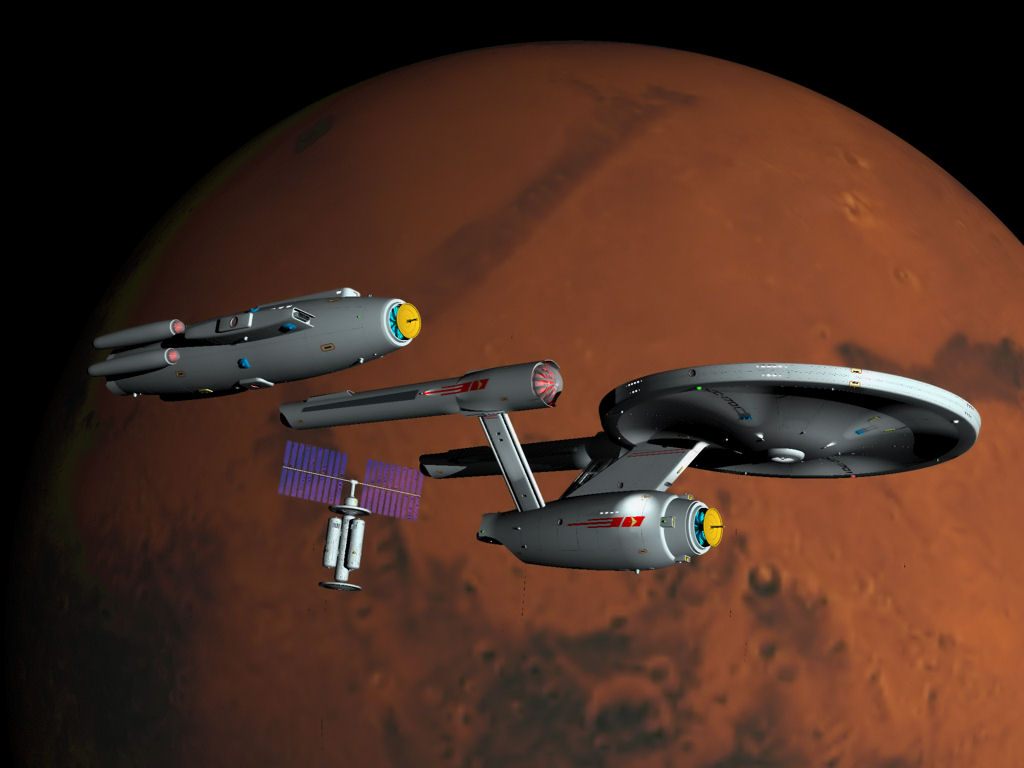
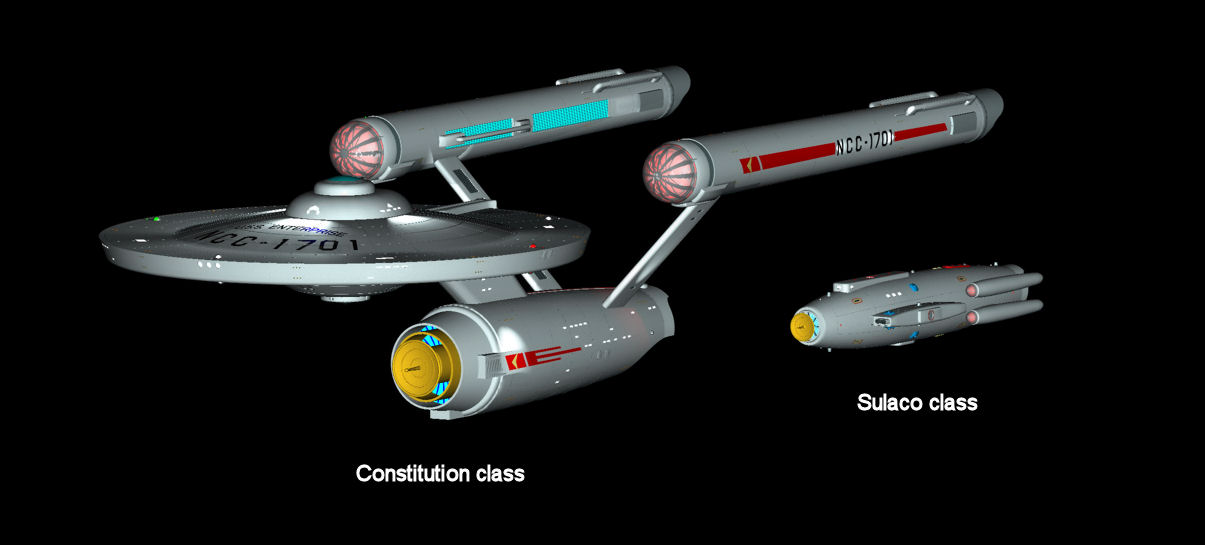
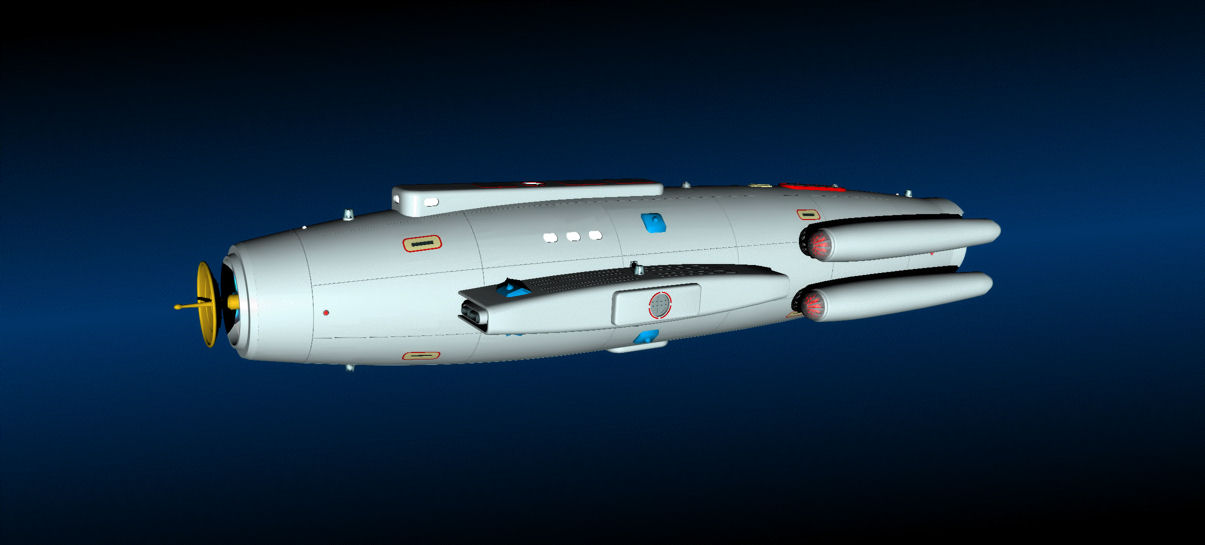
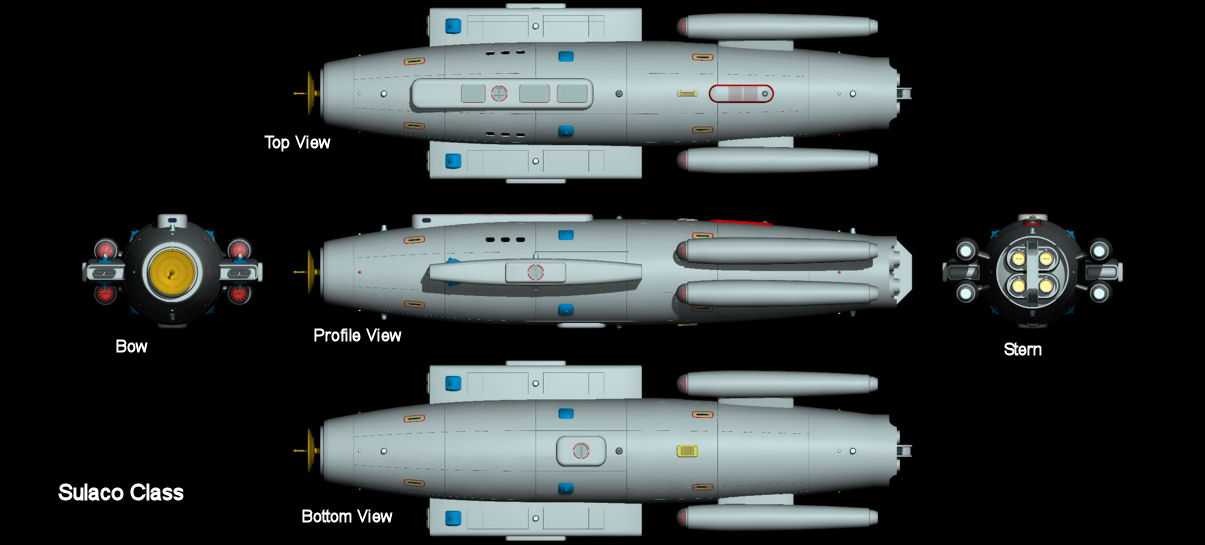 Design by Robert Heckadon
Type: PT boat
First commissioned: 2231
Length: 102m
Width: 30m
Height: 19m
Decks: 7
Displacement: 11000t
Complement: 5 officers + 45 crew, evacuation limit: 100
Speed: Warp 1 (cruise), Warp 1.5 (max.), Warp 1.7 (max. emergency)
Sublight speed: 0.2c (max.)
Armament: 4 - 90 megawatt, 175 megavolt phase modulated electron particle beam discharge
cannons (AKA lasers); 4 - 60 megawatt phase modulated energy discharge cannons (AKA phase
cannons); 4 photon torpedo launchers with 60 photon torpedoes
Defense: 50 megawatt magnetic flux condensation force shield
“The only starship in interception range is the Enterprise. Ready or not, she launches in 12 hours.” - James T. Kirk, Chief of Starfleet operations, 2271.
In the event a warp capable starship or starships are not available to intercept a potentially hostile intruder or intruders outside of the Sol system, the Sulaco class PT boat ensured the Sol system is far from unprotected.
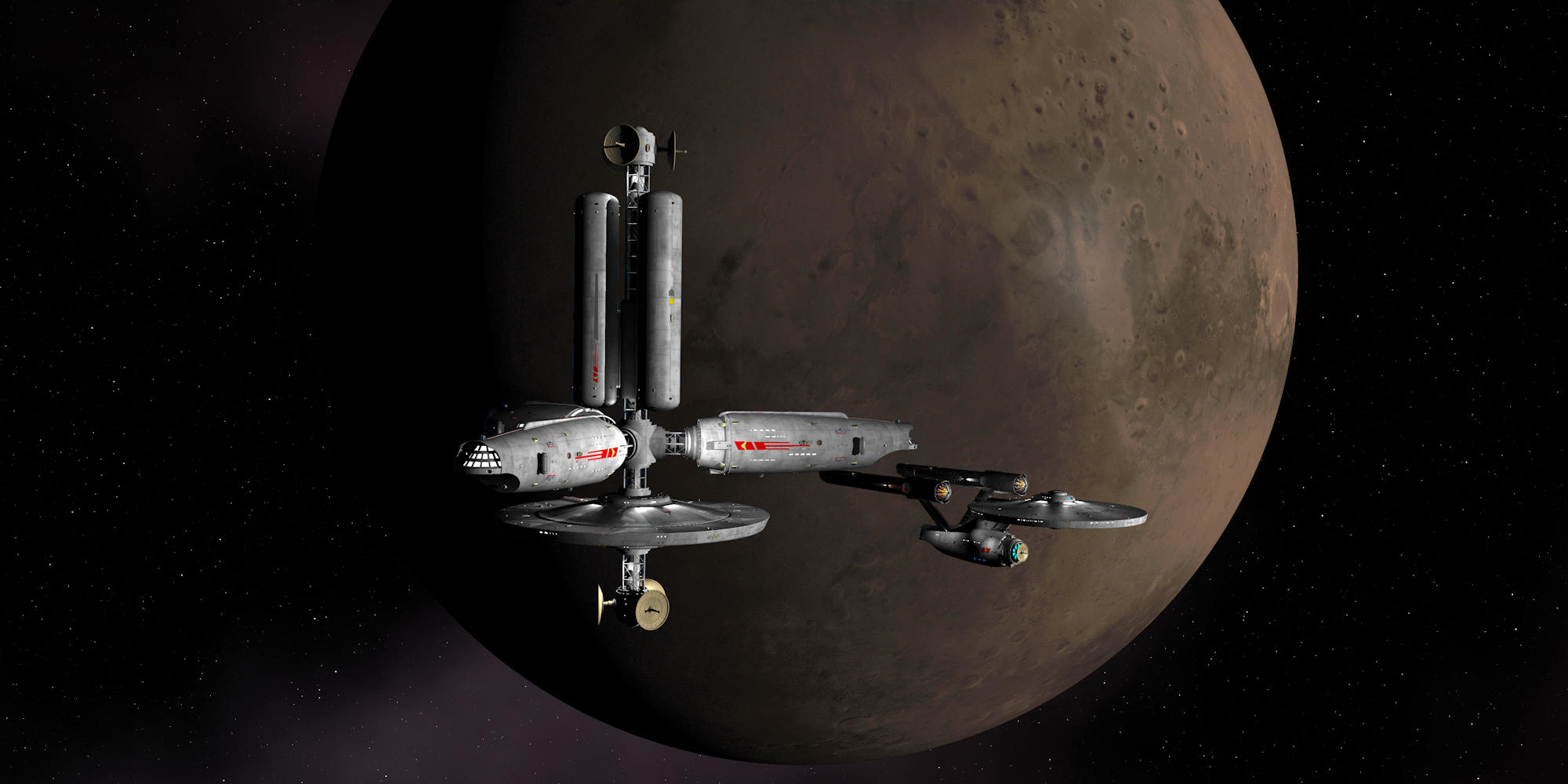
First built in 2231, the Sulaco class is the primary backbone of the Mars defence perimeter. It was designed for rescue missions in the Sol system, deflecting planet threatening asteroids and meteors with its deflector, and rapidly delivers the equivalent firepower of a “Mayflower” class (1) starship to any potentially hostile intruder entering the Sol system. The ship’s artillery was upgraded to Constitution class equivalent in 2259.
The ship is driven by 4 “sub”-warp nacelles (a precursor to the driver coil assembly of a Galaxy class starship of the 24th century) that gives the ship a top speed of warp factor 1.7, or approximately 5 times the speed of light, and a maximum range of 200 AU’s, or 0.003 lightyears. Though the warp speed is deemed slow, it is fast enough to deliver the Sulaco’s intense firepower within the Sol system within a few hours, and the low warp allows more power to be made available from the ship’s matter/antimatter reactor for tactical systems and shields via primary energizer.
Albeit small, the Sulaco class is capable of transporting over 100 MACO’s with disaster relief within the Sol system in a matter of hours.
The Sulaco class is armed with 4 – 90 megawatt single turret laser canons, 4 – 60 megawatt single turret phase canons, and 4 photon torpedo launchers. The ship’s laser canons and photon torpedo launchers are focused forward for offensive action while the ships phase canons can fire in virtually all directions and used for defensive action and to supplement the lasers and torpedoes. The ship is defended by a 50 megawatt magnetic flux condensation force shield. It uses a subspace coil to focus the magnetic flux lines of the ship’s radiation shields into a virtually solid force barrier only a few millimetres thick, which can protect the ship from a limited number of attacks.
The Sulaco navigates the Sol system with navigation beacons throughout the solar system for long range travel, standard sensors for short distances, and telemetry from Starfleet command. In an alternate reality, this proved to be an undoing when a massive Romulan ship entered Earth's orbit and interfered with long range communication, including navigational beacons. Therefore the Sulaco class ships were unable to travel to Earth safely to destroy the enemy ship, especially since the Romulan ship was forced to drop shields to deploy its laser drill.
Critics have asked why not a fleet of warp capable starships to protect Sector 001. Starfleet deemed that warp capable starships would be more effective in intercepting intruders not only outside of Earth’s solar system, but outside of Federation star systems as well. As well Starfleet deemed (until the Dominion War) that it was a waste of material to have a large warp capable space vehicle to simply deliver heavy firepower when a considerably smaller space vehicle is just as effective.
Critics have asked why a PT boat is named after a fictional mining town in the Joseph Conrad novel Nostromo. The Sulaco class was in reality named after the marine sleeper ship in the James Cameron film Aliens.
(1) “Mayflower” class refers to the USS Mayflower seen on Star Trek (2009).
(2) The original series Enterprise is used for a fixed scale for the size comparison to the Sulaco while the alternative variation of the Constitution class orbiting Mars is like a go between for the original series Enterprise and the
"Star Trek 2009" Enterprise.
Sviagod Class
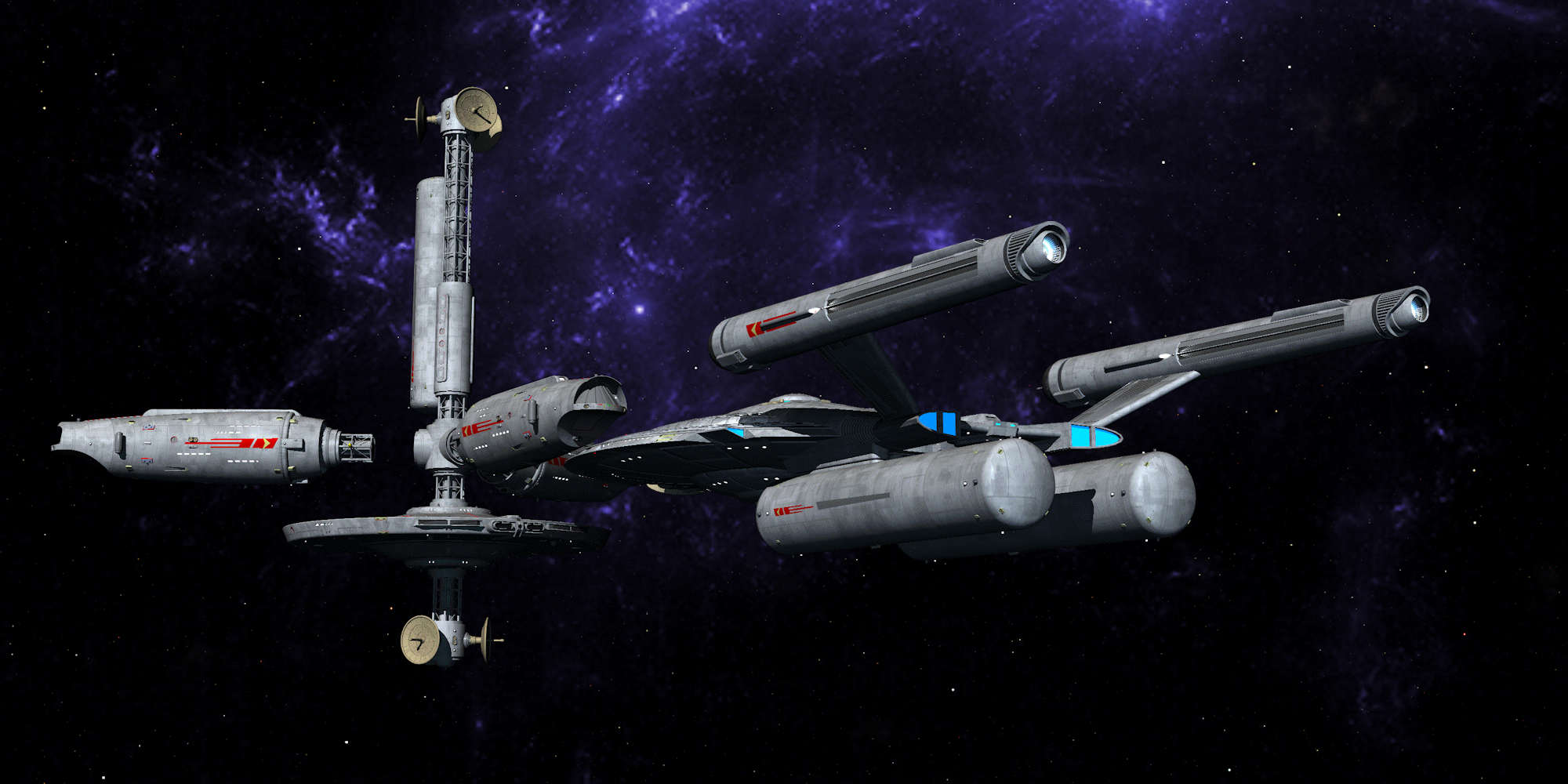
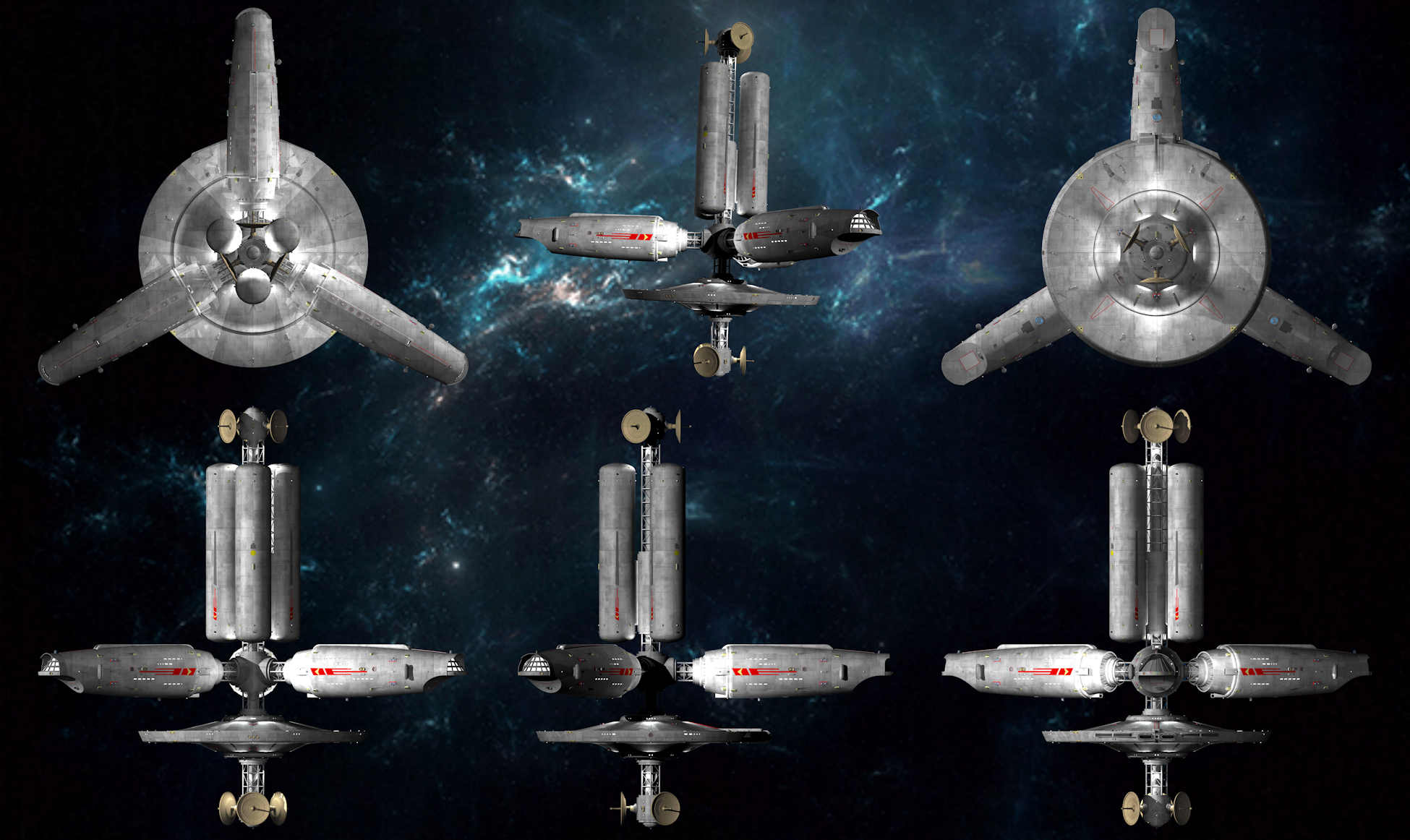 Design by Newdivide1701
Type: Deep space agricultural outpost
First commissioned: 2260
Length: 209m
Width: 238m
Height: 235m
Decks: 18
Displacement: 261000t
Complement: 100 officers + 500 crew, evacuation limit: 2000
Sublight speed: 0.01c (max.)
Armament: 18 - 190 MW phase modulated heavy particle cannons; 3 photon torpedo launchers
Defense: Cast rodinium deflector shields
Embarked craft: 6 cargo shuttles, 2 personnel shuttles, 8 worker bees
1.0 - Introduction:
The Sviagod class outpost is a modular deep space outpost that serves as a repair and resupply station for long range exploration ships and cruisers, as well as a deuterium, helium-3 and antimatter fueling station.
2.0 - Klingon war:
Due to the Klingon that ended in late 2257, Starfleet and the Federation were forced to rebuild which halted many programs that included long range stations and star bases like the Watchtower class and Starbase Yorktown.
For this, simplified outposts were deemed the best solution to the current problem, which introduced the Sviagod class outpost.
3.0 - Construction:
The station is divided into 8 section.
-1 habitat saucer,
-1 engineering module,
-2 hydroponics modules,
-1 central core,
-1 fuel containers,
-1 water tank,
-1 CO2/O17 tank.
The modules are constructed at a shipyard near the edge of Federation space and are transported to the frontier via transport/tug ships.
3.1 - Transport:
Three Hudson Cavalier "H.C." class transport ships -- a variation of the NX class with cargo docks and clamps on the lower fairings -- carries the 3 fuel modules and the 3 engineering modules. Another H.C. class has an adapter module that allows the ship to transport the saucer section. A Fisher class transport ship transports the core and the lower lighthouse with another Fisher class transporting the crew via starliner.
4.0 - Habitat saucer:
The habitat saucer is divided into 3 sections; upper dome, lower dome and central saucer.
The upper dome primarily contains water and sewage recycling for the saucer section along with chemosynthetic and electrosynthetic bioprocessing food production which uses kelp, Jovian seaweed and protein resequencers. On top of the upper dome houses the station's operations centre, offices, and privacy lounges for the crew.
The lower dome carries the saucer's cargo holds and extra water storage tanks. At the very bottom of the saucer are the genetic diversity labs and access to the lower lighthouse.
Three dual phaser banks are each located on the upper and lower dome powered by the saucer's escape impulse engine (see 5.1).
The central disk houses the crew quarters on both the upper and lower decks. The disk also has the primary mess halls and galley, sickbay, station services, security and recreational services.
4.1 - Recreation:
The disk also contains holographic interactive VR rooms along with what are referred to as "hamster balls" that are spherical interactive VR simulators that allows for simulations requiring more floor space than what is available on the station, and allowing for limited changes in topography within the simulation. Using the hamster balls requires VR glasses rather than holograms.
These simulator rooms on ships are often restricted to large or heavy cruisers such as the Constitution class and Crossfield class due to size restriction.*
With these size restrictions, many exercise facilities on the Sviagod class restricts the size of the pool where it barely has enough for a short course swimming pool. As an alternative, the Sviagod class uses 4 variable course swimming pools. Each pool is 2 metres by 4 metres with a 1.5 meter depth that uses water jets to push the swimmer back into pool at the same rate he, she or ze swims. This allows for virtually any length the swimmer to swim from as little as 50 metres to up to a virtually unlimited distance.
The water flow rate is monitored my computer and overhead sensors to keep the swimmer in the middle. The bottom of the pool is transparent with a 1 cm gap from the bottom that allows for a large polymer screen to display distance for the swimmer to see as well as 3 dimensional images of fish and other aquatic life.**
The recreation area also carries 4 - 3m x 3m jacuzzis.
5.0 - Engineering module:
The station's shuttle bay runs half way down the entire length of the module where double doors separates the shuttle bay from the hanger bay and cargo decks.
The lower sections carries the primary helium-3 fusion reactor with metallic fuel, transporter, photon torpedo launchers, fabrication centres and manufacturing.
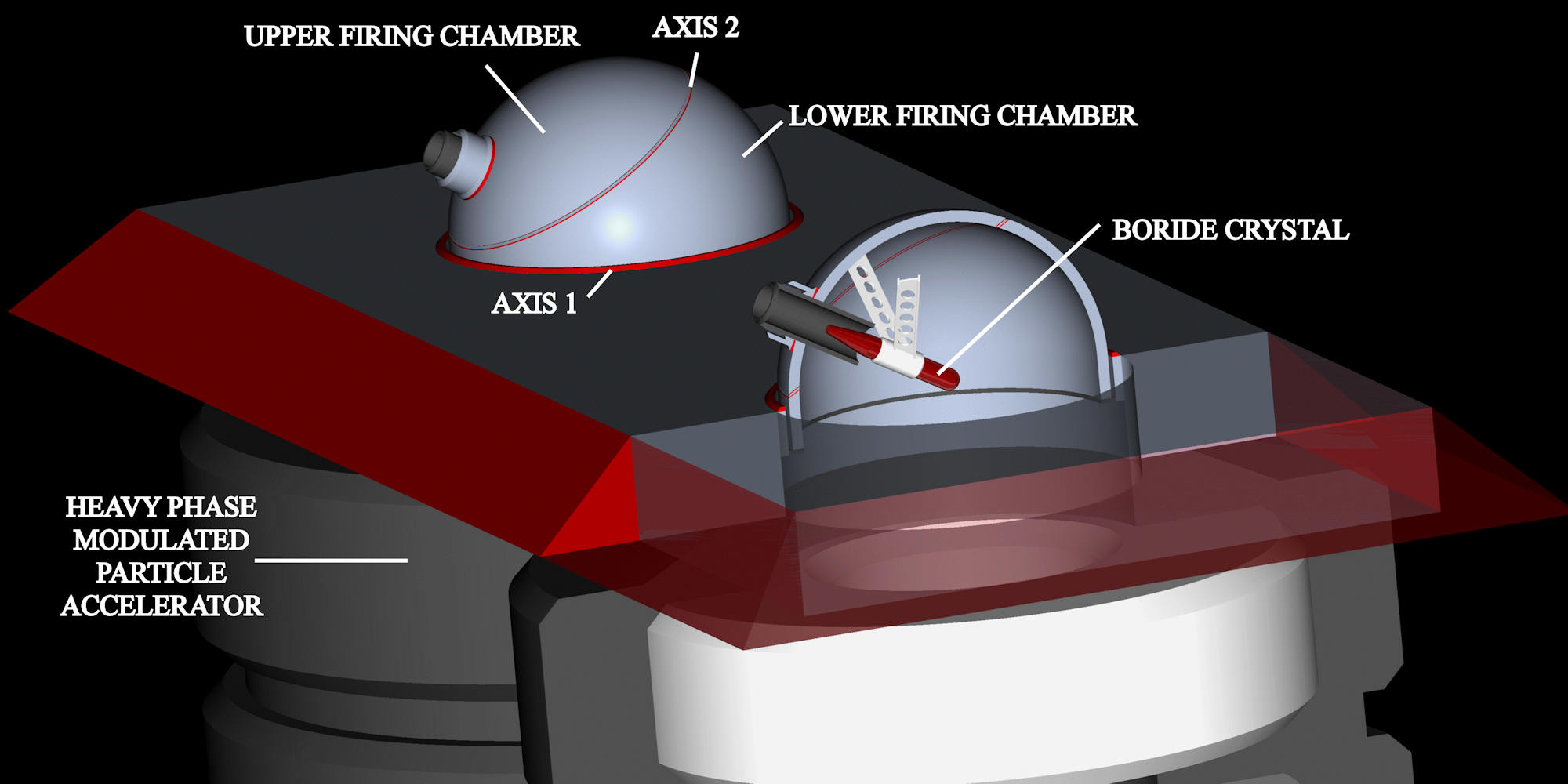
All engineering modules carries 4 dual phaser banks and a single photon torpedo launcher. The upper phaser particle accelerators are parallel to the hull and uses another boride crystal to redirect the beam into the firing chamber (see 5.1)
A large outer hatch under the fantail carries a limited supply of antimatter where a refuelling shuttle is used to restore a ship's antimatter supply.
5.1 Phasers:
Each dual phaser bank uses a fixed phase modulated heavy particle accelerator the size of a large shuttlecraft under the hull. The phase modulated particle beam enters the firing chamber into a weapons grade boride crystal in the centre of the chamber that's on the same frequency as the particle beam. The crystal redirects the beam out of the phaser particle emitter barrel.
The firing chamber has 2 points of rotation to allow for maximum possible coverage with little mass to move. One axis is perpendicular to the hull with a second axis offset by 60° with the barrel offset 60° to the second axis. To lower or elevate the barrel without changing direction along the XY axis, the lower firing chamber rotates in one direction while the upper chamber rotates in the other direction. This allows the elevation to change as much as 60° with a 360° coverage.
The boride crystal is attached to an articulation frame attached to the upper chamber and the power to adjust the frequency of the crystal is through EPS induction on both the upper and lower firing chambers.
The phaser can fire in both steady stream and pulses, while plasma recoil is absorbed in capacitor banks which are then used to augment the phaser power giving the station approximately 80% the phaser firepower of a Constitution class starship.
The phasers were upgraded from weapons grade Boride to NiCl 521 crystals that did away with the heavy particle accelerators, and improvements to the rapid nadion effect in 2277.
6.0 Hydroponic modules:
The hydroponic modules are designed to grow food and provide genetic diversity for visiting ships and long range explorers using photosynthesis, chemosynthesis, and electrosynthesis. These range from fresh fruits and vegetables in stasis, dehydrated produce, ration packs and prepackaged meals -- archaically known as TV dinners, or a genetic basis for ships with protein resequencers and food synthesizers.
On the upper half of the modules, 40% of the length is dedicated to orchards, primarily apples and oranges. The orchards are laid out to serve double duty as an arboretum with a large segmented dome to view space.
On the other side of the orchards is a 3 deck recreation lounge that extends 8 metres into the deck. Though normally open, a pair of air tight doors are used in the event of a hull breach and containment field failure.
The rest of those decks are dedicated to standard hydroponic gardens which uses music and wind to strengthen the crops, and they use porous sponge like nutrient enriched aerogel in the event of gravity failure.
Beneath the orchards are the photon torpedo launchers, shield generators, phaser banks, the module's life support systems, water recycling facilities, protein resequencers and inert carbon storage and recycling, and antimatter pods.
One deck below the hydroponic gardens are the controversial severed limb gardens (see 6.2). Below the severed limb gardens are sections dedicated to pharmaceutical hydroponics, tissue engineered meat labs and food processing and packaging.
6.1 Corridor crops:
Based on Xyrillian crop production methods, long and narrow hydroponic tank compartments are located behind access panels in the primary corridors to maximize useable space on the station -- commonly known as "corridor crops".
Each panel has a pair of vents with low power fans and phased ionization gas filters. The first fan draws in the ship's atmosphere with the filter allowing carbon dioxide and nitrogen into the tank, but keeps the oxygen out. The second fan blows out the oxygen and nitrogen from within the tank with the filter keeping the CO2 in. The fans also provide a wind to keep the crops strong.
Polymer lights provide the energy for the crops with a phosphorescent coating to continually provide light for the crops for several hours in the event of a power failure. Nutrient enriched water is provided by the water and waste recycling facilities which are absorbed in sponge-like trisilocate aerogel soil that holds the plants in place and absorbs the enriched water in the event of artificial gravity failure.
Each unit has a pair of medical scanners programmed to monitor the crops and to detect any problems including mold or decay. When any problems are detected, the vents automatically close until the distressed food is removed and vaporized.
The corridor crops are often limited to fruits and vegetables that can be grown in such a confined space such as carrots, potatoes, lettuce, pineapples with their tops cut off and reused, plomeek (Vulcan), kleetanta (Vulcan), C'torr root (Vulcan), Skopar carnivore seeds (Andoria), T'pocowan (Andoria), and Necreena (Andoria).
6.2 - Severed limb gardens:
The severed limb gardens involve removing the budding or flowering part of a plant-- typically from fruit or berry trees -- and inject synthetic glucose into it along with proteins and nutrients either stored in element bins, recycled from the wastewater and sanitation or organic material recycling. Electrostimulation encourages plant growth.
The synthetic glucose come from a generator that uses hydrogen extracted from the oxygen generators on the wastewater systems and the carbon dioxide waste gases from life support. As well as from the waste water and inert carbon offloaded from smaller ships (see 6.3).
Critics have asked why neither corridor crops nor severed limb gardens are used on starships? The corridor crop tanks and synthetic glucose generators were deemed too fragile to be used on starships.
Severed crops are often limited to fruits and vegetables that requires too much space, less essential, and cannot be regrown with the preexisting stem or crown. And despite the gardens using 30% the resources, the produce grows at the same rate as traditional gardening methods.
6.3 - Inert carbon:
Ships too small to cultivate photosynthetic, chemosynthetic or electrosynthetic bioprocessors, or carry protein resequencers uses oxygen generators that breaks down carbon dioxide into oxygen gas and inert carbon powder. The powder is then placed in the same tank as the sanitary wastes once the water has been extracted.
The organic wastes and carbon powder are offloaded onto the station which are then recycled in the hydroponic modules and used for the severed limb gardens and chemosynthetic bioprocessors.
7.0 - Storage pods:
The station's 3 storage pods are smaller than the standard transport containers measuring only 100 metres long and 20 metres in diameter. The first pod is the fuel pod primarily for starships, the second pod is the water tank with the third pod being a CO2/O17 storage pod.
7.1 - Fuel pod:
The fuel pod contains cryogenically slush deuterium in 4 out of 5 of its compartments with the final compartment being filled with cryogenically slush helium-3.
7.1.1 - Antimatter substitute:
With dilithium crystals, the fusion ignition temperature of helium-3 and deuterium is drastically reduced from 400 million Kelvin to less than a quarter million where the fusion rate can be high enough to power warp drive, but the drive burns substantially larger amounts of fuel -- approximately 2000 times the mass of matter and antimatter.
The engineering module uses special facilities to mix at a 1:1 ratio and super compress and cool helium-3 and deuterium into near metallic states so the fuel doesn't require large amounts of space.
Critics have often said there isn't enough deuterium, helium-3 or antimatter on the station to support exploration cruisers. The fuel supplies were meant for ships whose fuel levels are critical and cannot reach any dedicated refueling stations in time.
7.2 - Water tank:
The second tank contains water needed for the hydroponic gardens. The first 4 compartments holds water at -100°C to ensure maximum possible density of the ice for storage. A simple laser is used to melt the ice and a vacuum environment boils it so it can be transferred with ease.
The fifth compartment carries the wastewater storage from other ships as well as the inert carbon (see 6.3)
7.3 - CO2/O17 tank:
The third storage container is compartmentalized to store compressed carbon dioxide and O17 liquid oxygen.
During crop production in hydroponics (see 6.0) and corridor crops (see 6.1), a constant supply of carbon dioxide is needed for plant growth. Even with a crew of 500, they cannot produce enough carbon dioxide at a sufficient rate to keep the plants healthy so a contingency supply of CO2 is needed.
The excess oxygen is converted into a stable liquid oxygen molecule called O-17 which prevents the oxygen from being an oxidizer. When exposed to focused delta rays, the O17 becomes O2 once again. The O-17 is transferred to spent CO2 tanks for starships.
8.0 The core and lighthouses:
The central core connects all the modules together. At the top of the core is the station's upper lighthouse. It emits subspace signals for ships to track back to it in the event of navigation error. The lower lighthouse is attached to the bottom of the saucer section. During transport, the lower lighthouse is attached to the core with female couplings and is then separated and transferred via worker bees to the lower saucer.
Unlike other lighthouses, the ones on the Sviagod class do not carry the rotating mirror or prism for the traditional lighthouse look. This is the result of the Klingon war between 2256 and 2257 where even with the armistice, there are some factions that have broken away from the Klingon Empire with rumours saying that some crews underwent cryogenic suspension during the war with the belief that they were there to reawaken to continue the war when the Klingons were losing due to attacks on their shipping lines and supply bases by a mysterious ship called Discovery. ***
The prime directive prohibits the use of radio signals that can be picked up by prewarp civilizations.
8.1 - Assembly:
The assembly starts with the lower lighthouse being detached from the core. The saucer is then attached to the core followed by the attachment of the lower lighthouse. The engineering modules are then attached to the core followed by the containers.
The tolerances of the cylinders are only 2.5mm on a 1 metre diameter cylinder which requires delicate and precise adjustments from the worker bees' thrusters and tractor beams.
8.2 - Hydraulics:
The station's modules are held together using male/female connections where the male connector slides 5 metres into the female ones. A series of ram cylinders are then extended from the female connector and into sockets in the male connector. Those sockets and ram housing are reinforced with tritanium and osmium alloys.
The hydraulics used to extend the rams uses an electrodynamic tripolymer based hydraulic fluid that is normally solid below 232°C until an oscillating electromagnetic field on a frequency of 83.7 MHz is introduced to it where it then becomes a liquid without heating it and without expansion. The fluid also becomes polarized to where it can be driven by a non-mechanical magnetic pump and can operate effectively between -73°C and 141°C.
The polymer hydraulics replaces the old gallium based hydraulics that requires the metal to remain well above 29.76°C to become a fluid and well below to remain a solid. As well the gallium hydraulics requires constant temperature control and a mechanical pump to run it which are often prone to mechanical and electrical failure.
The tripolymer hydraulic fluid is barred on many planetary surfaces as they are highly toxic on fluid form and environmentally harmful which requires strict regulations to use.
9.0 - emergencies:
In the event of a catastrophic emergency, each engineering module can separate and be launched away with impulse thrusters and used as a lifeboat.
Auxiliary power is provided by neutronic power cells (element 115). When bombarded by protons, element 115 is transmutated into element 116 in which 2 neutrons undergo a beta decay by releasing positrons converting the neutrons into antiprotons. Those antiprotons then react with the protons within the isotope in a low level annihilation reaction.
Reserve power comes from hafnium-178 atomic batteries.
Backup life support uses CO2 scrubbers and a supply of oxygen-17 and a delta ray emitter.
9.1 Tarsus 4 incident:
After the famine on Tarsus 4 in 2246 and the rise of Governor Kodos -- later known as Kodos the Executioner, Starfleet issued a draft of Regulation 19, Section E which state in the event of a severe famine of a Federation colony, all food and ration shipments within range are to be rerouted to the colony immediately.
As well any ship in range of a resupply station or agricultural station -- such as the Sviagod class -- is to take on their maximum capacity of the station's ration packs and any food in stasis without hampering the station's resources and divert to the famine stricken colony to in exclusion above all else except higher priority missions outlined in Section 10, 17 and 31, code factor 1 and others.
10.0 - Afterward:
With the development of food synthesizers for the Enterprise class (Constitution refit) starships, genetic samples for protein resequencers and food synthesizers became less vital as the DNA was stored in the ship’s memory banks with what is referred to as a matter stream "snapshot" to duplicate the meals. And so the station’s hydroponic modules were removed in favour of a dedicated supply module filled with basic elements, and a dedicated repair module with all 3 modules having their own shuttle bays. And all 3 containers were dedicated to deuterium and helium-3 fuel.
As well with the development of the Excelsior class, it was determined the Sviagod would no longer be able to handle the demand of supplying exploration cruisers. The last of the Sviagod class was phased out in 2320 and replaced with the Ingvi-Frey class that is said to be a larger version of the Sviagod class.
The station was named after the Vanir god Freyr -- also known as Sviagod -- known for agriculture, prosperity, life and fertility.
* as depicted on the animated episode, "The Practical Joker," and the Discovery episode, "Lethe".
** a larger version of the medical display used by Dr. McCoy on Star Trek Beyond.
*** Star Trek: The Next Generation; Emissary -- though the timestamp would be off by 34 years.
TAS Shuttle
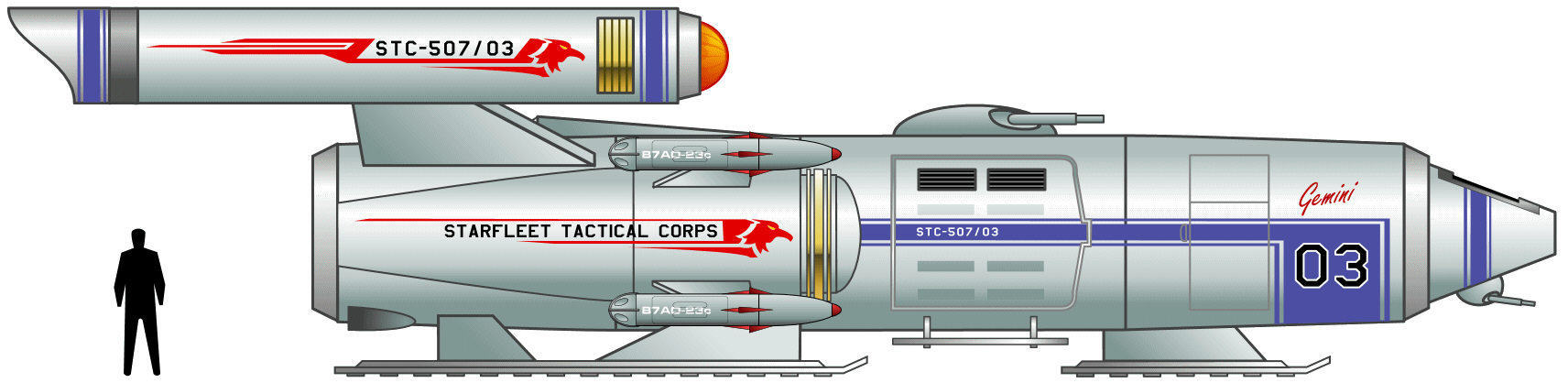
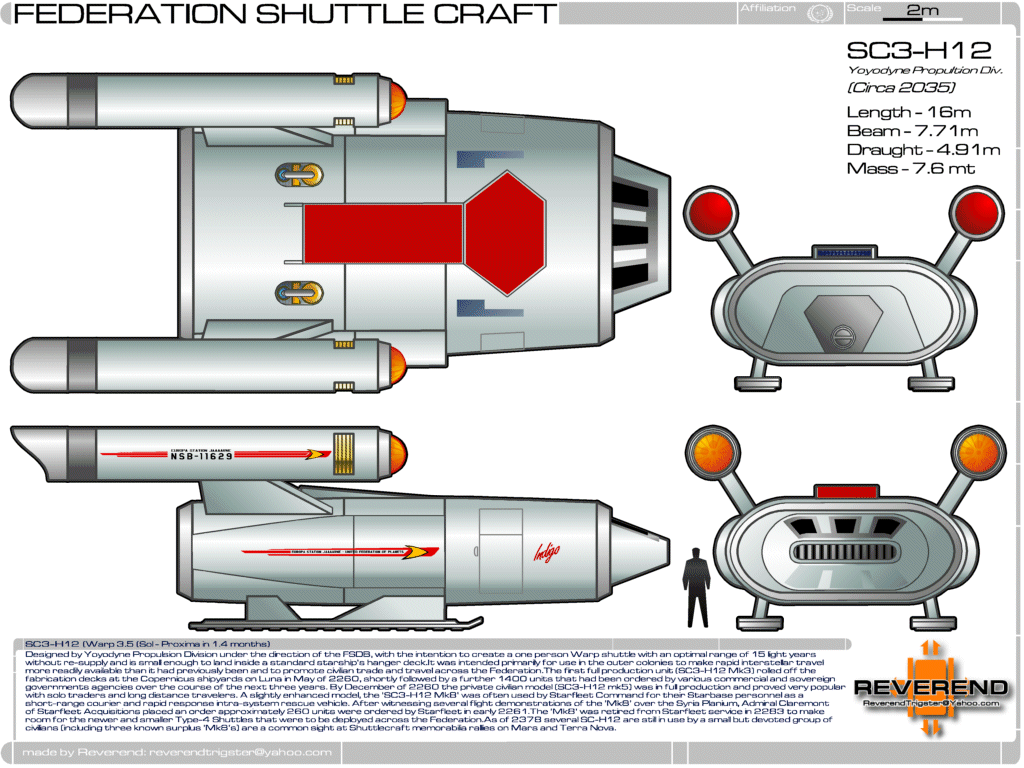 Design by Kris, 3D model
by
Kenny,
ASDB
Members
Design by Kris, 3D model
by
Kenny,
ASDB
Members
No specs available
This shuttle is based on a design from The Animated Series.
Type-2 Shuttle
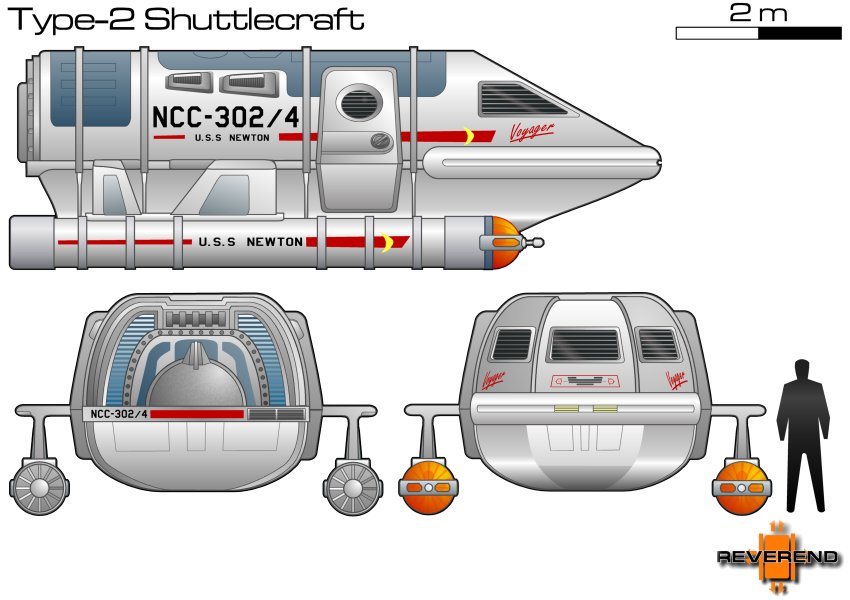 Design by Kris, ASDB Member
No specs available
This shuttle is the predecessor of the type used on the Enterprise NCC-1701. It was in use in the first decades of the 23rd century.
Vega Class
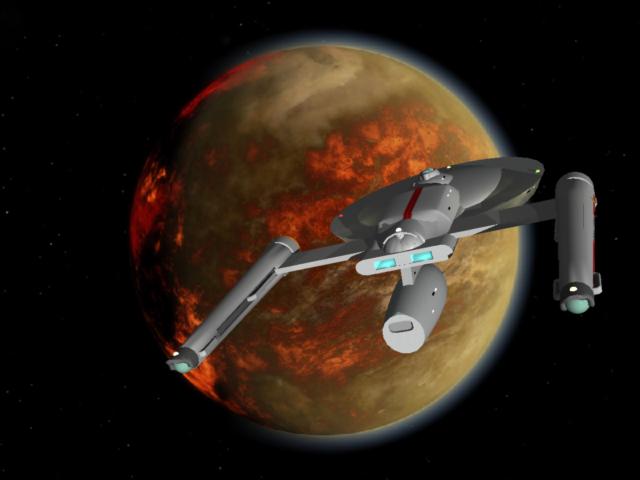
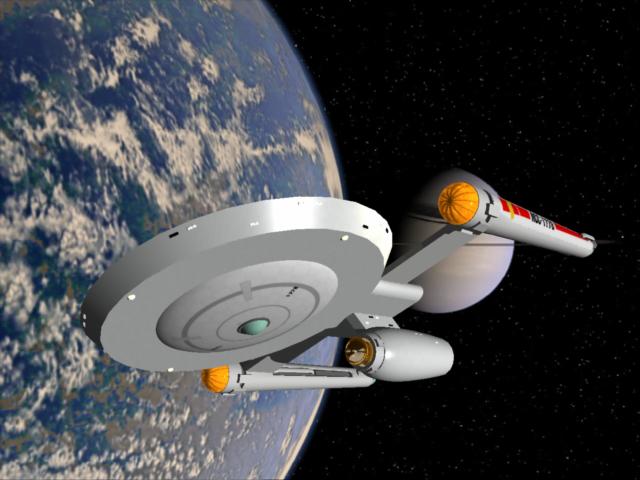
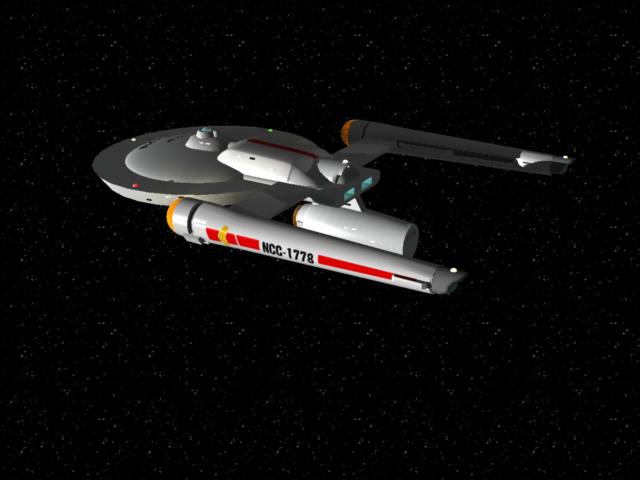
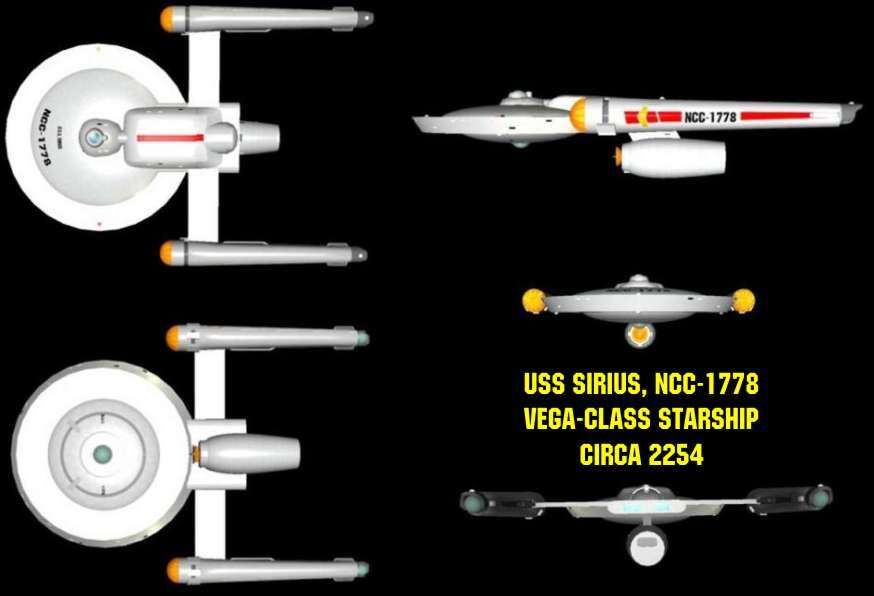 Design by Nixon's Head
Type: Frigate
First commissioned: 2250
Length: 274m
Width: 198m
Height: 60m
Decks: 17
Complement: 50 officers + 200 crew, evacuation limit: 600
Speed: Warp 6 (cruise), Warp 8 (max.)
Sublight speed: 0.4c (max.)
Armament: 6 phasers, 1 photon torpedo launcher
Defense: Standard defensive shields
Embarked craft: 4 standard shuttlecraft
The Vega-class was developed to fill the gap in Starfleet capabilities between the Constitution-class cruiser and the Saladin-class destroyer. Its primary role was intended to be as a follow-up to initial explorations made by the Constitutions, making diplomatic port calls to newly-contacted races, and providing general support to early phase-one colony planets in the outer regions of Federation space.
Smaller than the Constitution, the Vega-class uses a similar warp core and nacelles, but has a thickened primary hull. The superstructure at the rear of the primary hull supports expanded scientific and diplomatic facilities, as well as the hanger deck. An enlarged impulse deck houses main engineering.
The relatively small secondary hull houses the navigational deflector, deuterium storage, and an expansive cargo deck, used to ferry supplies to the outer worlds. The cargo deck has a dedicated space door at the rear of the secondary hull, allowing large volumes of vacuum-rated cargo to be moved without use of the transporters. The cargo bay door can also be used to launch scientific satellites and probes, or to store additional shuttlecraft if the hanger deck is unavailable.
Two batches of Vega-class starships were ordered, in 2250-54 and 2258-60, with a total of fifteen ships commissioned. The last ship to be decommissioned, USS Cheleb, left Starfleet service in 2295.
Follow the adventures of the USS Sirius at http://sirius.celestialprime.net/.
Yorktown Class
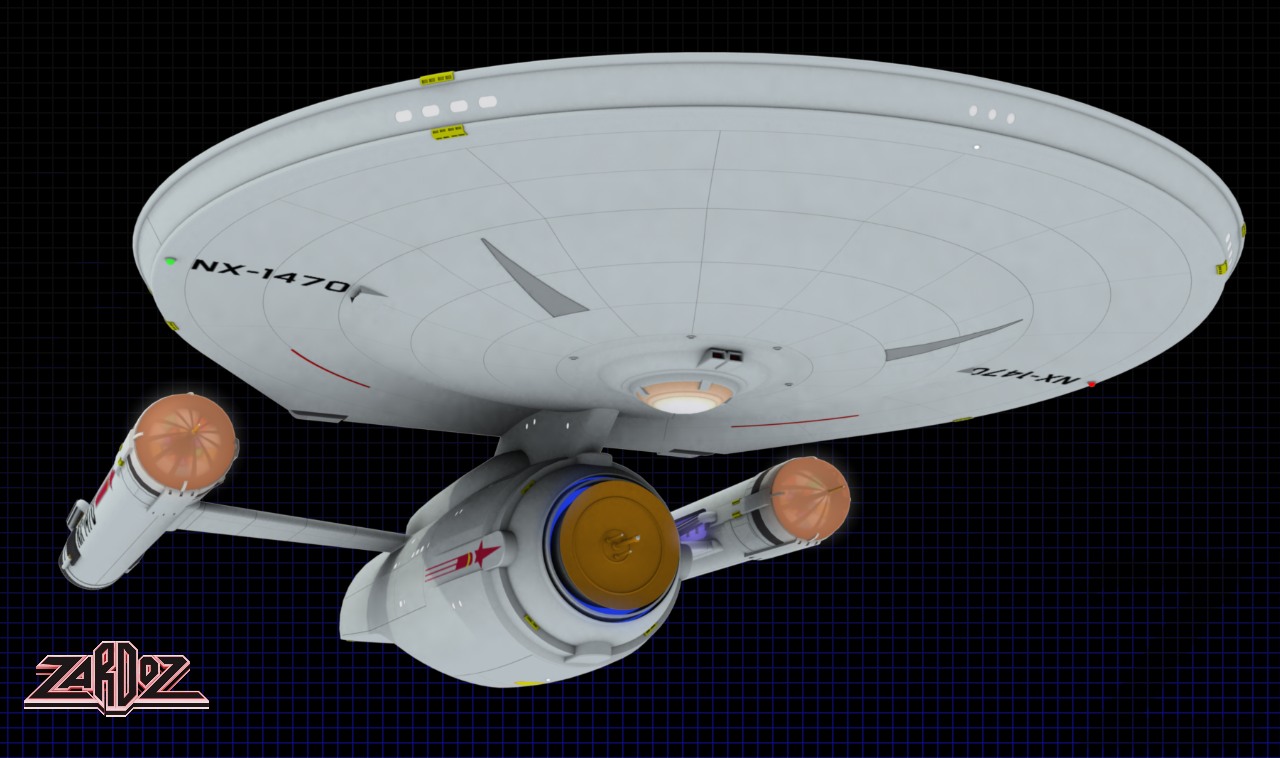
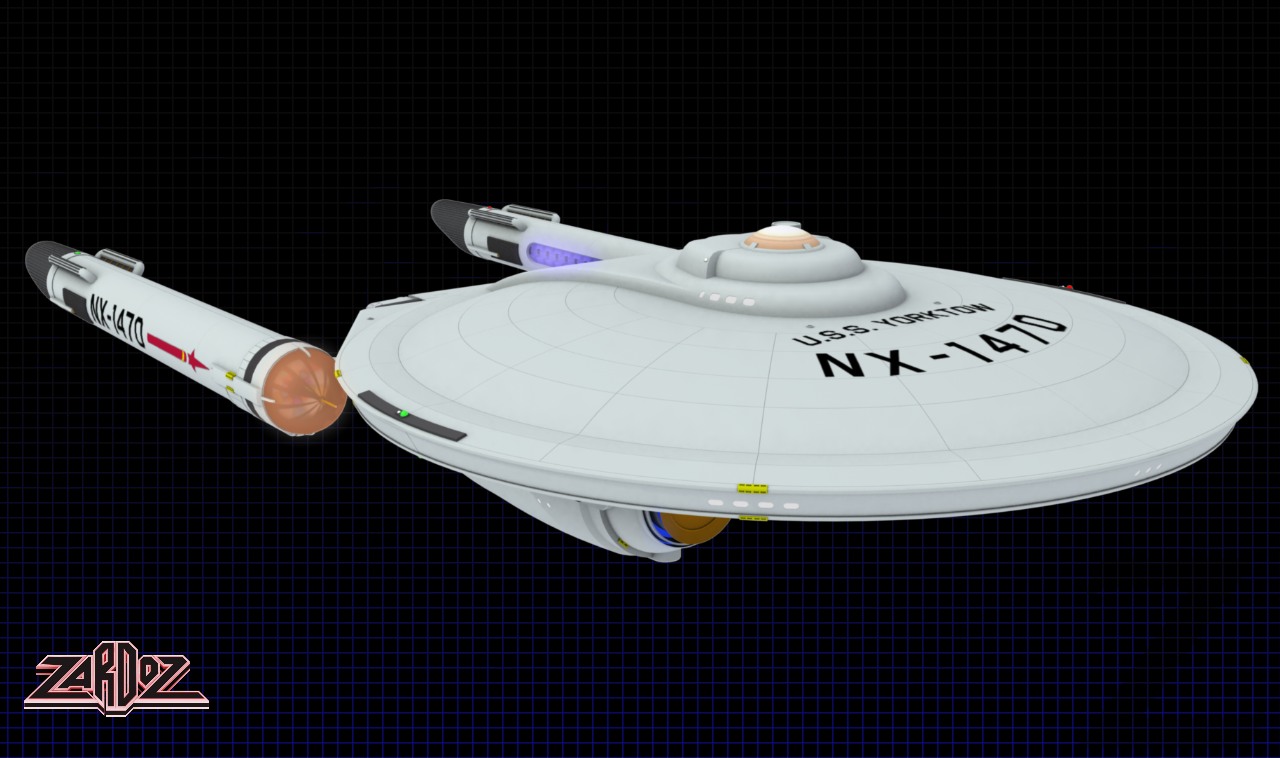
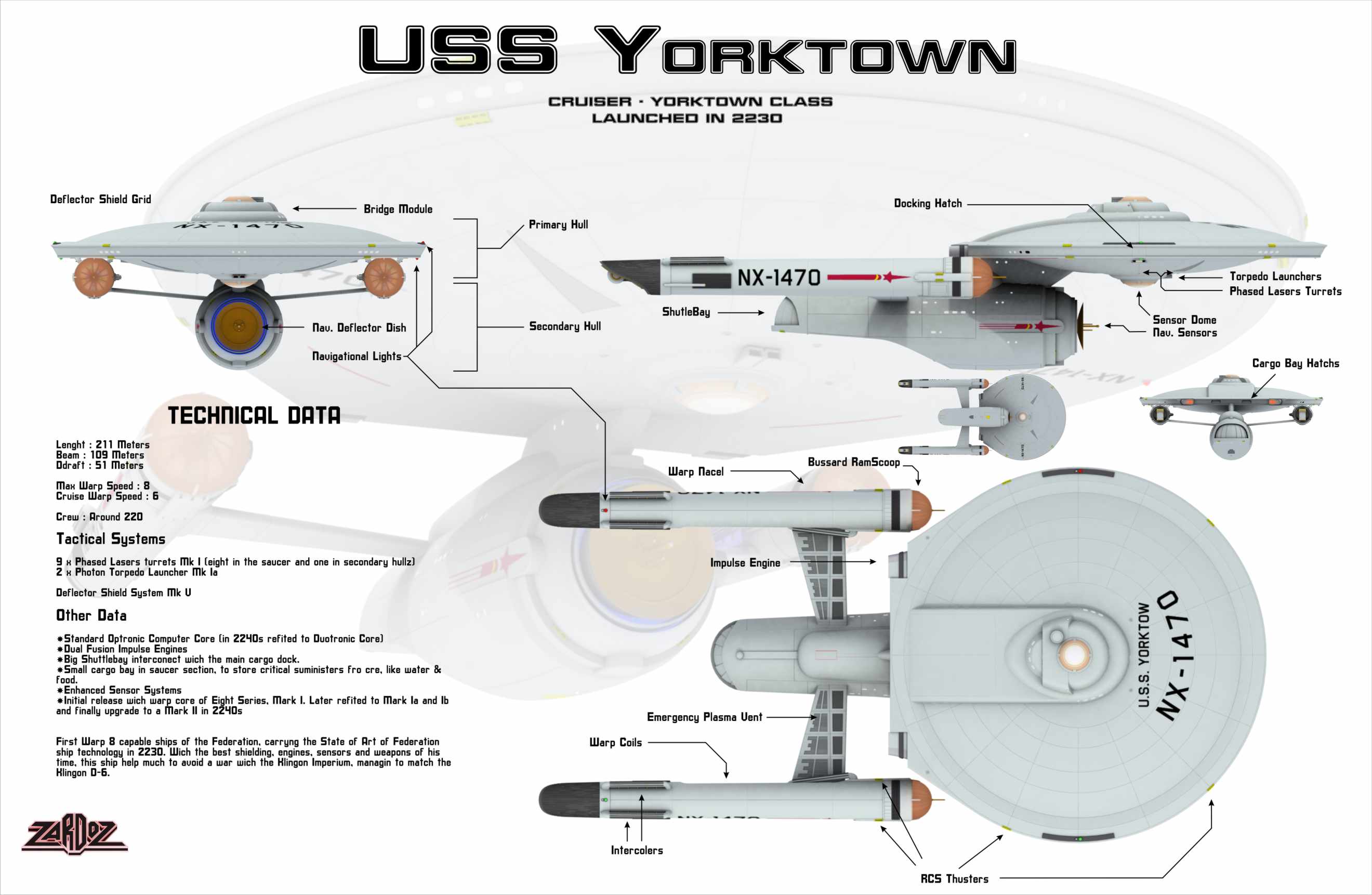 Design by ZardoZ
Type: Cruiser & exploration ship
First commissioned: 2230
Length: 211m
Width: 109m
Height: 51m
Decks: 17
Complement: 220
Speed: Warp 6 (cruise), Warp 8 (max.), Warp 8.05 (max. emergency)
Armament: 9 Phased laser turrets Mk I
Defense: Deflector shield system Mk V
The cruiser type was first launched in 2230, with an initial main role as deep space exploration and defensive cruiser. Its later roles: companion of Constellation heavy cruisers and frontier patrols.
The Yorktown was the first Warp-8 capable ship of the Federation. It initially failed to break the tme barrier (Warp 7.3) because the warp core not was capable of producing enough power to do it. Even with this flaw, the new cruiser was built in some quantities because it was the only ship in Starfleet that could match the Klingon D-6 battlecruiser (which changed the basic design of the ship to carry experimental weapons and better shielding), and that could be built quickly. When the Constitution class went into production, the Yorktown class was replaced by the Connie in deep space exploration missions. But after that, the class, and in special, the USS Yorktown still made history when finally in 2236 before a refit in the warp core (eight series Mk Ia warp core), the time barrier was broken for the first time and Warp 8 was reached.
These ships kept the Klingon forces from initiating a war before of 2243, plus it was the main ship class of Starfleet in the second conflict which the H’gerians. Later, they had a great performance in the Hapspear war of 2243, were working in battle fleets which Saladin class destroyers and Tiberius class frigates or in groups of three ships, two Yorktowns and one light cruiser, managing to keep the front lines static and to make the Klingon strike fleets withdraw. After the war, with more Constitutions in the fleet and with the mighty D-7 K't'inga battlecruiser in play, this class was relegated to work initially like a companion of the Connies and finally was retired beginning in the 2270's to be replaced by the new Mirandas.
Thanks to Masao, for his very hard worked Starfleet Museum, from where his Asia class was the inspiration of this ship. And to the people of Subspace Comms Network forum for their feedback. And finally to my friend Sikileia for his tips, and his opinions.
Venkman Class
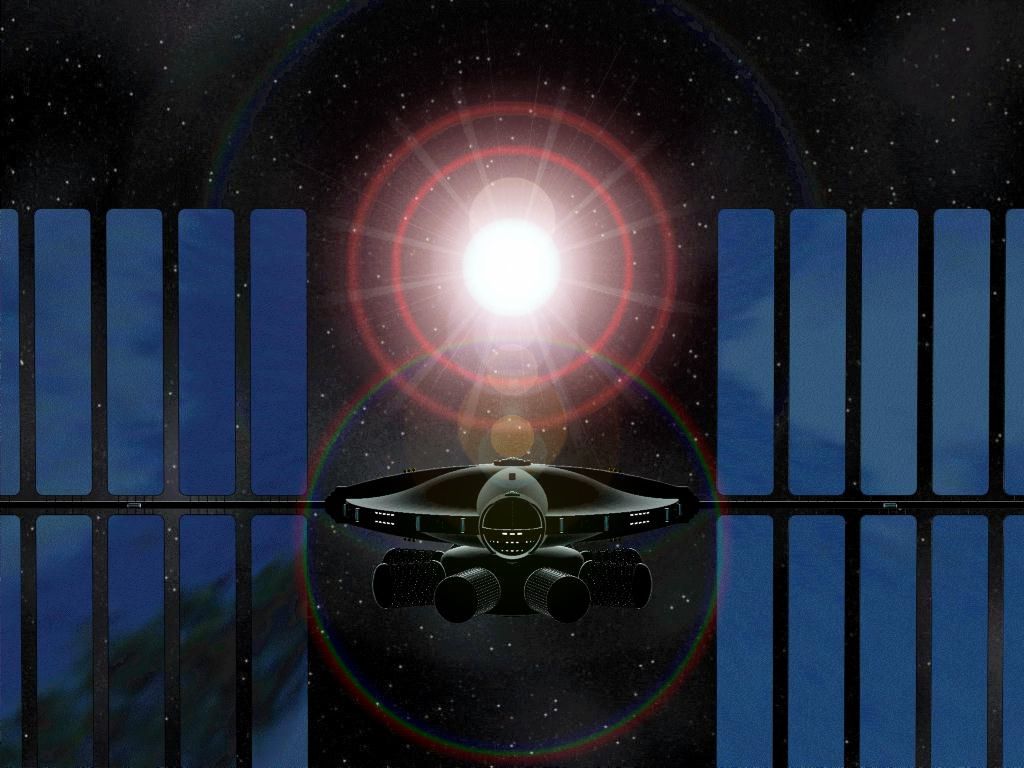
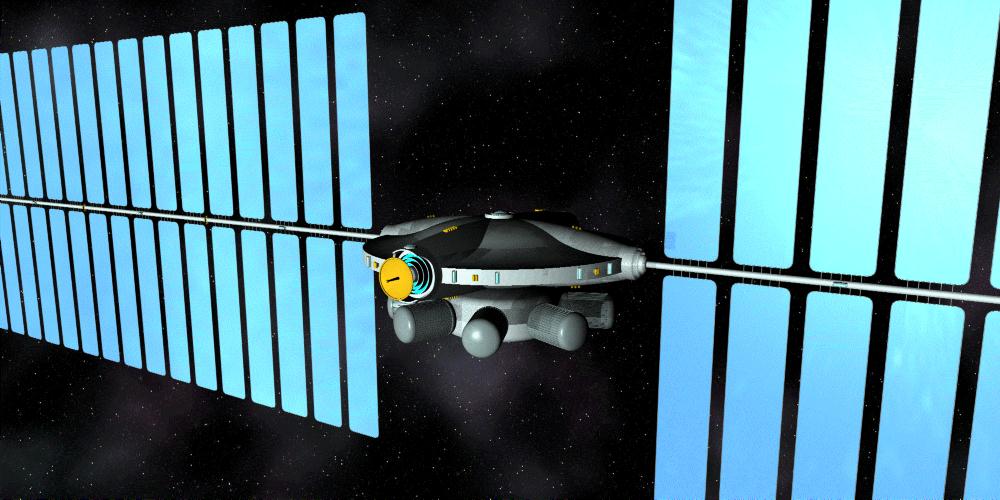
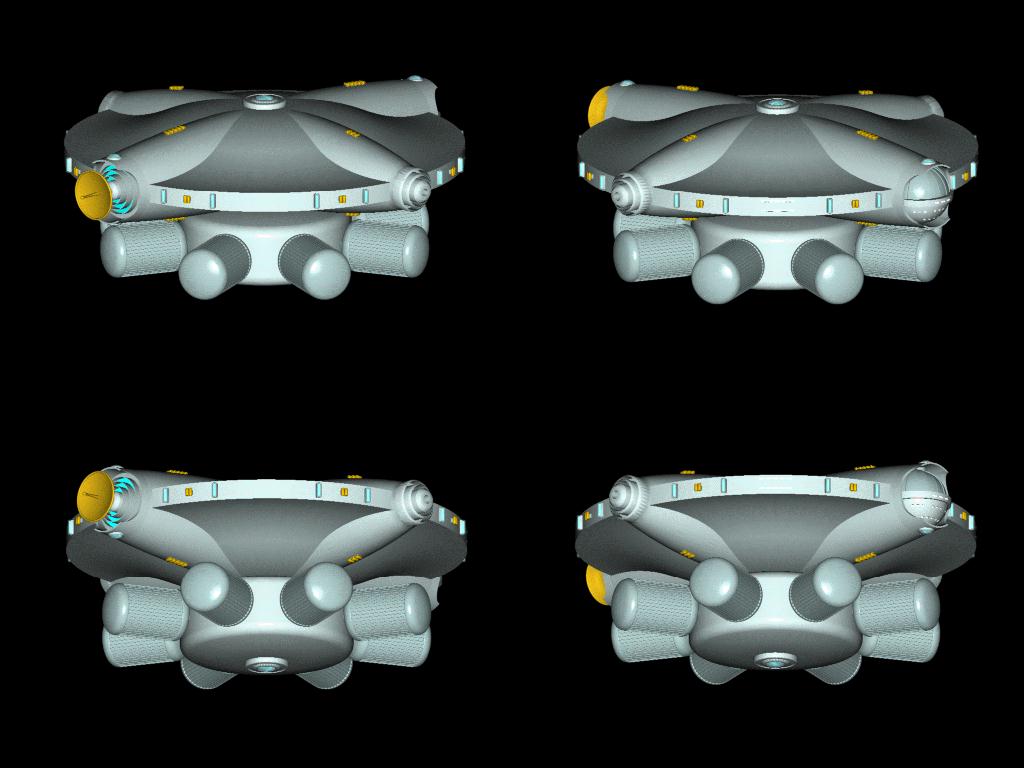 Design by Robert Heckadon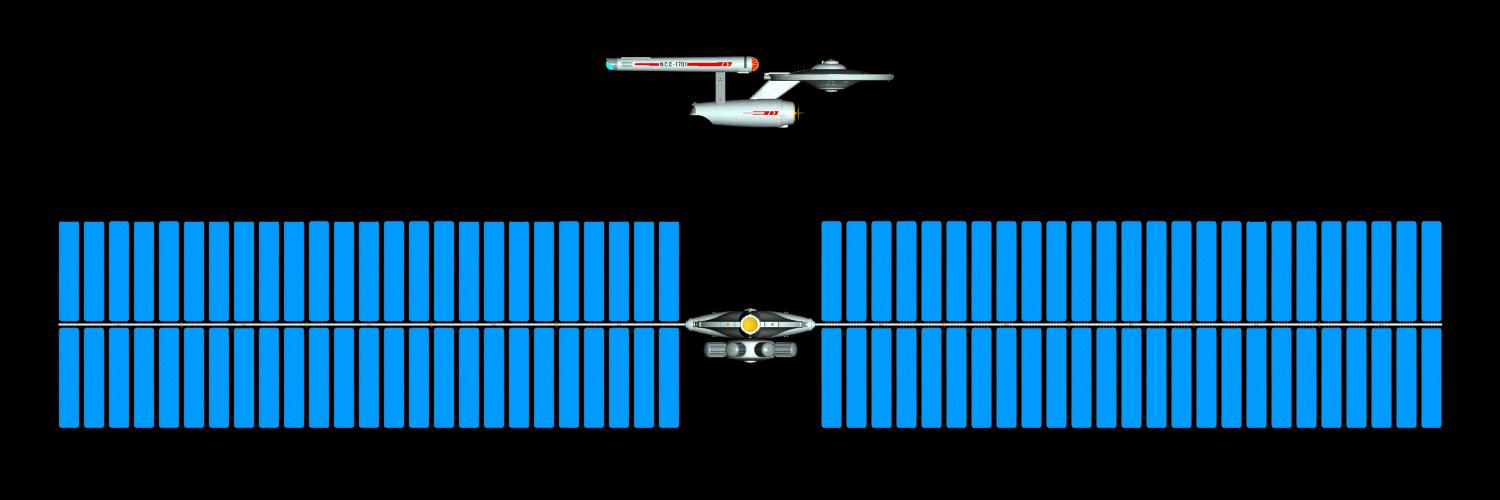
Type: Positron refinery
First commissioned: 2210
Length: 142m
Width: 1383m
Height: 207m
Decks: 18
Displacement: 2200000t
Complement: 5 officers + 105 crew
Armament: 4 phase-modulated laser cannons
Defense: Level 5 deflector shields, magnetic radiation shields
“Maybe now you'll never slime a guy with a positron collider, huh?” - Bill Murray, Ghostbusters
Positrons are the antimatter counterparts of electrons. Positrons are normally found orbiting antiprotons, and both together are used as fuel for warp engines in the form of antimatter. However small ships, such as shuttlecrafts, are too small to safely react matter and antimatter. Regulated with dilithium and electrons provided by deuterium, positron/electron reactions releases enough annihilation energy to power warp capable shuttlecrafts and ships below a certain tonnage. In the Earth year of 2210, the Federation commissioned a series of space stations to meet the demand for positron fuel, the Venkman class fuel refineries.
Unlike antiprotons that are manufactured with dense nuclear isotopes such as Ununpentium, element 115, the Venkman class refinery manufactures positron by harnessing solar energy, which is then converted into positrons through a standard energy/matter conversion systems within the refinery, located directly below the main saucer body. One hundred solar collectors are used to collect the energy of suns and stars. And each solar collector measures 2000 square metres, giving the station a current total of 200000 square metres of solar collectors.
Each collector has 10 layers of solar cells laminated on top of each other. When high energy gamma and X-rays hit's the outer layer of the solar cells, each photon transfers some of its energy to the cells. When it hits the second, more energy is transferred to the cells. The third, fourth, and so on. Often the 9th and 10th layers display a red hue, the weakest end of the visible spectrum. And with each cell sensitive enough to collect energy from infrared radiation, this brings the effective total surface area of 2,000,000 square metres of solar cells.
After the positrons are generated with solar energy, they are transferred to 8 magnetic fuel tanks that protrude out from the refinery section. Each tank can be disconnected so that it can be transferred to a fuel tanker or disconnected in the event of a breakdown of the magnetic shielding.
Since these refineries orbits stars at relatively close distances, 30 million kilometres in the Sol system for example, the Venkman class doubles as a solar observatory. The primary sensor dish is located on the “hot” side of the station. On the opposite side from the observatory is the stations shuttle bay. The “east” and “west” sides of the main saucer contains the solar power matrix system, where the stations solar collector support structures are attached to the station.
The station has a normal crew of 110. 20 scientists, 15 security personnel, 5 administration, and 70 refinery workers, engineers and support technicians.
The station is protected by the sun's ion and particle radiation with a dense magnetic field that bends the particles away from the station and tanker ships stationed near it. And due to its proximity, it gives a visually spectacular “Van Allen's belt“ radiation field. In the event of a solar eruption or a massive solar flare from the sun, all of the stations solar energy is transferred to the magnetic shield, converting it into an old style M2P2 electromagnetic sail to escape from the flare, and then can be repositioned later by a starship.
With the value of positron fuel in the open market, the station is defended by 4 phase modulated laser cannons, or simply referred to as lasers, augmented with solar energy. However due to the enormous size of the stations solar collectors, deflector shields are concentrated for the main saucer and refinery only, putting priority on the survival of the station's personnel. Old style hull polarization techniques are used to both help protect the initial 100 metres of the solar support booms and close the gaps in the stations shields.
Positrons are not restricted to fuel warp engines of shuttlecrafts and small ships. They are also used in manoeuvring thrusters in heavy cruisers and starships, fuel for portable power generators, and as an explosive used in old style spatial torpedoes and plasma warheads. However, though releasing as much energy as an equivalent mass of antimatter, the energy isn't as potent. Comparable to soft ultraviolet light from positrons to heavy gamma rays to antimatter (FOR COMPARISON USE ONLY, NOT TO SCALE). So antiprotons are preferred for larger scale starships, including the Constitution class. The refineries remained operational until 2301 when they were gradually replaced with the Trinia Utu solar platforms, that uses solar flare energy, after the Xindi joined the Federation.
http://www.universetoday.com/am/publish/positron_drive_pluto.html
http://www.nasa.gov/mission_pages/exploration/mmb/antimatter_spaceship.html
http://www.physorg.com/news64499584.html
http://en.wikipedia.org/wiki/Large_Electron-Positron_Collider
http://www.solideas.com/solrcell/howworks.html
http://www.nature.com/nmat/journal/v4/n6/fig_tab/nmat1387_f1.html
http://www.gravitywarpdrive.com/Element_115.htm
http://www.ess.washington.edu/Space/M2P2/
http://www.ofcm.gov/nswp-sp/text/c-sec1.htm
http://www-istp.gsfc.nasa.gov/Education/wradbelt.html
| Home | ||
|
||
| Last modified: 14.11.15 |  |
|