

Various Shuttles

|
Advanced
Starship Design Bureau Various Shuttles |
||
|
|||
| Starships | Shuttles | Equipment | Technology | History | Other | New | Submit | |||
 Shuttles
Various Shuttles,
Planetary Vehicles, The
Hopper Project
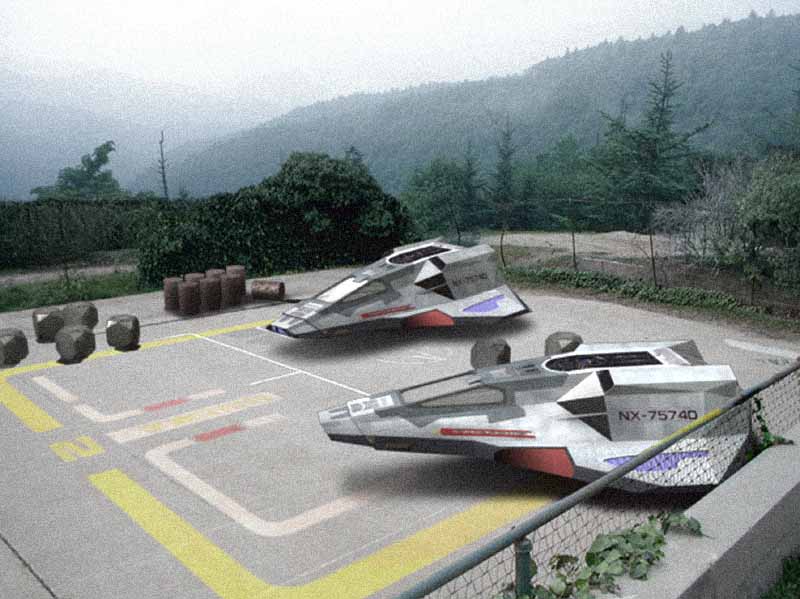
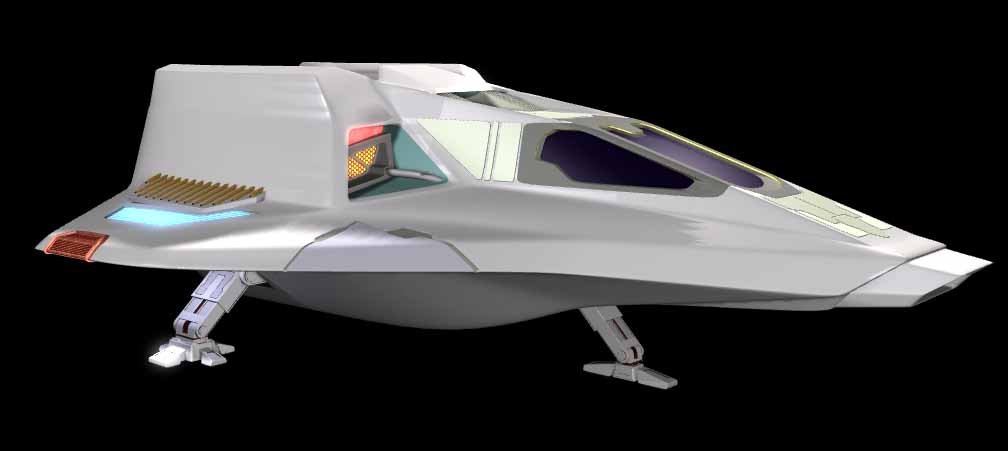
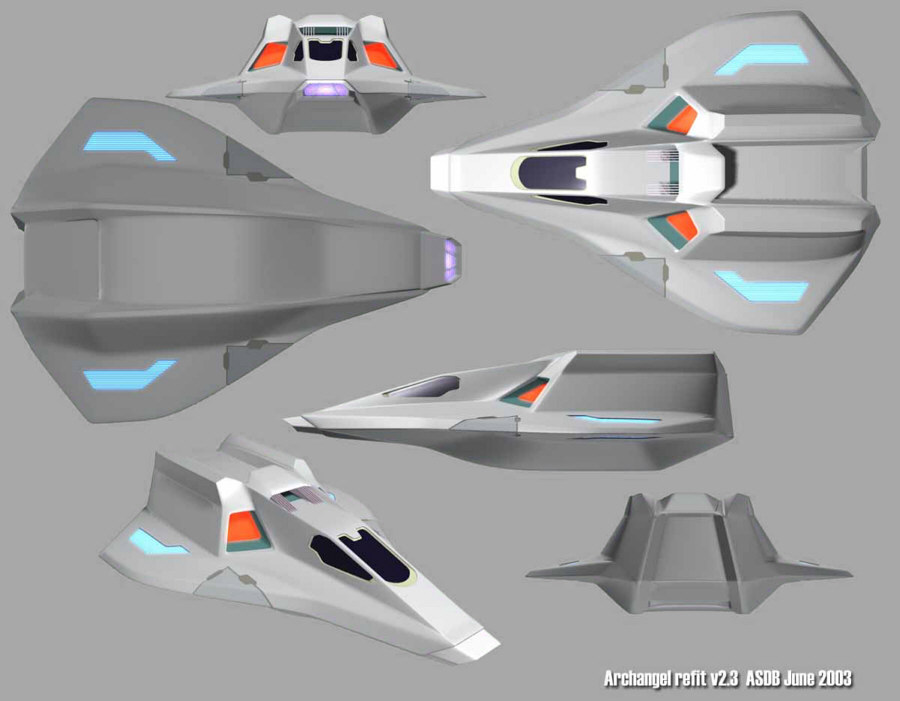
Archangel Class
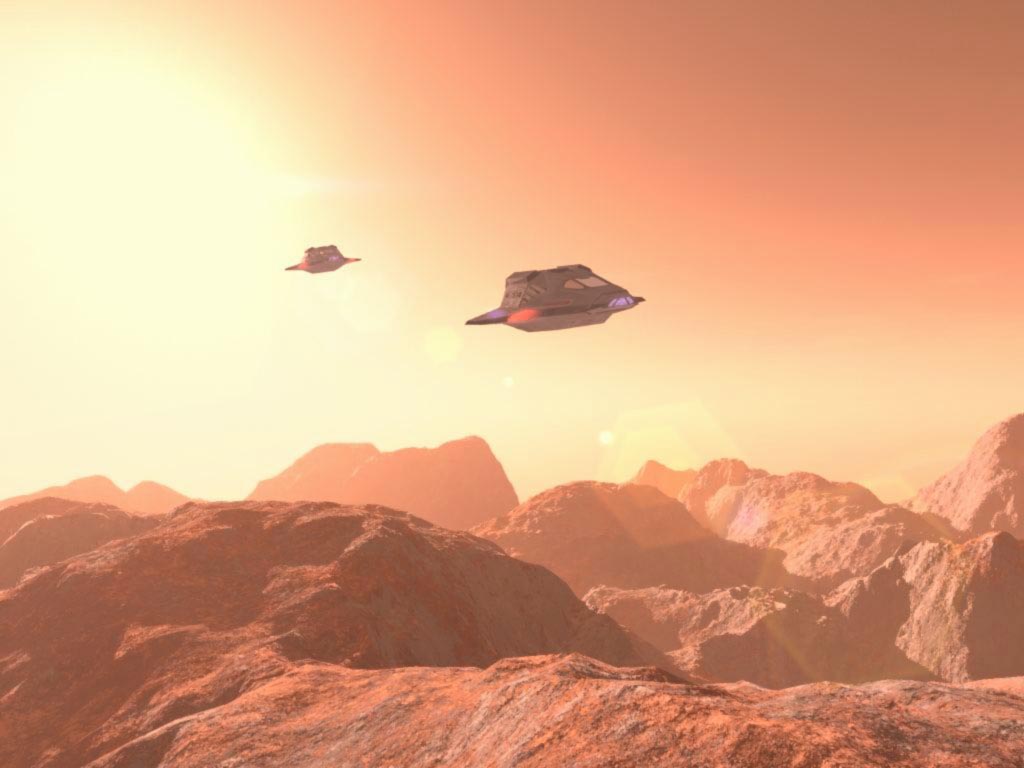
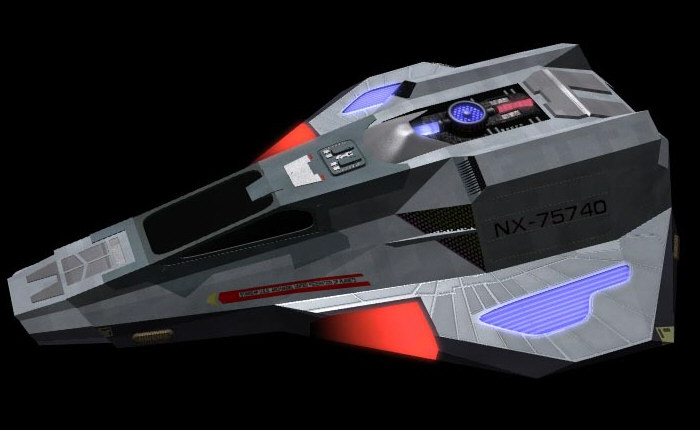
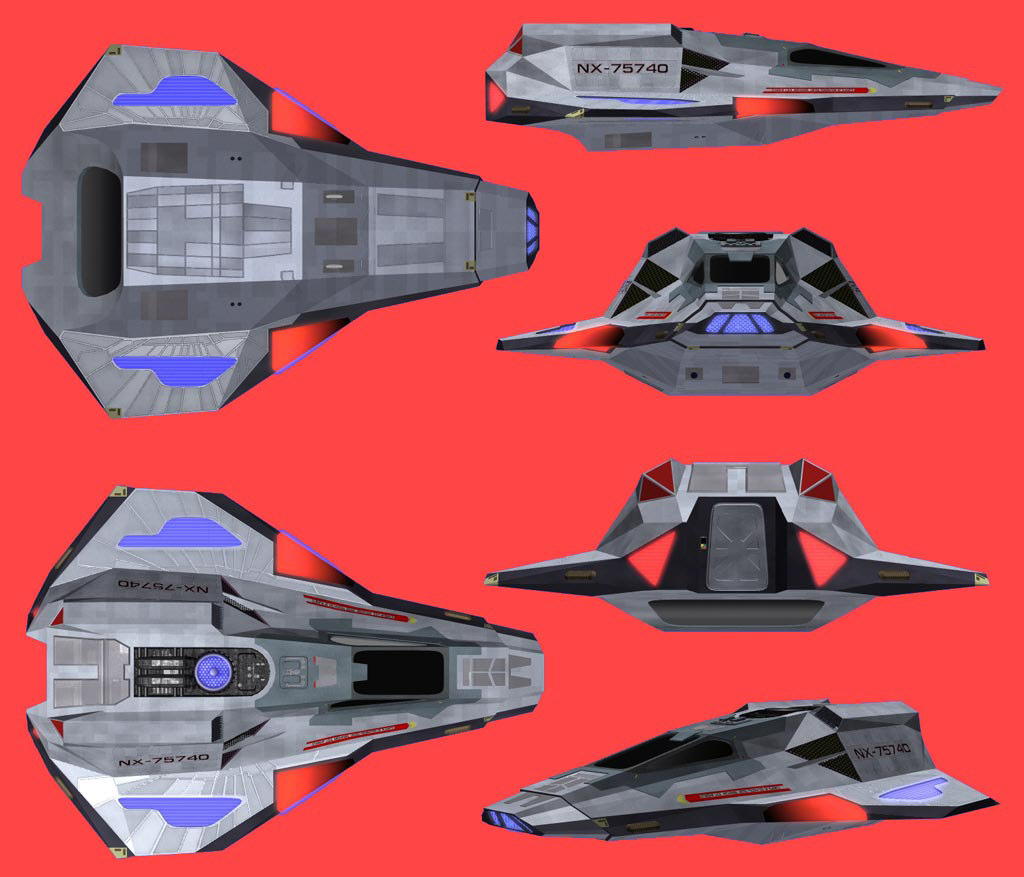 Design by Kenny, ASDB Member
No specs available
A large shuttle also known as the "Alpha Flyer"
Asgard Class
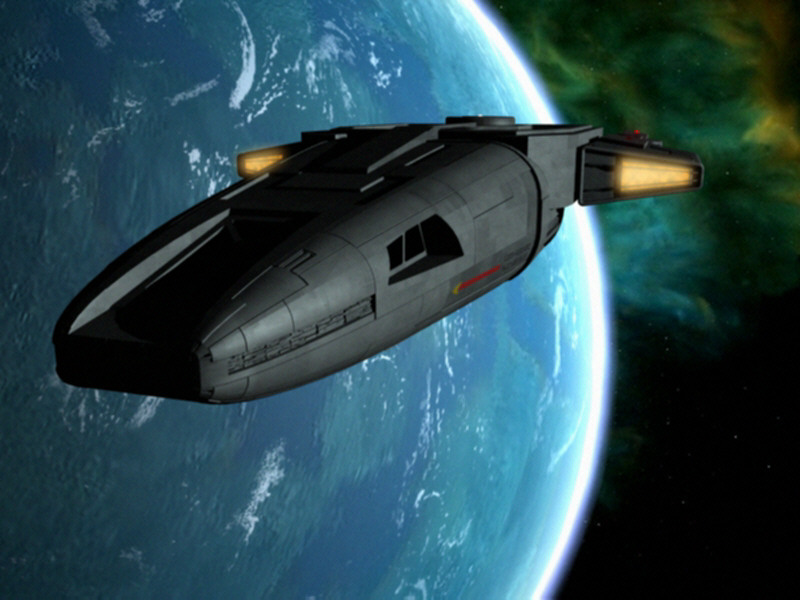
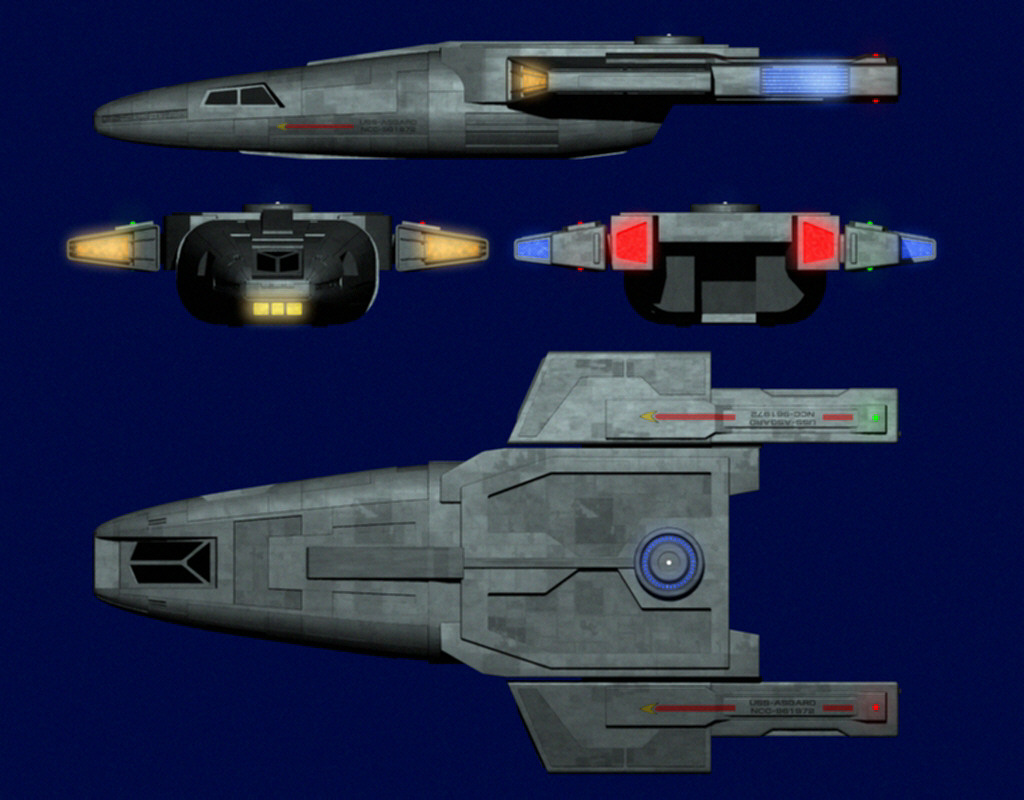 Design by Toddy
Length: 27m
Crew complement: 3
Maximum speed: Warp 9.5
No description
Bumblebee Maintenance Pod
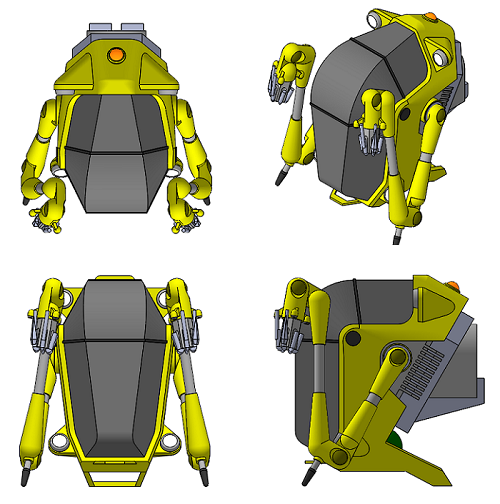 Design by Benjamin I Waddell
Type: Maintenance vehicle
First commissioned: 2320
Length: 2m
Width: 2m
Height: 2m
Complement: 1
Sublight speed: 0.00000000003c (max.)
Armament: None
Defense: None
Embarked craft: None
A one-person maintenance vehicle for spacedock and remote construction and repair functions. The operator interfaces with special sleeves/gloves which interface which enable the operator to utilize the vehicle's arms naturally. Equipped with rotary tool holders on each "hand" capable of carrying up to six tools each for grabbing, manipulating, welding, etc. Small and cheap to build, several could be stored on a starship to manage in-service repairs on the exterior of the ship.
Colorado Class
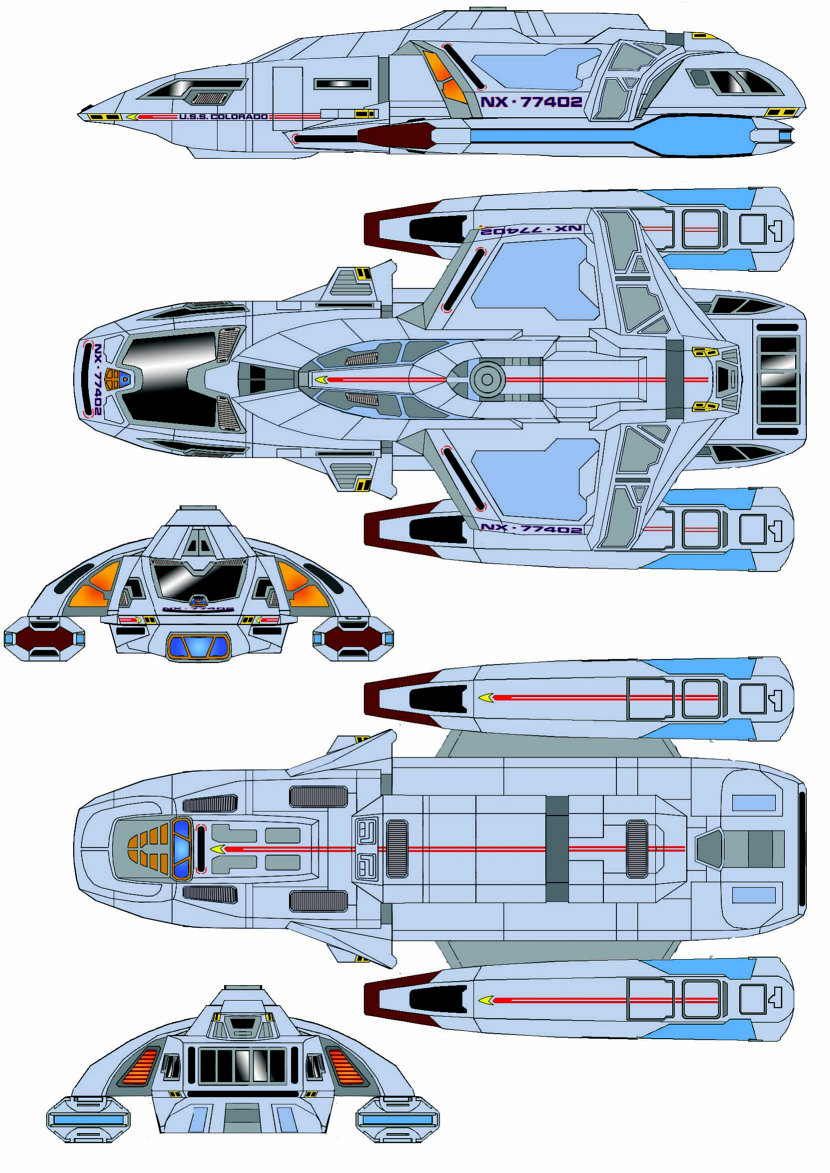
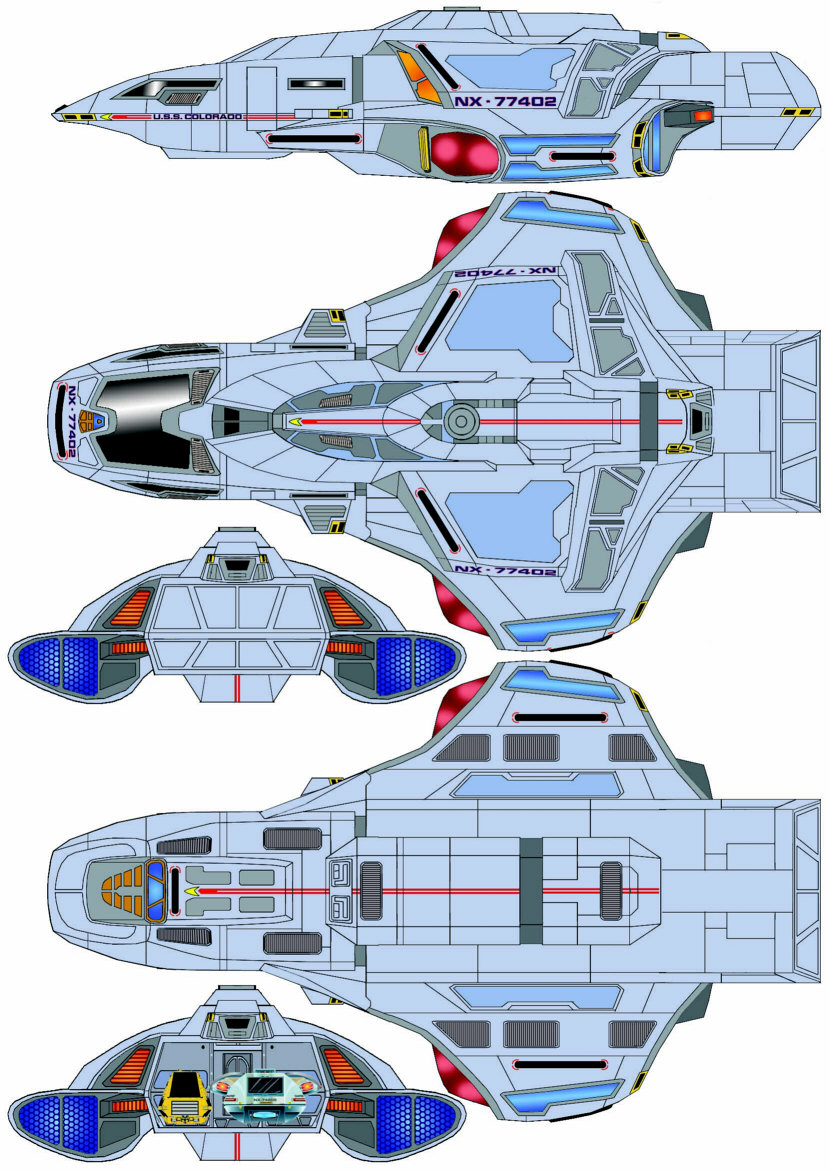
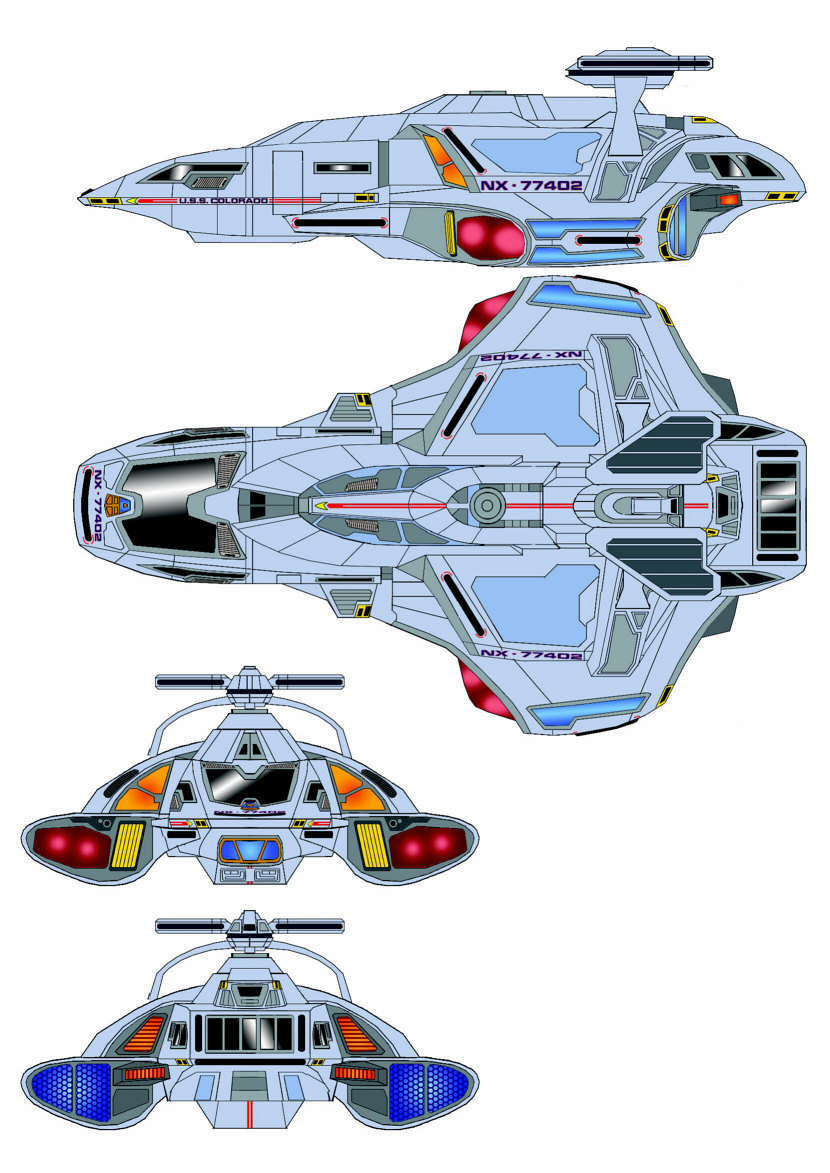
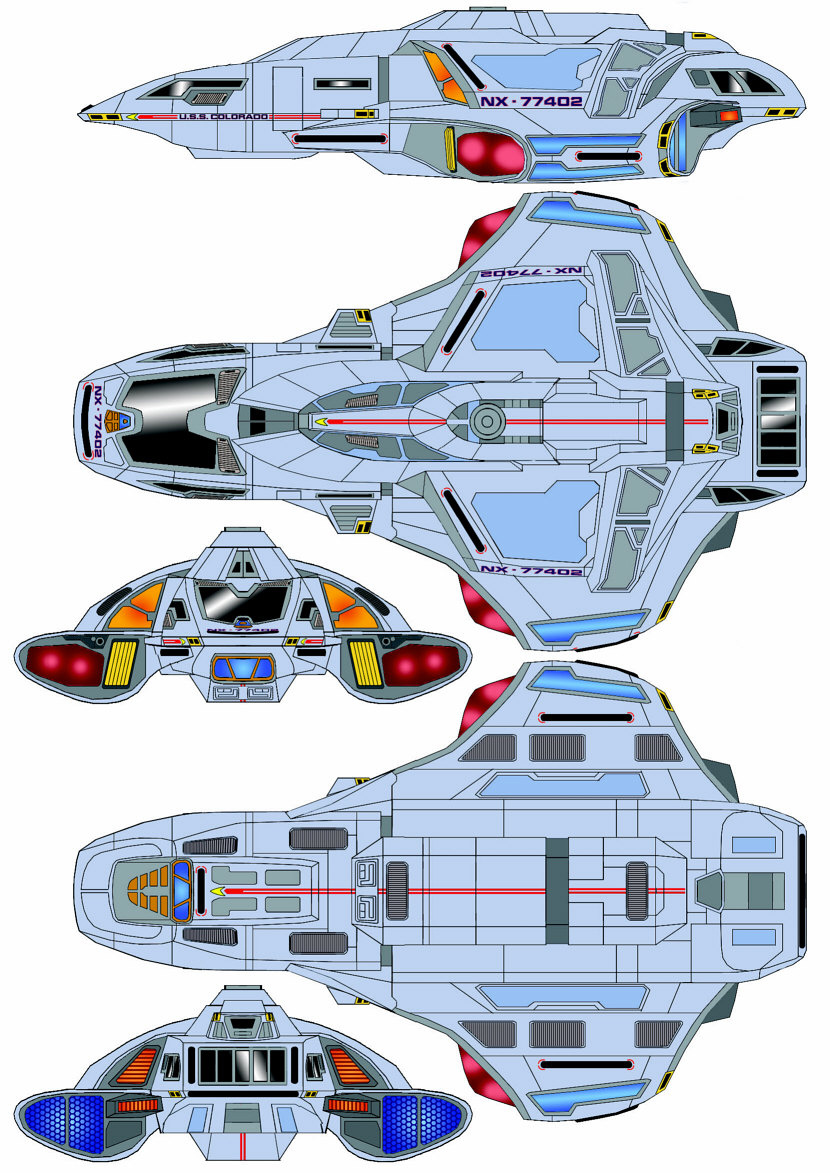 Design by James Gemperline
Type: Runabout
First commissioned: 2380
Length: 25m
Width: 15m
Height: 6m
Decks: 1
Complement: 2 crew, evacuation limit: 47
Speed: Warp 3.3 (cruise), Warp 6.2 (max.), Warp 6.9 (max. emergency)
Armament: 13x Type-5 phaser banks, 2x microtorpedo launchers
Defense: Deflector shields, Ablative armor
With the success of the Danube class runabout well established, Starfleet soon sought to expand upon the basic design. With the intent of retaining the Danube's modularity, Starfleet designers decided to make all Colorado class modular components (cockpit, midsection, aft section, warp sled, and mission pod) interchangeable with modular components of the Danube class. The Colorado class project included the development of two separate warp sled modules, one more "standard" compact, armored, and faster module, and one "slim" less compact, more conventional warp sled with a standard nacelle configuration resulting in easier storage aboard stations or starships. A new cockpit section was designed for the runabout, including increased internal space with a relatively small increase in mass, as well as the addition of a large primary and small secondary deflector, to allow for better protection during interstellar travel, and more versatility during operations.
Three aft modules have been designed thus far, the first being a standard habitation module, similar to those typically found on the Danube class. In addition, the project developed a small shuttlebay module, capable of housing workbees and shuttlepods, as well as smaller shuttlecraft, typically used in search and rescue or salvage operations. The final aft module is designed for quick and easy egress of personnel via a large rear gantry. The module is often referred to as a "drop pod" due to the module's ability to transport and deploy troops or security personnel. The "drop pod" can also be ideal for emergency evacuation due to the quick egress the gantry and multiple transporters allow.
Dauntless
Class
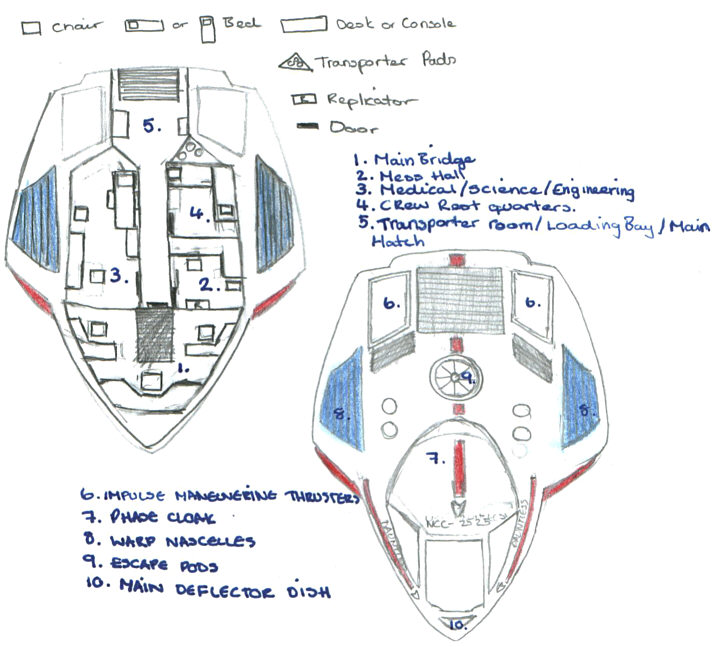
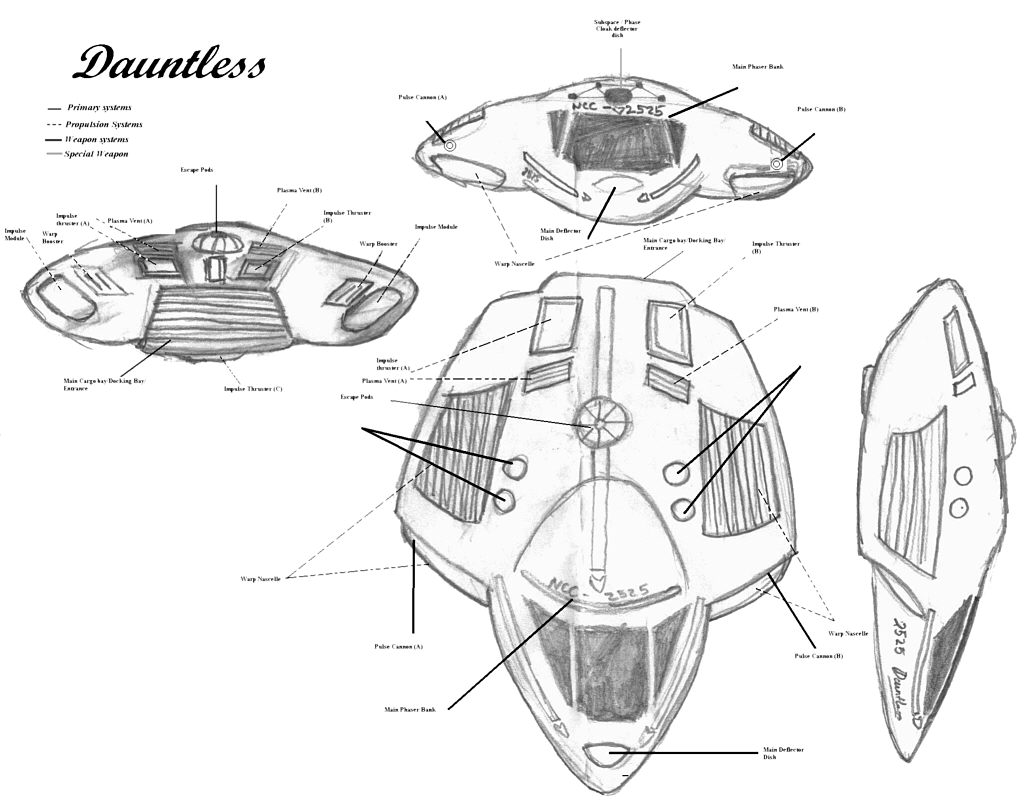 Design by Scott Summers
No specs available
No description
Dolphine Class Mark II
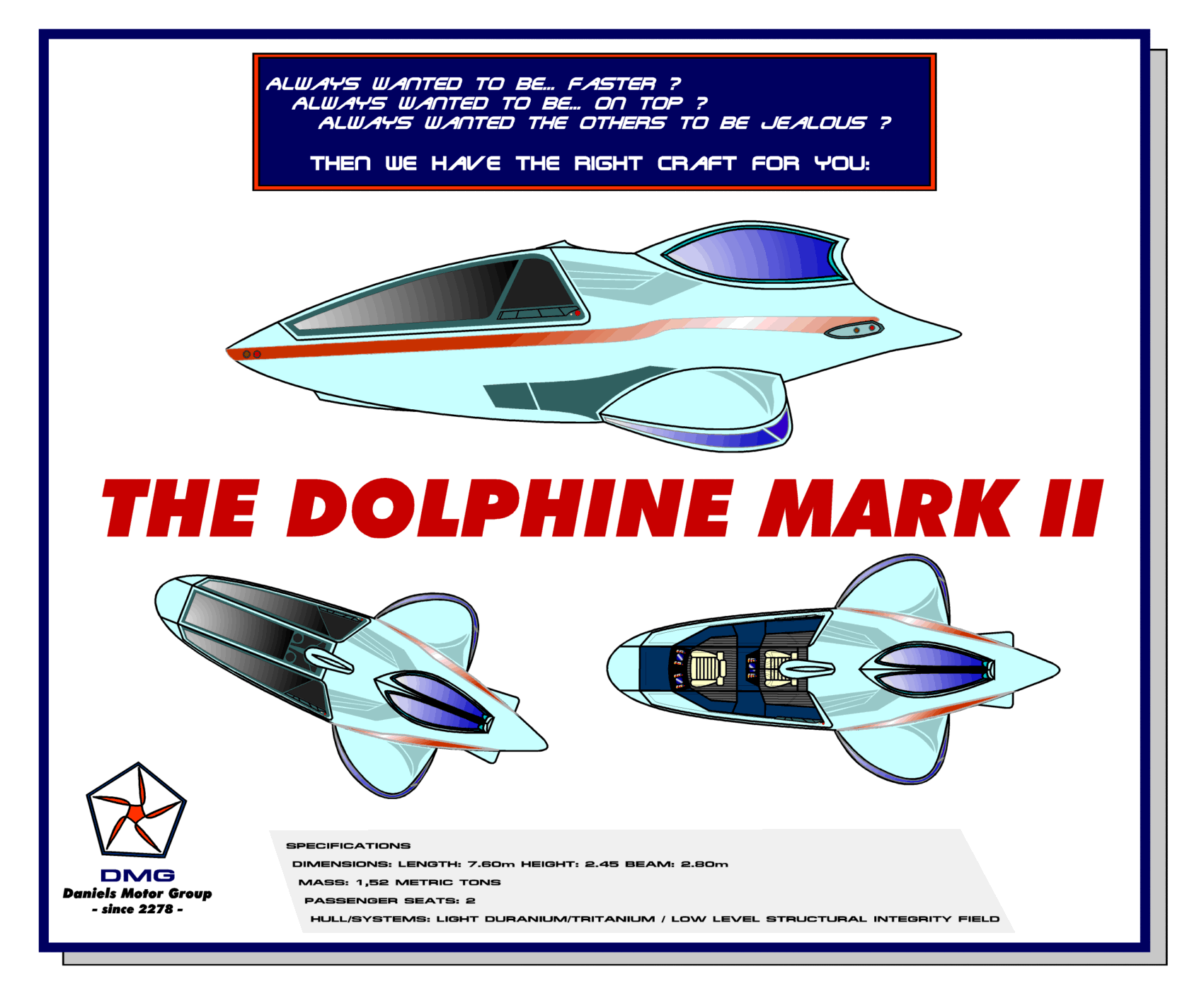 Design by Zorin
Type: Shuttle
First commissioned: 2385
Length: 7.6m
Width: 2.8m
Height: 2.45m
Displacement: 1.52t
Complement: 2, evacuation limit: 2
Always wanted to be... Faster? Always wanted to be... On top? Always wanted the others to be jealous? Then we have the right craft for you: Dolphine Mark II.
Duckbill Yacht Class
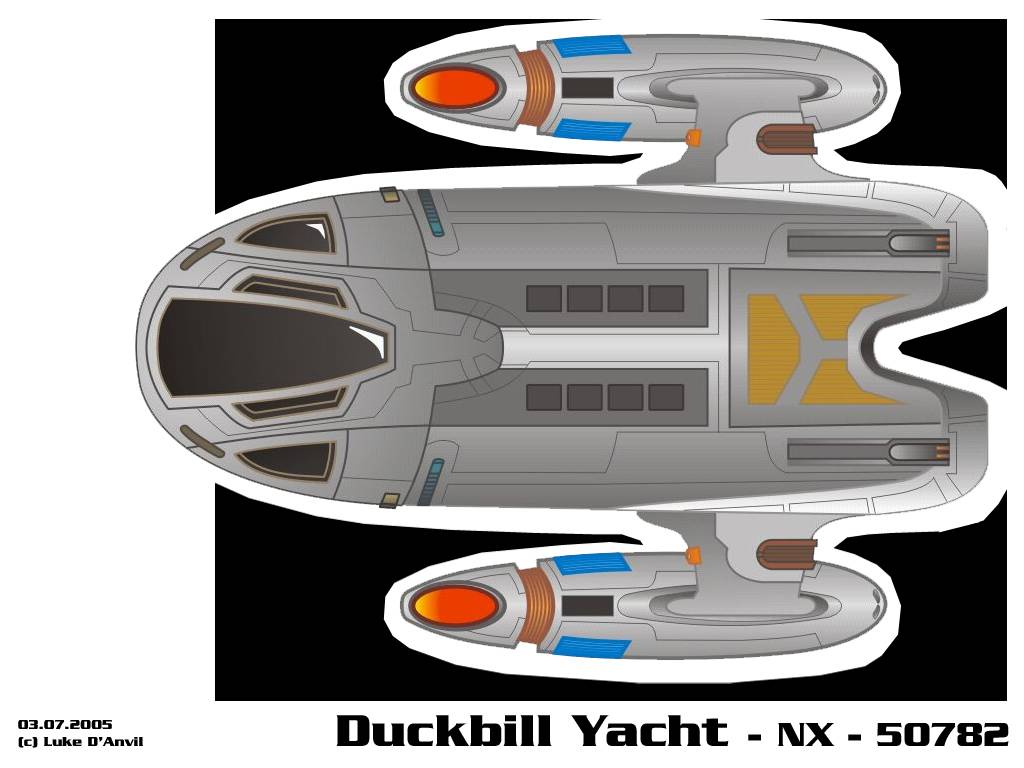
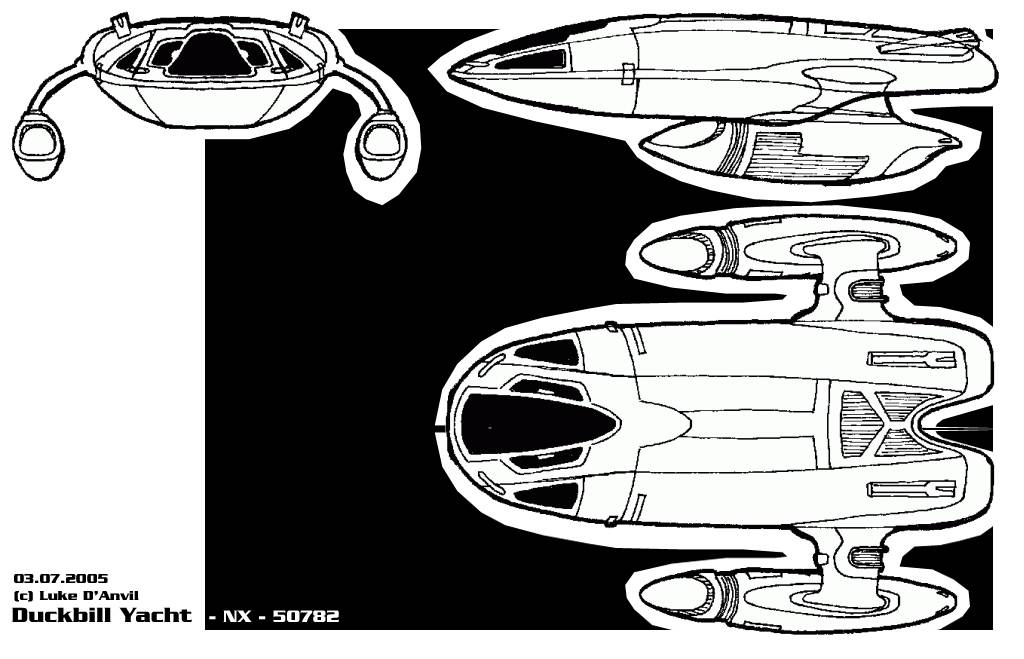
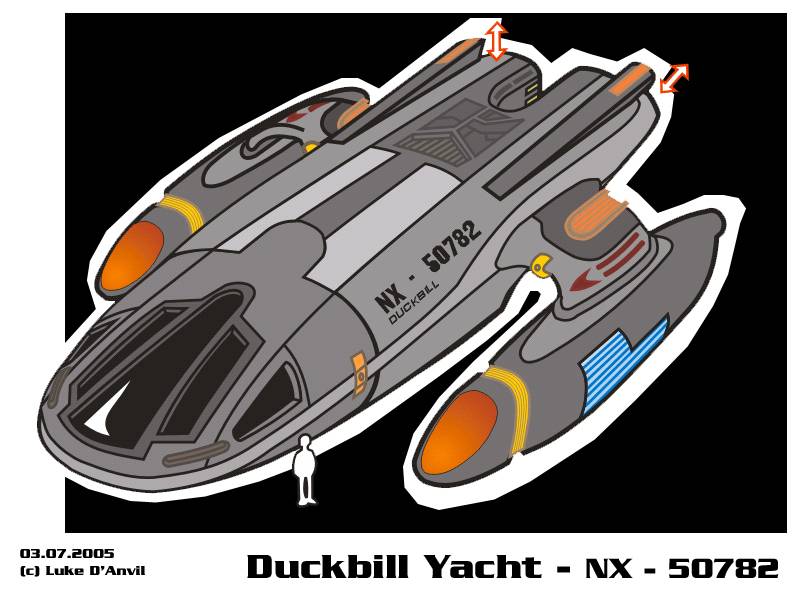 Design by Luke D'Anvil
Type: Captain's yacht
First commissioned: 2382
Length: 22.5m
Width: 18m
Height: 7.5m
Decks: 1
Displacement: 0.94t
Complement: 1 officers + 8 crew, evacuation limit: 22
Speed: Warp 9.2 (cruise), Warp 9.5 (max.), Warp 9.75 (max. emergency)
The Duckbill yacht was planned to be the Captain's yacht on the USS Daheisy first. Construction problems with the compact warp drive caused the engineers to replace her much later than intended. The Duckbill has proved herself worthy in a sudden conflict with some Ferengi Marauders.
Erewhon Class
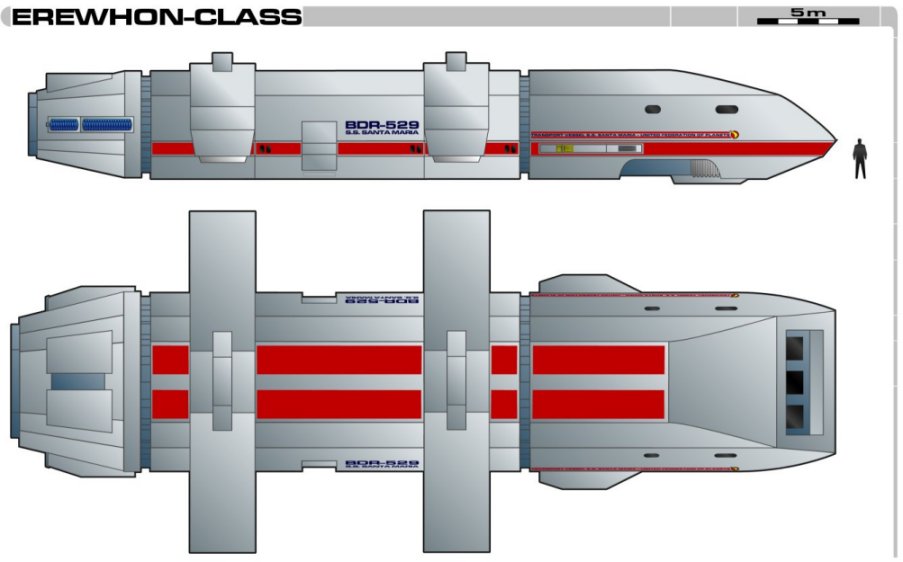 Design by Kris, ASDB Member
Type: Personnel transport
The SS Santa Maria of the Erewhon class could be seen landed on a planet in DS9: "Paradise", however, its hull shape was not revealed.
Jäger Class
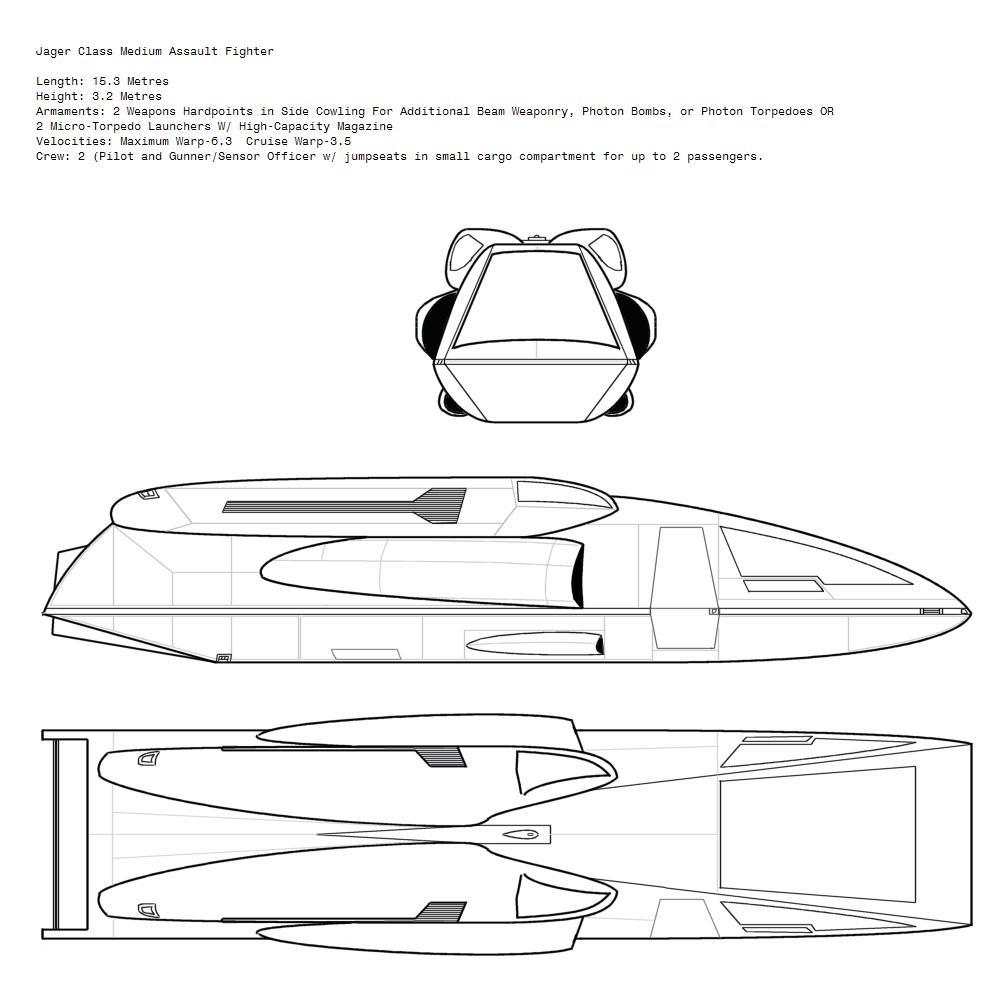
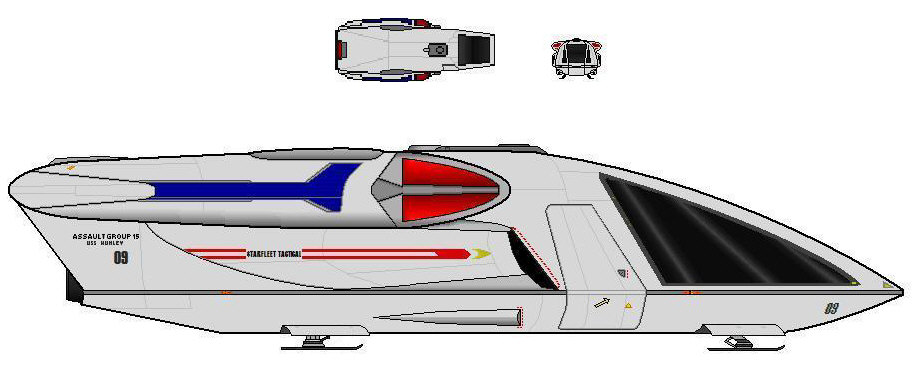 Design by Nathan Fortner
Type: Medium Assault Fighter
Commissioned: 2382
Length: 10m
Crew: 2 (one pilot and one gunner/sensor officer) with room in small storage/cargo space behind cockpit with 2 jumpseats for 2 passengers
Velocity: Warp 3 (cruise), Warp 5.5 (max.)
Armament: 2 Type-V pulse phasers, 2 weapons hardpoints for weapons such as torpedoes or photon bombs in side fairings
or 2 micro torpedo tubes in the fairings with a high torpedo capacity
magazine
The Jäger Class is a medium assault fighter to be carried aboard carriers or forward battleships to be used in fleet and base defense and security, support of ground troops, and securing ground and small space targets. The Jäger (pronounced Yay-gur) receives its name from the hunter in ancient Germanic mythology and the modern German word for hunter. It is a dedicated military ship, with advanced targeting sensors, weapons systems, and defenses. The Jäger is a formidable craft for its size. It has great versatility in weapons with the weapons hardpoints allowing for a wide range of missions, anywhere from ground assaults with photon bombs or assault in numbers on a capital ship with torpedoes. The Jäger's sleek design gives it good handling characteristics in an atmosphere even without shielding.
Knox-Johnston Class
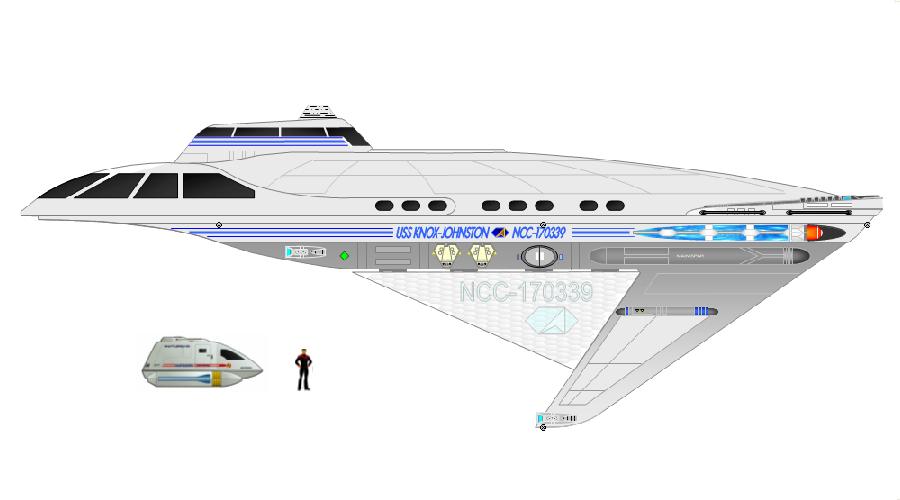 Design by Rich Rogers
Type: Stellar yacht
First commissioned: 2388
Length: 36.2m
Height: 13.5m
Decks: 3
Complement: 3 officers + 24 crew
Speed: Warp 2.9 (cruise), Warp 4.2 (max.), Warp 4.3 (max. emergency)
Armament: 1 phaser array
Defense: 1 low power shield generator
Embarked craft: nil
Background
In 2371, Captain Benjamin Sisko, Commanding Officer of DS9 undertook a voyage in a replica of an ancient Bajoran
light ship of his own construction. His voyage took him from the Bajoran system all the way to Cardassian
space, thereby proving the ancient Bajorans were capable of undertaking such a journey. Fourteen years later, and the region was finally emerging from the ashes of the Federation-Dominion War. Humanitarian and relief efforts had seen the restoration of the Cardassian Union to its former glory and there had been no further incursions from the Gamma Quadrant. To mark the tenth anniversary of the armistice, a solar yachting race was proposed, also recognising the achievements of Ben Sisko before his disappearance in 2375. In part, it was inspired by Sisko’s son Jake, who was also part of the original voyage who recalled their exploits in his book “On the Frontier” published in 2377 about life aboard DS9. Indeed, Jake Sisko entered the race along with his friend
Lieutenant Commander Nog, piloting the ship his father had built. Asides from the privateers, and foreign powers that entered, the Advanced Starfleet Design Bureau also fielded an entry called the “Spirit of the Wind”. In an event filled race, the Starfleet entry, crewed by a team of 12 volunteers, finished a credible third. The yacht was initially donated to the Smithsonian, but the Principal of the Academy, Admiral Sam Whitmore, was so impressed with the crew’s achievements, that he requested use of the yacht. A worrying trend had started to emerge amongst the graduates of the Academy. Fleet reports indicated an increased reliance on technology and automated function, and many officers lacked initiative or the ability to cope in less than ideal situations. Whitmore believed that by using the
yacht for training purposes, the cadet’s would gain valuable experience through working in an environment where computerisation and other comforts usual aboard a starship were keep to a minimum. The training proved to be such a success that Whitmore submitted a recommendation to Starfleet Command to expand the idea further. In his proposal, Whitmore suggested the creation of a further six solar yachts, with the aim
being...
“...to develop the technical skills and personal qualities essential to members of the Starfleet through adventurous sail training in an austere service environment.”
Automated function was to be kept to a minimum, so that sail handling, piloting, astro-navigation would all be done by hand. Furthermore, whilst the environment would be reasonably benign, the crews would experience certain hardships, including: no replicators, all meals would be from fresh produce and prepared by hand; all crews would perform all duties aboard the yacht, from cooking and cleaning to carrying out maintenance tasks. Starfleet Command approved the proposal in 2387, and gave the go ahead for six vessels to be constructed, widening the proposal to open up training for established Starfleet personnel as well as Academy cadets. Furthermore, the vessels would also be made available for expeditions. Thus, the Knox-Johnston class was born. From early 2388, the yachts were commissioned. The first of class, the USS Knox-Johnston (NCC-170339) was launched on the 16th February and was assigned to duties with Starfleet Academy. She was soon joined by the USS Macarthur and the USS Gypsy Moth. Other yachts soon came on line and were deployed throughout the Federation, in systems where large concentrations of tachyon eddies were known to exist. The six vessels commissioned were designated:
USS Knox-Johnston
USS Macarthur
USS Gypsy Moth
USS Cutty Sark
USS Aubery
USS Heyerdahl
Please with the results of the training, Starfleet Command approved to production of another six vessels. Furthermore, the remit of the class was expanded to fulfil diplomatic and trade duties. It was envisaged that whilst capital ships would still be engaged in first contact and important treaty agreements, solar yachts could be used to host minor political figures and dignitaries. For this purpose, the yachts were redesigned to incorporate a large state room at the rear in addition to ambassador level accommodation. The new ships would be constructed to this standard, whilst the existing fleet would be upgraded to incorporate the changes. Further changes included the incorporation of a single phaser array and a low-level shield generator to afford the ship some protection against hostile attack. The second batch of ships were commissioned in 2396, and designated:
USS Mayflower
USS Chichester
USS Bourgnon
USS Joyon
USS Jeantot
USS Vendee
USS Slocum
Specifications
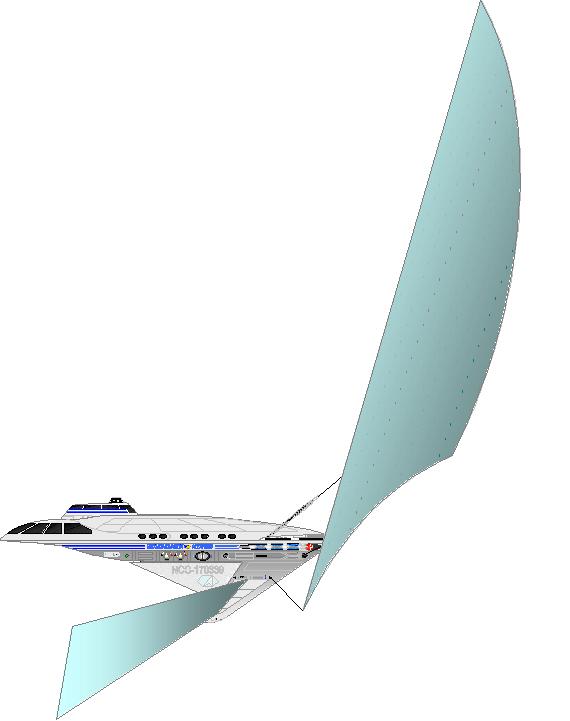
The Knot-Johnston class stellar yacht utilises a four-sail arrangement to provide its means of propulsion. It relies on tachyon eddies and solar winds to push against the sails and propel the ship forward. Within a constant tachyon stream, the ship will continue to accelerate, and in favourable conditions can achieve warp speeds. The ship has a main sail, known as the
Spinnaker from which much of the propulsive thrust is derived. It also has a pair of Genoa sails which can be adjusted to provide directional thrust. The forth sail, located behind the keel, is known as the Lateen, and is also used for directional control as well as providing electrical power to the yacht during bare-bones operations. All the ship’s rigging can be controlled by hand, or fully automated depending upon the mission requirements. Asides from the sails, the yacht does have a convention warp propulsion system, but this is often disabled for training missions unless an emergency situation ensues.
During training, the yacht can accommodate a crew of 27, comprising the skipper, the first mate, the navigator along with 24 crew arranged in 3 shifts of eight. Amongst the crew will usually be a medic and an engineer or technician. However, asides from the three principal officers, all other crew will be involved in all duties aboard the yacht including helming, sail handling and domestic duties. Crews are accommodated in two-person bunk rooms, whilst ablutions are minimal and shared. When configured for diplomatic duties, the on-board computer systems are enabled which allows the ship to be operated by a permanent crew of eight. This allows the accommodation to be made available for visiting dignitaries as well as representatives from the Federation Diplomatic Corps. Although it is preferred that the solar sails are used during such missions to make use of the yacht’s unique characteristics, the warp engine is available if required.
Lightning
Class
 Design by Gun
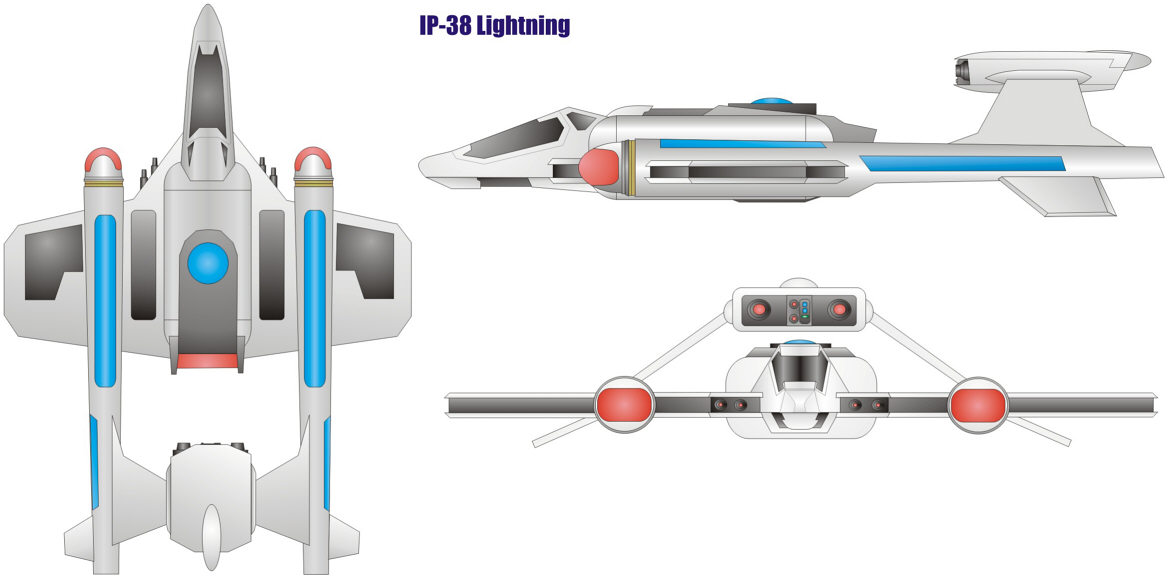
Type: Fighter
Length: 22m
Weapons: 4 light phaser
cannons, 2 Type-5 phasers, 2 micro torpedo launchers, 5 torpedo magazines each
Speed:
Warp 3.5 (for 48h), Warp 1 (cruise), or max. impulse
Defence: 2 redundant standard shuttle class
shield emitters
The class was designed during the Cardassian War by an engineer who was fascinated by the fighters of WW II, but stayed on the drawing board as it was thought to be somewhat of a novelty. But as the war progressed Starfleet Command put out a request for a new fighter to escort landing hoppers in battles where transporters could not be used due to dampening fields. Due to the urgent need for a fighter and the Lightning's other wise sound design, it was dusted off and put straight into production. It did not take long to realize the ship was all so useful as an interceptor and an assault fighter due to its relatively heavy armament and shielding. The novelty had become an extremely effective fighter so much that it is still in use today by many starbases and in planetary defence forces and is not due to retire any time soon.
PF-15 Iolair Class
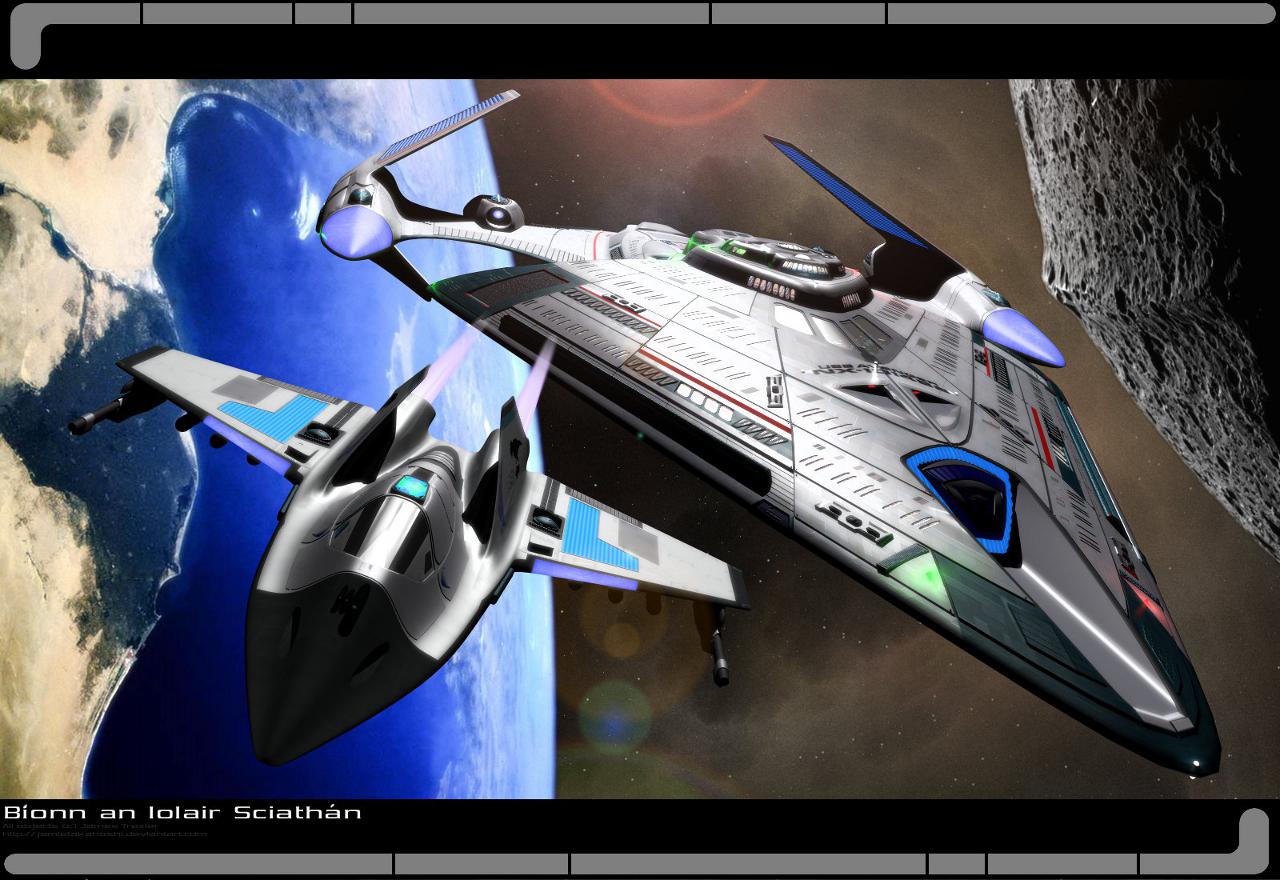
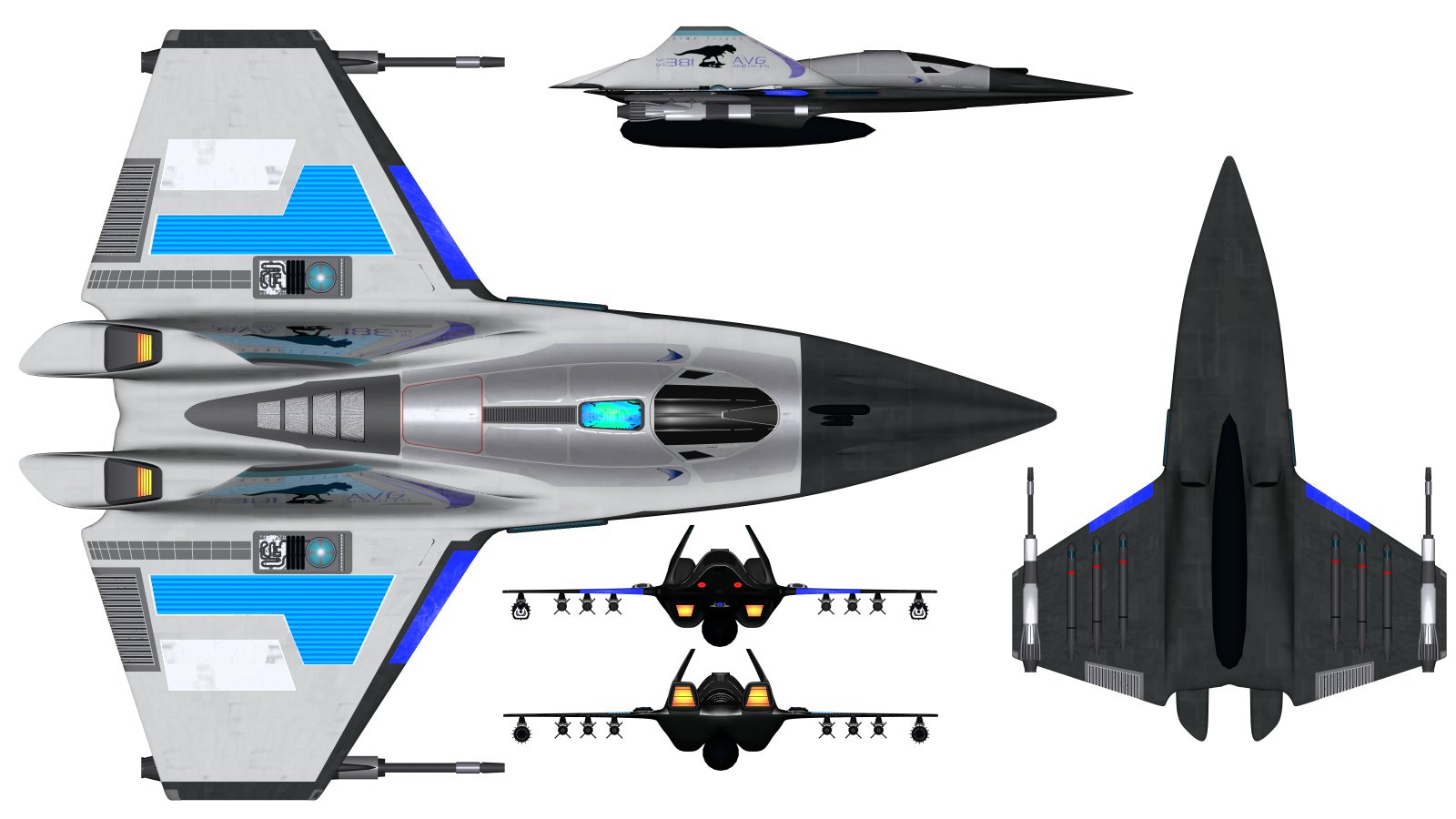 Design by James Trexler
Type: Fighter
First commissioned: 2401
Length: 23.6m
Width: 17.5m
Height: 4.14m
Displacement: 25.3t
Complement: 1 officer
Speed: Warp 1.85 (cruise), Warp 2.5 (max.), Warp 2.75 (max. emergency)
Sublight speed: 0.12c (max.)
Armament: Two Type XI phaser arrays, two Mark V microtorpedo launchers, two GSA-5U phaser cannons
Defense: Polymorphic ablative armor, deflector shields
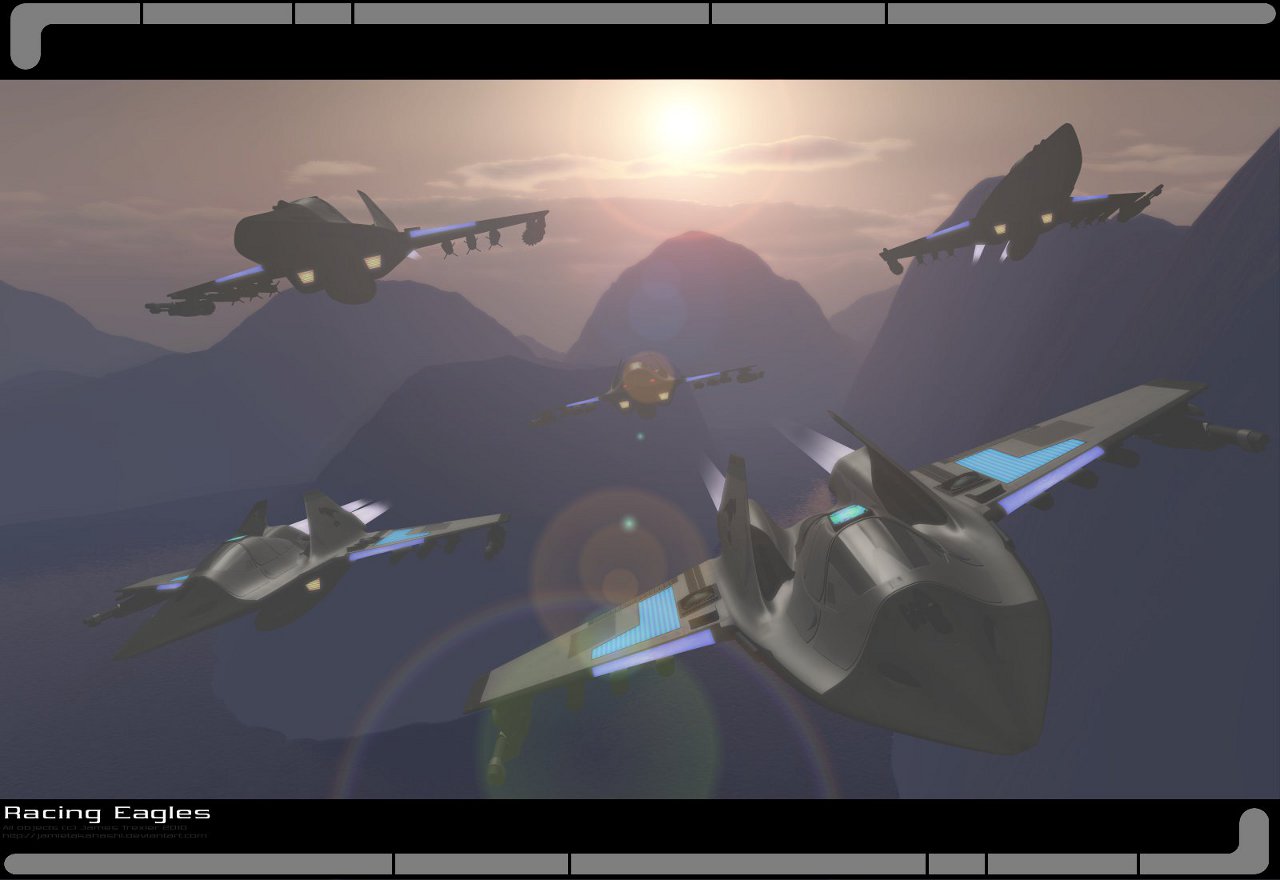
The Iolair entered Starfleet service in December 2401 as the PF-15. It was completed ahead of schedule and under budget on an accelerated development schedule, and Starfleet considers the PF-15 a critical component for the future of Starfleet tactical air and space power, and claims that the vehicle is unmatched by any known or projected fighter, while Aegis Corporation claims that the Iolair's combination of stealth, speed, agility, precision and situational awareness, combined with flight-to-flight, flight-to-ship, and flight-to-ground combat capabilities, makes it the best overall fighter in recent history. General K'rant of the Klingon Self Defense Force has been noted as stating that the Iolair will be "the single greatest fighter to ever fly."
Development
Origins
In 2388, Starfleet developed a requirement for a new aerospace superiority fighter, the Advanced Aerospace Strike Fighter (AASF), to replace the existing Federation attack fighters which had been based upon civilian support couriers. AASF was a demonstration and validation program undertaken by Starfleet to develop a next-generation aerospace superiority fighter to counter emerging and unknown threats. The AASF would use the latest innovations, including a tetryon plasma based warp drive, ablative armor, and advanced small scale phaser arrays.
A request for proposal (RFP) was issued in August 2392, and two contractor teams, Aegis Corporation/Yoyodyne Division and Adams-McQuarrie Defense Contractors/Brown Aerospace Systems were selected in October 2392 to undertake a 36-month demonstration/validation phase, culminating in the flight test of two prototype aircraft, the XPFA-01 and the XPFA-02. Each design team produced two prototypes. The Clement & Breese I240 impulse engine was selected as the main sublight powerplant with two forward facing units in addition to the aft units for enhanced maneuverability.
On 23 April 2396, Starfleet ended the design and test flight competition by announcing Aegis' XPFA-01 as the winner. Initial contract requests specified an order of 650 vehicles.
Into Production
The XPFA-01 entered production as the PF-15. Few modifications were made to the design. The airframe itself remained essentially unchanged, but there were several additions. These included Quantum Membrane Deflection Compensators, air scoops for atmospheric flight, radiator panels, and additional armor.
The first production model of the PF-15 was publically unveiled on 1 December 2400 at the Bay Stadium in San Francisco, Earth. Its first flight took place two days later when it docked aboard the USS Conestoga for further flight testing. Operational Testing and Evaluation commenced on 8 December 2400.
Procurement
Full scale production of the PF-15 began 15 November 2396 with the initial order of 650 vehicles. In early 2400, that number was decreased to 500 in the Quadrennial Defense Review. That number was altered once again in 2402 as part of the annual Official Threat Reassessment and Defense Evaluation, when the order was raised to 725 vehicles.
Initial cost estimates stated that the Iolair would cost 22.5 million credits per airframe, with an additional 3.6 million for testing, evaluation, and training. As of 2403, that total has increased to 31.6 million per airframe. The total AASF project cost has been estimated at 22.9 billion credits.
Upgrades
In 2400, production unit 00-601 flew using the Block 1.0 Software avionics, developed by CentComp Corporation, giving it all tactical flight and dogfight capability with limited ship attack capacity. In 2402, production unit 02-431 tested the Block 1.1 software, enabling it to attack strategic ground targets by use of its TFR Mapping Unit and 2x VGM-10 Vehicle-to-Surface Missile. Testing and evaluation of the Block 1.2 Software began in April 2403. The 101st Testing and Evaluation Wing received the Starfleet Team Excellence Award for upgrading all existing Iolairs with the 1.2 Software three months ahead of schedule in October 2403.
A proposal for a Block 1.3 Software upgrade has been submitted by CentComp. The 1.3 Software would include enhanced collision avoidance, semi-intelligent autopilot capacity, and compatibility with the SIM-25, a SIM-5 Firebird derivative hardened against electronic countermeasures.
Designation
The official designation of the PF-15, Iolair, comes from the ancient Gaelic word meaning Eagle. Other considerations included Dart, Lance, Falchion, and Raven.
Design
Characteristics
The PF-15 Iolair is a seventh generation fighter and the second generation warp capable fighter. Its unique forward facing impulse engines, a trait so far only shared with select starship classes and the Allegheny Class Runabout, provide for enhanced maneuverability and braking ability. Maximum thrust is classified, though it is estimated to be comparable to that of a Federation Mission Scoutship or Sovereign Class Yacht. Maximum speed at impulse is 0.12c with a recommended flight limit of 0.00001c to minimize time dilation. The PF-15 is capable of traveling at Warp 2.75 with a suggested cruise speed of Warp 1.85. Vertical repulsor lift speed within an atmosphere has been estimated at 660 km/h, while its flight speed is typically limited to Mach 8.5 to avoid excessive sonic interference.
The PF-15’s maneuverability is superior to that of most Starfleet craft, even of comparable or smaller size. Its deviation from input and departure-resistance allows it to complete even the most extreme pilot commands. Using its forward facing impulse exhausts, it can complete a zero-radius turn and maintain motion in its original vector with minimal loss of speed. Within an atmosphere, it is capable of maneuvers including the Herbst maneuver (or J-turn), Pugachev's Cobra, and the
Kulbit.
Avionics
Avionic systems for the PF-15 are provided by FCM Systems and include their E-205 radar warning receiver (RWR), E-105 Identification Friend or Foe (IFF) System, the D-250 Incoming Fire Detection and Warning System (IFDEWS), and the R-1171 Active/Passive Scan radar.
The R-1171 allows the PF-15 to observe enemy vehicles without being detected. Its passive scan mode can detect vehicles at a range of 0.05ly with enough precision to allow the E-105 IFF System to obtain a positive identification on the vehicle. The R-1171 changes frequencies once every hundredth of a millisecond to avoid detection. It is also capable of high intensity Active Scan and can even overload an enemy’s sensors.
Cockpit
The cockpit of the PF-15 includes a combination of LCARS based input panels, physical controls, and bio-response sensor inputs. Its throttle and joystick are physical controls located on the left and right sides of the pilot’s seat respectively. It utilizes a holographic heads-up display which can be expanded into a full battlefield view as required. For enhanced situational awareness, the inner surface of the cockpit is lined with micro-holoemitters which project a representation of the vehicle’s surroundings.
The ejection system of the PF-15 includes an autonomous clamshell style escape pod. Prior to releasing the canopy, clamshell-shaped armor plates enclose the pilot. The pod then ejects normally. The pod is capable of withstanding several direct phaser blasts. Concerns have been raised, however, over the deployment of the clamshell shielding and the potential for injury if the pilot is not completely secured in place.
Armament
The Iolair is well armed for a craft of its size. Its primary weapons are the two GSA-5U phaser cannons mounted to its outermost wing hardpoints. These cannons deliver tightly confined bursts of energy capable of punching through a half meter of tritanium armor. Available modes include pulse fire, rapid fire, and three round burst. Mark V Microtorpedo Launchers located in the nose fire small, self-propelled quantum torpedoes. Additionally, two Type XI phaser arrays are located on the port and starboard chines extending out from the main fuselage. These allow the Iolair to fire at targets not directly in its line of sight and to some degree even behind it.
Along with the integrated weapons systems, the Iolair has seven additional hardpoints, three per wing and one under the fuselage, for further weapons. These hardpoints typically support vehicle-to-vehicle or vehicle-to-ground missiles. The Iolair can also be equipped with a quantum dive torpedo capable of anti-ship or ground targeting attacks.
Stealth Countermeasures
Though low observability has been a trait of vehicles and vessels designed since the late twentieth century, the PF-15 utilizes a number of additional features not found on contemporary vehicles. These features include scan scramblers, polymorphic ablative shielding, and variable visibility skin.
FCM Systems provided S-2112 Passive/Active Radar Signal Scramblers (PARSS) which are housed in the tailfins of the PF-15. Though details on this equipment remains classified, the basic concept involves emitting interference waves which distort the signal reflected off of the vehicle. The effect of this varies from changing the apparent size of the vehicle to breaking it up into smaller, separate return signals. Rumors claim that it can even mitigate all returns, making the PF-15 invisible to sensors, but this has not been confirmed by official sources.
The PF-15’s polymorphic ablative shielding uses an artificial crystalline structure to absorb and deflect incoming scans with comparable effects to early twenty-first century stealth technology. Actively controlled polymorphism allows the molecular structure of the armor to rearrange itself in such a way that it can more effectively reduce the signal returns based upon the waveform characteristics of the original scan.
The variable visibility skin is comprised of two components. The first component, a variable albedo layer, changes how strongly it reflects light from light sources by use of a nanomolecular coating and electric catalyst which causes the coating to restructure itself in a way that it can emit less or more visible light based on mission requirements. The second component, a variable reflectivity layer, is interspersed with the variable albedo layer. This layer works under a similar principle, but it controls how reflective the surface of the vehicle is. At maximum albedo and reflectivity, the PF-15 gives the appearance of being a component of the starfield, while at near zero albedo and reflectivity, it appears as nothing more than an extremely dark shape.
Total effectiveness of the PF-15’s stealth countermeasures is currently classified. It has been stated by official sources, however, to be the most efficient low observable vehicle of its kind in the public Federation inventory. Estimates of the stealth capability of the PF-15 in the Quadrennial Defense Review places its signal reduction capacity at greater than 75%, with speculative estimates by non-Federation sources state it may be as great as 87% or higher.
Operational History
Testing
The Operational Testing and Evaluation program began on 8 December 2400. Using Iolair 00-522, survivability tests were conducted on the vehicle’s critical systems. Iolair 00-522 underwent numerous crash, impact, and live-fire tests and was then deconstructed with usable parts salvaged for use in another production model.
Service History
The Iolair reached Initial Operational Capability (IOC) on 18 November 2401.
In its first major combat simulation, 10 PF-15s of the 468th Fighter Squadron downed 47 adversaries while incurring no friendly losses. In a one week exercise, the combined Iolair-Attack Fighter force amassed a kill-to-loss ratio of 8 to 1. None of the losses were PF-15s.
A software glitch in the Iolairs of the 221st FS stationed at Betazed caused loss of navigation and sensors. The flight managed to return to base via visual navigation, and the software issue was corrected in all other units.
PF-15s stationed at Bajor have intercepted and escorted suspicious vessels coming through the Bajoran Wormhole on numerous occasions. In addition, they have shadowed Jem’Hadar
cruisers on the Gamma Quadrant side of the wormhole.
Maintenance
There have been several reports as to the F-22's overall mission ready rate and maintenance requirements.
Aegis Corporations’ PF-15 spokesman says that the overall mission ready rate has improved from 62% in 2401 to 68% in 2402, and is "on track" to reach 85% by the time the fleet reaches 100,000 flight hours. FNN says that between October 2401 and May 2402, just 55 percent of the deployed PF-15 fleet has been available. The Starfleet Reporter reported that the FNN article was incorrect and that mission capable rates have been climbing, and by June 2402 stood at 62.9%, compared to approximately 70% for the mature Assault Fighter. The Starfleet Reservist Association states that the current mission capable rate for the entire PF-15 fleet is 70%.
In July 2402, Starfleet reported that the PF-15 requires 10 hours of maintenance for every flight hour. The Defense Department puts that figure at 14 hours of maintenance per single flight hour.
During at least one exercise the PF-15 maintained a high state of mission readiness. In January 2401, it was reported that the PF-15 maintained a 97% sortie rate (flying 102 out of 105 tasked sorties) while amassing a 144-to-zero kill ratio during "Polaris’ Edge" vehicle-to-vehicle exercises held in Sector 042, the first large-scale exercise in which the Iolair participated. Commander Dennis Faylor, the squadron commander of the 221st FS commented on the upkeep and reliability of the Iolair’s stealth countermeasures during simulated combat conditions, stating "the stealth coatings are not as fragile as everyone assumes. It can stand the wear and tear of combat without degradation."
Variants
Derivatives
XPFA-01 – pre-production version used for AASF testing and evaluation. Two were built.
PF-15A – single-seat production version. Typically recognized simply as PF-15.
RF-6 – modified reconnaissance version.
F-22B – planned two-seat variant.
Notable Incidents The PF-15 has a moderate accident rate compared to similar vehicles in such an early stage of deployment. In April 2392, the first XPFA-01 lost control when an electrical surge from a nearby nebula shorted out its avionics. The vehicle was recovered and put back into service. The first crash of a production PF-15 occurred on 12 August 2402 when a fighter of the 221st FS suffered a command pathway linkage failure during an evaluation flight. The fault was traced to an error in production by a contractor. The pilot ejected without incident and most major components of the vehicle were salvaged.
Operational Units
468th Fighter Squadron, Pittsburgh, Earth – “Dino-flight”
221st Fighter Squadron, El’Nar City, Betazed – “Screaming Eagles”
117th Fighter Squadron, ShiKahr, Vulcan
232nd Fighter Squadron, Devari, Andoria – “Trimua Flight”
Vehicles on Display XPFA-01 is currently on display at the Vulcan Museum of Military History while Evaluation PF-15 01-221 resides in the Starfleet Museum in Earth orbit.
Specifications
General characteristics
Crew: 1
Length: 23.6 m (77 ft 5 in)
Wingspan: 17.5 m (57 ft 5 in)
Height: 4.14 m (13 ft 7 in)
Wing area: 74.34 m² (800 ft²)
Airfoil: SCE2010
Empty weight: 25,300 kg (55,660 lb)
Loaded weight: 31,300 kg (68,860 lb)
Max takeoff weight: 58,000 kg (127,600 lb)
Powerplant: 2× Clement & Breese I240 dual exhaust impulse engines and one Yoyodyne Propulsion Systems YP318-S Disk Warp Core
Atmospheric Performance
Maximum speed: Mach 8.5 (9,027 km/h, 5,610 mph)
Range: global
Combat radius: global
Ferry range: global
Service ceiling: Capable of exospheric operation
Wing loading: 375 kg/m² (77 lb/ft²)
Thrust/weight: 3.01 (4.52 with loaded weight & 50% fuel)
Maximum design g-load: -6.0/+15.0 g
Spacebound Performance
Cruising warp: 1.85
Maximum warp: 2.50
Maximum emergency warp: 2.75
Range: 500 ly
Combat radius: 20 ly
Ferry range: 300 ly
Armament
Two Type XI phaser arrays (P/S)
Two Mark V microtorpedo launchers
Two GSA-5U phaser cannons
Air-to-air loadout
4x SIM-5 Firebird
2x SIM-20 MRAVVM
Air-to-surface loadout
2x SIM-20 MRAVVM
2x SIM-5 Firebird
2x VGM-10 VSM
1x Quantum dive torpedo
Hardpoints: 4x under-wing pylon stations, each with a capacity of 2,500 kg (5,500 lbs)
Avionics
RWR (Radar warning receiver): 0.15 ly (or more)
Radar: 0.85-1.25 ly at least (maximum range is classified)
Hildebrand 22-E drone targets for protection against missile lock on
Sierra Class
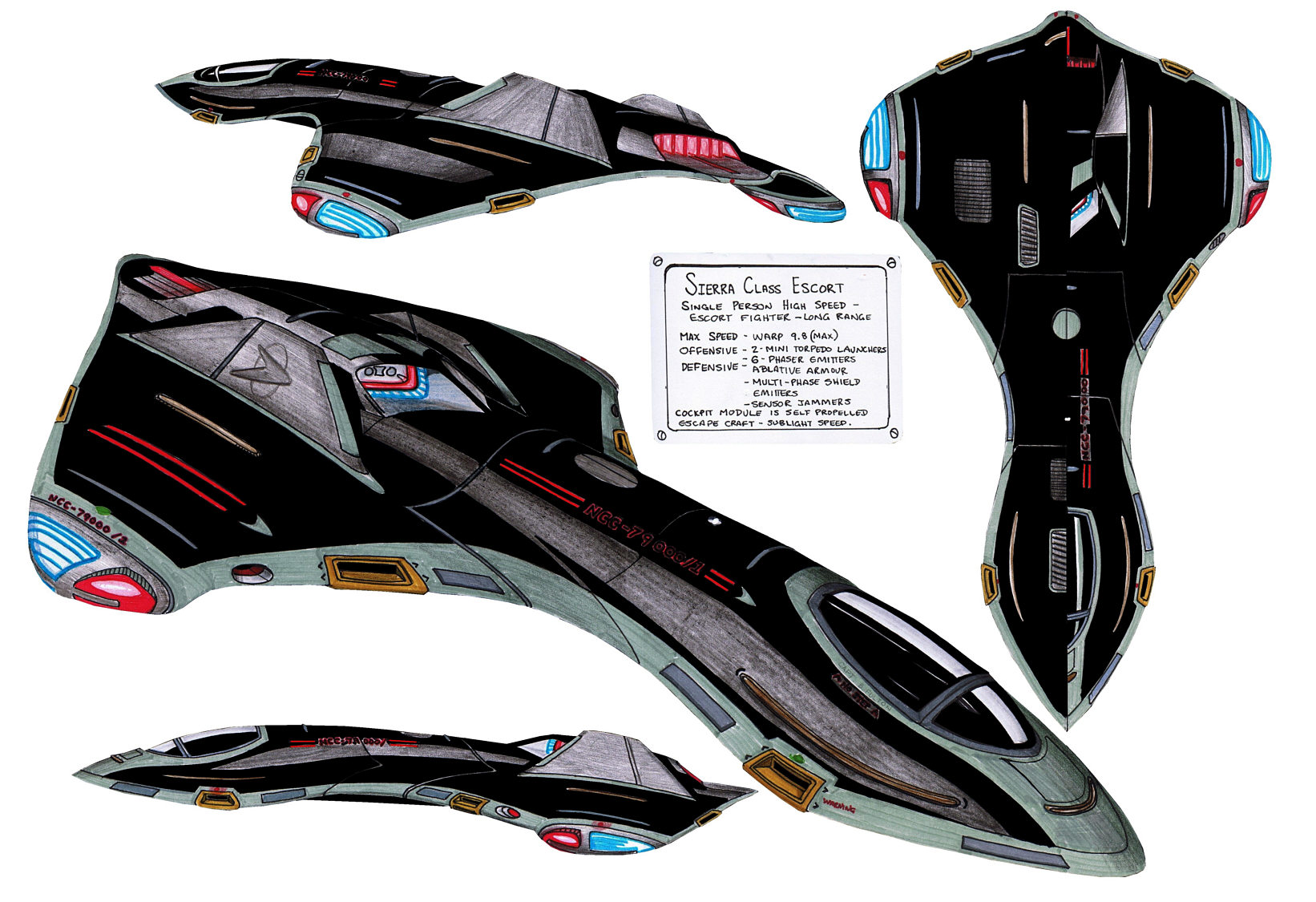
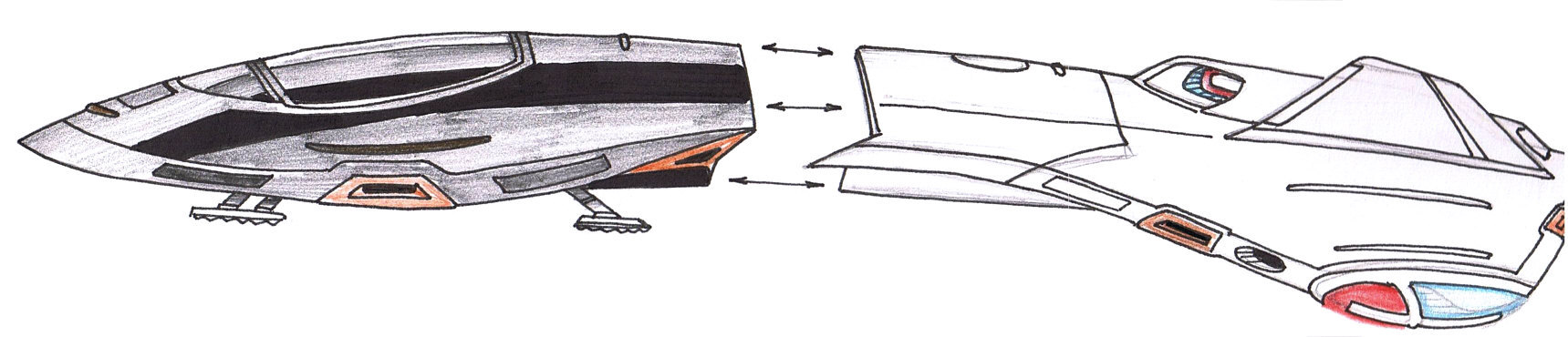 Design by Brent Fulton
Type: Escort fighter
First commissioned: 2384
Length: 10m
Width: 8m
Height: 2.5m
Decks: 1
Complement: 1 officers + crew, evacuation limit: 1
Speed: Warp 9 (cruise), Warp 9.5 (max.), Warp 9.95 (max. emergency)
Sublight speed: 0.9c (max.)
Armament: 2 micro torpedo launchers, 8 phaser emitters
Defense: ablative armor, multi-phasic shields
The Sierra class was designed as a high speed escort for long range starships (i.e. Sonoma class). They are capable of sustained high warp and short slipstream speeds. Their battle tactics are based on a swarm of bees, multiple ships attacking a single target. Up to a dozen single fighters can attack from multiple vectors, drawing enemy fire, and inflicting damage to several systems at once. Due to their small size an entire squadron can be assigned to a single ship, and still leave room for other shuttlecraft. they can be hung from the roof of the shuttle bays to free up extra room for visiting shuttles.
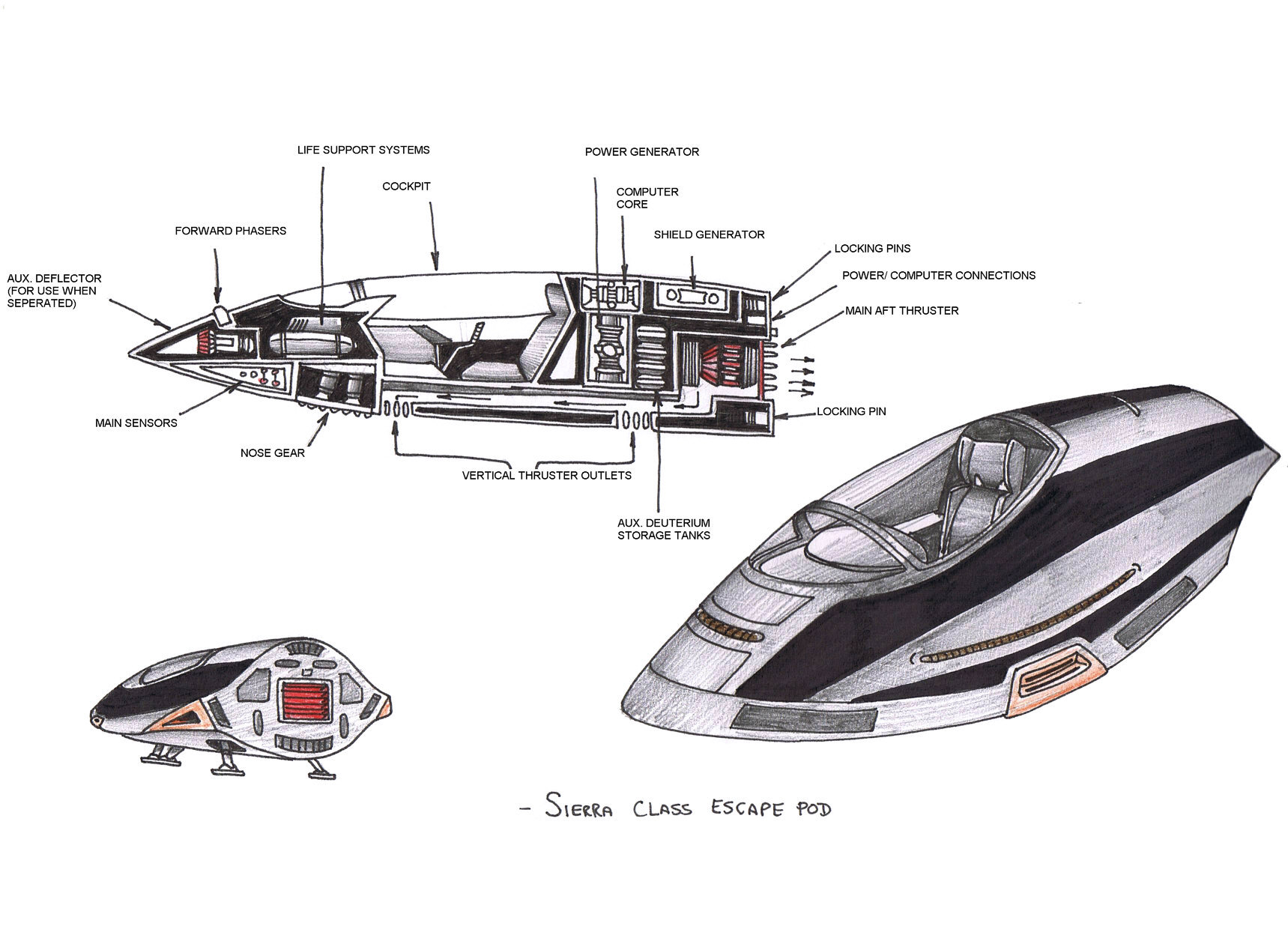
They all use the ablative armor and slipstream drives introduced by Admiral Janeway several years prior. In case of a warp core breach the nose section can be ejected as a self sustaining escape pod, capable of low sublight speeds, it can land and fly in a planets atmosphere un aided. The majority of its weaponry is targeted forward, but it has rear facing phasers in case of rear attack. the micro torpedo launchers have a dozen torpedoes each, all with tri-cobalt warheads for maximum punch. The shuttles are all painted black to make visual targeting more difficult. Several squadrons were assembled and introduced on all larger long range ships including Galaxy, Sovereign, Akira, and Nebula class ships.
Sly Fox Class
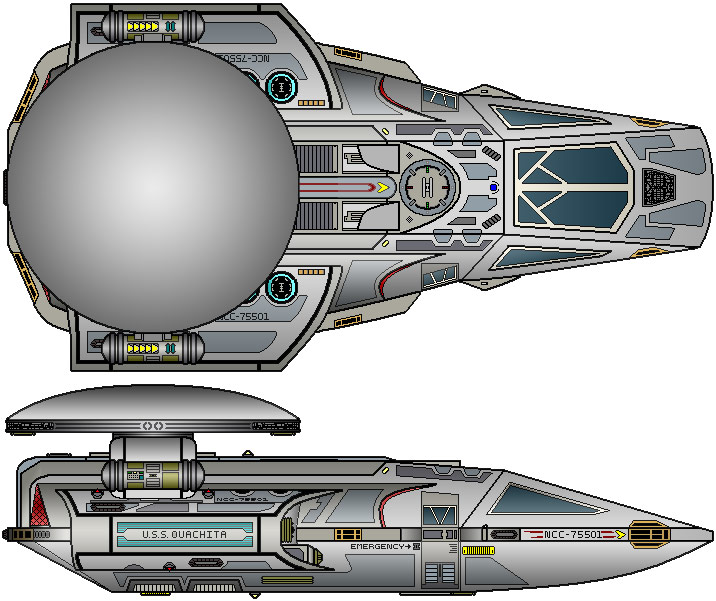
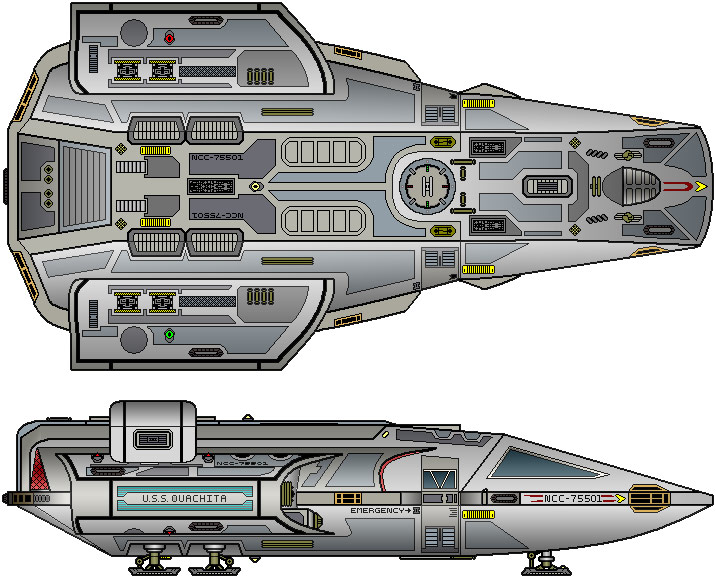
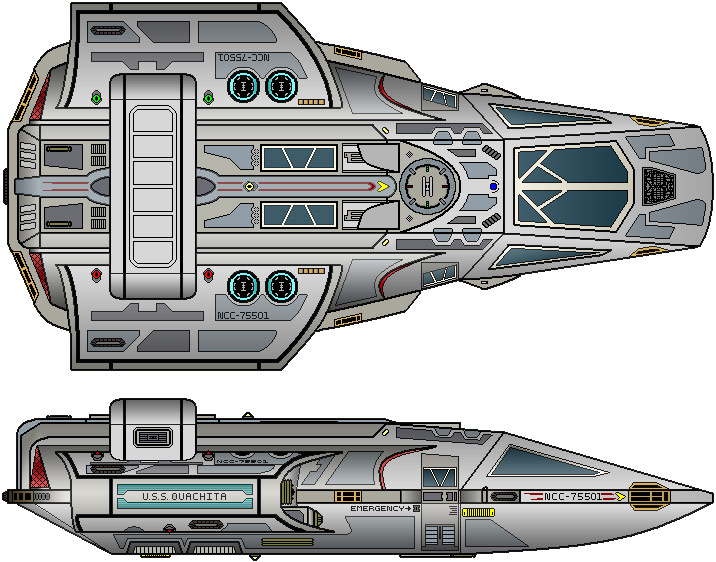 Design by Andrew K. L.
Type: Runabout
First commissioned: 2378
Length: 21m
Width: 10.5m
Height: 4.5m
Decks: 1
Complement: 2 officers + 4 crew
Speed: Warp 5.56920 (cruise), Warp 8.62215 (max.), Warp 9.15123 (max. emergency)
Armament: 9x Type VI phaser arrays, 2x micro-torpedo launchers with forward and reverse tubes, 4x 10-round micro-torpedo magazines (2 for each launcher)
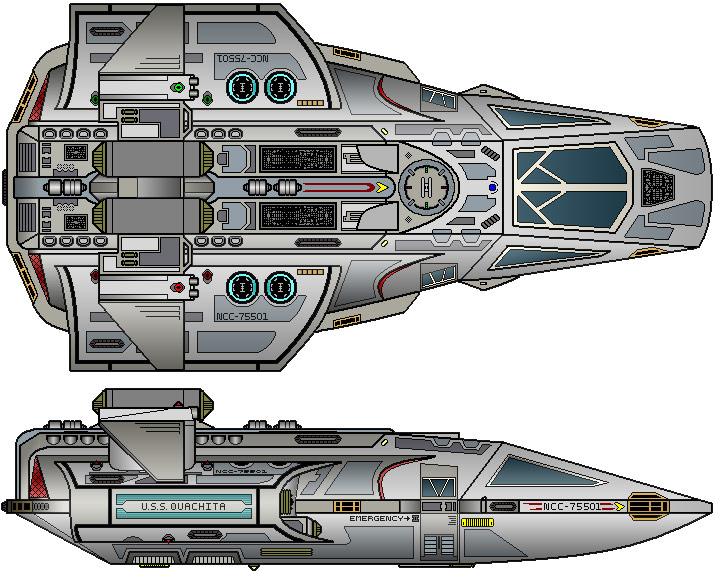
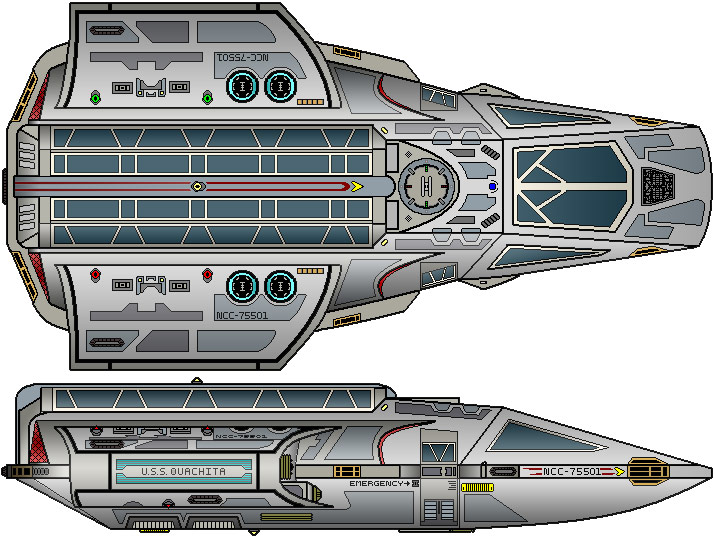
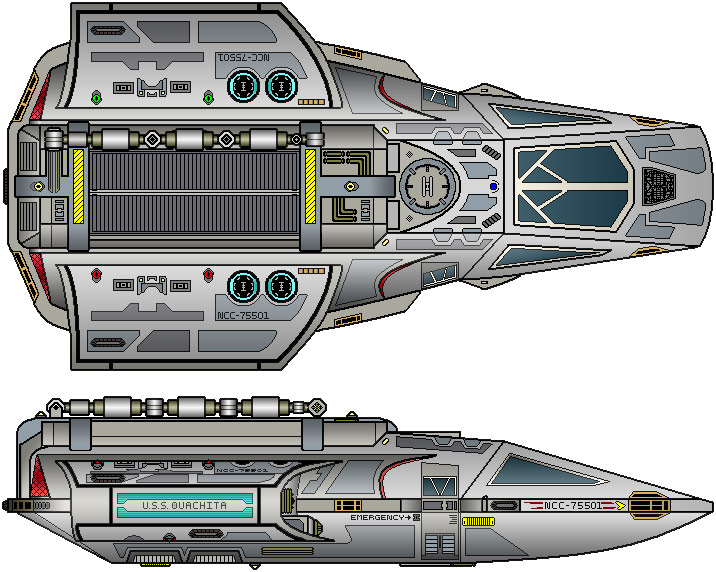
In the 2370's, Starfleet began looking at the usage of the Danube runabout with greater interest through its common use at the space station Deep Space 9. Starfleet researchers began works on several new Runabout designs as they felt they had strongly underestimated the usefulness of such a ship. Several designs were submitted for production, but only a few designs considered to directly replace the Danube class. The Sly Fox was one of few picked, and assigned to duties that prohibited the other accepted designs such as starship assignments, as it was the only one in the same size as the Danube class requiring little to no modifications required for the storage facilities. Production was severely limited when it was being commissioned, and was delayed by the focus of resources to the larger starship productions. Delayed even further by recovery efforts in the conclusion of the war, three years after the war’s end it was finally officially commissioned and put into full production. It is estimated that by 2379 all Danube class runabouts will have been replaced and put into civilian operation.
The class name stems from its compact appearance combined with swifter speeds brought by impulse engines far more sophisticated than that of the Danubes. The registry titles of each individual ship are inspired by National Parks and Wildlife Refuges on various Federation planets including Earth, Vulcan, Andoria, Risa, and even Bajor for the Sly Fox vessels that will be replacing the Danube on Deep Space 9.
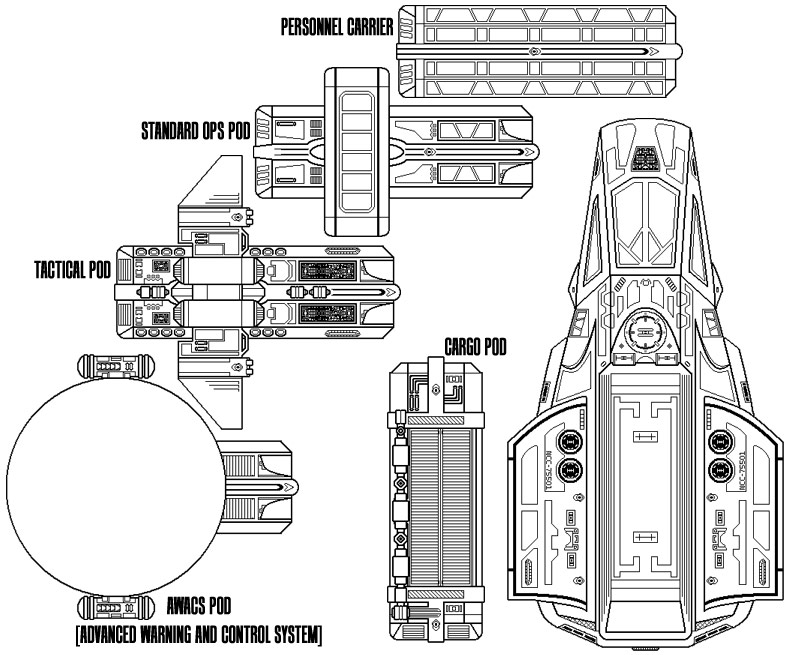
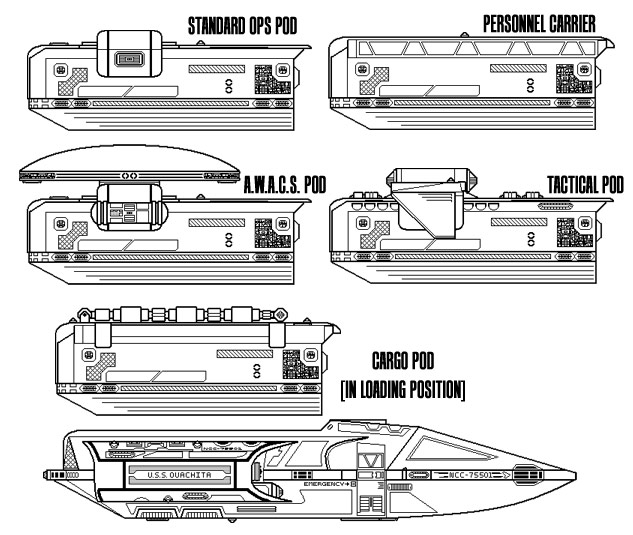 Modular pod options Standard - Tactical - Personnel - AWACS - Cargo - Science (not shown) - Medical (not shown) - Custom (not shown)
Notable active vessels
U.S.S. SLY FOX - NX/NCC-74686
U.S.S. JASMUND - NCC-75129
U.S.S. YOSEMITE - NCC-75209
U.S.S. YELLOWSTONE - NCC-75307
U.S.S. T'RIRR - NCC-75405
U.S.S. KHUNJERAB - NCC-75422
U.S.S. OUACHITA - NCC-75501
U.S.S. NAUCOODA - NCC-75508
U.S.S. HALEJI - NCC-75602
U.S.S. HALEAKALA - NCC-75808
Pod descriptions
Standard - The pod most commonly seen used on the craft, it can host a myriad of tasks that may be required during a runabout’s varying missions as it’s assigned far from practical services that would be capable of changing the pods for each mission.
Tactical - When the standard armaments aren’t enough, this adds 2x pairs of type VIII pulse phasers, 2x type VI phaser arrays, and 2x micro-photon torpedo launchers for forward and reverse launch capability. With torpedo tubes that are larger than standard, it’s capable of delivering multi-round bursts with far more efficiency.
Personnel - A larger pod than most others in order to house a large group of people for any need necessary from crewing a new starship, to helping with evacuating a colony, to hosting diplomatic meetings.
AWACS - Often used as recon for the development of new space stations to determine areas with least probable chances to be bothered by naturally occurring spatial phenomenon, the advanced sensory package is also used for a plethora of other duties. Border patrol, science research or even keeping detailed track of a fleet it serves several purposes.
Cargo - Most often used in supplying remote colonies, the cargo pod is an enlarged version much like the personnel pod so as to add further room within it. The removal and addition of cargo is aided by the track-traveling crane fitted with a dual-sided tractor beam emitter head.
No pod - The runabout will still function with impulse and warp capabilities even without a pod installed. As well, when in this form it can be used for simple tasks such as hauling large debris, construction supplies, workbee crafts, and other vacuum travel-capable cargo within the empty bed area secured with force-fields. However, it’s discouraged to haul any cargo this way when atmospheric (re-)entry is required, as it can put far too much stress on the structural integrity field.
Strider Class
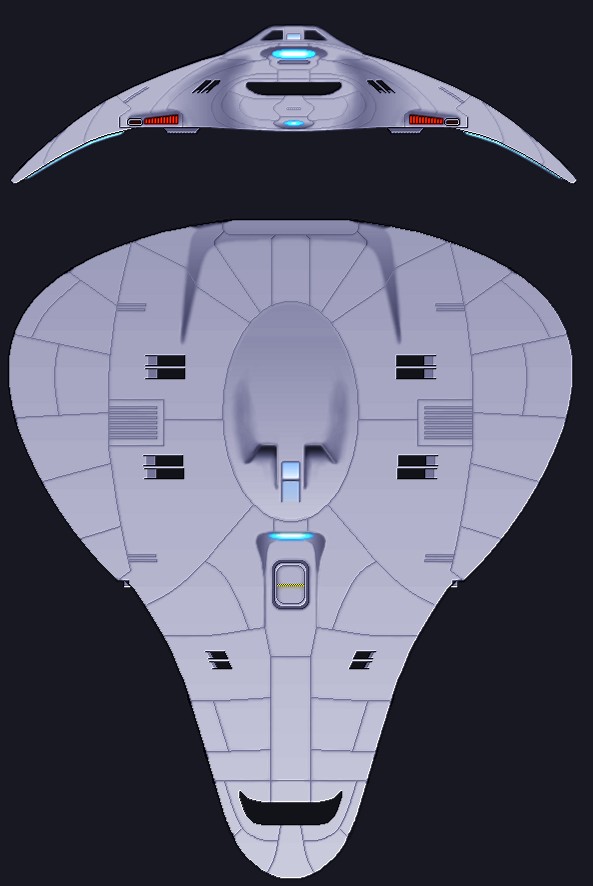
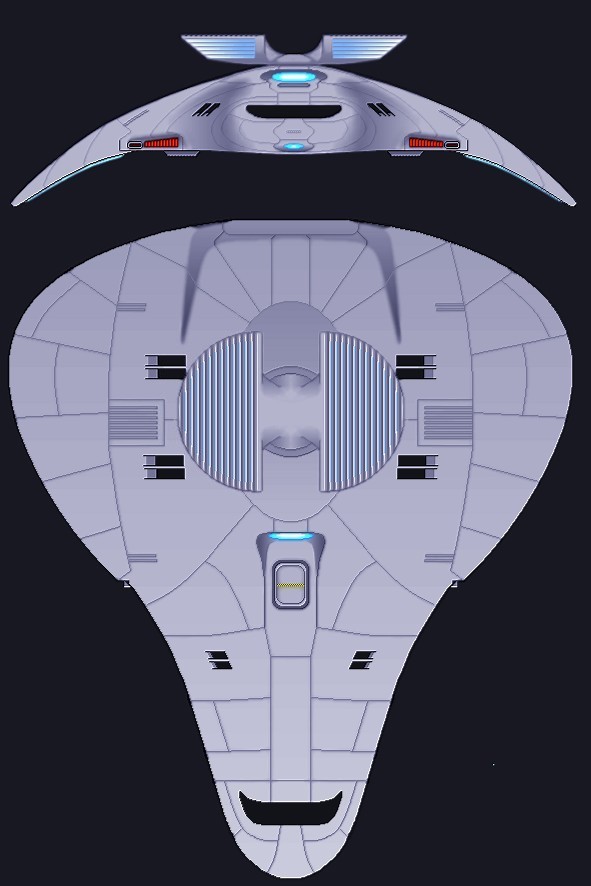
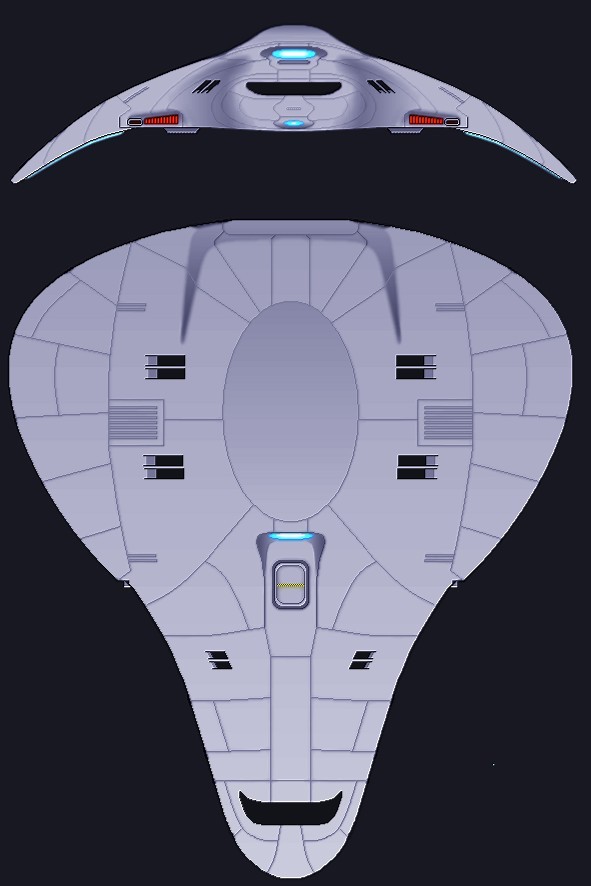
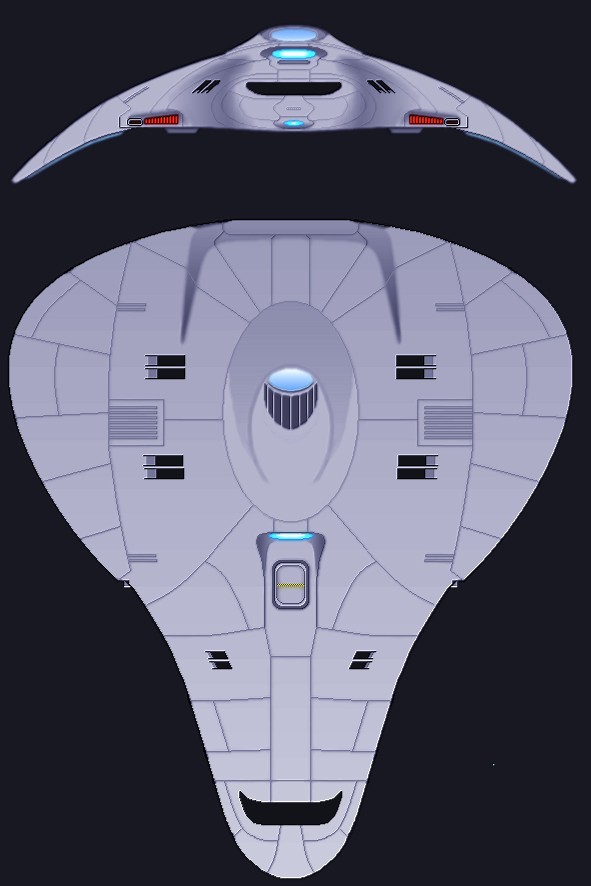
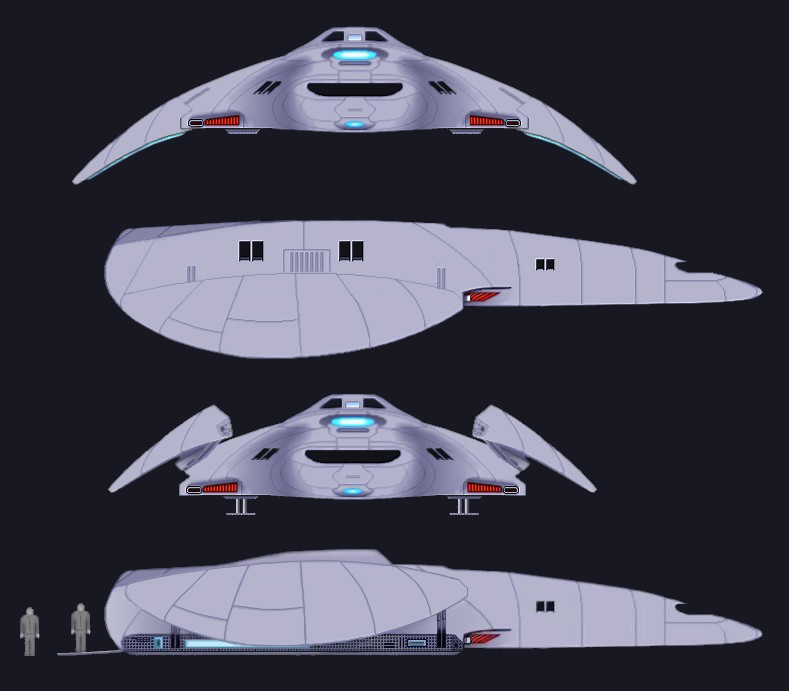
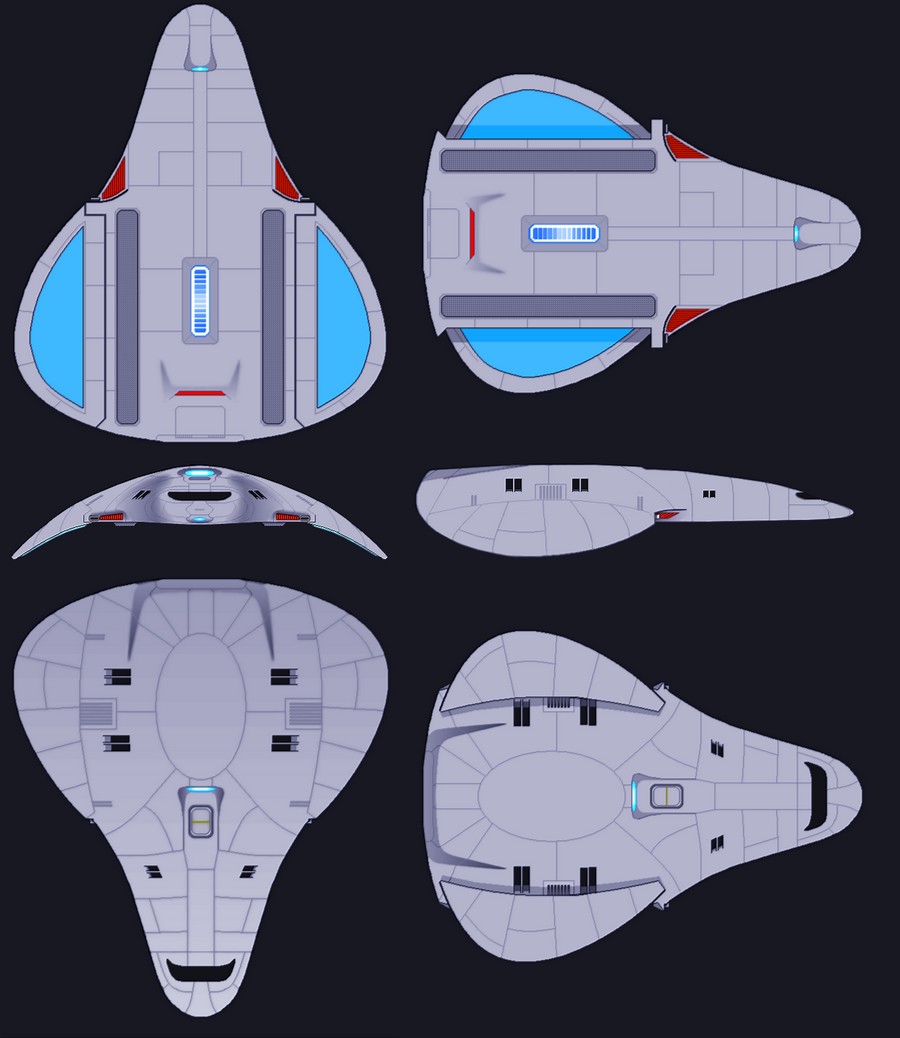 Design by Phil Sherman
Type: Runabout
First commissioned: 2397
Length: 25.5m
Width: 21.7m
Height: 6m
Decks: 1
Displacement: 4.5t
Complement: 1 officer + 2 crew, evacuation limit: 25
Speed: Warp 5 (cruise), Warp 6 (max.), Warp 6.8 (max. emergency)
Sublight speed: 0.98c (max.)
Armament: 2 type VIII pulse phasers | tactical pod
Defense: Metaphasic shields / 5mm ablative armor
The Danube class runabout had been a work horse for the Federation, but the design was growing long in the tooth, a need had arrived for a more capable craft, able to fill multiple roles, diplomatic, search and rescue, scouting and longer range shuttle missions to name a few. The Danube was a good ship, but often fell short in its abilities when assigned to missions with little support. Starfleet was looking for a small ship, able to fit in shuttle bays of its larger vessels, yet able to perform solo for extended periods or travel vast distances not in the Danube's ability without modification.
Enter the Strider class, a joint venture of Terran and Vulcan civilian engineers at Lancer Industries, originally designed to provide shuttle services over vast distances, but recognized by Starfleet as a possible replacement for the Danube. When asked to submit a rendition to the Utopia Planitia Shipyards, Lancer Ind. jumped at the chance, and immediately began an overhaul of the design to fit Starfleet specs. The Strider is designed to land on flat surfaces, but a portion of the landing skids, in the front and the rear, can lower up to one meter for clearance purposes. The wings move straight out and down for half a meter, then the wing hydraulics lift the wing 1.2 meters, then retract the wing to the sides of the upper hull with approximately 1/3 meter clearance between the wing and the hull, in order to clear the skids for touchdown, and allow clearance for landing in shuttle bays. Height is 4.2m in landing configuration.
The warp core is a single iso-linear induction core. (This is an experimental variant, however, that is designed to be able to be shut down extremely quickly, for landing purposes, so the wing nacelles can separate with very little danger.)
Mission Pods In order to give the ship the versatility it needed to compete, Lancer Industries designed 4 pods. These pods will replace the central modular storage compartment on the standard configuration. These pods are as listed:
1. Micro Astro-Physics pod. This pod is designed for long range star mapping and scouting purposes.
2. Extended Range Pod. 2/3 of this pod is equipped with transporter loop storage facilities that can hold enough raw materials to sustain a crew of 10 for 6 months without re-supply. 1/3 of the pod is extra anti-matter.
3. Sensor Pod. This pod houses powerful short/medium and long range sensors that cover a full 360
degree field around the ship.
4. Tactical Pod. The Strider has powerful pulse phasers on board, but it is not an assault craft by any means, however... this pod can and will turn it into one. The pod contains extra targeting sensors that seam flawlessly with the ships systems, and 2 triple-launch burst fire micro photon torpedo launchers. The torpedo sensors built into the pod can track and fire on multiple targets. A maximum volley is 6 torpedoes.
Max. payload is 36 torpedoes, enough for 6 full volleys.
Type 10a
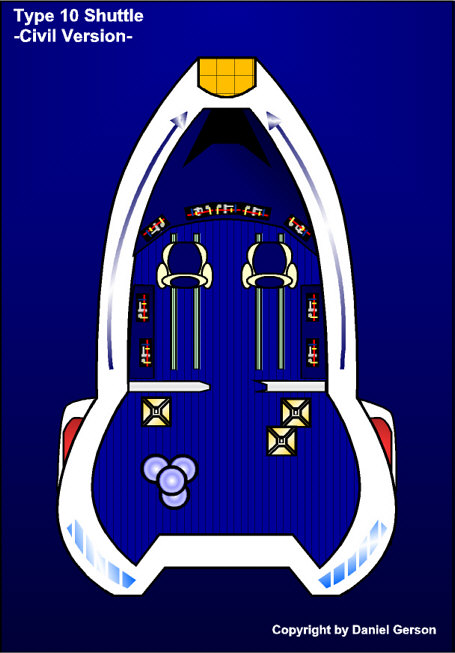 Design by Daniel
Gerson
Design by Daniel
Gerson
No specs available
No description
Type 12
"Tiberius"
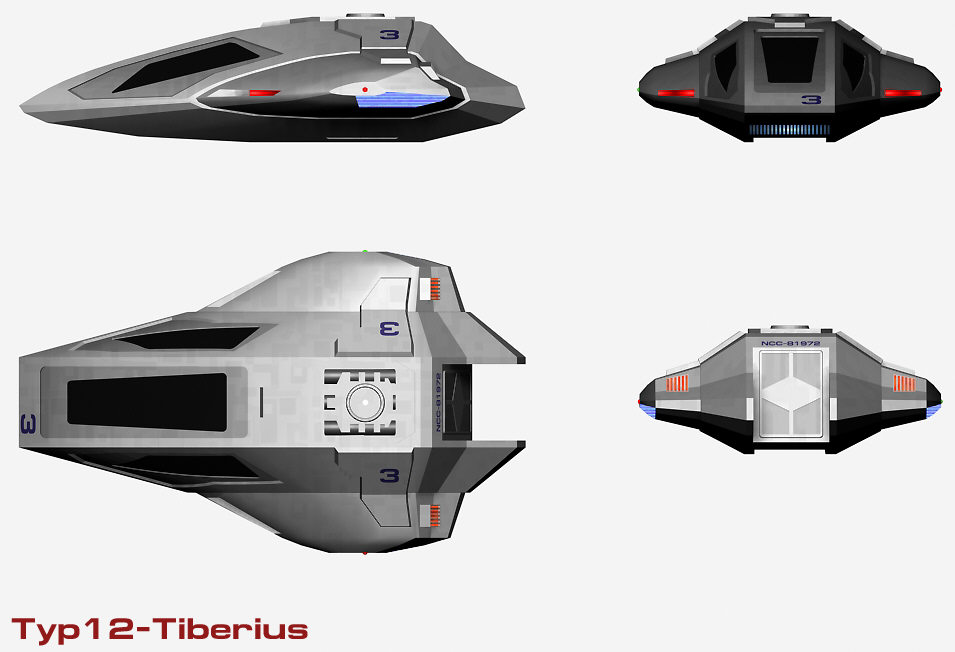 Design by Torsten
No specs available
This shuttle may become a replacement for the current Type 6.
Type 13
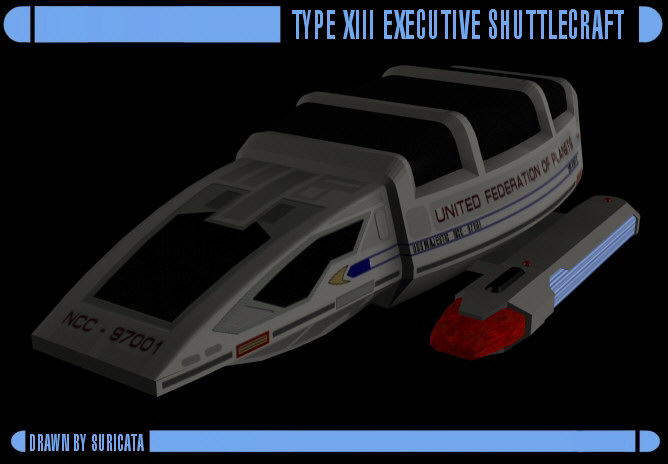
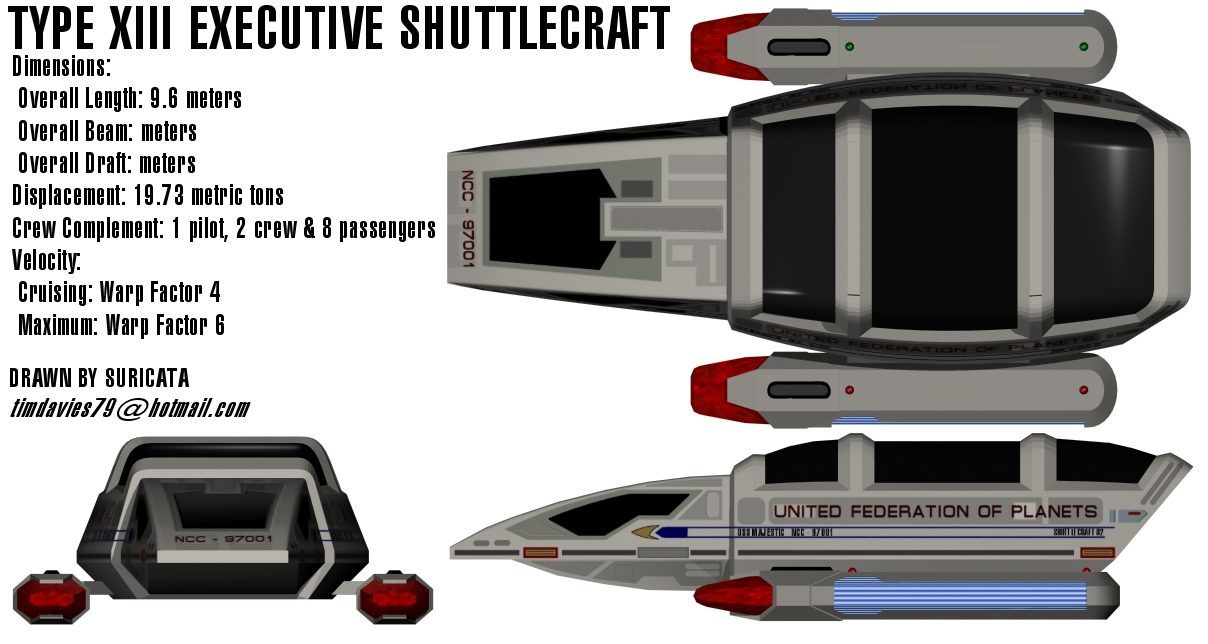 Design by Tim
Davies (Suricata), website
Design by Tim
Davies (Suricata), website
Type: Executive shuttlecraft
First commissioned: 2378
Length: 9.6m
Displacement: 19.73 metric tons
Crew Complement: 1 pilot, 2 crew, 8 passengers
Speed: Warp 4 (cruise); Warp 6 (max.)
Propulsion Systems: 2 LF-10A Advanced Compact Linear Warp Drive Units,
Impulse: (2) FIC-1 Compact Subatomic Unified Energy Impulse Units
Weapons: 2 Type-VI Collimated Phaser Arrays
Primary computer system: M-16 Bio-Neural Gelpack Isolinear III Processor
Primary navigation system: RAV/ISHAK Mod 3D Warp Celestial Guidance
Deflector systems: FSQ-2B Primary Force Field and Deflector Control System
The Type 11 Executive shuttle was created after it was noticed there was a lack of shuttles
equipped for the comfortable transport of diplomats in areas where either starships are not required for transport or in 1st contact situations where transporting may be seen as to imposing on technologically 'inferior' races. They are equipped with 2 phaser arrays, for defensive means only.
The shuttle can comfortably transport 8 diplomats, with two crew members (stewards) who can see to
their 'needs'. The shuttle only requires one crew member to operate due to its high level of automation.
Type 14
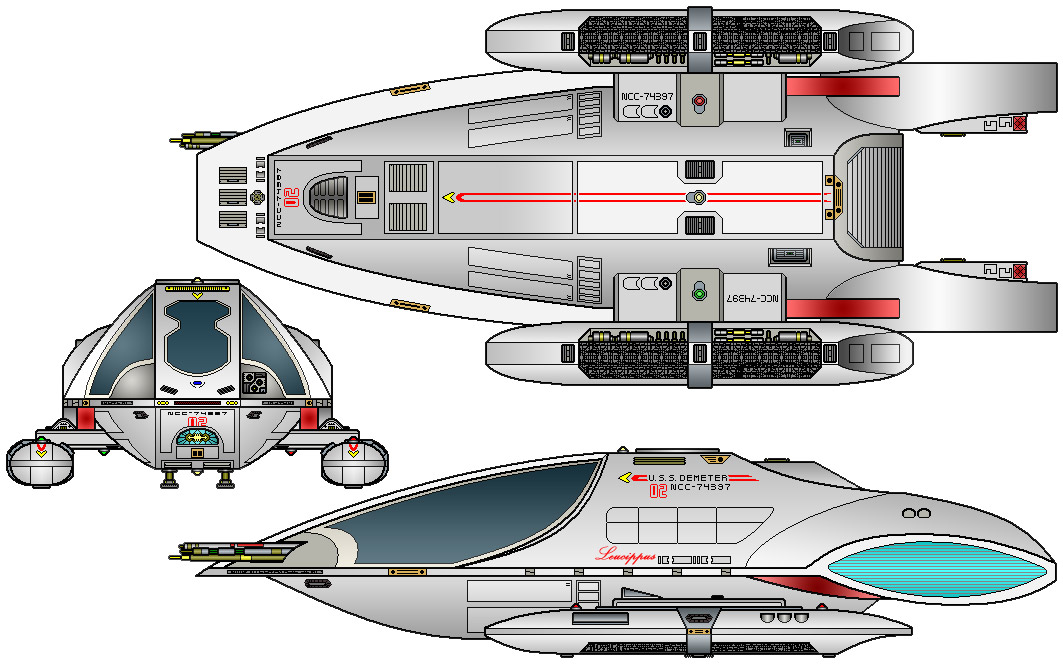
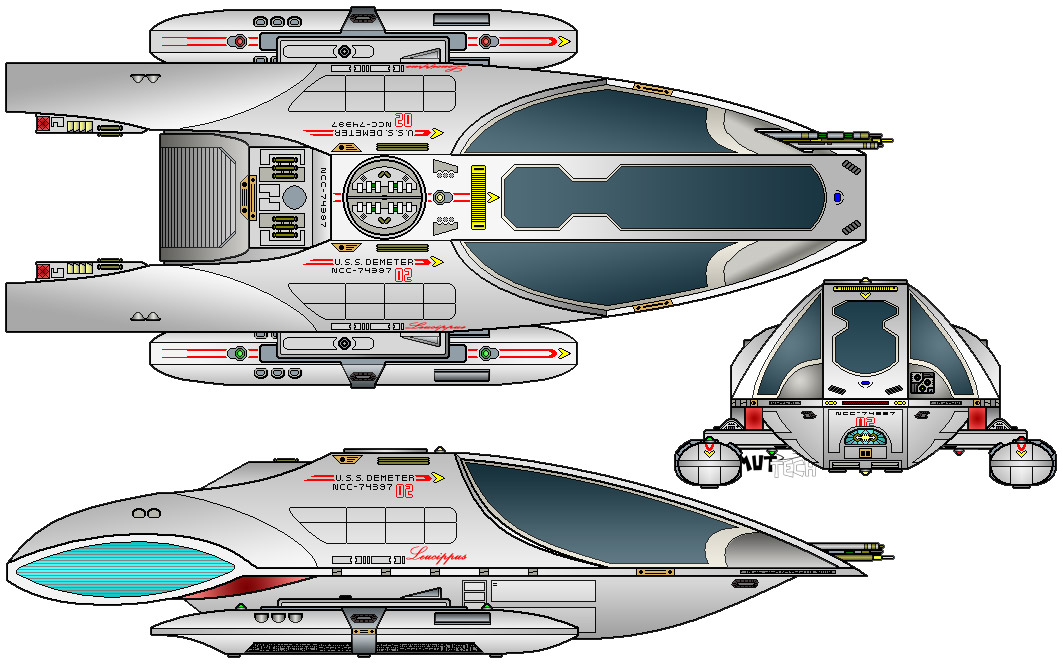
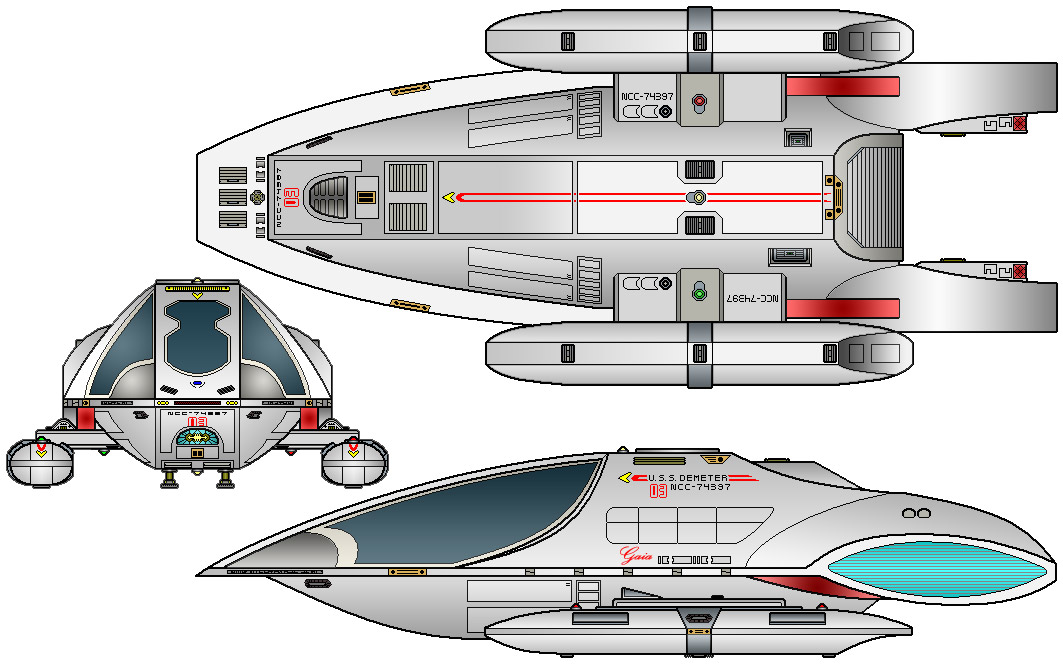
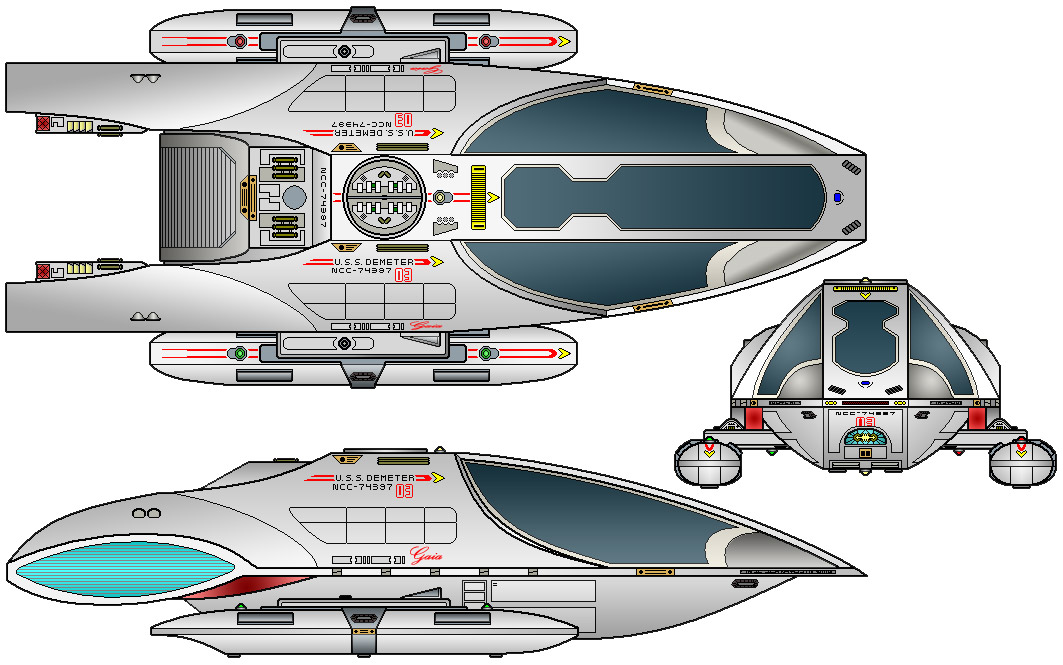 Design by Andrew K. L.
Type: Shuttlecraft
First commissioned: 2370
Length: 12m
Width: 4m
Height: 3m
Decks: 1
Complement: 1 officers + 2 crew, evacuation limit: 11
Speed: Warp 4 (cruise), Warp 7 (max.), Warp 8.2 (max. emergency)
Armament: 4x Type V phaser arrays
As shuttlecrafts prove their convenient usage time and time again, Starfleet commissioned a shuttle as a test bed for a highly modular format. This format would allow for starships to outfit a shuttle with mission-specific equipment, enhancing the potential for far more efficient use on each shuttle mission. For this reason, the warp nacelles have been integrated to the hull leaving the usual landing nacelles to become easily exchangeable. As well, due to the slightly weakened natural structural integrity brought on by the modularity, redundant landing gear are equipped to the shuttle itself in case of exceeded weight limits and/or unusually high gravity putting too much stress on the landing nacelles' pylons. There are various modular packages available for the shuttle, including the following configurations: standard, research/recon, tactical and salvage/recovery.
The standard configuration is made very similar to all other standard shipboard shuttlecraft; designed to handle functions for a large variety of needs, but only to a moderate degree. Due to the landing nacelles having very little configuration-specific equipment housed within them, they have been filled with mostly survival equipment, and are programmed to disengage from the shuttle in case of a crash-landing. This is to avoid damage to the survival equipment.
The research configuration is equipped with long-distance sensory equipment in the landing nacelles, as well as ports for deploying miniature probes. Also normally equipped to it are sensor vanes that can be placed in either of the shuttle's nose hatches, normally hidden in standard configuration by hull plates.
Type 17 (1)
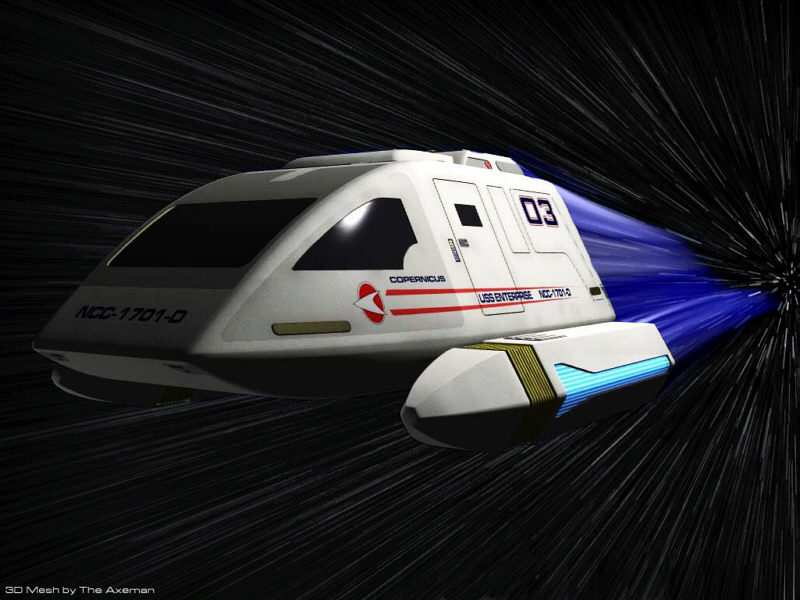
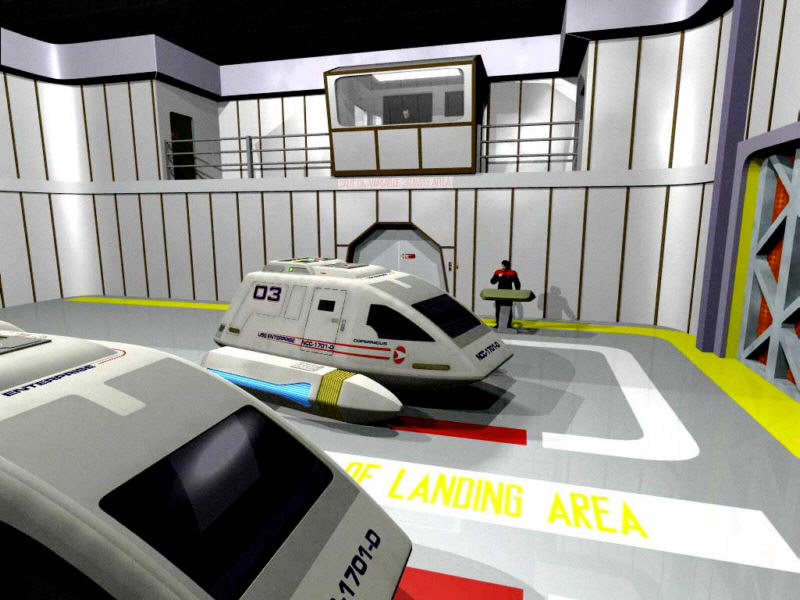
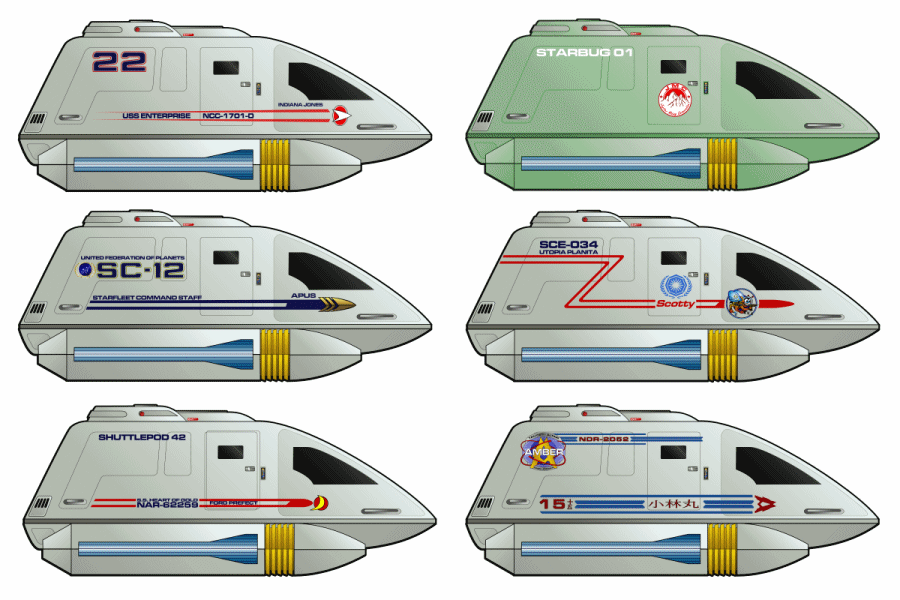
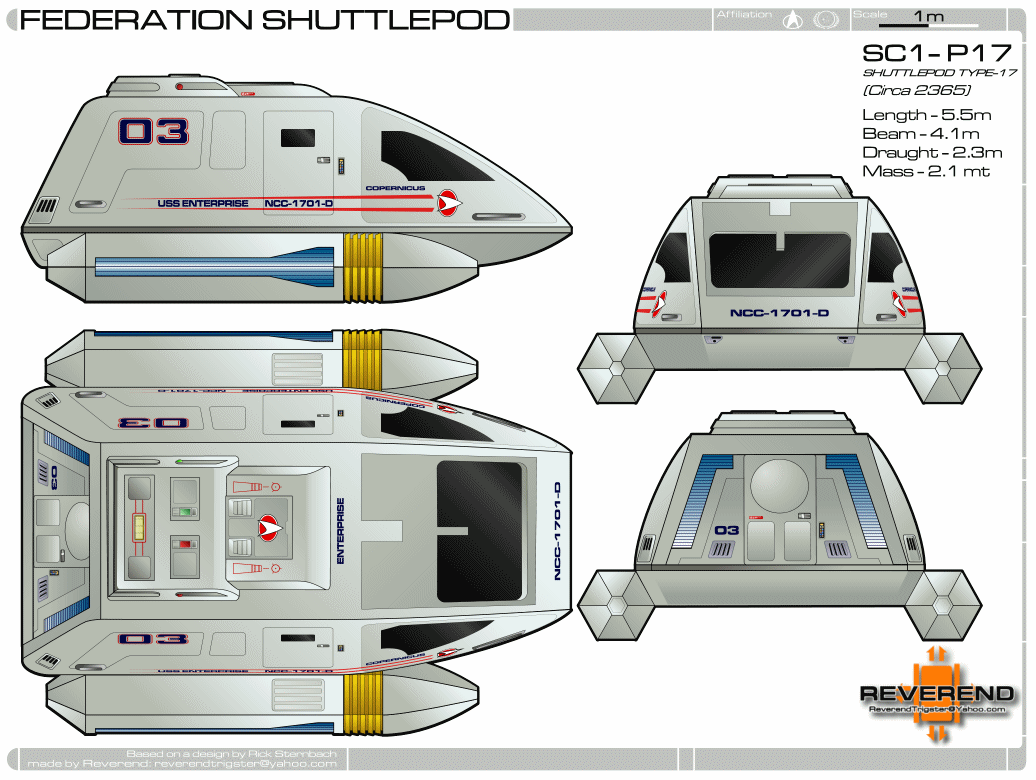 Design by
Rick Sternbach and Kris, ASDB Member,
3D model by Axeman, ASDB Member
Design by
Rick Sternbach and Kris, ASDB Member,
3D model by Axeman, ASDB Member
Type: Shuttlepod
In service around 2365
Length: 5.5m
Beam: 4.1m
Draught: 2.3m
Mass: 2.1 metric tons
This design is based on a sketch by Rick Sternbach.
Type 17 (2)
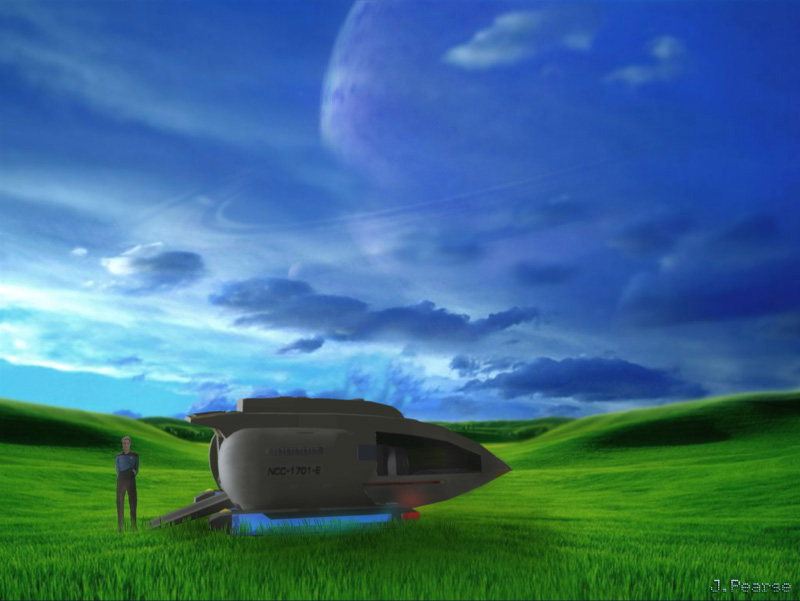
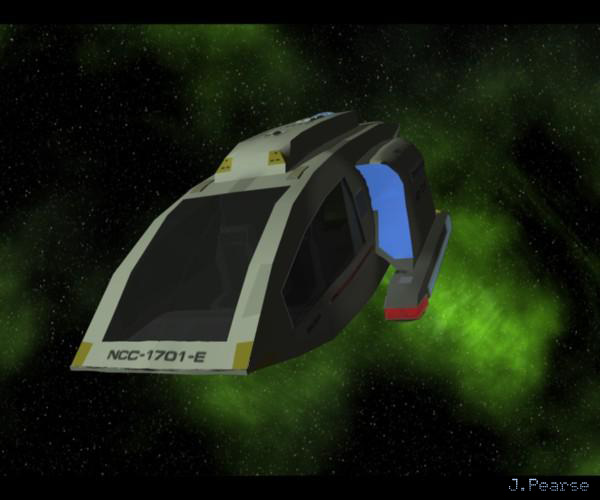
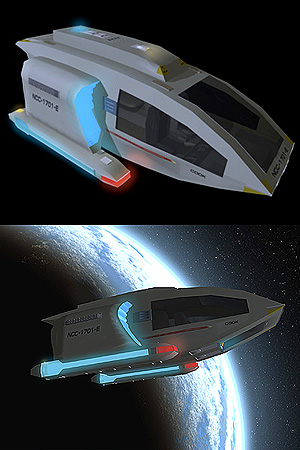
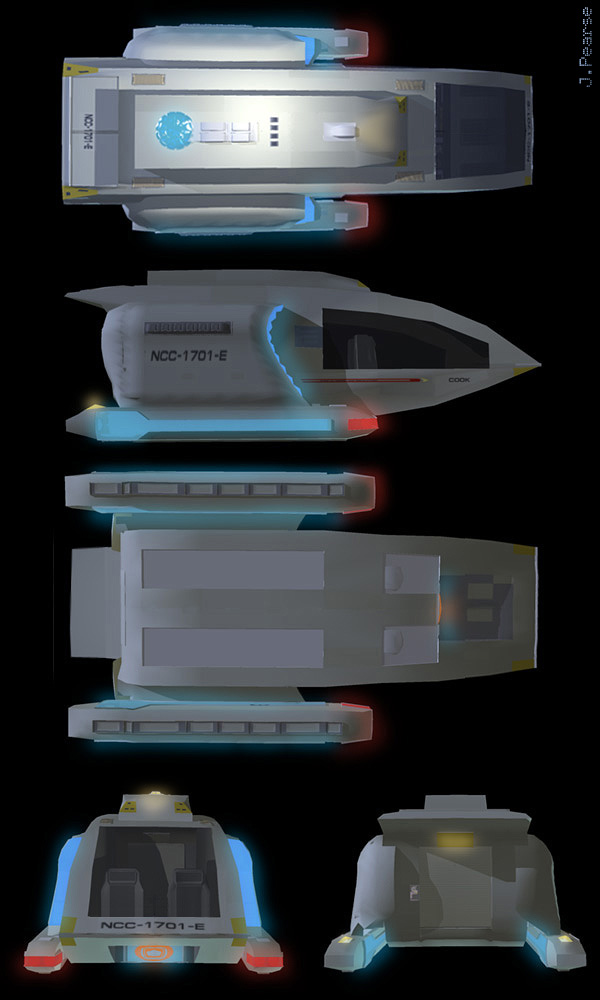 Design by John Pearse
Type: Shuttlecraft
First commissioned: 2374
Length: 6m
Width: 4m
Height: 3m
Displacement: 4t
Complement: 2 officers + 6 crew, evacuation limit: 12
Speed: Warp 2.8 (cruise), Warp 3.5 (max.), Warp 4 (max. emergency)
Armament: 4 phaser banks or two phasers + two micro torp launchers
Defense: Standard shields and countermeasures
Medium-range shuttle introduced in 2374 as a step between the smaller personnel shuttles and the large Danube class runabouts. Designed to have the flexibility and power of runabouts while taking up much less space in the shuttlebays of smaller starships. Despite this, the shuttle is often among the complement of larger vessels, including Sovereign class ships such as the USS Enterprise. The Type-17, which can carry up to 12 people (two pilots, eight seated and two more standing) proved particularly useful for the Flagship during the Genesis Wave crisis, when several of these shuttles were used during planetary evacuations. Maximum safe speed is Warp 3.5, although faster speeds have been recorded in emergencies. The shuttle has a total of four phaser banks - one Type-V phaser strip on each of the two nacelle pylons and two more emitters at the front of the craft, these can be swapped for micro torpedo launchers if necessary.
A vague description in the Genesis Wave books inspired me to design a new Starfleet shuttle.
Type 18 Long-Range Shuttle
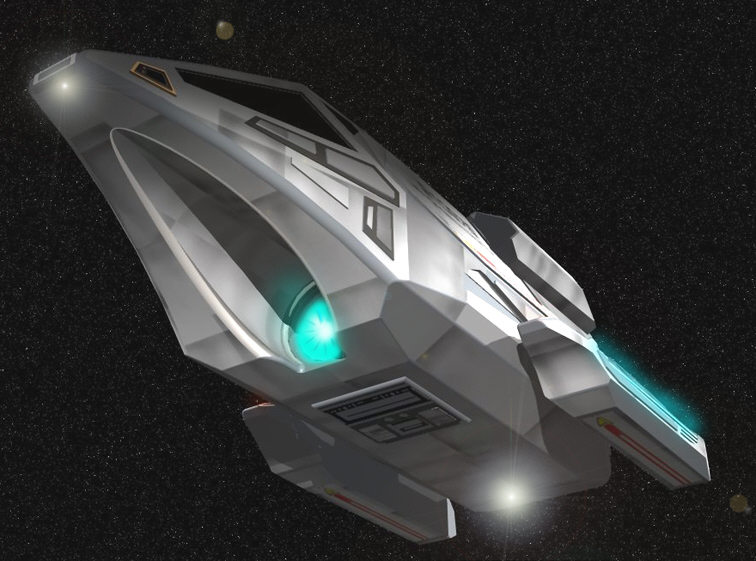

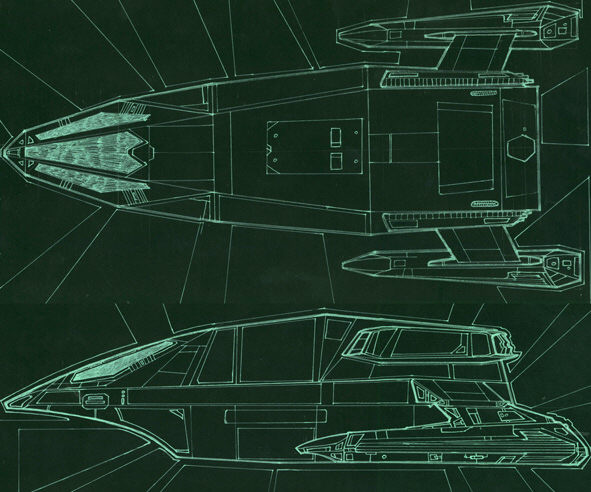 Design by Noel Taylor
Type: Long range shuttle
First commissioned: 2374
Length: 14.5m
Width: 7.2m
Height: 3.7m
Decks: 1
Displacement: 112t
Complement: 2 officers + 3 crew, evacuation limit: 18
Speed: Warp 3.61 (cruise), Warp 3.9 (max.), Warp 4.12 (max. emergency)
Sublight speed: 0.96c (max.)
Armament: 2 x type V phaser arrays; 2 micro torpedo tubes; provision for weapons pod with 2 x micro quantum torpedo launchers and 4 x type
V phaser arrays
Defense: standard shielding.
A mid to long range shuttlecraft. This shuttle is a step-down from the standard runabout. It is designed for diplomatic missions and passenger ferrying. One of these shuttles, the Lilly Sloane, was stolen from the USS Kurosawa NCC-76219 by Commander Jordan Virgo when he was framed for the murder of his Captain. He was joined by Lt. Commander Meg Peterson and is considered a rogue Starfleet officer. They are still at large and is still trying to find the person who framed him to prove his innocence.
Type 22
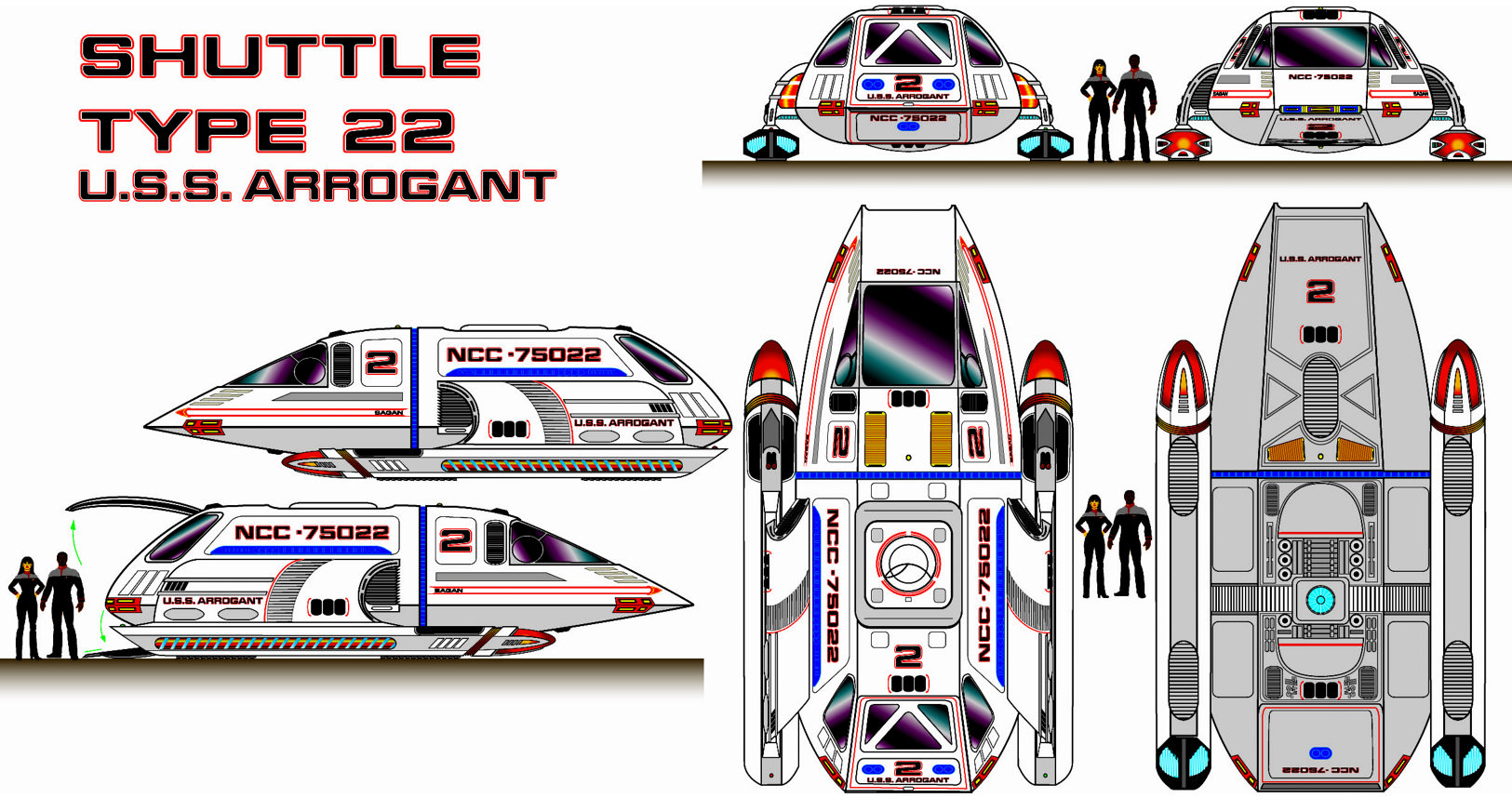 Design by Gustavo Castillo
Type: Shuttle
First commissioned: Stardate 54238.3
Length: 10m
Width: 5.6m
Height: 2.6m
Decks: 1
Displacement: 4.9t
Speed: Warp 4 (cruise), Warp 4.5 (max.), Warp 5.5 (max. emergency)
Sublight speed: 0.98c (max.)
Armament: 6 phaser banks
Defense: enhanced 3 layers bubble-like shield
Embarked craft: none
Provided with a bigger engine and larger fuel storage capacity, this model is capable to accommodate up to 10 passengers (plus 2 flight crew) and sustain warp 4 for 96 hours.
Type 28
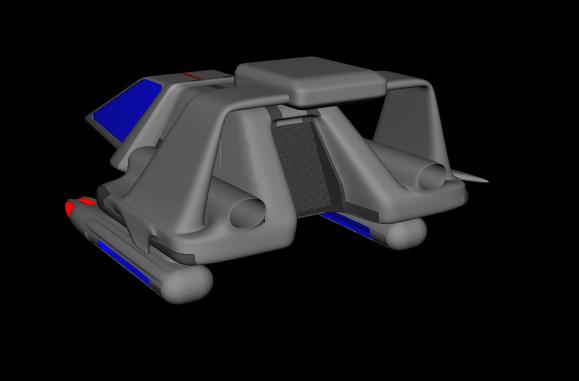
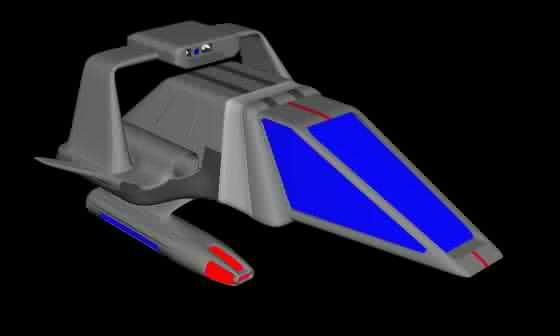 Design by James Trexler
Type: Shuttle
First commissioned: 2385
Length: 9m
Width: 6m
Height: 5m
Decks: 1
Displacement: 2.3t
Complement: 1 officers + 3 crew, evacuation limit: 4
Speed: Warp 7 (cruise), Warp 8.5 (max.), Warp 9.22 (max. emergency)
Sublight speed: 0.37c (max.)
Armament: Twin Type-8 phaser emitters, 8 photon torpedoes
Defense: 272 gigawatt deflector shield
Embarked craft: N/A
The Type-28 shuttle was designed in 2383 to fill the role of a heavy duty, long distance transport shuttle. By 2386, all Type-8 shuttles are slated to be replaced by the Type 28.
Courtesy of AC3D 3d design software.
Type 31
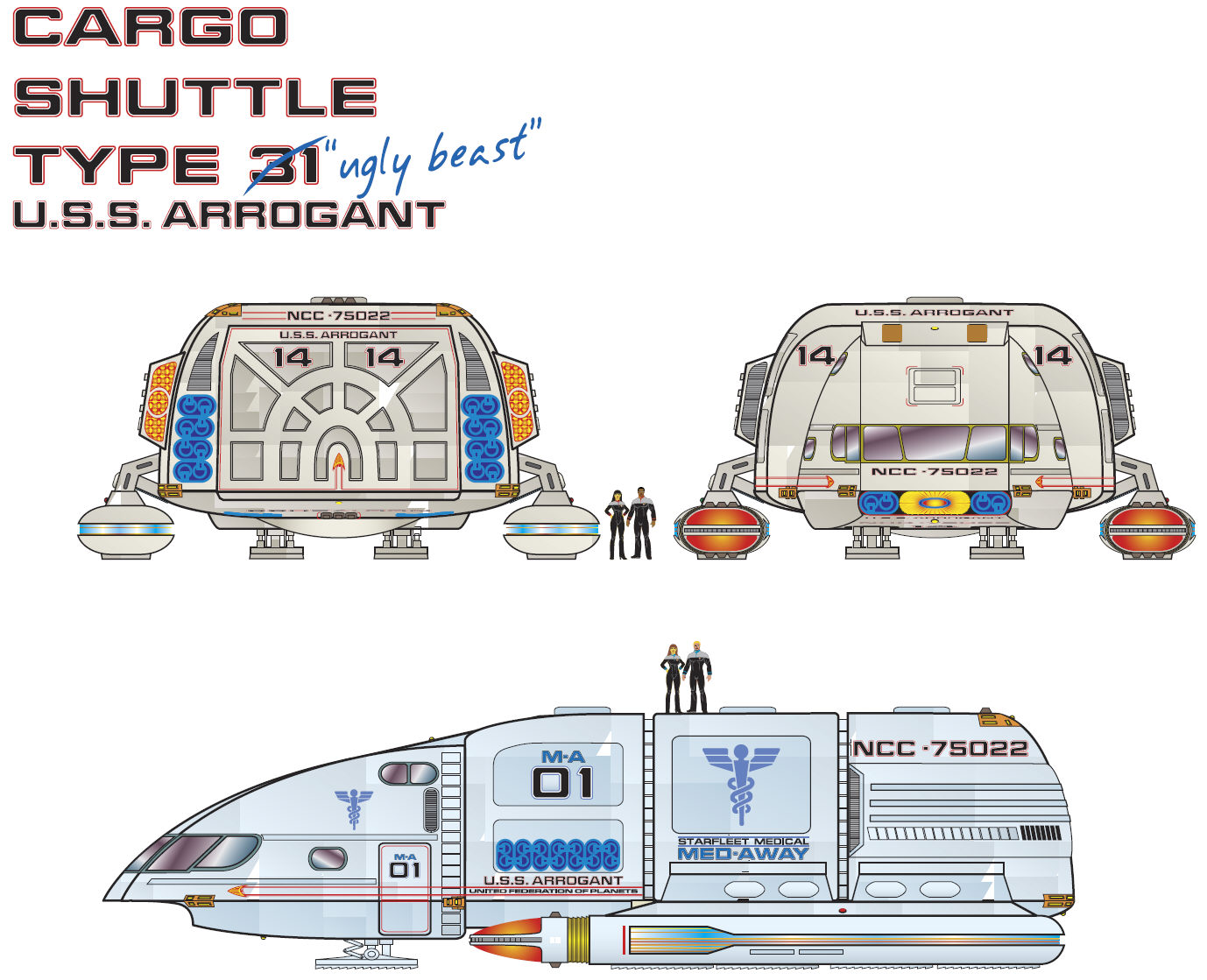 Design by Gustavo Castillo
Type: Shuttle
First commissioned: Stardate 55790.1
Length: 24m
Width: 13m
Height: 7m
Decks: 2
Displacement: 28t
Complement: 1 officers + 2 crew, evacuation limit: 100
Speed: Warp 2 (cruise), Warp 3 (max.), Warp 4 (max. emergency)
Sublight speed: 0.65c (max.)
Armament: 6 phaser banks
Defense: energy deflector shield
Embarked craft: none
Starfleet was in need of a cargo vessel smaller than a starship, but capable of carrying a considerable amount of goods at reasonably fast speed. The type 31 cargo shuttle (affectionately called "ugly beast") is just that vehicle. With about the length of a runabout, her capacity is four and a half times larger, but significantly slower, though. Each "ugly beast" can carry 54 metric tons, or more than 500 cubic meters of any material or substance at speeds up to warp 3 ( for about 32 hours). The cargo area can be divided into three hermetic sections or used as a whole, mission-wise configurable. The cockpit is a two-decker, being the lower deck the commanding bridge, and the upper level the resting zone. The cockpit is connected with the container by an airlock hatch. U.S.S. Arrogant chief medical officer, Dr. Oshinobu Hate (haet'e)-yeah, everybody calls him "Dr.Hate" (heit)-, devised a way to turn one "ugly beast" into a fully operational six bio-beds sickbay in-the-field, very useful when transporting is unavailable or the situation is too critical that immediate medical attention is mandatory. It can also be used as an auxiliary sickbay onboard the ship for emergencies. He called her "med-away" for "medical away team". The idea was so well received at Starfleet Medical that it was decided that every starship should have one "med-away".
Log in to protected area with user="guest" and password=<Riker's middle name> to download detailed PDFs of this design.
Versailles Class
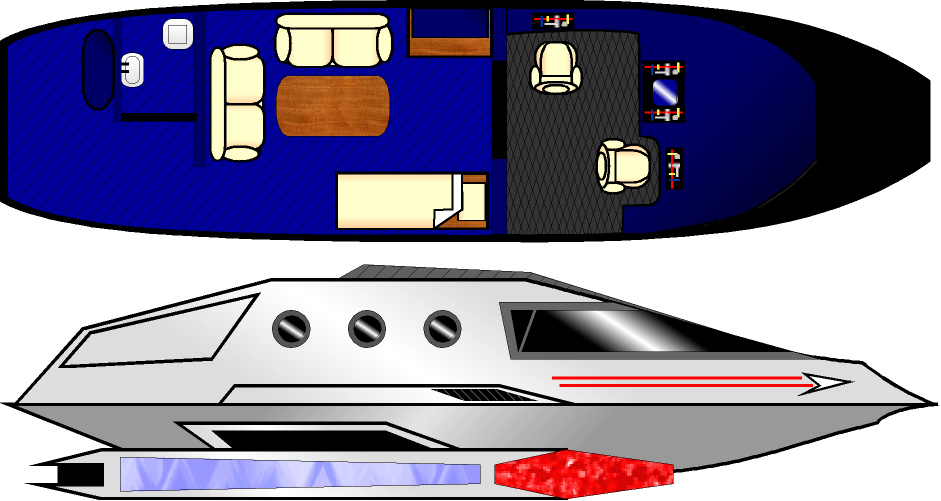 Design by Daniel
Gerson
Design by Daniel
Gerson
Type: Diplomatic shuttle / fast courier
Start of development: 31.6.2397
First flight: 2.11.2399
Time in service: 2399 -
Length: 15m
Beam: 4m
Height: 4.5m
Decks: 1
Speed: Warp 6 (normal cruise); Warp 6.6 (max. cruise), Warp 7.3 (4 hours)
Crew: 1 officer, 2 diplomats
Weapons: 2 x Type VII phaser banks
No description
| Home | ||
|
||
| Last modified: 13.10.13 |  |
|