

21st Century

|
Advanced
Starship Design Bureau 21st Century |
||
|
|||
| Starships | Shuttles | Equipment | Technology | History | Other | New | Submit | |||
 History
21st Century, 22nd
Century, Early 23rd Century, Late
23rd Century, Early
24th Century, DY Starship Family
Arrakis Class
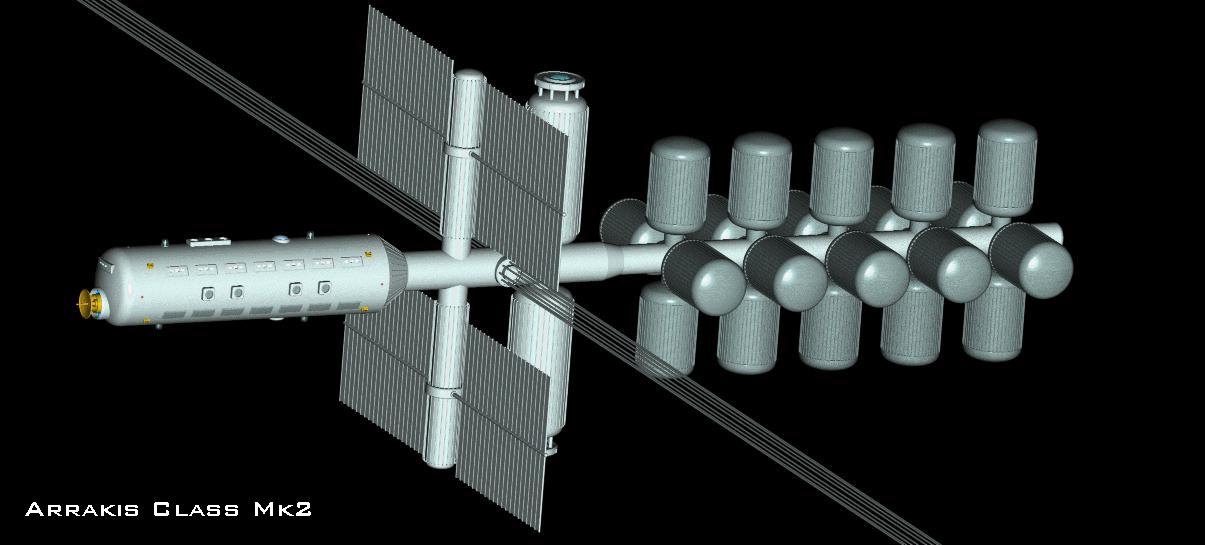
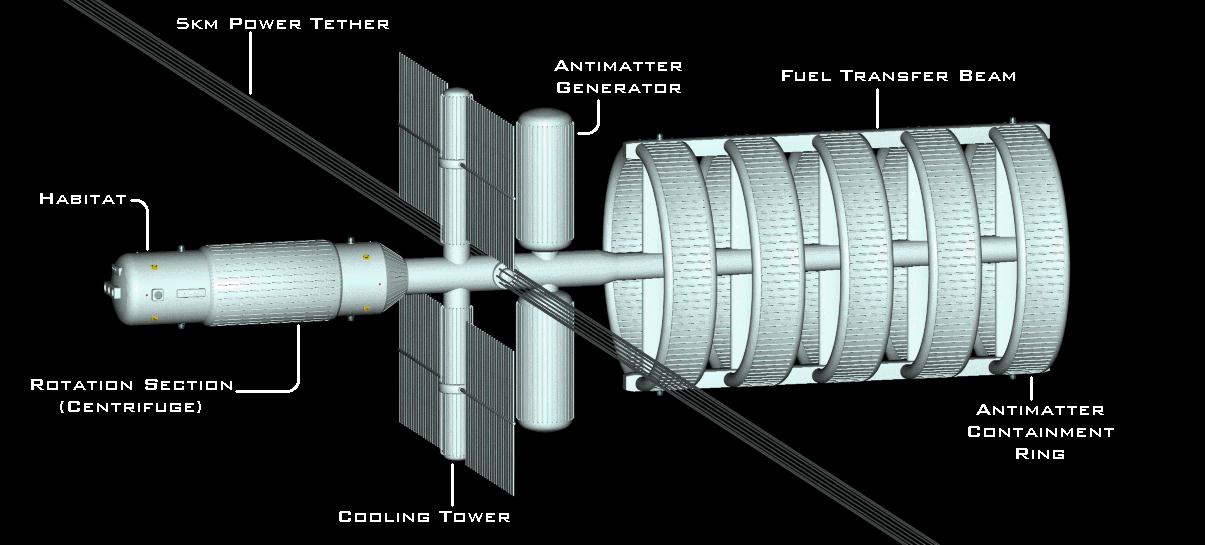 Design by Robert Heckadon
Type: Antimatter fuel refinery
First commissioned: 2082
Length: 226m
Width: 10111m
Height: 122m
Decks: 9
Displacement: 172000t
Complement: 7 officers + 43 crew
Armament: none
Defense: Kevlar lining, tri-silicate aerogel
Embarked craft: Docking shuttles, fuel tanker
“When you write a story, you create a universe that parallels our own.” - Jake Sisko, 2383
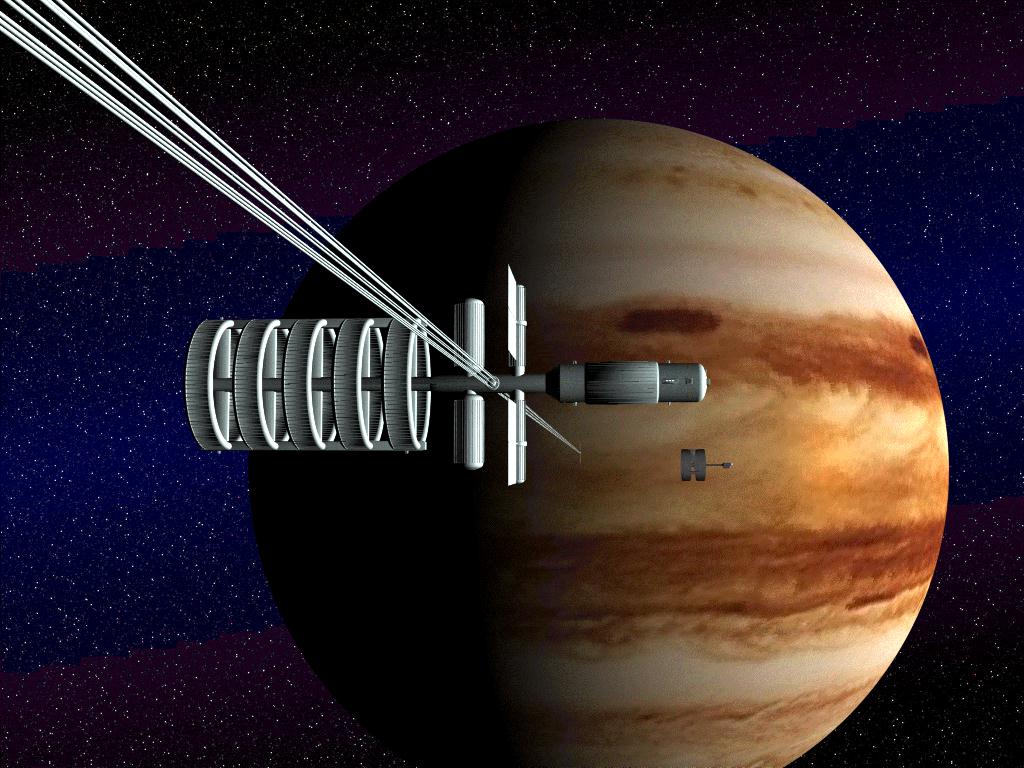
Travelling faster than light has been the dream of many story tellers and explorers, to reach the neighbouring stars within a lifetime. Then in 2063, Zephram Cochrane engaged his first warp drive, a propulsion system that uses a subspace displacement field to cause space to travel towards the ship at faster than light, rather than vice versa since space, not starships, can travel faster than light. This then lead to the virtual eradication of poverty, disease, and war from what is known as First Contact, as well as opening the new frontiers of space. But one problem, generating the incredible energies needed for the faster than light drives for the fleets of starships. In 2082, the first of the Arrakis class antimatter fuel refineries was constructed.
Antimatter Antimatter in the late 21st century was generated by accelerating electrons to the speed of light. As an object approaches the speed of light, not only time dilation occurs, but also mass increase. This is because as soon as electrons reaches the speed of light, they can no longer store kinetic energy in its velocity, so it starts storing kinetic energy in its mass. If an electron were to receive 1836 times its mass worth of energy, its mass will increase to the point where it will have the same density and mass as that of a proton with a negative charge. An antiproton.
Antimatter generation The minimum voltage to accelerate an electron to the speed of light so its mass will increase to the equivalent to a proton is 940 megavolts. This voltage is achieved with a pair of electron acceleration antimatter generators. The primary components of the antimatter generators are one gigavolt transformer, an tri-osmium based Tesla coil, an antiproton collector on the anode of the Tesla coil, and an electron restoration conduit on the cathode of the coil. The electrons comes from a fuel ship that docks at the back of the station with a hold full of atmospheric gases from Jupiter itself. The antimatter generators draws the electrons away from the gases through the electron restoration conduit, and the now ionized gases are vented out of the ship in equal directions.
This method of generating antimatter as well as using this type of antimatter is common among younger and less advanced warp capable species.
Antimatter storage Since this form of antimatter can only exist at the speed of light, the antimatter is stored in large rings and use relatively low intensity magnetic fields to keep the antimatter in the hollow rings. This allows the antimatter to maintain its massive storage of kinetic energy, while at the same time, the magnetic fields keeps the protons and other positively charged particles out. This is often seen on the Declaration class starship, including the XCV-330, the Enterprise prior to the NX-01.
Though a new type of antimatter storage bottle is used for ships that puts the antiproton in a form of suspended animation, the antimatter containment rings remain on the station.
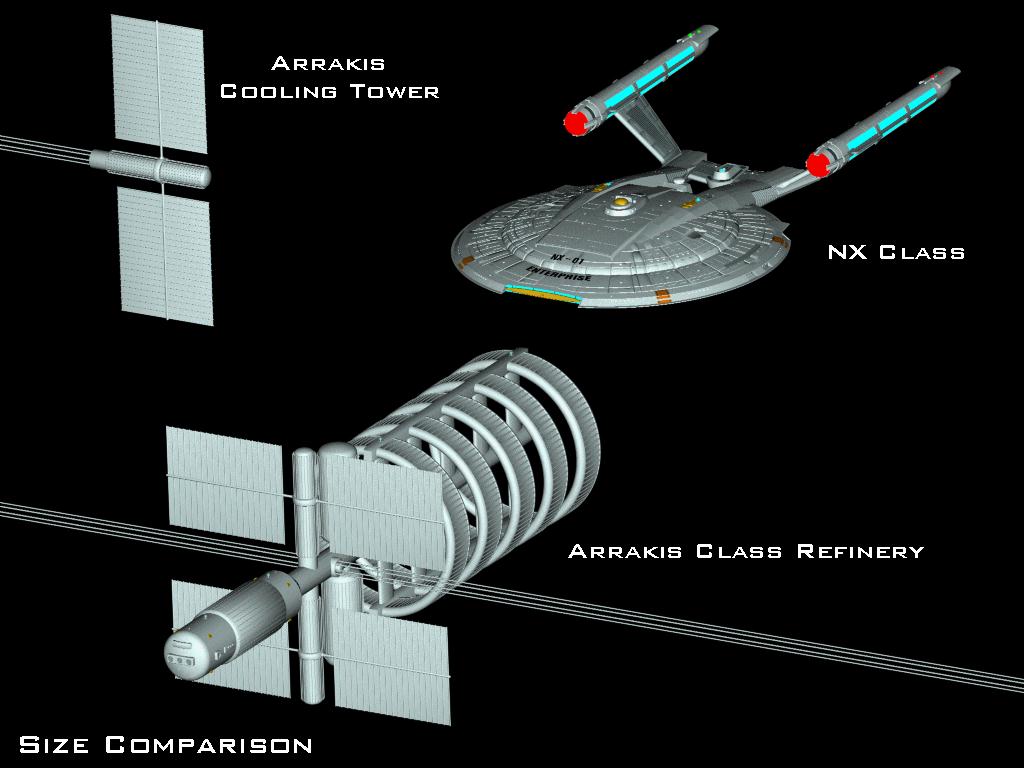
Tether power To power the antimatter generators, Arrakis uses 16 .5km long tethers to collect energy from Jupiter’s electromagnetic field. The total length of the tethers being 80km making it 17 times longer than the total length of the main cables used on the Golden Gate Bridge. When the station is above Jupiter’s geosynchronous orbit, the planet’s electromagnetic field cuts through the stations tethers generating power. In essence, Jupiter becomes dynamo. The key for using Jupiter as a dynamo is to keep the space station above geosynchronous orbit, or else the orbit of the space station will decay rapidly.
The antimatter refinery is located between the orbits of the Jovian inner moons of Adrastea and Amaltea, located 155,000km from Jupiter. This allows the magnetic field to impact the tethers at a speed of over 16km/s. And with Jupiter’s magnetic field being 20,000 times more intense than Earth’s, a single station can refuel 8 ships with antimatter at a 15% greater rate than those the 8 ships can burn the fuel.
Large cooling towers, similar to the ones on the antimatter generators, are used not to turn the tethers into superconductors, but rather to prevent the tethers from melting from the intense electromagnetic energy from Jupiter. They are also used to provide tension on the tethers using the micro gravity from the towers being 5 km above and below stable orbit, even though the pull is virtually undetectable. The tethers were considered to generate natural gravity for the space station without centrifugal forces, but the tethers need to be at least 65000km long to even achieve 1% of Earth‘s gravity, even with a planet as massive as Jupiter. And so gravity is then generated with a centrifuge in the habitat section.
Based upon early perpetual energy experiments on Earth, it was considered to increase the power output of the antimatter station by giving it a retrograde orbit around Jupiter. So instead of orbiting from west to east, the station would orbit from east to west, and increase the speed of the magnetic field impact on the tethers to nearly 64km/s. But that idea was abandoned due to numerous navigational hazards and the difficulties of reaching and docking with the station safely.
With this power source, it has been estimated that even with hundreds of stations providing fuel to thousands of starships, Jupiter has enough kinetic energy to last millions of years.
Critics Critics have asked as to why Arrakis wasn’t powered by solar energy? The complex series of solar collectors and structure that would be needed to power the antimatter generators at a required rate would have thrown the entire Arrakis project horrendously over budget. Though an enormous solar sail had been considered to reflect solar energy onto a smaller array, and was deemed cheaper and easier to maintain than conventional solar collectors and within a reasonable budget, tether power was in the end cheaper and easier to maintain.
Critics have also asked as to why not simply power the antimatter station with matter/antimatter reactions and dilithium? Despite conventional belief, starships using this type of antimatter do not harness its energy from reacting it with matter, but rather energy is released when the antiprotons enter a dilithium crystal causing them to instantly decelerate, releasing their massive storage of kinetic energy in the form of intense X-rays. These X-rays then powers the ship’s warp drive. Even though this type of antimatter can react with normal matter in an annihilation reaction, because they can only exist at light speed, they often are unable to react with them cause of their speed, being unable to alter course in time to intercept a proton. With at best 1 in 10000 antiprotons being able to react with protons, annihilation reaction was deemed highly inefficient and too dangerous for starship use.
An extremist group known as Terra Prime claims that the reason why the antimatter refinery is orbiting Jupiter is so that Starfleet can force humanity away from Earth, and that the antimatter refinery can easily be powered by the Sun’s electromagnetic energy even more efficiently than Jupiter, and can be kept relatively close to the Earth, since at that distance the sun‘s magnetic field would impact the station‘s tethers at 405km/s. In fact Starfleet tested this idea with Arrakis 1’s tethers in the final testing stage, and for reasons unknown, no power was being generated.
The extremist group also claims that Earth can also power the space station and it in turn can power Earth itself. However with a geosynchronous orbit of 35000 km, and requiring at least 45000km about the surface, the Earth’s magnetic field is deemed too weak to power anything larger than a medium size city.
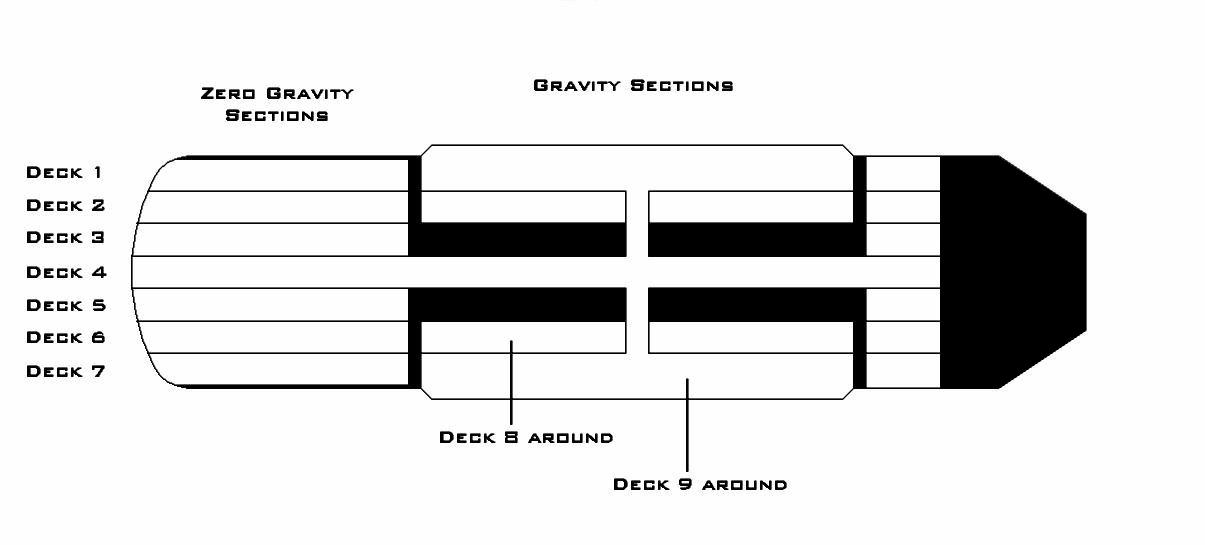
Habitat The habitat section is designed with an internal rotating section, a centrifuge, to generate gravity for the station’s living quarters, medical bays, exercise bays and oxygen garden with a force of only 0.3G. Every other part of the habitat section, or the rest of the station as a matter of fact, is in zero gravity. 100% of Jupiter’s energy is dedicated for the antimatter generators, and with the weak solar energy at that distance, the habitat section is powered by nuclear fusion.
The refinery’s resources are replenished with a series of docking ports and cargo shuttles from Europe and Io.
Refit The first major redesign of the Arrakis class began with Arrakis 8 in 2140 with the installation of verteron field generators attached to the antimatter generators. These generators converts the kinetic energy of the antiprotons into an interstitial spin within the antiproton while retaining the antiproton’s mass and density. This allows the antimatter to be stored in magnetic bottles instead of rings, as well as being relatively safe to react with matter in an annihilation reaction using dilithium as a reaction controller. The verteron generators requires significant amounts of power and causes antimatter production to drop 29%.
Another major redesign includes 500 metre long electron collectors at the end of the tether cooling towers to capture valence electrons trapped in Jupiter’s magnetic field. Therefore a fuel shuttle is no longer required. The refit also included a redesigned habitat section which includes artificial gravity plates and generators. This upgrade is considered a blessing for the crew who were tired of floating off the deck when they jogged as fast as the centrifuge in the opposite direction and cancelling out its gravitational effects.
These upgrades became mandatory with the development of the NX program in its final stages, including the prototype NX-01. The refitted Arrakis class became known as the Arrakis MK2.
Variants A variant of the Arrakis class MK2 was constructed around Venus in 2145. This space station instead of having 5 km long tethers for power, they were replaced with 1km long photoelectric panels. The antimatter generators were replace with 100 megavolt transformers to generate highly energetic electrons to fuel the ion drives of civilian impulse drives.
Decommission In 2220, the quantum charge reversal device had been successfully introduced to the Federation. Though about the same size as their light speed antimatter counterparts, they only used 15% of the power. It was initially proposed to develop the Arrakis class MK3, which removes the 5km long tethers with 2km wide solar arrays, but it was then decided to design an entirely new class of antimatter fuel refinery, especially with the development of the new Constitution class starships.
In 2262, the last of the Arrakis class antimatter fuel refineries, along with the civilian ion fuel refineries, had been deactivated and decommissioned.
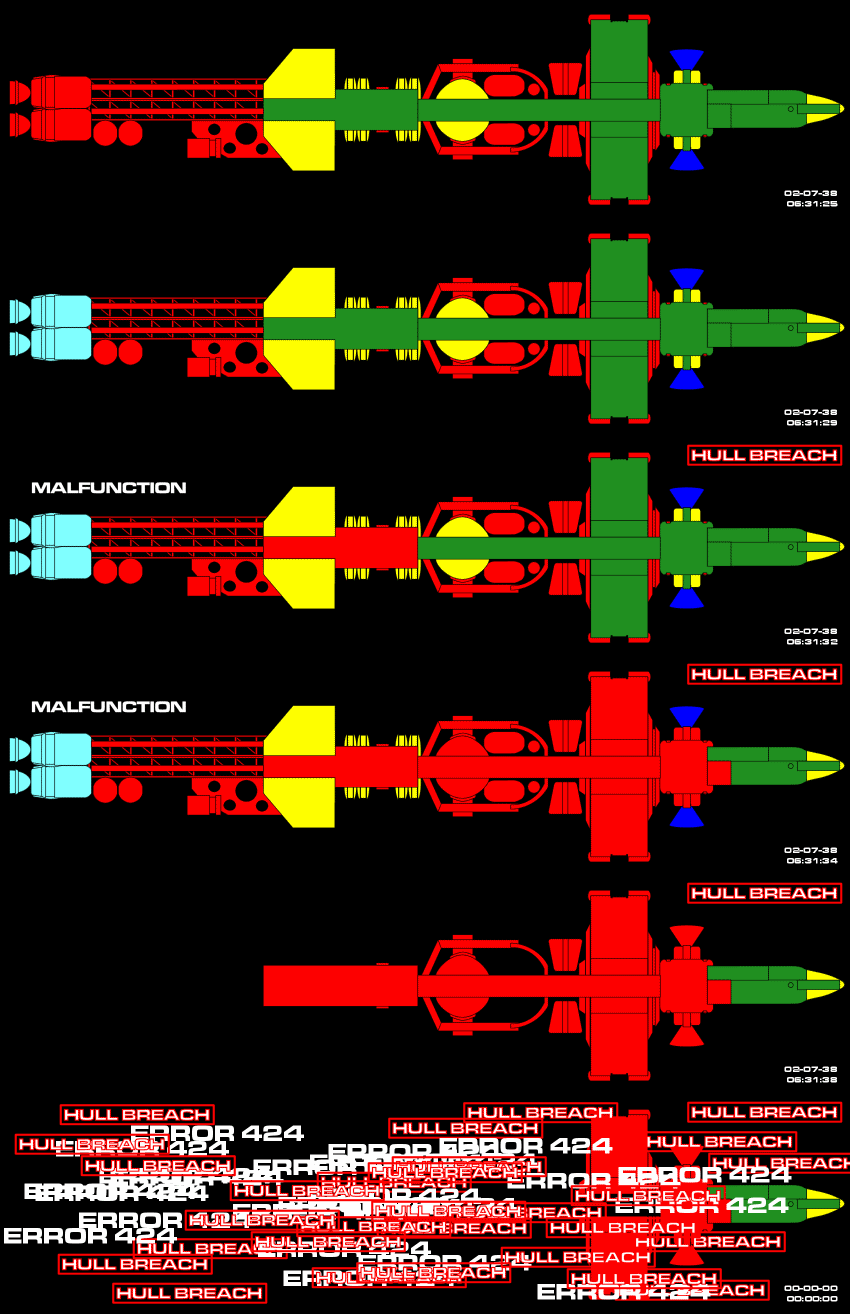
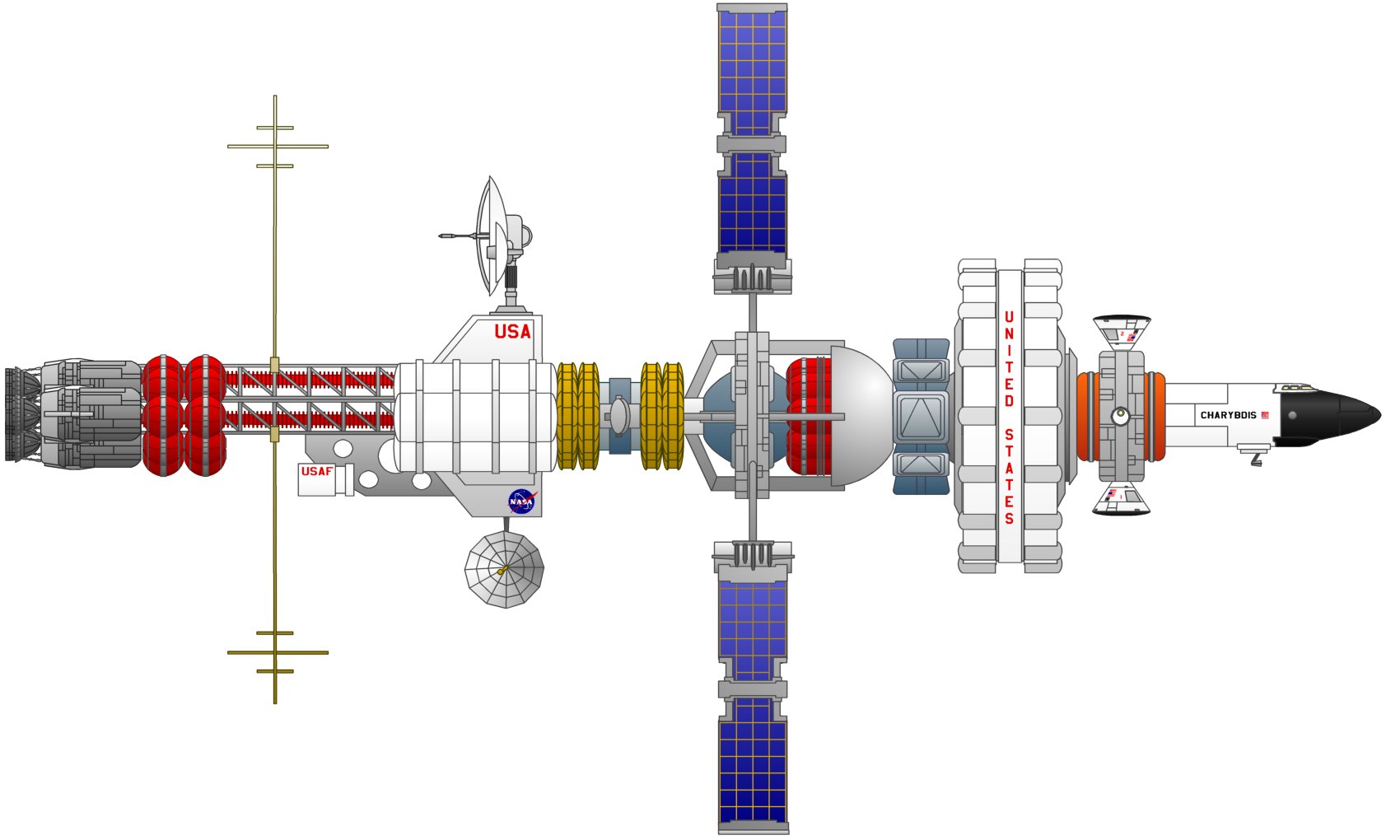
Charybdis
 Designs by
Kris,
Kenny,
ASDB Members
Designs by
Kris,
Kenny,
ASDB Members
No specs available
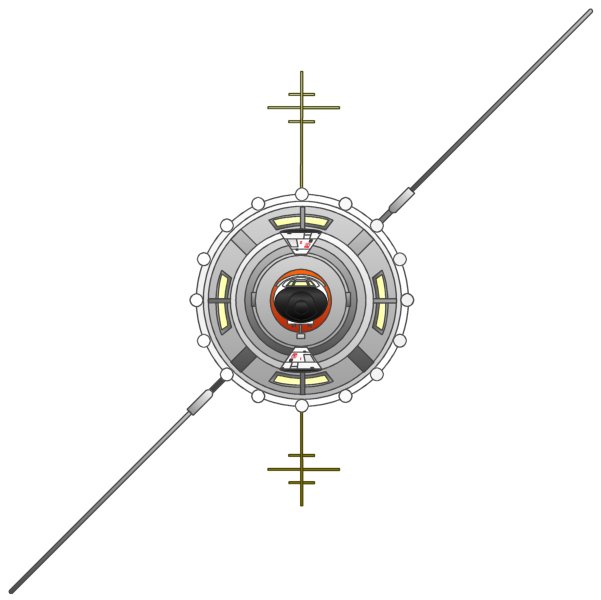
These are two different approaches to design the Charybdis, a spaceship launched by the NASA in 2037, in the third attempt to explore beyond Earth's solar system.
Cosmonaut
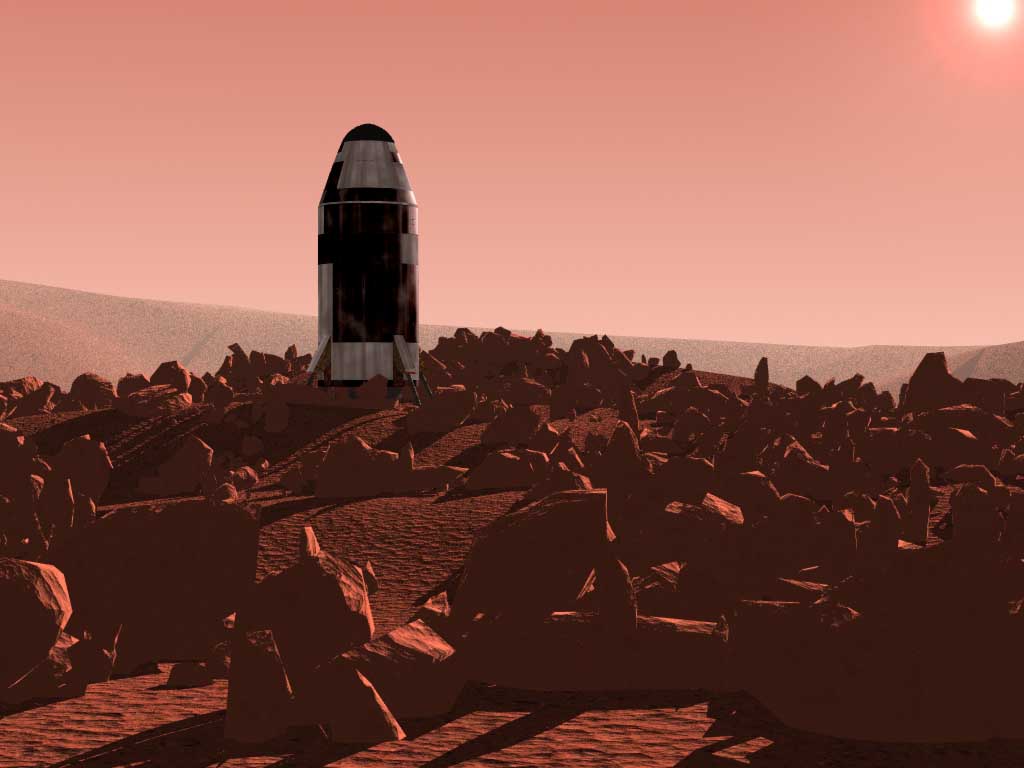
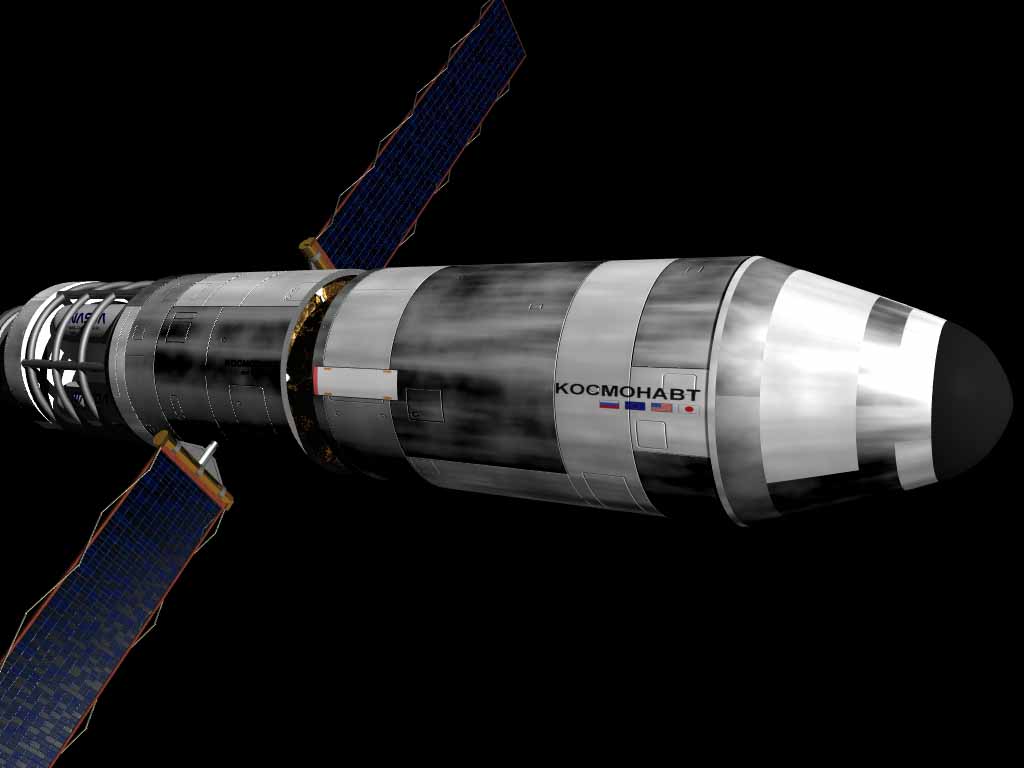
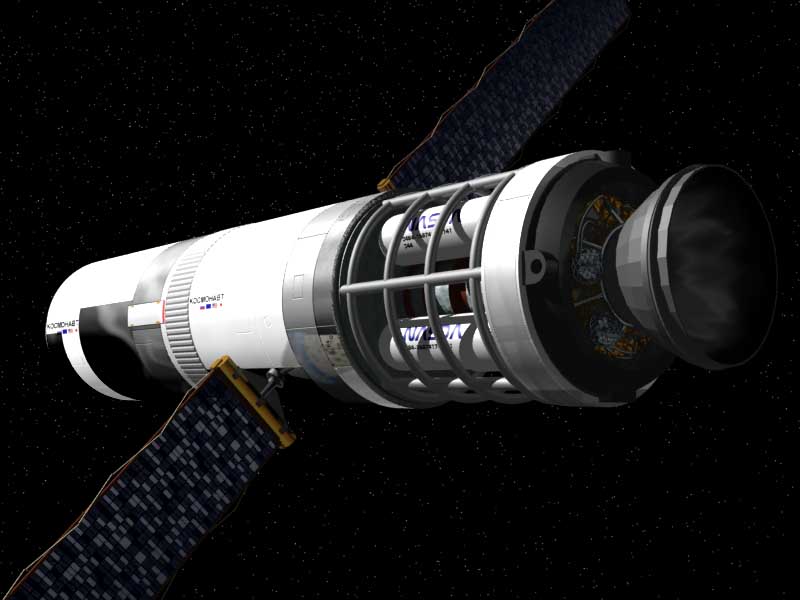
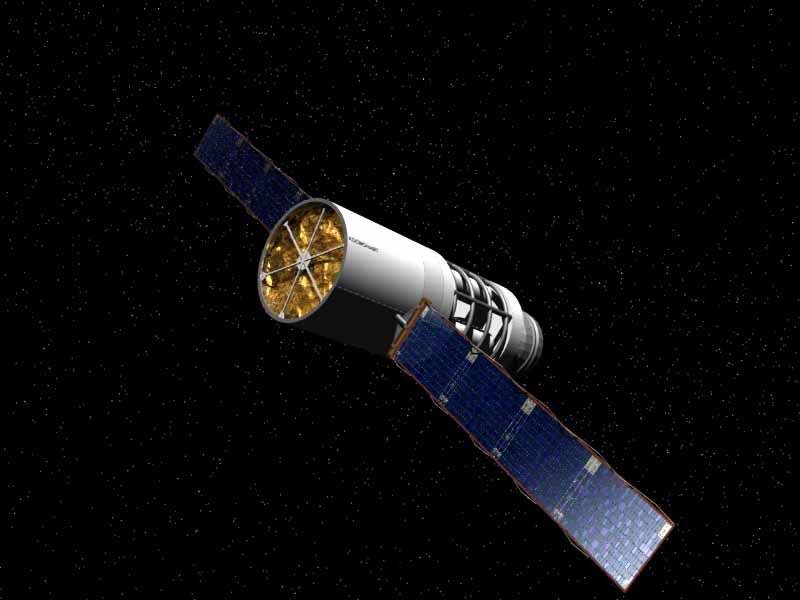
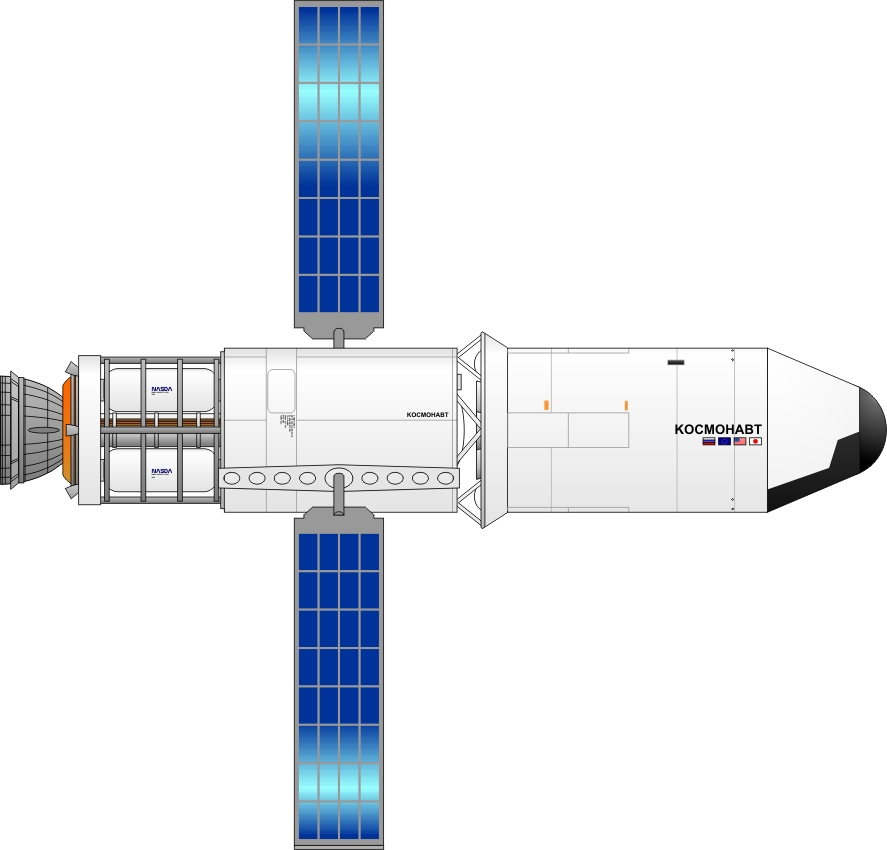 Design by Harry
& Kenny,
ASDB Members
Design by Harry
& Kenny,
ASDB Members
No specs available
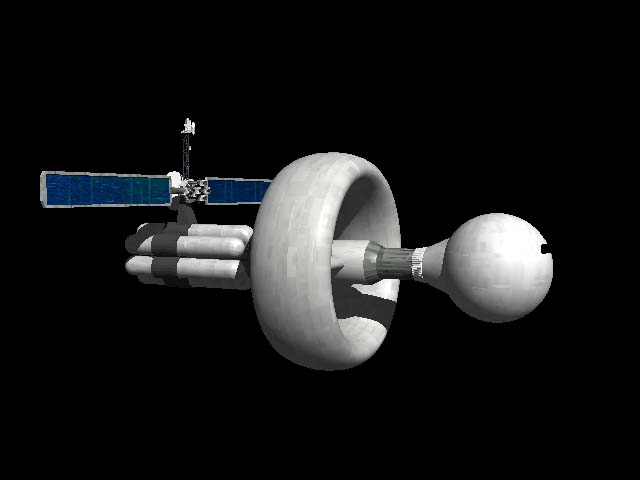
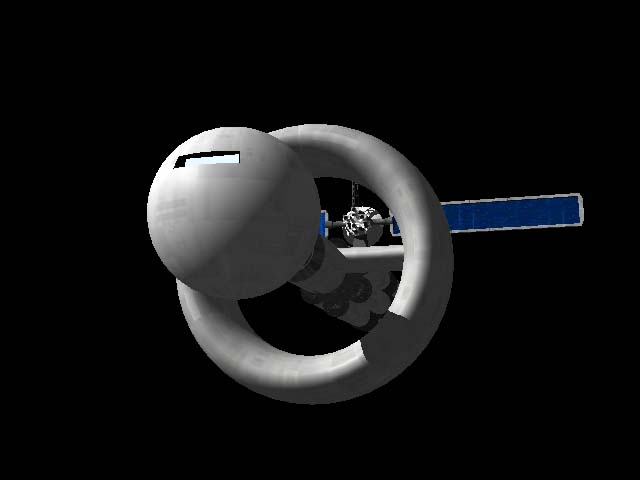
The late 90s of the 20th century saw the
first manned missions to Mars, aboard DY-100 sleeper ships, the early
predecessors of this long family of ships. Because these early primitive
ships could only hold small supplies (barely enough for two weeks of
exploration), and the long journey it took to reach Mars (up to a year in
stasis), the missions were extremely costly and eventually discontinued. A
new way to explore the Red Planet was needed.
The Cosmonaut program started development in 2009 at the Russian Space
Research Institute, supported by the European ESA, Japan's NASDA and the
American NASA. The basic premise of the Cosmonaut was based on the
principle of 'living of the land'. The entire program would consist of two
missions, Cosmonaut and Astronaut. The first one would fly to Mars
unmanned, land on the surface, and start the production of methanefuel (CH4)
out of the abundant CO2 in the Martian atmosphere reacting with
a relatively small amount of liquid hydrogen (H) brought from Earth. This
way a complete Earth Return Vehicle was ready and waiting for the actual
explorer arriving in the Astronaut ship. Because there is no need for a
huge ship carrying fuel for the trip back, the mission would be many times
more efficient and cost-effective. And on top of that, the smaller mass
and increased power in propulsion meant the journey to Mars was shortened
to only 4 months.
The Cosmonaut ship was launched in modules during most of 2019, and was
assembled at the ISS. With all systems checked and computers installed,
the ship was launched November 15th, 2019. Final telemetry and remote
control tests were conducted when Cosmonaut passed Lunar Base. In the
meantime, the Astronaut craft was on the drawing boards and planned for a
launch of late 2020. Cosmonaut reached Mars orbit on March 12th 2020. All
systems were functional, and the landing proceeded as planned. The Orbiter
acted as a communications relay satellite, while the Lander produced
methane fuel on the surface. On February 1st 2021, the Astronaut entered
Mars orbit, and landed the crew safely on the surface of the Red Planet.
There they conducted varied research and set up a semi-permanent shelter.
After seven weeks, they launched into orbit aboard the Cosmonaut probe,
leaving behind the Astronaut lander and a shelter. Once in orbit, the
Cosmonaut craft docked with the Astronaut Orbiter and set course for
Earth.
More about the design @ Titan Fleet Yards
EVA Pod

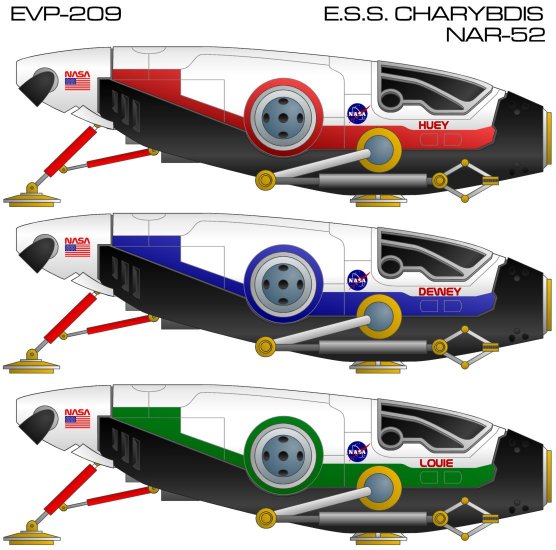
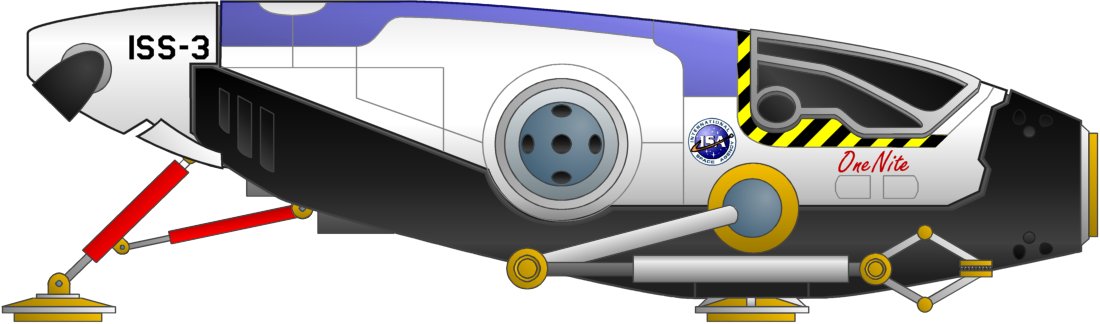
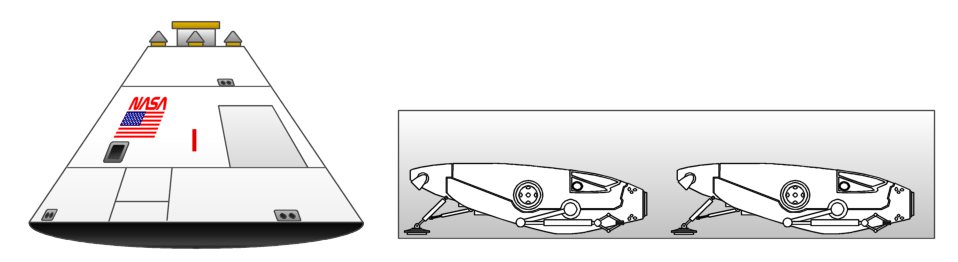 Design by Kris, ASDB Member
Type: EVA pod
A design for the EVA pods carried aboard the Charybdis. Plus a scale comparison to one of the escape pods and the payload bay doors. It's meant to be a 1- or 2-man craft, for short-range inspection and repair/retrieval work on the mothership.
Kestrel Class
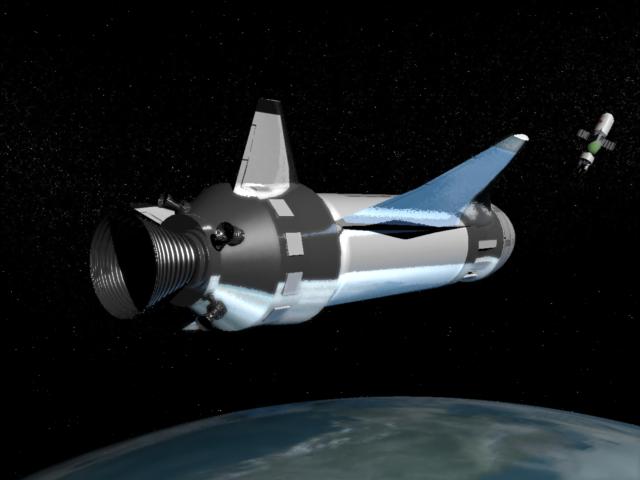
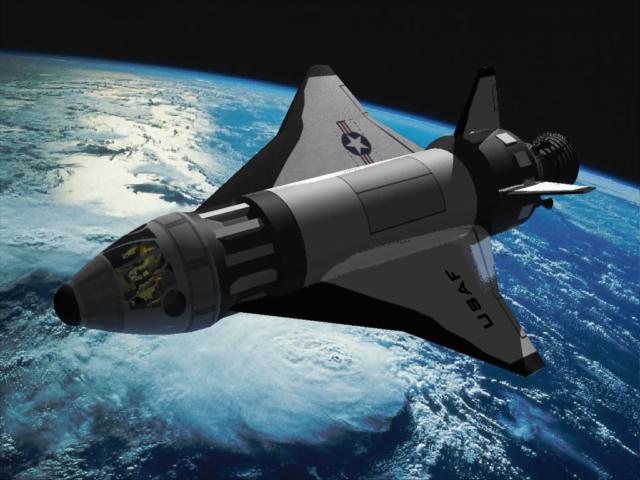
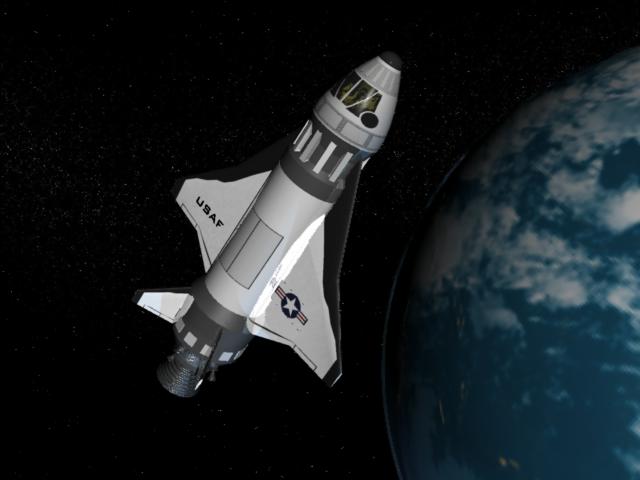 Design by Nixon's Head
Affiliation: United States Air Force
Type: Spaceplane
First commissioned: 2036
Length: 17.6m
Width: 12.1m
Height: 5.7m
Decks: 1
Displacement: 15t
Complement: 2
Armament: 6x MS-22 missiles
The Kestrel-class spaceplane was developed in the 2030's as part of the US Air Force's long-running programme to create a responsive, flexible and economical means to access low Earth orbit. Building on the successful unmanned X-47B spaceplanes of the 2010s, the Kestrel took advantage of advances in propulsion and thermal protection to provide a high-performance spacecraft for launch, retrieval and on-orbit inspection, repair, reconnaissance, or search-and-destroy missions.
One of the most important and controversial new technologies included in the Kestrel was the Cooper-Nowitzki antimatter-catalysed fusion engine. This revolutionary powerplant introduced small quantities of anti-hydrogen into a reaction chamber and mixed it with hydrogen, releasing enormous amounts of energy, both directly and via secondary hydrogen-hydrogen fusion reactions. This gave the Kestrel a phenomenally high performance compared to previous rockets. Theoretically capable of a direct single-stage launch from the ground into orbit, public concern over the hazards of antimatter powered flight meant that standard practice was to use a conventional chemical rocket for the initial ascent, only activating the Cooper-Nowitzki drive at altitudes of more than 20km. Obsolete Titan II missiles (sometimes erroneously identified as Titan V's by the press) were often used, due to their cheapness, and several former missile bases found themselves hosting Kestrel squadrons.
Once on-orbit, Kestrel missions typically lasted a few days to a week. Although capable of operating as far out as the Earth-Moon Lagrange points, most missions took place in low Earth polar orbits. In the year before World War III, Kestrel launches peaked with over 200 sorties flown by a fleet of 17 planes. Though usually unarmed, there were several occasions when MS-22 “Starscream” missiles were loaded into the Kestrel's payload bay. Tested against defunct US satellites throughout the late 2040's, the first operational use of the Kestrel's ASAT capability came in the first hours or World War III, when a Kestrel of the 4th Space Control Squadron destroyed an Eastern Coalition early warning satellite in a Molniya orbit, before itself coming under attack by a ground-based laser from Sary Shagan.
A total of six Kestrel's survived the war., including one that was undergoing a maintenance overhaul at Malemstrom Air Force Base, Montana. The base escaped nuclear destruction, but was abandoned after the war in the general chaos surrounding the rise of Colonel Green. The Kestrel remained in its hanger, largely undisturbed for almost a decade before being salvaged by Zefram Cochrane and Lily Sloane. The powerplant was modified by Cochrane to act as the power source for his warp engine prototype, whilst Sloane was able to make use of much of the airframe and avionics in constructing the Phoenix warp ship.
Mars Station Beta
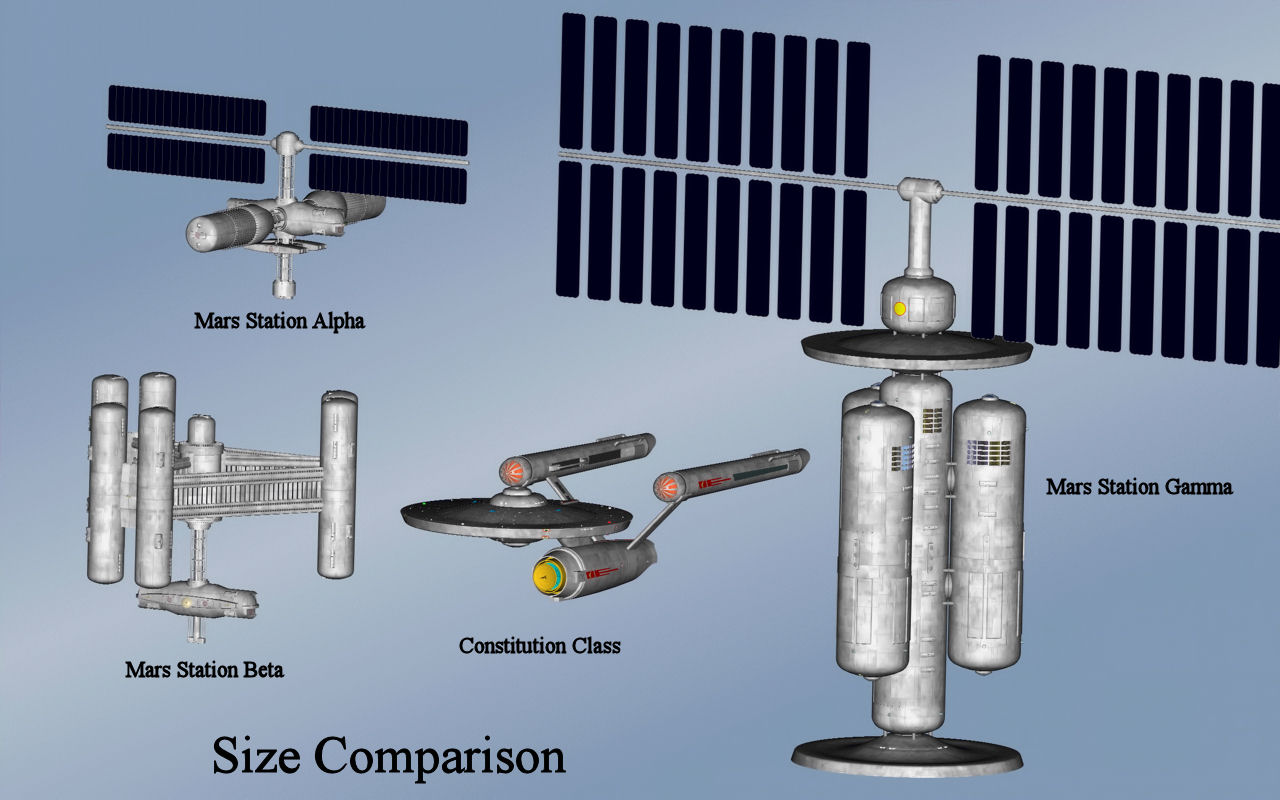
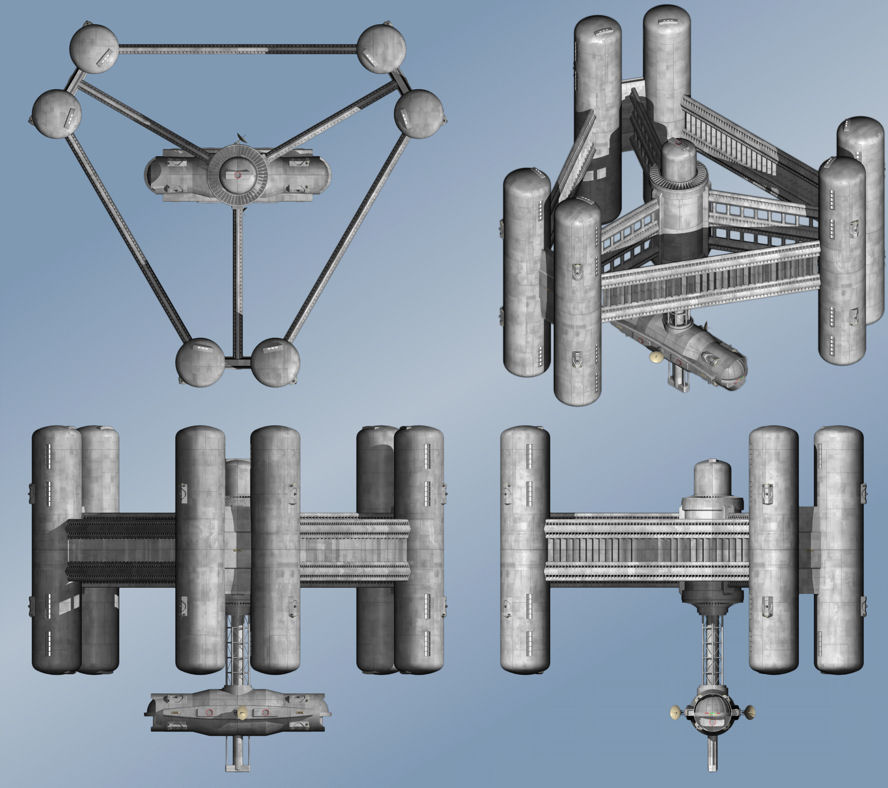 Design by Robert Heckadon
Type: Orbital space station
First commissioned: 2070
Length: 147m
Width: 168m
Height: 139m
Decks: 20
Displacement: 400000t
Complement: 30 officers + 270 crew
Sublight speed: 0.001c (max.)
Armament: none
Defense: magnetic radiation shield
Embarked craft: 2 DC-12 class atomic ion shuttles
“Tide's up. Time to stay alive.” – Ice Cube; Ghosts of Mars
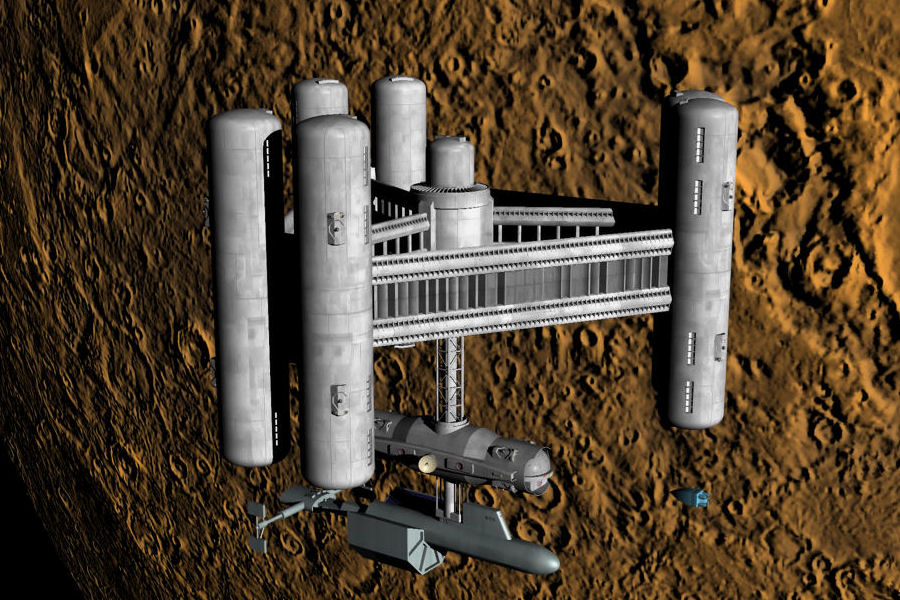
Built in the midst of the post atomic horror, Mars Station Beta was one of most ambitious projects that spawned from First Contact. It serves as a complex and sophisticated research outpost, and a space port beyond what Mars Station Alpha is capable of handling, especially with hopes of colonisation by the beginning of the 22nd century.
The space station components were launched from Earth with the Prometheus 6 space craft, which was a larger and more powerful version to the electodynamic tether ship Prometheus 2 that launched the Ares 4 in 2032.
The space station generates gravity by rotation the habitat section while the docking section remains in zero gravity. Each of the 2 shuttle bays is capable of handling 2 DC-12 class ion space shuttles, while typically storing 1 at any real given time. Similar in size to the DC-X from the mid 1990's, the DC-12 class is powered by 4 hafnium-178 atomic engines that emit gamma rays to, with a nadion catalyst, heavily ionize xenon gas for ion fuel. The electromagnetic accelerator is powered by gamma ray converters.
Mars Station Beta went through many design revisions that included a 600 metre long solar array, but in the end the space station is powered by 6 hafnium-178 reactors located in the station's core.
The rotation section and shuttle section are not directly connected to each other; rather they are suspended via electromagnetic shives. The only real connection is an internal travel pod that either connects to the habitat section or the docking section when transferring cargo or personnel between the 2 sections. The habitat section has its own zero-G airlock for more direct cargo transfer. The 6 habitat pods contain their own hydroponic gardens, water recycling, science labs and accommodations.
Mars Station Beta was replaced with Mars Station Gamma in 2132 which used “graviton wind” gravity push generators, which was then upgraded to the now standard gravity pull generators in 2141.
Molniya Class
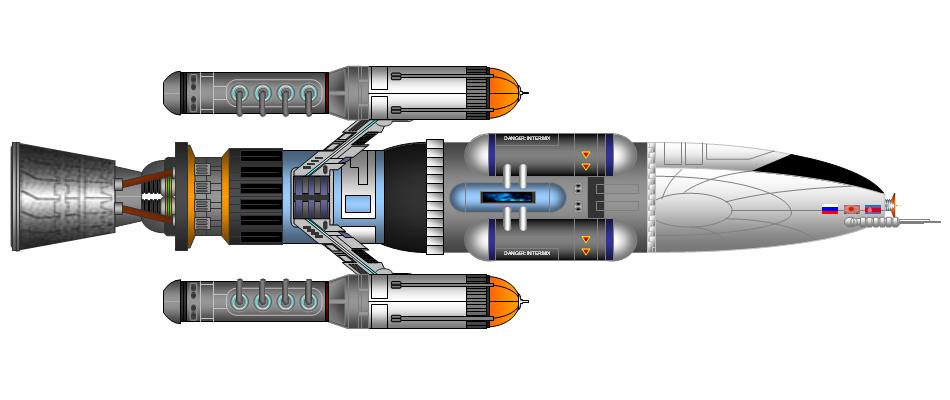 Design by Rich Rogers
Affiliation: Eastern Coalition (Earth)
Type: Experimental
warp ship
First commissioned: 2062
Length: 22.8m
Width: 6.8m
Height: 5.9m
Decks: 1
Displacement: 62t
Complement: 1
Speed: Warp 0 (cruise), Warp 1.06 (max.), Warp 0 (max. emergency)
Sublight speed: 0c (max.)
Armament: nil
Defense: nil
Embarked craft: nil
April 5th 2063, the day that mankind took its place amongst the stars, the day when Zefram Cochrane first broke through the light barrier, the day of first contact. Or, at least, that is what the history books would tell us. In the dark, post-apocalyptic days on the mid 21st Century, the records of mankind’s darkest hour are somewhat shaky to say the least. Yet the recent discovery of historic documents from the period have revealed a truth that will rock the very foundations of the Federation, and shed new light on how faster than light travel was really achieved.
Born in 2013, Zefram Cochrane’s name has become legendary for his ground-breaking flight that was to set in place the chain of events that would lead to the formation of the United Federation of Planets. Yet surprisingly little in known of Cochrane up until the launch of the Phoenix in 2063, or to how he developed his pioneering warp engine.
The development of faster than light travel began with the formation of the first theories postulated by acclaimed theoretical physicist, Miguel Alcubierre Moya. Alcubierre is best known for his paper "The Warp Drive: Hyper-fast travel within general relativity", published in 1994. In this, he describes the Alcubierre drive, a theoretical means of travelling faster than light that does not violate the physical principle that nothing can locally travel faster than light. In his paper, he reversed the regular way general relativity is applied; instead of going from massive objects to space-time curvature, he constructed a model that could transport a volume of flat space inside a "bubble" of highly curved space, much like a crease in a sheet. This bubble is driven forward by a purely local expansion of space-time behind it, and an opposite contraction in front of it. In this way, a spaceship could be pushed away from the Earth and pulled towards a distant star by space-time itself. Faster than light velocity would be possible because the starship would be, strictly speaking, stationary (relative to the space of its bubble) while space-time itself would be moving. The key to generating a distortion of spacetime like that is the so-called "exotic matter". Exotic matter has the provoking property of having negative energy density. (While two "normal" particles would attract each other by their gravity, an exotic particle would repel a "normal" particle.)
Buiding on Alcubierre’s work, Cambridge astrophysicist, Christopher Bayer refined the mathematical model underlying the concept of space warping to create a field in which an object could travel at superluminal speeds. However, the vast amounts of power required to generate such a field rendered Bayer’s calculations little more than a theoretical possibility. During the early 2030s, one of Bayer’s post-graduate students was Zefram Cochrane, who had won a scholarship to Cambridge following his first degree. Cochrane formed part of Bayer’s research team that worked on trying to create a practical warp field generator, but with little success, cut short by the unexpected death of Bayer in 2036. Cochrane returned to the US soon after, gaining his doctorate at MIT for his research on Heim theory. Little is known of Cochrane until well in to the war in the early 2040s. By this time, Cochrane had been recruited by a branch of the National Security Agency, employed on covert special operations around the globe. Although shrouded in secrecy, it is likely that Cochrane was involved in counter-espionage, and the misappropriation of technology from foreign powers. It is during this time that Cochrane was exposed to the horrors of the war leading to bouts of depression and alcohol abuse. On one such mission into the heart of Eastern Coalition territory to steal weapons technology, Cochrane stumbled upon reports and schematics relating to a viable warp engine design, powered by a matter/antimatter reactor. Recognising the material for what it was, thanks to his earlier work with Bayer, Cochrane seized the opportunity to acquire the designs for himself – knowing full well that such information would be extremely valuable.
Sadly, the reality of Cochrane’s alcohol dependency and growing depression led to him being dismissed from the NSA. In the early post-war years, a penniless, homeless Cochrane found himself on the streets in Bozeman, Montana begging for money to feed his addiction. It was here, that he found salvation in the form of his former NSA colleague, Lily Sloane. Together Cochrane and Sloane assembled a team of scientists and engineers at an abandoned missile silo in Bozeman, and began the development of the warp engine. Progress was slow, partly as they were working with stolen technology, and also because the resources required were in short supply.
Meanwhile, on the far side on the planet within the Eastern Coalition, at the Baikonur Cosmodrome in Kazakhstan, Government scientists were also working on a practical warp engine. The team was headed by Vladimir Alexeyov who, like Cochrane, had also been a student of Bayer at Cambridge, and whose warp engine technology Cochrane had acquired. By 2055, just as Cochrane was starting work on his engine in Bozeman, Alexeyov was already bench-testing his fusion reactor. Furthermore, the Russians were at a distinct advantage, with state funding and greater resources, whereas Cochrane was little more than a privateer, using only the resources he could beg, borrow or steal. Unbeknown to each other, the two teams were involved in a race to the stars, just like Wernher von Braun and Sergei Korolev had enjoyed a Century earlier.
In 2057, with plans to launch an unmanned warp ship, the Russian team suffered a major setback when their test-bed reactor failed. Alexeyov and three other scientists on his team were killed in the blast. The programme stalled as a lengthy investigation into the cause of the explosion was conducted. The board of inquiry revealed that the crystalline rubidium structure was far too brittle and fractured under the extreme stresses in the reaction chamber. The team recommenced their research in early 2058, with Dmitri Vasiliev taking Alexeyov’s place as head of the team. The disaster had set them back at least 2 years.
By 2060, the Russians began construction of the new Shishka class rocket that would be used to launch their warp capable ships. By now, Vasiliev’s team had developed a lithium based fusion reactor, similar to the one Cochrane was building in the US. The Russian programme was now geared towards an unmanned flight in early 2062, followed by a series of manned flights commencing six months later. Cochrane had also begun construction of the Phoenix, using a Titan V rocket as his launch vehicle. With Titanium in short supply, much of the delays for Cochrane was obtaining sufficient material to build his starship. He grew intensely frustrated by the process, seeking solace in the bottle, and would often go missing for days on end in the forests of Montana.
On the 19th December 2062, over four months before Cochrane’s “historic” flight, mankind’s first ever faster than light starship was launched from the Vostochny Cosmodrome. The launch was a resounding success, and the unmanned Molniya II (meaning “Lightning”) warp space-vehicle departed Earth’s orbit. Fourteen minutes later, mission control was given the go-ahead to bring the reactor on-line and accelerate to superluminal speeds. The test was a complete success, as Molniya II achieved a speed of 1.02c (approx 306000kms-1). Approval was granted to proceed with a manned flight, early the following year.
On the 9th January 2063, Eastern Coalition Cosmonaut, Gregor Pavlovich became the first man to break the light barrier. In a 2 minute flight, he took the warp-ship Molniya III to a speed of 1.06c. However, on return to Earth, Molniya III suffered a core breach killing Pavlovich. Within the Eastern Coalition, the flight was heralded a great success, for which Pavlovich was awarded the Star of Putin and became a national hero. Sadly, the Coalition’s isolationist policy following the war, meant that no-one outside ECON ever heard about his achievement. Plans were afoot for an extensive flight programme, but the scheduled second flight, slated for June 2063 never took place. The team never got to the root cause of the core failure and the state executive became unwilling to fund any further tests. By then, Cochrane had already established first contact with the Vulcans, and their arrival had already begun to establish a dialogue of conciliation amongst the factions. The Russian’s instead eventually became collaborative partners with the US-led development programme. All records of the Molniya programme were lost when hostilities briefly re-ignited in 2074, such that the common knowledge was that Cochrane had led the way…
The Shishka class rocket was a development of the earlier Soyuz and Vostok class rockets from Russia’s pioneering space programme. The Molniya warp ship was integrated into the rocket, much in the same way the Phoenix had been integrated into the Titan V rocket.
The Molniya had a similar fusion reaction chamber to Cochrane’s; the principle difference was it fed four nacelles as opposed to the Phoenix’s two. There is some anecdotal evidence to suggest that all subsequent four-nacelle starships are based upon the system employed by the Molniya. The other thing to note is that the warp drive was considerably more sophisticated than Cochrane’s, simply because greater resources had been put into its development. Indeed, it is likely that had the Russian’s led warp drive development in the latter half of the 21st Century, then far greater progress would have been made. It would take mankind another 100 years to develop a practical warp five engine. Whereas using the greater efficiency and potential for growth from the 4-nacelle Molniya as a basis for future development could have enabled a warp five system to be realised in half the time. Cochrane had “lucked in” to a working solution, but to the detriment of mankind, but it proved to be only a temporary set-back. As it was, Cochrane for a time lost interest in developing his warp drive further, leaving the mundane tasks to less able scientists, whilst he sought fame and glory on the world stage. Dmitri Vasiliev, the last of the great Russian racket Scientists died in 2065, and his ideas died with him. It wasn’t until the likes of Henry Archer (b. 2077)and Doctor Takasi came along at the turn of the century that any major advancements in warp technology were made.
At every pivotal point in history in the development of flight and space flight, they have been defined by the rivalries of competing persons, determined to be the first. It struck me that Cochrane would not have been the only person developing warp drive in the mid 21st century - just as both the Russians and US had been in a space race in the 1950s. What if during those uncertain post-apocalyptic times, that someone else had launched a Warp ship before Cochrane, unknown to the rest of the world, yet it was Cochrane who was credited with the first flight - simply because of the establishment of first contact with the Vulcans. History is written by the winners...
Red Dawn Class
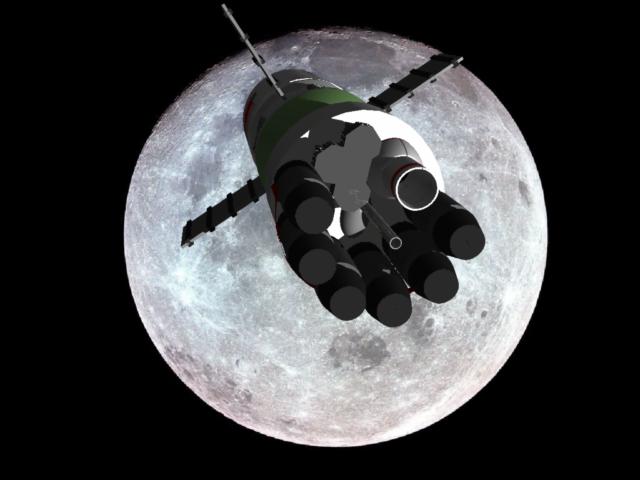
 Design by Nixon's Head
Affiliation: ECON, Eastern Coalition of Nations (Earth)
Type: Fighter
First commissioned: 2041
Length: 12.04m
Width: 6.34m
Height: 6.34m
Displacement: 10t
Complement: 1 officer
Speed: Sublight
Armament: 6 space torpedoes, IR laser, MASER, 30mm cannon
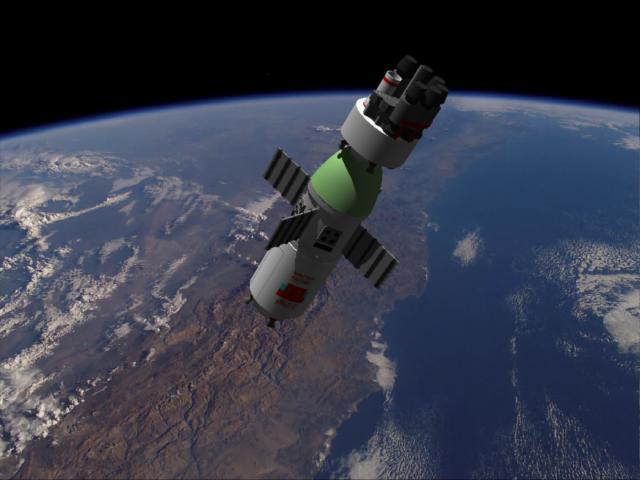
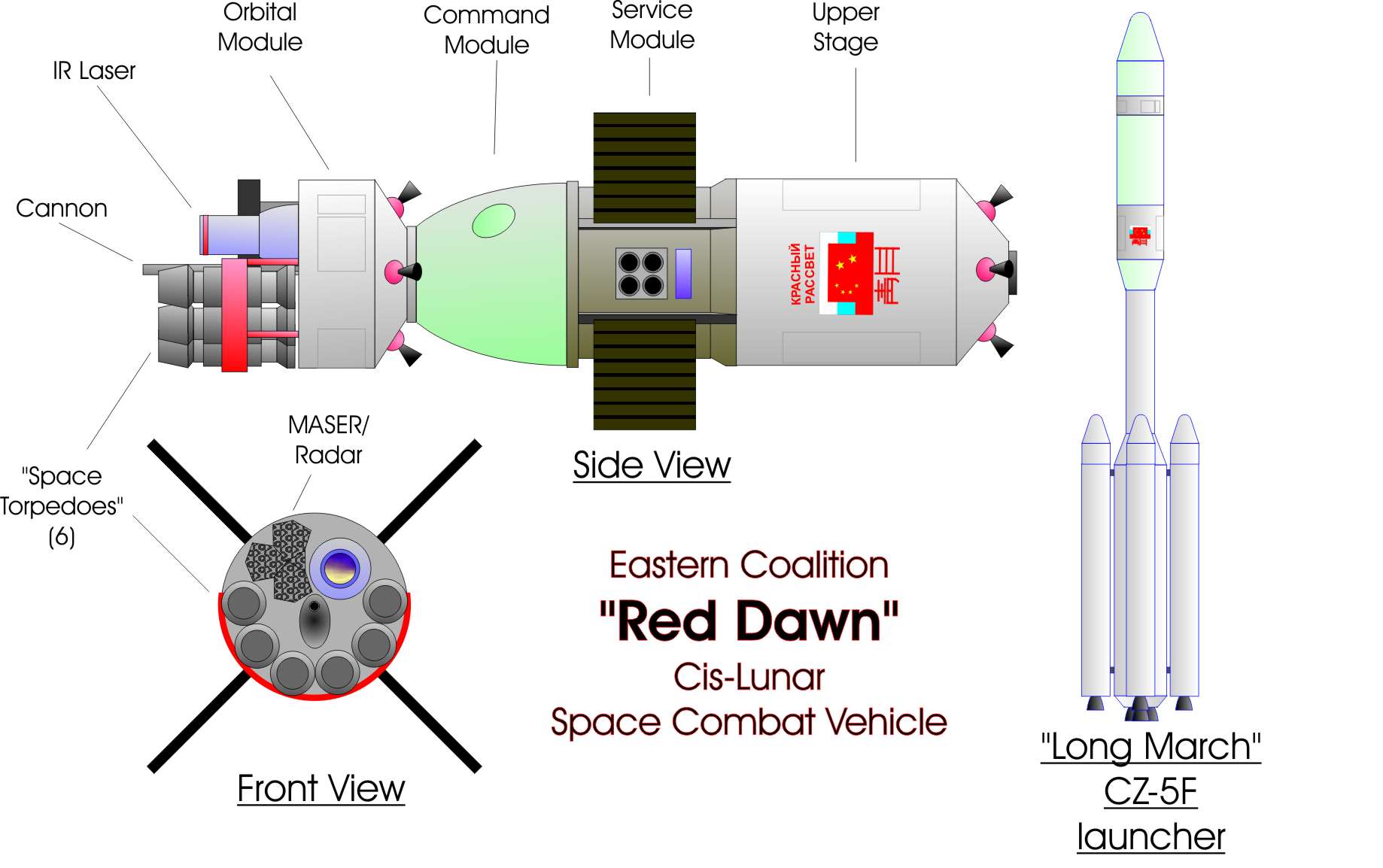
Based on the successful Soyuz and Shenzhou spacecraft, the IS-5 RED DAWN was a manned space fighter capable of extended operations in near-Earth and cis-lunar space. Several units saw action for the Eastern Coalition during WW III. A Shenzhou-style re-entry vehicle supported a single pilot. A modified orbital module held sensor and weapons systems. The service module contained a fission reactor power source and provisions for missions of up to one month’s duration. An additional Upper Stage module was added for operations beyond Low Earth Orbit, housing a high-performance ion drive which drew power from the SM fission reactor.
Red Dawn was designed primarily to attack Western Alliance geosynchronous and high Earth orbit military assets such as comsats, spysats and strategic defence platforms, as well as low orbit targets like bombardment platforms. The Eastern Coalition opted for a manned system due to the continuing superiority of the Western Alliance in electronic and cyber warfare technology, which rendered unmanned Coalition systems vulnerable to Western interference.
Primary weapons were an IR laser rated at 1.5 terawatts peak output, with a sustained beam strength of around 25kW. This was used mainly for sensor disruption of enemy spacecraft, or to damage solar arrays and other sensitive systems at ranges of 70-100km. Also mounted was a combined UHF radar/MASER with a rated power output of up to 75kW. This was capable of delivering a focused beam of microwave energy which was capable of disrupting unshielded electronics at ranges approaching 200km, or hardened military electronics from around 20km. In its radar mode, the MASER was capable of tracking stealthed nanosats from several thousand kilometres range.
Further offensive capability was provided by six small chemical-explosive "space torpedoes", codenamed the OO-15 STARBUCK by Western intelligence. These small missiles had a maximum delta-v of around 5km/s and were normally guided remotely via encrypted link by the Red Dawn's fire control system tied into the MASER/radar, but also had some limited independent targeting capability based on a visible-spectrum CCD camera. The explosive shrapnel warhead had a rated kill-radius (defined as the outer range giving a 50% change of a lethal kinetic impact) of 200m.
The final weapons option was given by a single GSh-1001 projectile cannon modified from that used on the Coalition's Sukhoi Su-52 fighter aircraft. Using a duel hypergolic reactant to propel 30mm depleted uranium projectiles, this was a short-range (1-5km) low-accuracy weapon intended to be used when a close, low-speed intercept was possible, or as a last resort if there was a danger of the fighter being boarded. The Red Dawn generally carried no more than 1000 rounds for the gun, giving a maximum of less than 15 seconds of continuous firing at the maximum rate. Normal operation would be short bursts of 10 rounds.
The Red Dawn's primary power system was a Topaz-10 nuclear fission reactor, fuelled by enriched uranium dioxide fuel pins moderated by ZrH with a beryllium neutron reflector. The system used a liquid metal NaK coolant and had a maximum rated output of 150kW. Four radiator fins mounted on the external surface of the Service Module dissipated the excess heat of the reactor. The use of nuclear power on the Red Star was what made it possible to mount the high-energy MASER and laser weapons, as well as giving the fighter impressive delta-v and endurance capabilities when combined with the high-thrust plasma drive in the Upper Stage. However, it also enormously increased the unit cost of the fighter, leading to the development of a more limited but cheaper solar powered fighter, the RED MOON.
In the two weeks before the start of the war, six Red Dawn fighters were launched and began shadowing Western targets in cis-lunar space. Within two hours of the first missile launch, all launch sites of both sides had been destroyed, but the Red Dawn's mostly continued their missions on their own initiative, causing considerable disruption to the surviving Western space assets in high orbit. In one of the most notorious incidents of the war in space, Red Dawn 32 commanded by Major Lu Xinhua intercepted and destroyed a Western DY-245 transport that had been en-route to Earth carrying civilian evacuees from Copernicus Base. RD-32 went on to take out much of the Western industrial infrastructure in Lunar orbit, before Lu deliberately crashed his vessel into the Moon, his weapons having been exhausted and his homeland long since turned to ashes.
Sol Class
 Design by
Flagg, 3D by Nixon's Head
Design by
Flagg, 3D by Nixon's Head
Launched: 2092
Length: 229m
Width: 66m
Height: 55m
Crew complement: 28
Shuttlecraft: 1
Max. Speed: Warp 2.9
Impulse engines: 4 (8 reactors)
Weapons: 2 plasma cannons, 2 probe launch bays capable of deploying nuclear mines (8 onboard)
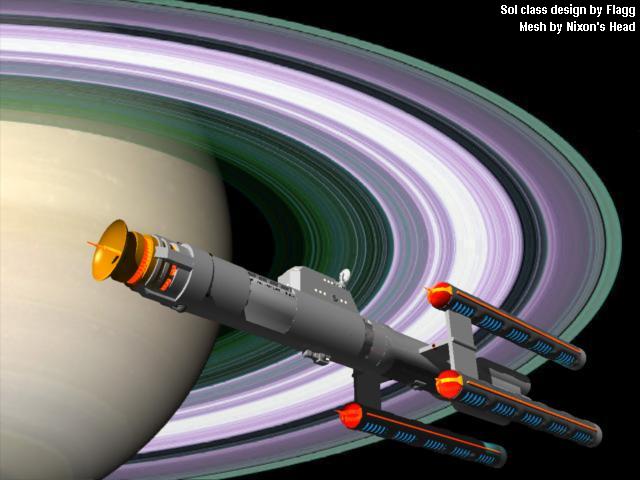
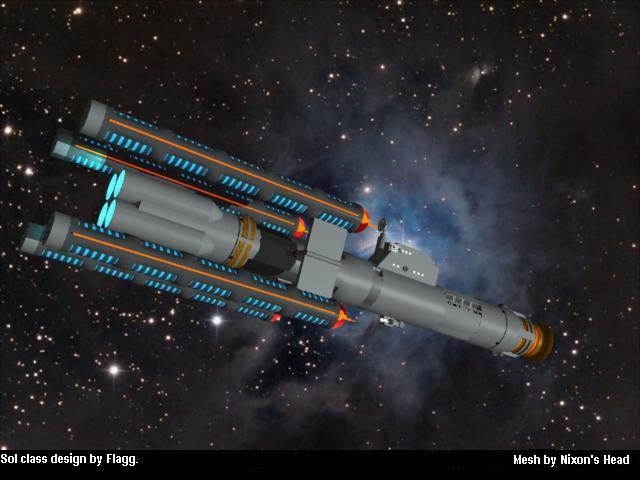
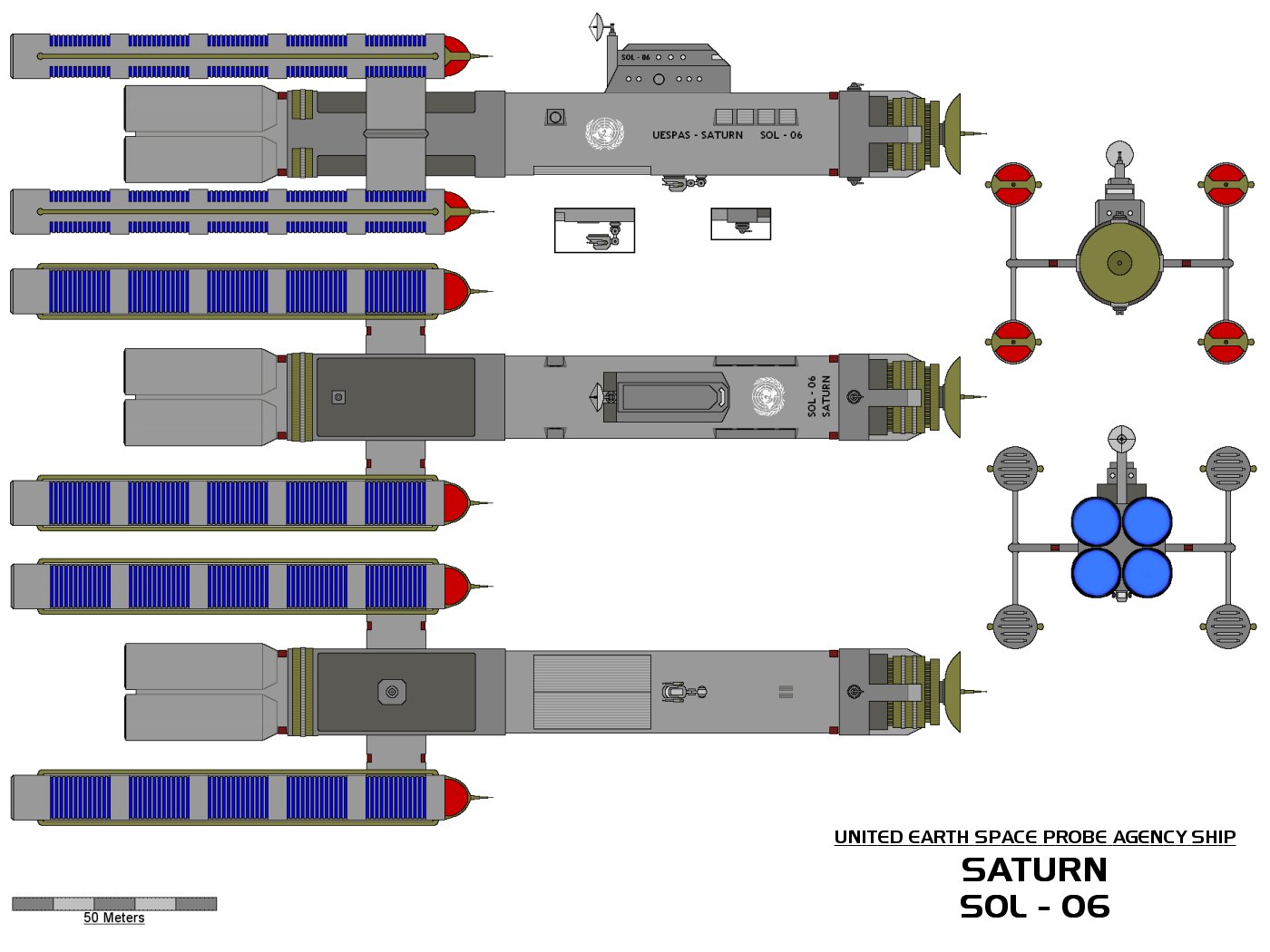
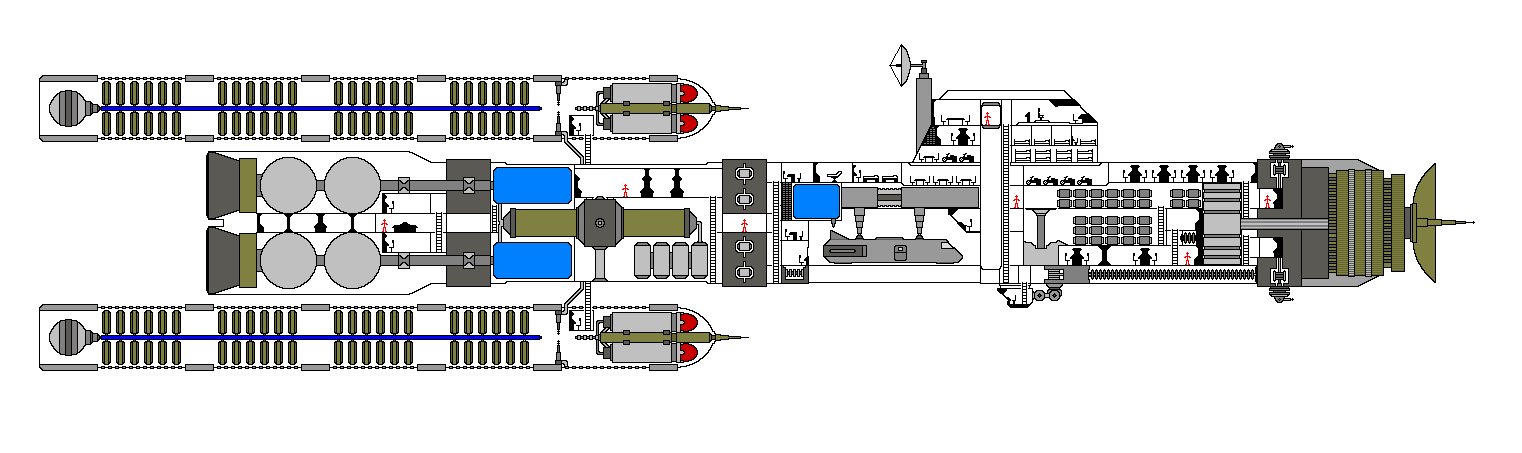
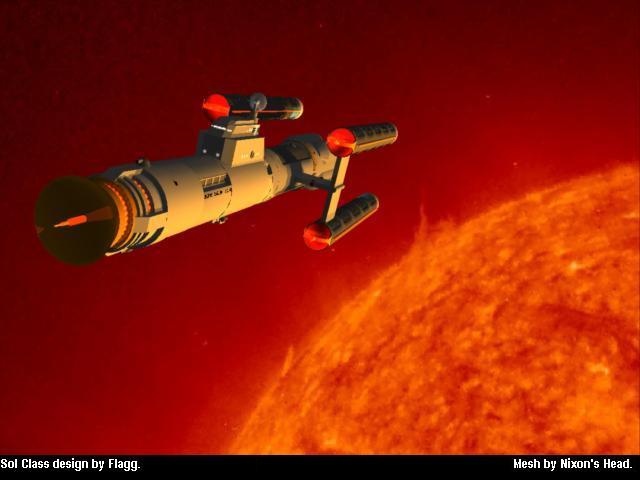 In the last decades of the 21st century the newly formed United Earth Space Probe Agency
embarked upon a new endeavor; constructing the first dedicated exploration ship capable of
achieving warp speed and being deployed for long term Intra, and Inter Solar mapping and
exploration. The finished design was the Sol Class prototype UESPAS-Sol was launched in 2092.
It was able to reach a maximum of warp 1.9 at launch, with a desired peak capability of warp
2.5. The initial attempt at breaching the warp 2 barrier resulted in disaster as the nacelles
ruptured and exploded, causing a cascade effect which resulted in a warp core breach, the
first such event in Human history. It was discovered upon investigation of sensor logs
that the initial 2 nacelle design was overpowered, there was simply too much energy being
put into the nacelles for them to cope past Warp 1.9. Rather than completely sacrifice the
concept, as the Vulcan High Command advised, the UESPA hit upon an ingenious solution,
refine the efficiency of the warp coils, and add another pair of nacelles. The downside of
course was that the warp core efficiency would be drastically lowered, but with a
new core design at the turn of the century, this problem was mitigated. The second ship of the
class, UESPAS-Mercury, was launched in 2103, 11 years to the day
after the UESPAS-Sol disaster. It went on to achieve a maximum speed of Warp 2.9, far beyond
the initial expectations. A total of 11 Sol-class vessels (including the ill fated
UESPAS Sol, Sol-01) were completed and put into service.
In the last decades of the 21st century the newly formed United Earth Space Probe Agency
embarked upon a new endeavor; constructing the first dedicated exploration ship capable of
achieving warp speed and being deployed for long term Intra, and Inter Solar mapping and
exploration. The finished design was the Sol Class prototype UESPAS-Sol was launched in 2092.
It was able to reach a maximum of warp 1.9 at launch, with a desired peak capability of warp
2.5. The initial attempt at breaching the warp 2 barrier resulted in disaster as the nacelles
ruptured and exploded, causing a cascade effect which resulted in a warp core breach, the
first such event in Human history. It was discovered upon investigation of sensor logs
that the initial 2 nacelle design was overpowered, there was simply too much energy being
put into the nacelles for them to cope past Warp 1.9. Rather than completely sacrifice the
concept, as the Vulcan High Command advised, the UESPA hit upon an ingenious solution,
refine the efficiency of the warp coils, and add another pair of nacelles. The downside of
course was that the warp core efficiency would be drastically lowered, but with a
new core design at the turn of the century, this problem was mitigated. The second ship of the
class, UESPAS-Mercury, was launched in 2103, 11 years to the day
after the UESPAS-Sol disaster. It went on to achieve a maximum speed of Warp 2.9, far beyond
the initial expectations. A total of 11 Sol-class vessels (including the ill fated
UESPAS Sol, Sol-01) were completed and put into service.
UESPAS - Sol, Sol - 01 2092-2092 (destroyed)
UESPAS - Mercury, Sol - 02 2103-2128 (missing)
UESPAS - Venus, Sol - 03 2105-2113 (heavily damaged, scrapped)
UESPAS - Mars, Sol - 04 2106-2148 (decommissioned) 2156-2161 (recomissioned during Romulan War)
UESPAS - Jupiter, Sol - 05 2106-2148 (decommissioned) 2156-2161 (recomissioned during Romulan War)
UESPAS - Saturn, Sol - 06 2107-2148 (decommissioned) 2156-2159 (destroyed during Romulan War)
UESPAS - Uranus, Sol - 07 2108-2152 (scrapped)
UESPAS - Neptune, Sol - 08 2108-2134 (destroyed)
UESPAS - Pluto, Sol - 09 2109-2152 (scrapped)
UESPAS - Sol, Sol - 10 2110-2210 (placed In Smithsonian Orbital Exhibit)
UESPAS - Luna, Sol - 11 2111-2119 (missing)
Teitron
Class
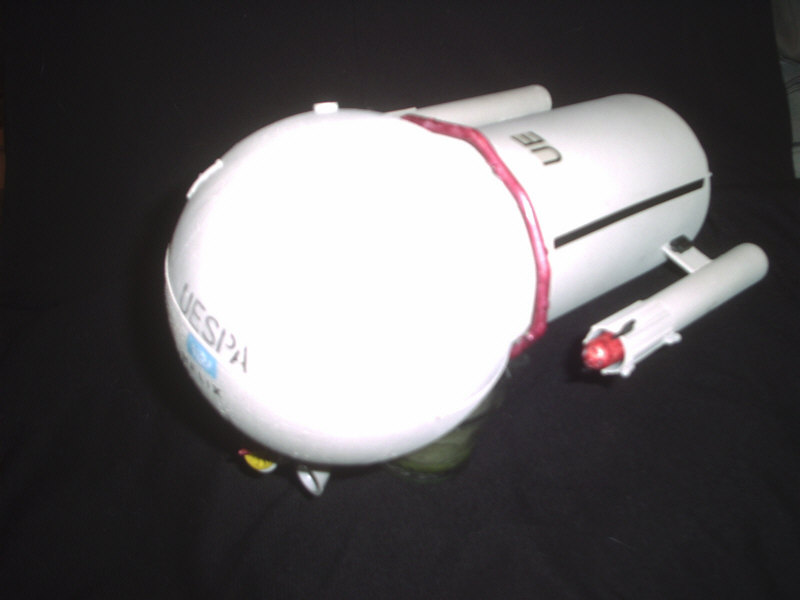
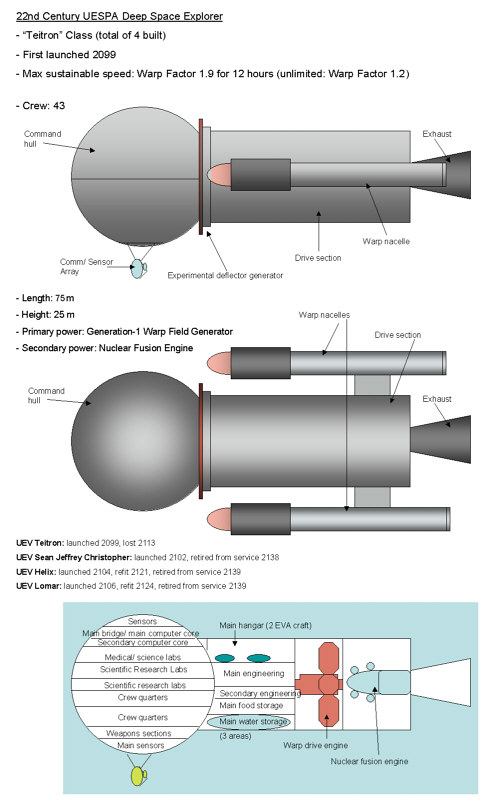 Design by [email protected]
Type: Deep space explorer
First launched: 2099
Length: 75m
Height: 25m
Crew complement: 93
Speed: Warp 1.9 (for 12 hours), Warp 1.2 (unlimited)
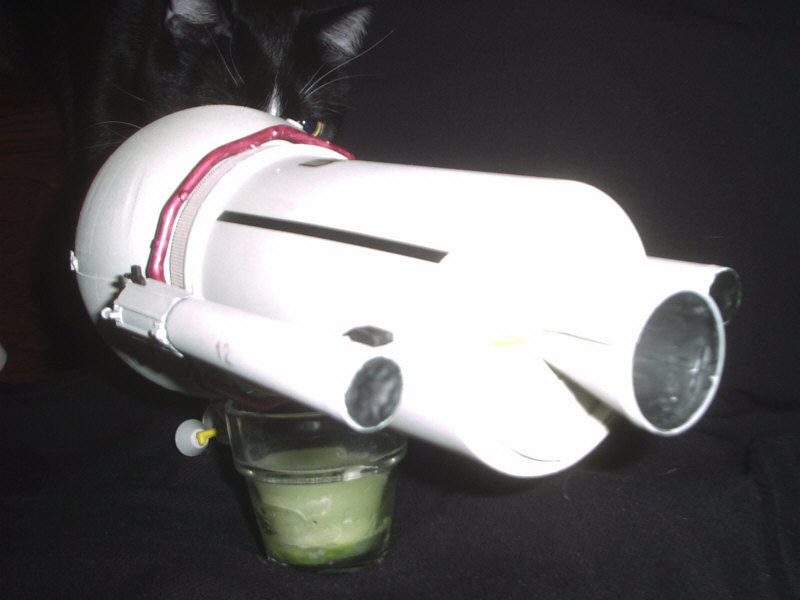
First launched in 2099 under the auspices of the United Earth Space Probe Agency, the Teitron Class ships, along with those of the DY class, played a key role in helping to focus the attention of Earth citizens on rebuilding the planet, re-establishing contact with Earth outposts in the Solar System (the Moon, on Mars, Jupiter moons, Saturn), and solidifying our position as a spacefaring race intent on peaceful exploration for the benefit of all mankind.
The Teitron class ships were instrumental in helping to transform United Earth into the United Solar System, eventually United System (hence the use of USS - United System Ship for Earth/Federation ships, still used today), the precursor to the United Federation of Planets.
Triton Class (1)

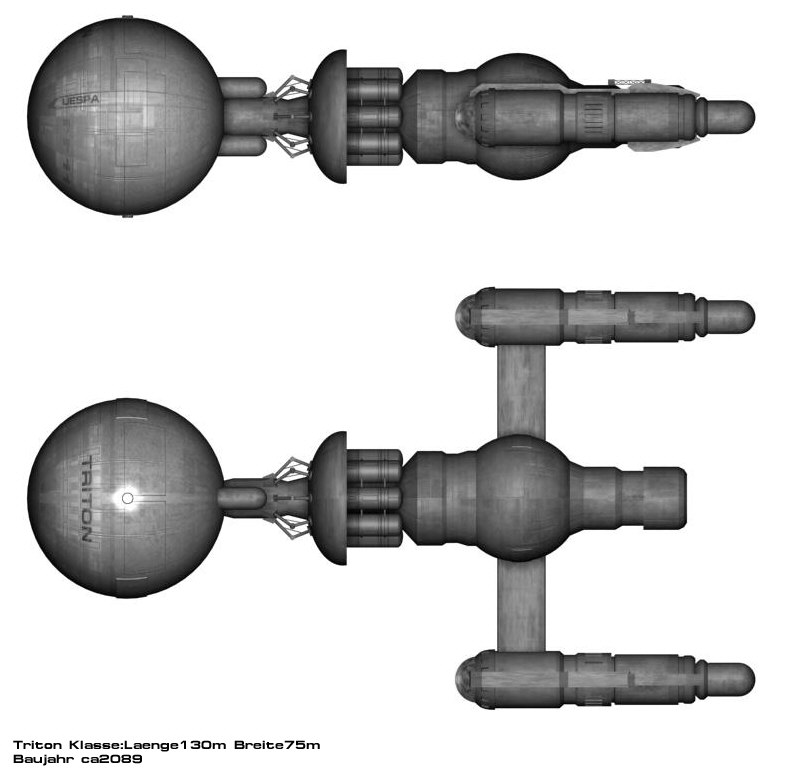 Design by Torsten, logo by Kris, ASDB Member
Length: 130m
Beam: 75m
This is a ship built around 2089.
| Home | ||
|
||
| Last modified: 13.07.14 |  |
|