


Notable Matte Paintings in Classic Star Trek
In pre-digital film and television, matte paintings were hand-painted extensions of a set. They were combined with live-action footage by painting on glass and leaving a window to film through, or both elements were shot separately and merged by double exposure or in post production. The goal was always to create a seamless transition between the physical set and the painted surroundings.
Three of the most notable matte painters worked for Star Trek productions: Albert Whitlock, Syd Dutton and Robert Stromberg. In 2019, 2020 and 2021, Heritage Auctions sold several of their screen-used matte paintings and concept sketches, which they created for the TOS movies, TNG, DS9 and Voyager. Our article presents high-quality pictures of those paintings and some more from classic Trek along with descriptions. We also show the sometimes different ways they were used or re-used on screen.
TOS
The famous matte paintings used in The Original Series were created by Albert Whitlock. They were not part of the 2019-2021 Heritage Auctions, their whereabouts are sometimes uncertain and we don't have great pictures. But they shouldn't be missing from this list. We show how the matte paintings look in the original episodes. The remastering of 2006 replaced much of the original footage with CGI and is described in Planet Surfaces in TOS and TOS Remastered.
The Cage
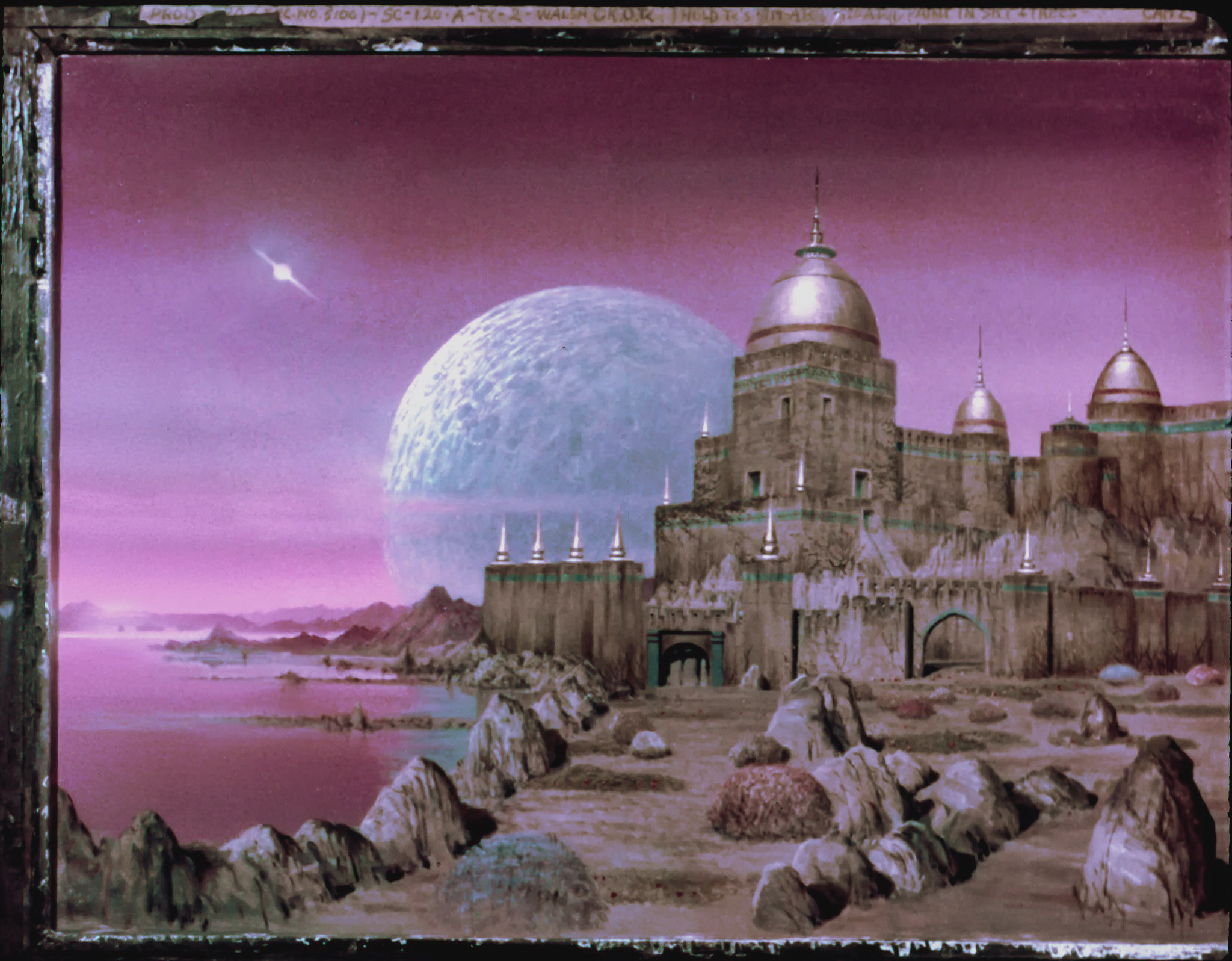
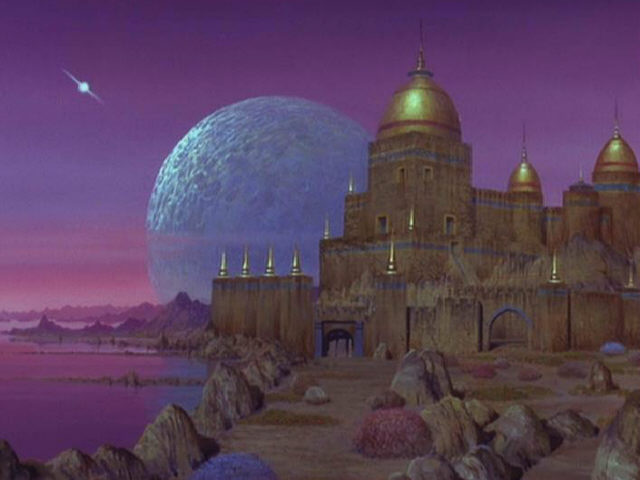
This iconic matte painting shows the fortress on Rigel VII in a flashback sequence. The shot was later re-used without changes for Flint's palace in "Requiem for Methuselah". Created by Albert Whitlock.
Where No Man Has Gone Before
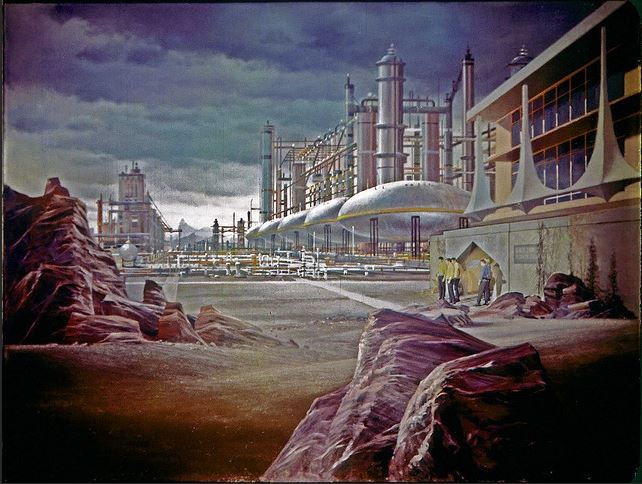
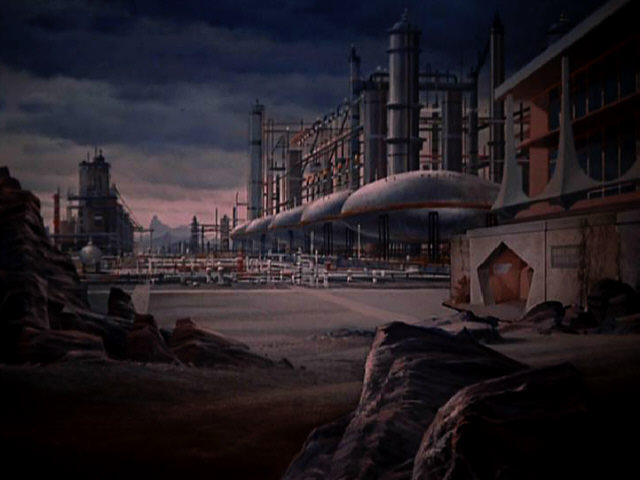
The famous lithium cracking station on Delta Vega from the second pilot. Our unsourced picture of the matte painting apparently shows a placeholder for the live action. The painting was later modified, removing the upper portions of the tanks, to act as the Tantalus V colony in "Dagger of the Mind". The matte painting is usually attributed to Albert Whitlock, but it may have been created by Garson Citron.
Court Martial
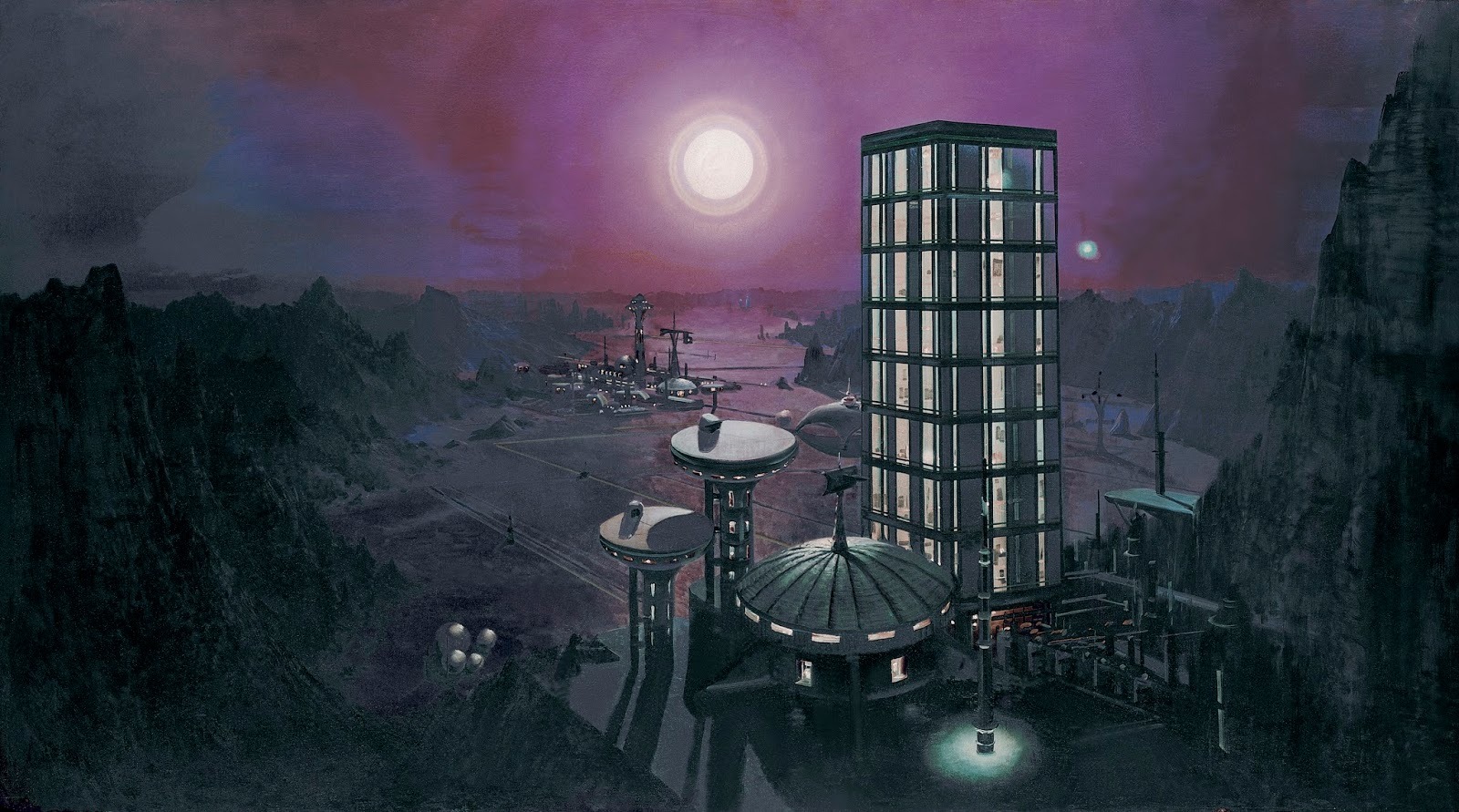
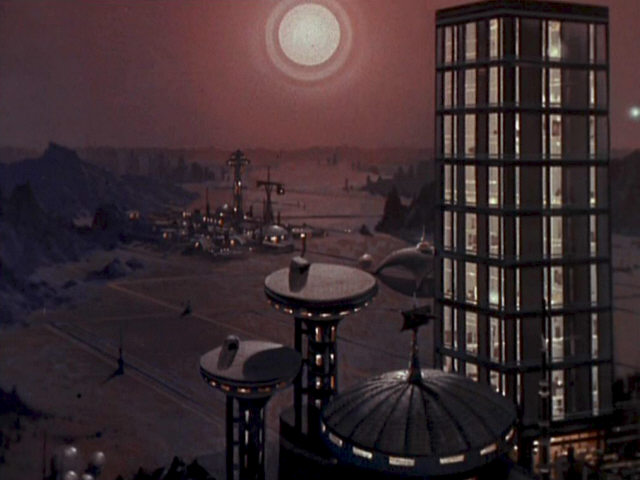
Starbase 11 at night. This is the first appearance of Starbase 11. A daytime painting will show up in "The Menagerie I". Created by Albert Whitlock.
The Menagerie I
Starbase 11 daytime. This painting includes a cutout for live action. Created by Albert Whitlock.
A Taste of Armageddon
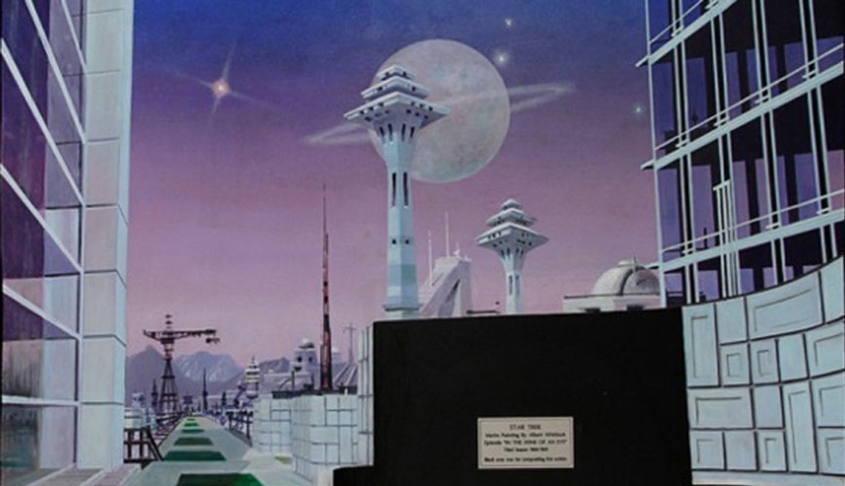
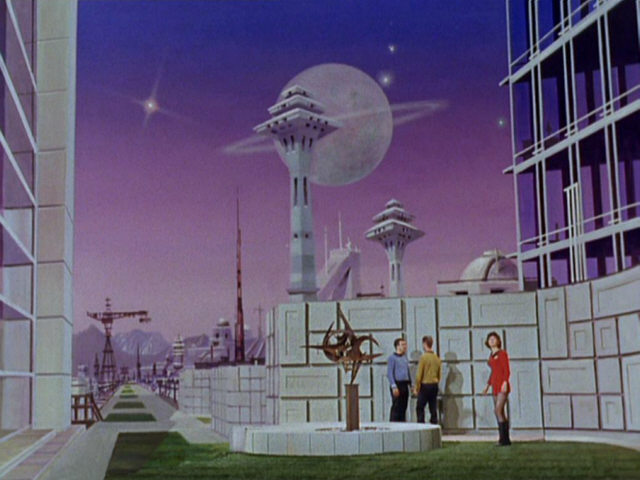
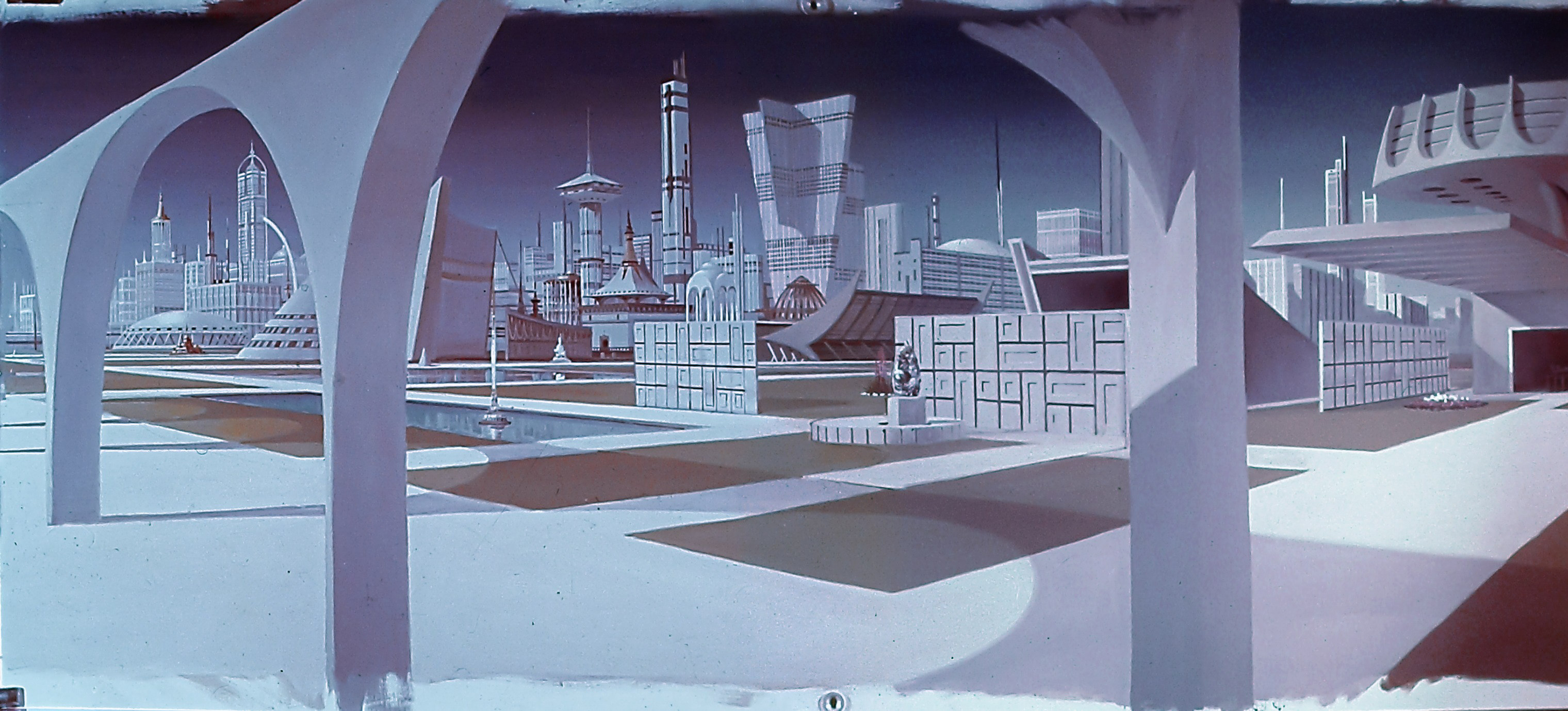
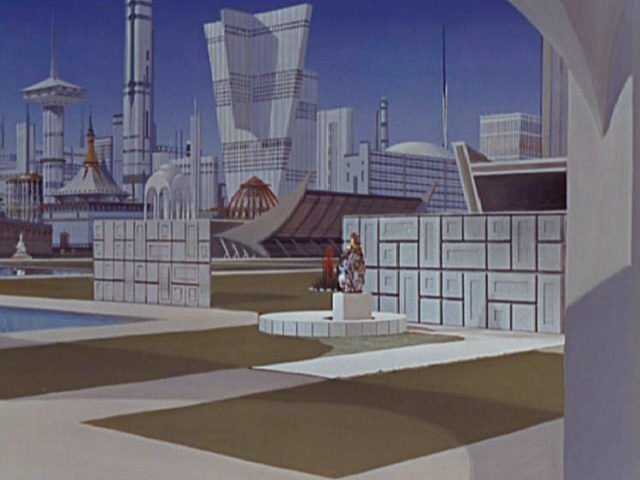
A futuristic cityscape on Eminiar VII. The shot was re-used for the city on Scalos in "Wink of an Eye". Created by Albert Whitlock.
The Devil in the Dark
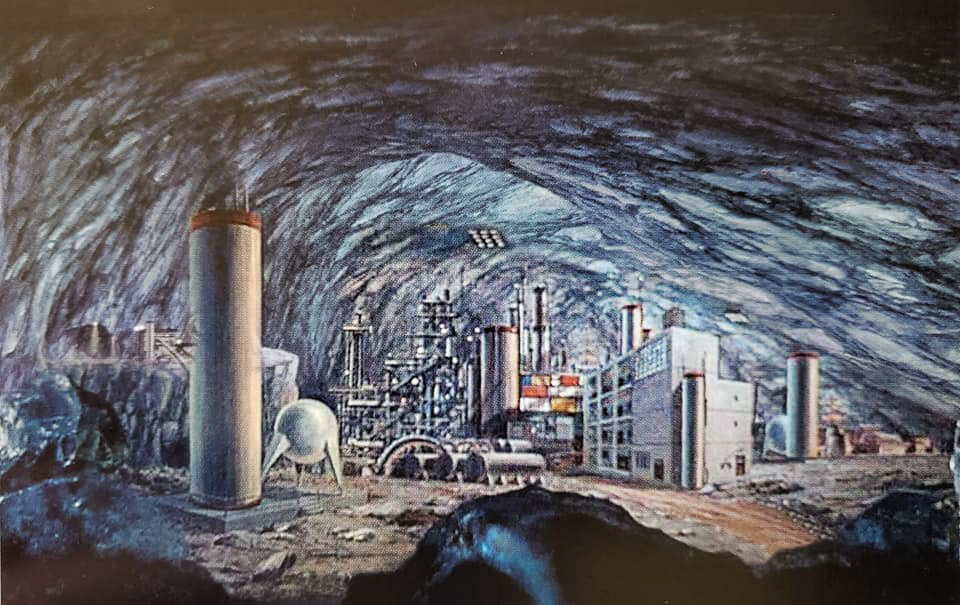
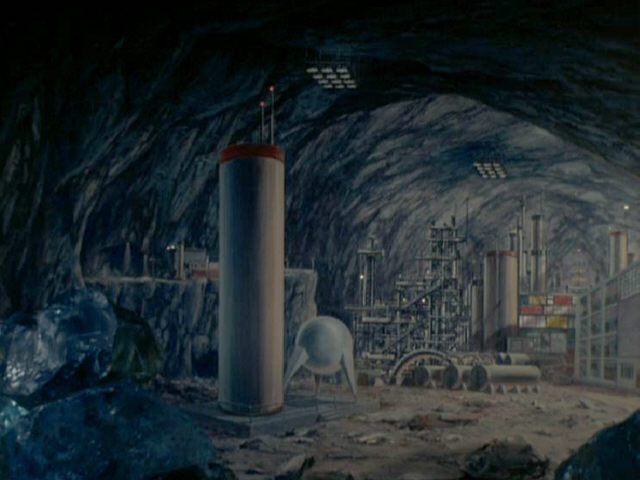
The underground mining facility on Janus VI. The left picture is from a documentary about the filming of the matte painting, hence the real rocks in the foreground, as they can be seen in the finished episode as well. The screen cap from the episode shows an extra lighting unit in the ceiling, which must have been added before filming the final take. The painting was re-used for the underground facility of the Triskelians in "The Gamesters of Triskelion". Created by Albert Whitlock.
TOS Movies
"Star Trek: The Motion Picture" has dozens of shots with matte paintings, created by Matthew Yuricich and Rocco Gioffre. We only show a few examples, of which high-resolution images are available. Two more movie matte paintings, from "Star Trek: The Final Frontier" by Syd Dutton, were part of the Heritage Auctions.
Star Trek: The Motion Picture
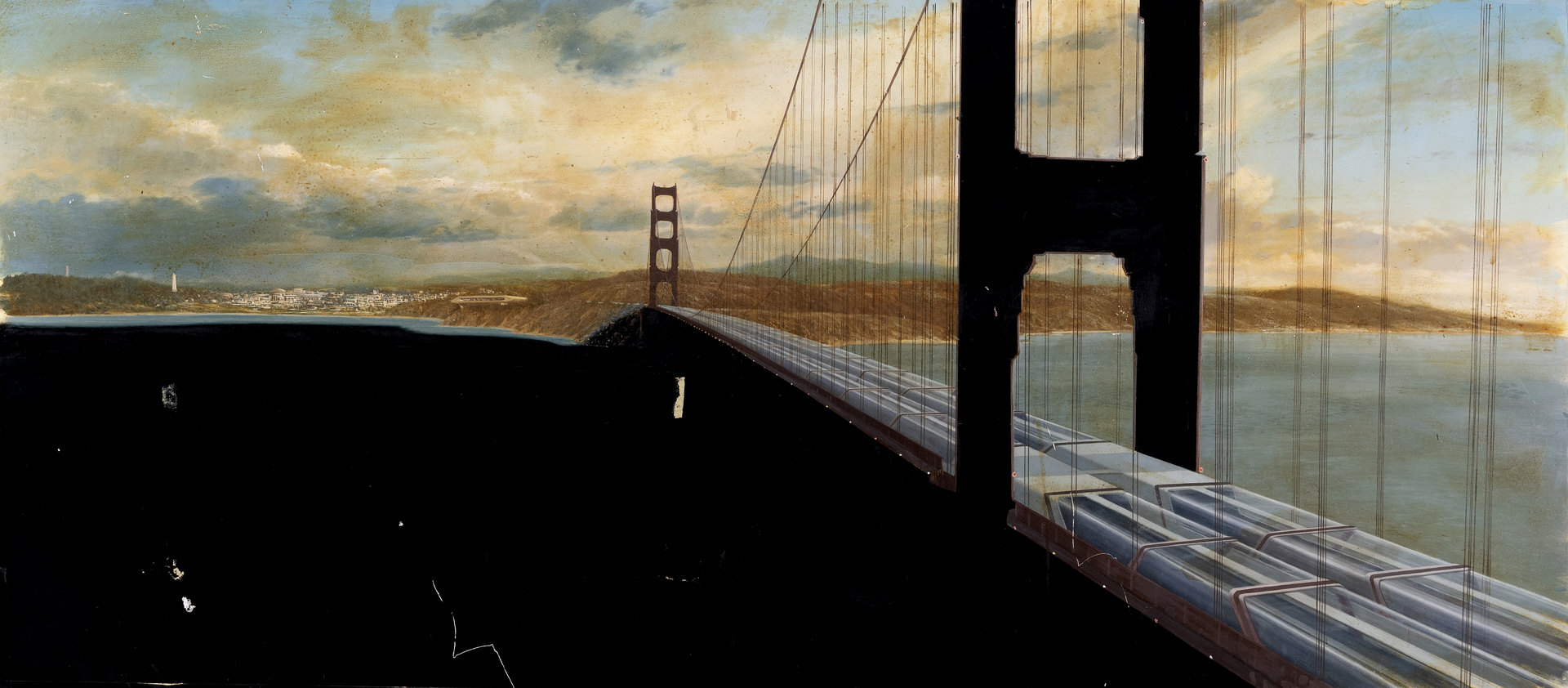
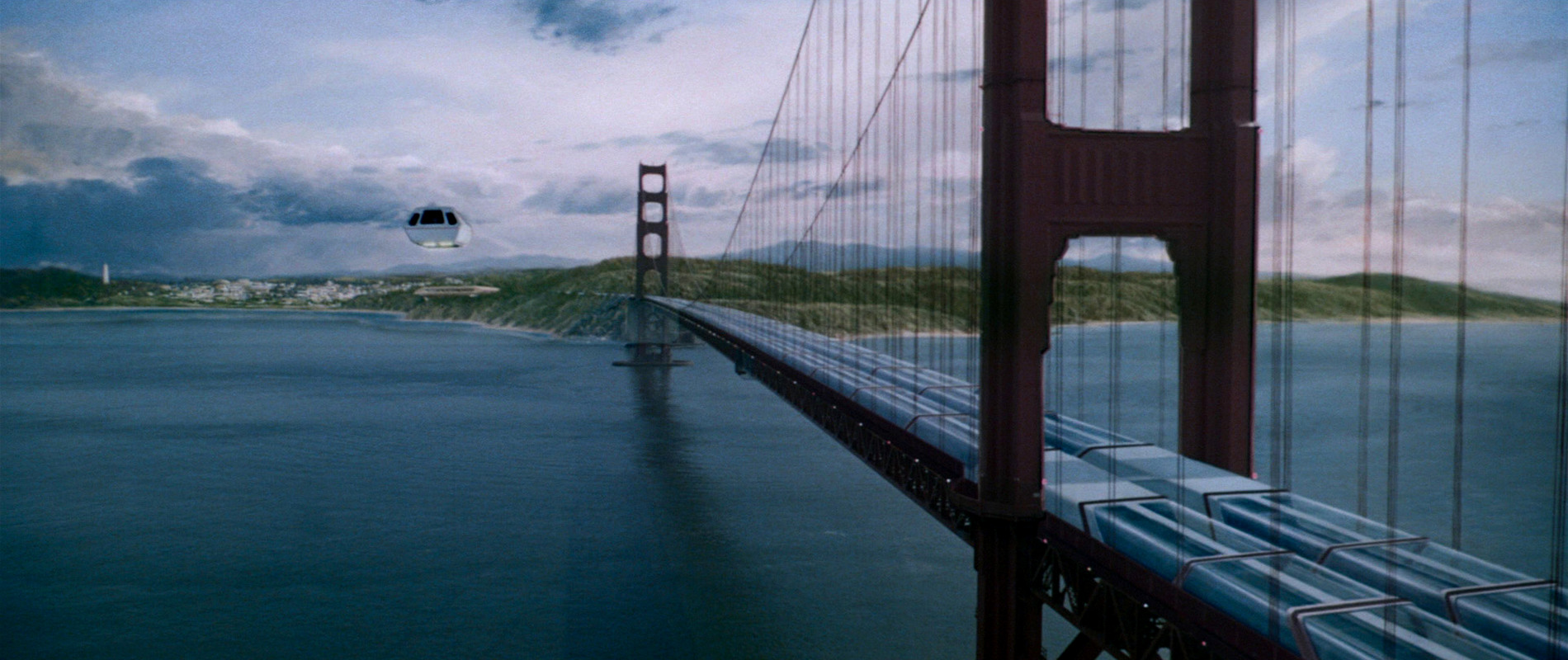
The Golden Gate Bridge, looking in southern direction, with tram/subway tubes added. Includes large cutouts for real footage of the bridge pylons and San Francisco Bay. The shuttle/air tram was inserted in addition to that. Created by Matthew Yuricich.
Enterprise cargo/shuttlebay, with a window for a studio set. Created by Matthew Yuricich, based on a concept by Andrew Probert.
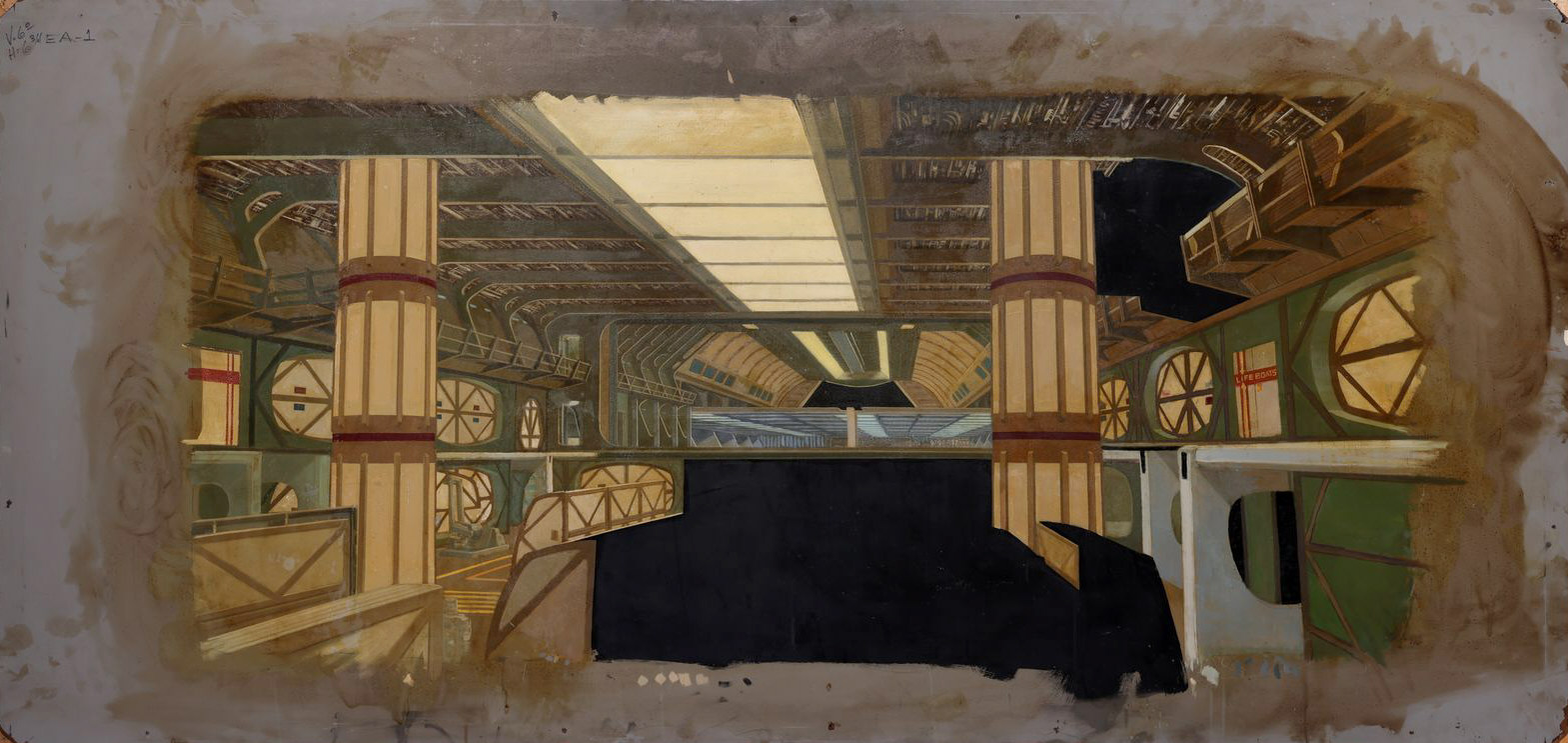
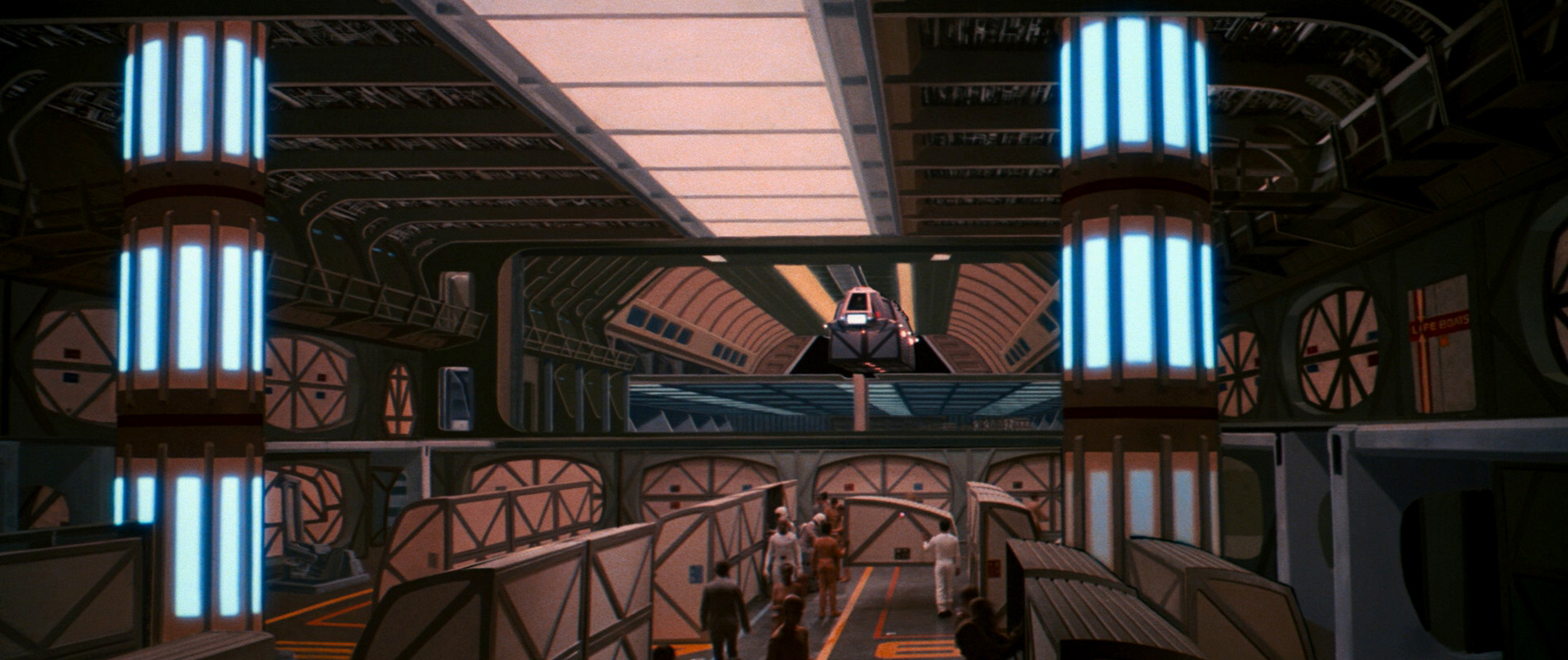

Designing the TMP Cargo- and Shuttlebay @ Forgotten Trek
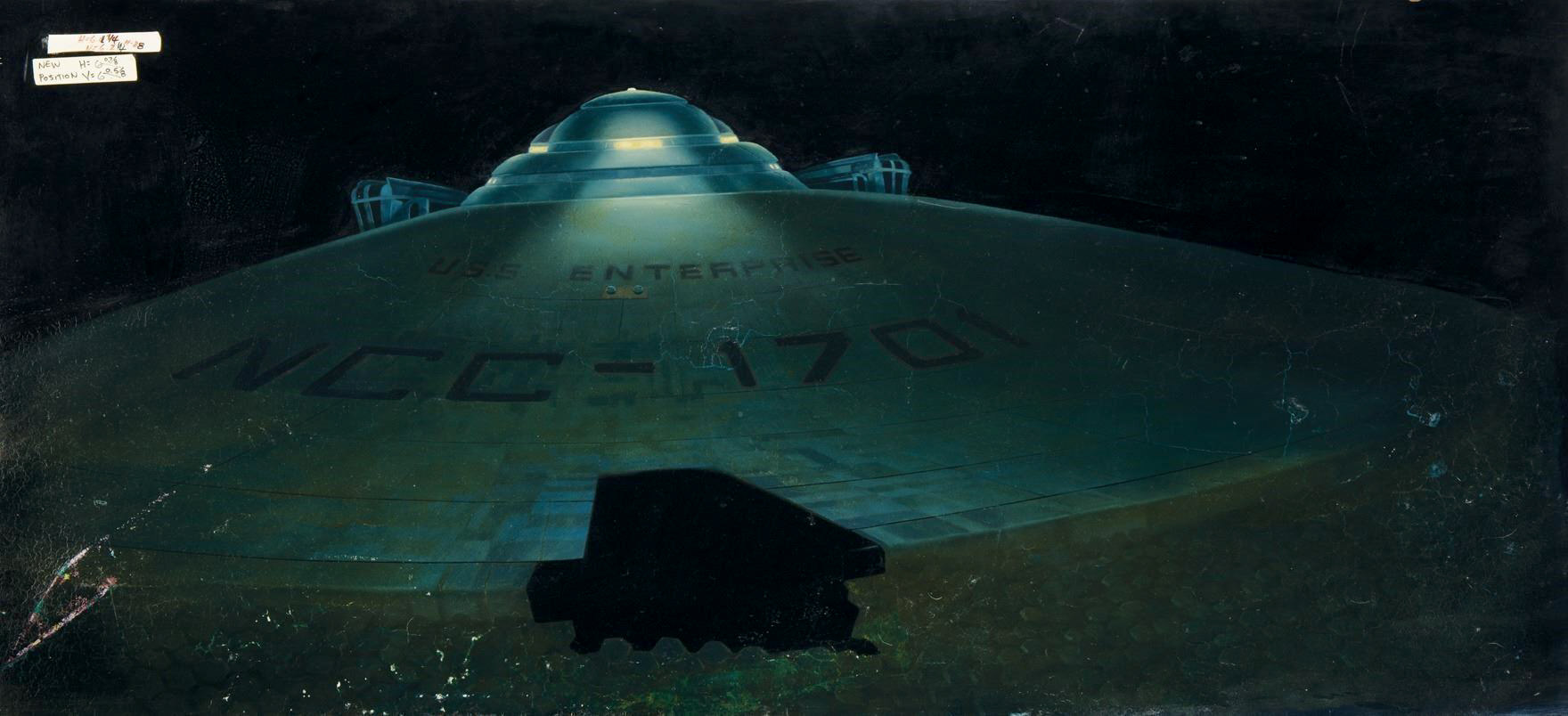
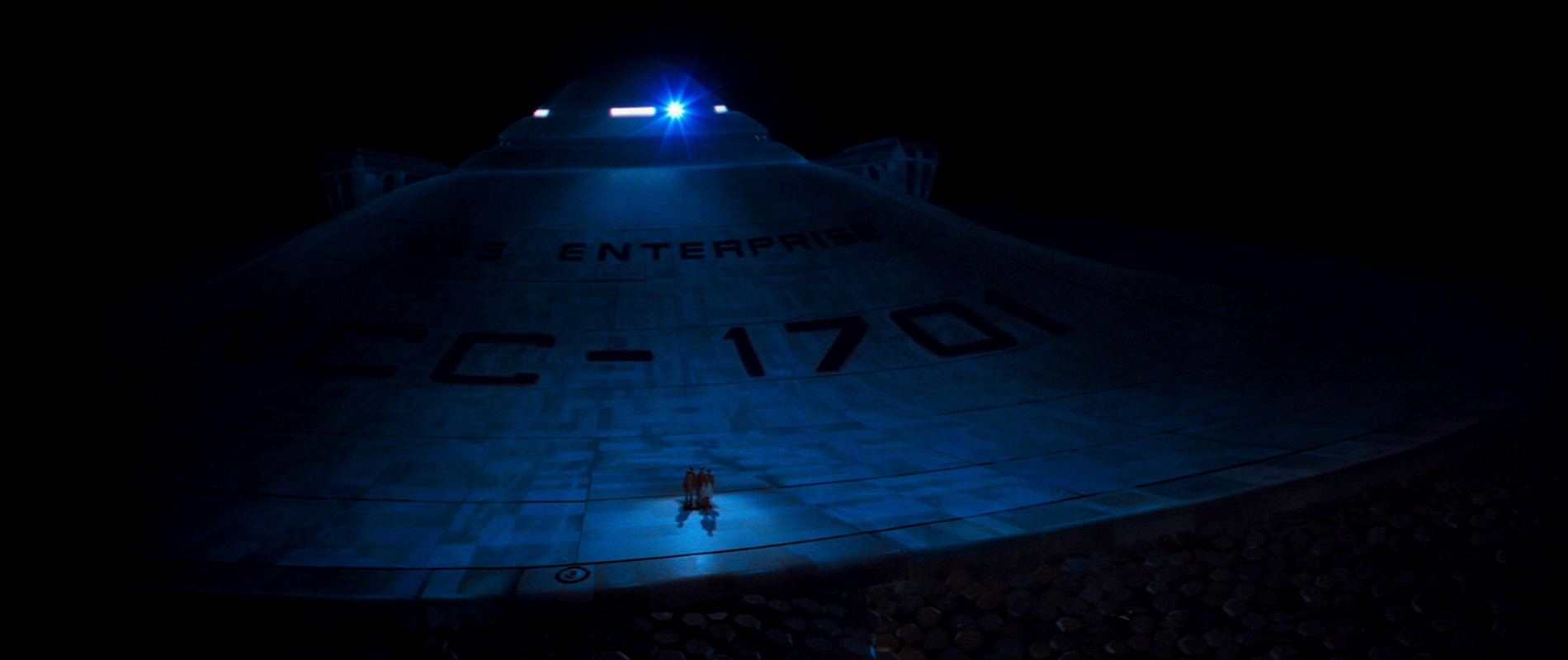
Enterprise saucer, with a cutout for actors walking across the "hull". The perspective isn't quite right. Created by Matthew Yuricich.
Star Trek: The Final Frontier
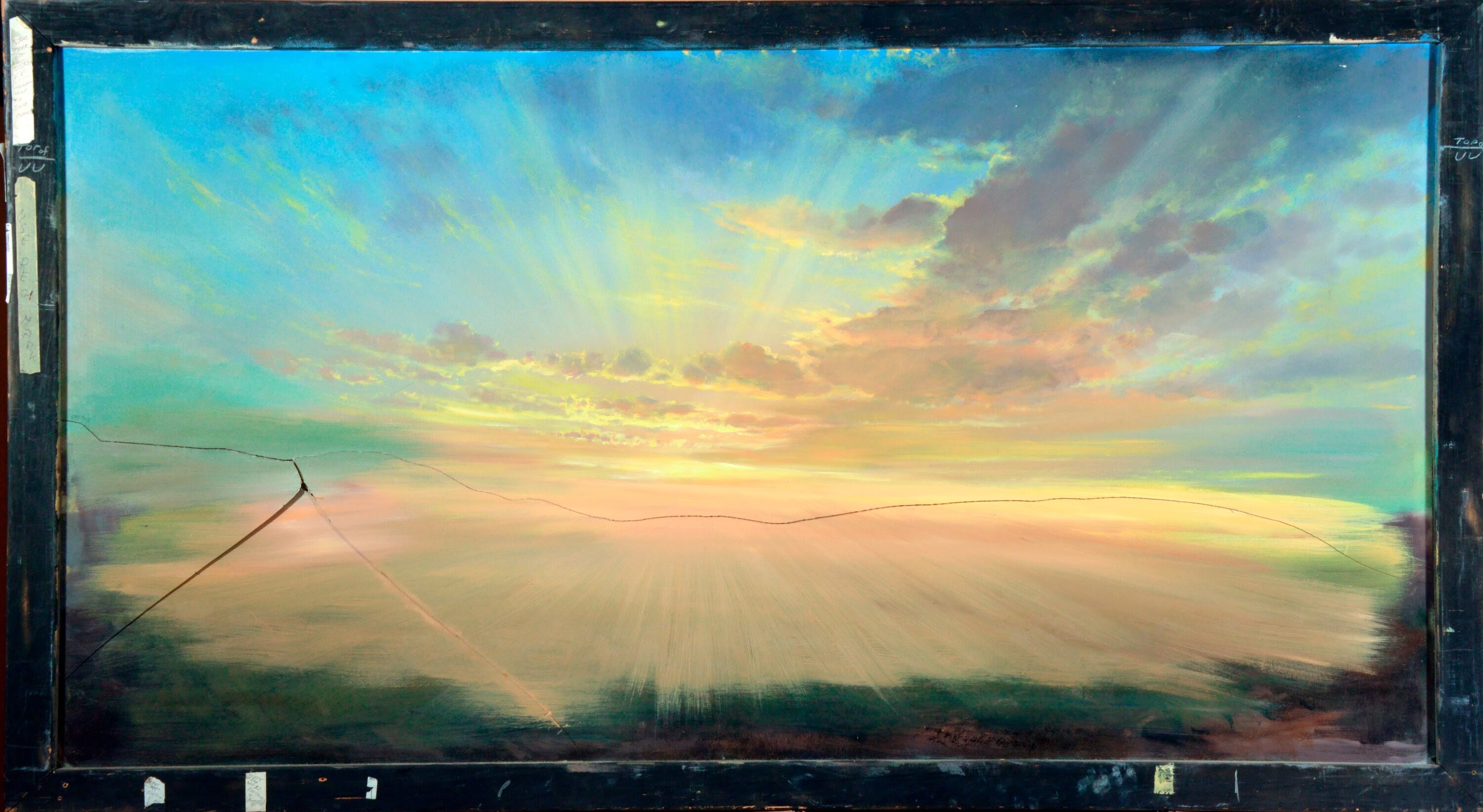
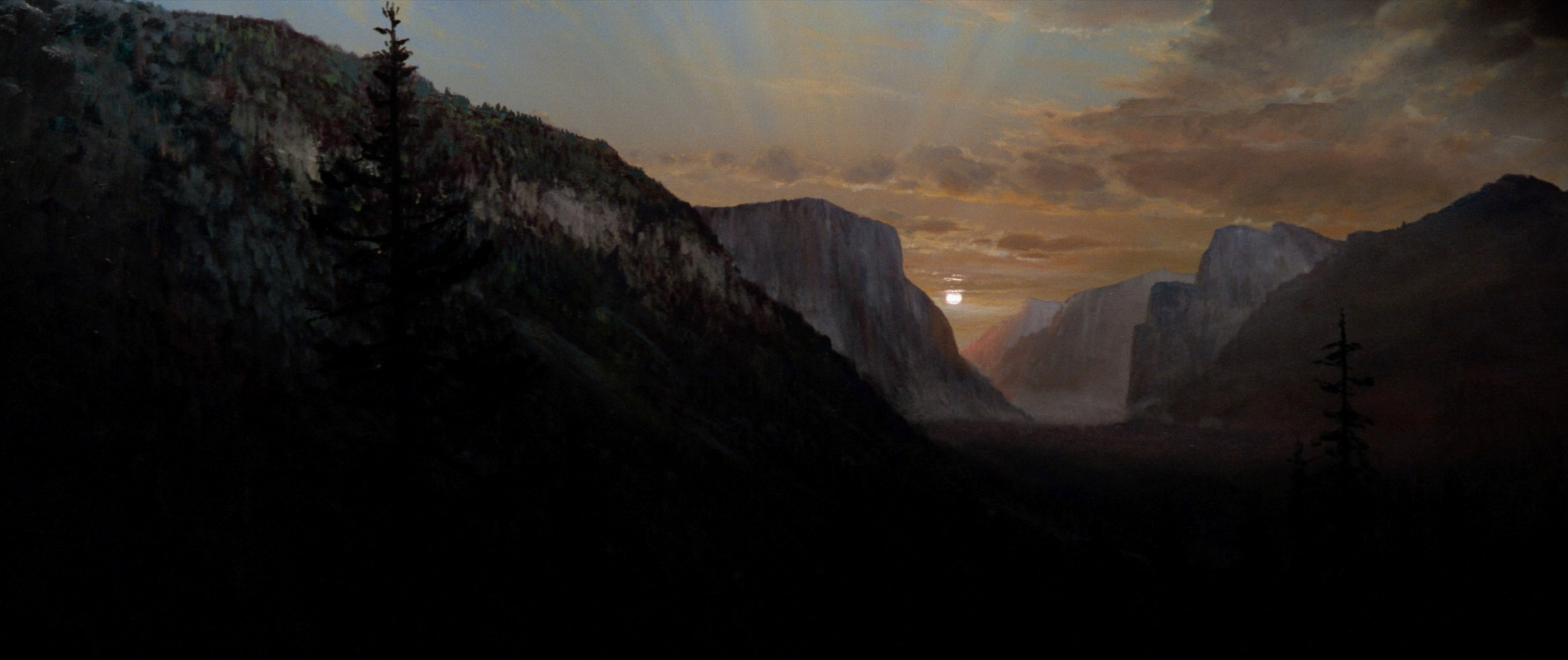
A sky with a sunrise was created for the opening of the film. The sun was lit from behind. 77" x 42.5", glass with masonite backing in pine frame. The heat of the lighting caused the glass to crack during the filming, which is why it had to be reinforced. Created by Syd Dutton.
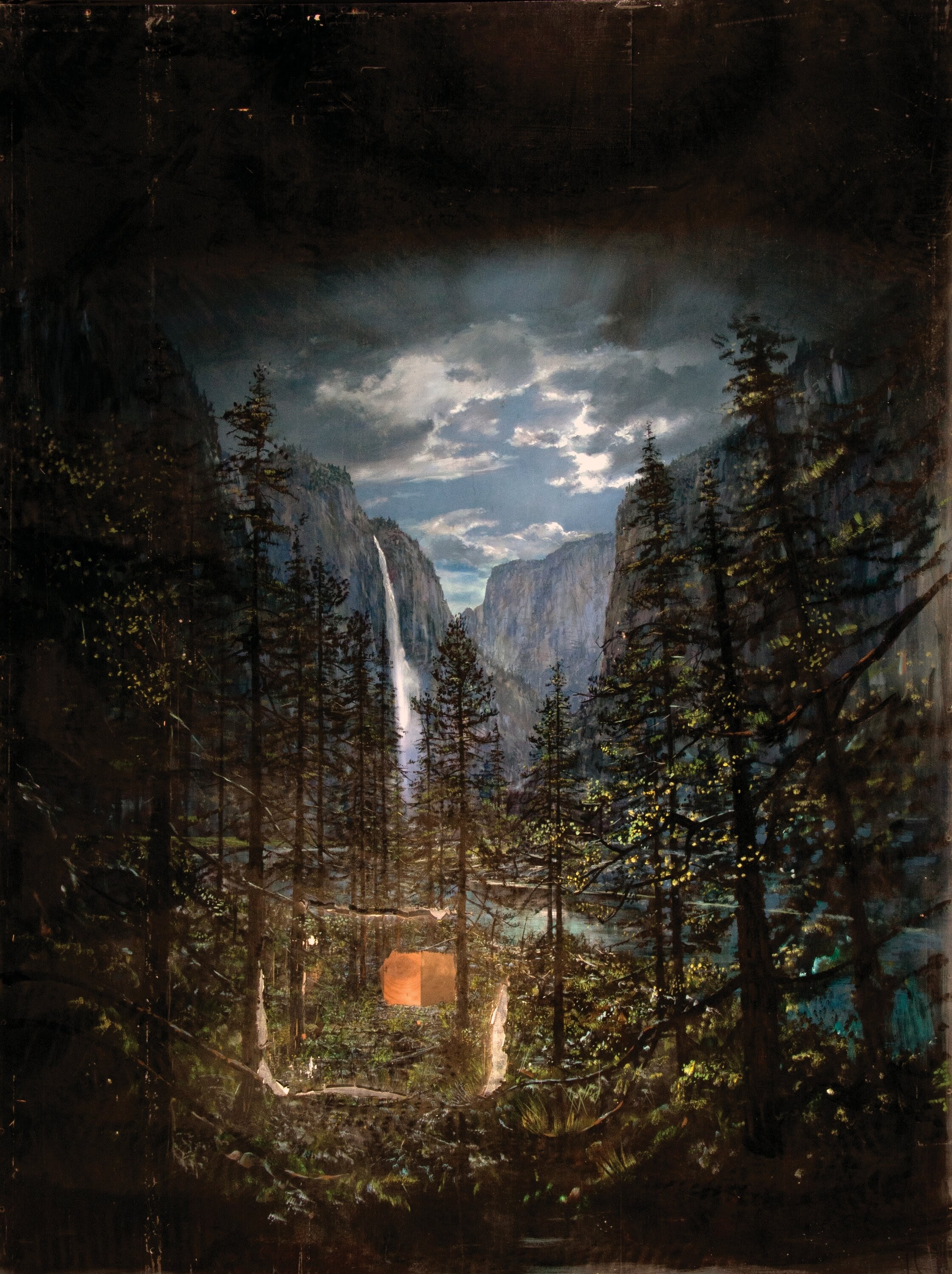
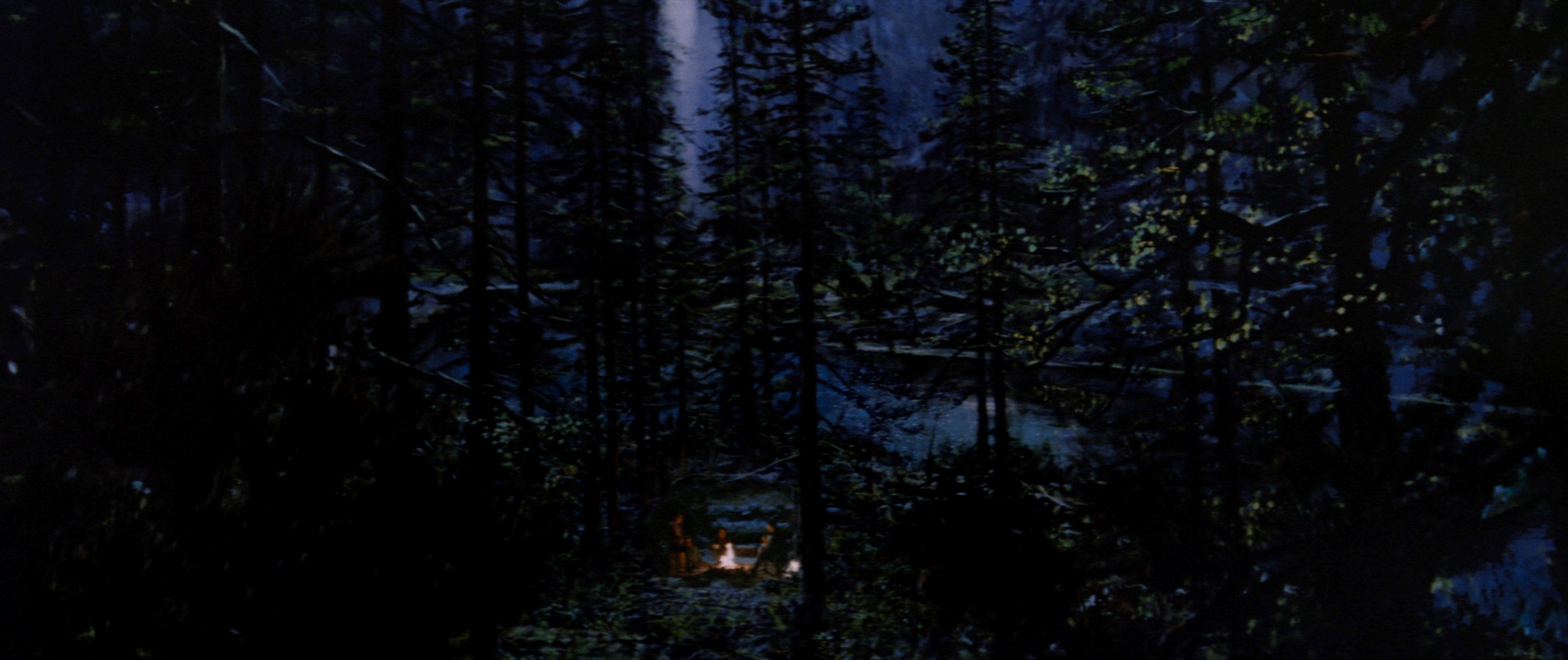
Another matte painting was created for the nighttime view of Yosemite (the camp fire scene). 96" x 72", masonite with glass flush in pine frame. Glass opening is 16" x 11". Created by Syd Dutton.
TNG
Syd Dutton or Robert Stromberg created most of the TNG matte paintings. TNG-R generally doesn't replace them with all-CGI versions. Therefore, with a few exceptions, we focus on how the shots look in the remastered versions of TNG episodes. The changes relative the original episodes are described in the Observations section.
TNG: Code of Honor
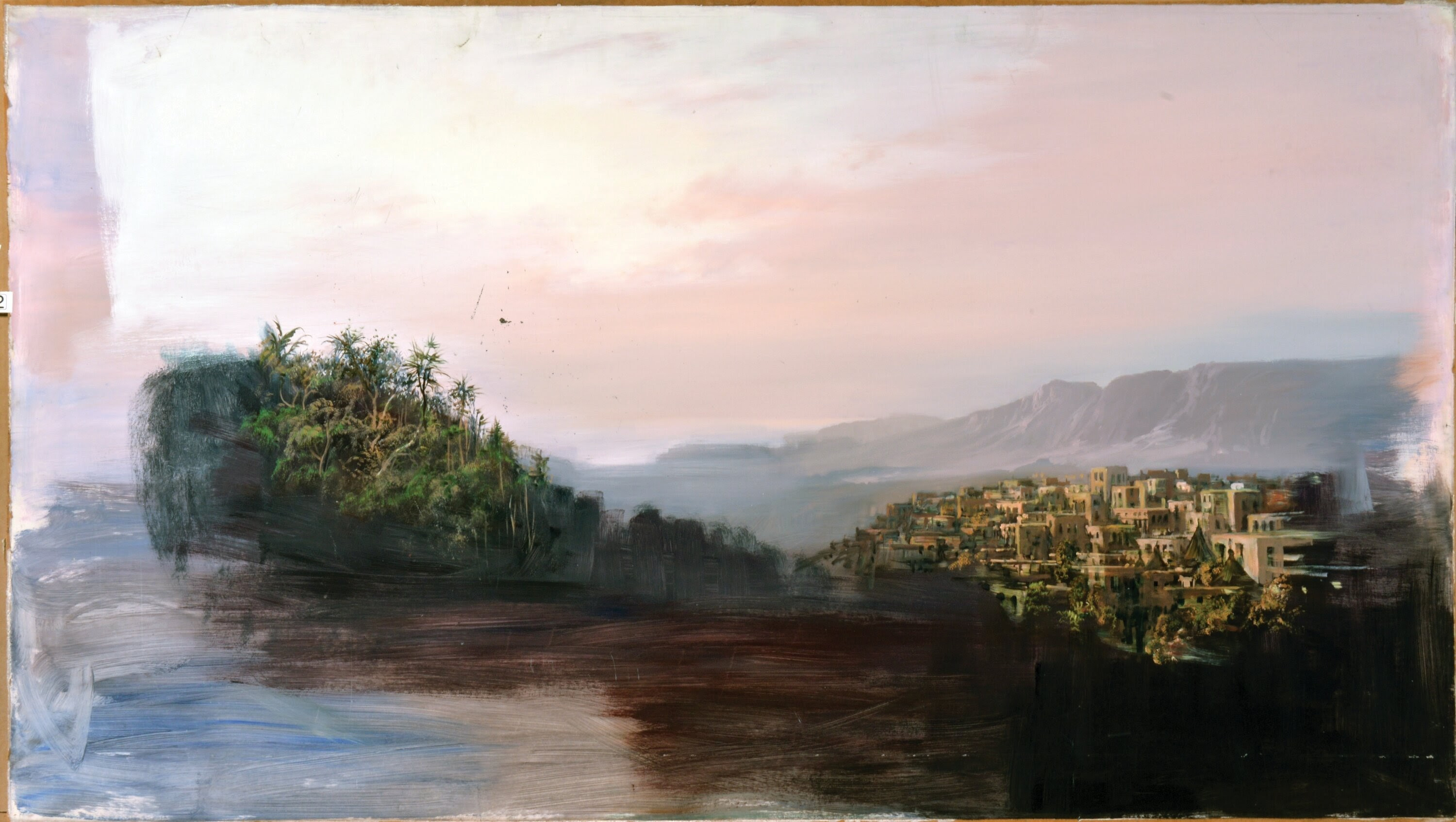
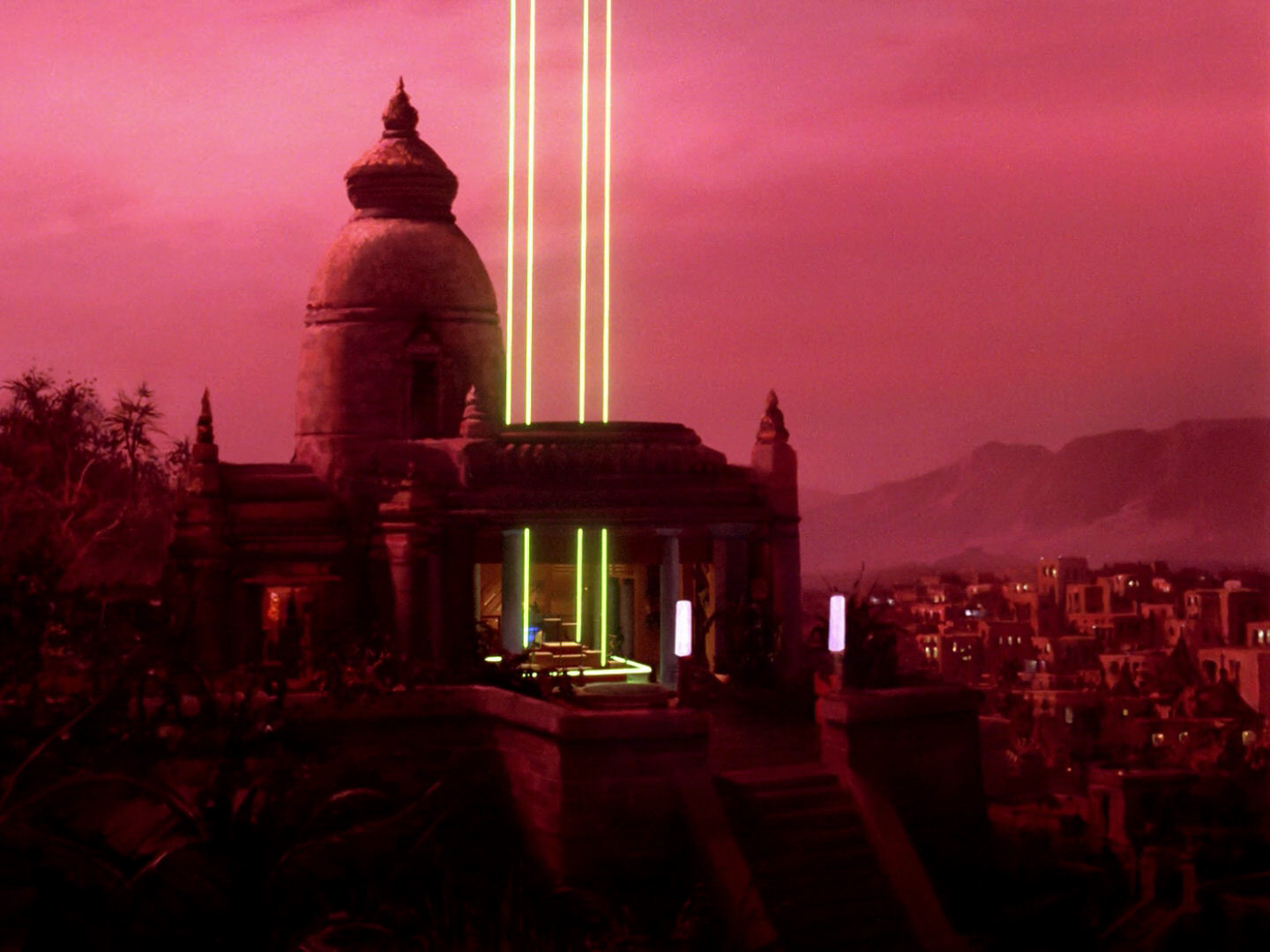
The matte painting of Lutan's palace on Ligon II consists of two parts. The first contains the foreground and the palace building. It is one of the few all-glass matte paintings in Star Trek and measures 45" x 34.5". Two areas remain uncovered for the live footage and for the background, respectively. Created by Albert Whitlock and Syd Dutton.
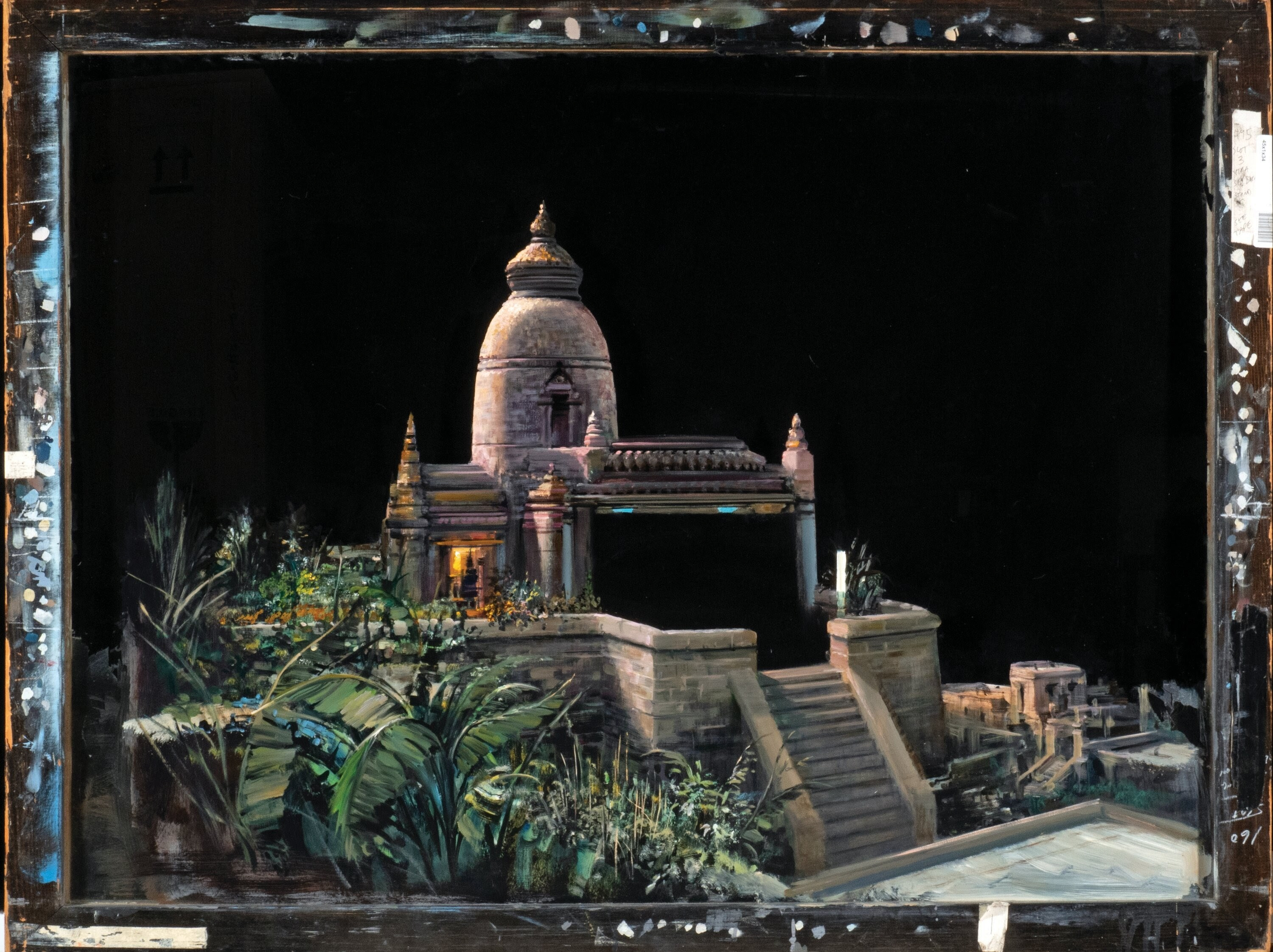
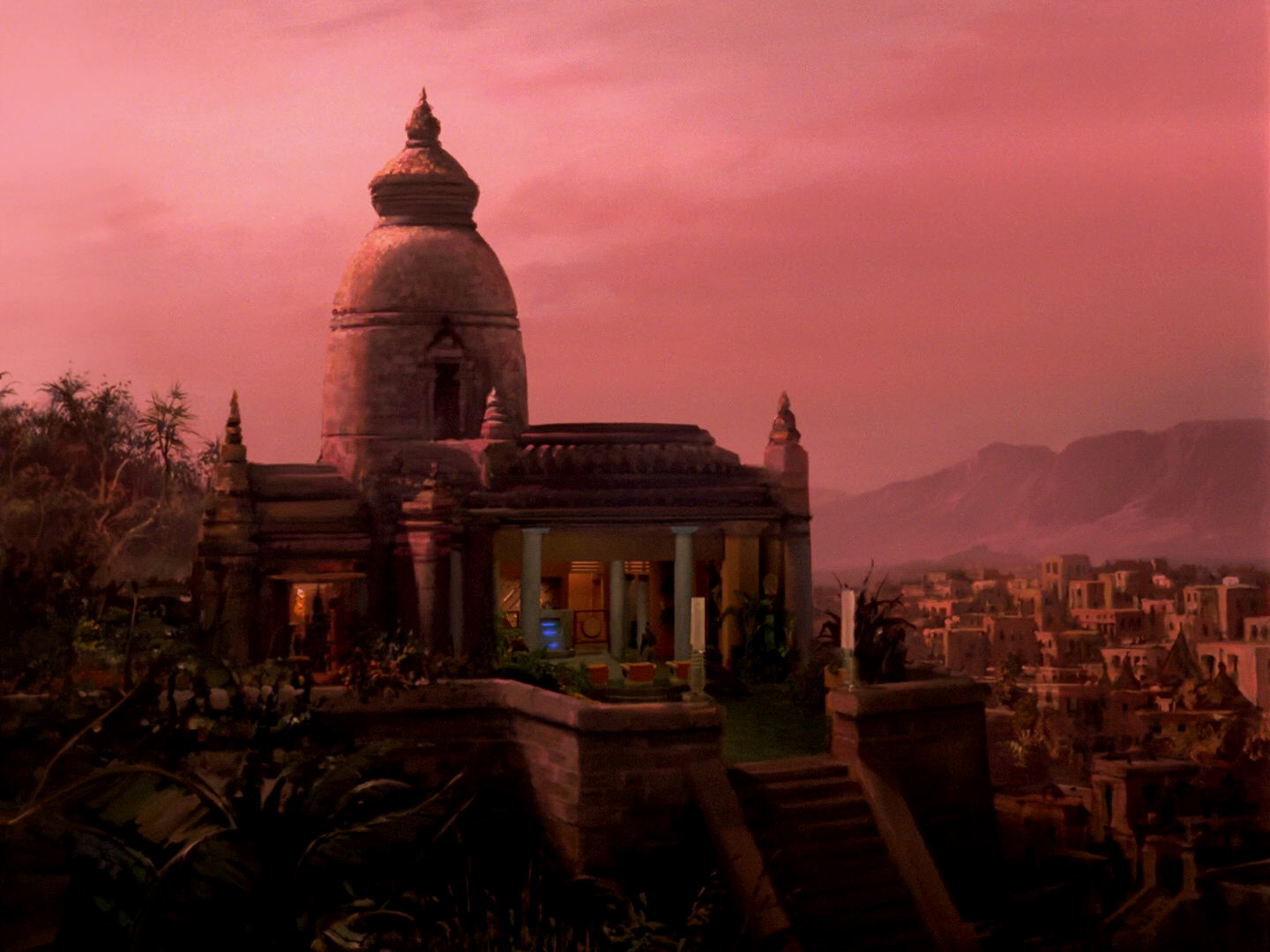
The background is a separate painting, measuring 66.25" x 37.25". The palace is also shown at dusk, with additional lighting.
TNG: Angel One
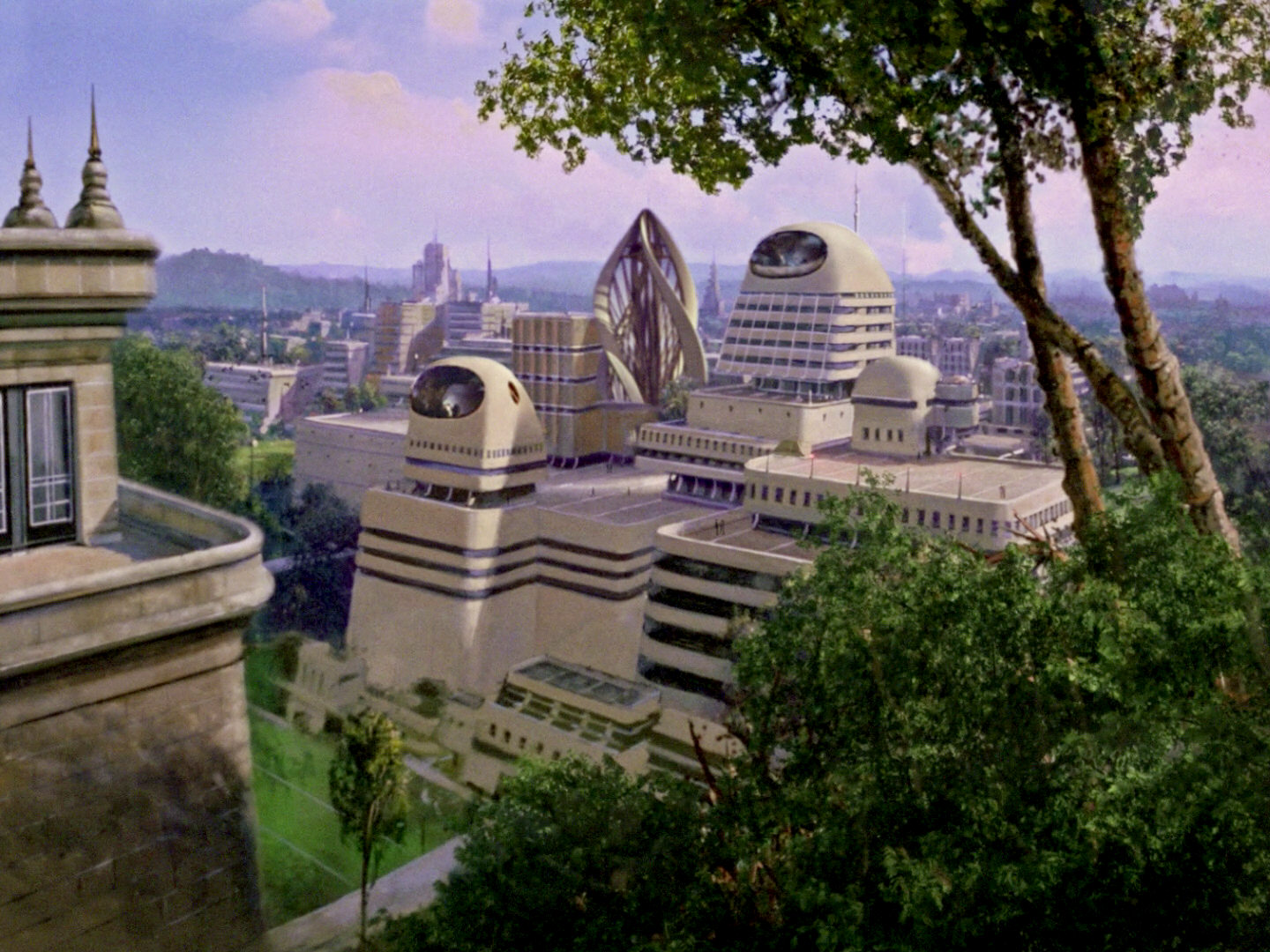
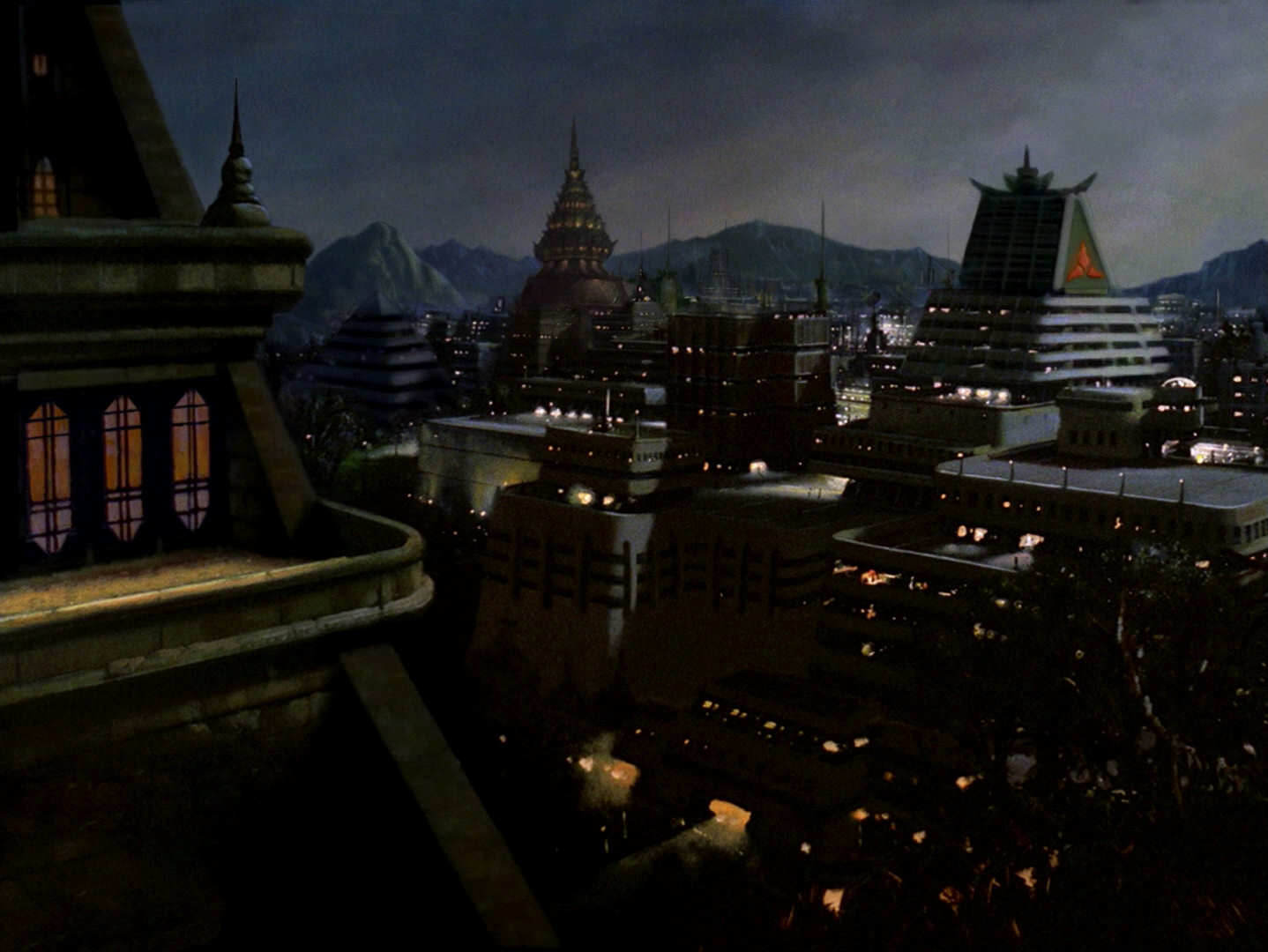
A modern cityscape that was first used for the eponymous planet Angel I. Although the matte painting itself doesn't contain a cutout or window, it was combined with additional foreground elements to provide the shots with more depth. 70" x 41", masonite in pine frame. Created by Syd Dutton.
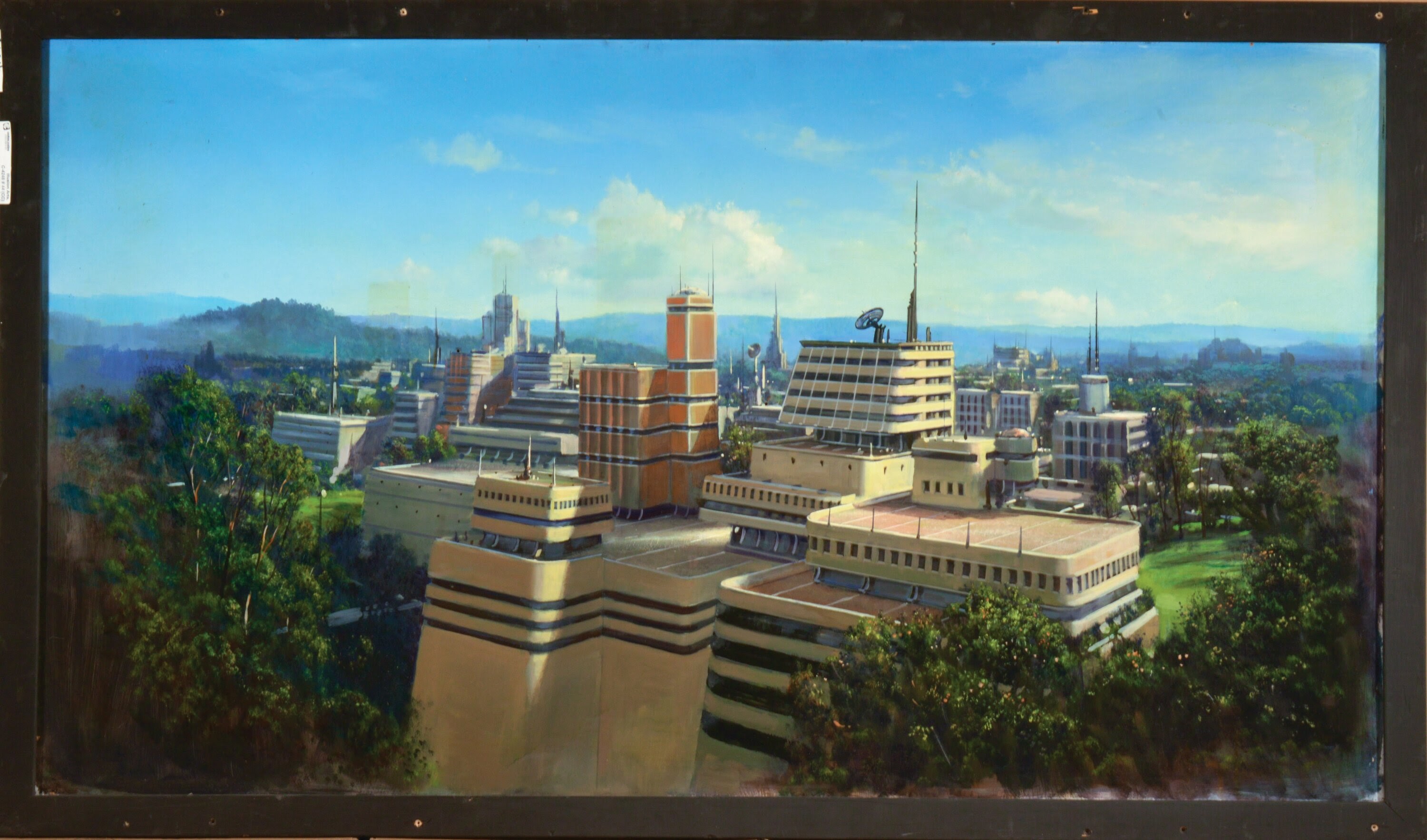
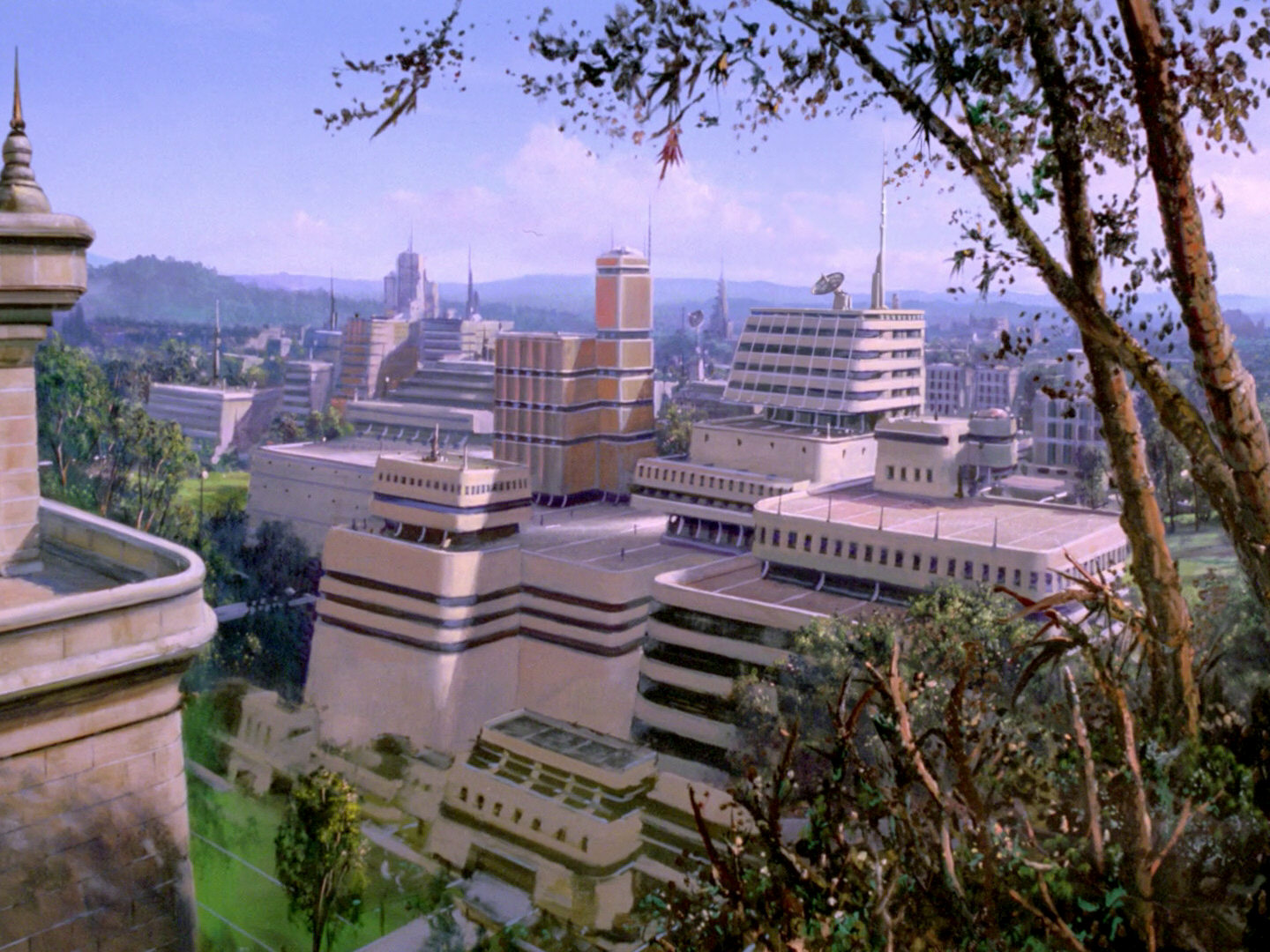
This matte painting appears in several more episodes. Some modifications were already done for the original re-use as Krios in "The Mind's Eye". TNG-R goes a bit further and also establishes a visual difference between Angel I and the Starbase 515 planet in TNG: "Samaritan Snare" by modifying the latter. The re-uses and how they are dealt with in TNG-R are described in detail in the separate article Re-Uses of the Angel One Matte Painting.
TNG: 11001001
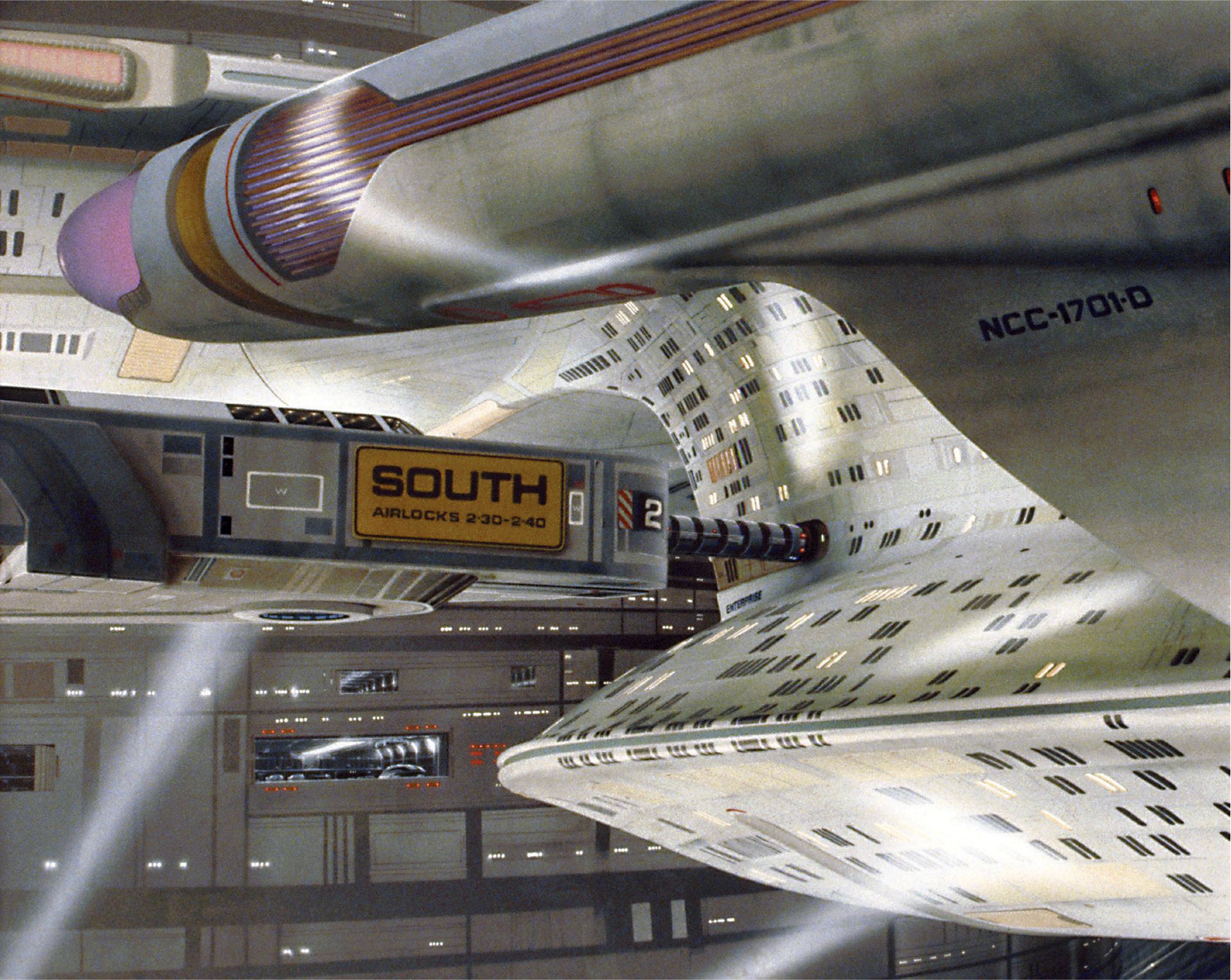
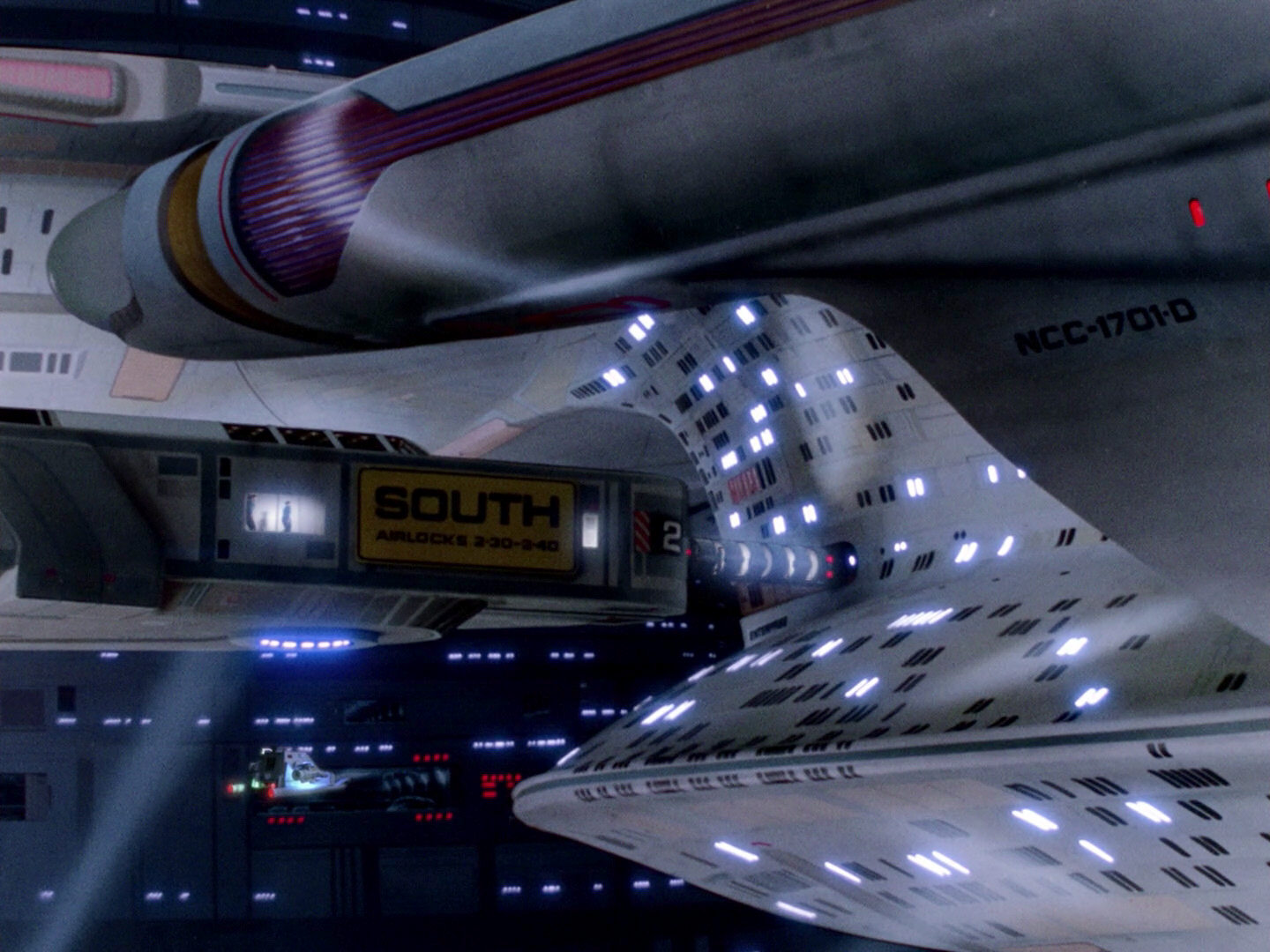
This matte painting was not part of the Heritage Auctions, but we didn't want to skip it. The Enterprise-D docked inside Starbase 74. Small effects were added in post production. Created by Andrew Probert.
TNG: Home Soil
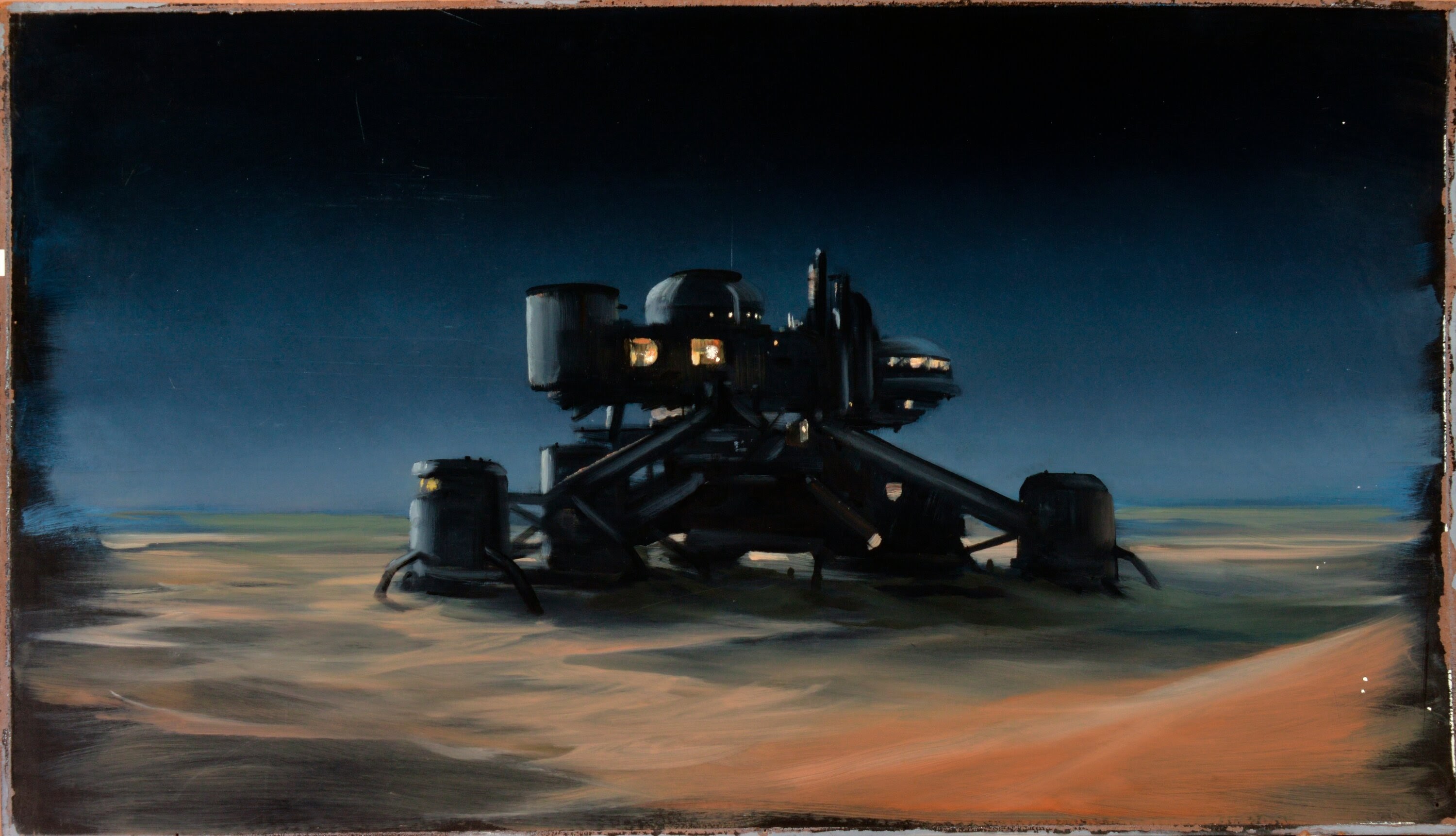
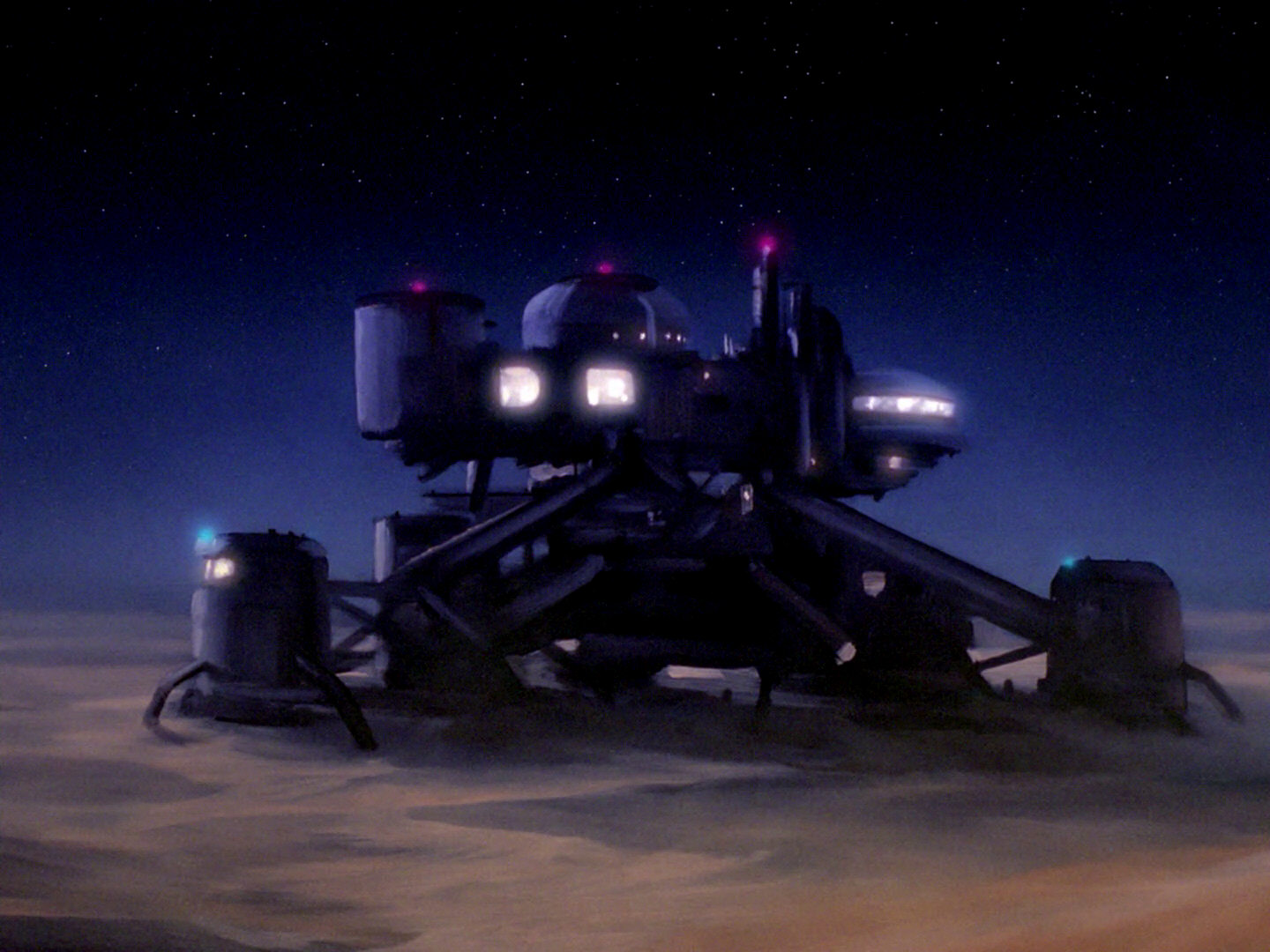
This matte painting shows the terraforming station on Velara III. 60" x 30", masonite. The painting is opaque; stars, dust effects and (in TNG-R) window lights were added in post production. Created by Syd Dutton.
TNG: Unnatural Selection
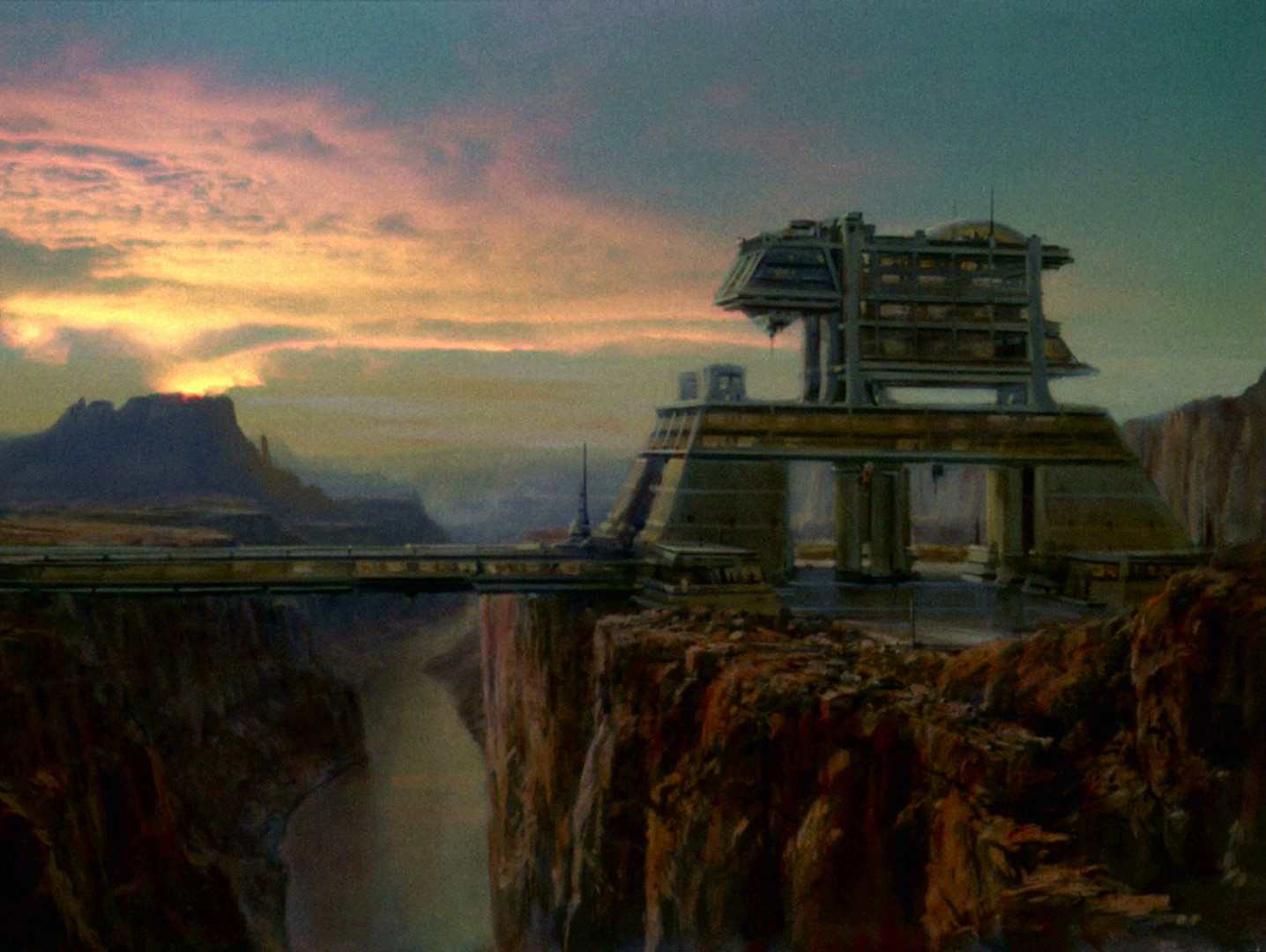
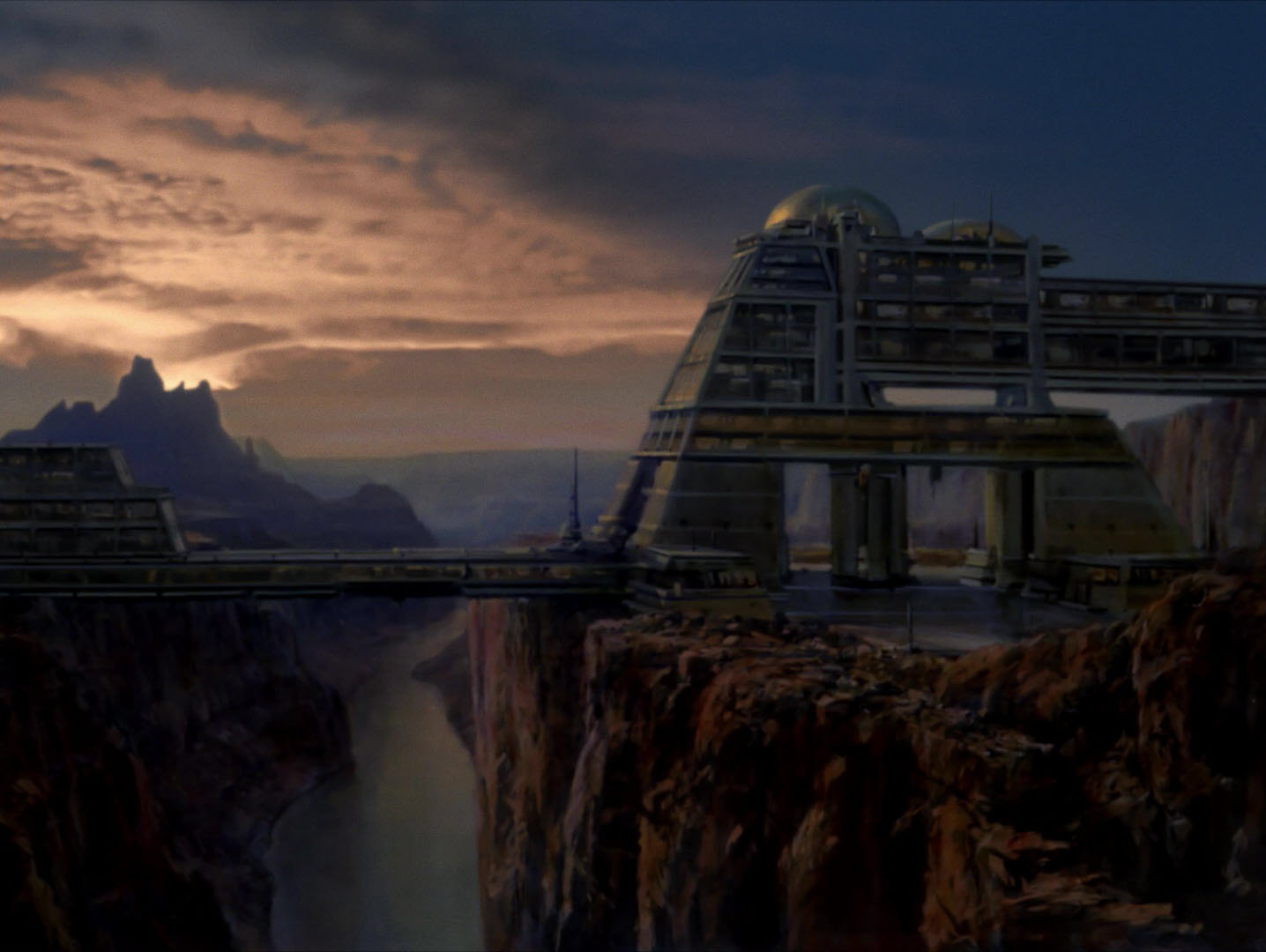
This matte painting was originally used for the Darwin Genetic Research Station on Gagarin IV. It doesn't feature an inset or cutout for compositing. Masonite, 73.5" x 38.75". Created by Syd Dutton.
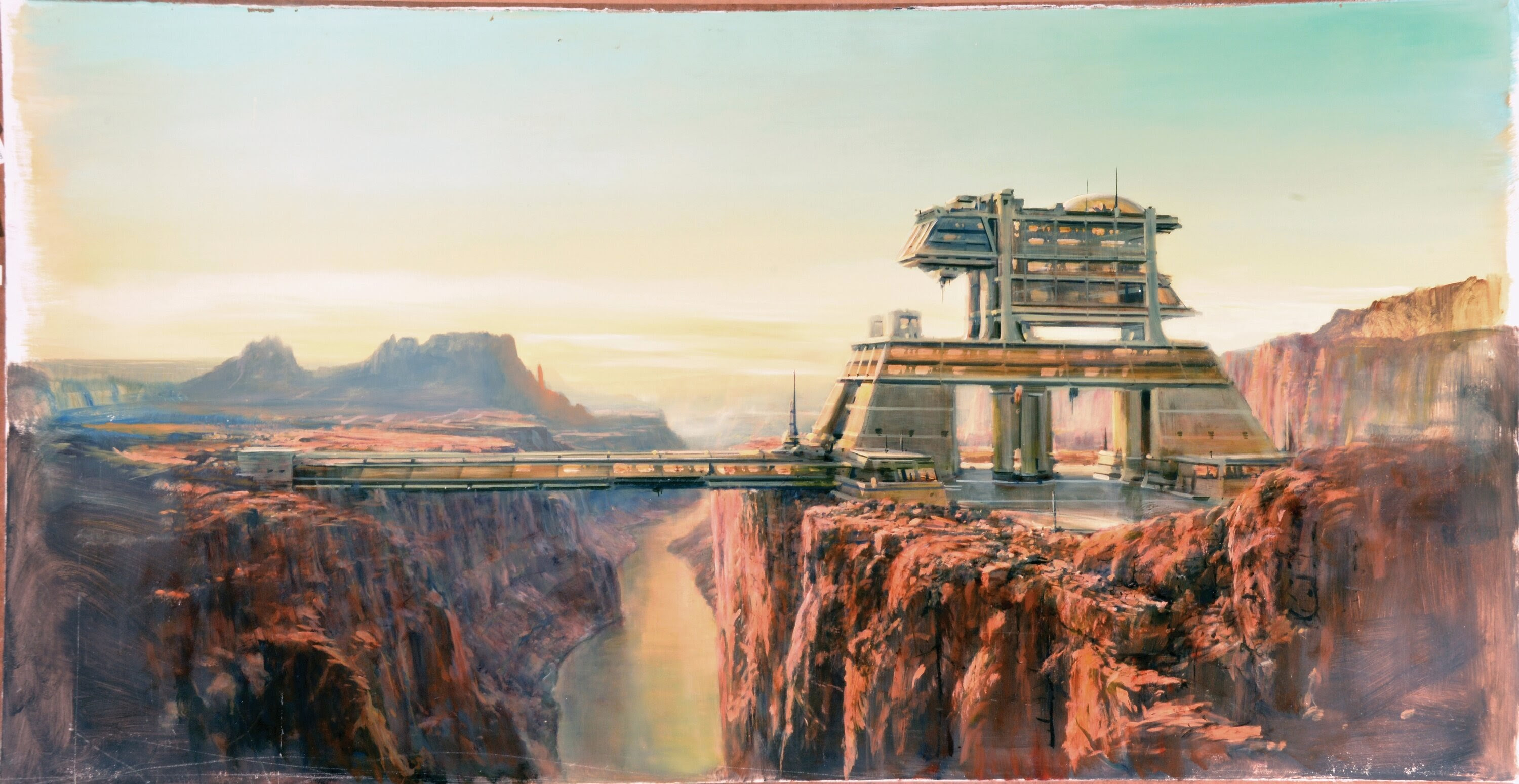
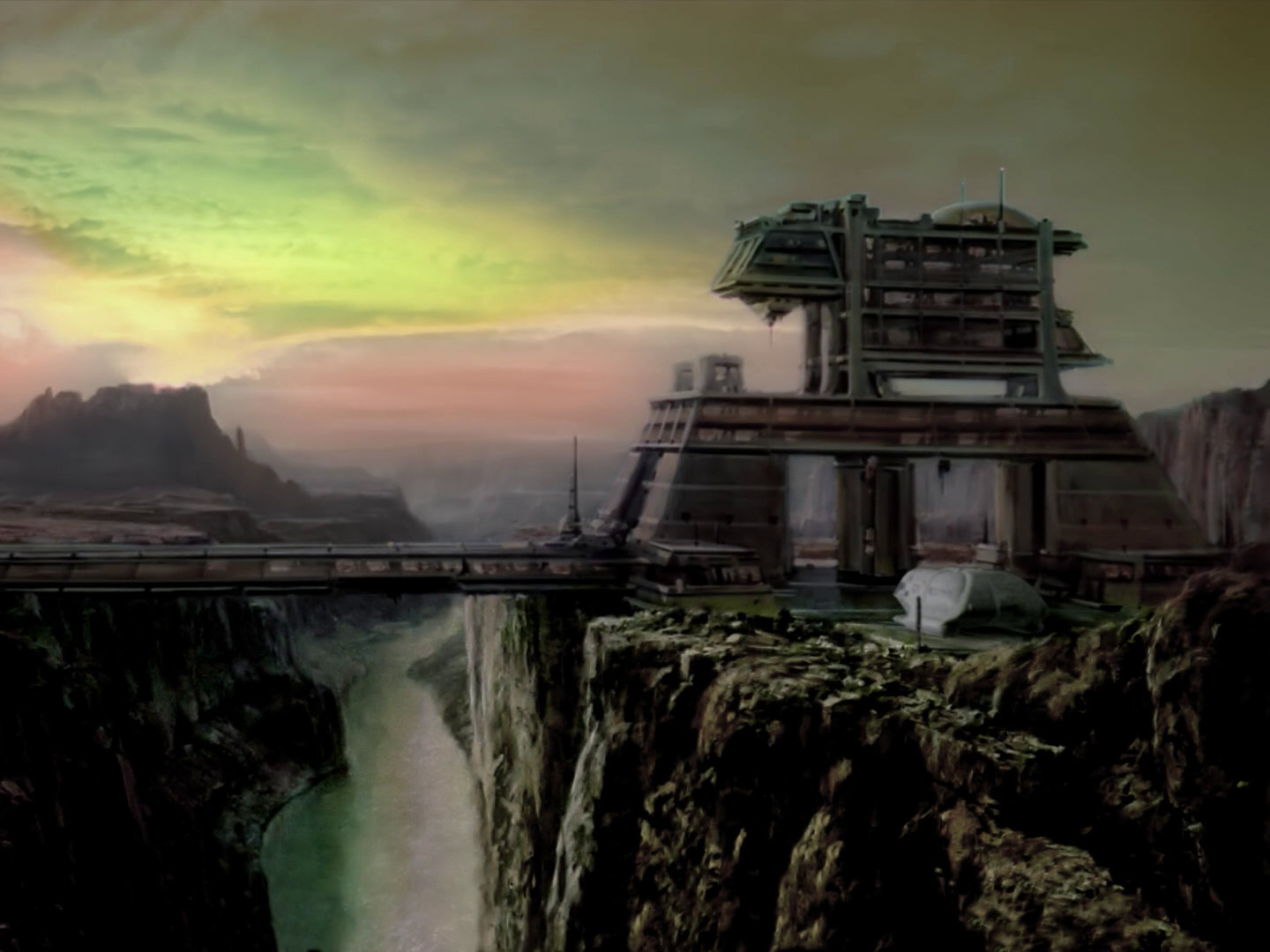
We can see the matte painting again as the Arkaria Base in TNG: "Starship Mine" (with a color grading that differs only in the two remastered episodes, not in the original versions). Actual changes take place for Ohniaka III in TNG: "Descent I", as new building parts are added.
TNG: Q Who
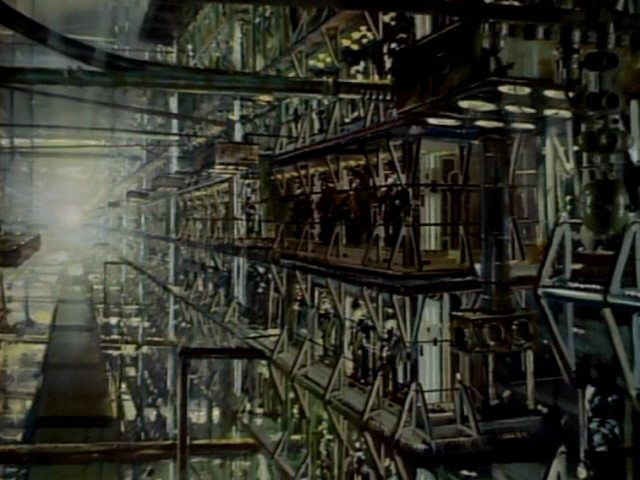
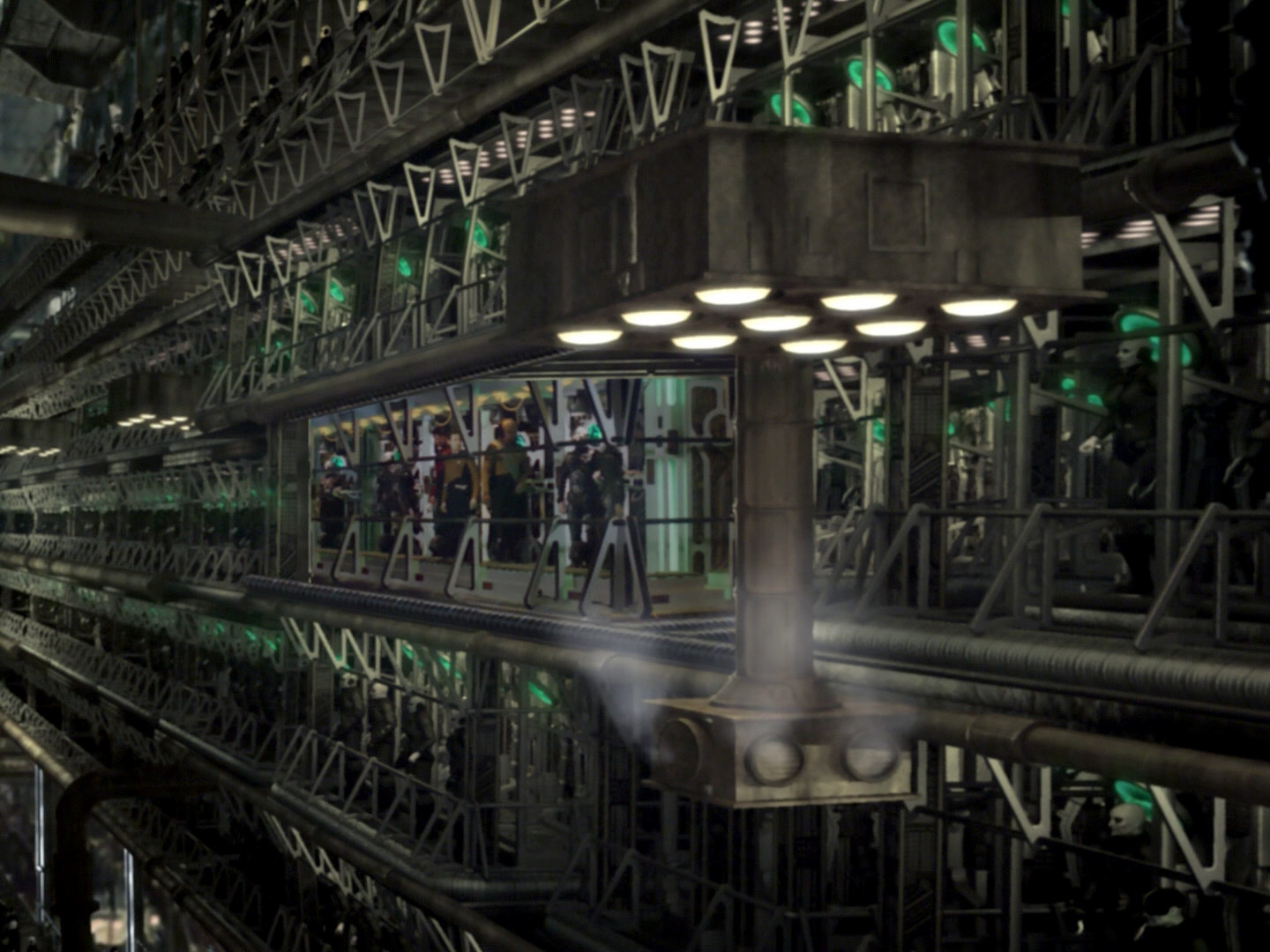
One of Star Trek's most famous matte paintings depicts the huge interior of the Borg cube. Real elements were inserted to create depth as the camera zooms out. Masonite and glass flush in pine frame, 96" x 72". The glass inset measures 16" x 11.5". Created by Syd Dutton.
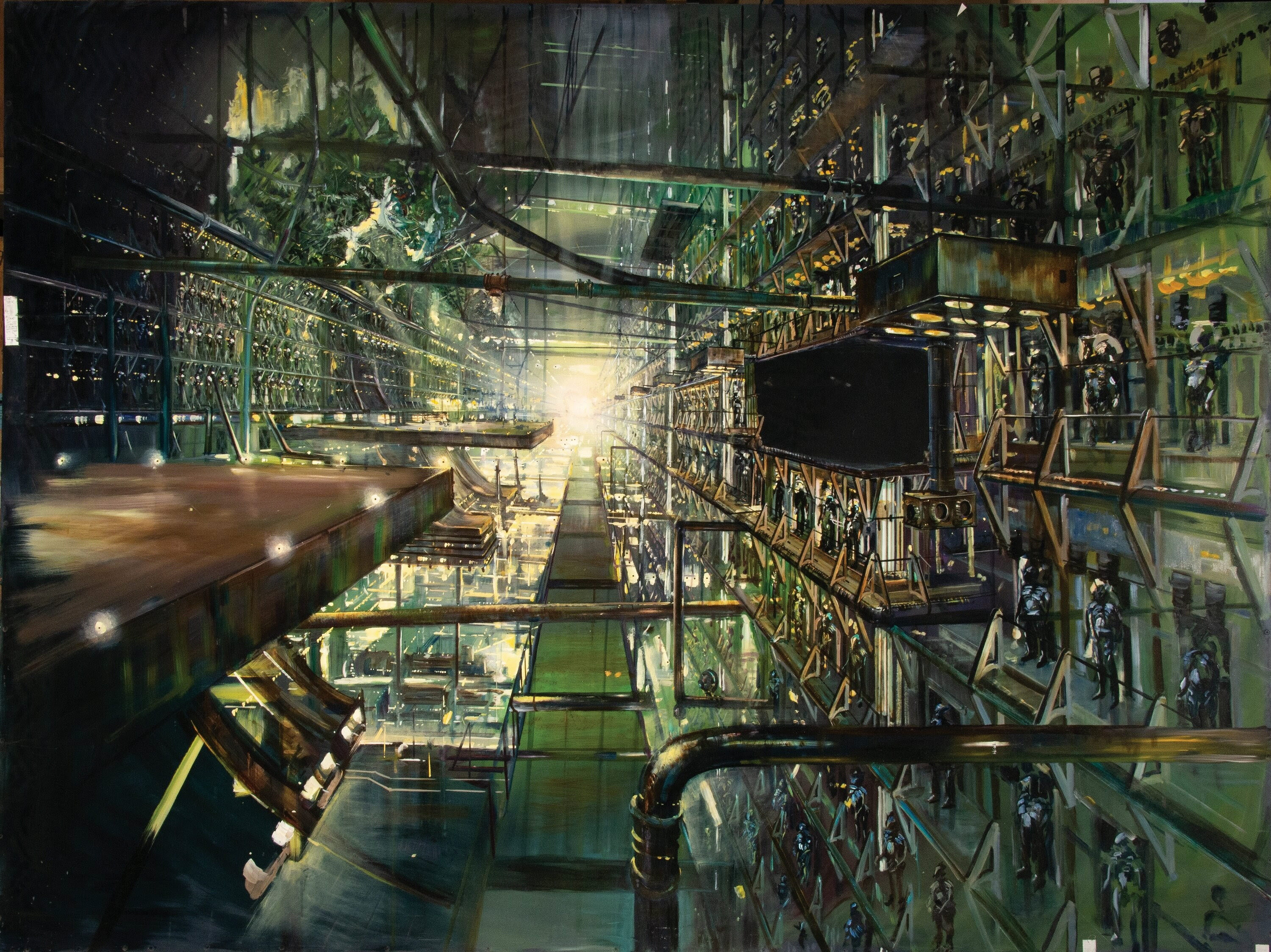
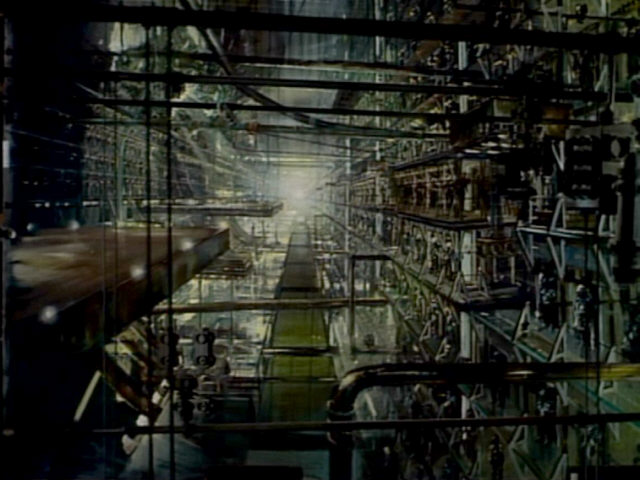
 In the remastered episode, the original matte painting was heavily digitally reworked. Note that the the alcoves in the extensions with the sloped overhead displays in TNG-R look more like the "First Contact" or "Voyager" design.
TNG: The Ensigns of Command
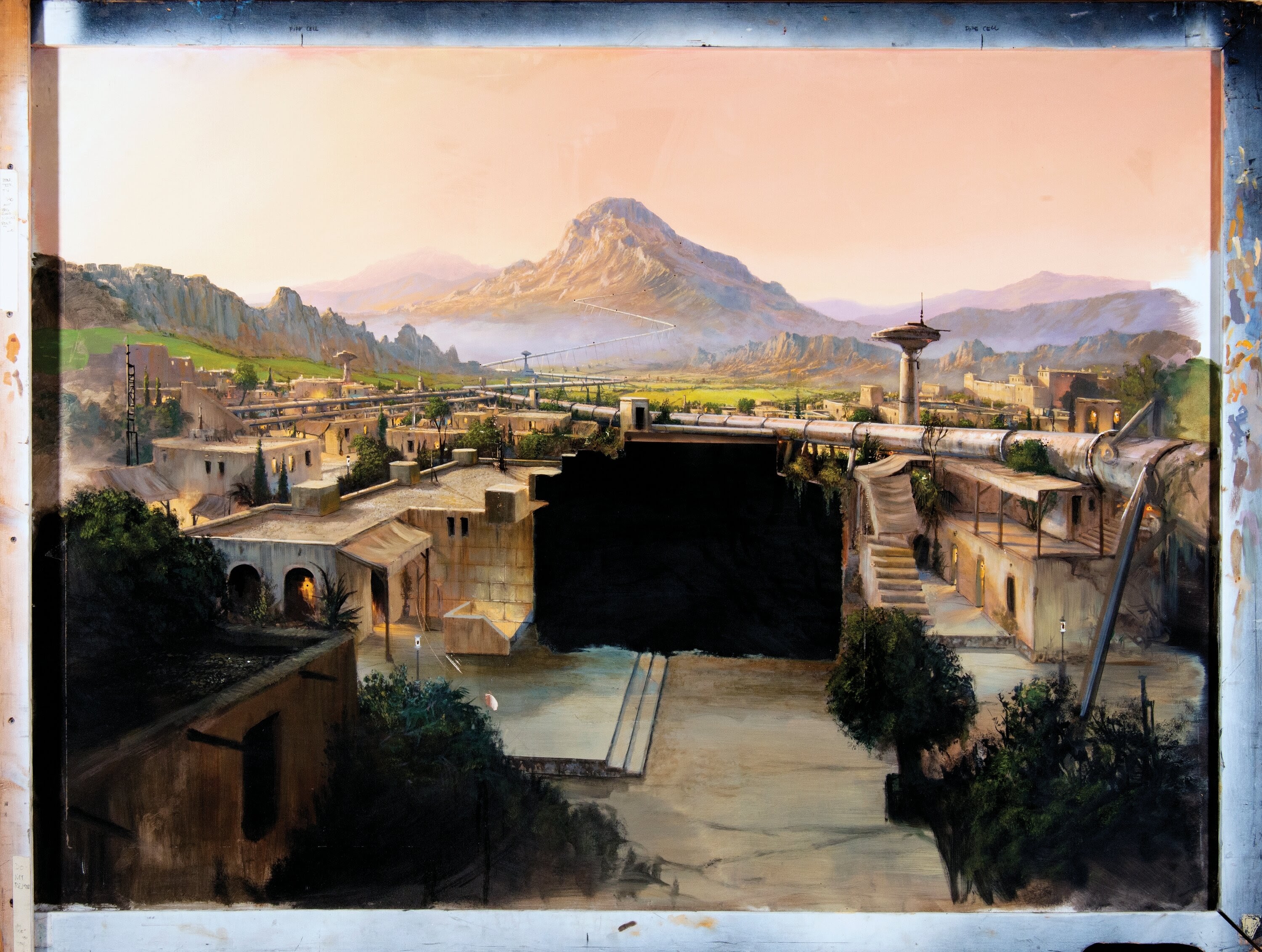
The painting of the colony on Tau Cygna includes the aqueduct, which plays a role in the course of the story. Masonite with glass in pine frame, 69" x 50". The glass opening measures 22" x 17". Created by Robert Stromberg.
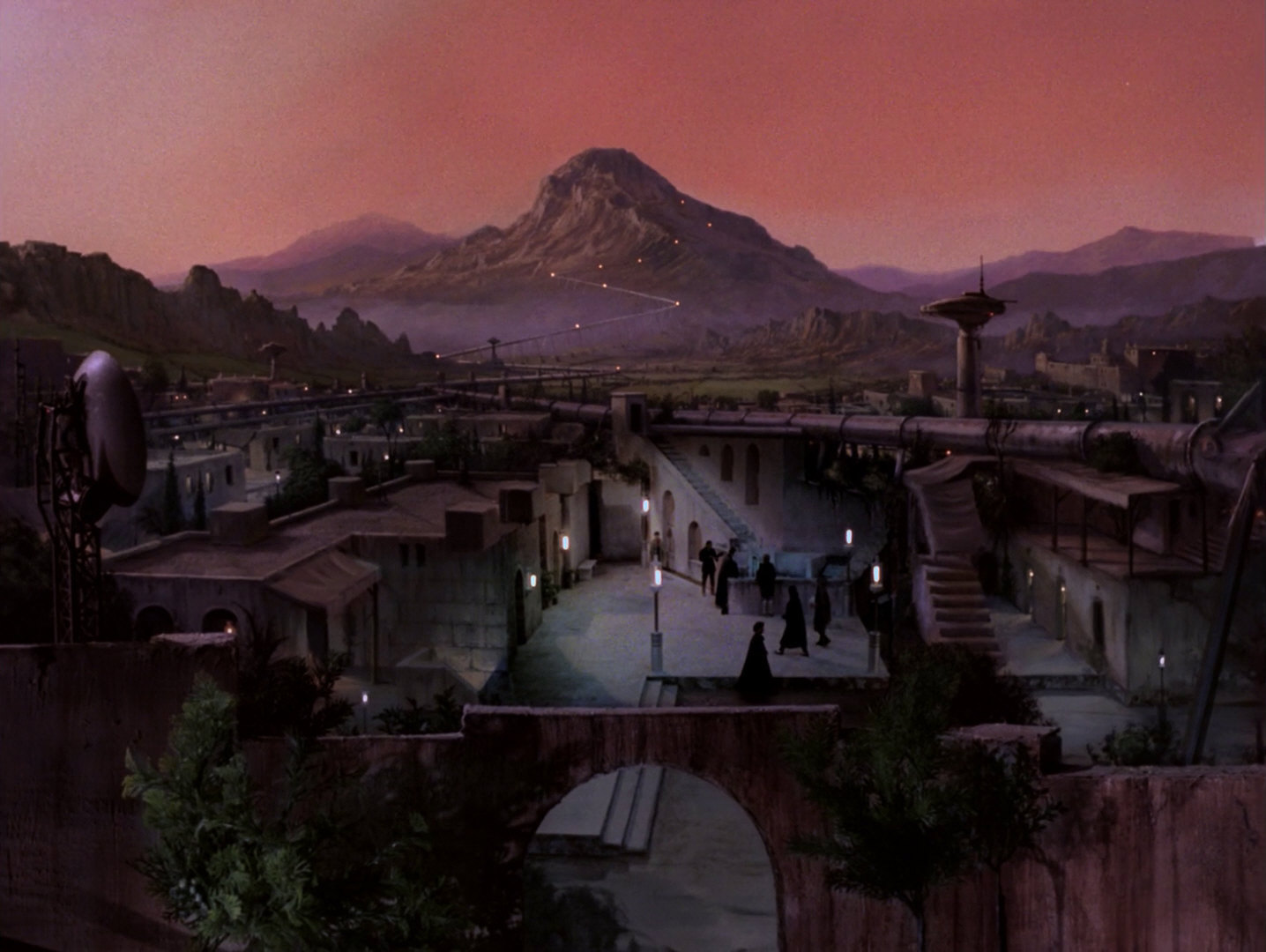
The footage appeared without changes as the Maquis colony on Volon II in DS9: "The Maquis I+II".
TNG: The Survivors
The matte painting, in its original form, appeared as the devastated surface of Delta Rana IV. 96" x 48", masonite, flush with pine frame. It featured a glass portion to insert the live action of the away team on the lawn, which measured 10.5" x 7.25". Created by Illusion Arts.
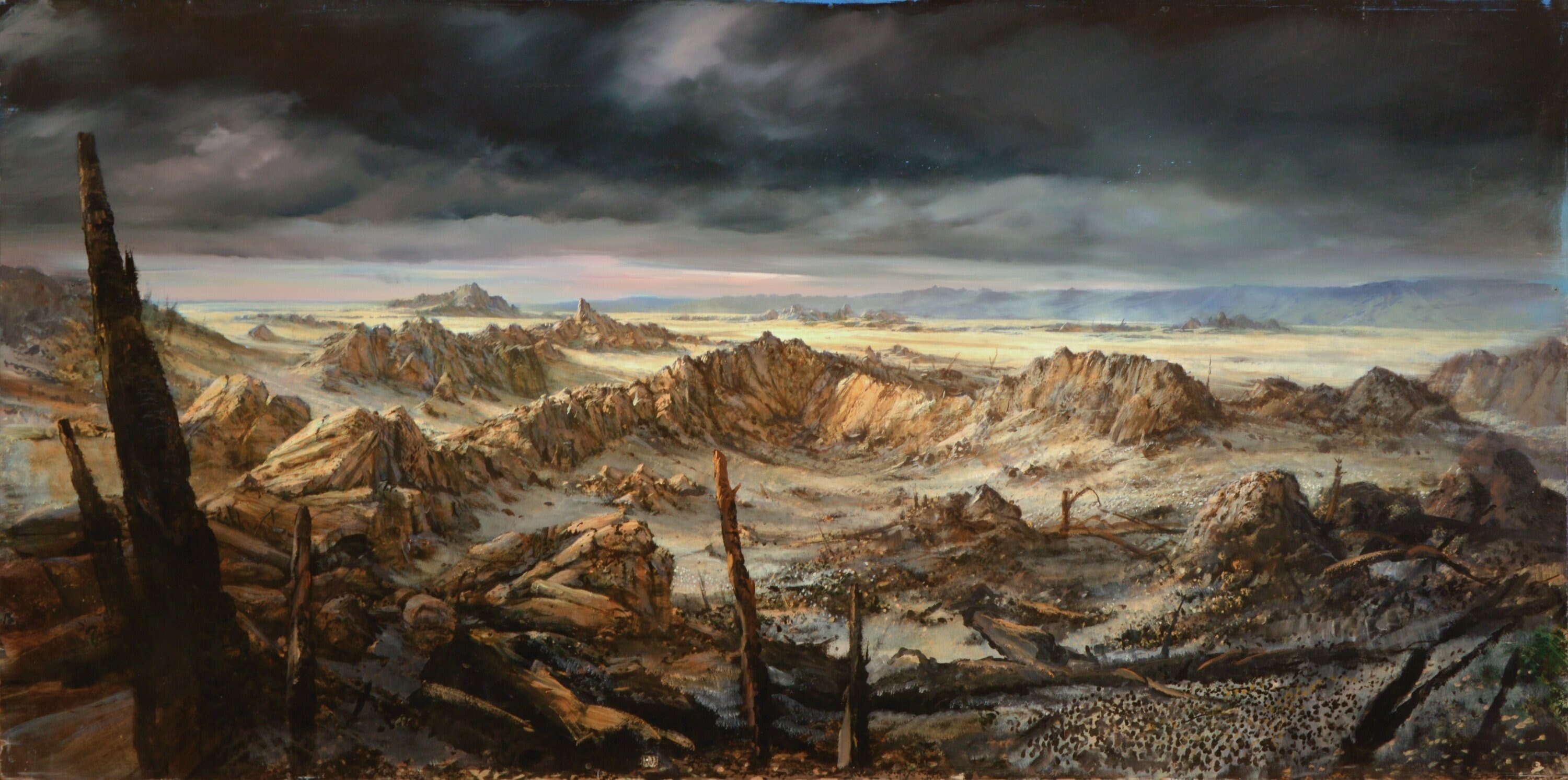
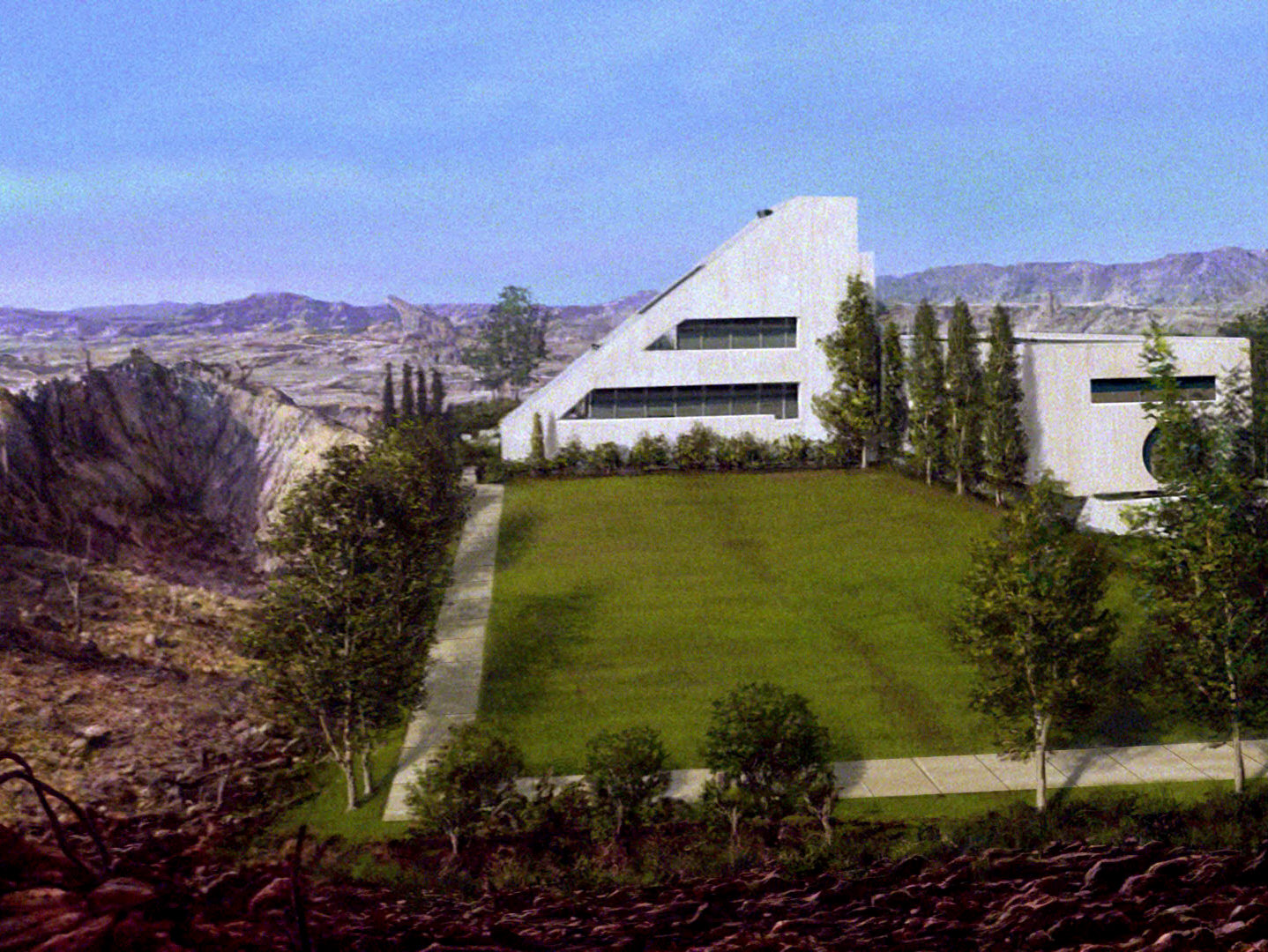
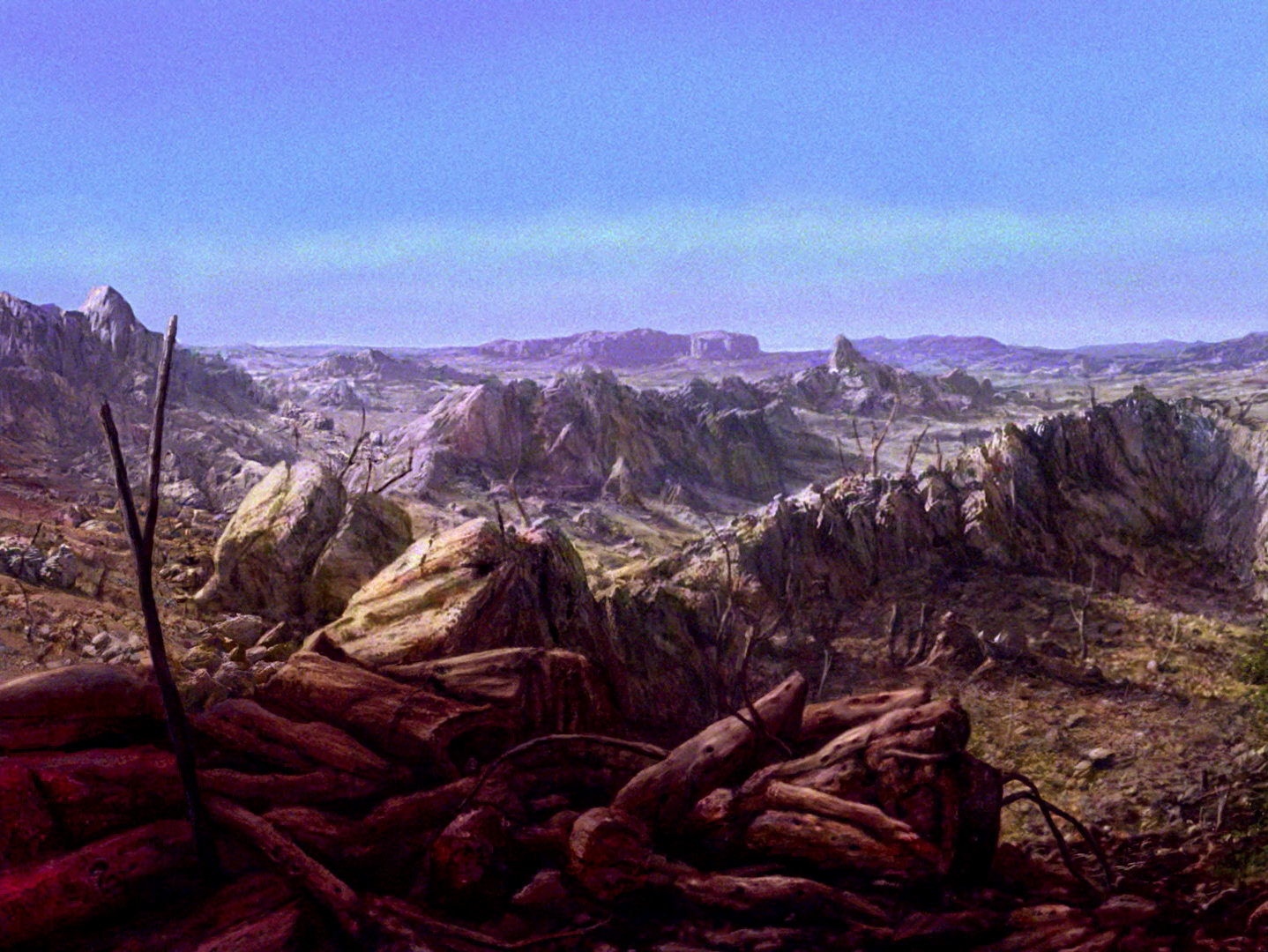
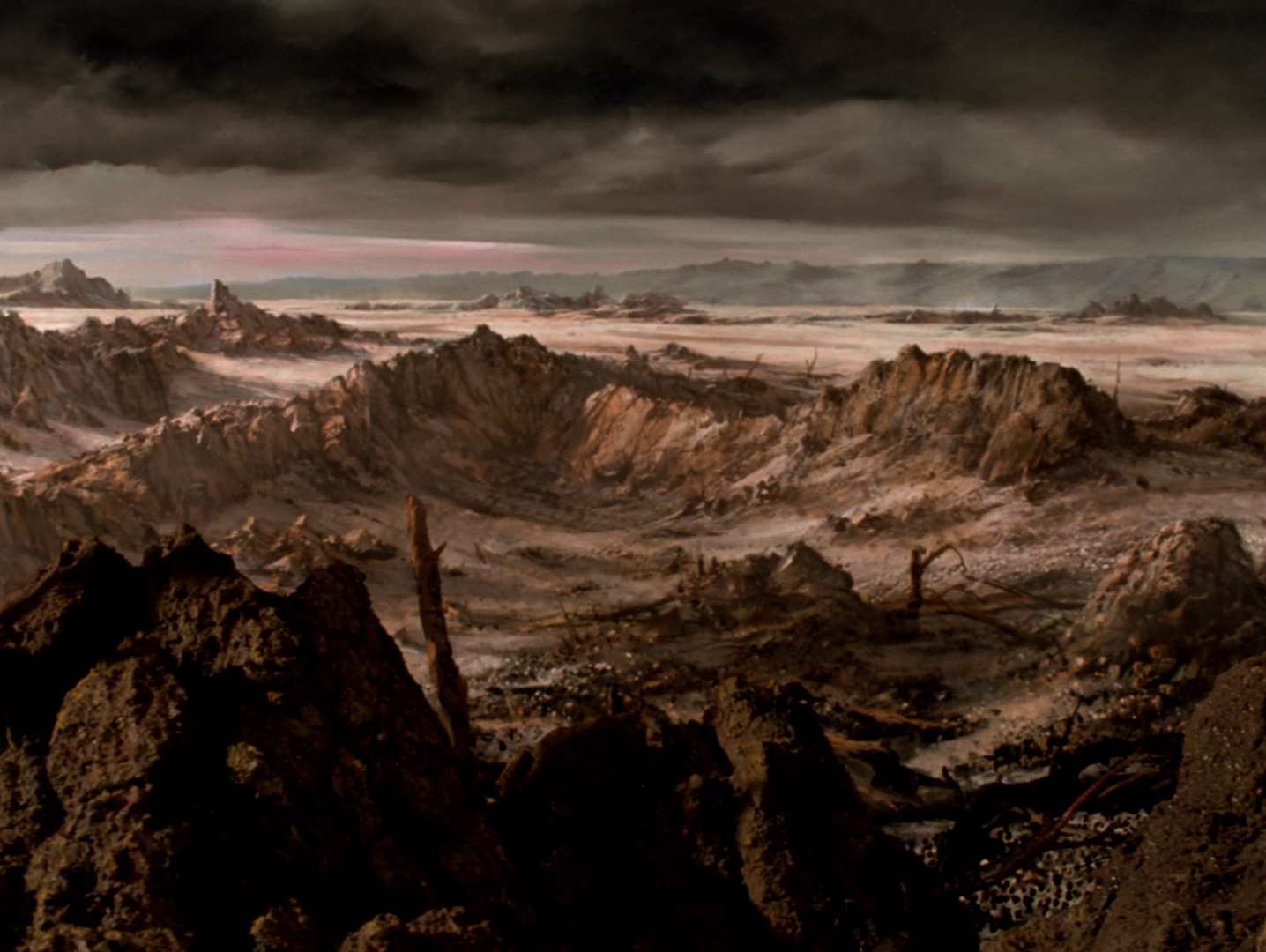
The painting was modified for its appearance as Melona IV in "Silicon Avatar" to its current (final) state. The dark sky was darkened, and the whole window for compositing was painted over to extend the ravaged landscape. Also, rocks were put into the foreground, which are not part of the painting.
TNG: The Hunted
This matte painting was created for the cityscape of Angosia (and was never re-used). Masonite, 66" x 34". Created by Syd Dutton.
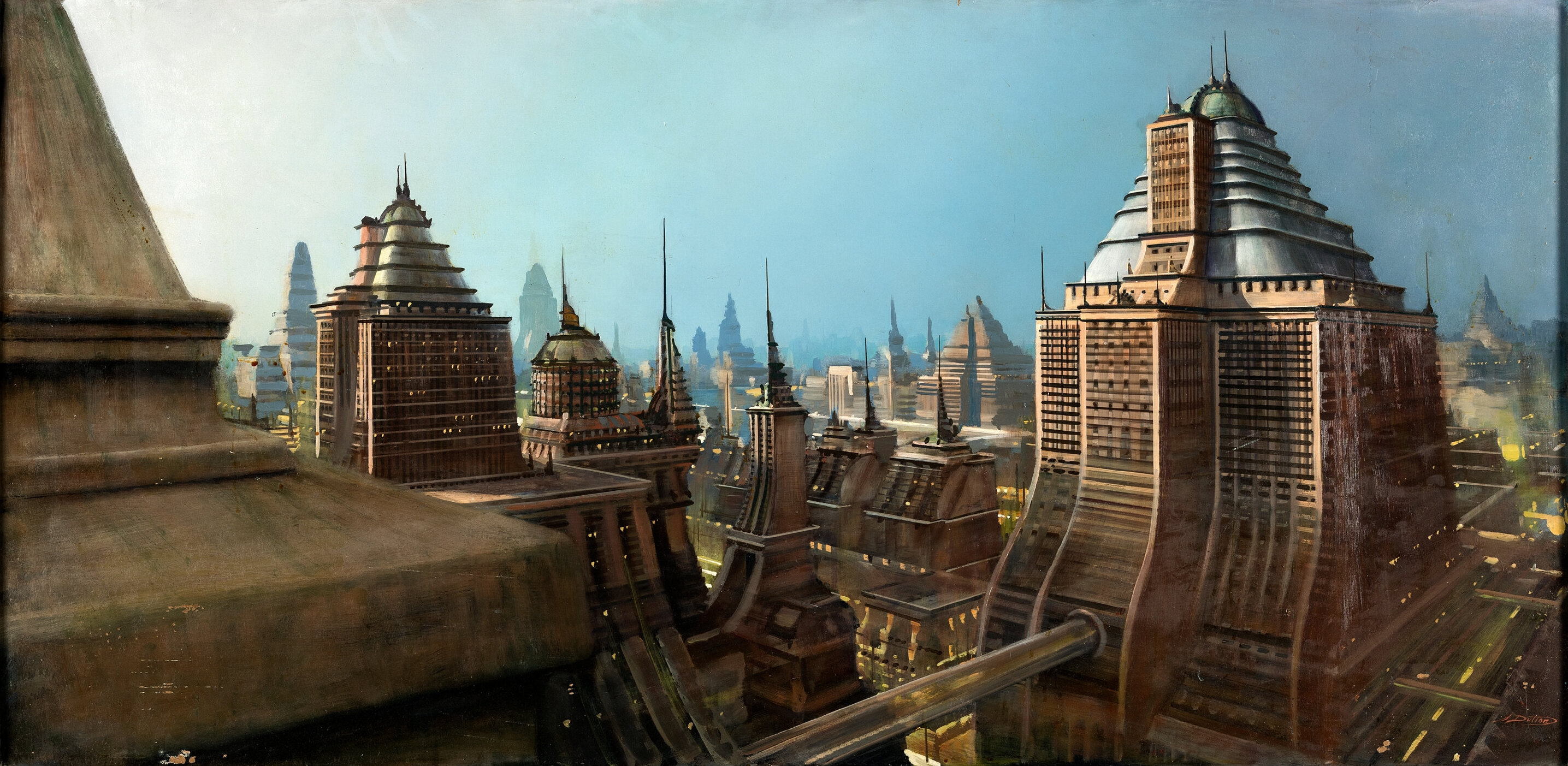
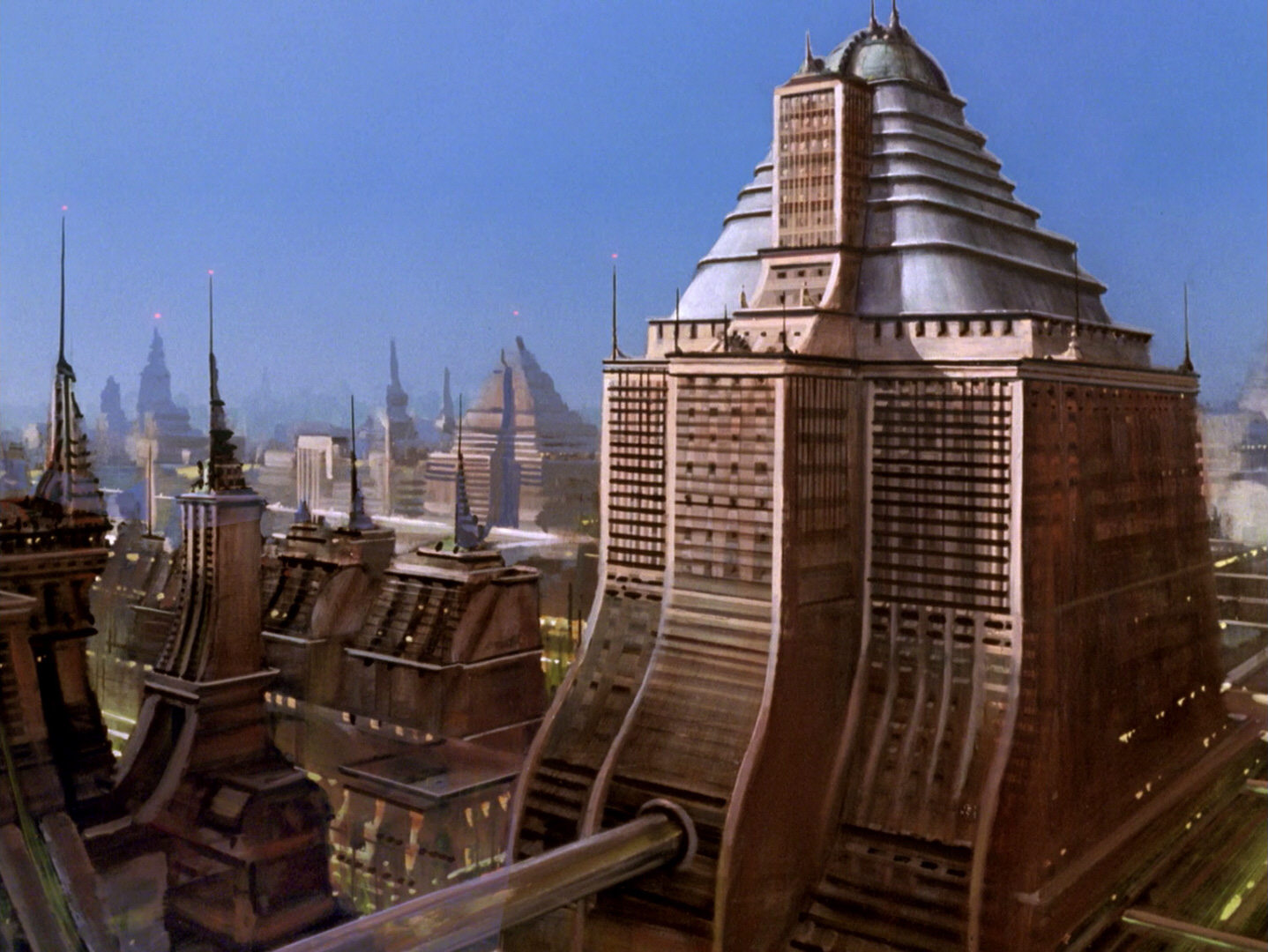
TNG: Sins of the Father
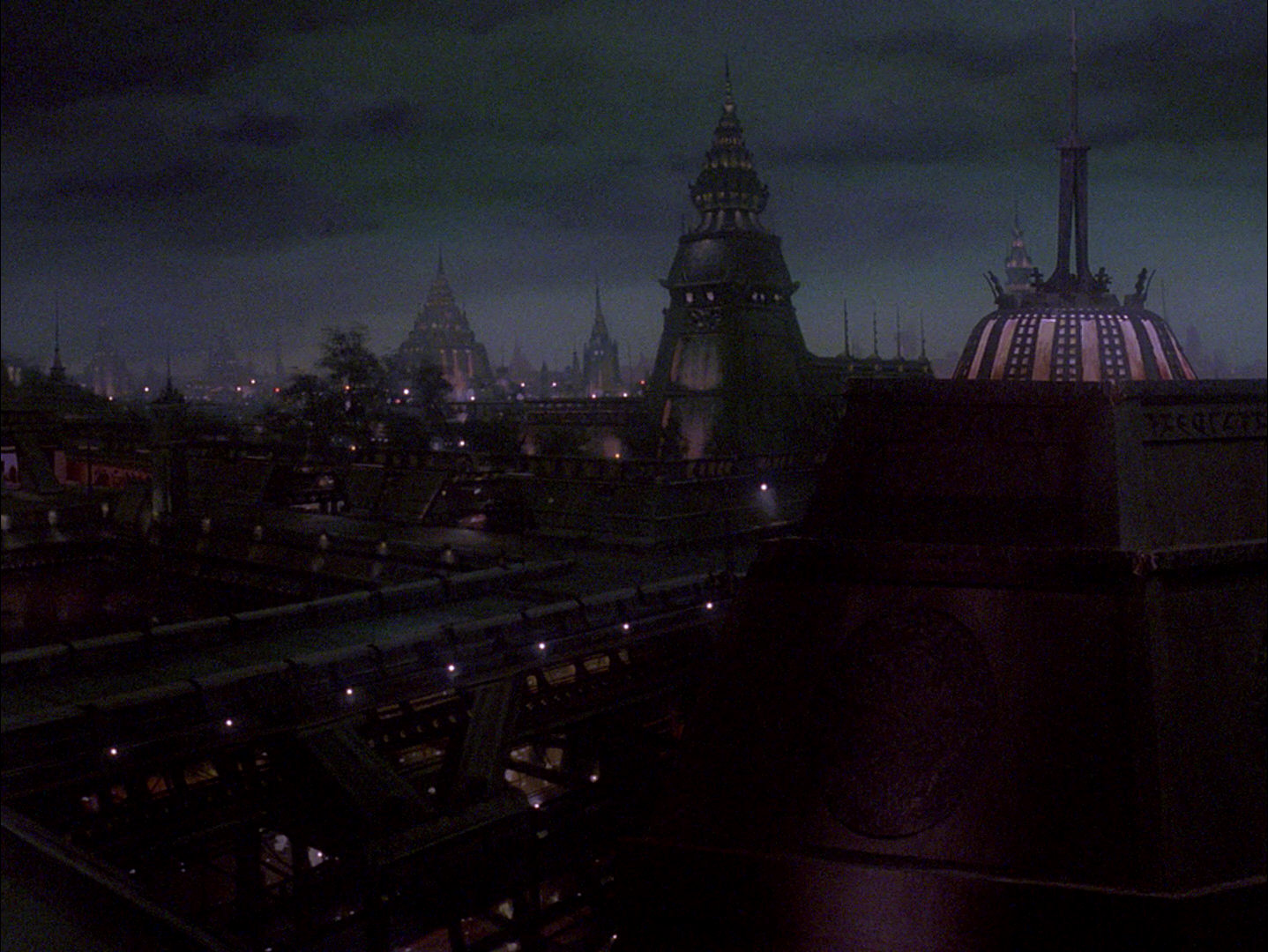
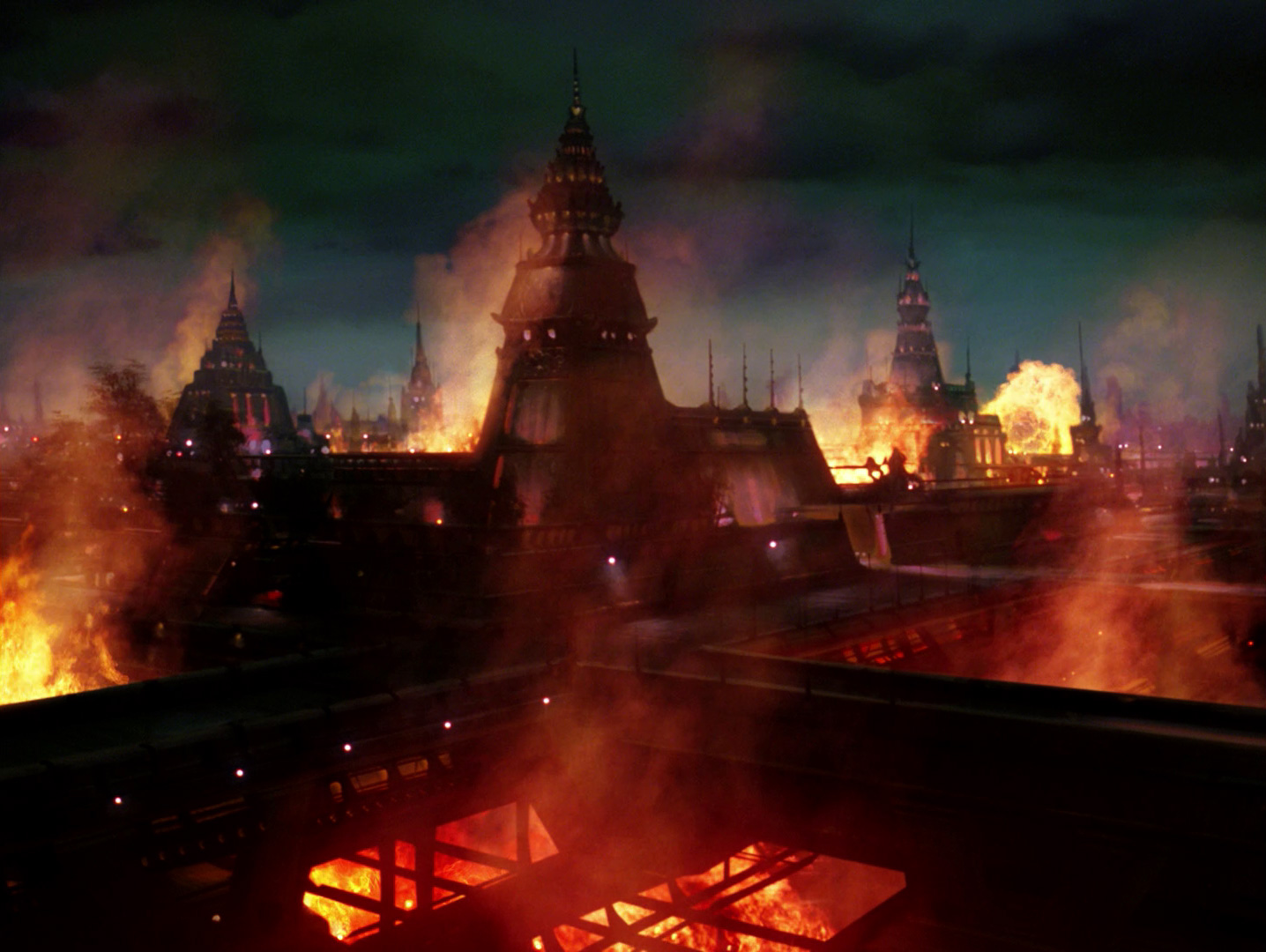
The famous matte painting of the Great Hall on the Klingon homeworld Qo'noS. Masonite, 96" x 48", with holes for lighting and a plexiglass cutout for live action inside the Great Hall. Created by Syd Dutton.
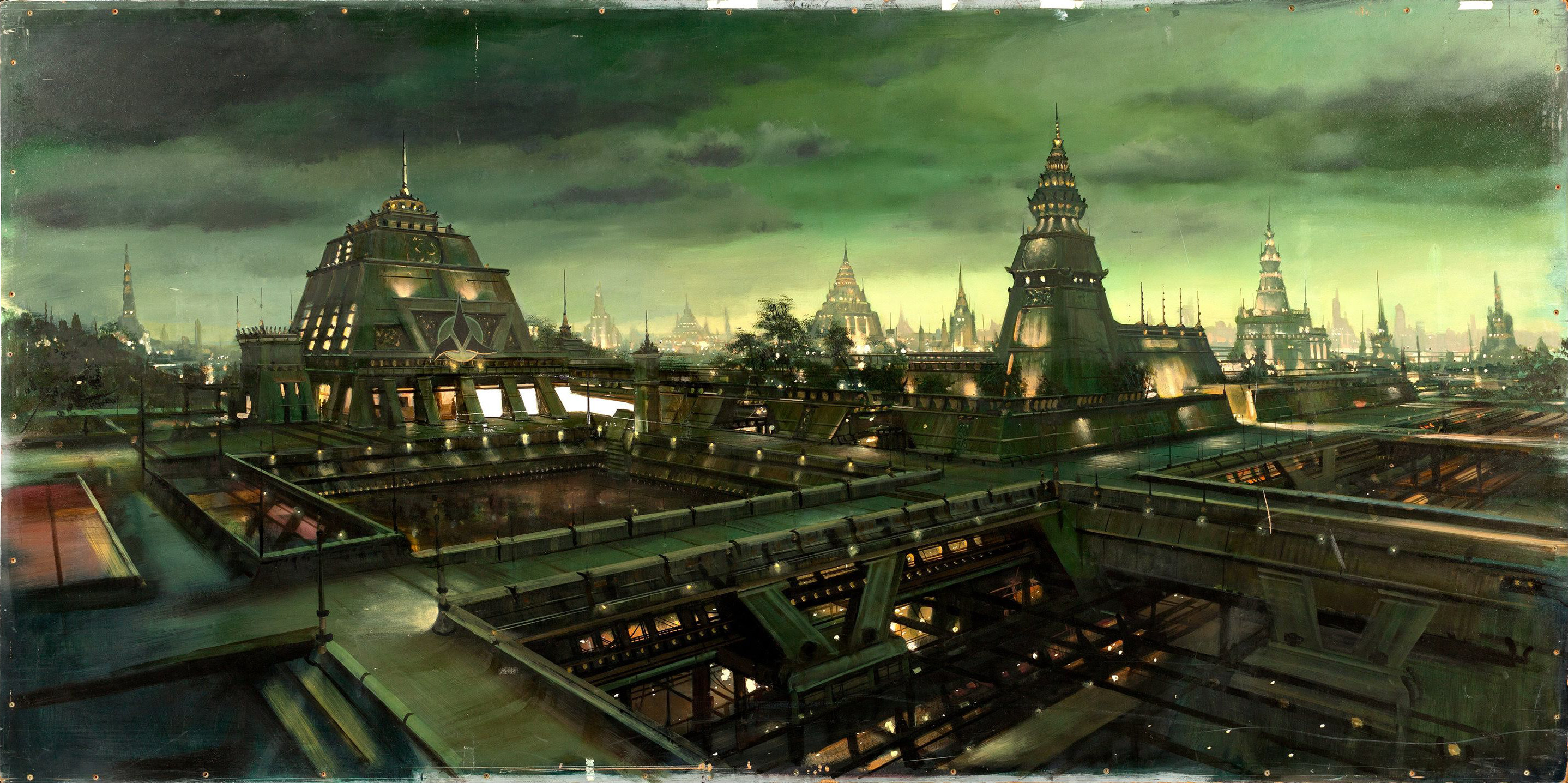
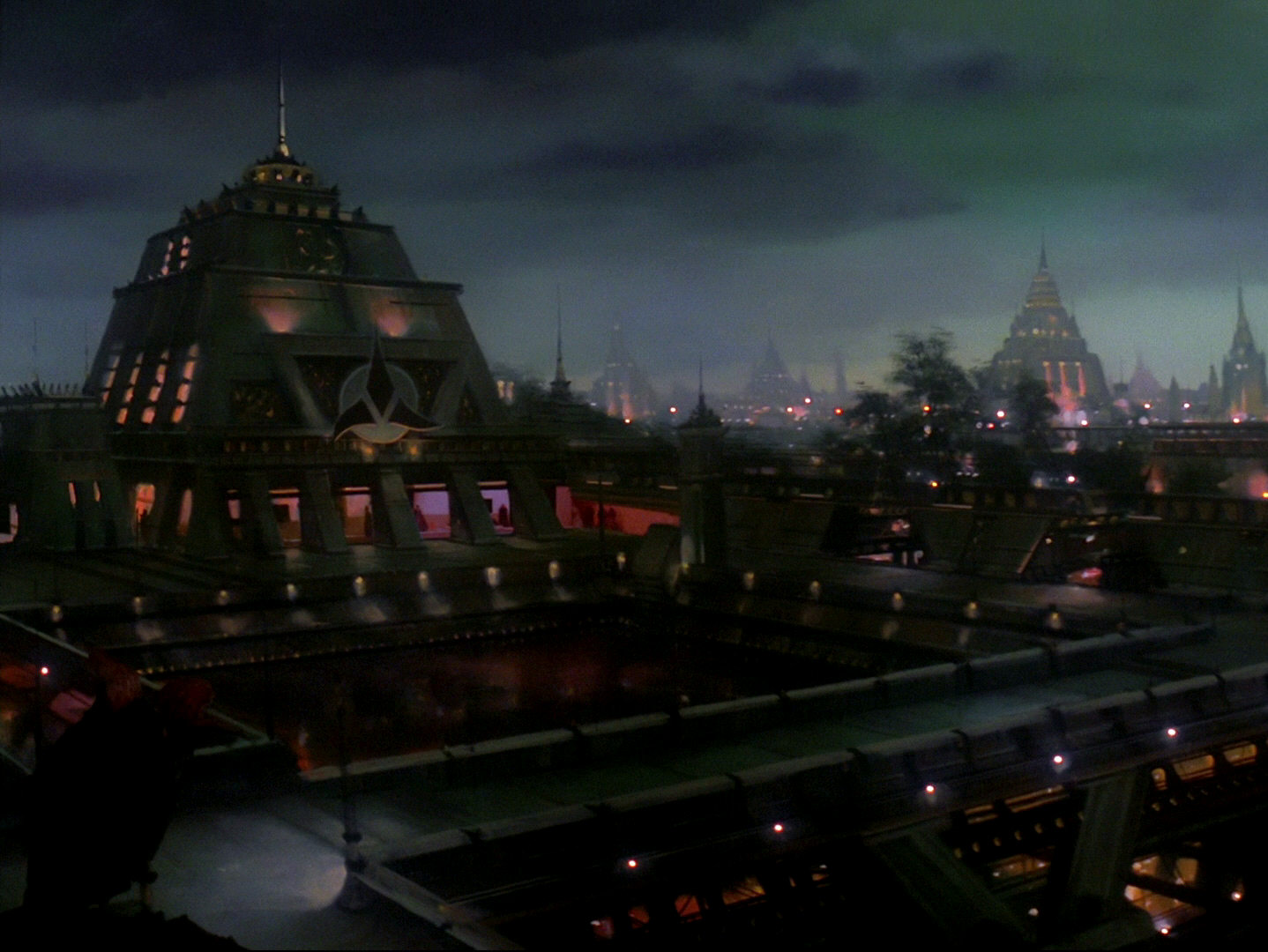
Variations of this matte painting include close shots, a foreground building on the very right and notably the burning city in "Redemption II".
TNG: Ménage à Troi
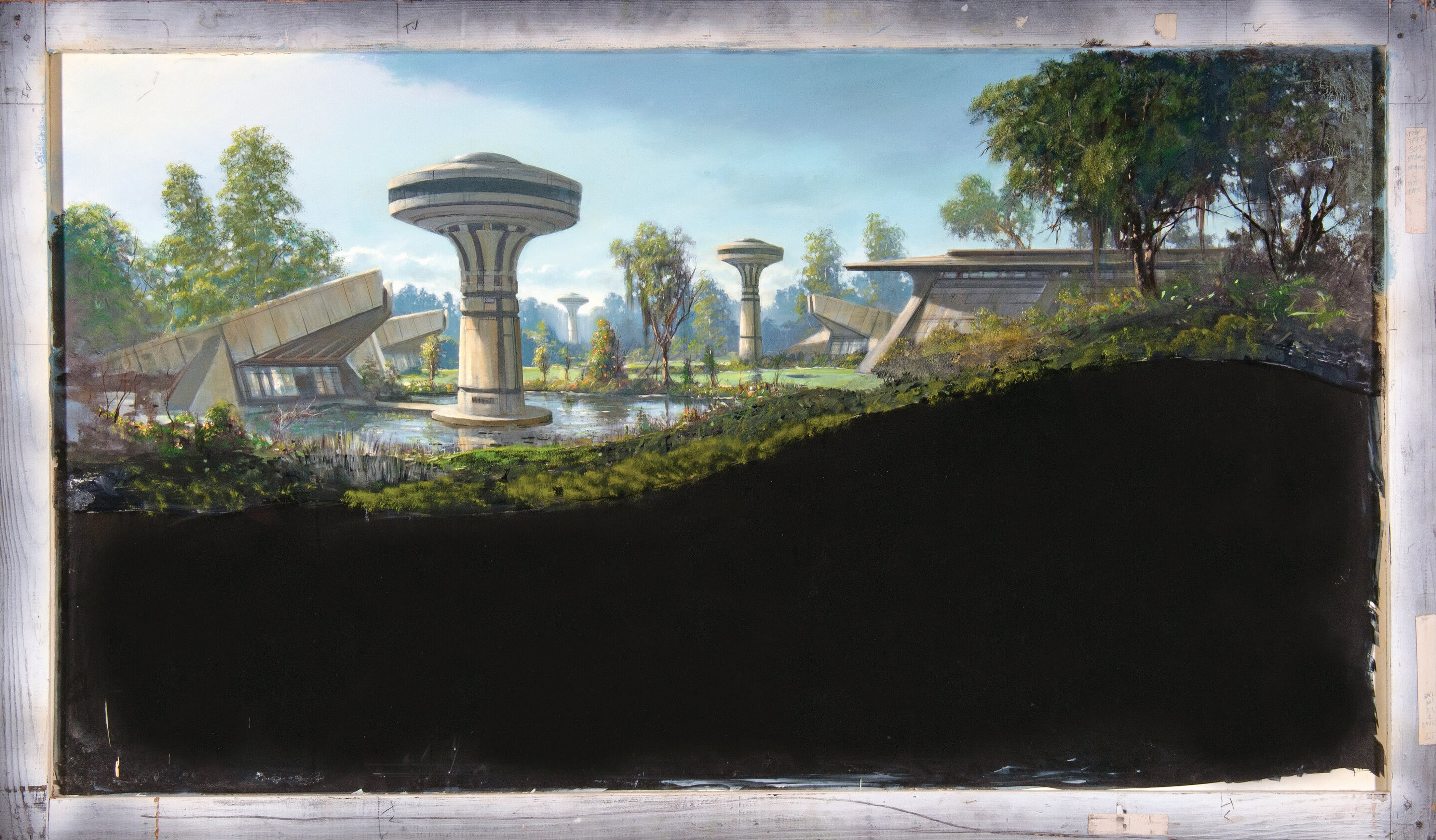
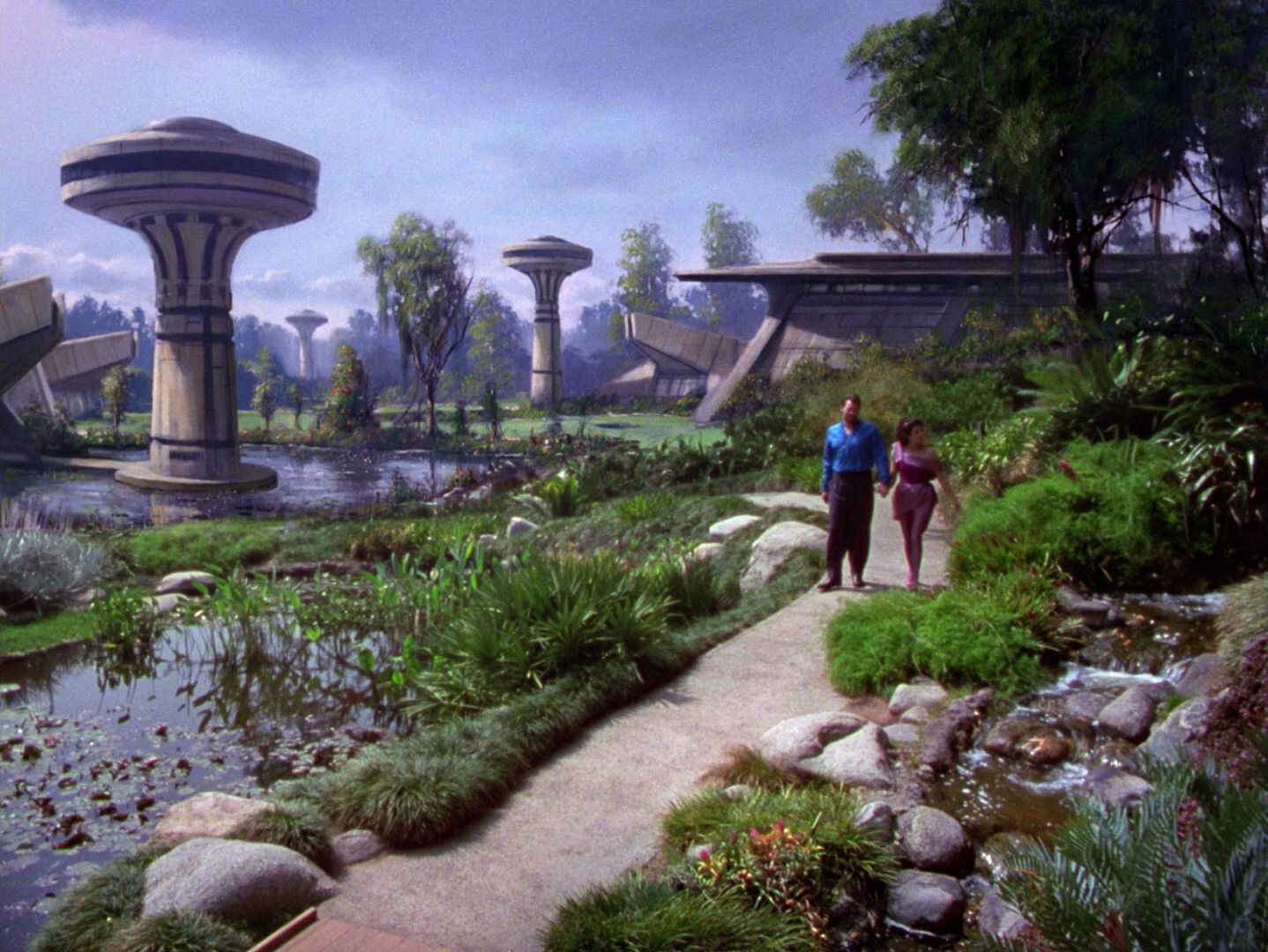
This matte painting depicts the planet Betazed and was used to extend live shots filmed at Huntington Library Botanical Gardens in Pasadena, California. Masonite with glass in pine frame, 71" x 42". The whole lower half of the painting is transparent. Created by Robert Stromberg.
TNG: The Best of Both Worlds I
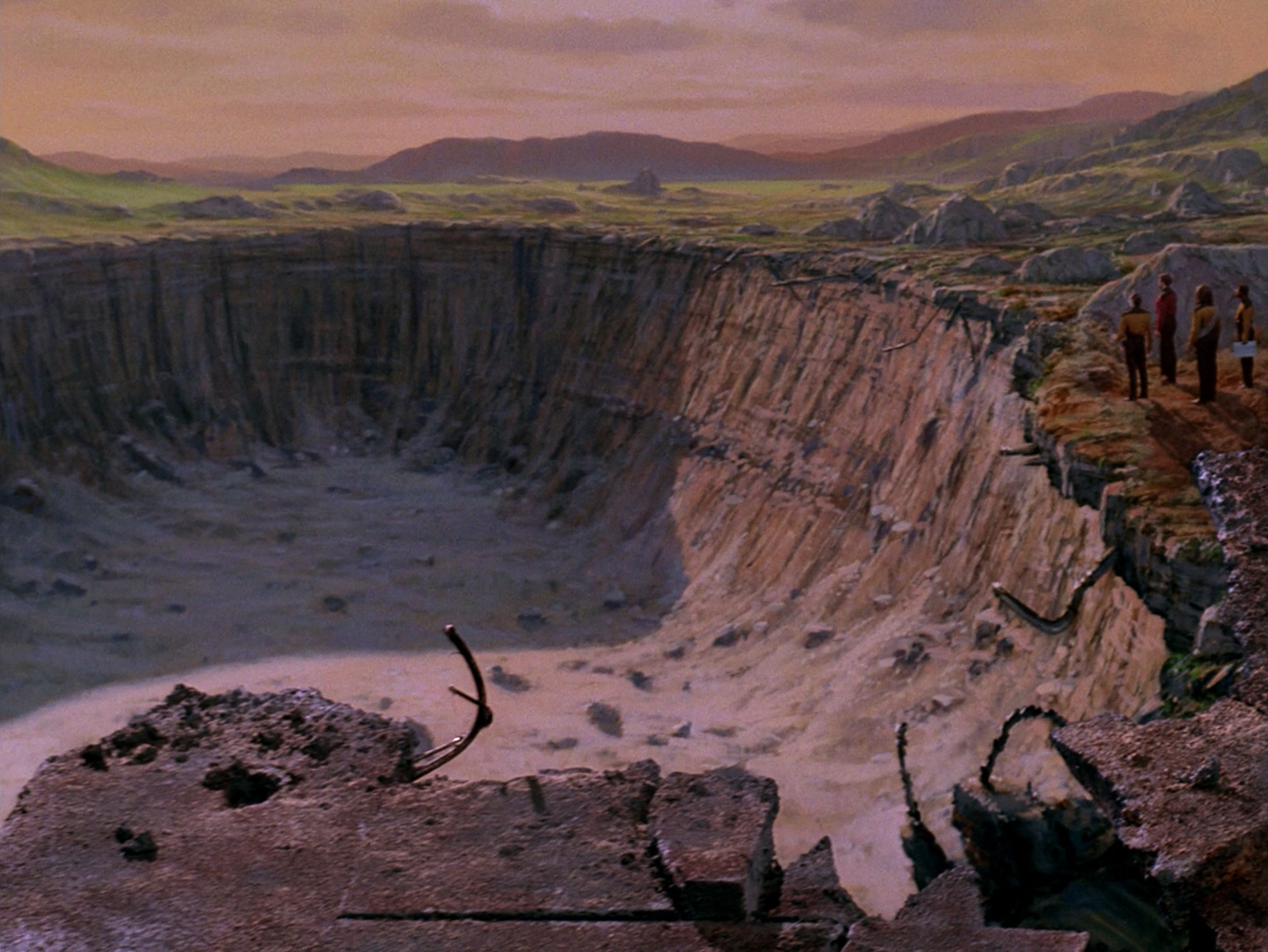
This matte painting appears at the beginning of the episode, as Riker and his away team investigate the ravaged surface of the planet Jouret IV. The episode cap shows additional foreground elements. Masonite in pine frame, 96" x 48". There is a glass opening of 18" x 15.5". Created by Syd Dutton.
TNG: Legacy
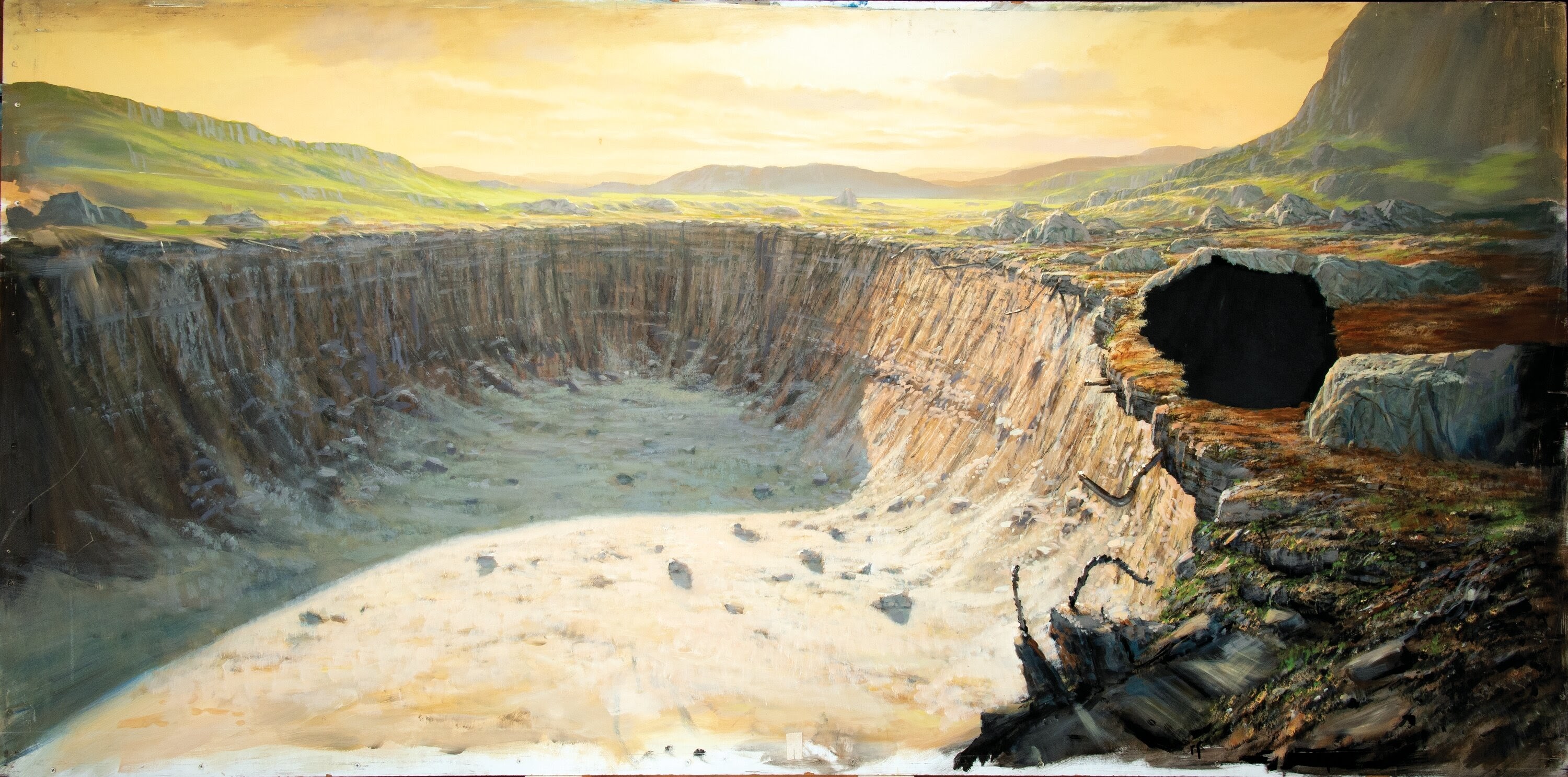
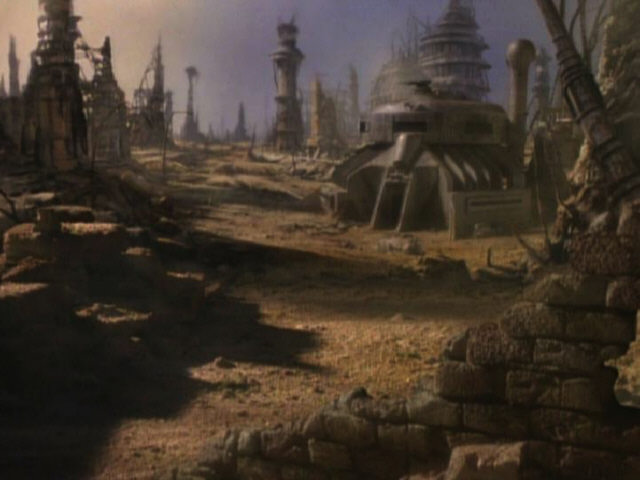
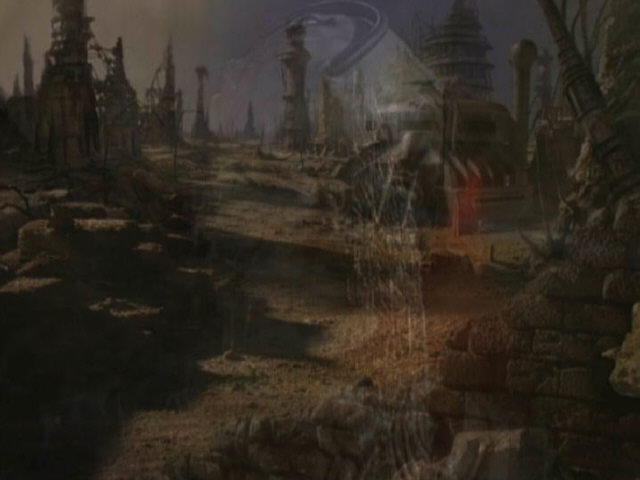
This matte painting depicts the devastated surface of Turkana IV. It was created for standalone use. Masonite, flush with pine frame, 96" x 48". Created by Syd Dutton.
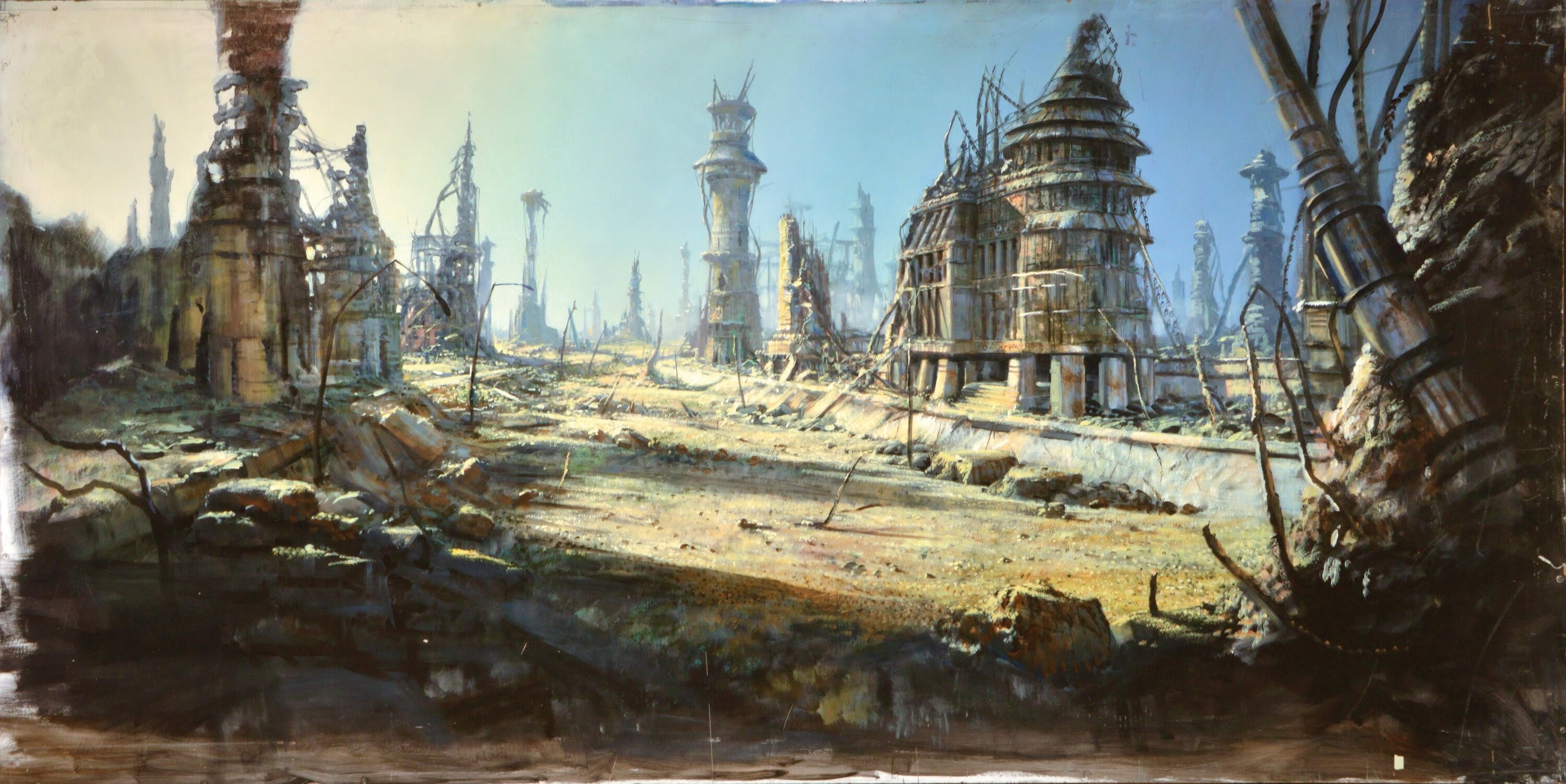
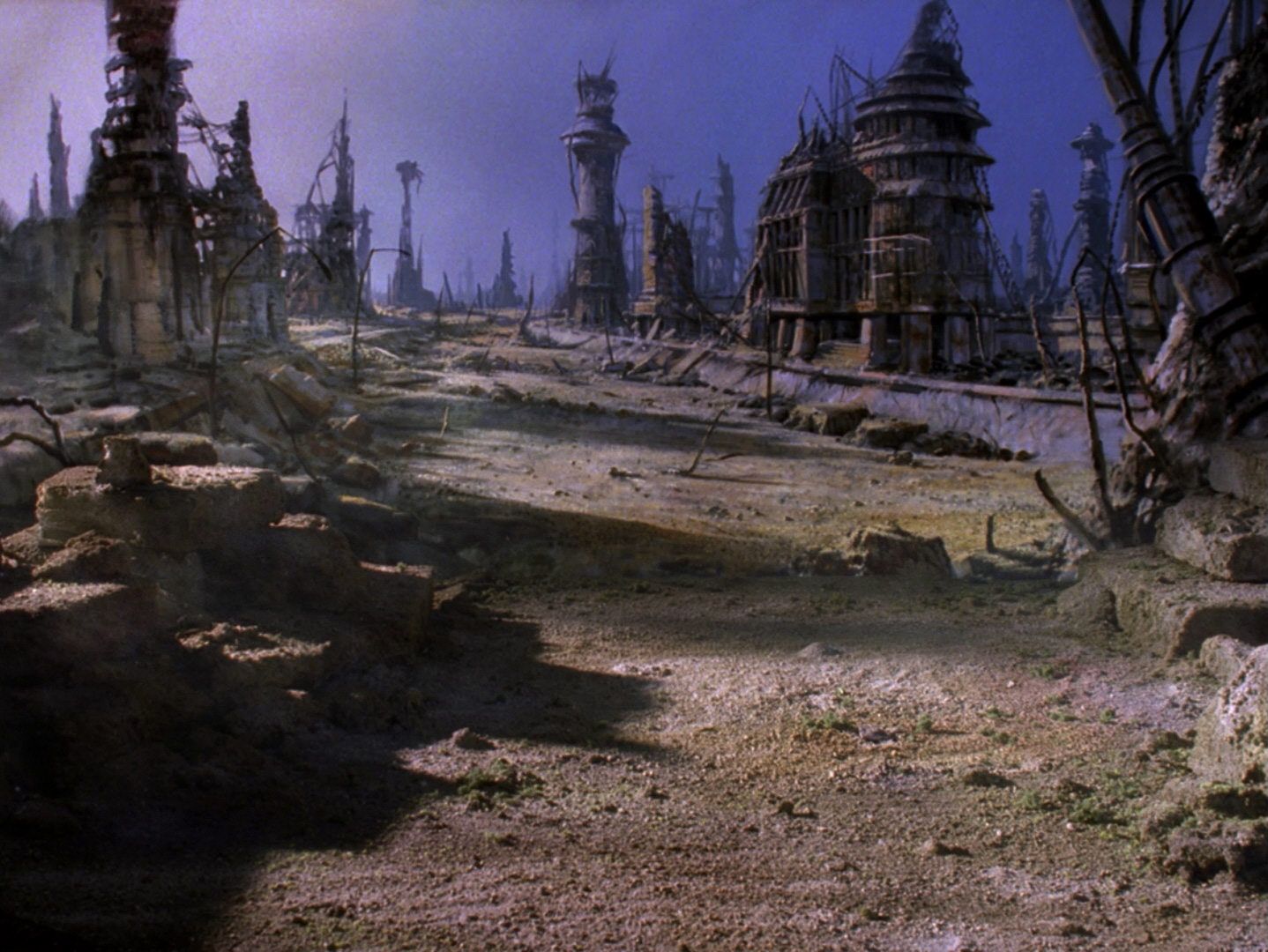
The shot was modified for the planet T'Lani III in DS9: "Armageddon Game". The color of the sky was changed, a wall was inserted into the foreground, and finally a new smaller building was added in the center of the picture. This is the one where O'Brien and Bashir seek shelter. We see this shot very briefly in VOY: "Unity" too.
TNG: Devil's Due
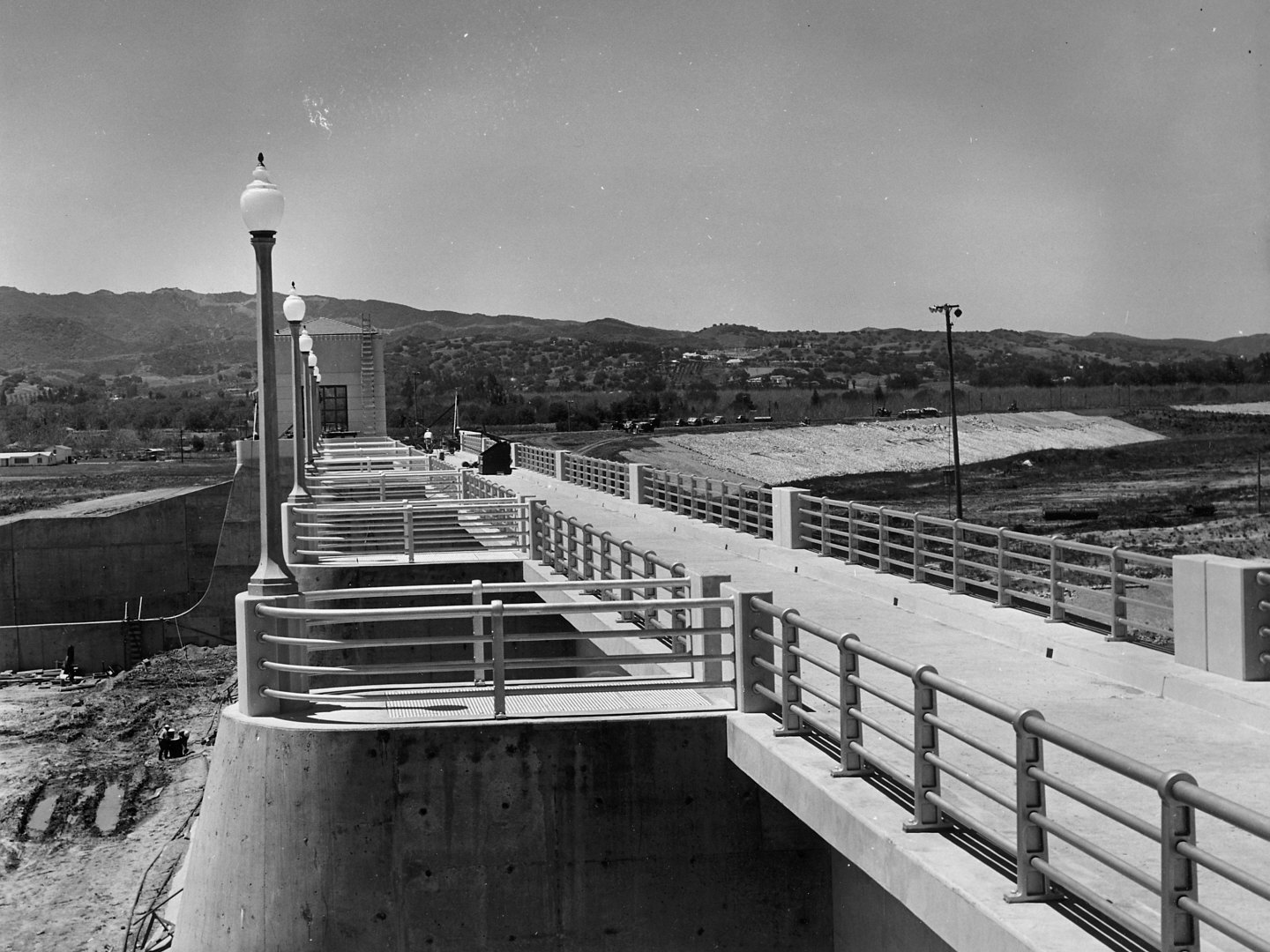
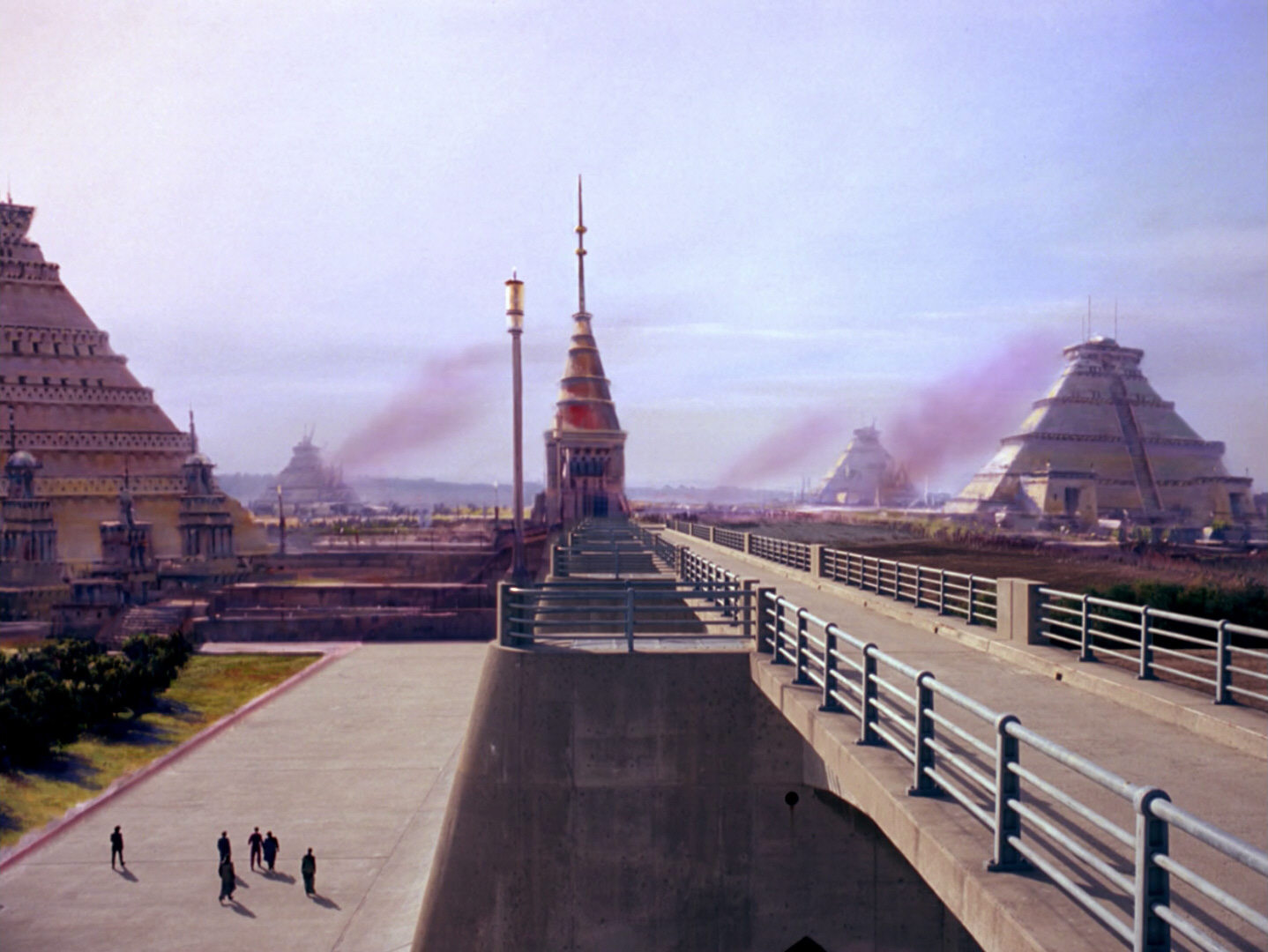
Created for the planet Ventax II. This matte painting was used together with live footage of panicking pedestrians on a bridge, which was filmed at Sepulveda Dam in San Fernando Valley. 34" x 54" masonite. Created by Syd Dutton.
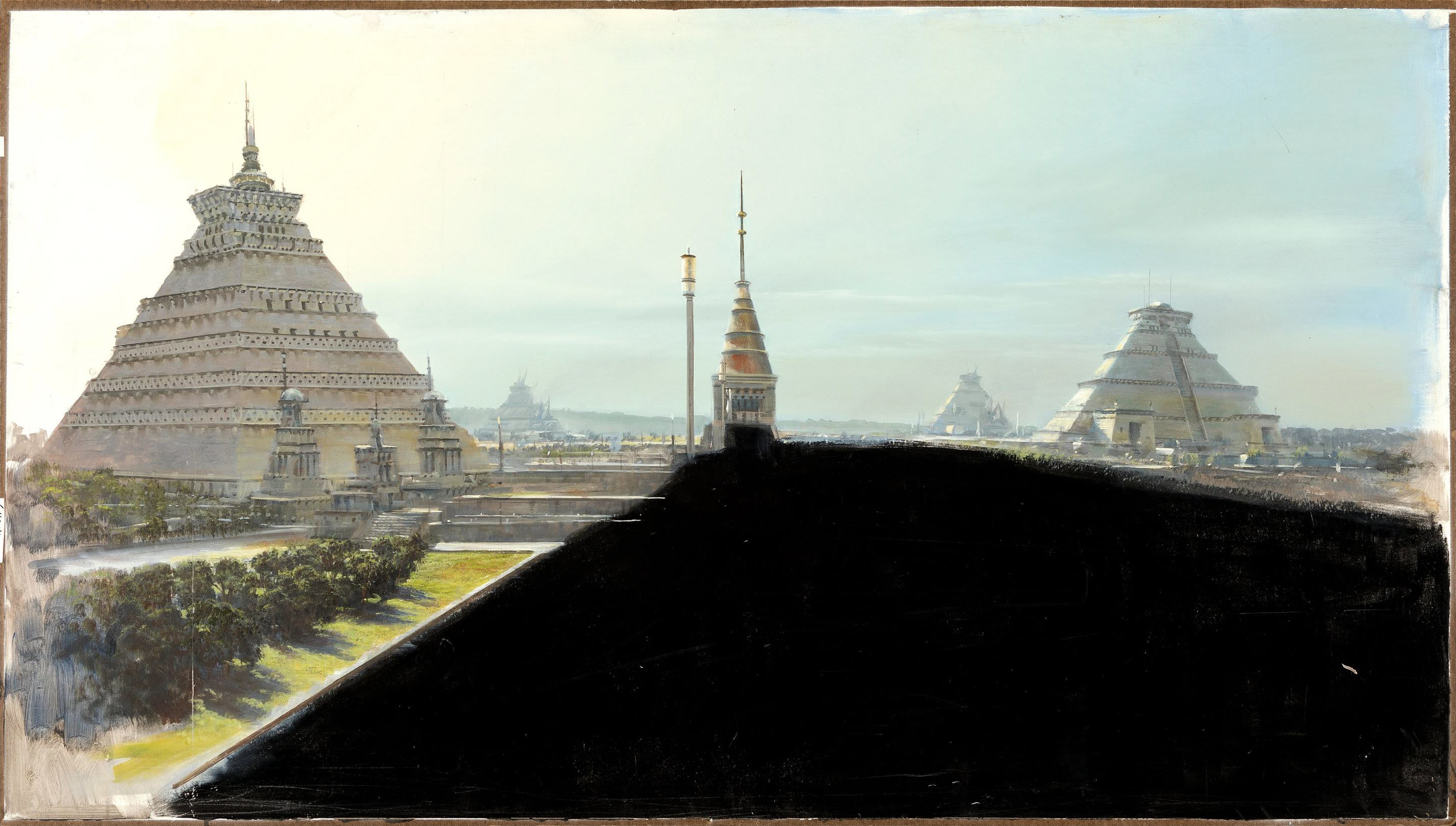
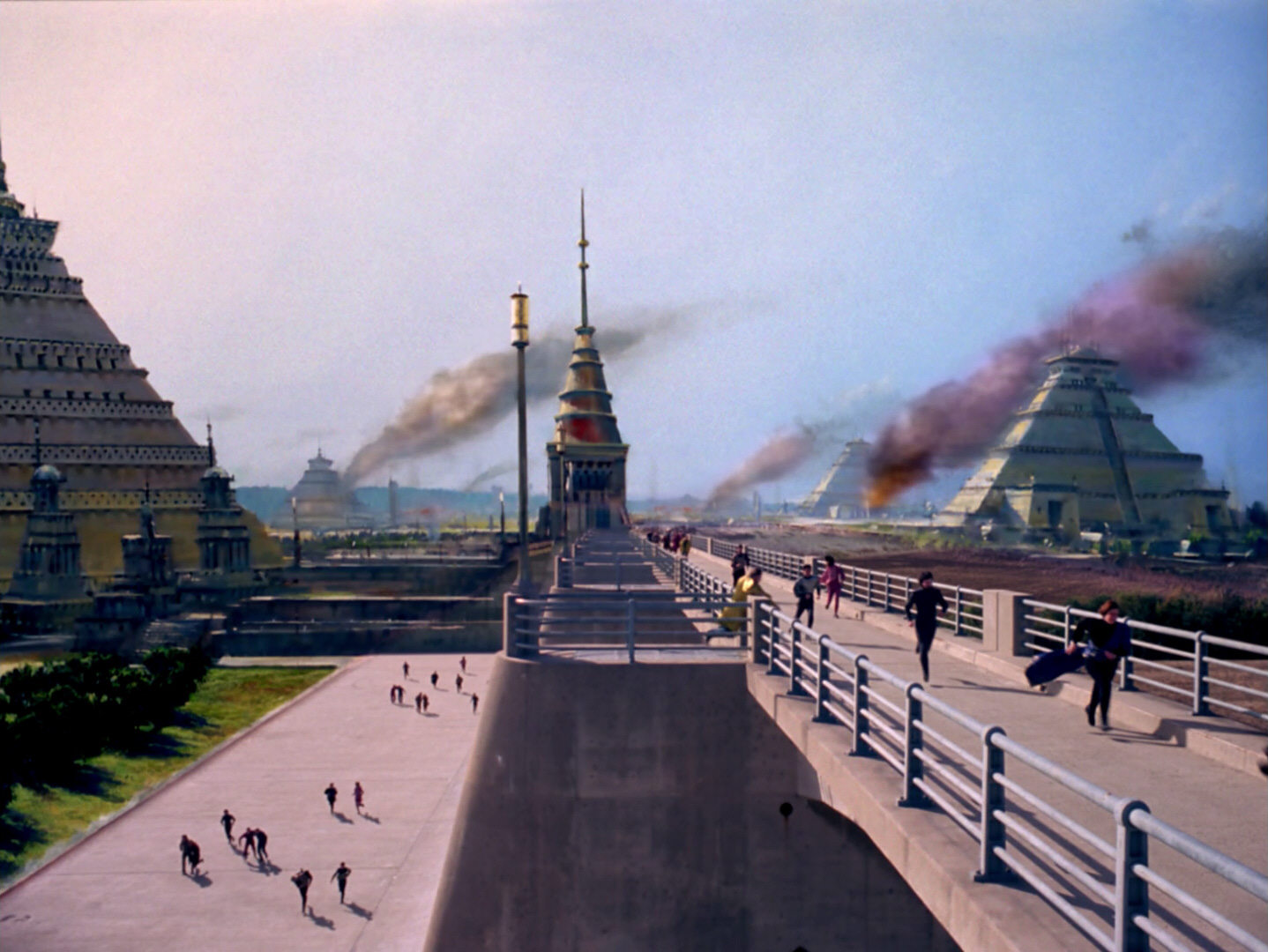
The painting appears again after the situation has calmed down, without those people.
TNG: First Contact
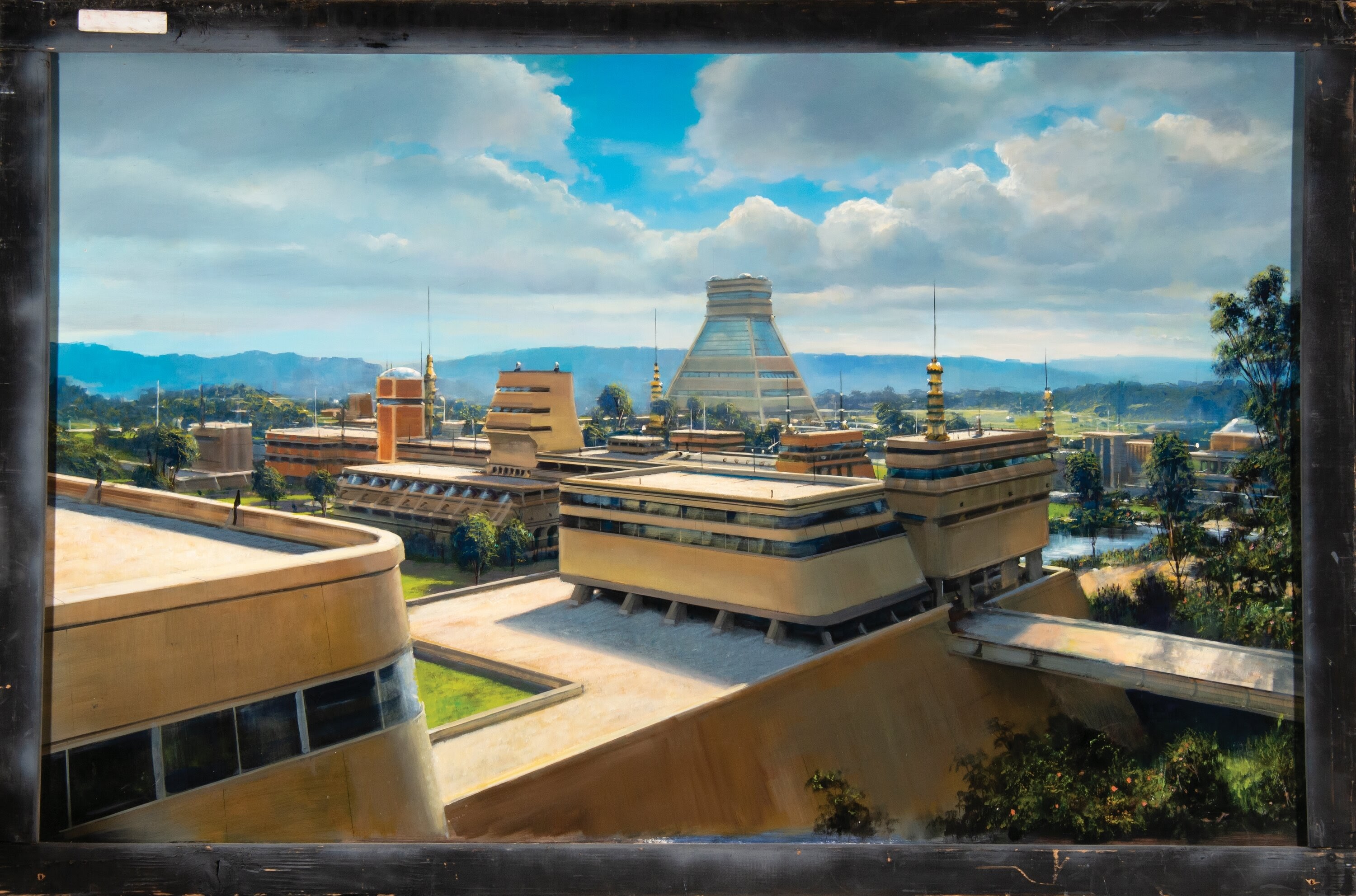
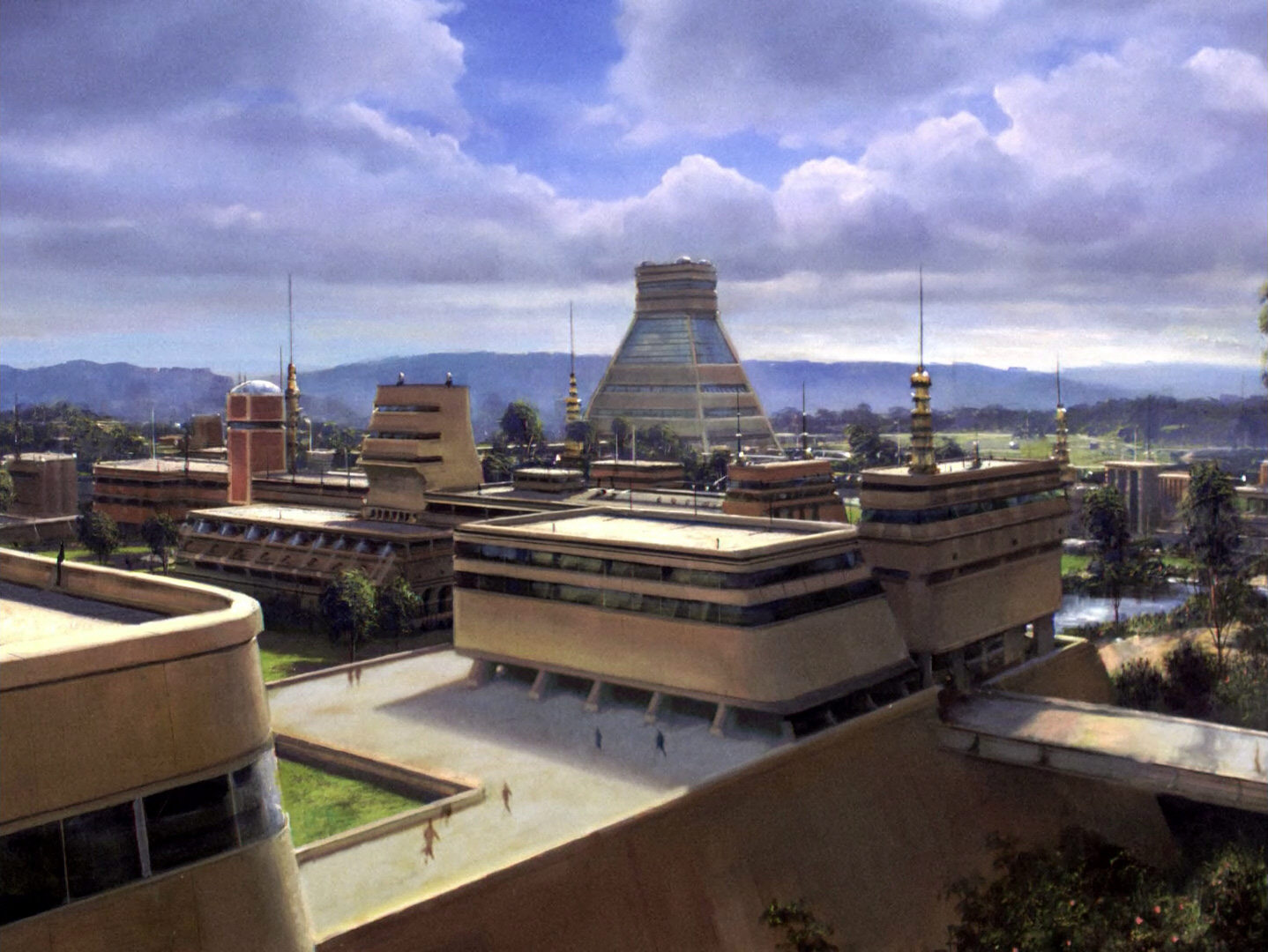
Very similar in style to the one from "Angel One", this is another cityscape that was created for Malcor III. Both are used concurrently in "First Contact". 64" x 42", masonite in pine frame. Created by Robert Stromberg.
TNG: Unification I
Romulus first appears in the double feature "Unification". Masonite in wooden frame, 77" x 43". Created by Syd Dutton.
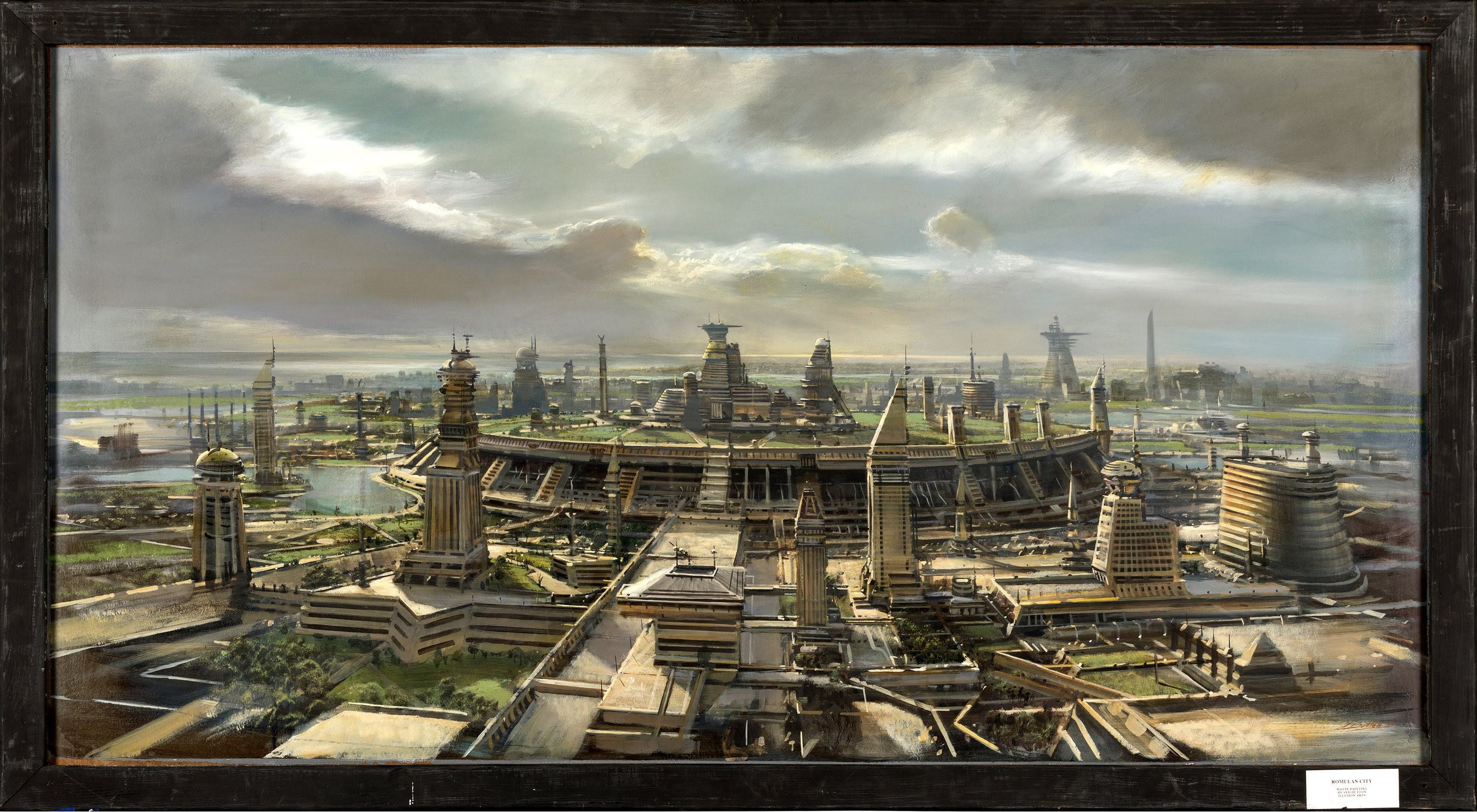
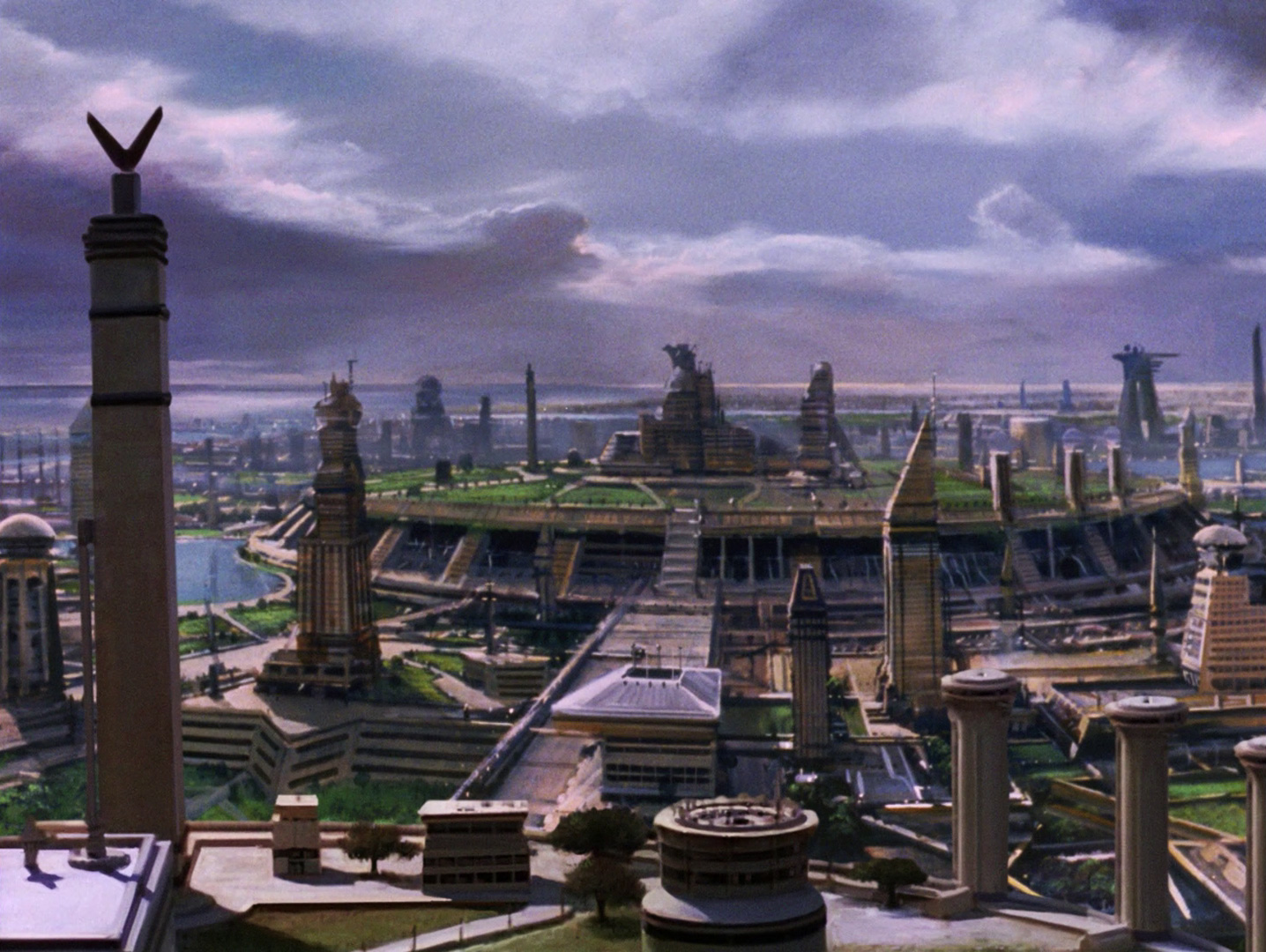
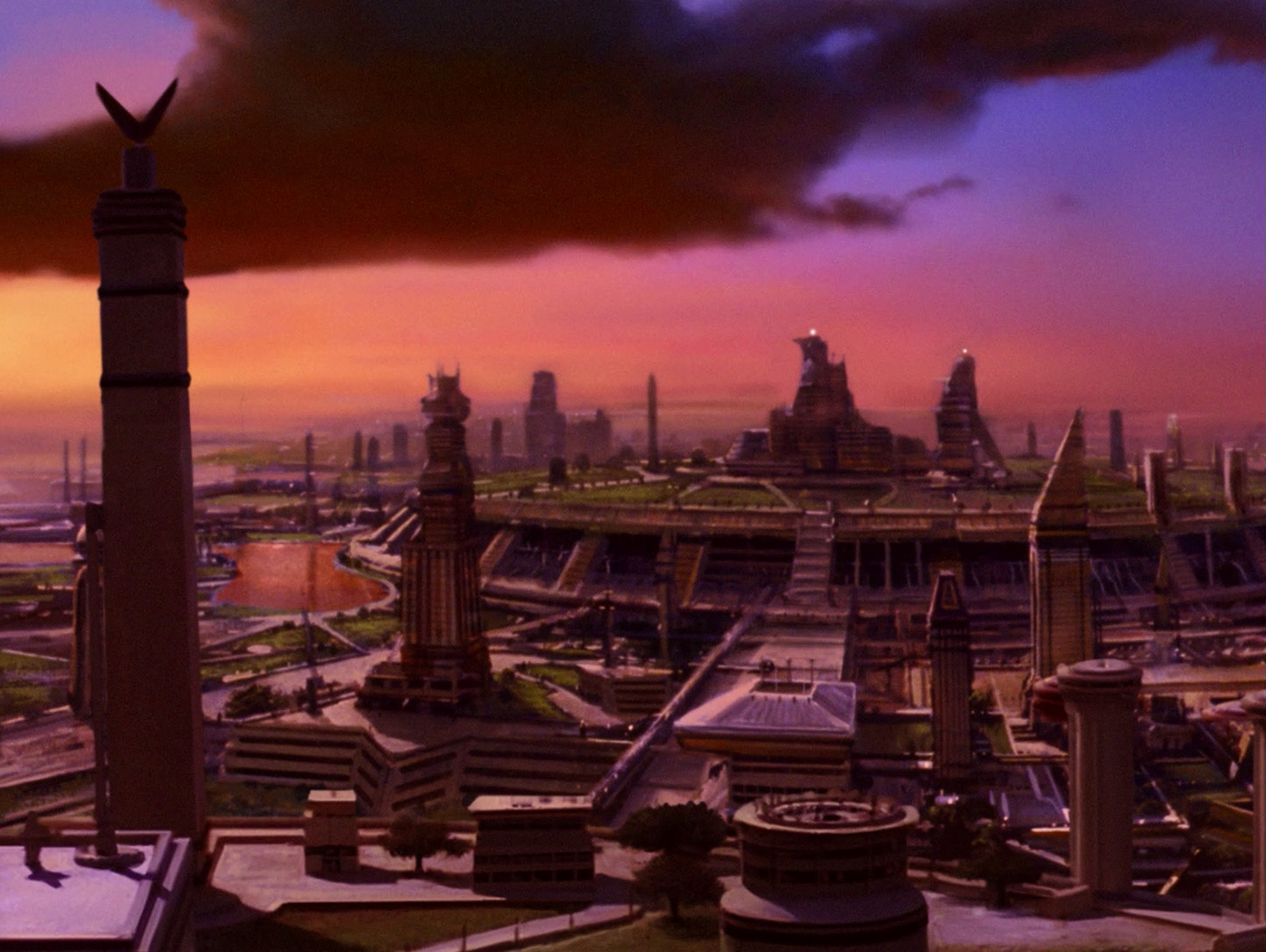
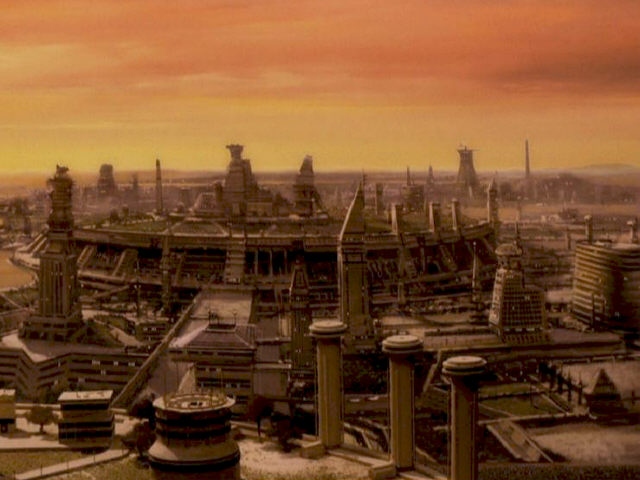
Romulus also appears at dusk. The same matte painting will remain in use on DS9, until "Star Trek Nemesis" reimagines the capital city.
TNG: The Masterpiece Society
The matte painting originally depicts the inhospitable surface of Moab IV. It was created for standalone use. Masonite, flush with pine frame, 74" x 45.5". Created by Robert Stromberg.
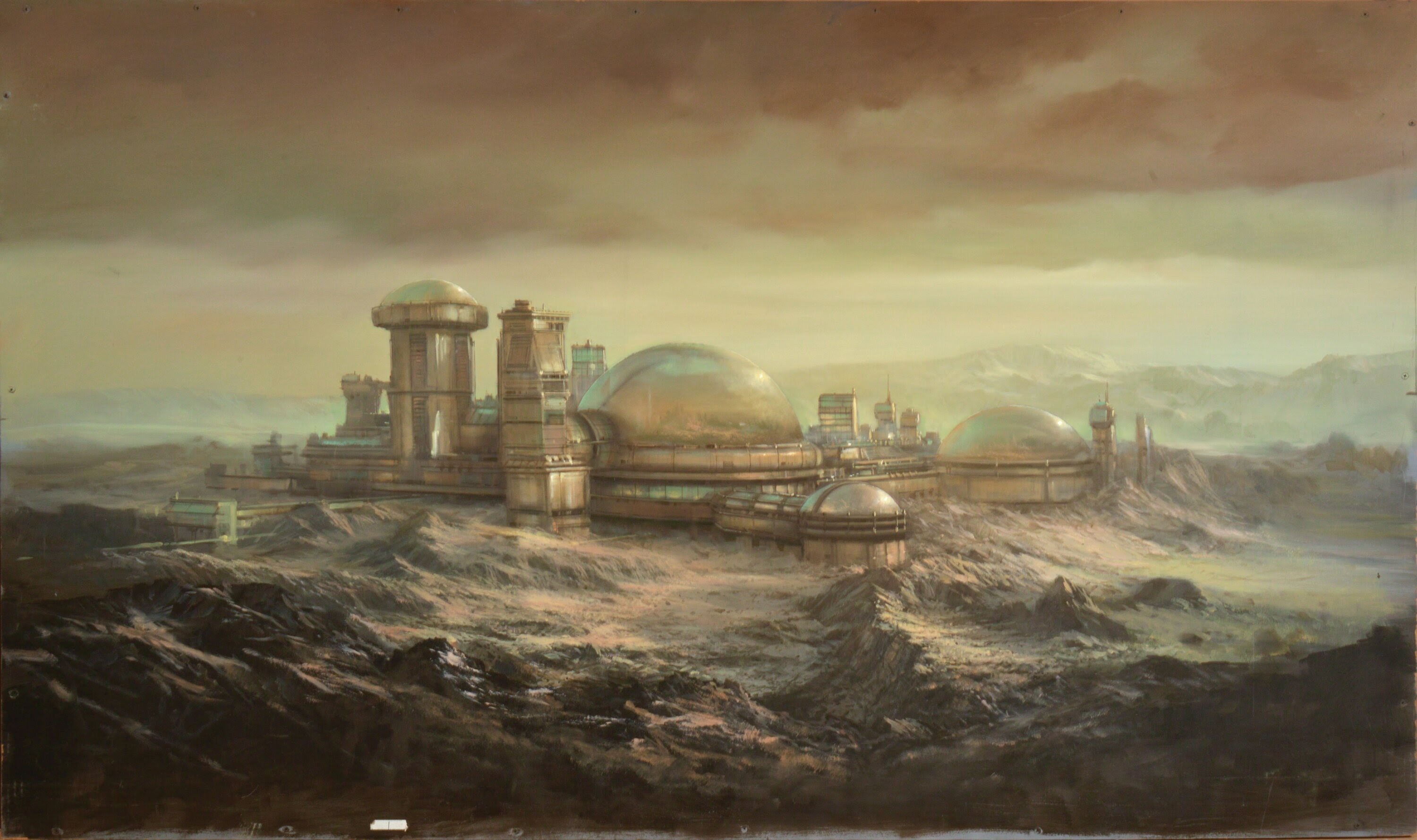
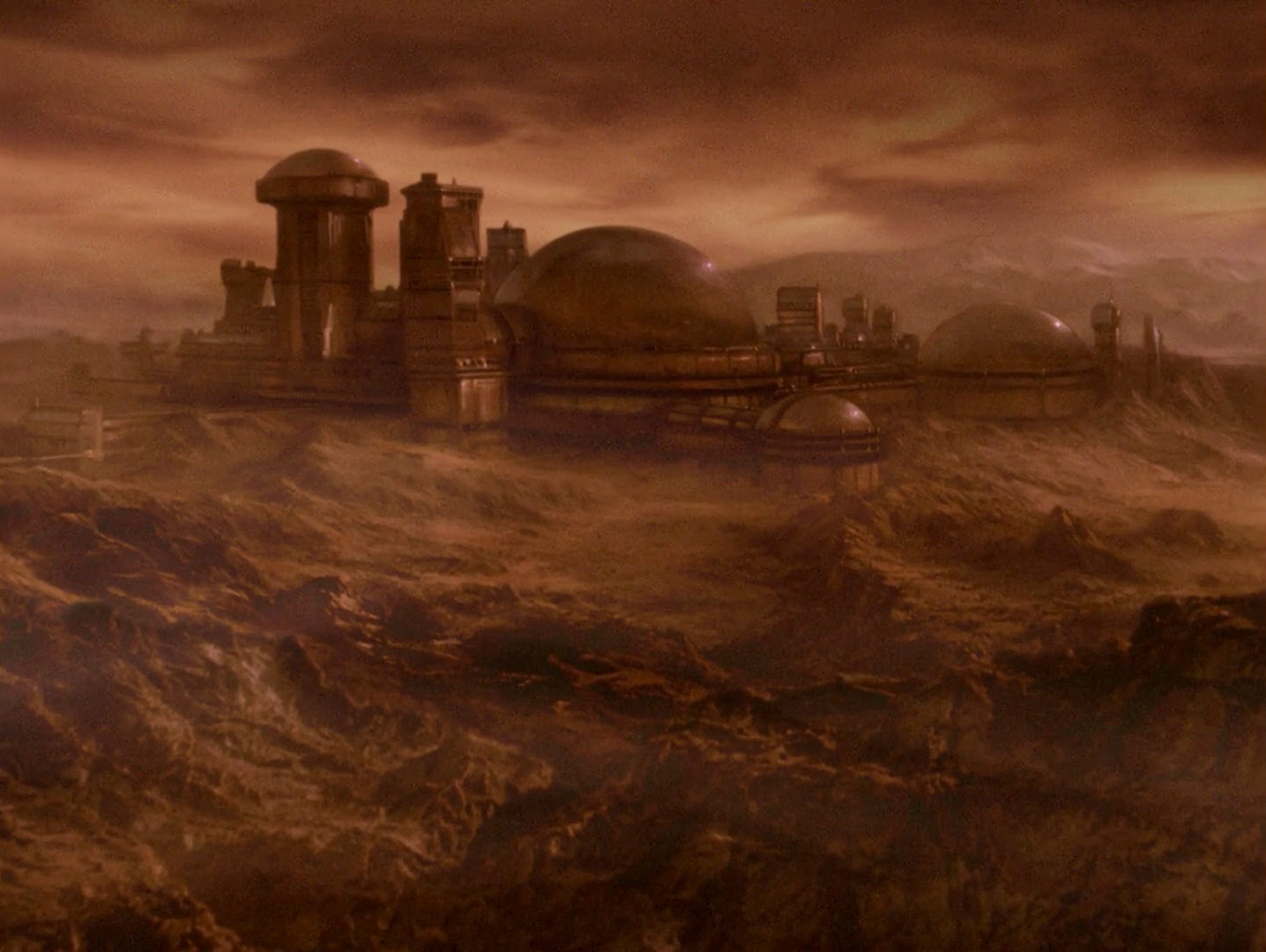
The shot of the matte used for Torman V in TNG: "Chain of Command I" is identical, still in TNG-R.
TNG: The First Duty
We can see the buildings of Starfleet Academy and the Golden Gate Bridge in the background. This was combined with live action filmed at Tillman Japanese Gardens in Van Nuys, California. Masonite, 68.5" x 38.75". Created by Robert Stromberg.
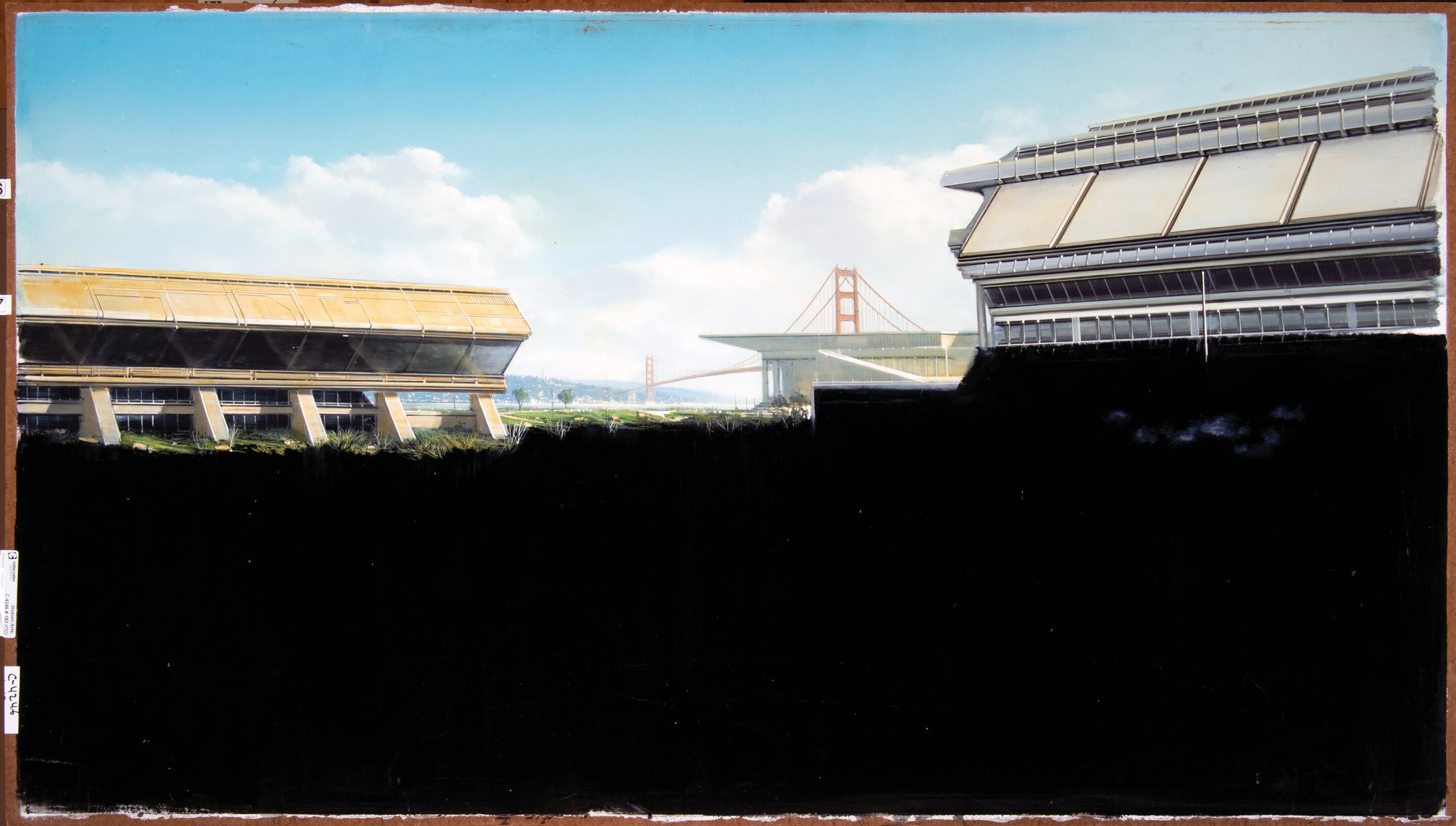
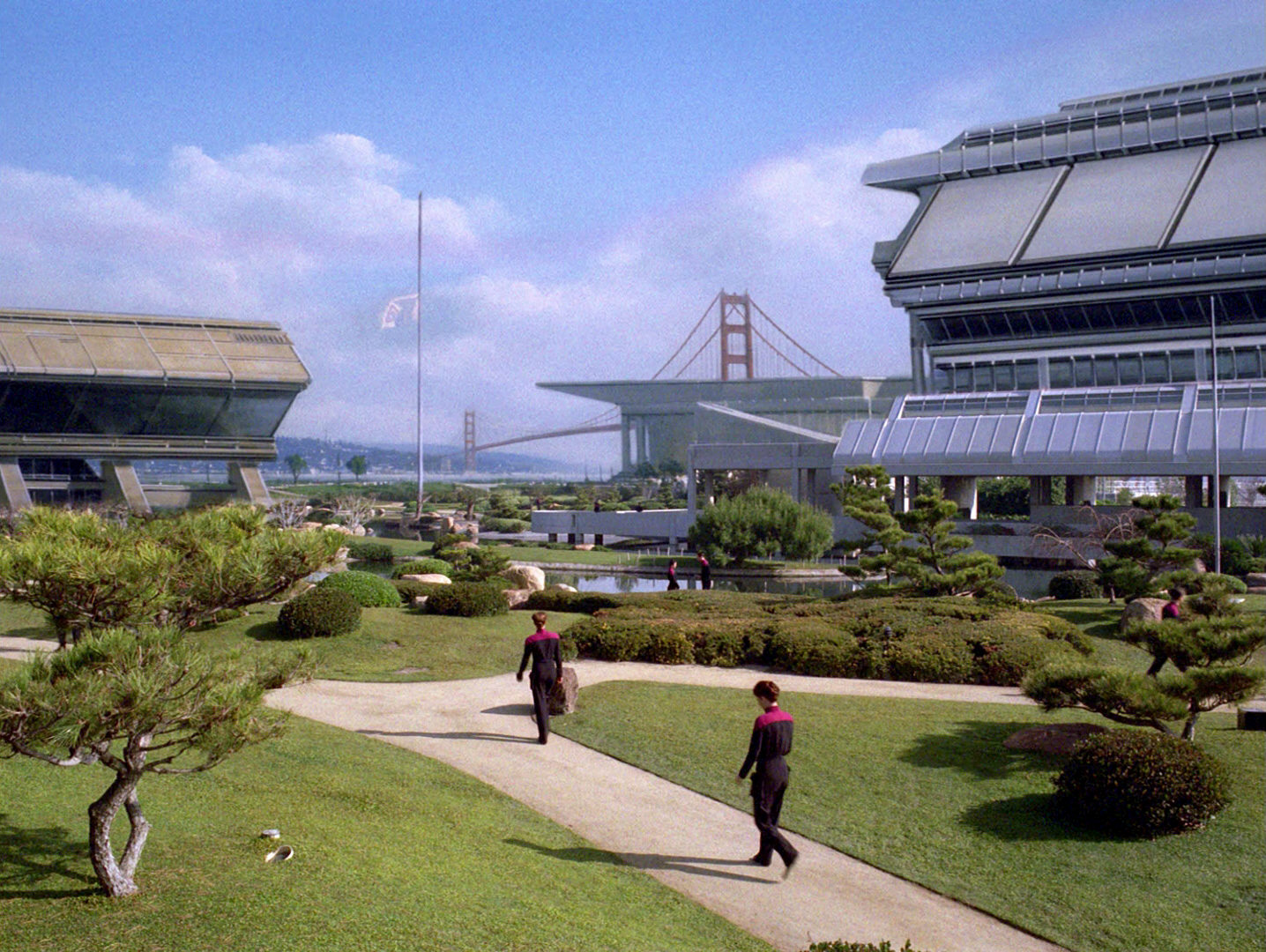
The shot used in TNG: "Time's Arrow I" is identical, except that the flag is not at half-staff any more.
DS9 & Voyager
DS9 and Voyager increasingly used CGI instead of hand paintings, but there are some great examples from these series as well. Most of DS9's matte paintings were created by Robert Stromberg. In later DS9 episodes, CGI helped to add more variation to existing matte paintings.
DS9: Emissary
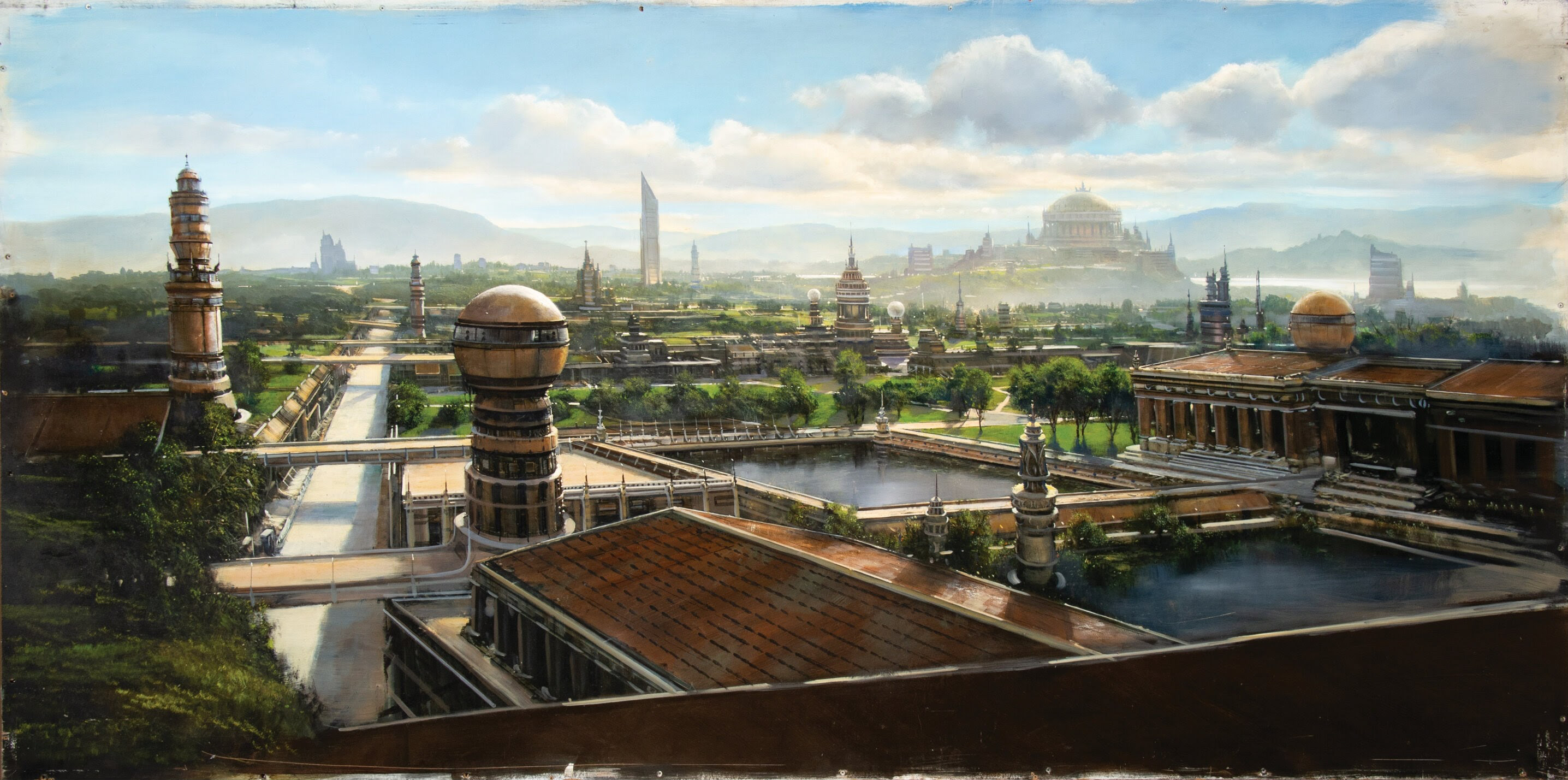
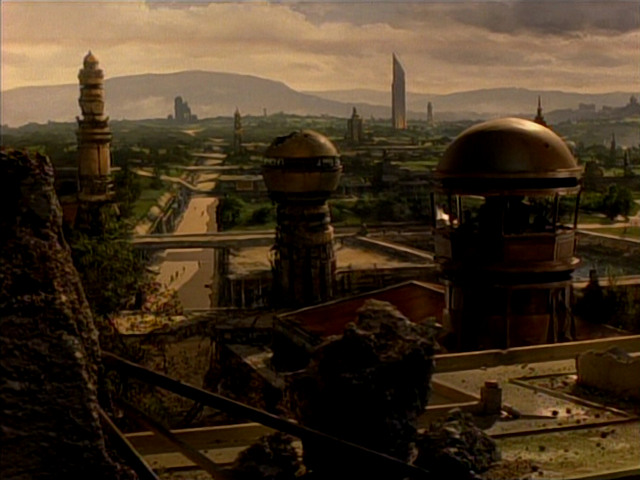
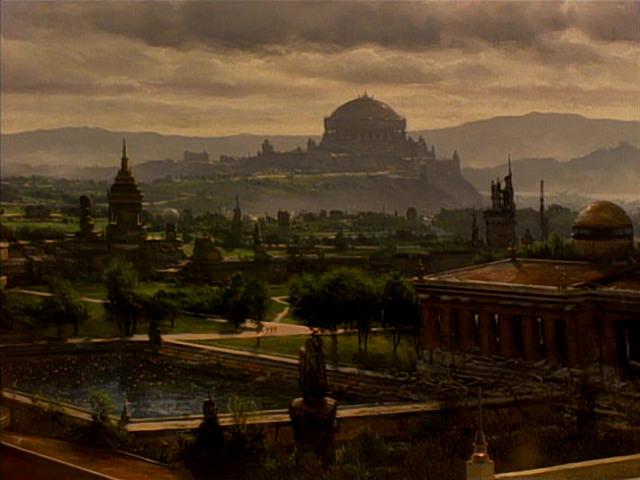
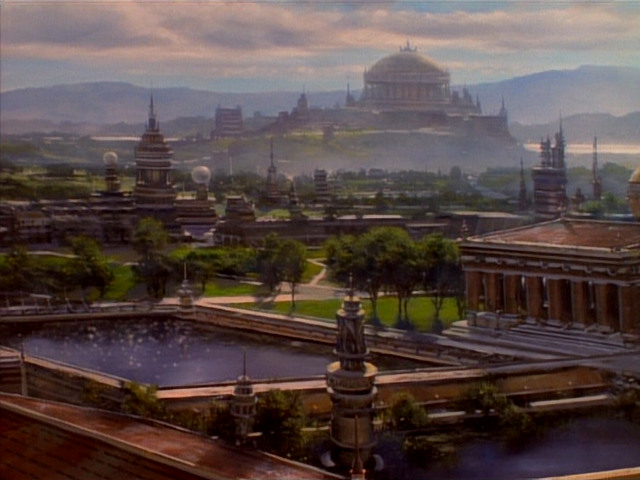
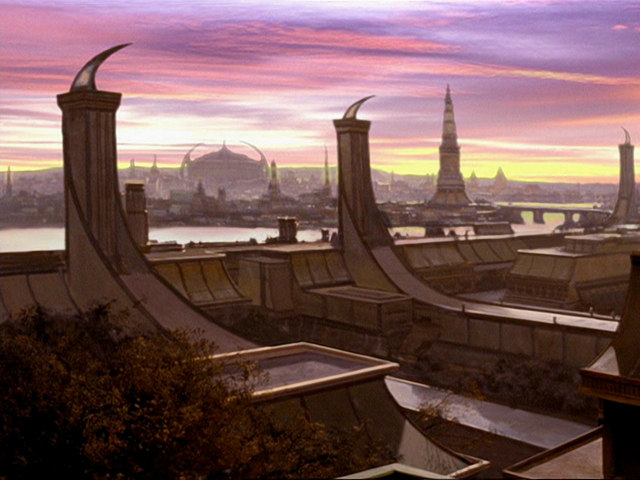
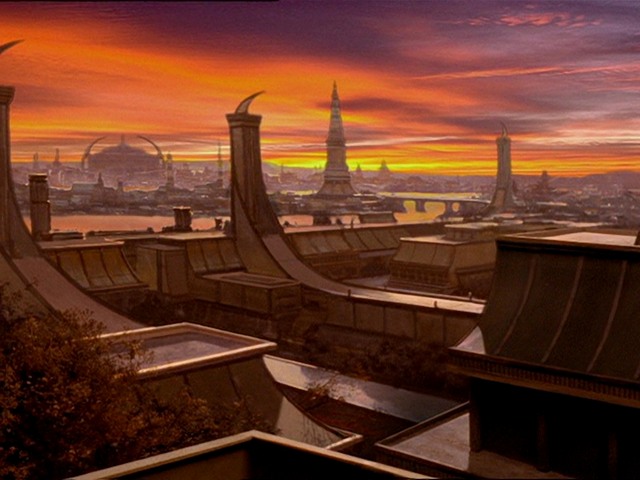
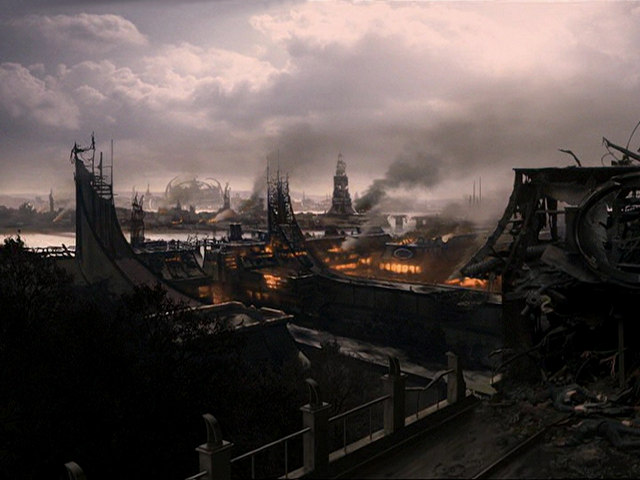
This is the view of the Bajoran capital that was created as soon as for the pilot episode. A splitting technique was used to simulate cloud movement, and a flying bird was inserted in post production. An extra tower and a rooftop as foreground elements give a sense of depth, as the camera pans and zooms. The first time we see the painting in "Emissary", there is still damage to the buildings, and pieces of debris are lying around. 96" x 49", masonite flush with pine frame. Created by Robert Stromberg.
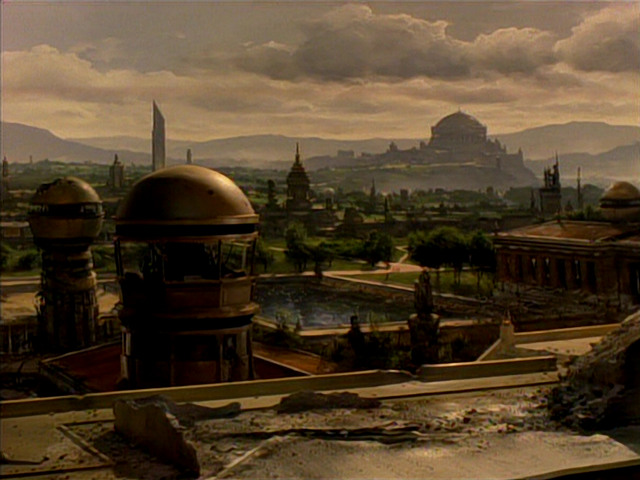
Bajor has been tidied up in later episodes, as the comparison between "Emissary" and "In the Hands of the Prophets" shows.
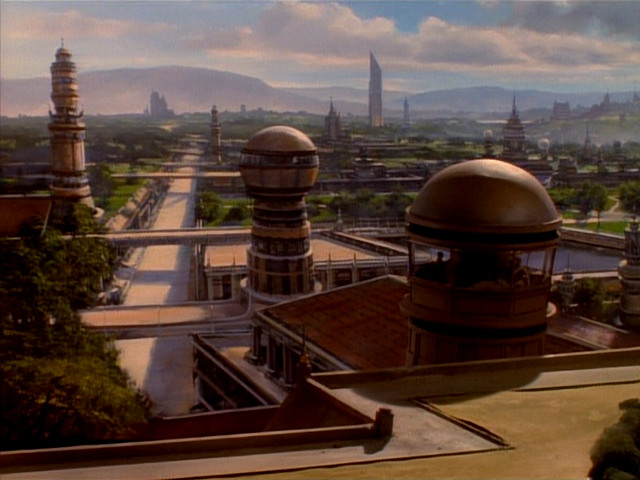
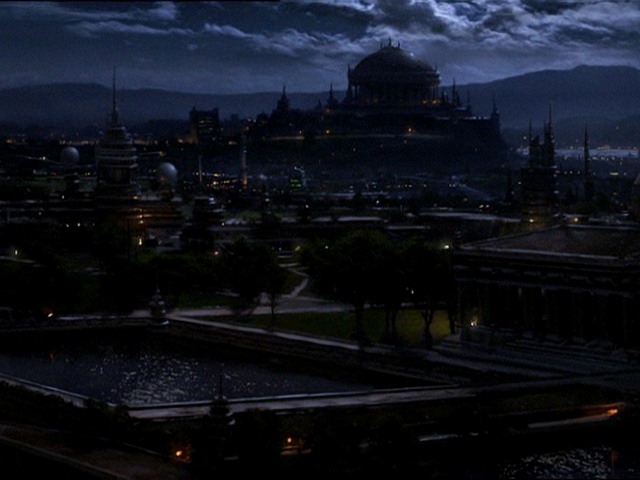
A night shot of Bajor with extra lighting exists as well.
DS9: Cardassians
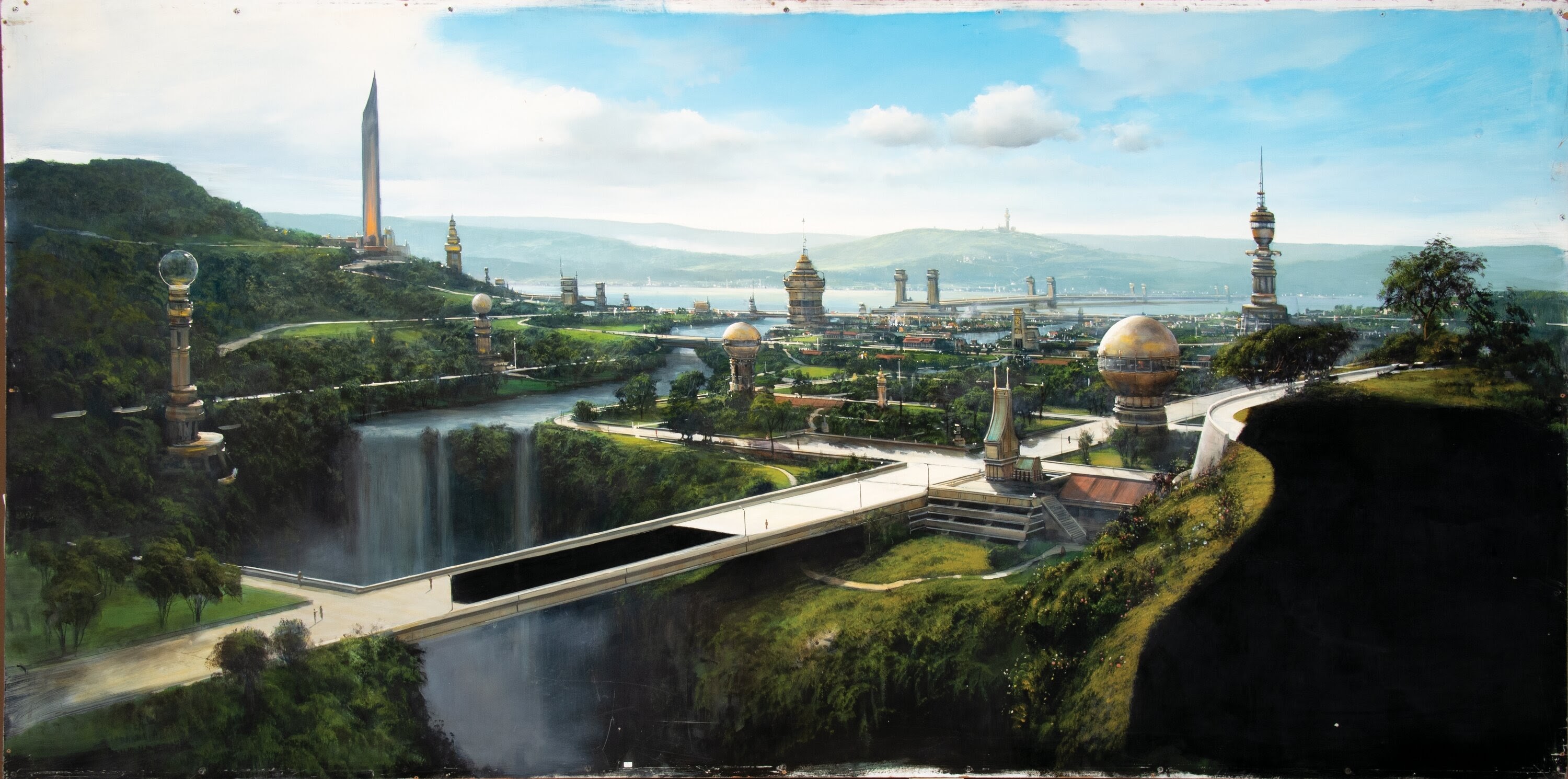
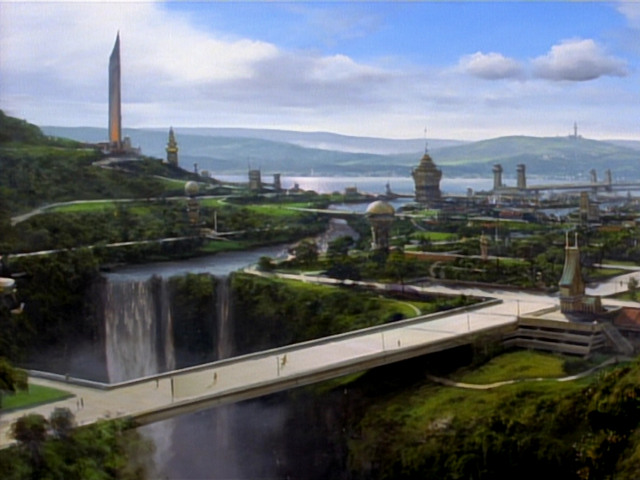
This second view of Bajoran capital first appeared in the season 2 episode "Cardassians". It features a cutout to insert actors walking across the bridge. The waterfall was apparently animated in post production. 96" x 48.5", masonite flush with pine frame. Created by Robert Stromberg.
DS9: Tribunal
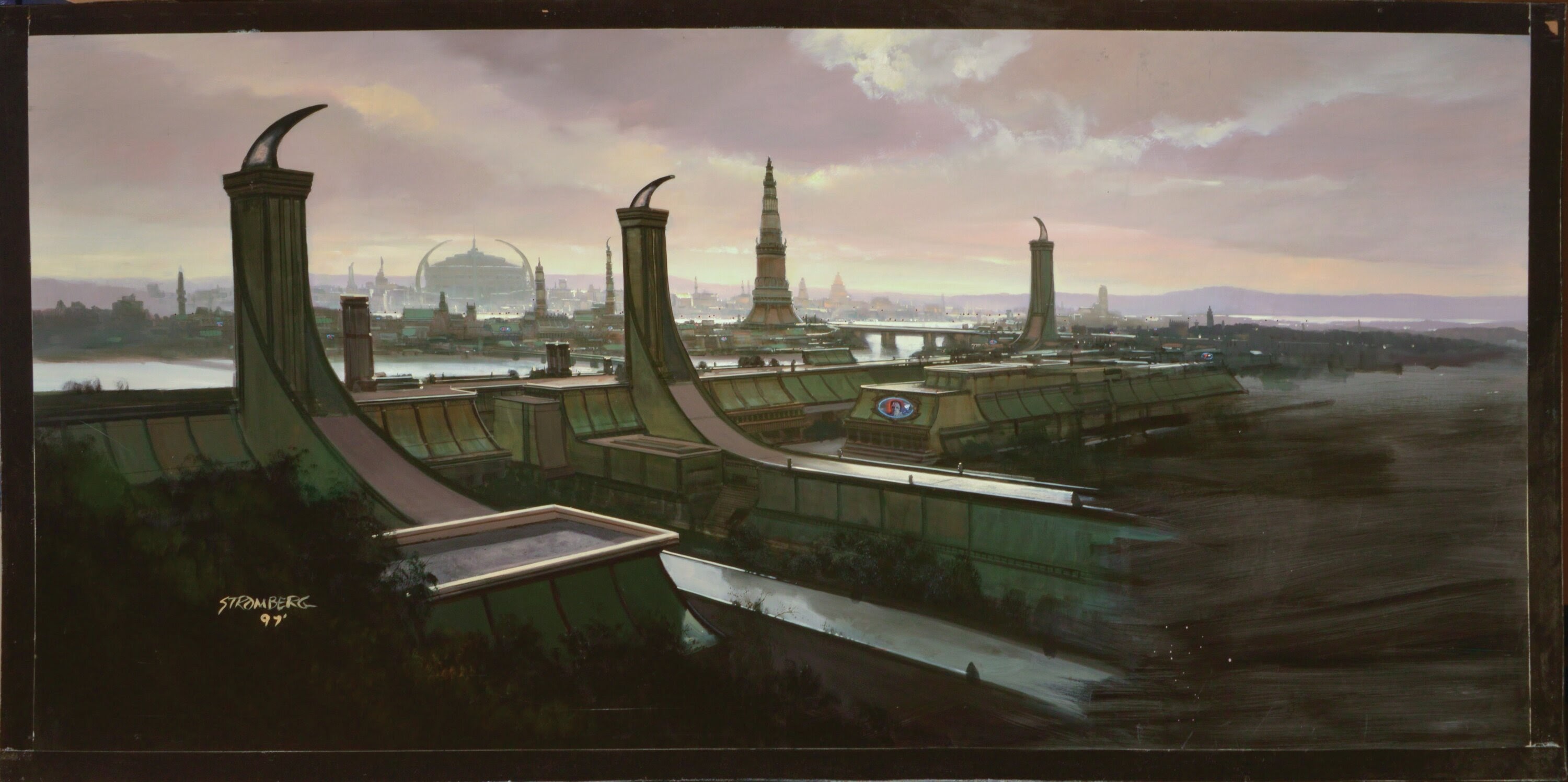
Cardassia Prime can be seen for the first time in this season 2 episode. The matte painting seems unfinished on the lower right, which is the area where foreground elements were inserted in post production, most notably the "Big Brother"-like viewscreen. 96" x 47.25", masonite in pine frame, with holes for backlighting. Created by Robert Stromberg.
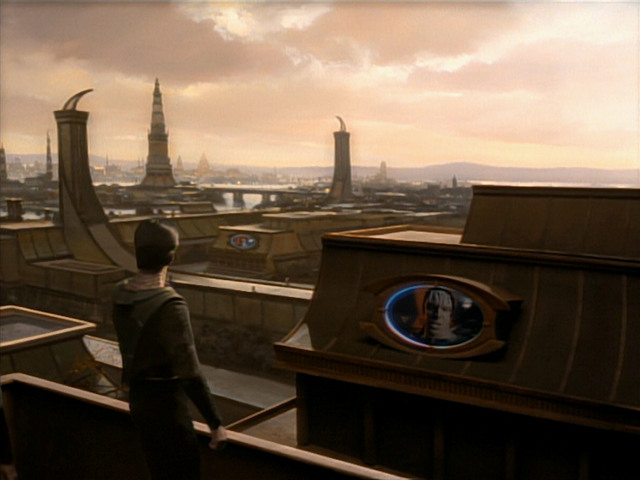
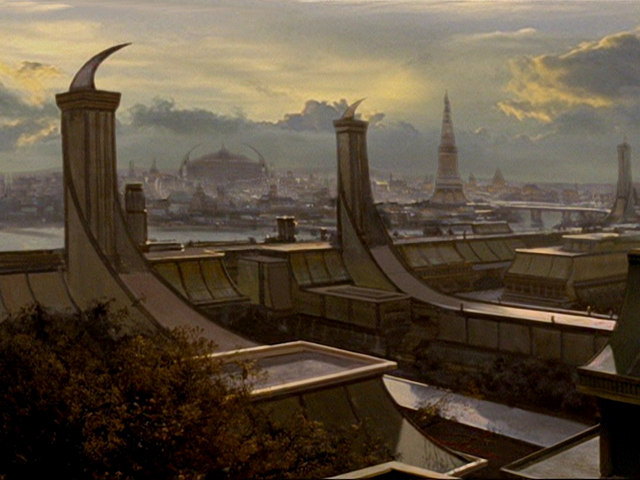
The matte painting of Cardassia appears in several color variations throughout the series, without and with the large video screen, and with different screen insets. Also, the clouds are often modified in later episodes. One particular alteration was done to show the destroyed city after the genocide committed by the Jem'Hadar in "What You Leave Behind". The shot also features rising smoke and must have been created digitally.
DS9: Equilibrium
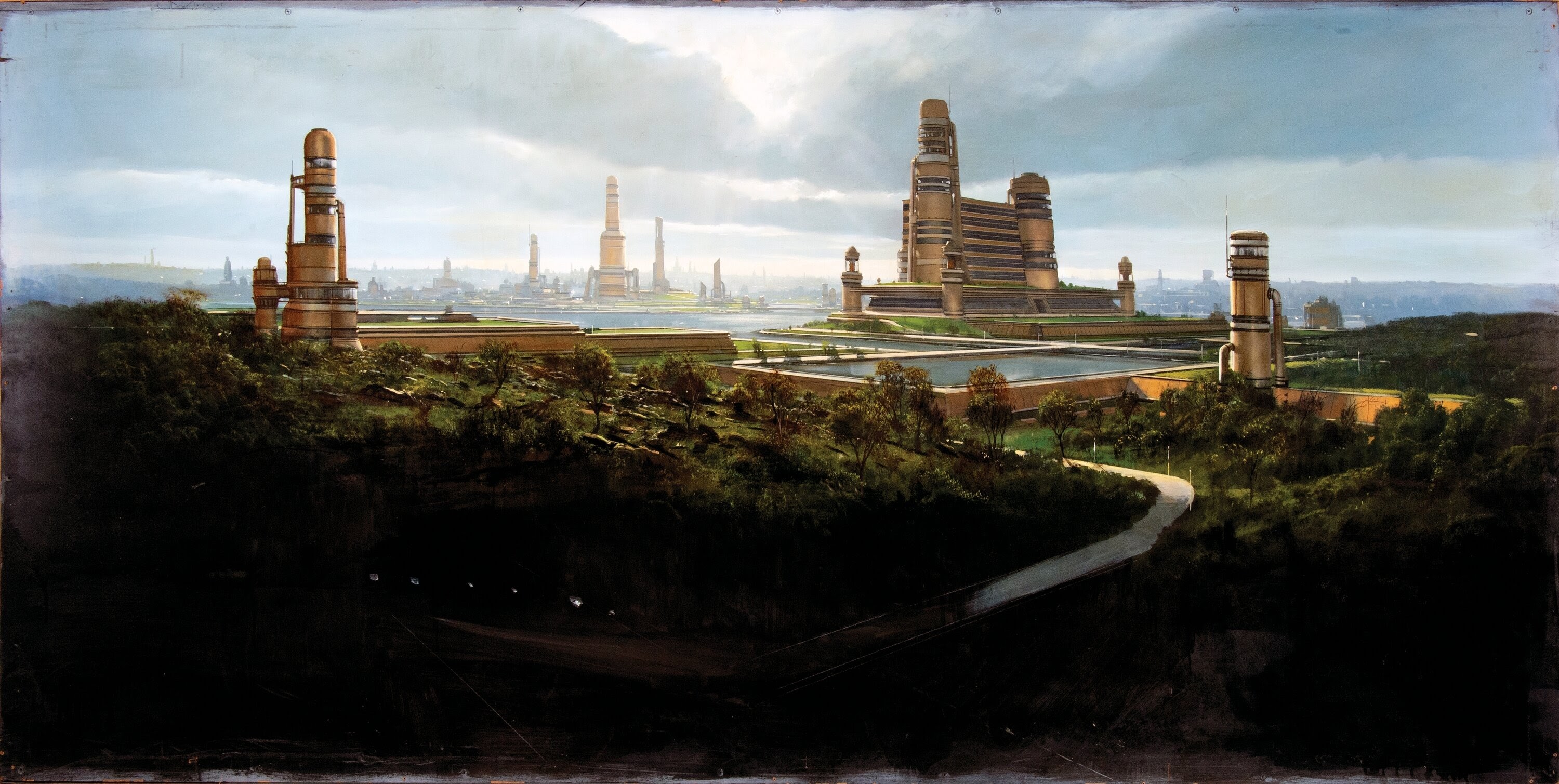
The surface of Trill shows up in DS9: "Equilibrium". Vegetation was inserted into the foreground for a sense of depth as the camera pans. 96" x 48", masonite in pine frame. Created by Robert Stromberg.
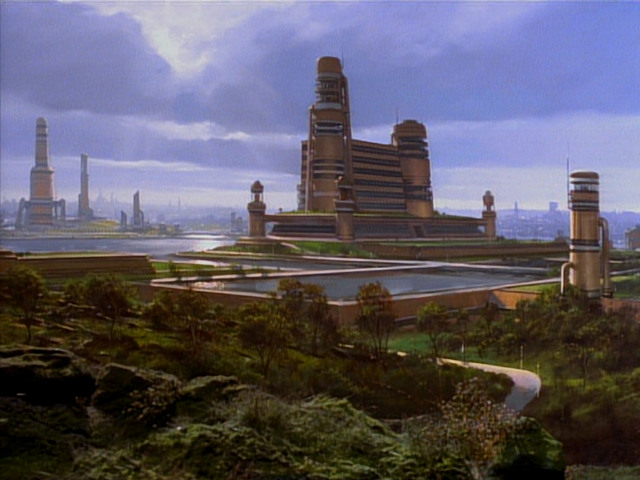
DS9: Family Business
This matte painting shows the surface of Ferenginar. Live-action vegetation was inserted into the foreground. Masonite, 96" x 48". Created by Syd Dutton.
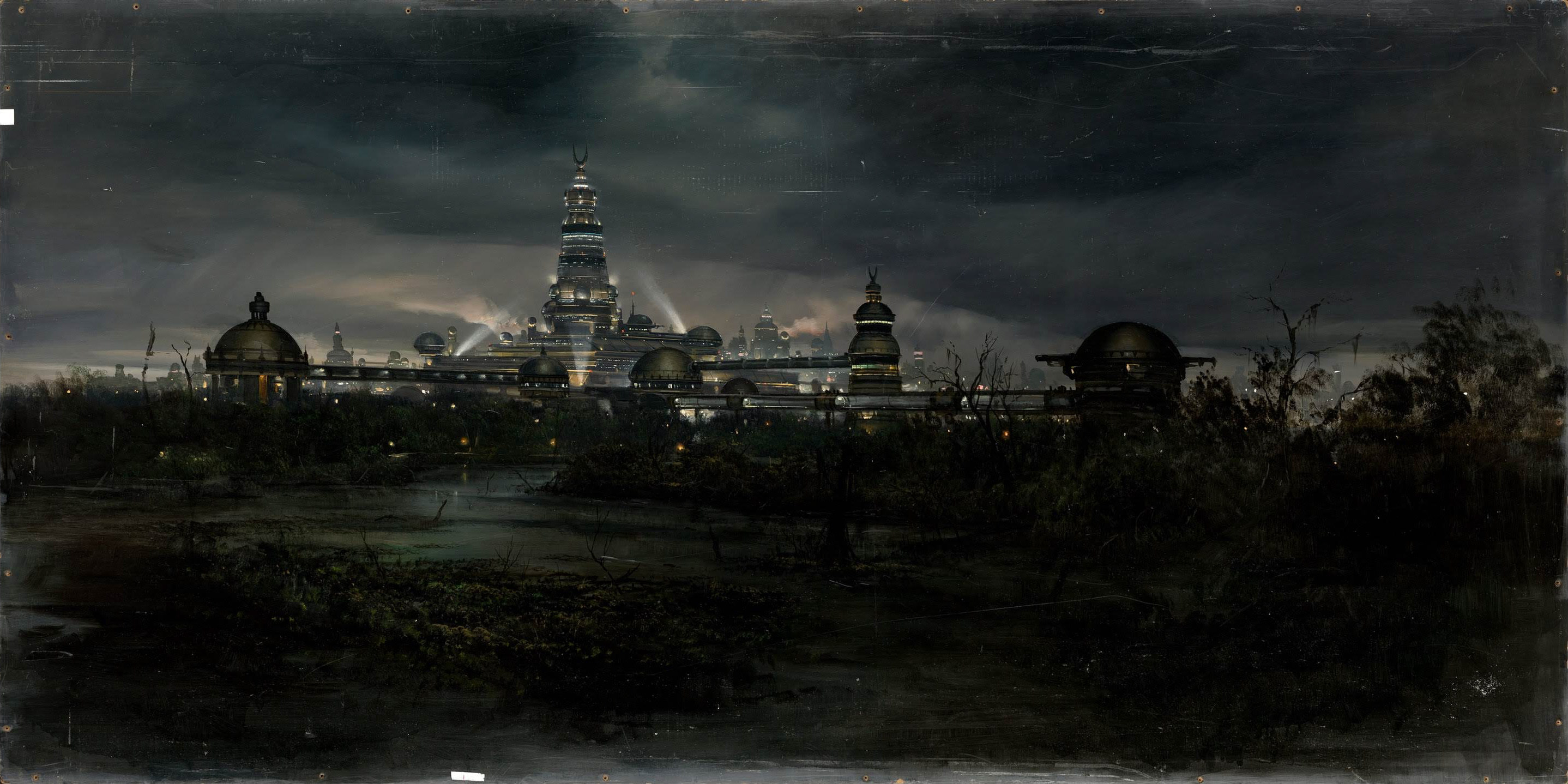
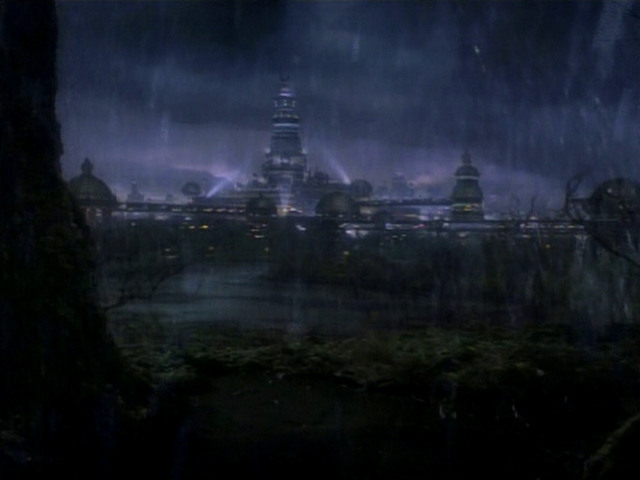
DS9: The Quickening
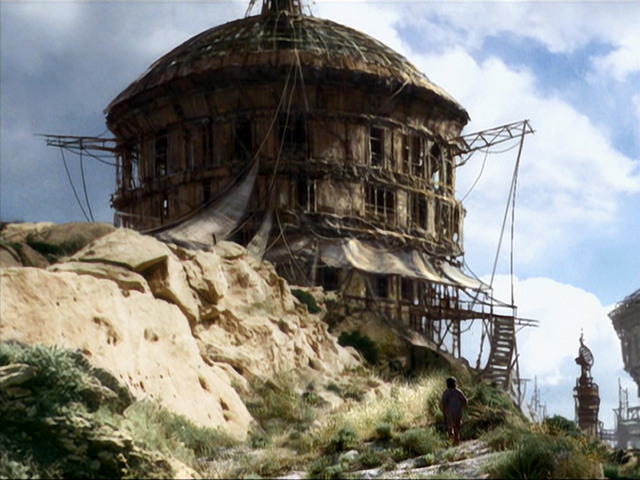
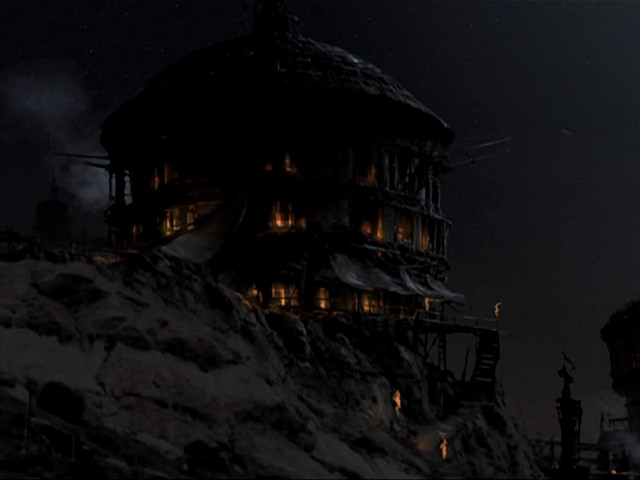
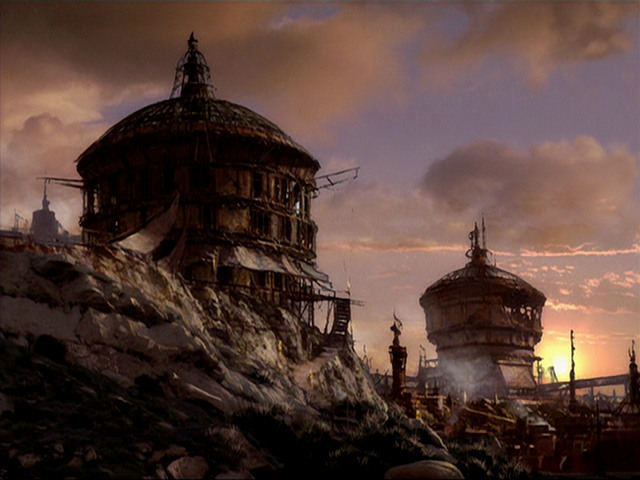
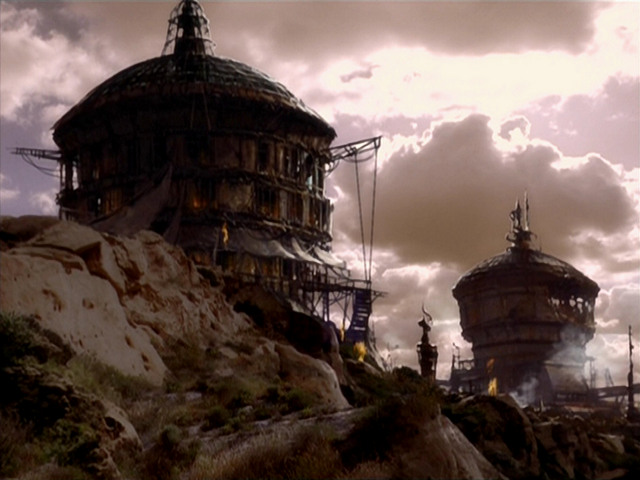
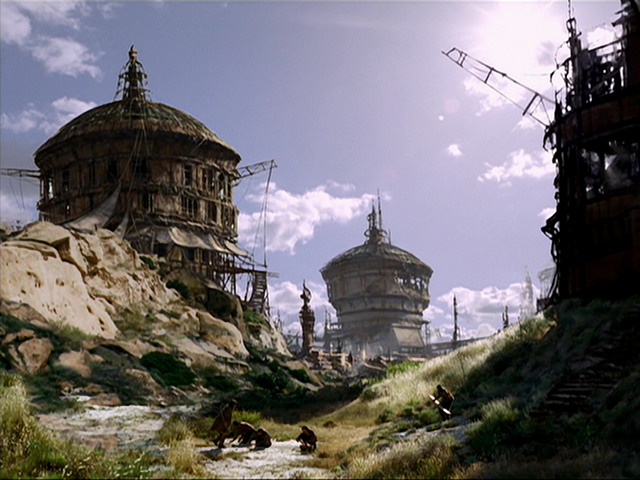
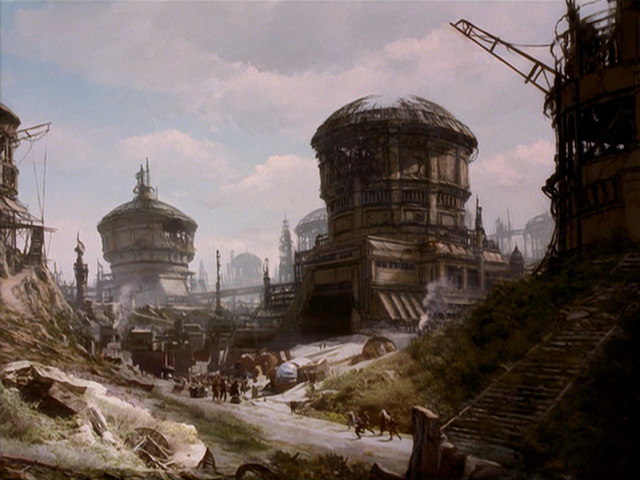
This matte painting shows the surface of the Teplan homeworld. The left cutout is where Julian and Jadzia beam down, the right one shows several extras. 120" x 72", masonite in pine frame, with a transparent glass area of overall 61" x 15". Created by Illusion Arts.
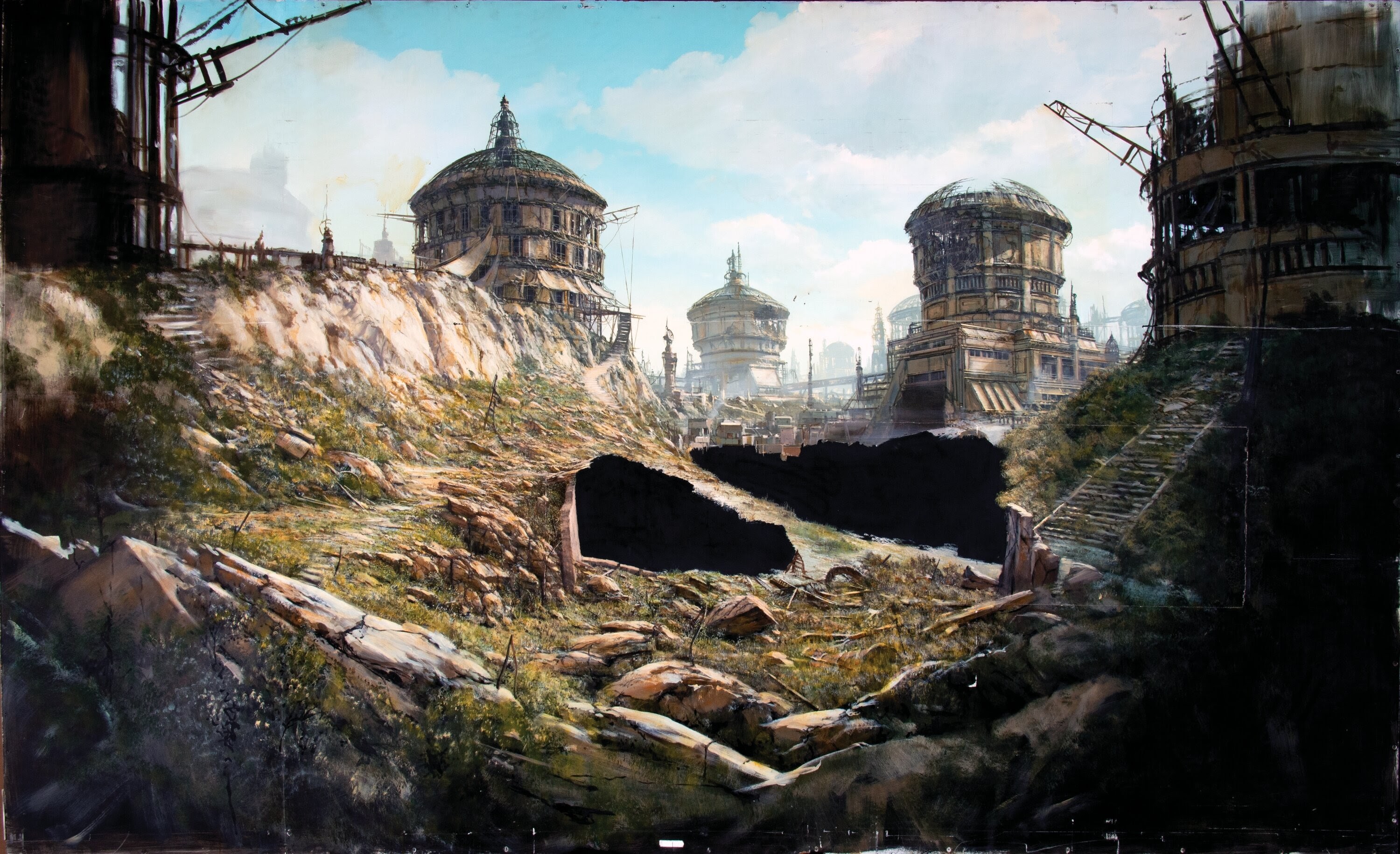
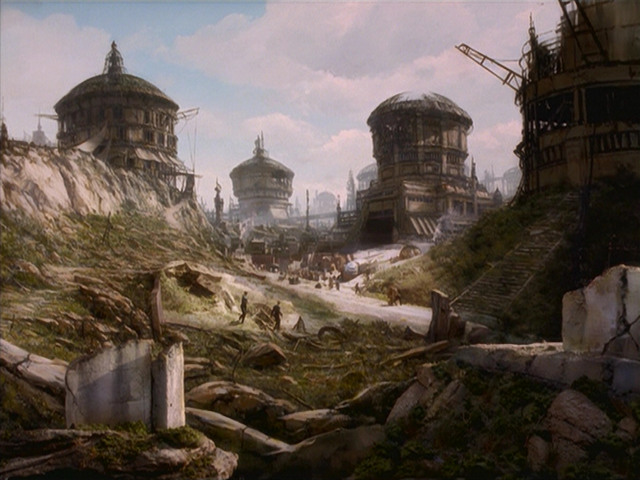
We can see the Teplan homeworld under different lighting conditions. A quick-motion sunrise shot shows the portion above the cutouts and has the sun as well as torches as extra elements. A few shots were filmed with a larger live-action area in the foreground that includes real rocks, using a still smaller portion of the matte painting.
VOY: Caretaker
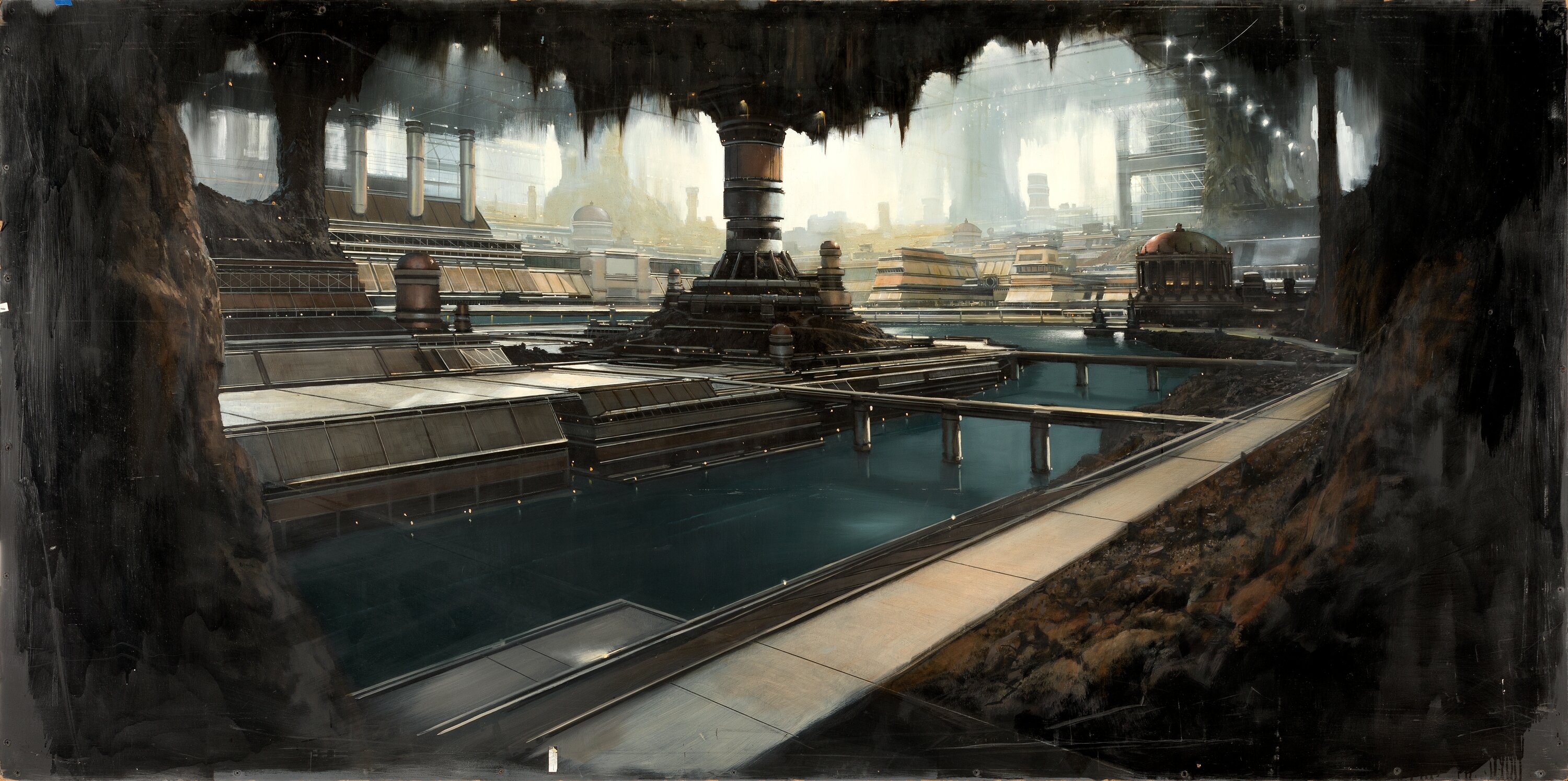
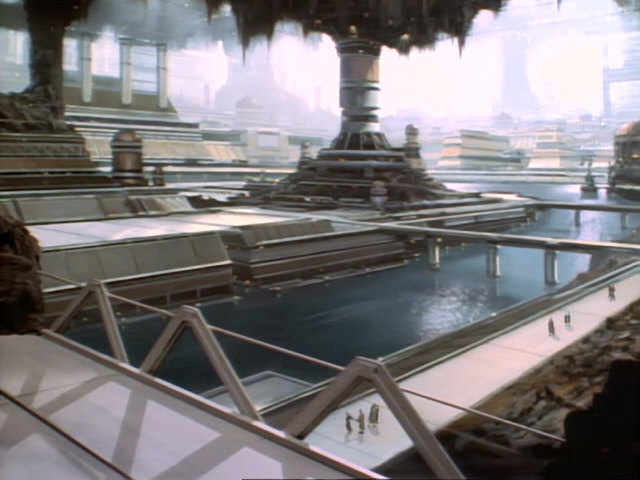
The Ocampa underground city was created for the Voyager pilot episode. It appears with foreground elements that simulate depth. 97" x 48", masonite with holes for lighting. Created by Syd Dutton.
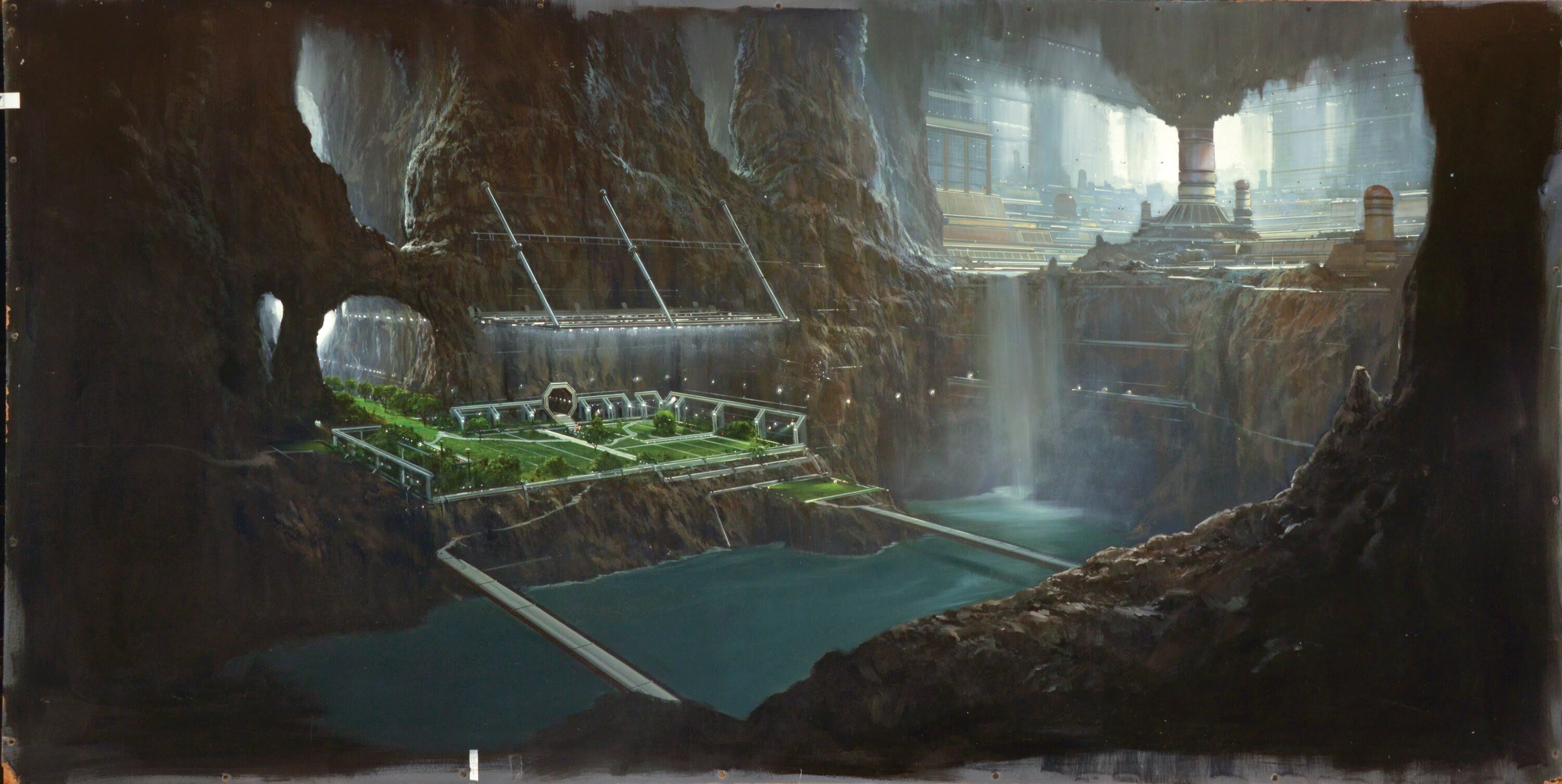
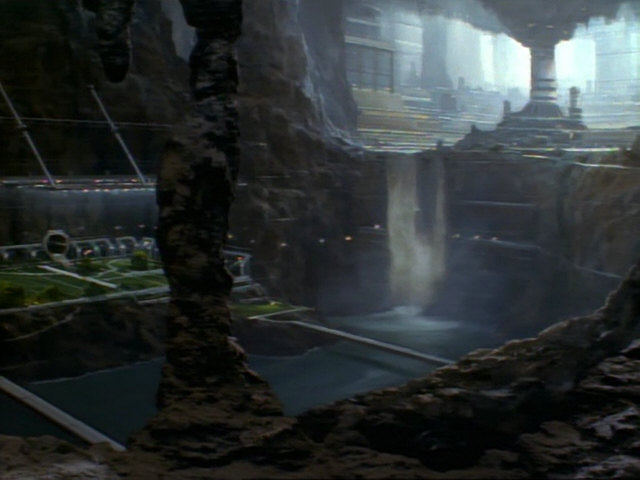
There is a second matte painting with similar structures and also a similar perspective that shows a different, not so rocky portion of the underground habitat. 97" x 48", masonite. Also created by Syd Dutton.
See Also
Re-Uses of the Angel One Matte Painting - observations about Star Trek's most frequently used matte painting
Re-Used Planet Sets - different planet surfaces that are amazingly alike
Credits
Matte painting photos and information from Heritage Auctions. Some background information from Trek Collective. TMP matte photos from Set Blueprint Archive.


