


Reimagined TOS Characters
Main CharactersSupporting Characters and GuestsCommentary
 Discovery and especially Strange New Worlds reintroduce a growing number of characters from The Original Series (TOS), sometimes with substantially different looks, personalities and backgrounds. This raises a fundamental question: are these believable younger versions of the legacy roles we know, or have the writers merely retained their names and selected traits while effectively creating new characters? My own approach to prequels is a canon-first one. I believe that established facts should take precedence over the freedom to reinvent familiar characters, even if this limits the stories that can be told. A prequel should fit the series it is based on, rather than expecting the original to accommodate whatever the prequel comes up with.
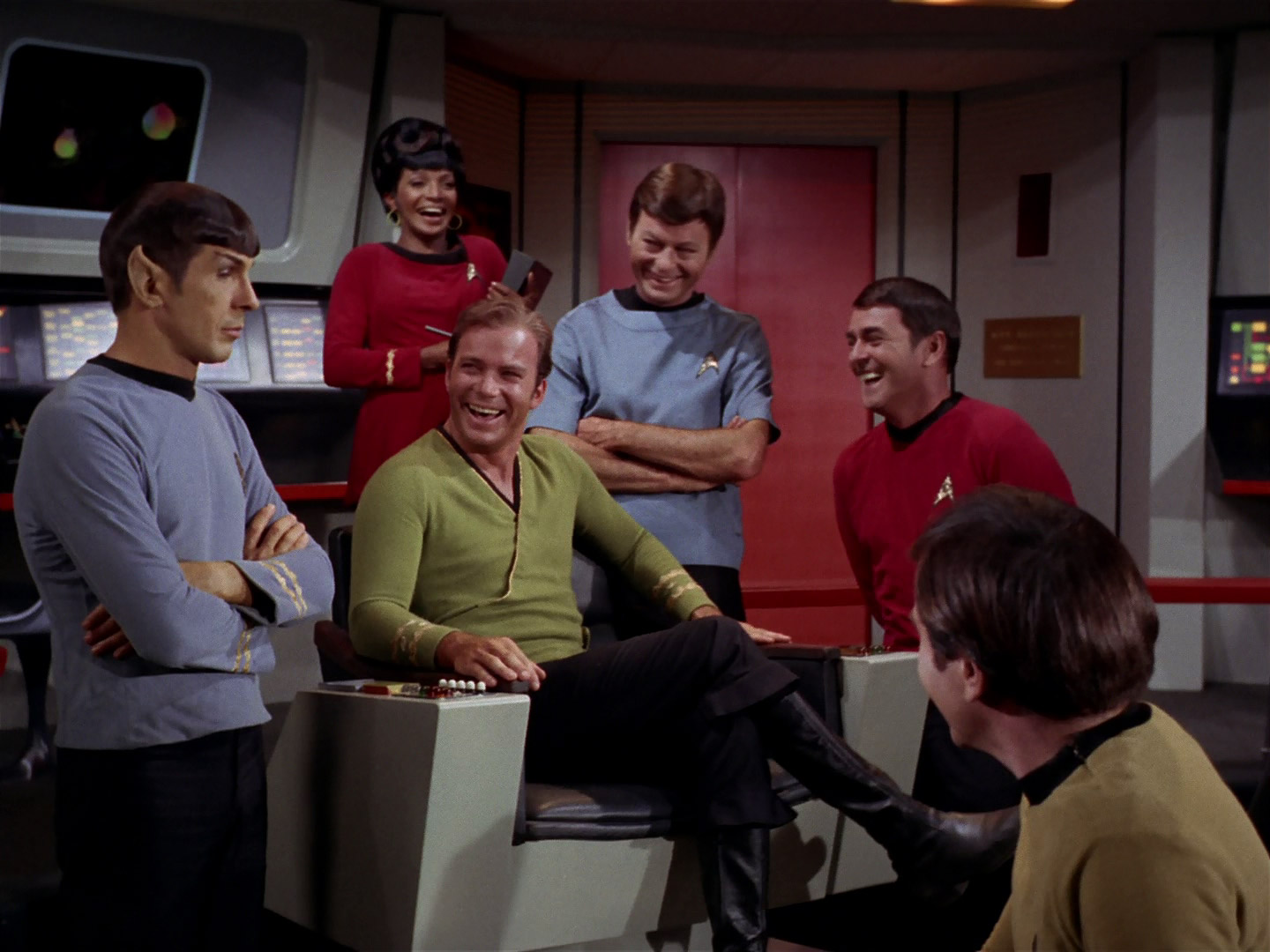
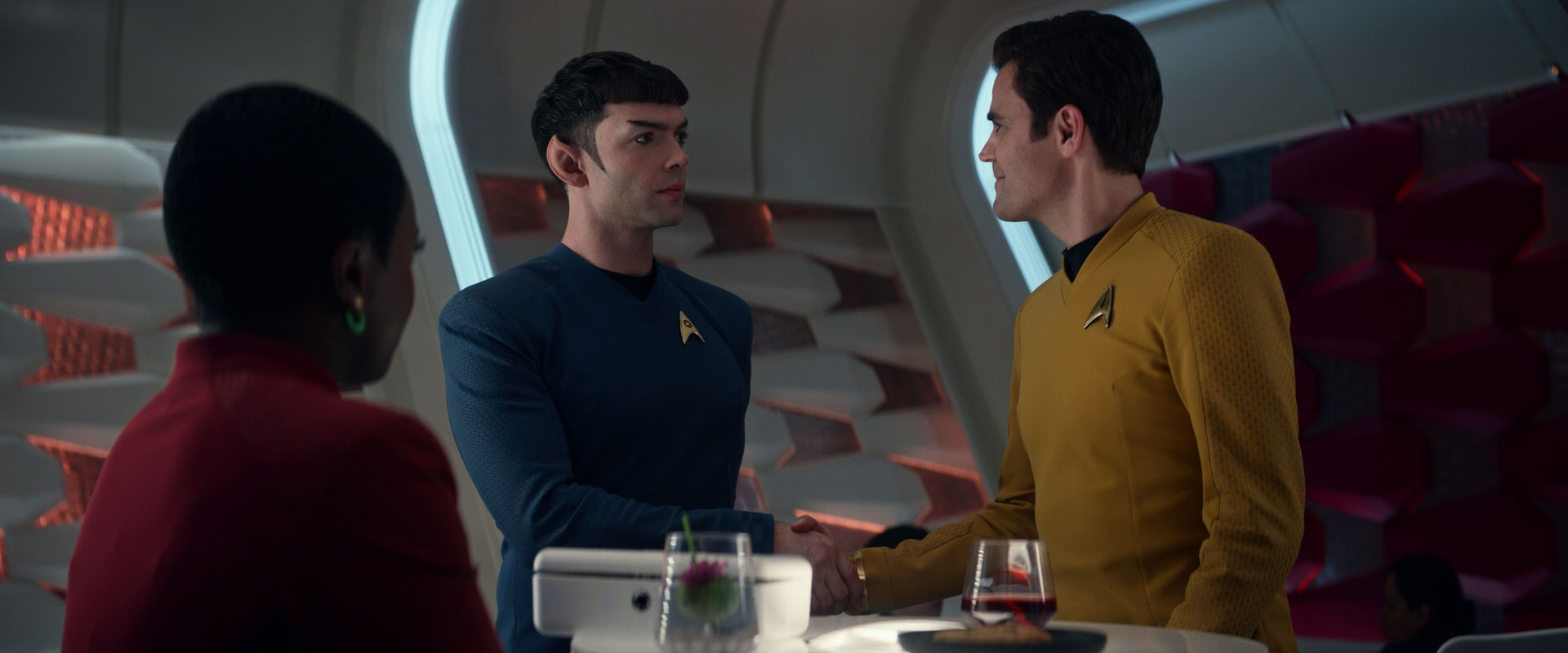
This article comments on recent Trek's reimagined TOS characters, focusing on their personalities, professional and private lives, as well as visual resemblance to their original counterparts. I acknowledge that exact physical likeness is neither necessary nor desirable, and new actors should be free to bring their own interpretations to a role. What matters is whether the result remains recognizably the same person. My assessment of continuity should be distinguished from how I see an actor's performance or from how a role works within SNW. I can appreciate the modern reinterpretation of Christine Chapel while considering this version fundamentally incompatible with the role we know from TOS. Likewise, I can admire Ethan Peck's portrayal while disliking the silly aspects written into the new Spock.
I try to account for different storytelling approaches: TOS generally showed its crew at work and explored their private lives only when the story called for it, whereas personal relationships and emotional struggles are central to SNW. Not every SNW detail absent from TOS is therefore a contradiction, but neither does such a gap give the prequel unlimited freedom to redefine established roles.
Main Characters
Christopher Pike
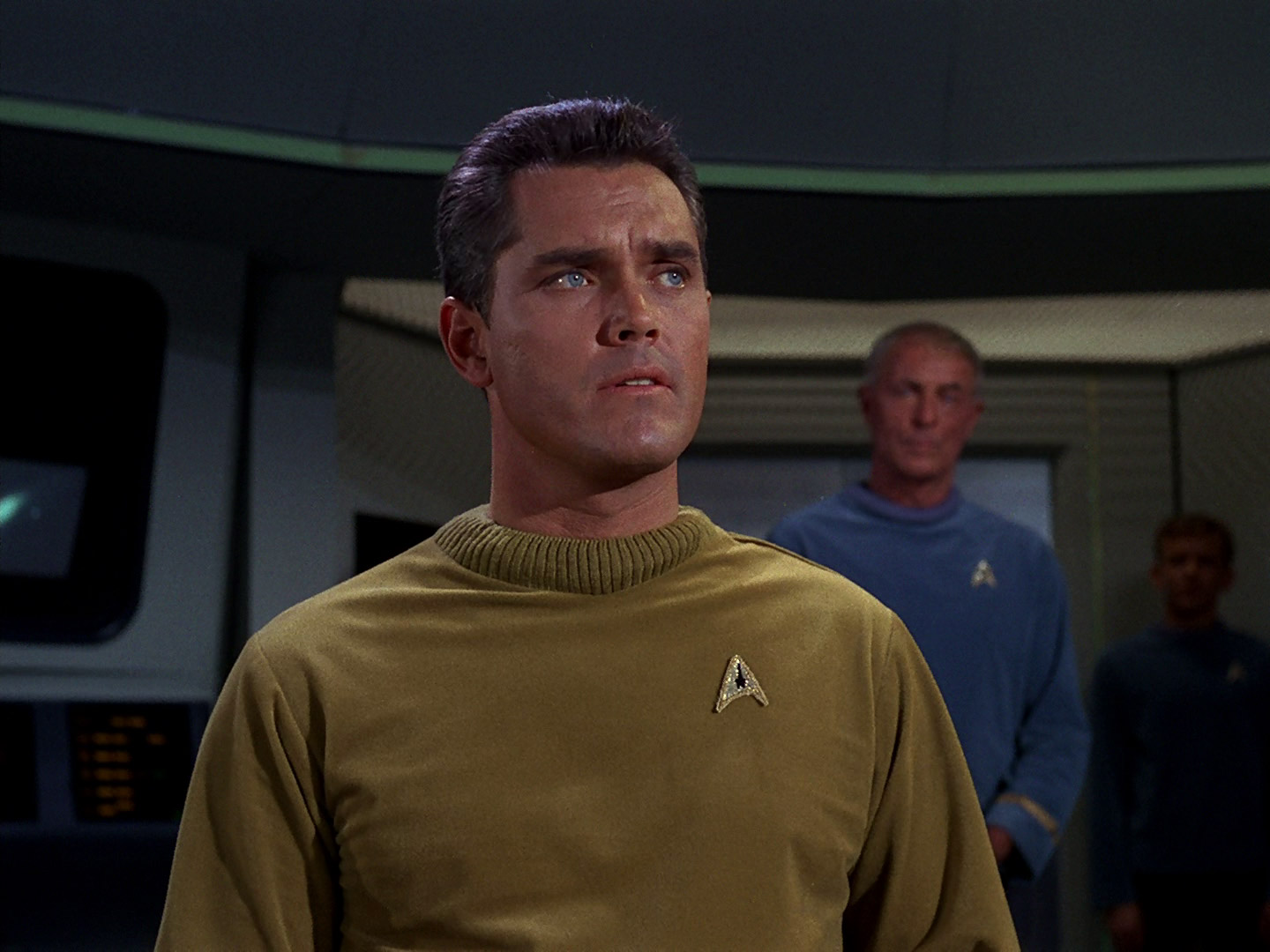
We learn comparably little about Captain Pike in "The Cage", although he is the principal character of the first pilot episode. Captain Pike is a cautious and skeptical commander who questions the situation he finds himself in on Talos IV, while also showing frustration with the burden of command. Discovery and especially Strange New Worlds give us a much more extensive picture of his personality, including details of his private life and his foreknowledge of the accident that will leave him severely disabled, as established in TOS: "The Menagerie". This fate is an important part of his story in the newer series, although it need not define his entire role.
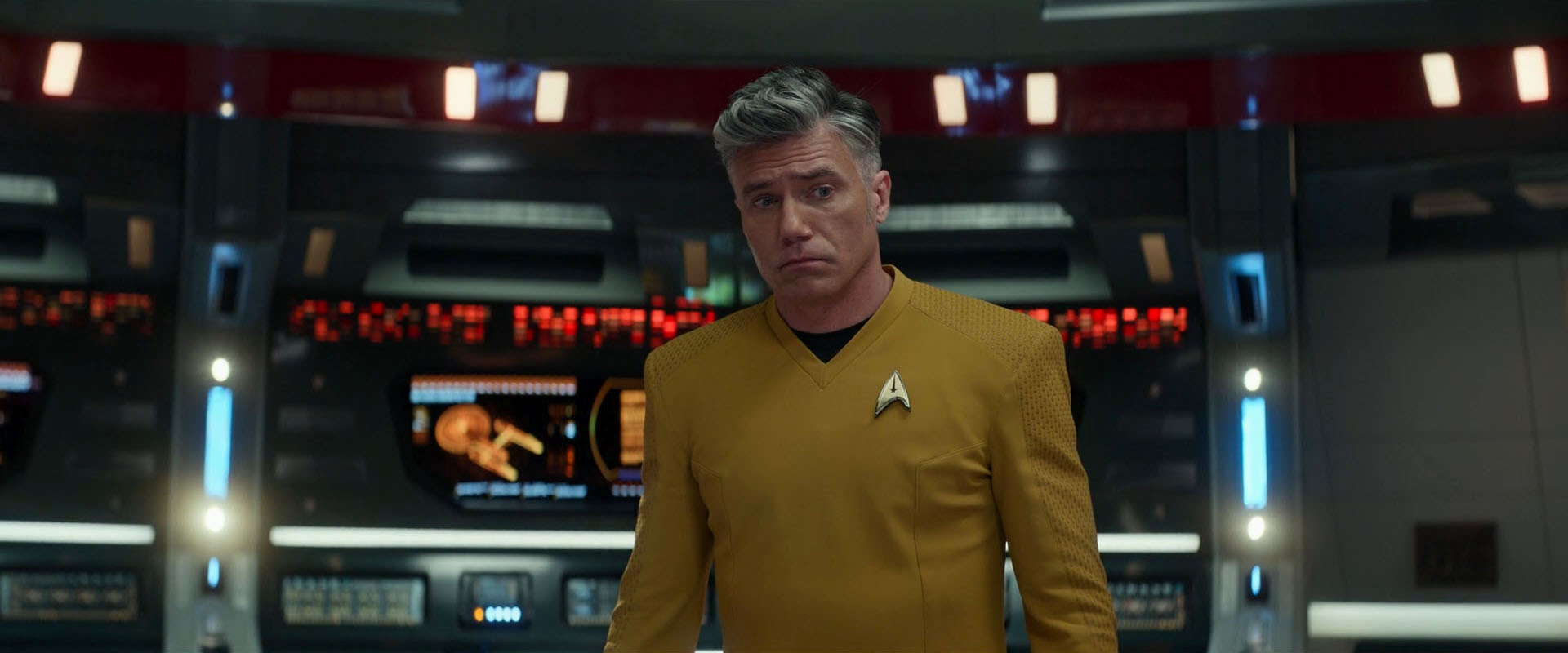
Considering the rather few reference points, the newer Pike is a convincing continuation of the original portrayal. In "The Cage", he remains considerate for much of the time, but he is also capable of losing his temper when pushed too far as we can see when he angrily attacks one of the Talosians. SNW preserves both sides of his personality, even if SNW: "Among the Lotus Eaters", in which he loses his memory and becomes unusually aggressive, takes the latter trait to an extreme. His love of horses is another unmistakable point of continuity, carried over into SNW as a natural part of his private life.
Anson Mount is also a good visual match for Jeffrey Hunter. The likeness grants him a bit more freedom in his interpretation of the original actor, especially since the material from "The Cage" is limited. Overall, Mount gives Pike a recognizable appearance and a convincing personality, making him one of the more successful reintroductions of a TOS character. Although some SNW stories handle his leadership inconsistently and later seasons often undercut his authority for comic effect, the basic characterization feels right.
Number One
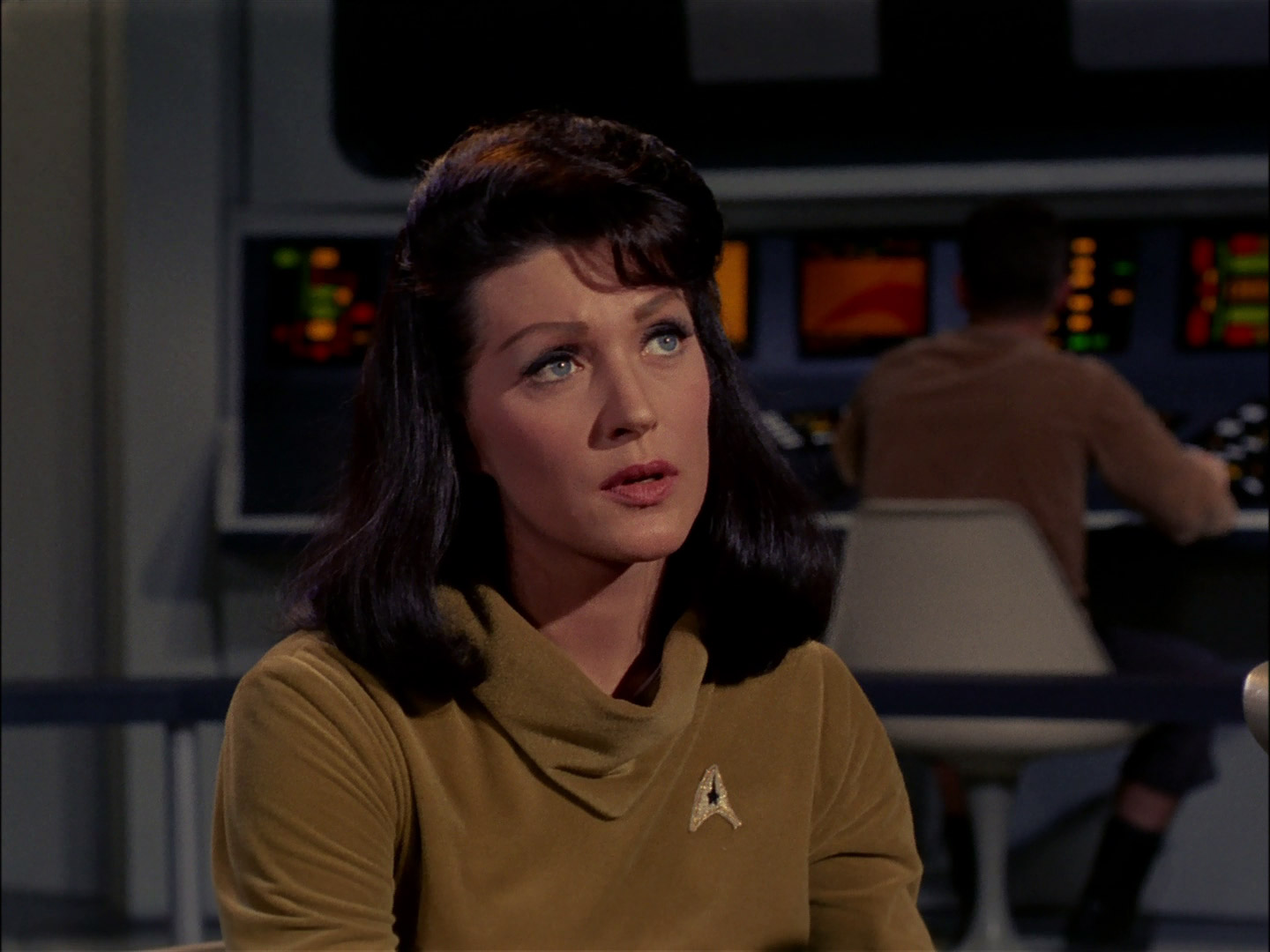
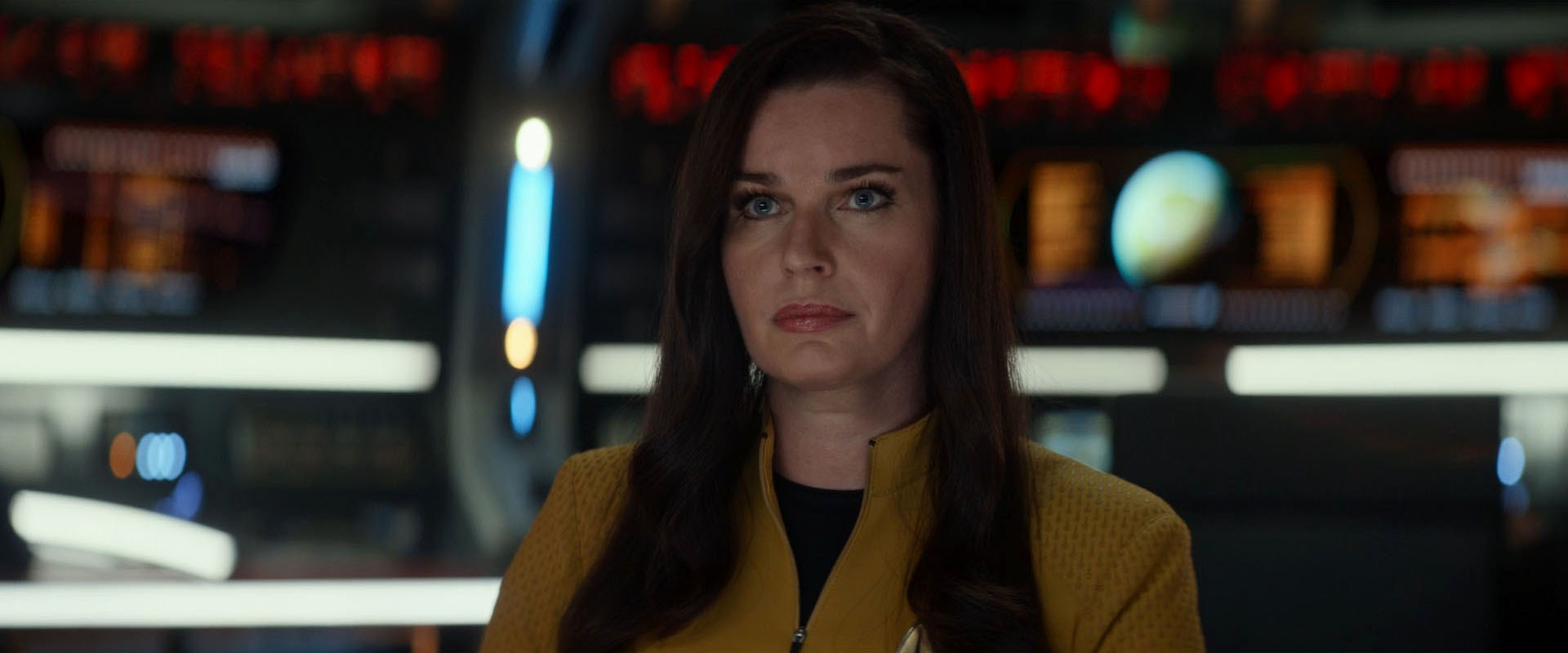
Number One, played by Majel Barrett in "The Cage", was a rather mysterious character. She had no established first name or surname, and the designation "Number One" could simply be understood as a nickname reflecting her position aboard the Enterprise, just as in Riker's case many years later. She was professional, reserved and apparently quite logical, in some ways resembling the Spock we would later come to know in TOS. SNW gives her a name, Una Chin-Riley, and reveals in "Ghosts of Illyria" that she is an Illyrian whose genetic modifications are responsible for some extraordinary abilities (that we rarely witness). These additions expand on what little we knew about her without contradicting her original portrayal. There was no established background to violate, and nothing in "The Cage" required her to be human, even if that might have been the natural assumption at the time.
Rebecca Romijn is convincing in the role, and the SNW version retains much of Number One's professionalism and reserve. Una generally keeps her emotions in check and does not frequently overstep the boundaries of her position, unlike some other SNW crew members. There are certainly exceptions, such as the fact that she keeps her genetic modifications secret in the first place, leading up to her trial in "Ad Astra per Aspera", and her participation in the Enterprise bingo game with La'an in "Spock Amok", but these are relatively minor departures rather than a fundamental change of character. SNW develops Una's personality without making her unrecognizable, and she is therefore one of the more successful examples of how a prequel can expand on an established role. There are continuity problems surrounding Una's Illyrian background, but these stem from inconsistencies within Strange New Worlds itself rather than from any conflict with Number One's portrayal in "The Cage".
Spock
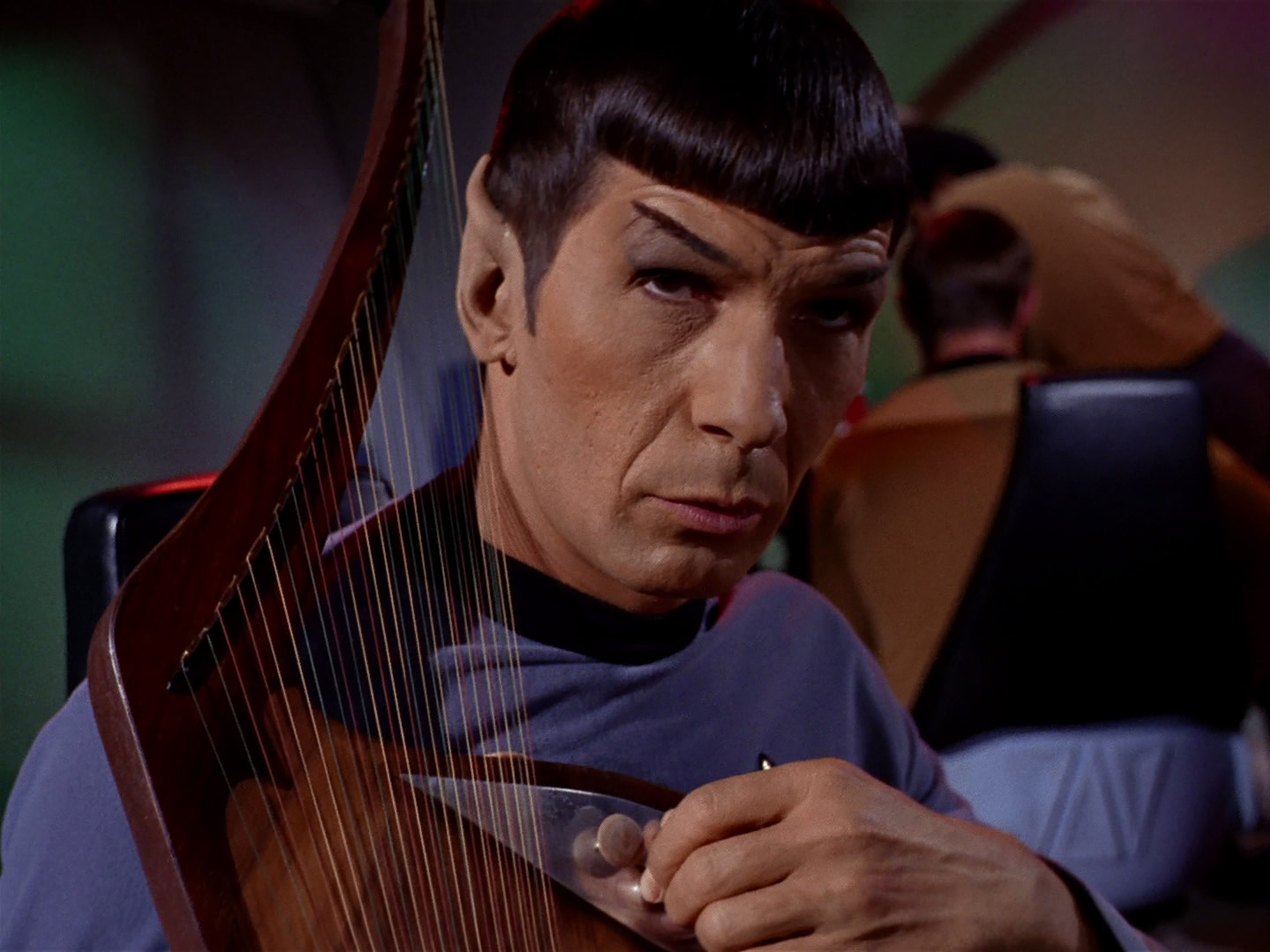
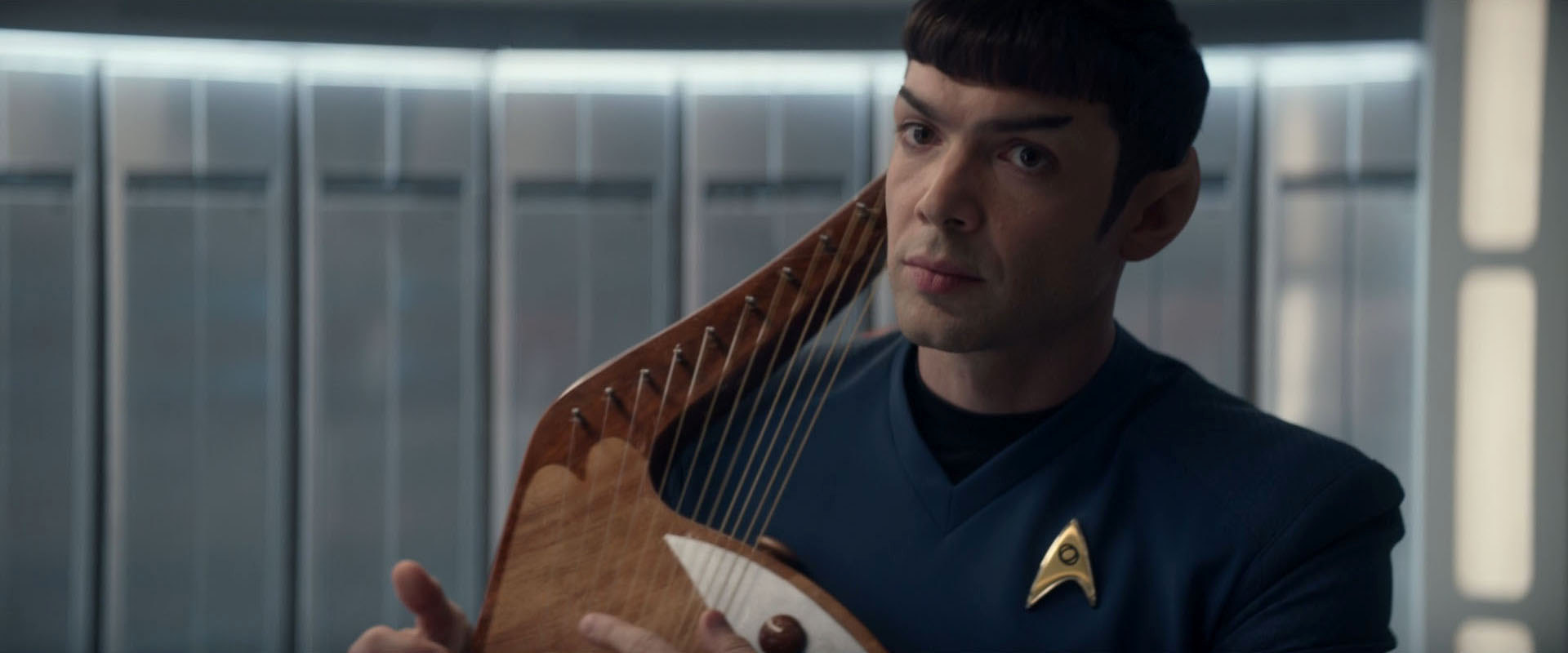
We know Spock as a reserved and always logical officer, who defines what it means to be Vulcan, although he is part human too. Ethan Peck is a convincing choice to portray a younger version of him. I immediately liked his performance in Discovery season 2, and I consider him closer to Leonard Nimoy's legendary original than Zachary Quinto in the Kelvin movies. The physical resemblance is good enough, and Peck is successful in conveying Spock's characteristic composure and mannerisms without slavishly imitating Nimoy.
Yet, starting as soon as in the SNW pilot episode, Spock frequently serves as comic relief, with embarrassing situations and jokes about his mixed heritage. TOS occasionally poked fun at Spock or showed him losing his composure, but such moments were exceptions.
In DIS season 2, he comes across as "Emo Spock" until he seems to find his way. However, the cycle continues in SNW. The series repeatedly presents Spock as being torn between his Vulcan and human sides. His development seems to go back and forth rather than progressing towards the Spock we know from TOS. He suppresses his emotions, loses control of them, rediscovers logic and then struggles with the same conflict again. Even if we accept that this is supposed to be a younger Spock who has not yet fully established his identity, the repetition becomes tiresome, especially when increasingly bizarre situations are used to explore it: "Spock Amok", "Charades" and "Wedding Bell Blues" are only the most notable examples. The sad culmination is in "The Griffin Incident", when a delusive Spock cuts off his ear tips in a poorly motivated horror sequence, only to rediscover logic for some reason in the course of the same episode. But this is not yet the end. His emotional struggle is once again in the focus in "Level-Five Transporter Accident", visualized as a dream in which his crewmates are puppets. Such stories do not make his development more convincing. They turn a character whose internal struggle was usually expressed through restraint into a vehicle for endless exaggerated emotional drama.
The romantic storylines are perhaps an even greater departure from TOS. SNW establishes a mutual relationship between Spock and Chapel, followed by an involvement with La'an, turning his private life into an ongoing soap opera. TOS, by contrast, gives us a Spock who is engaged to T'Pring but otherwise keeps his personal feelings largely to himself (with exceptions, such as in "This Side of Paradise" or "All Our Yesterdays"). Chapel's affection for him is unrequited, and there is not the slightest indication that the two have a romantic history of the kind SNW makes up. Of course, The Original Series did not explore the private lives of its crew as extensively as SNW does, and a prequel is entitled to fill in some of those gaps. But the additions should lead convincingly to the established character, not make us wonder how this emotionally volatile and romantically entangled Spock could become the restrained, logical officer we meet in TOS. I like Ethan Peck's portrayal, but I increasingly dislike the character he is asked to play.
Uhura
In TOS, Lieutenant Uhura is portrayed as a competent and self-assured woman who performs her duties as the Enterprise's communications officer. Although she rarely gets the spotlight, she is an integral part of the bridge crew and can be relied upon in critical situations. She is hardly ever assigned to landing parties and is usually seen at her station, which reflects the professional focus of The Original Series rather than a lack of initiative or personality. We get occasional glimpses of her private side, most notably when she sings in "Charlie X" and when she has a vision of Kirk in "The Tholian Web", but her personal life is otherwise largely unexplored. SNW, by contrast, gives Uhura (whose first name Nyota is established in the Prime Universe now) a much more extensive backstory and a prominent emotional arc. The death of her family as established in SNW: "Children of the Comet" and the loss of a friend as mentioned at in SNW: "What is Starfleet?" are important elements of her characterization, up to the point where her personal tragedies seem contrived. This is not necessarily a contradiction of TOS, which tells us almost nothing about her life before joining the Enterprise, but it illustrates how differently the two series approach their characters.
Uhura's professional competence is one of the strongest points of continuity between the two portrayals. SNW: "Children of the Comet" introduces her as a cadet who is uncertain whether Starfleet is the right place for her, but this is understandable given her recent Academy graduation and the traumatic experiences she has already endured. Her linguistic abilities, technical aptitude and empathy soon become apparent, and she gradually develops into a confident officer. Yet, her decision to remain in Starfleet after the Gorn attack in "All Those Who Wander" is not really convincing. Although Hemmer's role as her mentor provides meaningful support, we might have expected the new traumatic experience of his death to have the opposite effect and make her less willing to stay. On another note about her professional expertise, the classic Uhura barely manages to communicate in Klingon in "Star Trek VI: The Undiscovered Country", whereas the reimagined character is proficient even in a rare dialect of the language in "A Case of Chiaroscuro".
TOS generally explores relationships among the regular crew and emotional struggles when they are relevant for the story. SNW, on the other hand, routinely places these aspects at the center of its stories. As mentioned in the introduction, this difference in storytelling needs to be considered when comparing the characters, but it does not mean that we can simply handwave different characterizations with the argument that we simply were not shown the whole truth in TOS. Even small details can affect the impression of continuity. Uhura never addresses Kirk as "Jim" in TOS, nor does she call McCoy "Bones", whereas SNW makes its characters considerably more familiar with one another. Such choices may seem trivial in isolation, but they contribute to the different atmosphere and character dynamics of the two series.
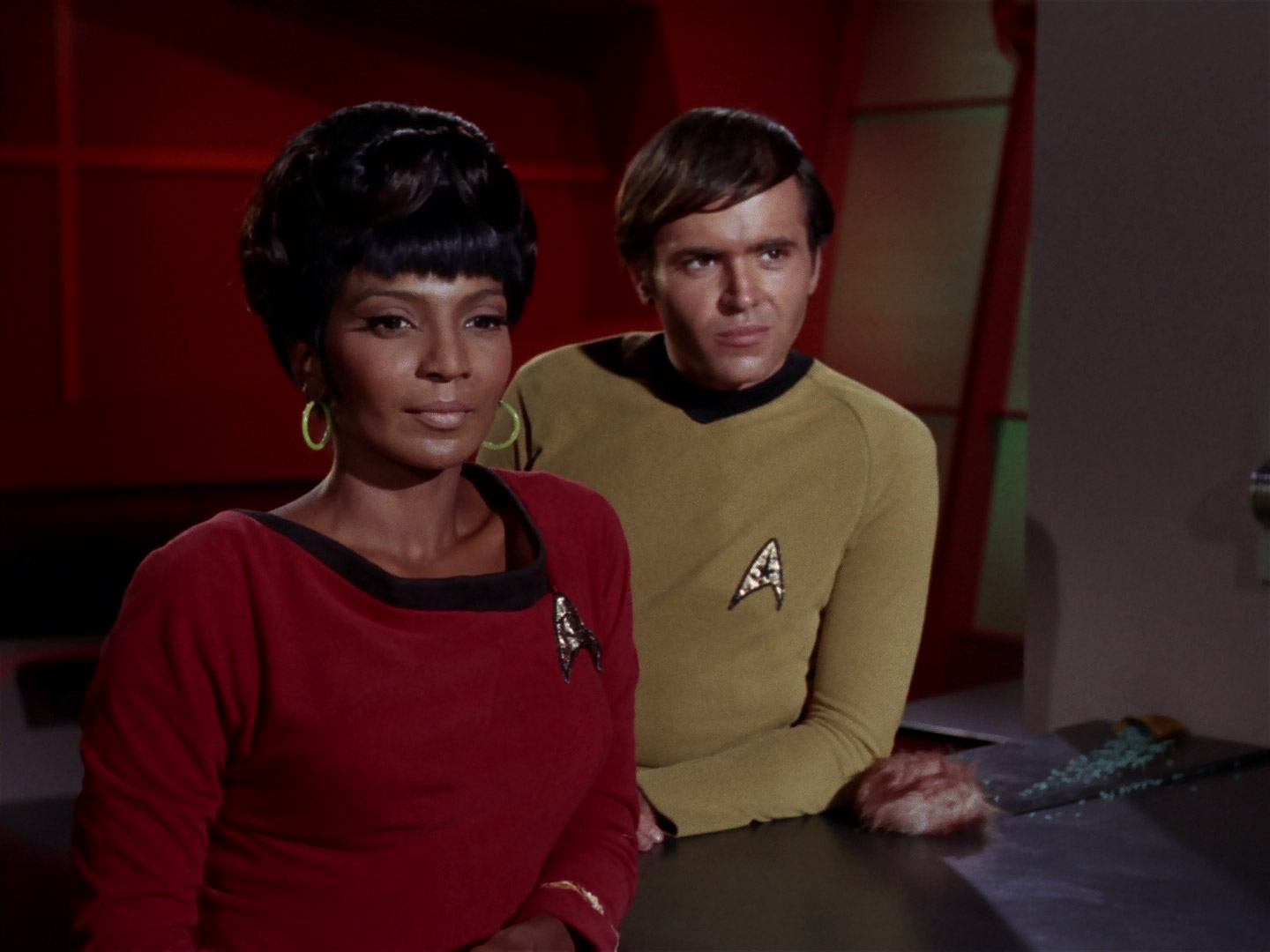
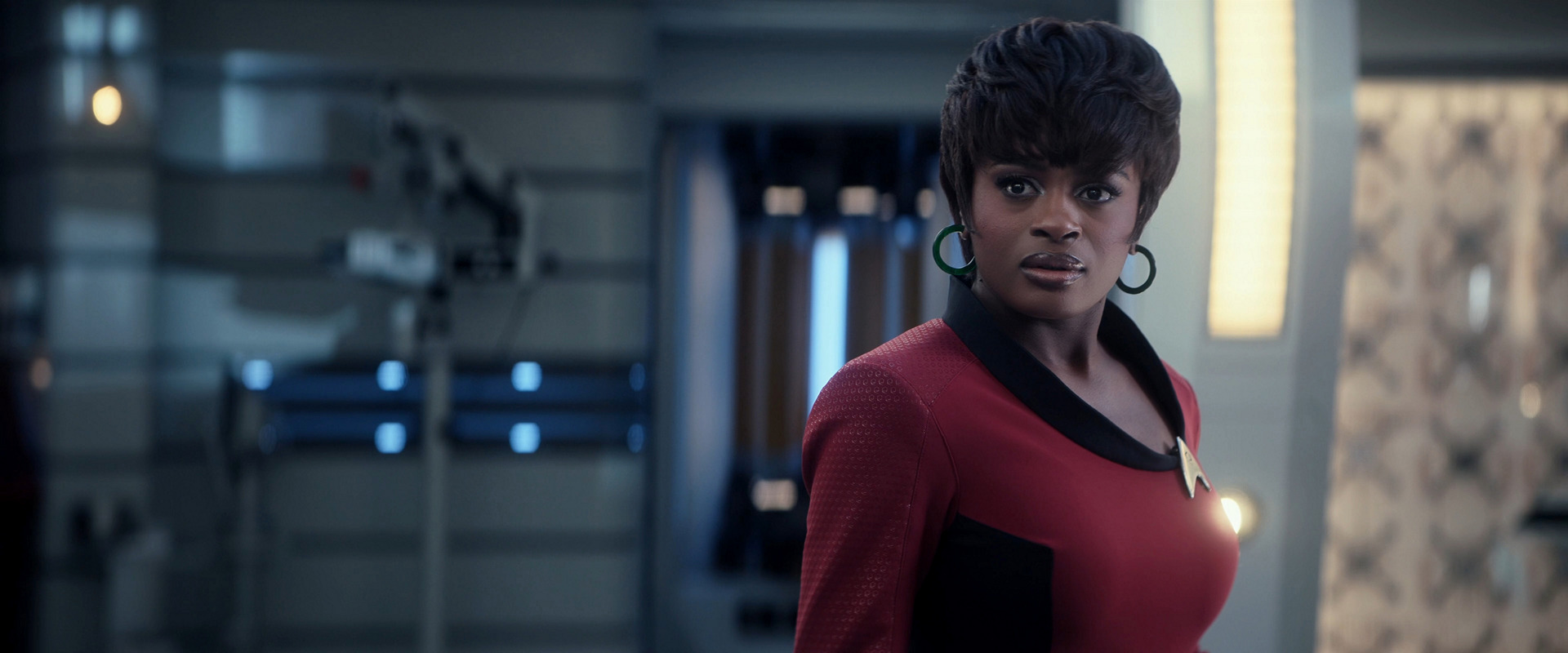
Visually, Celia Rose Gooding is one of the strongest examples in Strange New Worlds of how to recast a legacy character successfully. She resembles Nichelle Nichols closely enough that the connection feels natural from the start (and even more so in the flashforward in "Tomorrow's Enterprise"). There is a recognizable similarity in her facial features, expressions and overall screen presence that makes it easy to accept her as a younger Uhura. Perfect likeness is neither possible nor necessary. What matters is that the audience immediately sees who that character is supposed to be, lowering the barrier to suspension of disbelief. Because she already looks plausibly like Nichols' Uhura, Gooding does not need to rely on imitation. Instead, she can bring her own nuances to the character while remaining entirely believable as an earlier version of the same individual.
Christine Chapel
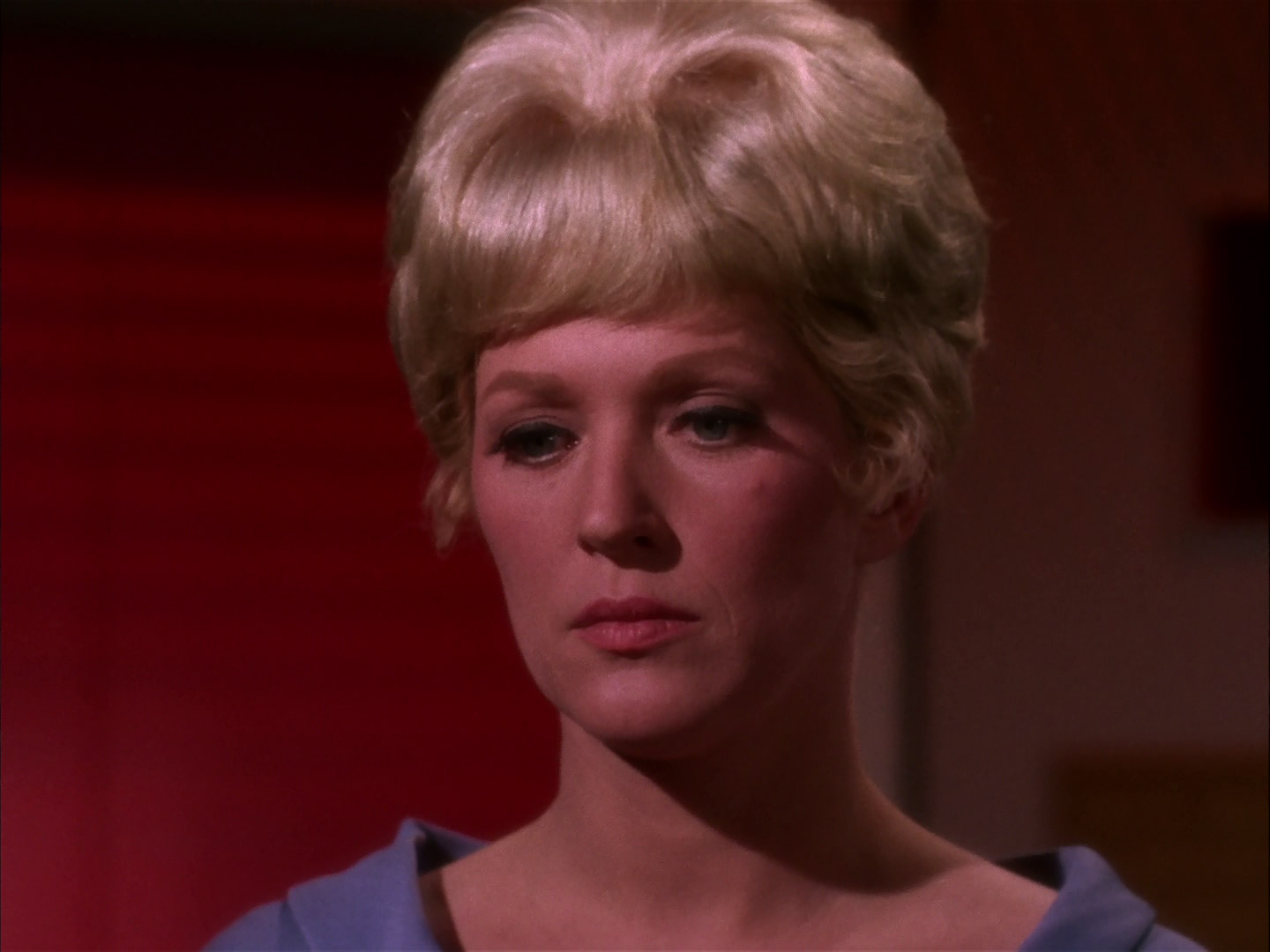
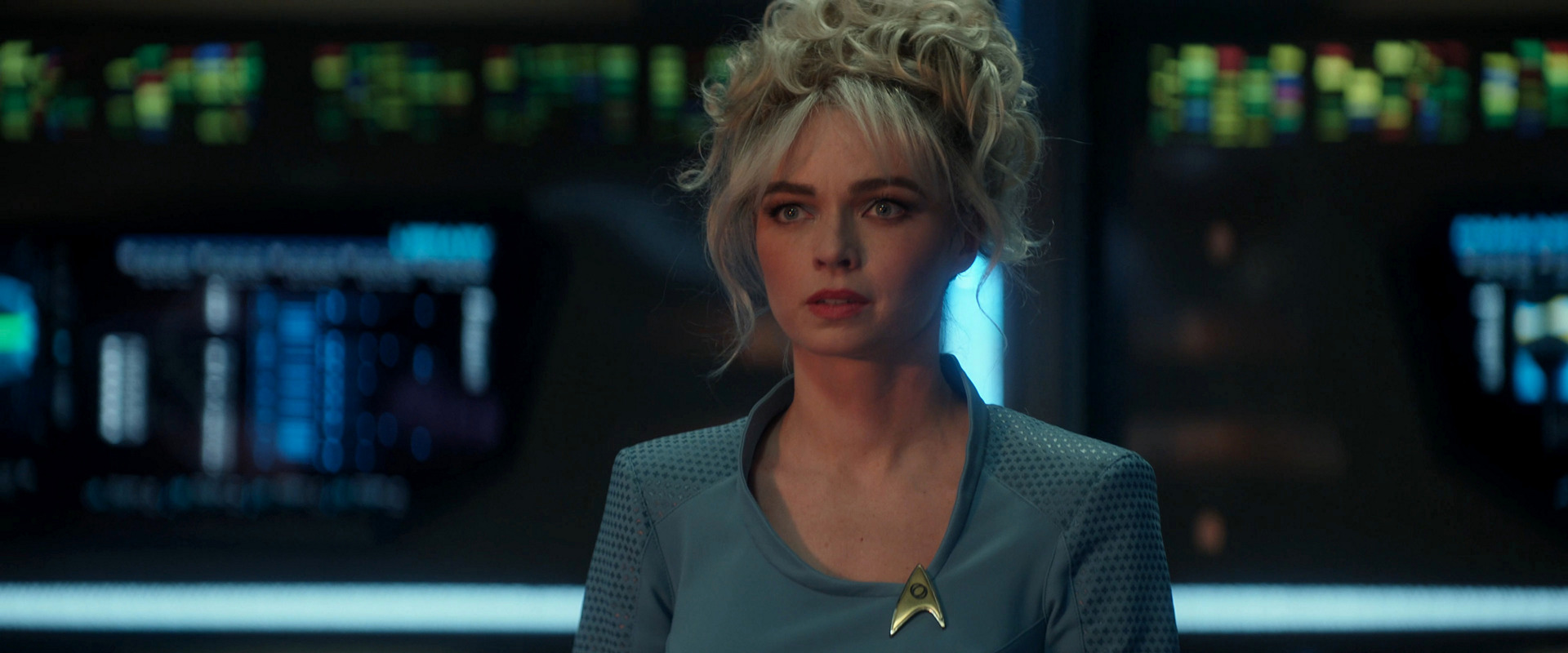
The Christine Chapel of TOS, played by Majel Barrett, is a demure and dutiful nurse who looks up to Dr. McCoy and is secretly in love with Spock. SNW's version, played by Jess Bush, is a very different person, and not only on the visual side. She is cheeky, sassy and assertive, with the posture, gestures and expressions of a confident modern woman. The contrast reflects the different times in which the two versions were written, and it goes well beyond a new actress bringing her own interpretation to an established role. In situations where TOS-Chapel might be frightened or dependent on others, SNW-Chapel tends to take action and put herself in charge. Her war experiences may explain some of this, but the result is that she barely appears to be the same person.
The differences extend to her professional life. TOS establishes Chapel as a competent nurse and mentions that she gave up a career in bio-research to search for Korby. SNW turns her into a universal prodigy. She is an accomplished medical researcher ("Charades") but just as well an expert in fields extending well beyond medicine, including particle physics ("Off-Hour") and computer science ("A Case of Chiaroscuro"). She is also is a war veteran ("Under the Cloak of War"). Her abilities seem to expand to whatever a particular episode requires. None of this means that TOS-Chapel is unintelligent or incapable; she is a skilled professional in her own field. But if the woman in SNW is so exceptionally capable in so many different areas, it becomes difficult to understand why she is relegated to the sidelines in TOS. The two portrayals do not fit together.
The romantic storyline with Spock is another conspicuous problem. TOS makes it clear that Chapel has feelings for him, although she keeps them largely to herself and knows that he is emotionally distant and effectively out of reach. SNW turns this unrequited affection into a mutual romantic relationship, complete with an intimate history that is nearly impossible to reconcile with their later interactions in TOS. It is not simply a matter of TOS leaving some details of Chapel's private life unexplored. The former relationship fundamentally changes the meaning of what we see in The Original Series, in addition to the reserved nurse of TOS bearing almost no resemblance to the assertive woman of SNW.
A similar difficulty affects the introduction of her relationship with Dr. Roger Korby and other connections to established characters. SNW attempts to build a complicated personal history around Korby, Chapel, Spock and T'Pring, but some of these developments sit awkwardly alongside what TOS establishes. Chapel's apparent lack of familiarity with T'Pring in "Amok Time", for example, cannot be reconciled with the connections SNW has already created. A prequel should be allowed to adding new aspects to personal histories, but it should lead convincingly to the characters and relationships we already know. In Chapel's case, the changes are so extensive that the connection feels more like a shared name than a coherent continuation of the same character.
Dr. M'Benga
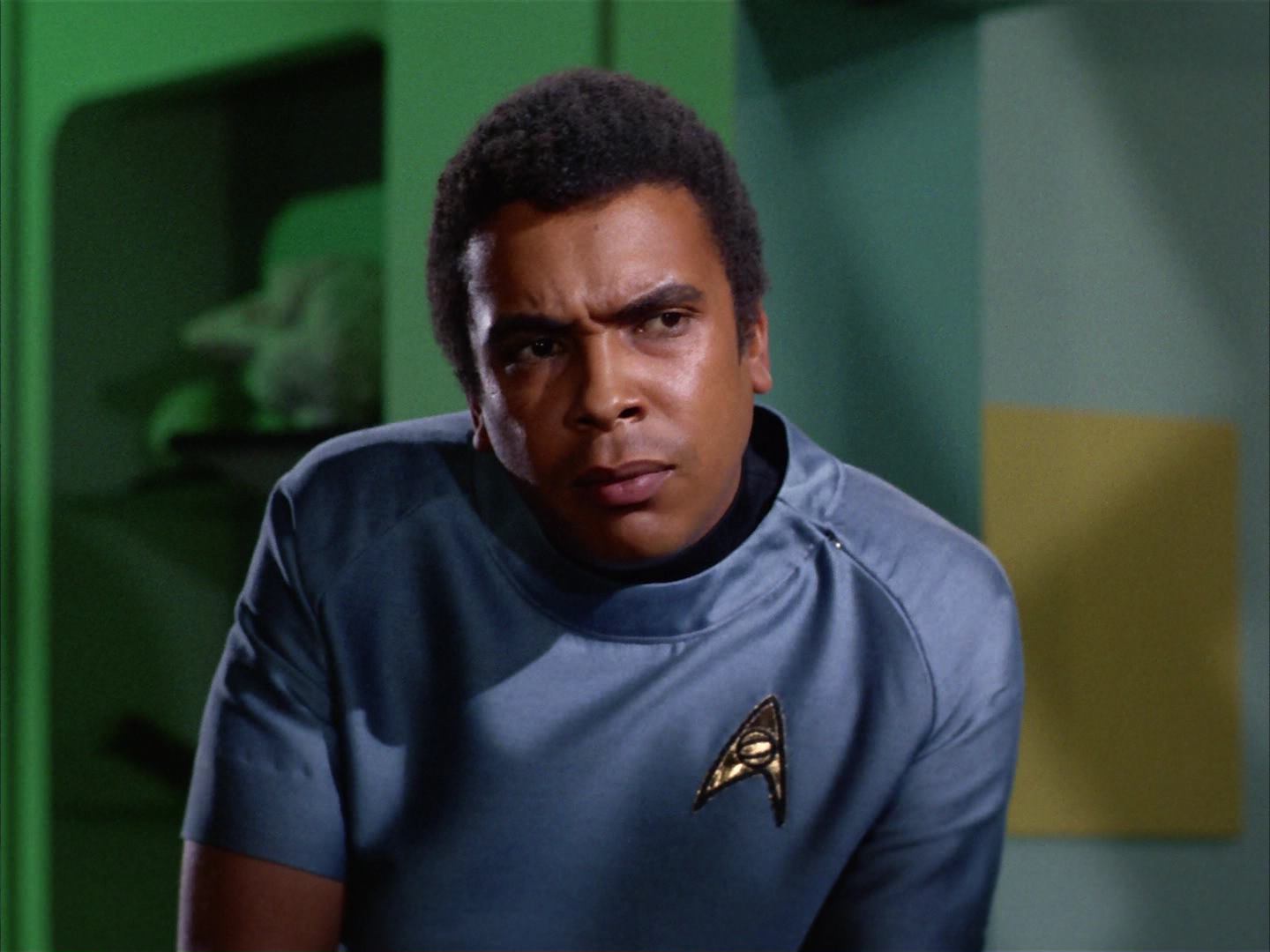
Dr. M'Benga appeared in only two TOS episodes, "A Private Little War" and "That Which Survives", played by Booker Bradshaw. He was a member of Dr. McCoy's medical staff and apparently served as the senior medical officer when McCoy was away from sickbay. We learn nothing about his private life, but we do know that he has considerable expertise in Vulcan physiology, which proves essential when he treats the seriously wounded Spock in "A Private Little War". He is a competent and professional doctor, but otherwise remains a minor role. His first name is not yet established.
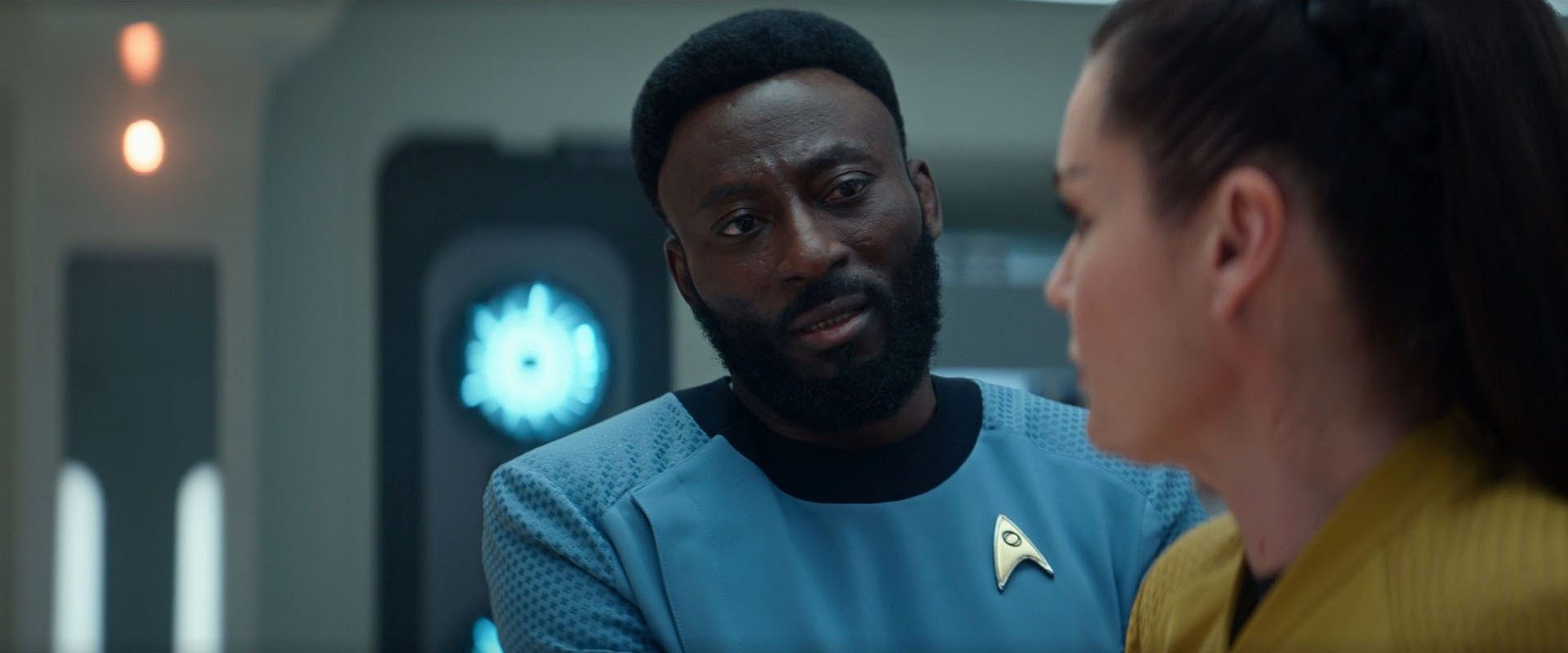
SNW turns Joseph M'Benga into a much more prominent character, now the Enterprise's chief medical officer. The series also gives him an increasingly complicated and extremely dark past. He killed someone when he was still a boy ("New Life and New Civilizations"), he is a war veteran and was involved in a secret medical project ("The Broken Circle"), and he eventually murders the Klingon war criminal Dak'Rah ("Under the Cloak of War"). He also keeps his terminally ill daughter Rukiya in the medical transporter in the hope of finding a cure ("Ghosts of Illyria"), before ultimately allowing her to leave with the mysterious entity from the Jonisian Nebula ("The Elysian Kingdom"). There is more than enough material here for a compelling character, and some of it works well, particularly the moral ambiguity of "Under the Cloak of War". But the accumulation of dark secrets becomes excessive, especially when M'Benga repeatedly escapes any meaningful consequences for his actions. In "Shuttle to Kenfori", his actions toward Dak'Rah come to light, yet Pike continues to protect him. In M'Benga's case it is particularly evident how SNW gives a character a dramatic personal history but seems reluctant to fully explore its consequences - perhaps because anything that doesn't remain a secret would be a problem in TOS.
Babs Olusanmokun is not a particularly close physical match for Booker Bradshaw, although the difference is not much of a problem. Overall, M'Benga was only a supporting character in TOS, and there is little about his original portrayal that could not plausibly be developed further. The main question is whether all these additions lead to the man we encounter in TOS. His medical expertise and professionalism provide a foundation for continuity, but the increasingly dark and morally questionable aspects of his SNW characterization make the result less straightforward. In "Off-Hour", the series also begins to explain his eventual departure from the Enterprise, with Dr. Boyce arriving and M'Benga telling Chapel that he intends to leave the ship. It remains to be seen whether this transition will be handled convincingly.
James T. Kirk
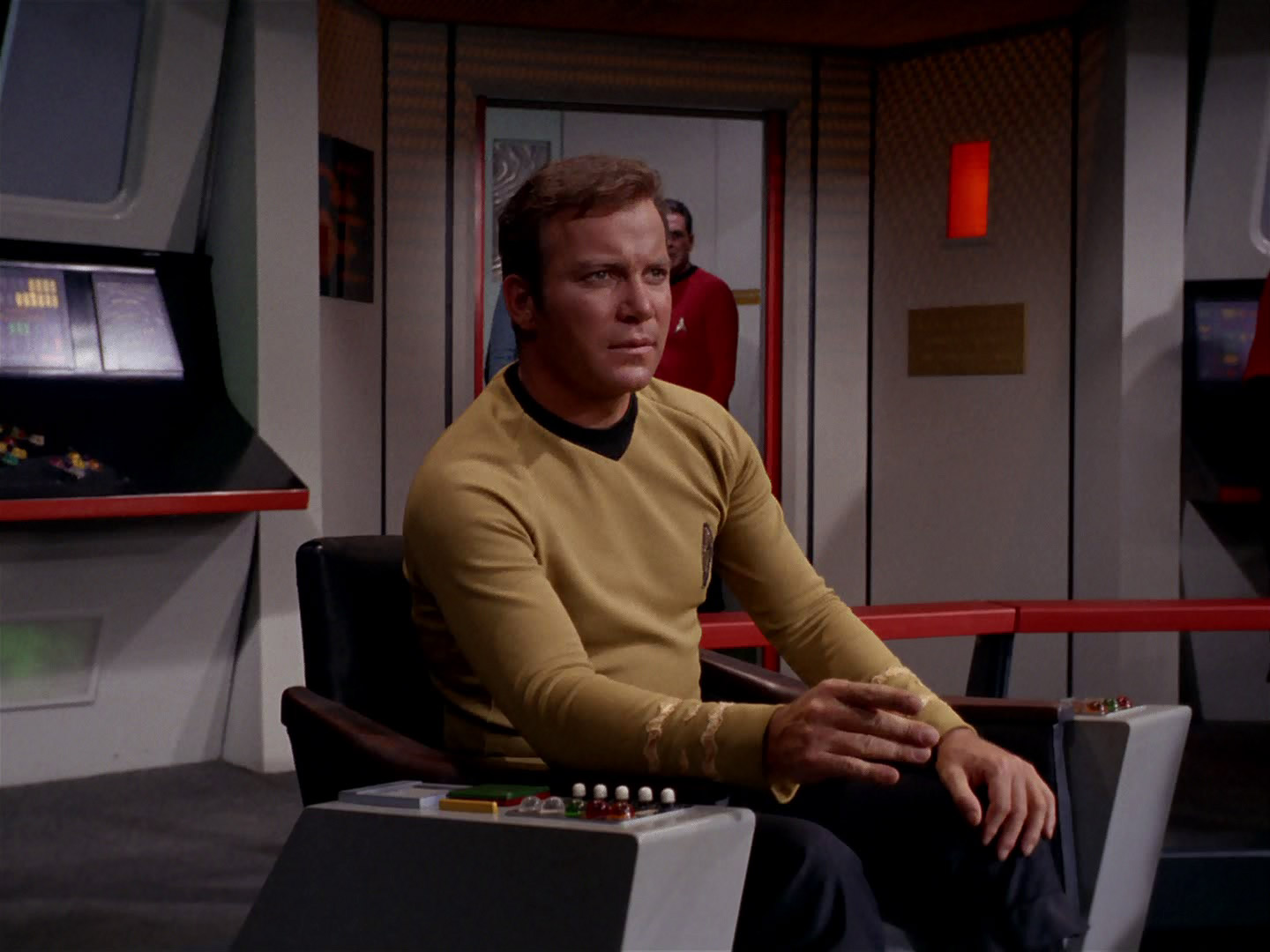
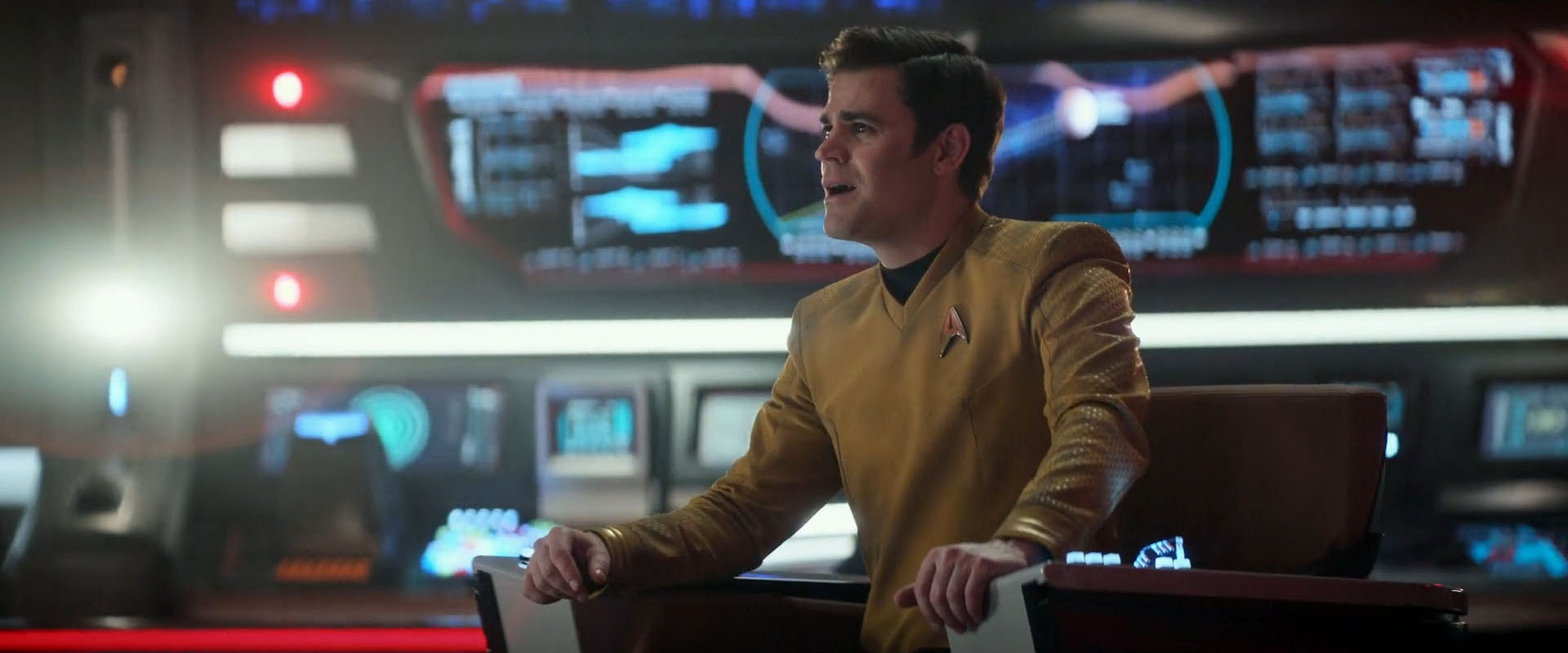
In TOS, James T. Kirk is a charismatic, resourceful and determined captain, capable of combining quick thinking with a strong sense of responsibility. His personality and leadership are developed across the series and films, providing considerably more material against which to compare Paul Wesley's portrayal than is available for many other established figures. Wesley is a good actor, and his Kirk is likable in his own right, but I have trouble recognizing the future captain of the Enterprise in him. He comes across as a friendly, sociable and sometimes charmingly clumsy officer, and although he is ambitious and capable, he lacks the charisma that made William Shatner's Kirk so compelling. I wouldn't expect Wesley to imitate Shatner, nor would I demand an exact physical resemblance. The problem is that the broad strokes of the character do not convince me. Wesley's Kirk may be a perfectly agreeable Starfleet officer, but he does not feel like James Kirk.
There is also the question of how often he appears in SNW. Kirk still serves aboard the Farragut at the time, yet he seems to be visiting the Enterprise almost every other week. Initially, the series at least provides reasons for his presence, including his brother Sam. But the explanations become increasingly contrived, and eventually the writers seem not to care about providing them at all. He even appears alongside Spock on the pleasure planet in "Human Best Friend", although the circumstances are so absurd that it hardly matters whether the Kirk we see is real or a hallucination. The repeated encounters are not merely tiresome; they also undermine continuity. In TOS: "The Menagerie", Kirk recalls meeting Pike only once, when Pike was a fleet captain. SNW briefly promotes Pike to that rank in "Lost in Translation", merely to accommodate the reference, but subsequently gives Kirk and Pike numerous further encounters, including substantial interactions, such as in "The Sehlat Who Ate Its Tail", "New Life and New Civilizations" and "Orders of Magnitude". The writers seem happy to use TOS references when convenient and disregard the implications when it becomes inconvenient.
SNW also tries to establish Kirk through familiar details from his private life. We learn about his relationship with Carol Marcus and his son David, and Kirk's inability to reconcile his career with family life is hinted at in "The Griffin Incident". He dismisses ordinary chess in "Tomorrow and Tomorrow and Tomorrow" as "idiot's chess" in comparison with the three-dimensional version. Such details are recognizable nods to established Trek lore, and some of them are handled effectively. But getting individual references right does not necessarily make the character convincing. Then there's his involvement with La'an, which is stretched across multiple seasons. The parallel-reality encounter in "Tomorrow and Tomorrow and Tomorrow" could have remained an unusual, self-contained experience. Instead, SNW repeatedly revisits the topic, with the two moving between attraction and estrangement. By season 4, this has become another soap-opera storyline rather than a meaningful addition to Kirk's characterization.
There are positive aspects to the portrayal. Wesley can be convincing when Kirk shows empathy, takes responsibility or demonstrates the resourcefulness expected of a future captain. SNW: "The Sehlat Who Ate Its Tail" is a start, although or just because Kirk has to be pushed into filling that role. "Orders of Magnitude" is another good example: he instinctively does the right thing in his confrontation with Admiral Reeger, and his cooperation with Sam shows how the two brothers complement one another. The problem is that these moments do not add up to a consistently recognizable Kirk. He is more frequently used as a convenient guest character, a romantic partner for La'an or a means of connecting familiar names and events. SNW gets some of the aspects right, but the overall characterization remains unconvincing.
Montgomery Scott
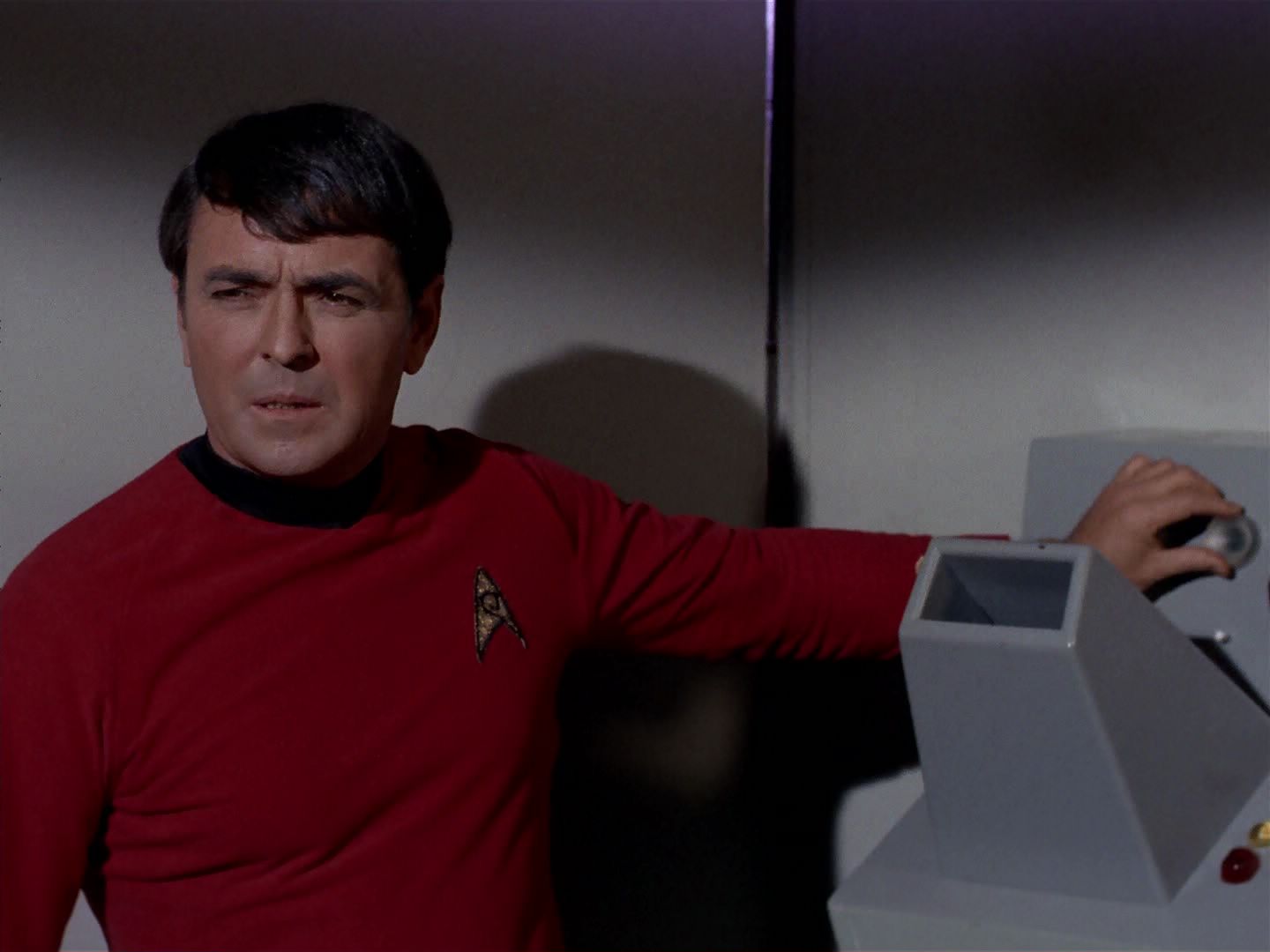
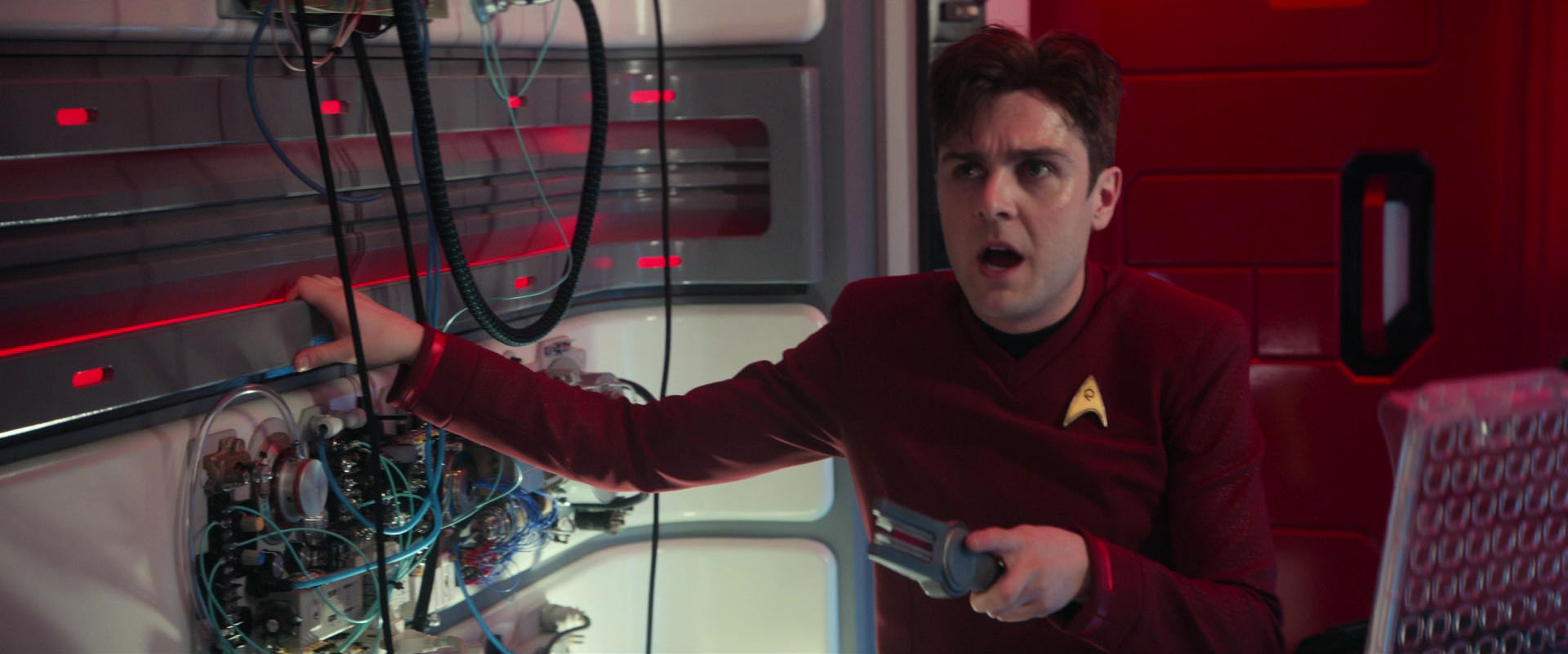
In TOS, Montgomery Scott is a seasoned engineer who knows his ship inside out and is protective of its engines. We also learn that he is interested in women, on at least three occasions: he is attracted to Carolyn Palamas in "Who Mourns for Adonais?" and Kara in "Wolf in the Fold", and develops a genuine romantic relationship with Mira Romaine in "The Lights of Zetar". That is quite a lot for a TOS character, yet no one would particularly remember Scotty as a ladies' man. These romantic interests are simply aspects of his life, whether included to give him more involvement in an episode or to flesh him out beyond his engineering duties. His quirks can also serve a particular plot purpose, as in "The Trouble with Tribbles", where his fierce loyalty to Kirk and the Enterprise leads him to fight the Klingons. The scene is certainly played for laughs, and Scotty's readiness to defend the ship's honor even more zealously than the captain's provides a convenient humorous setup. Still, neither his eccentricities nor his interest in women defines him; they remain secondary to his identity as a capable, dedicated engineer.
SNW's Scotty, played by Martin Quinn, on the other hand, feels much closer to the comedic interpretation introduced by Simon Pegg in the Kelvin movies than to James Doohan's original. He is younger, less experienced and more prone to irresponsible behavior. His attempt to get the (anachronistic) holodeck prototype working in SNW: "A Space Adventure Hour" almost ends in disaster. In "Level-Five Transporter Accident", he risks a major malfunction when he tries to beat a transporter range record while playing a prank on a classmate. Scotty may certainly make mistakes or behave humorously, but these traits have become central to his characterization in SNW. The age difference is another obstacle, as SNW's version is younger than Kirk, whereas the Scotty of TOS is the more seasoned and older officer. Their relationship feels off, with Kirk treating him almost like a younger brother rather than as the experienced engineer we know from TOS, only a few years later.
A mutual affection between Uhura and Scotty is never visible in TOS, except perhaps when he is protective of her in "The Changeling" and gets killed by Nomad. It also is hinted at (somewhat awkwardly) in "Star Trek V: The Final Frontier". In SNW, the two are dating by the time of SNW: "Tomorrow's Enterprise", which only works within the scope of that series, but not with Scotty's different age and with the lack of character interaction established in TOS. Quinn plays a likable Montgomery Scott in his own right, but I have difficulty recognizing him as the man from TOS. The gap between the two portrayals is simply too wide for me to accept them as the same person.
Dr. Leonard McCoy
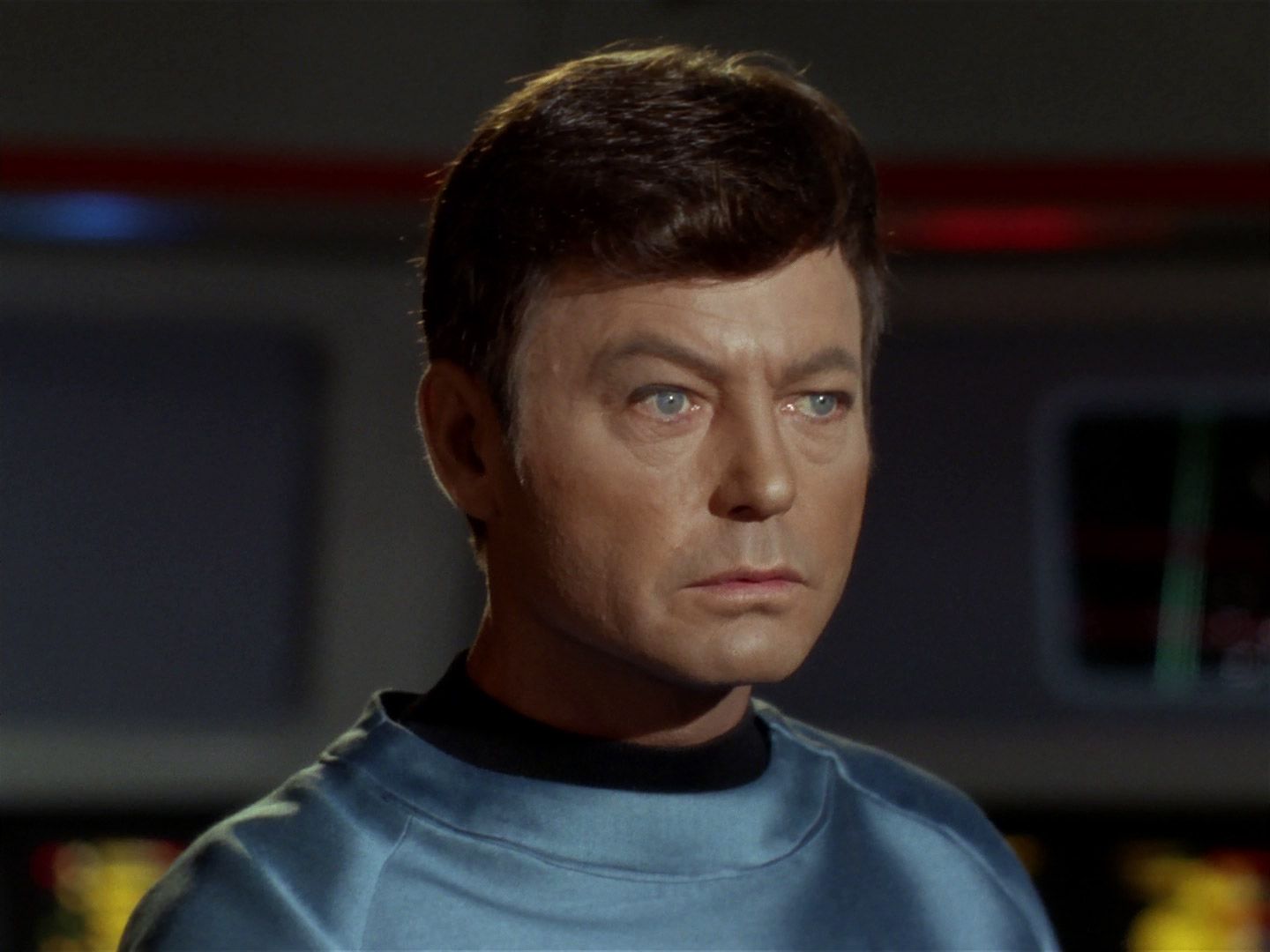
Dr. Leonard McCoy (DeForest Kelley) is one of the principal characters in TOS, serving as the Enterprise's chief medical officer and providing an important counterbalance to Spock's logic with his emotional, outspoken and often skeptical nature. Thomas Jane has been confirmed to appear as McCoy in the fifth and final season of SNW. We don't know if and how this will comply with "Where No Man Has Gone Before" where he wasn't aboard yet. An assessment will follow.
Hikaru Sulu
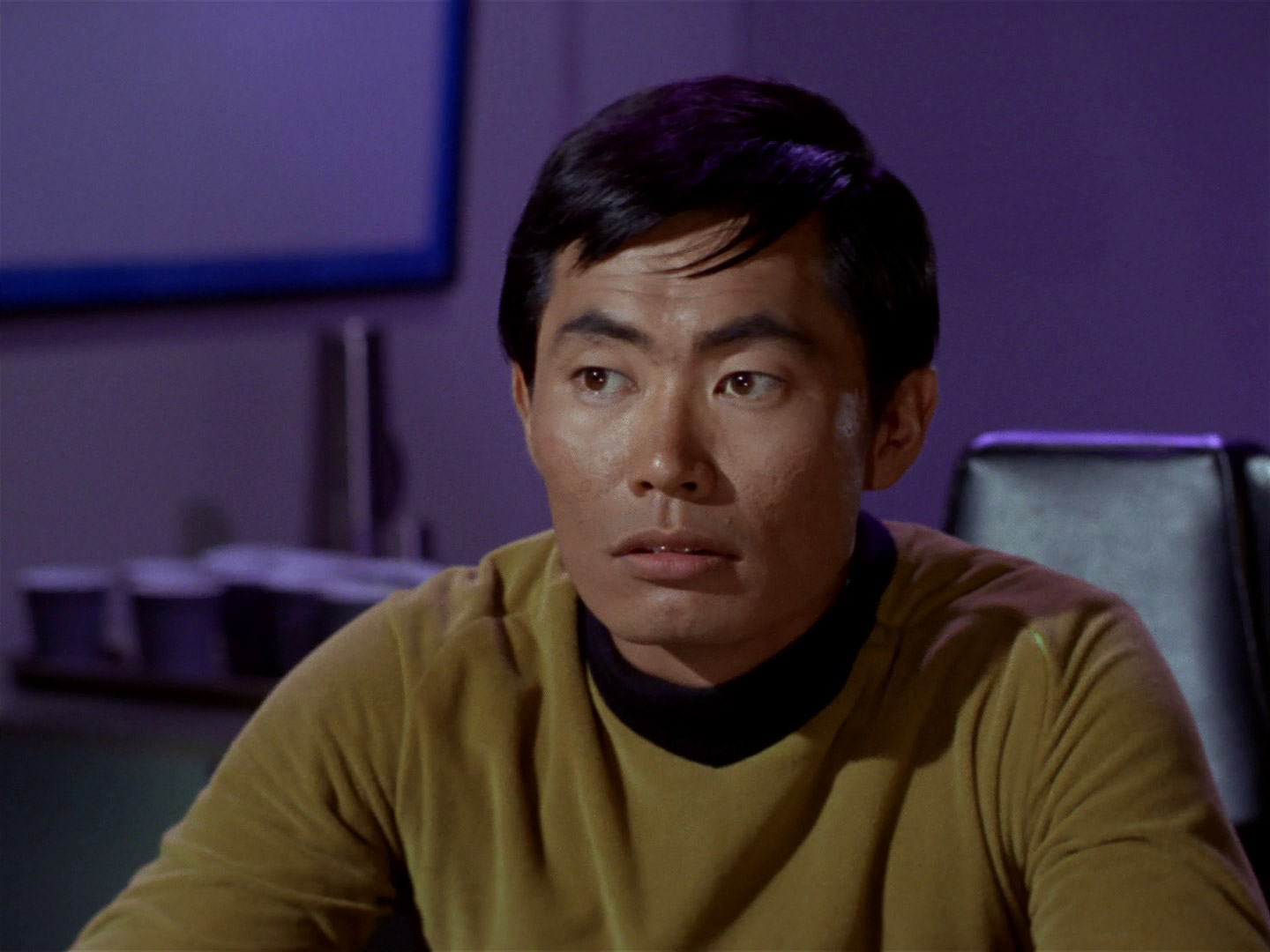
In TOS, Hikaru Sulu (George Takei) serves primarily at the helm and is portrayed as a level-headed and reliable officer. Several interests and abilities are established that extend beyond his duties on the bridge. Sulu has also been recast for the final season of SNW, with Kai Murakami set to play him. We will see in 2027 how this turns out, and whether the makers of the show will remember Sulu initially has to wear a blue shirt.
Supporting Characters and Guests
Robert April
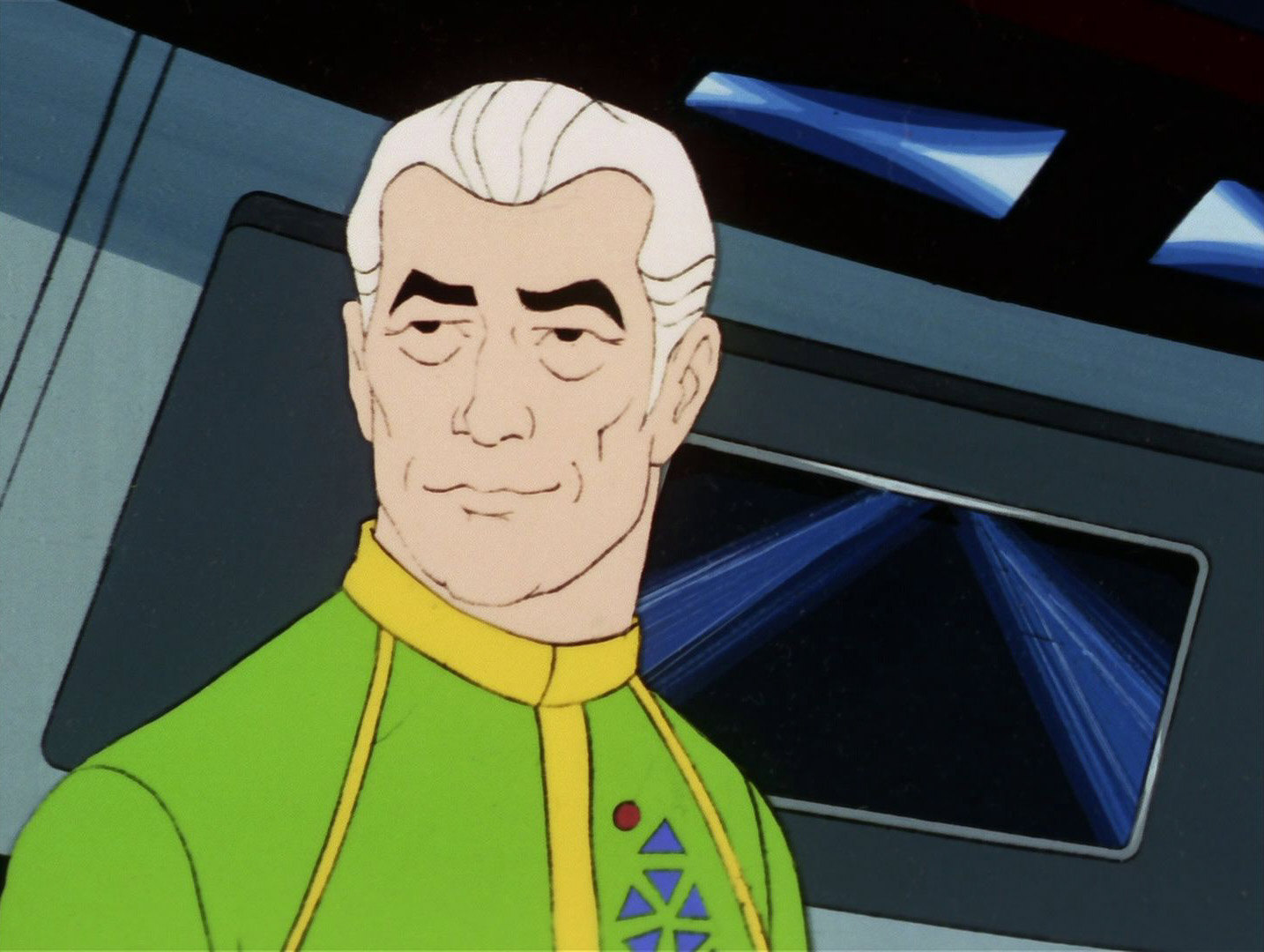
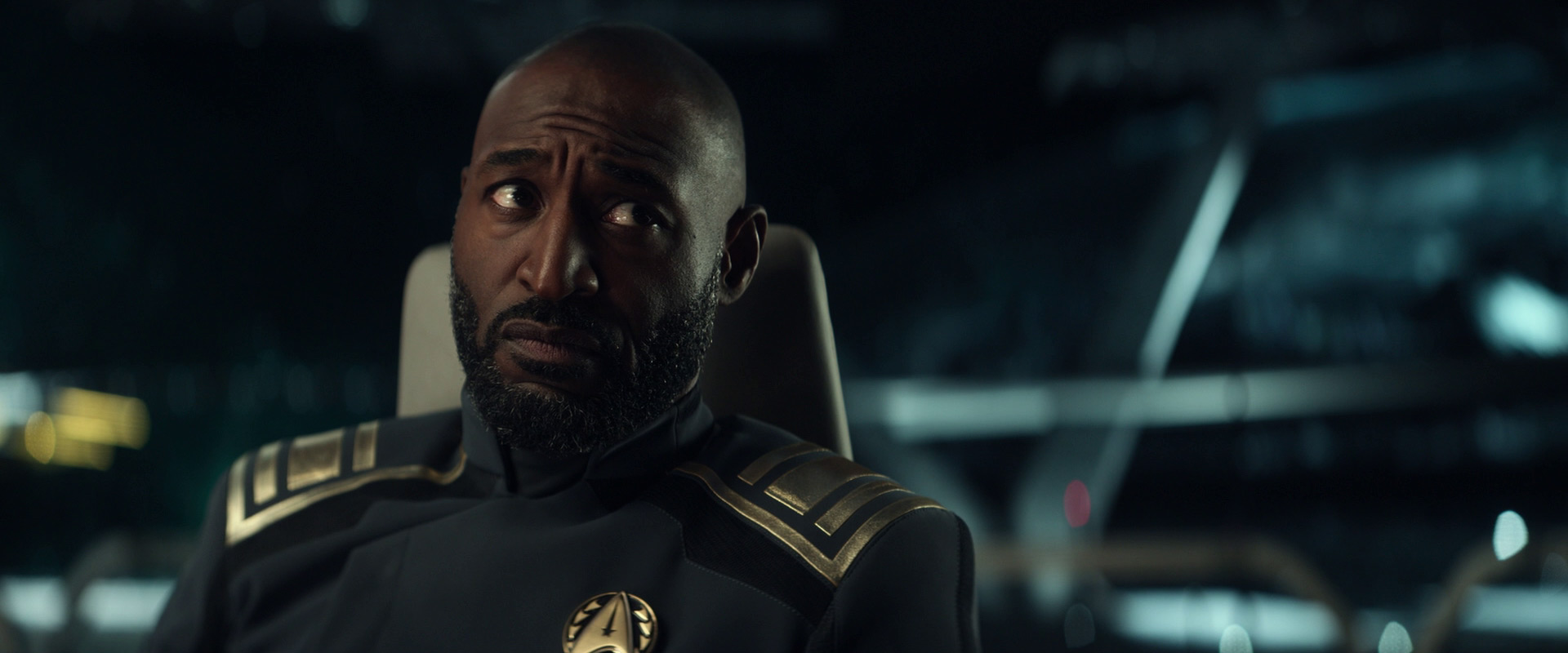
In TAS: "The Counter-Clock Incident", Robert April is portrayed as an elderly white man and holds the rank of commodore. SNW reintroduces him as a black admiral and Pike's superior. This creates two continuity issues: one involving April's rank and career history, and another involving his established appearance. Neither change is easy to reconcile. For April to appear as a commodore after serving as an admiral would require a demotion or some other explanation. The change in ethnic background presents a separate conflict with the character's TAS depiction. Since the current producers regard TAS as canon, the original portrayal of April is part of the established continuity and should not have been disregarded.
George Samuel Kirk
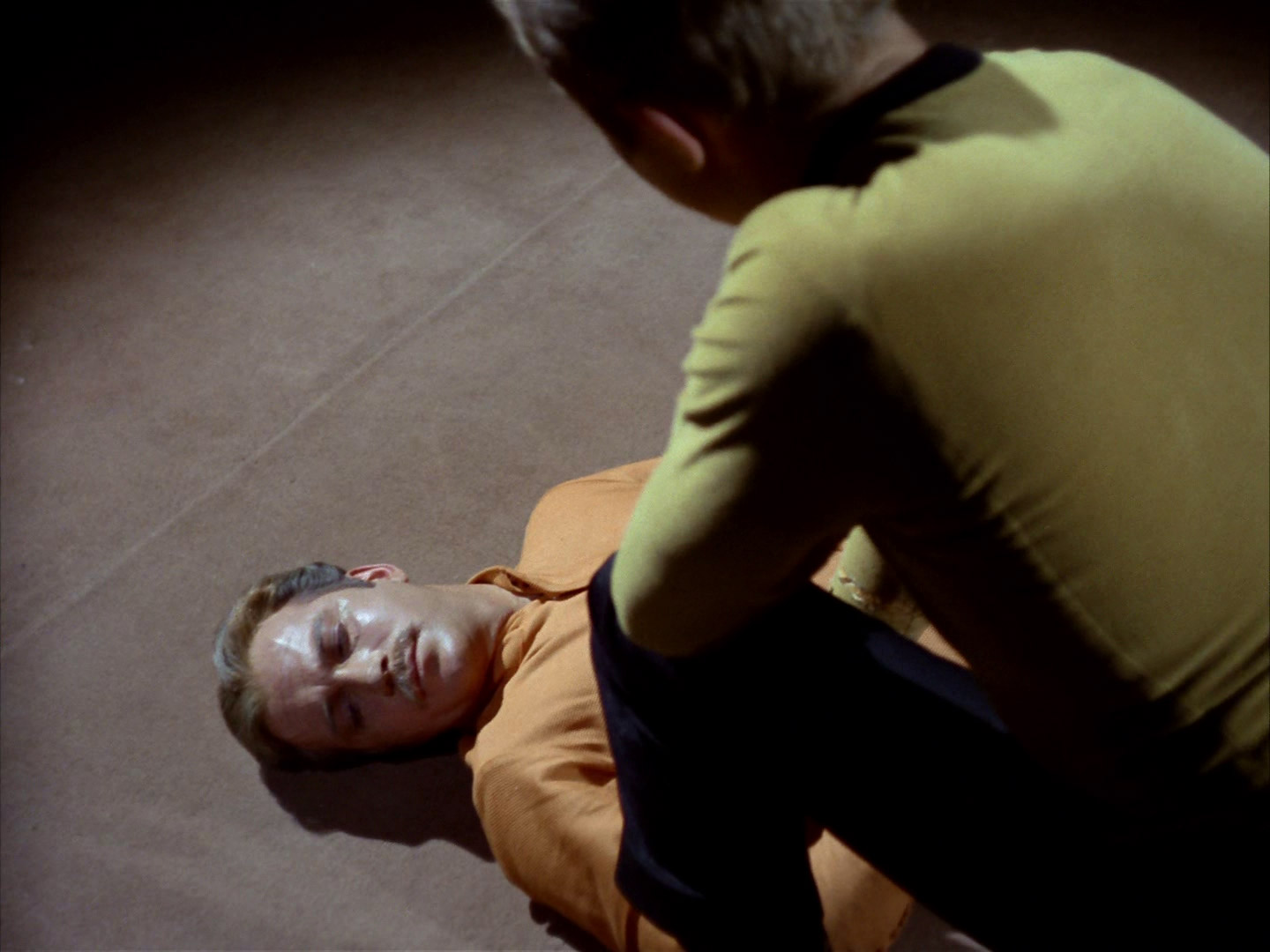
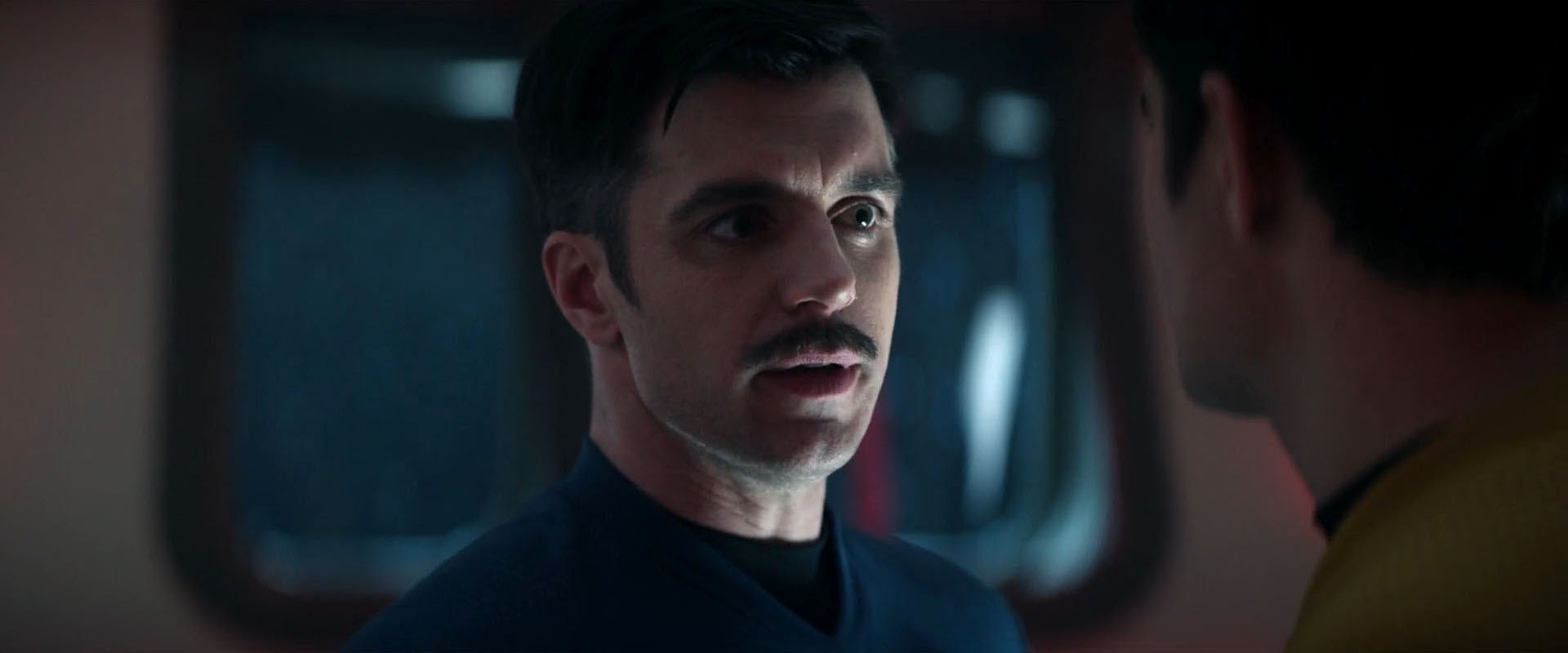
George Samuel Kirk, whom Jim calls Sam, was mentioned in TOS: "What Are Little Girls Made Of?" and appeared only once in the series, in "Operation - Annihilate!". By the time Jim Kirk finds him on Deneva, Sam is already dead, having fallen victim to the neural parasites that have taken over the colony. His wife later dies as well, while his son survives. In the brief scene in which the captain identifies his brother's body, Sam is played by William Shatner himself, with a different hairstyle and a mustache. That is practically all we know about him from TOS.
SNW gives Sam a much more extensive role, played by Dan Jeannotte rather than Paul Wesley, and develops his relationship with his brother. Since TOS provided so little information about Sam's personality or appearance beyond that brief glimpse of his body, there is little reason to object to this expansion. Overall, this is a relatively unproblematic reintroduction of a minor TOS figure.
Kyle
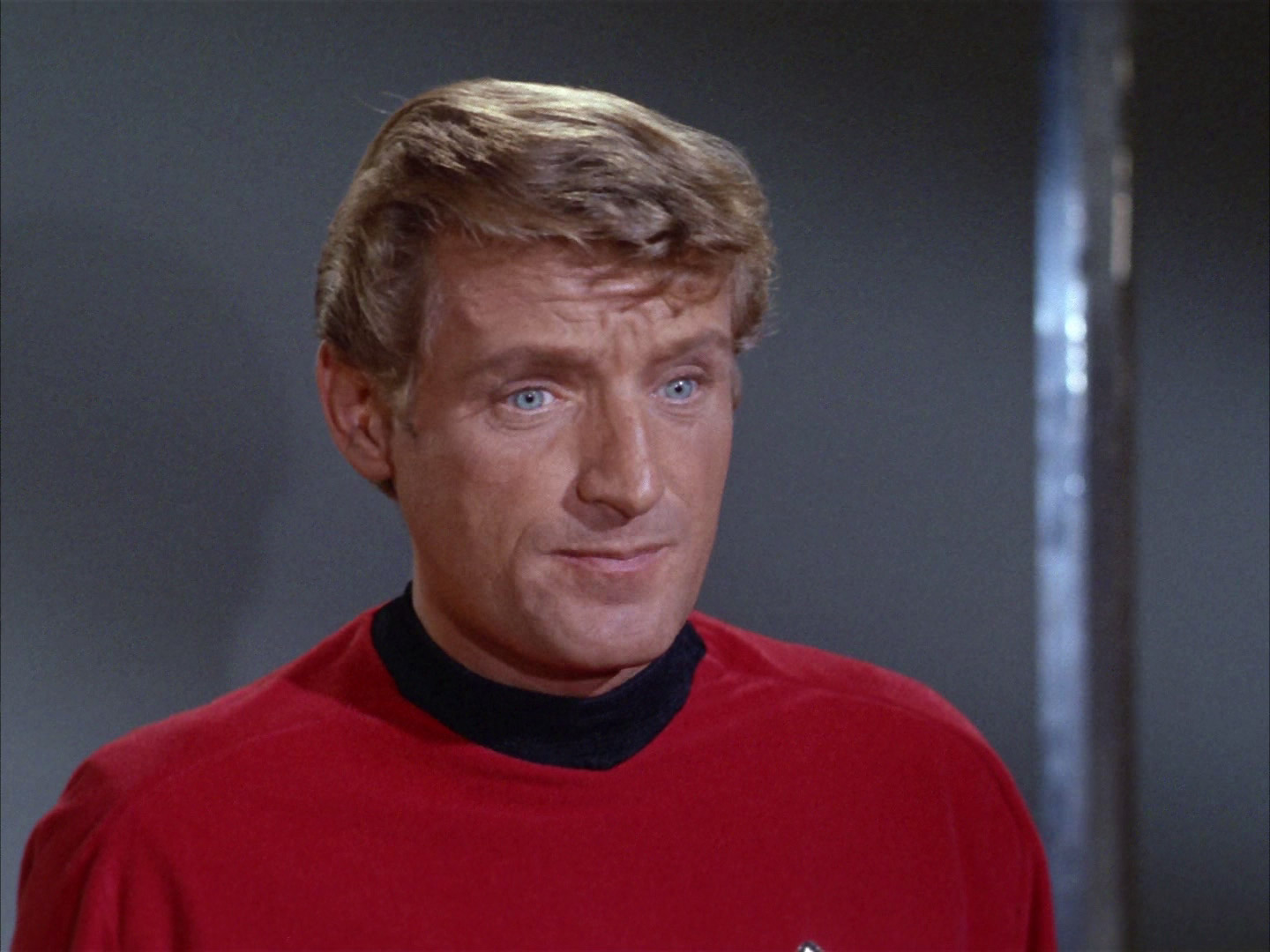
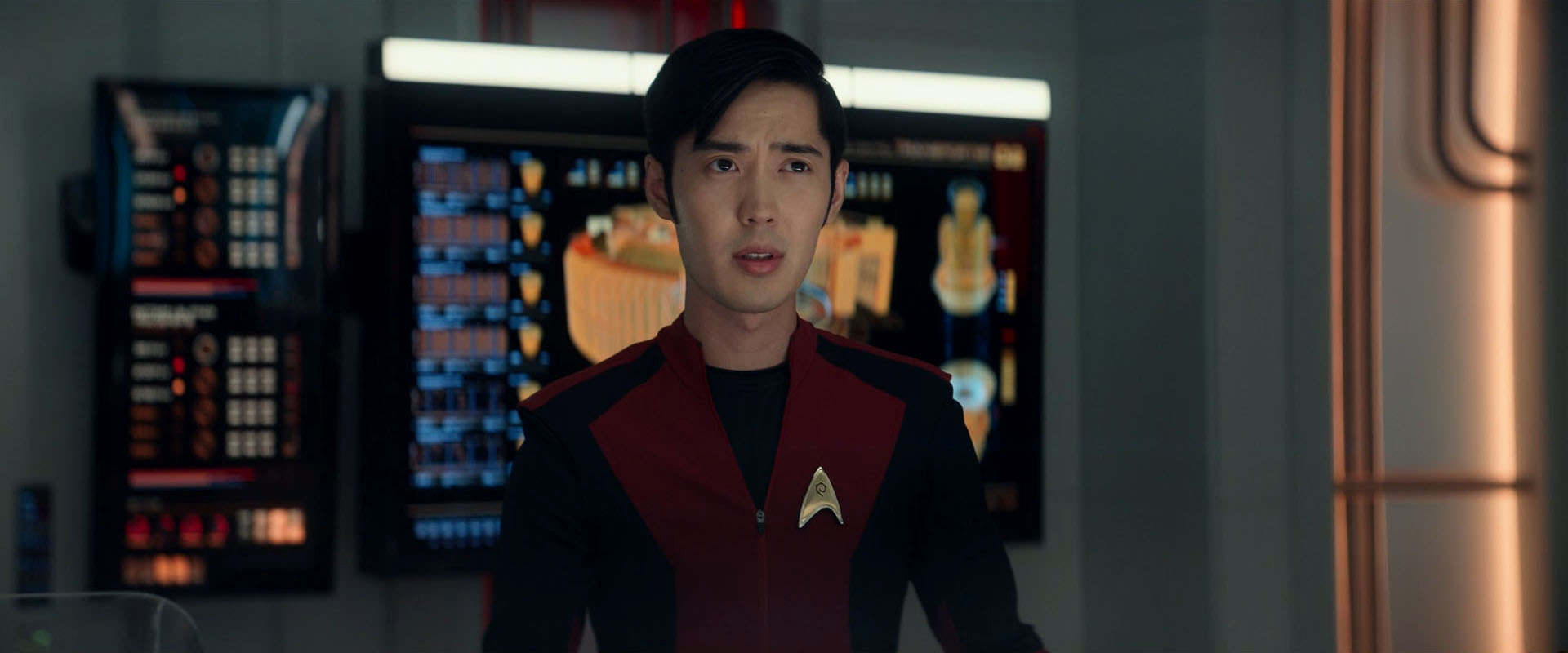
Kyle is a recurring supporting character in TOS, played by John Winston. He appears in eleven episodes and in "Star Trek II: The Wrath of Khan", usually as the Enterprise's transporter operator or chief, although he occasionally serves on the bridge. TOS gives him no characterization beyond his professional role. He is a tall, white man. SNW brings Kyle back in its first season, now played by André Dae Kim, who appears in eight episodes. The role remains as undeveloped as before, with little to distinguish him beyond his job and name. The only conspicuous difference is his appearance: the white officer from TOS is now portrayed by an Asian actor. Nevertheless, SNW clearly intends him to be the same Kyle, rather than an unrelated officer who happens to share his name.
Commander Hansen
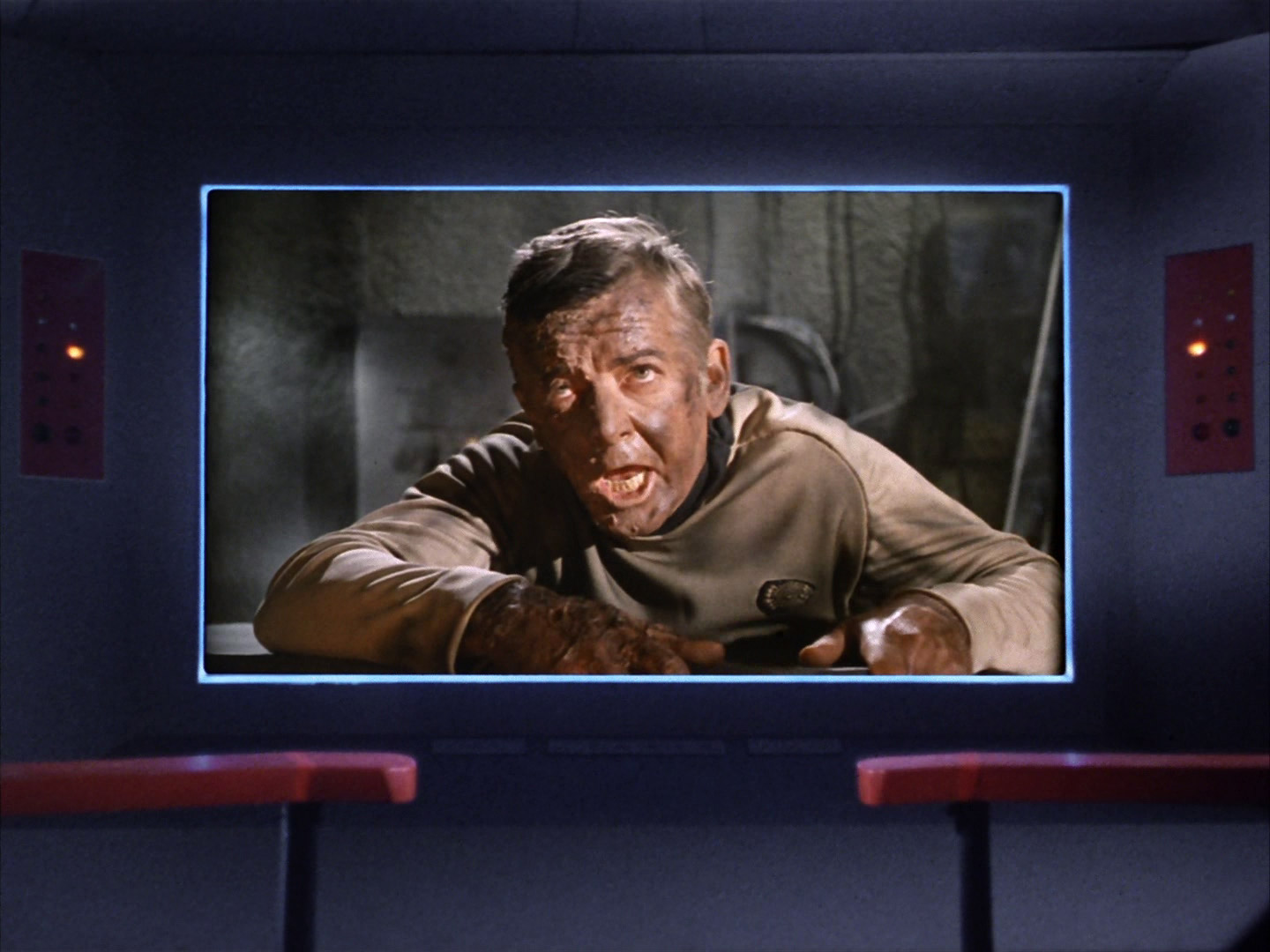
Commander Hansen appears in TOS: "Balance of Terror", where he is in charge of Outpost 4 near the Romulan Neutral Zone. He reports the devastating attack on the outpost to the Enterprise, but the Romulan ship strikes again before help can arrive, obliterating the installation and killing him. Played by Garry Walberg, Hansen is a white man whose brief appearance tells us nothing about his background or private life. He is identified only by his rank and surname.
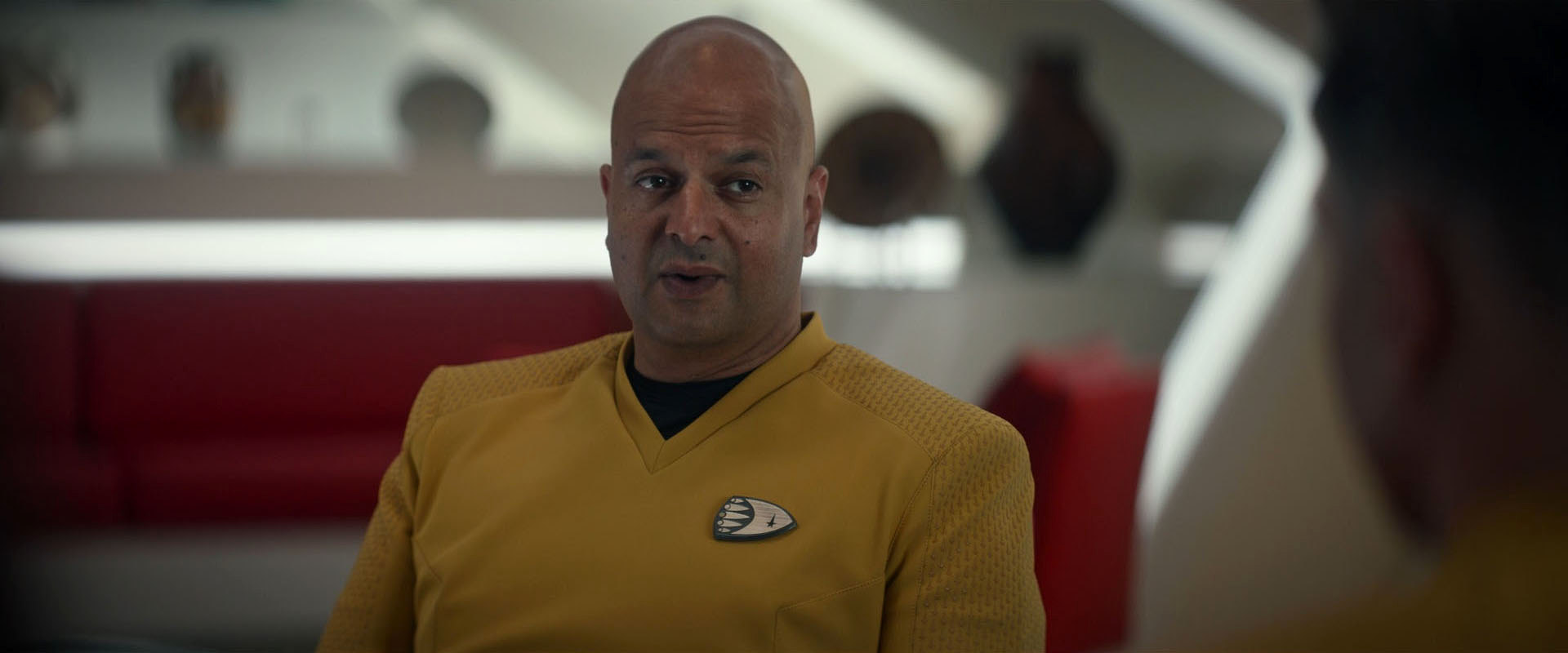
SNW revisits the character in "A Quality of Mercy", played by Ali Hassan. He is now identified as Commander Hansen Al-Salah, with Hansen presented as his first name and Al-Salah as his last name. The episode also expands his role by introducing his son, Maat, as one of the cadets that Pike would save through his sacrifice. The change in characterization is not particularly significant, since TOS established almost nothing about him. The change in appearance, however, is conspicuous: the white character from TOS is reimagined as a bald man of Middle Eastern background. The transformation of his last name to his first name is an additional peculiarity because now addressing him as "Commander Hansen" as in the TOS episode makes no sense any more.
Angela Martine
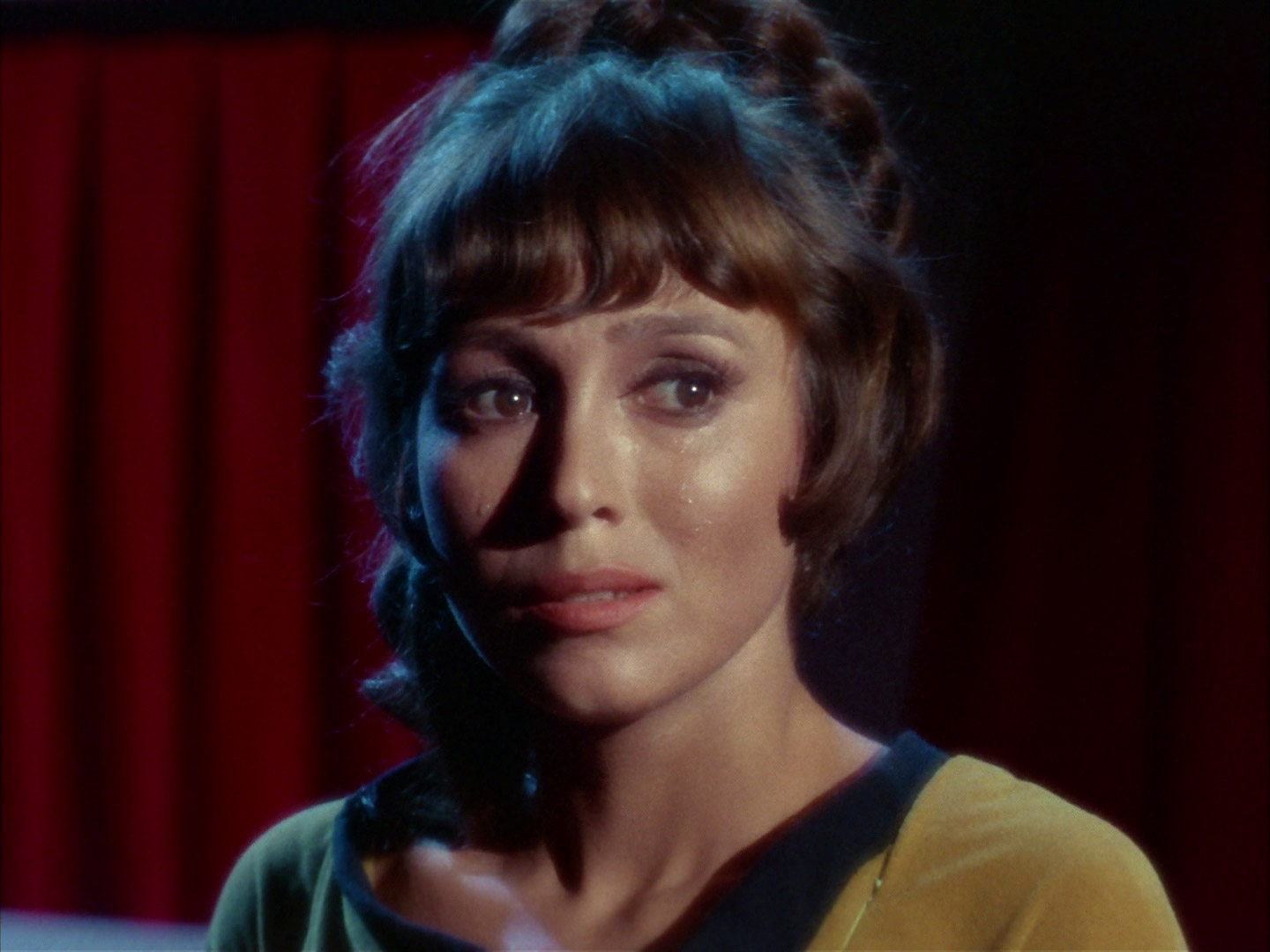
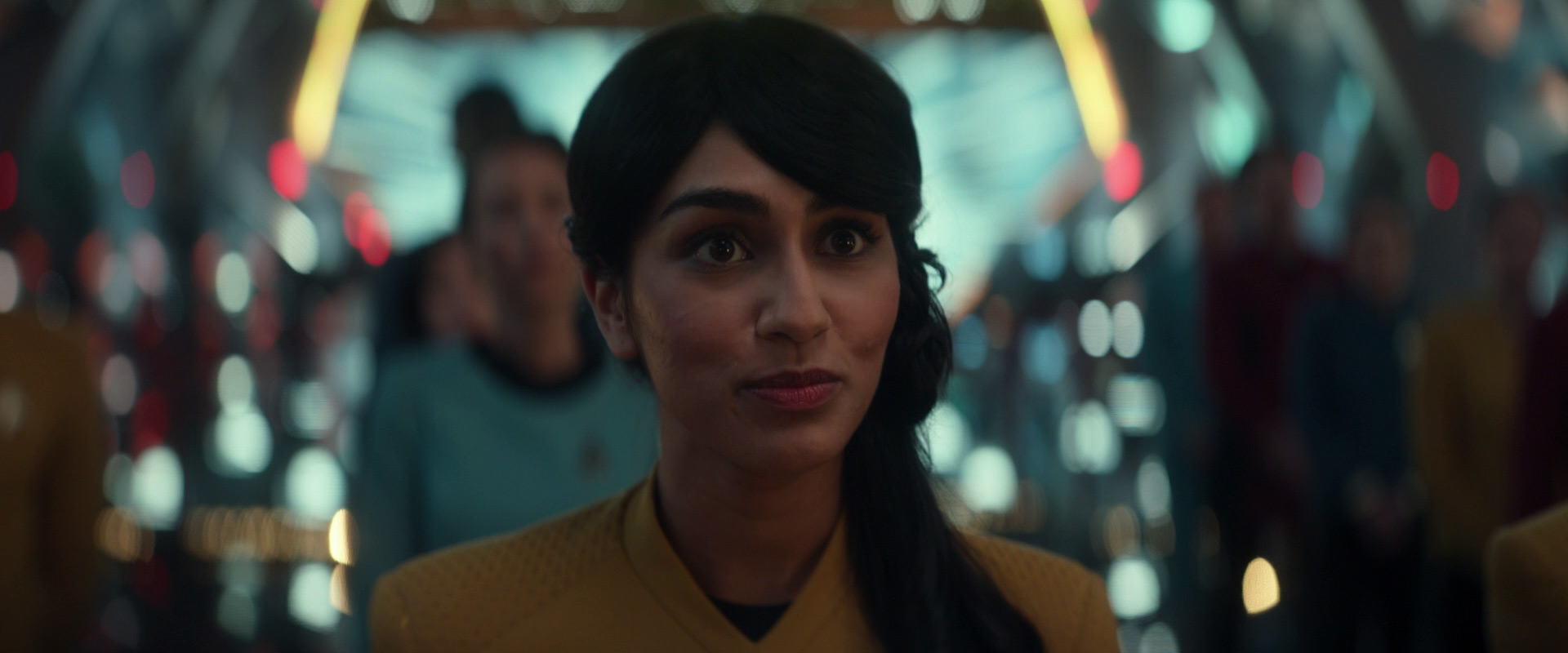
Angela Martine is the bride in TOS: "Balance of Terror", whose groom Robert Tomlinson dies in the Romulan attack. In SNW: "A Quality of Mercy", we see a wedding that is obviously supposed to be the very same, with white actress Barbara Baldavin replaced by Megha Sandhu, who is of Indian descent. She is the one who dies in SNW's alternate version of the events.
Robert Tomlinson
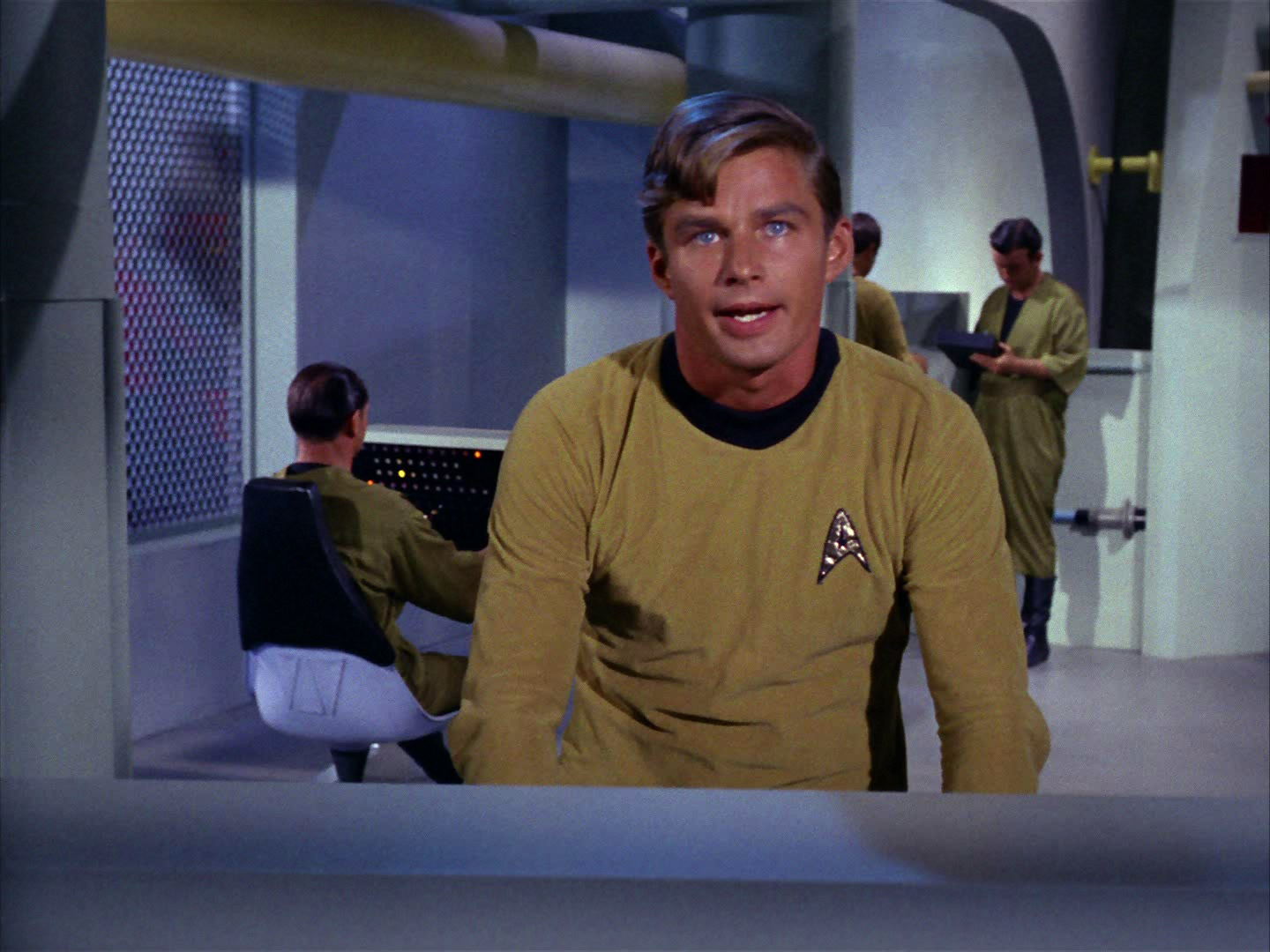
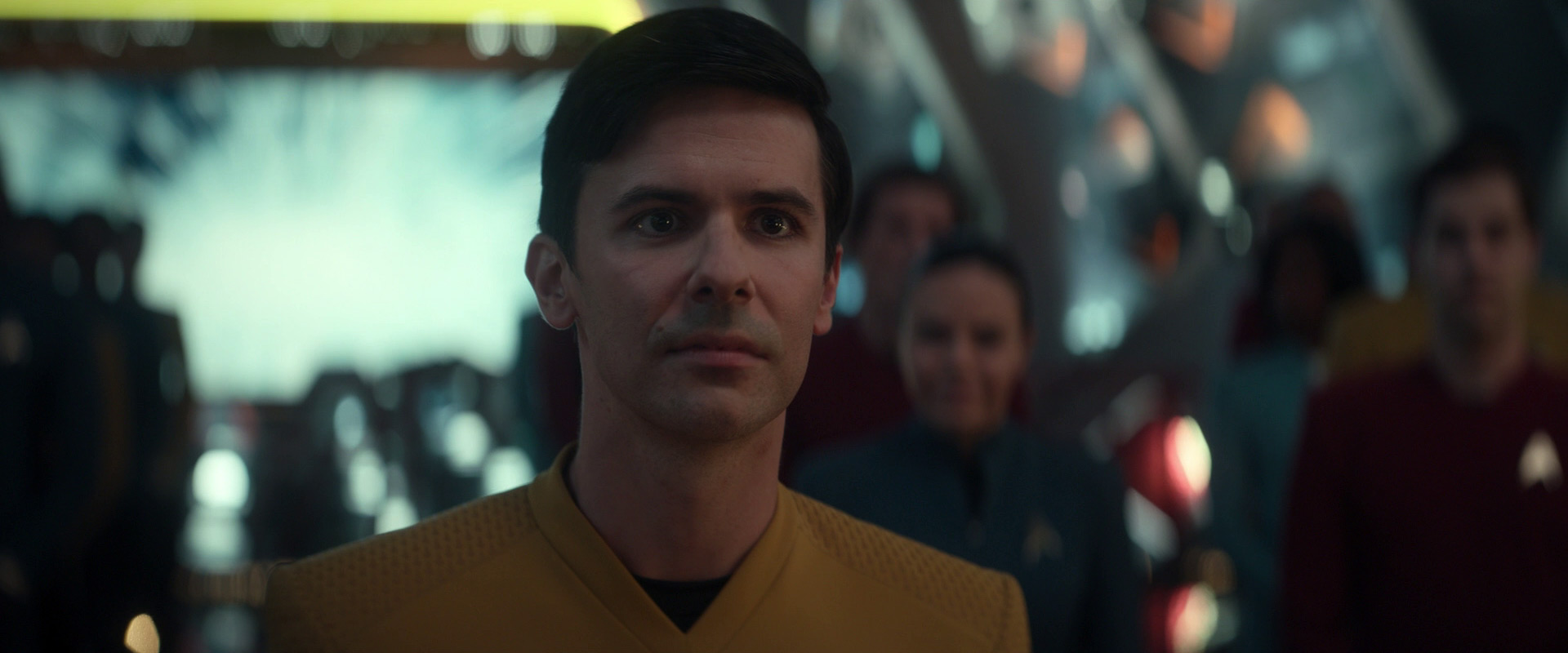
Robert Tomlinson is the groom in TOS: "Balance of Terror", played by Stephen Mines. He later dies dies in the Romulan attack. In SNW: "A Quality of Mercy", we see a wedding that is obviously supposed to be the very same, with Ian Rayburn as the groom. It is his bride that dies in SNW's alternate version of the events.
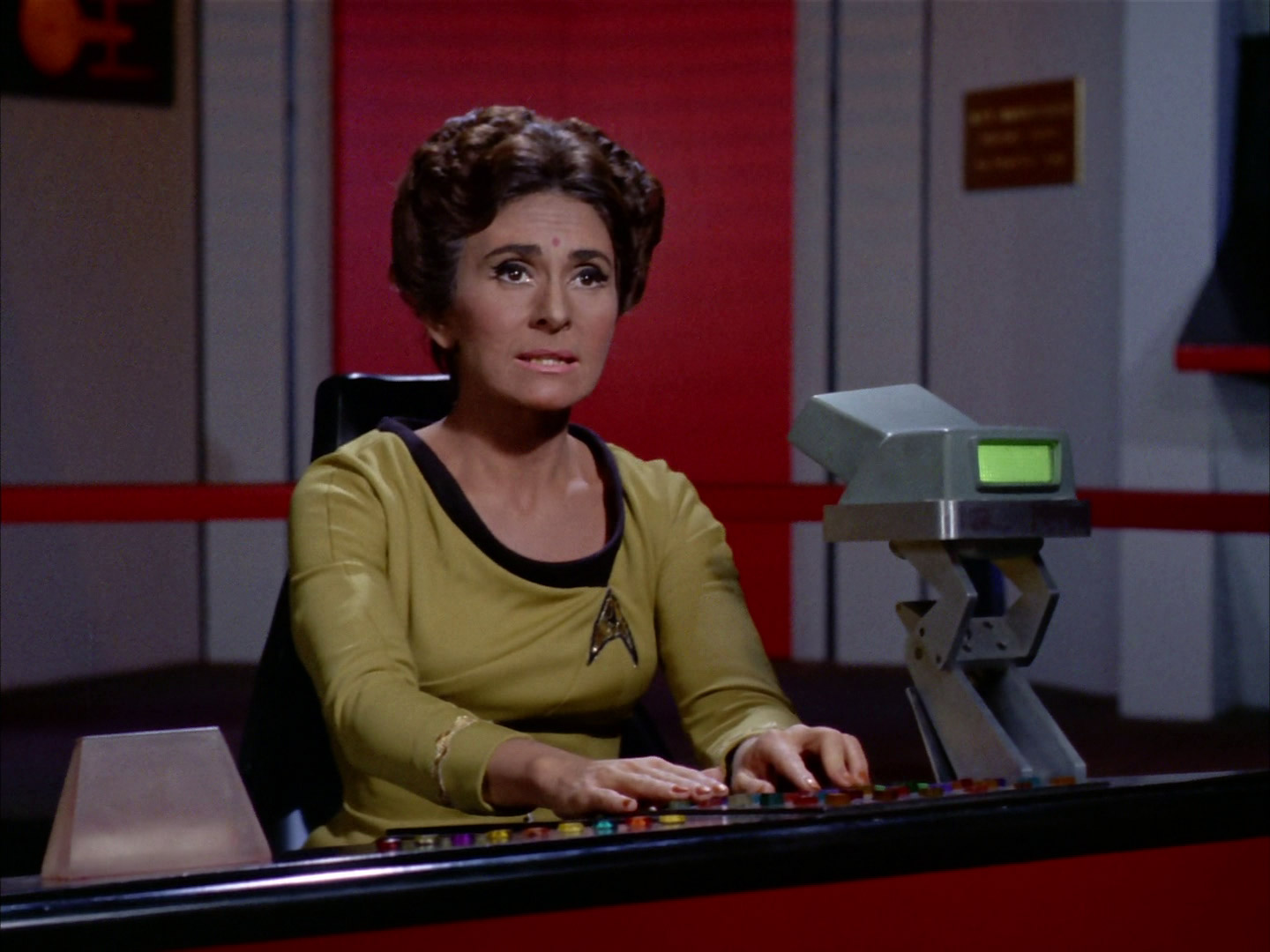
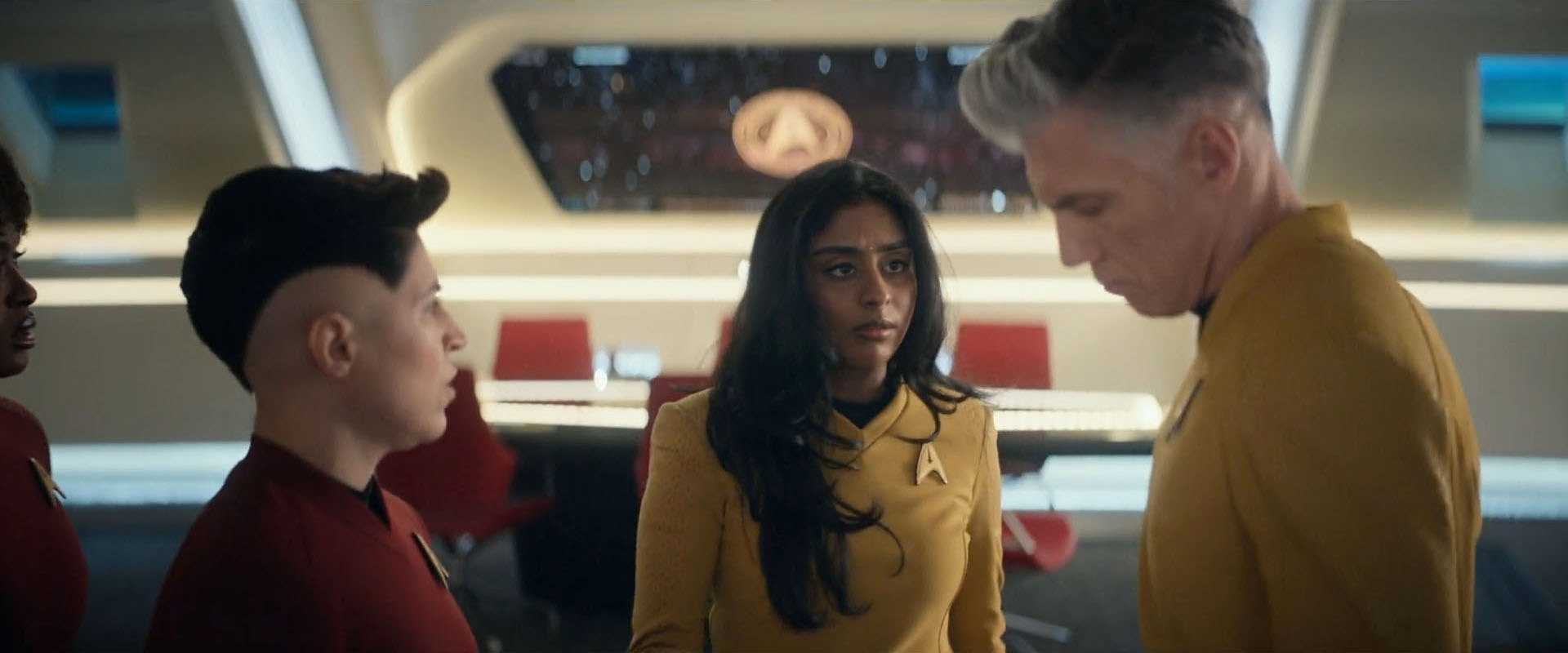
Lieutenant Rahda
Lieutenant Rahda appears only once in TOS, in "That Which Survives", where she takes over at the helm of the Enterprise. The character is clearly meant to be South Asian, with a bindi on her forehead, but is played by white actress Naomi Pollack. TOS provides no information about her personality. SNW brings Rahda back in season 4's "Off-Hour", now played by Abinaya Sivakumaran. The two actresses look quite different, but the recasting is a reasonable choice that better reflects the character's intended ethnic background.
Dr. Boyce
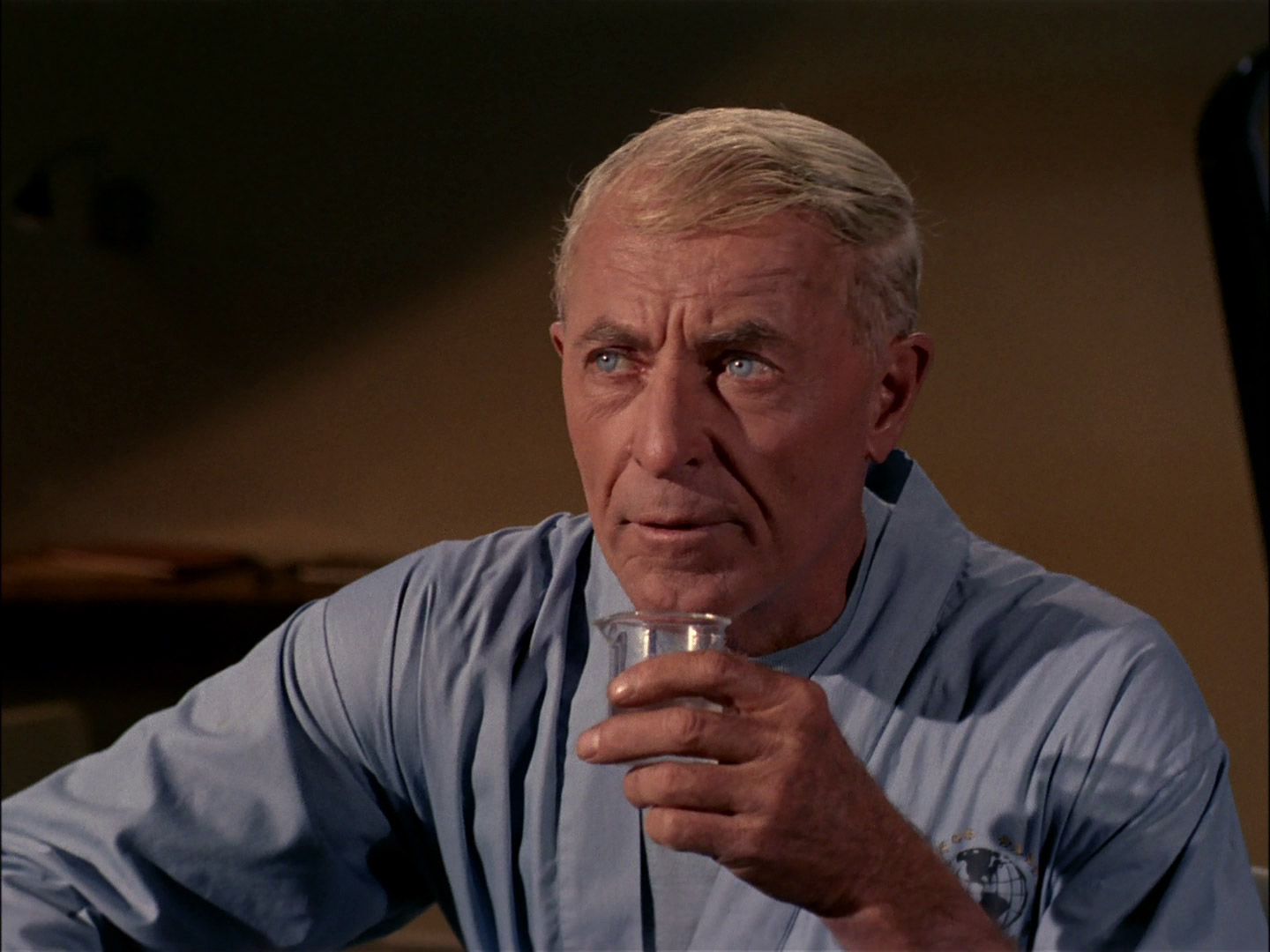
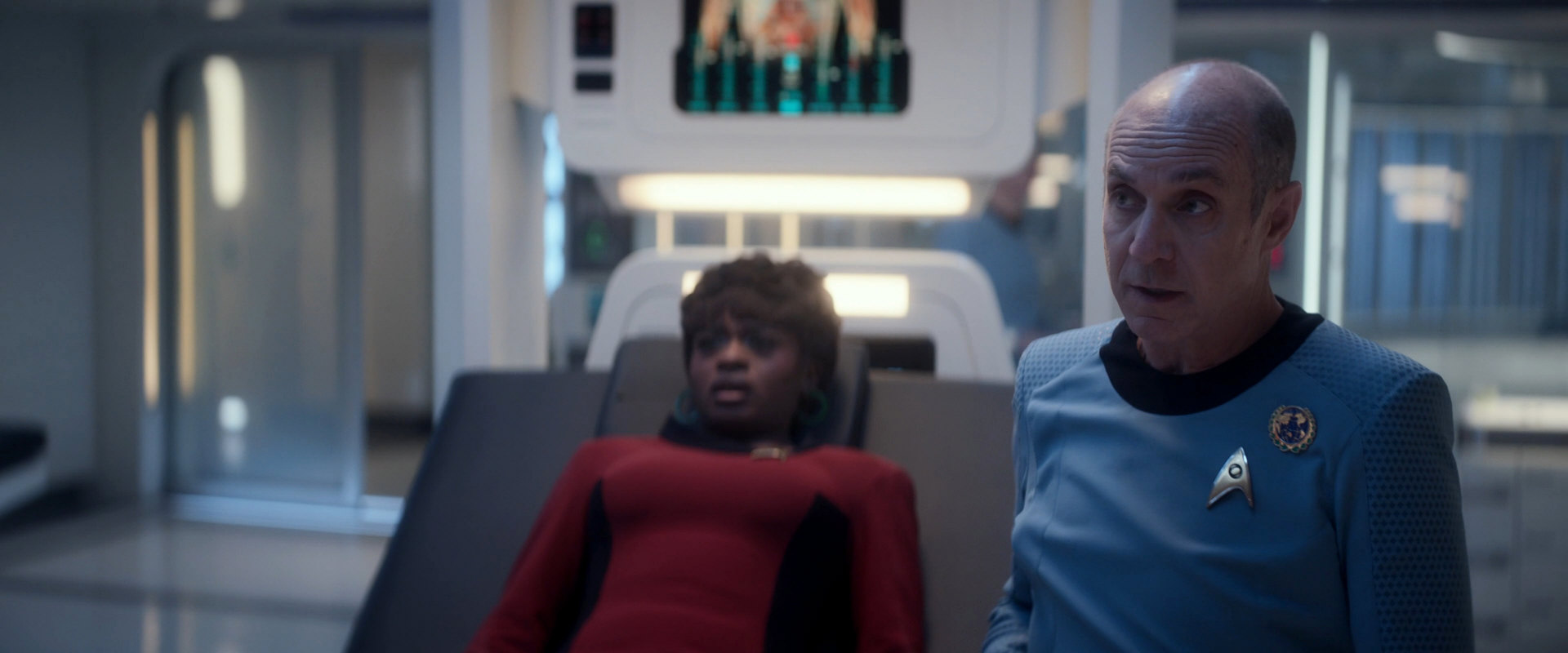
Dr. Boyce appeared in the original pilot, "The Cage", where he was Pike's chief medical officer and a trusted, almost fatherly friend. He was an older man with white hair, and his calm, experienced manner made him a reassuring presence for the captain. SNW brings him back in season 4, apparently to take over from M'Benga, but this return is difficult to reconcile with what we know about the Enterprise's medical staff in the years that follow. TOS establishes Dr. Piper as the Enterprise's doctor before McCoy takes over, so Boyce's renewed presence raises the question of why he has returned to the ship at all, and for how long.
The new Boyce also looks noticeably different. He is played by Brian Markinson, who is bald yet appears younger than John Hoyt as the white-haired physician in "The Cage", despite the passage of several years. Well, in reality the two actors' ages are almost a match, as Markinson is a bit older than Hoyt was when he played TOS-Boyce. But more importantly, Boyce's behavior in SNW lacks the warmth and reassuring authority of the original. In "Off-Hour", when he orders Chapel to tend to lightly injured crew members in the galley instead of helping M'Benga, he comes across as unnecessarily callous rather than as the friendly man we met in "The Cage". Although the role in "The Cage" was rather small, this is an unconvincing reintroduction of a character for whom there would have been no reason to return in the first place.
Dr. Roger Korby
Dr. Roger Korby (Michael Strong) appears in TOS: "What Are Little Girls Made Of?", where he is introduced as a renowned scientist whose work is required reading at Starfleet Academy. He is also Christine Chapel's fiancé, and she has joined the Enterprise partly in the hope of finding him after he disappeared five years earlier. When they finally meet, however, Korby has changed profoundly. His increasingly disturbing experiments reveal how far he has moved away from the man Chapel once loved. It turns out that Korby is actually dead and has been replaced by an android. Overall, although we never see the real Korby, we can take for granted that the android is a convincing replica because it deceives Chapel. We can take away that he is visually a man in his late forties, and story-wise a distinguished scientist with a long career.
SNW introduces a much younger, dashing version of Korby, played by Cillian O'Sullivan, in "Wedding Bell Blues". He is already an accomplished scientist, but it is hard to believe he could have written works that are required reading at the Academy for at least 15 years already. His age, characterization and relationship with Chapel seem more like an attempt to create a new character. He feels designed as a more fitting love interest for the "new" assertive Chapel and a rival for Spock, rather than a convincing slightly younger version of the man we meet in TOS. The age difference and the contrast in their personalities make the connection difficult to accept. Korby's involvement in SNW's elaborate romantic entanglements also adds to the impression that an established character has been reworked to serve the newer series rather than developed in a way that leads naturally to TOS.
Amanda Grayson
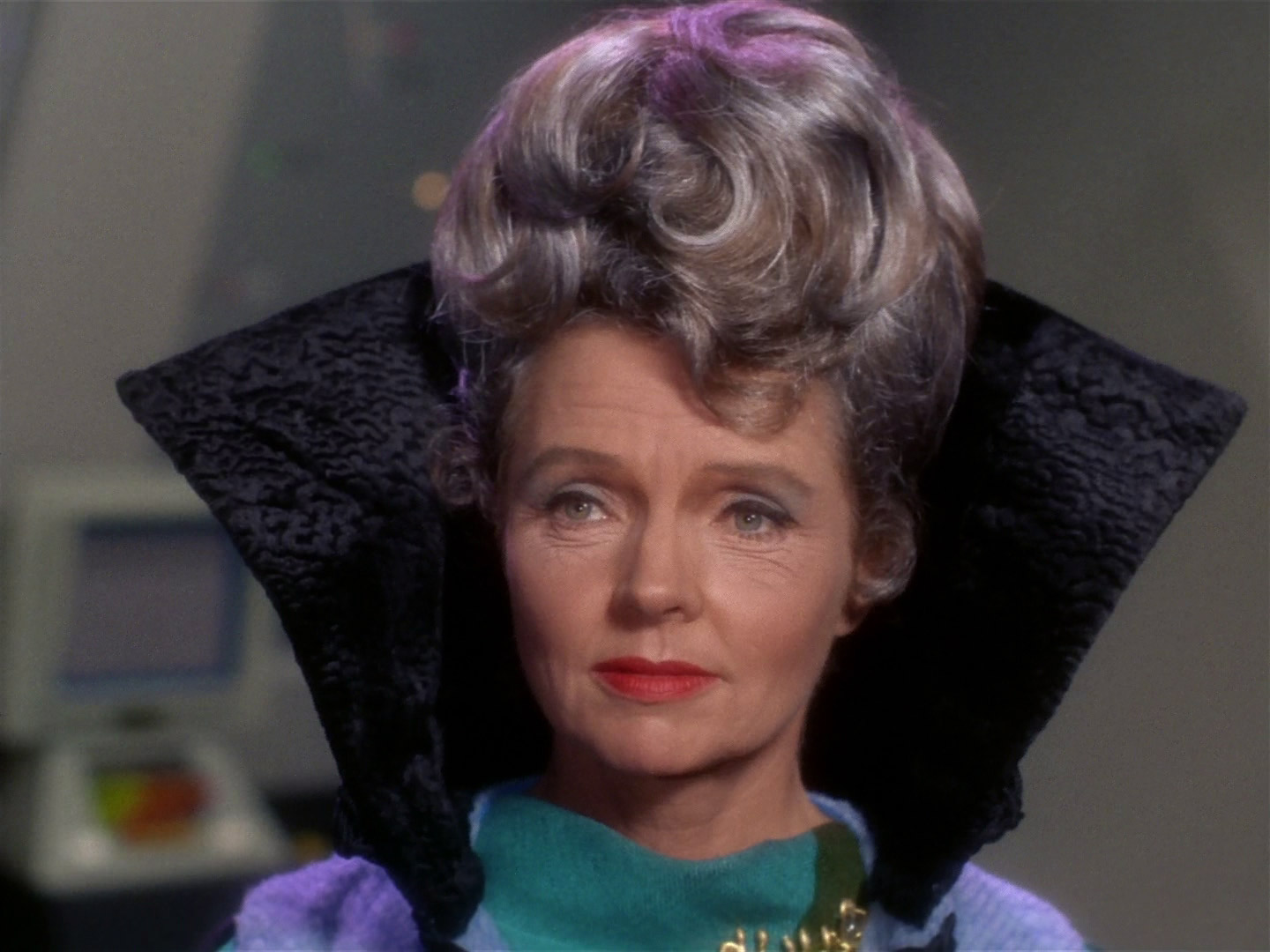
In TOS: "Journey to Babel" and the film "Star Trek IV: The Voyage Home", Amanda Grayson, Spock's human mother and Sarek's wife, is played by Jane Wyatt. She encourages Spock to acknowledge his human heritage rather than submit entirely to Vulcan logic, and she is not afraid to challenge Sarek when she believes he is being unreasonable. Although her appearances in classic Trek are limited, they establish her as a warm, perceptive and strong-willed woman.
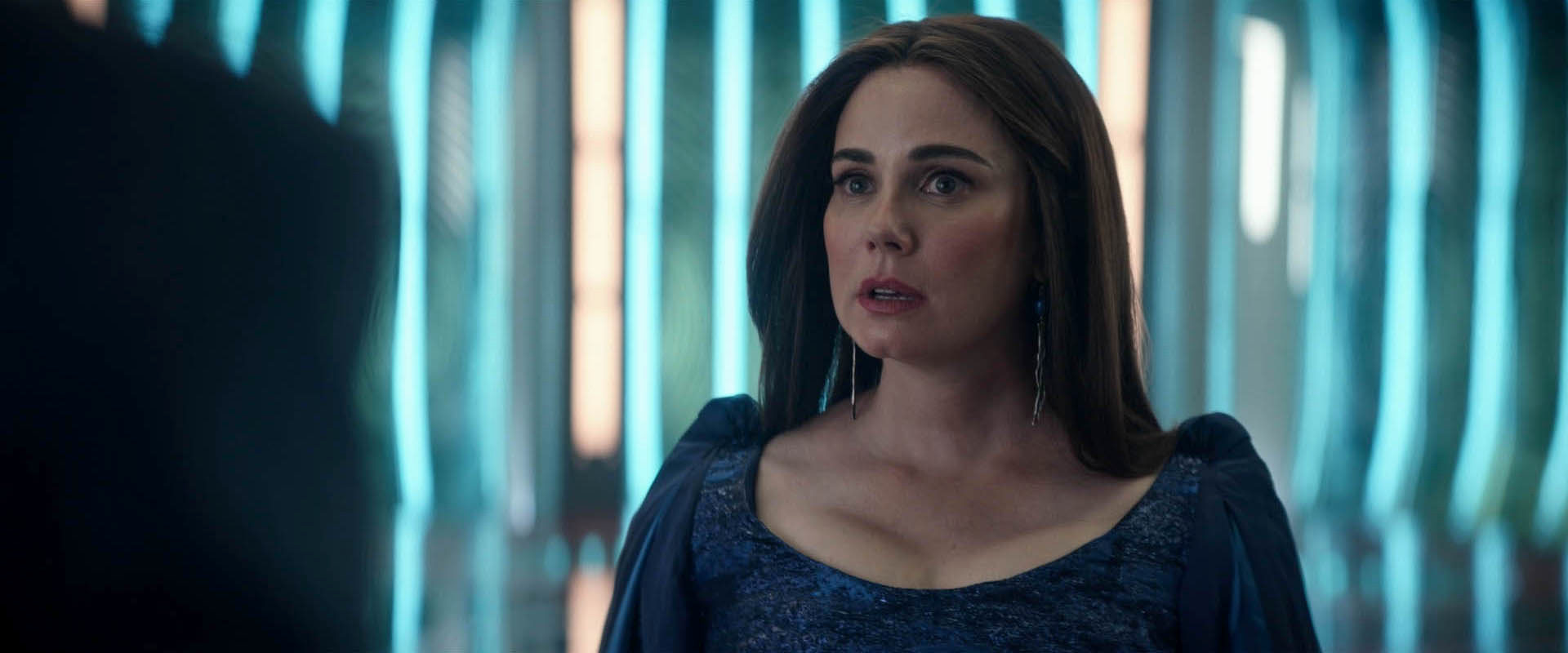
Mia Kirshner's portrayal in Discovery and SNW gives Amanda a much more extensive family history, also through her role as the foster mother of Michael Burnham. She is more directly involved in family conflicts and more openly protective of her children (DIS: "Light and Shadows"), but these developments do not fundamentally contradict the character established in TOS. In SNW: "Charades", as silly as the premise is, she helps Spock navigate a difficult Vulcan engagement ritual and demonstrates the resilience she has developed while living among Vulcans. The main difference is visual: Kirshner looks younger than Wyatt did in "Journey to Babel", even though the events of SNW precede that episode by just a few years. If Amanda appears again near the end of SNW, it will be interesting to see whether the series makes any effort to bridge that difference in appearance. Overall, Amanda is a relatively unproblematic reintroduction, and the expanded role gives us more insight into the woman behind Spock's human heritage.
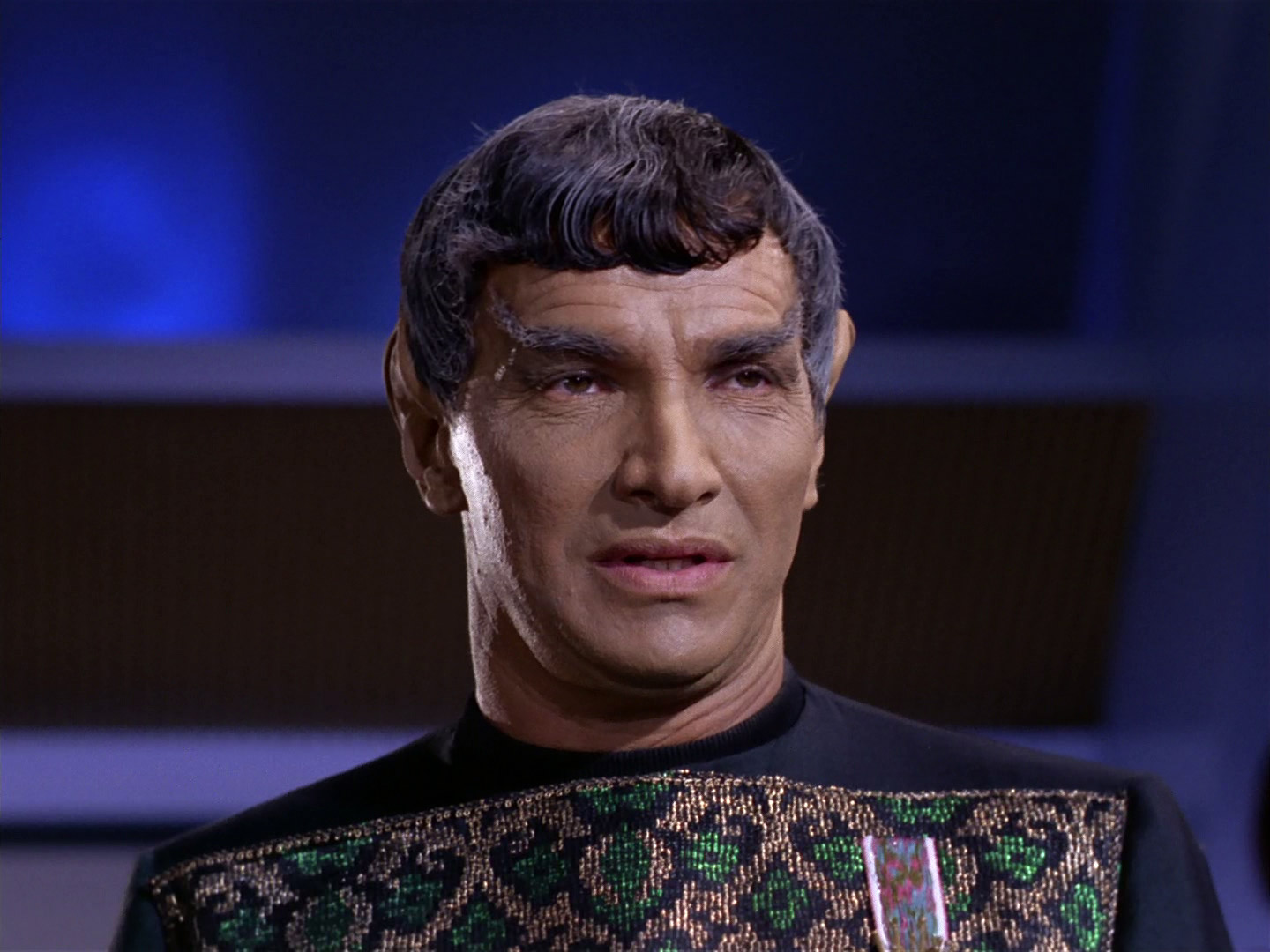
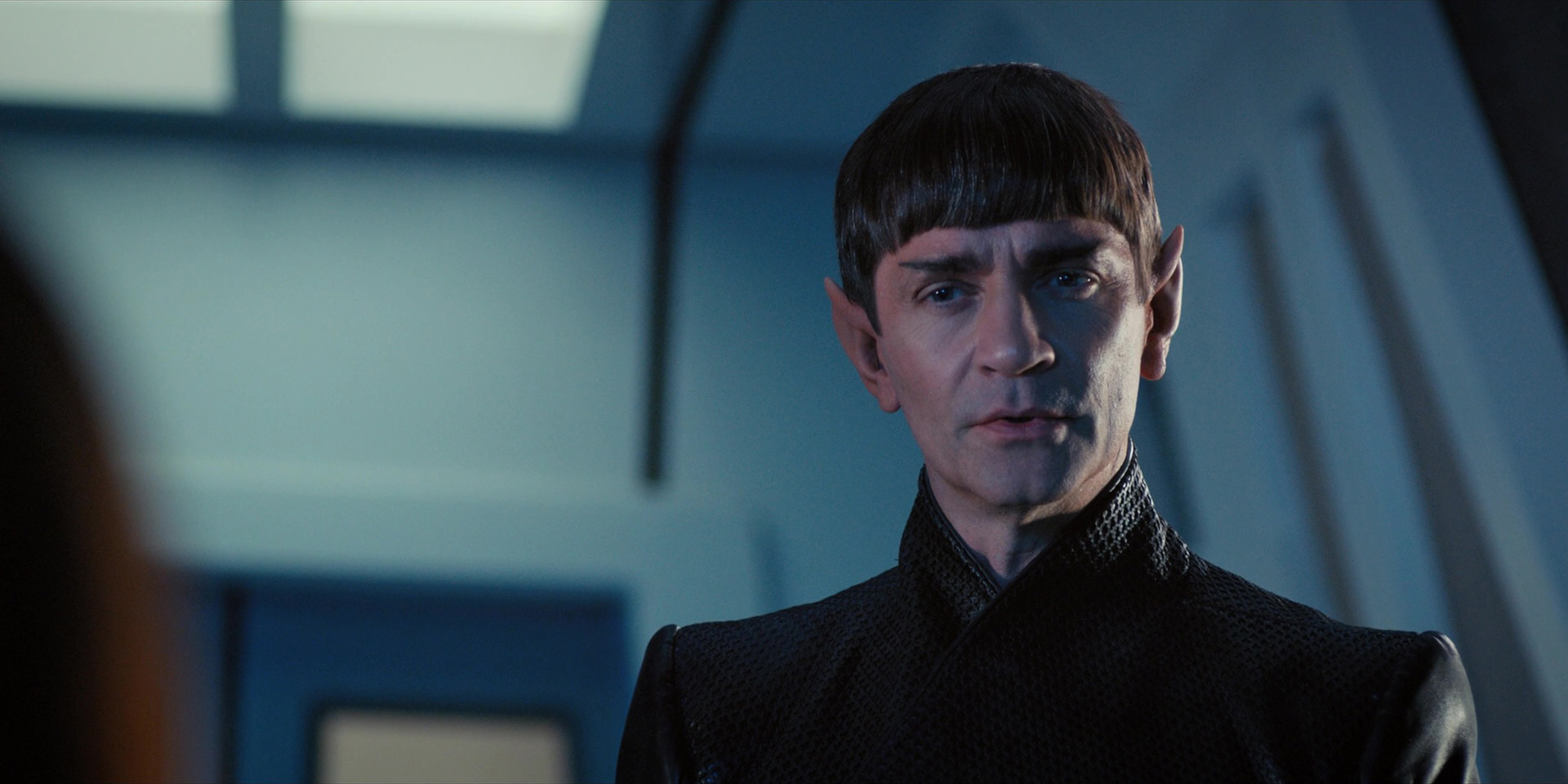
Sarek
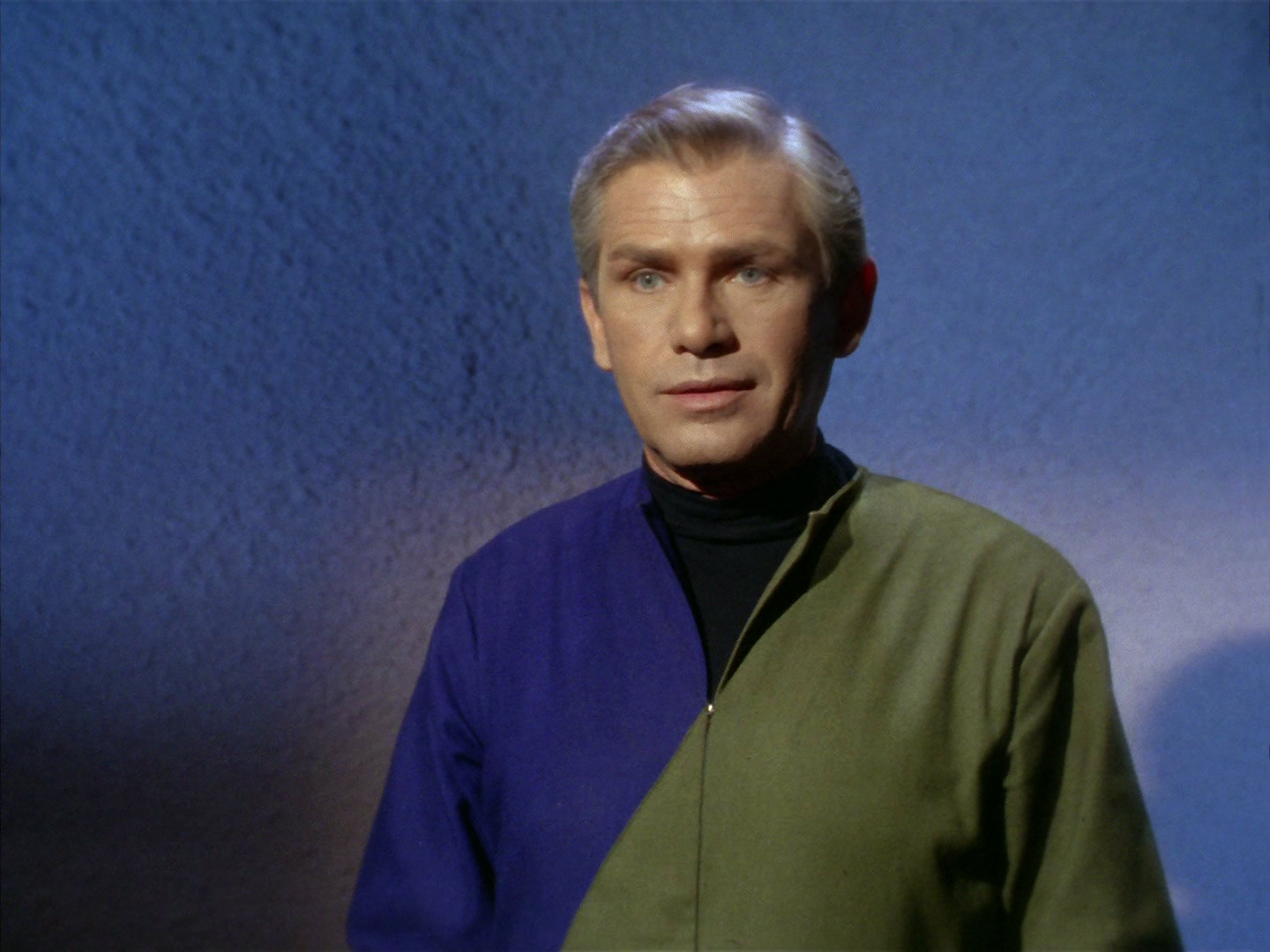
Sarek, played by Mark Lenard, is introduced in TOS in "Journey to Babel" as a distinguished Vulcan ambassador and a traditionalist who expects his son to follow the Vulcan path. He wanted Spock to enter the Vulcan Science Academy, but Spock chose Starfleet instead, leading to an estrangement that lasted 18 years, according to his wife Amanda. Sarek's marriage to a human woman shows that he is not entirely conventional, but his disapproval of Spock's career choice is central to their relationship. In the subsequent films, he gradually reconciles with his son and eventually acknowledges that his judgment may have been wrong. Throughout these appearances, Sarek is a diplomat committed to logic, restraint and peaceful solutions to political conflicts.
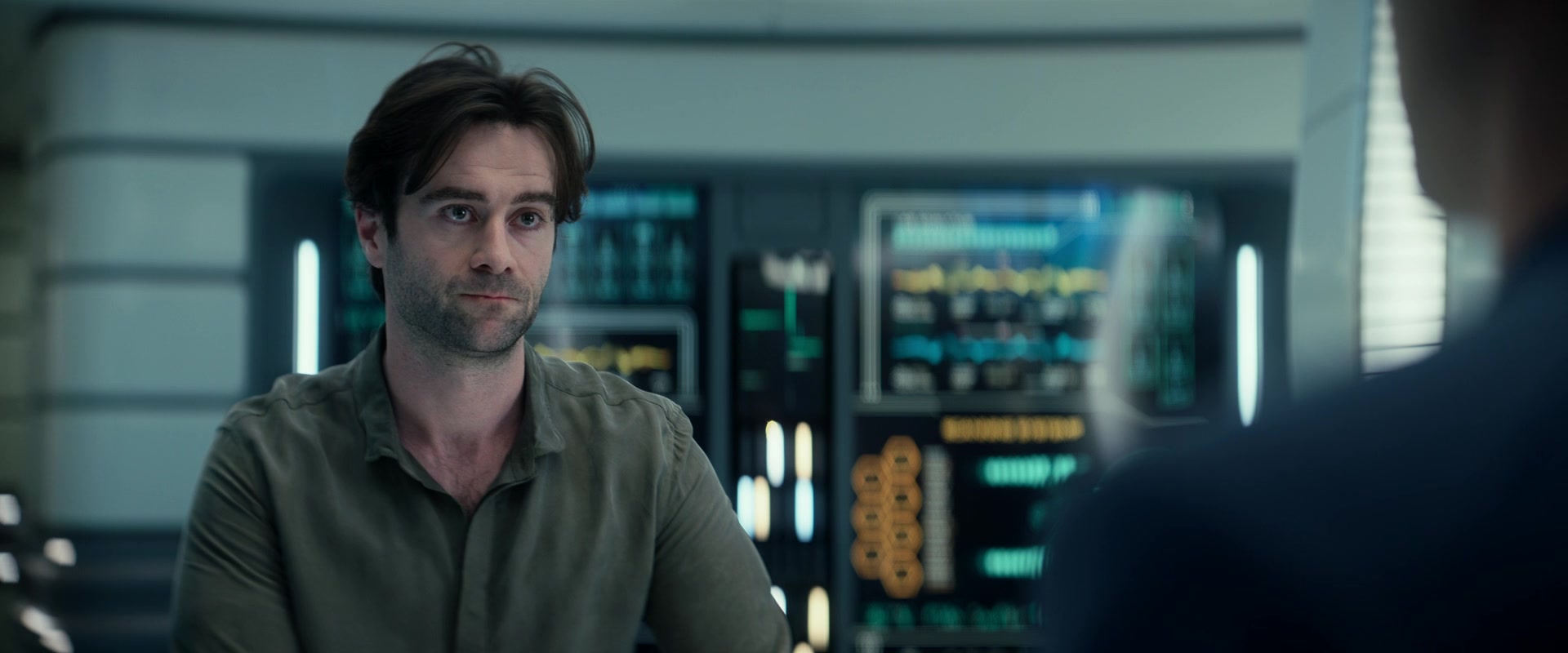
Discovery, with James Frain in the role, substantially expands Sarek's history, particularly through his relationship with his adopted human daughter, Michael Burnham. DIS: "Lethe" adds a new dimension to his conflict with Spock: Sarek chose Spock over Michael as the candidate for the Vulcan Expeditionary Group, only for Spock to reject the opportunity in favor of Starfleet. This fits reasonably well with the estrangement established in TOS, although the additional family history makes Sarek's personal life considerably more complicated.
The greater problem is his role in the Federation's war against the Klingons. In season 1, he is closely involved in Starfleet's strategic decisions and supports an increasingly ruthless approach to winning the war, including the use of Emperor Georgiou's military expertise. The proposed attack on Qo'noS ultimately comes close to genocide, although the plan to destroy the planet is Georgiou's, not Sarek's. This wartime pragmatism sits uneasily alongside the ambassador in TOS, whose career is defined by diplomacy and peaceful coexistence. We may argue that the desperate circumstances of the war explain the difference, but the problem remains that Discovery makes Sarek far more closely involved with Starfleet than his portrayal in classic Trek would allow. His renewed contact with Starfleet in the films does not resolve this discrepancy. Overall, Discovery gives Sarek a more militaristic role that is difficult to reconcile with the traditionalist diplomat we meet in TOS.
T'Pring
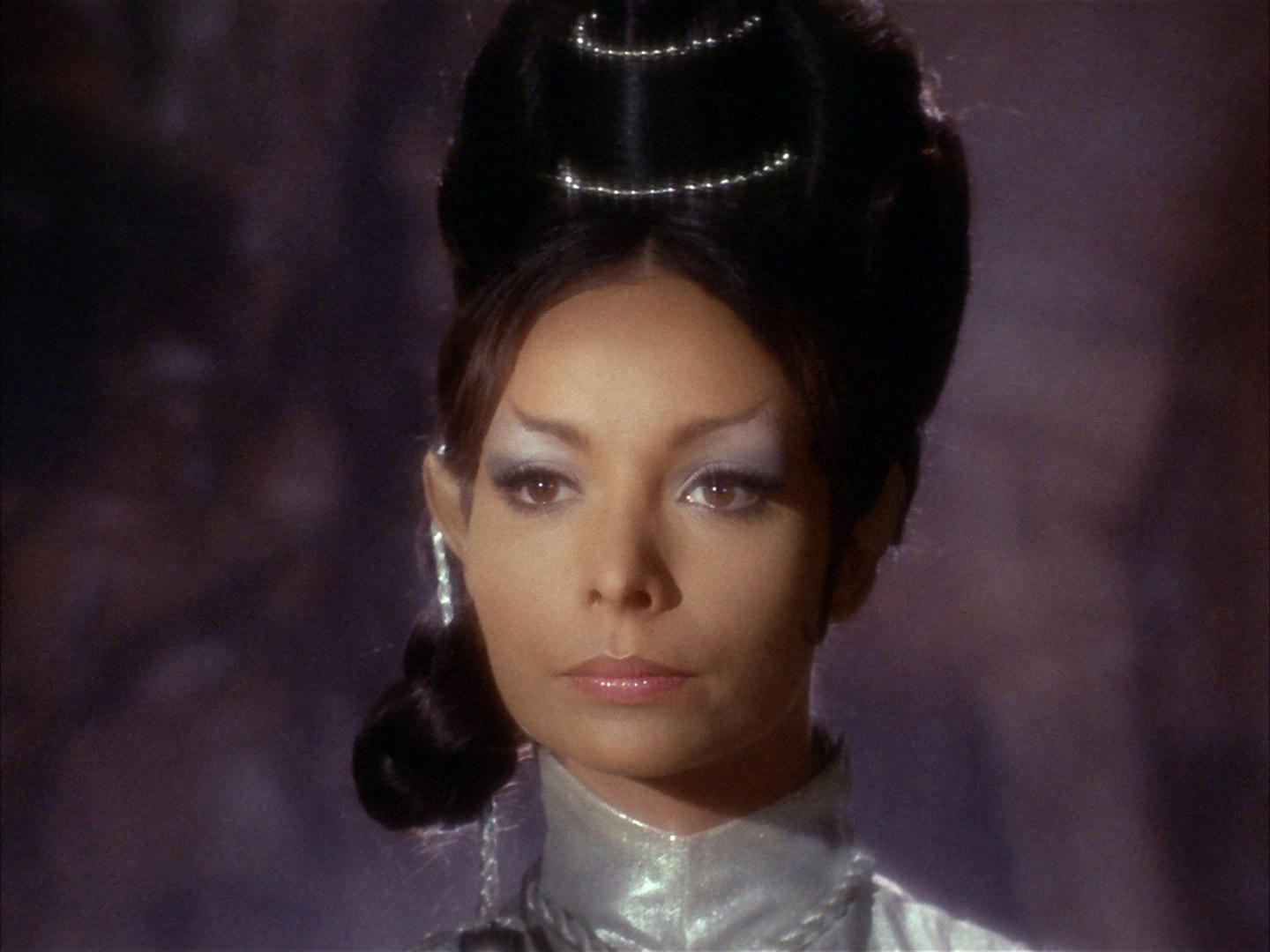
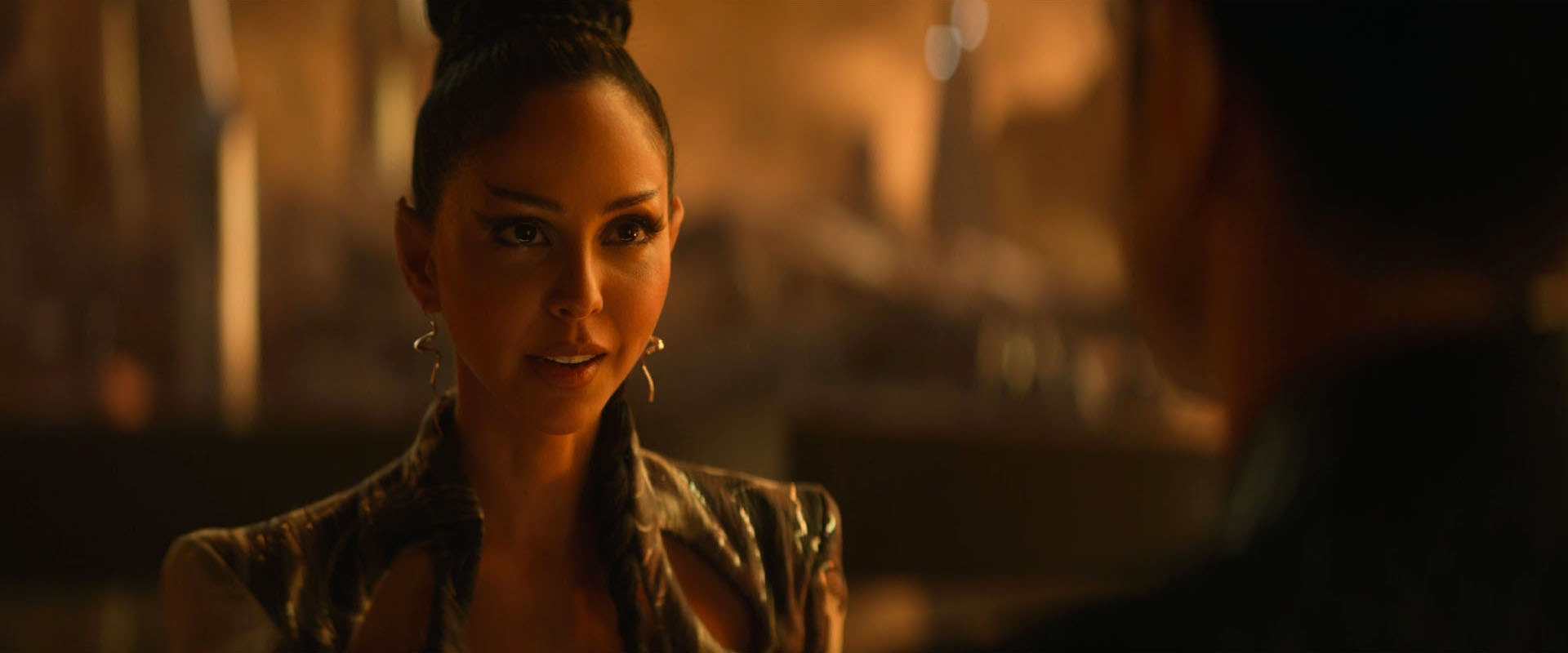
T'Pring (Arlene Martel) is introduced in TOS in "Amok Time" as Spock's fiancée, to whom he has been bonded since childhood according to Vulcan custom. The story depends on the fact that she remains a mystery to the Enterprise crew. Even though Spock and T'Pring are engaged, they appear to have had little contact over the years, and neither Uhura nor Chapel recognizes her when she appears on the viewscreen. T'Pring herself reveals little about her intentions. She appears to follow Vulcan tradition, but she has her own agenda and ultimately uses the kal-if-fee ritual to free herself from her bond with Spock so that she can marry Stonn. Her reserve and cunning are essential to the story.
SNW, with T'Pring played by Gia Sandhu, takes a very different approach and ultimately tells a very different story. She is a recurring character who frequently visits the Enterprise and interacts with Spock and the rest of the crew. Unlike her TOS counterpart, she has an on-and-off relationship with Spock, repeatedly discussing what she expects from him whenever they meet. Thanks to the ultrafast ship she uses in "The Serene Squall", she can and does visit him whenever she wants. There are no real secrets between them, and little reason why there should be. She appears in episodes with increasingly elaborate comic situations built around his emotional conflicts, including "Spock Amok" and "Charades". She also appears in Spock's imagined scenarios, as in "The Griffin Incident" and "Level-Five Transporter Accident", although she herself is just an illusion on the first occasion. They have even broken up for a year or two before resuming their relationship after the latter episode. Under these circumstances, the ritual in "Amok Time" makes little sense. Why would T'Pring need to invoke a formal Vulcan ritual to end a relationship that she has apparently ended before? Why would she need to keep her intention to marry Stonn secret? SNW's Spock has had romantic relationships of his own, which T'Pring must have been aware of or at least suspected. The cultural norms, distance and lack of communication that make the TOS situation possible simply don't exist in SNW. T'Pring is no longer a mysterious fiancée whose private life is largely unknown to Spock. And everyone aboard the Enterprise, including Chapel and Uhura, is familiar with her too.
This all undermines the very circumstances on which "Amok Time" relies. The problem is not so much Sandhu's performance or the physical differences from the original portrayal. TOS leaves room for a different actress and a more detailed personality. Rather, SNW has made T'Pring so familiar and accessible that her role in the original story becomes extremely hard to reconcile with what we have seen.
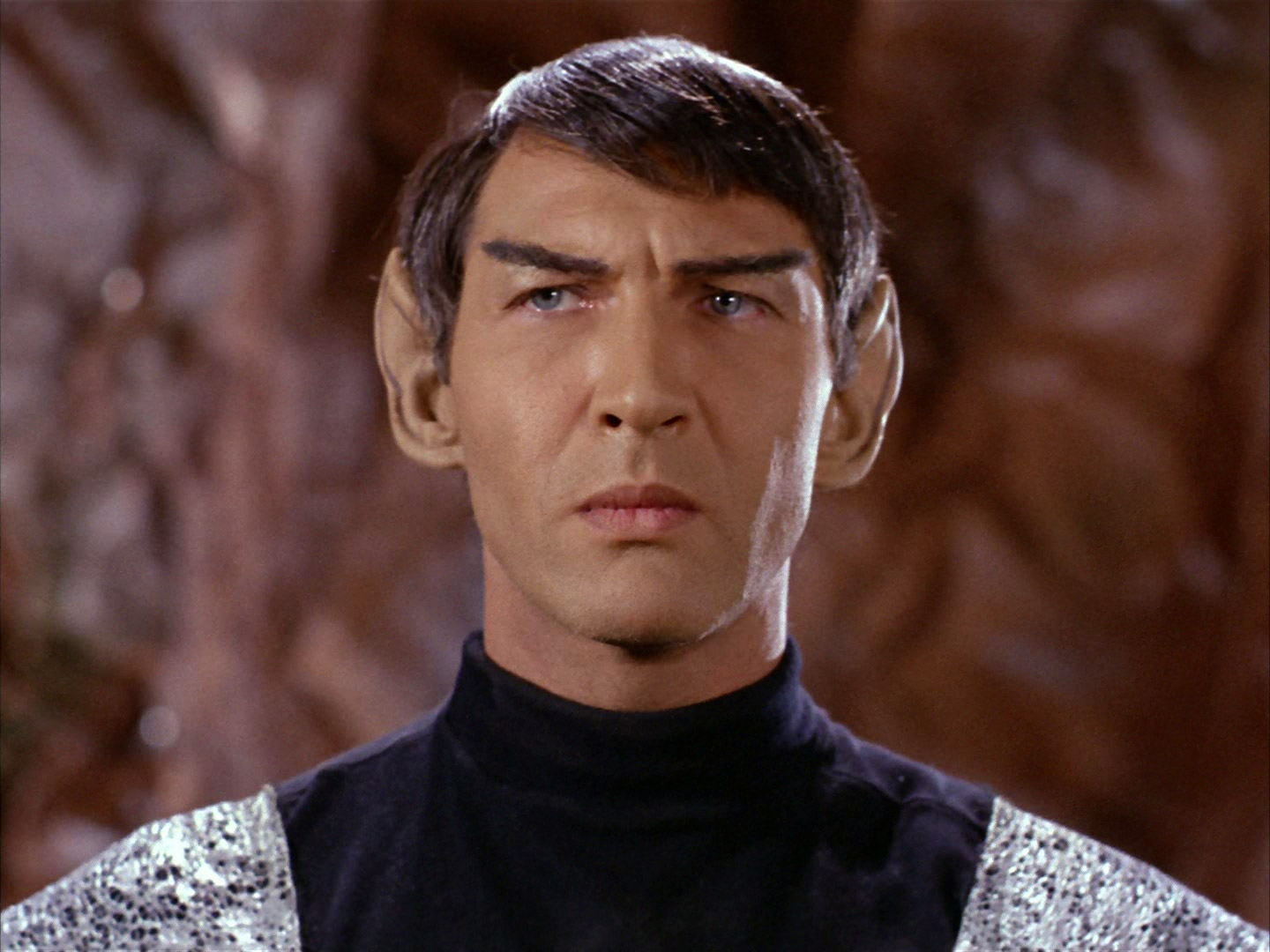
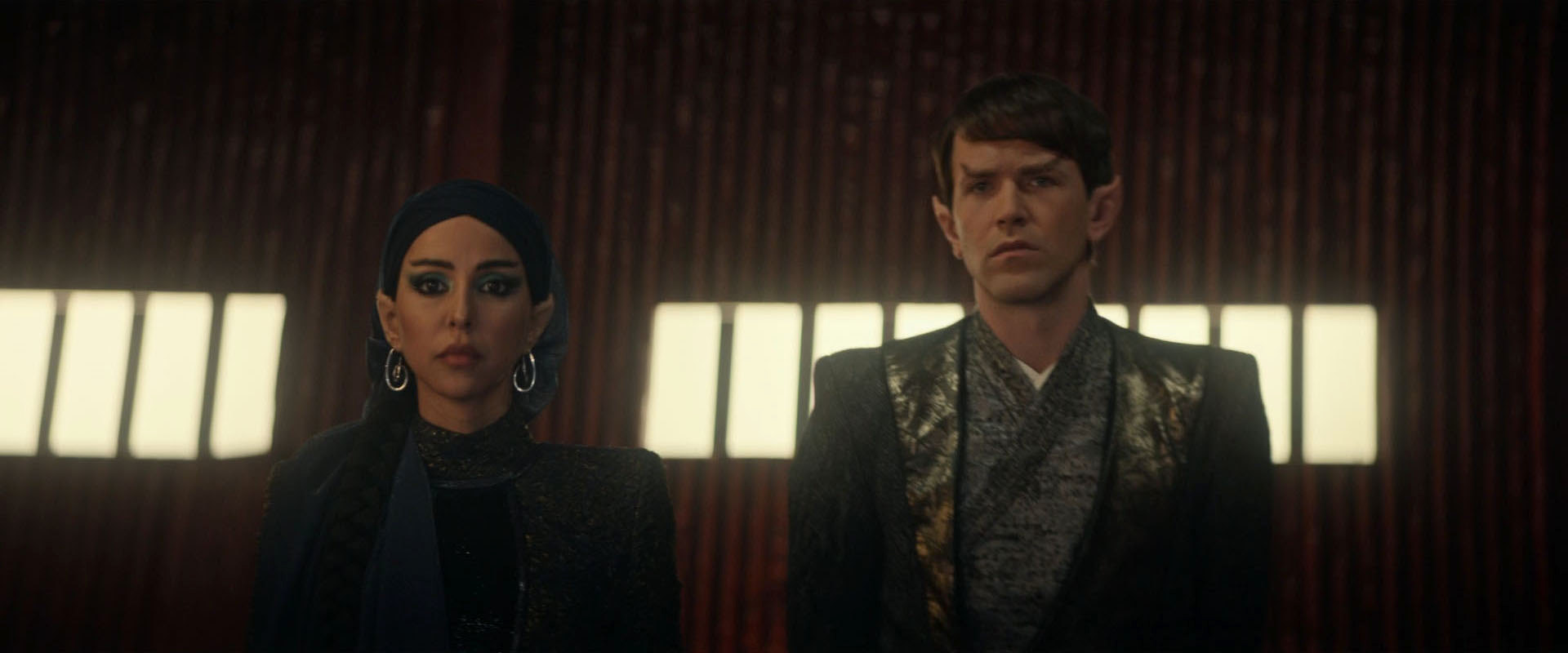
Stonn
Stonn (Lawrence Montaigne) appears briefly in TOS in "Amok Time" as the Vulcan whom T'Pring wishes to marry instead of Spock. Her decision to choose him is the reason she arranges for Spock and Kirk to fight in the Vulcan ritual. Stonn himself remains a peripheral character, with almost nothing revealed about his personality or background. SNW briefly brings him back in "The Serene Squall", where he is again connected to T'Pring and played by Roderick McNeil. The series has not established clearly how his relationship with her develops alongside her complicated engagement to Spock. Since Stonn is a background character in both series, there is little to compare beyond his continued connection to T'Pring.
Sybok
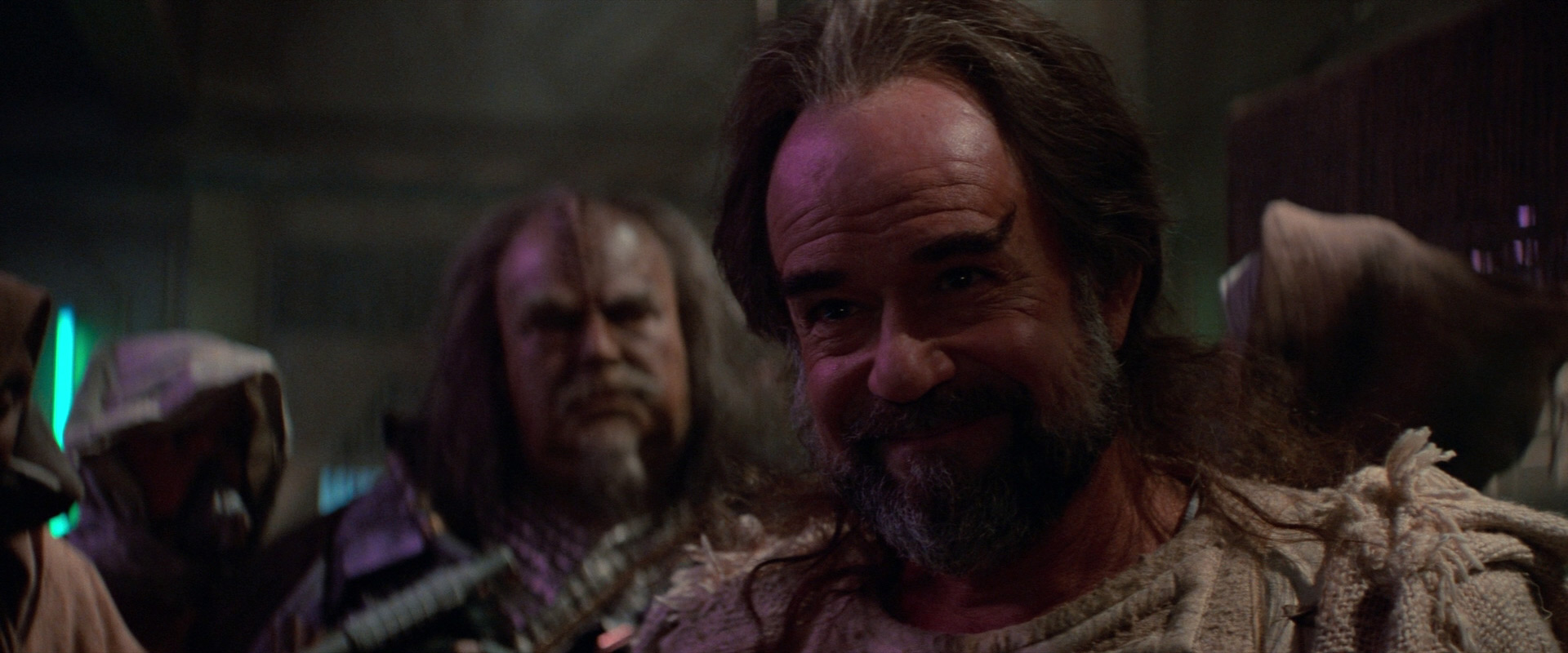
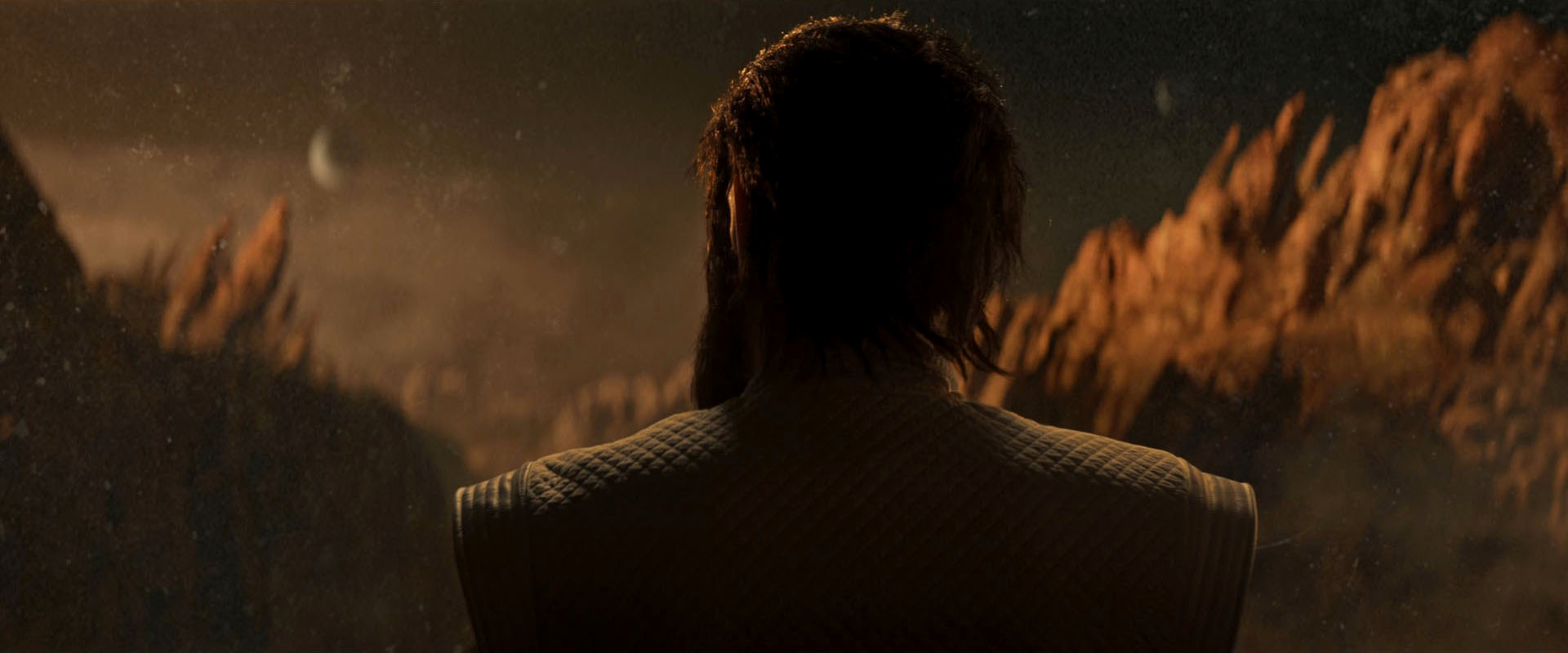
In "Star Trek V: The Final Frontier", Sybok (Laurence Luckinbill) is revealed to be Spock's older half-brother, a son of Sarek from an earlier marriage who rejects Vulcan logic and embraces emotions. His existence is one of the major mysteries surrounding Spock. Before the events of the film, nobody in the Enterprise crew knows of his existence, and Spock has kept silent about him (just as about Michael Burnham). SNW reintroduces Sybok in "The Serene Squall", where he is mentioned as a prisoner at a Vulcan rehabilitation center and briefly seen from behind, without revealing to the people on the Enterprise he is related to Spock. This provides some background without altering what we know from the film. In season 4's "Like Chronitons Through the Hourglass", he also appears in Trelane's soap-opera scenario, but this is an manufactured version of Sybok rather than the real character, played by Spock. For now, SNW has not redefined him, and there is no continuity problem. Whether season 5 will change that remains to be seen.
Trelane
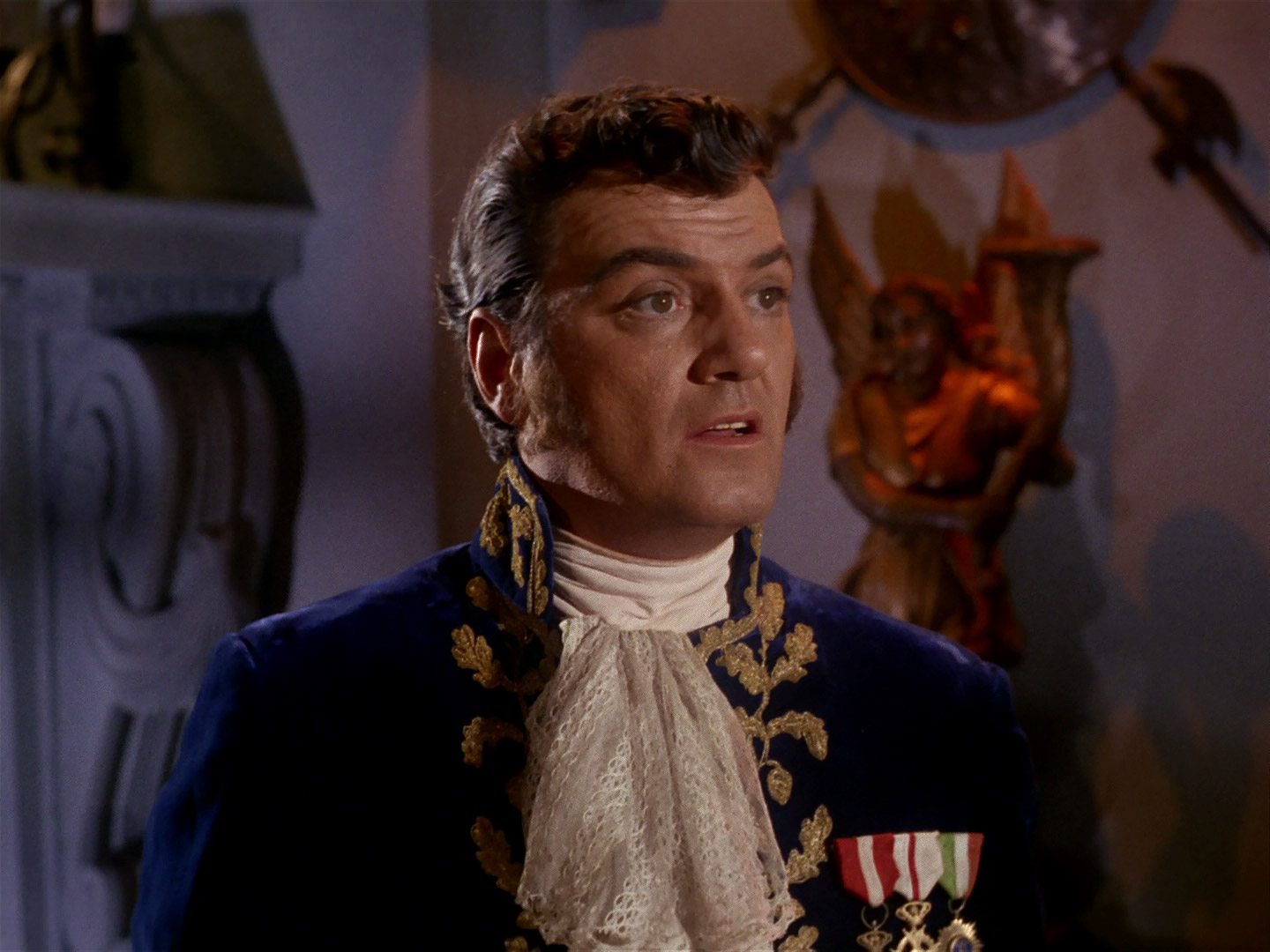
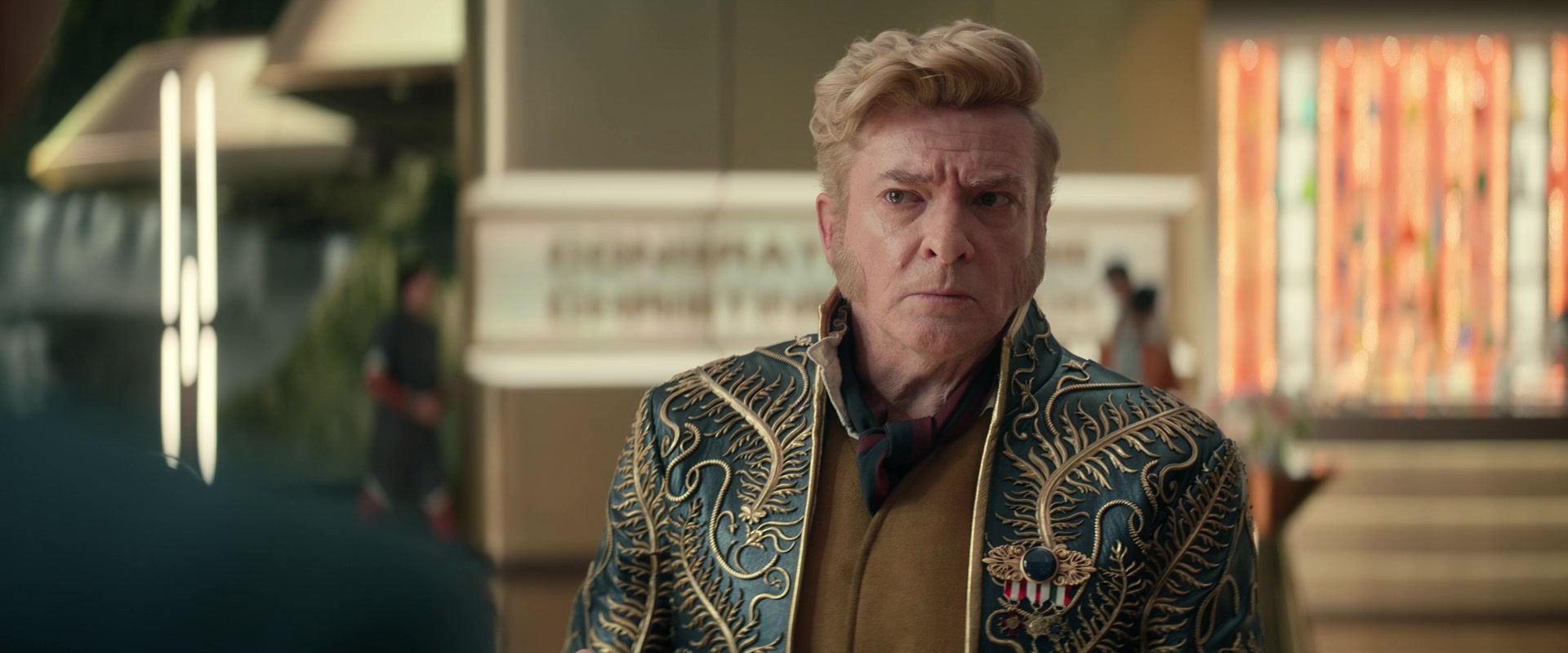
Trelane first appears in TOS: "The Squire of Gothos", where he is an immensely powerful being fascinated by Earth's past. Having observed Earth through a telescope, he recreates an idealized version of the late 18th century and treats the Enterprise crew as playthings in his elaborate games. His behavior is childish and capricious, despite his enormous powers, and his parents eventually intervene and take him away. SNW revisits the character in "Wedding Bell Blues", where he is played by Rhys Darby. It is not clearly established at which point of his own timeline this encounter takes place, but it is likely after "The Squire of Gothos". He retains his flamboyant historical costume, mischievous personality and tendency to manipulate people for his own amusement. In these respects, the portrayal is reasonably consistent with TOS, although the new Trelane looks older than William Campbell's original.
The more questionable aspect is how SNW connects Trelane to the wider Star Trek continuity. His father is voiced by John de Lancie now, immediately suggesting that he is Q. Yet neither Trelane nor Q are named in "Wedding Bell Blues", leaving the relationship deliberately ambiguous. The same approach preserves Spock's ignorance of Trelane when he meets him in TOS: "The Squire of Gothos", a few years later. In the SNW episode, Spock encounters the entity in other guises rather than seeing him in the familiar form from "The Squire of Gothos". When Trelane reappears in SNW: "Like Chronitons Through the Hourglass", only Pike sees him, and we can only hear that his name begins with "T". These devices allow the producers of SNW to suggest a connection without openly making it canon. Whether Trelane is Q's son, another relative or a being whose relationship with Q is more complicated remains open to interpretation, if we go by the bare facts. The character himself is not the problem so much as the contrived way in which SNW tries to connect him to TOS while avoiding a direct acknowledgment of that connection.
Romulan commander
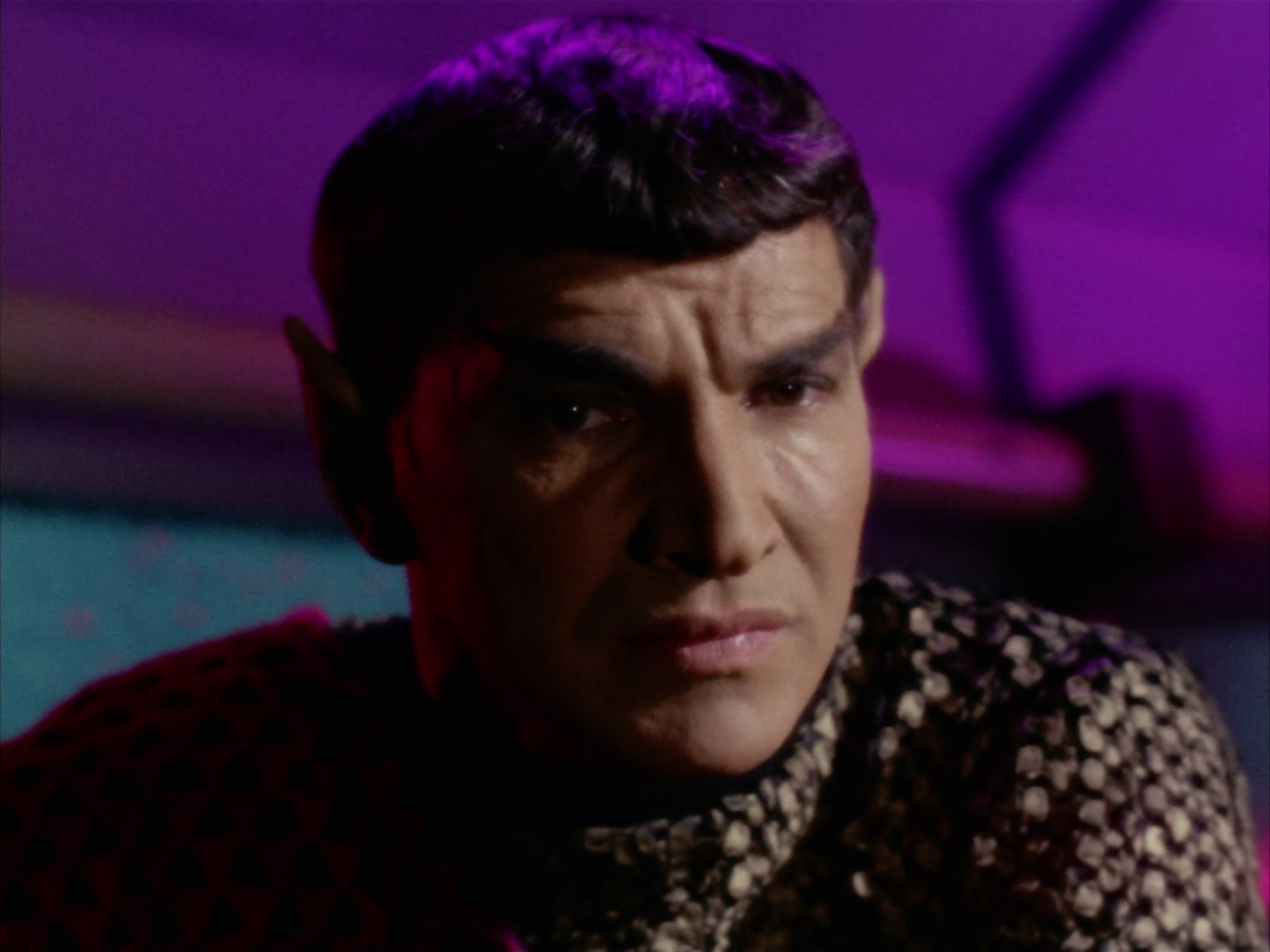
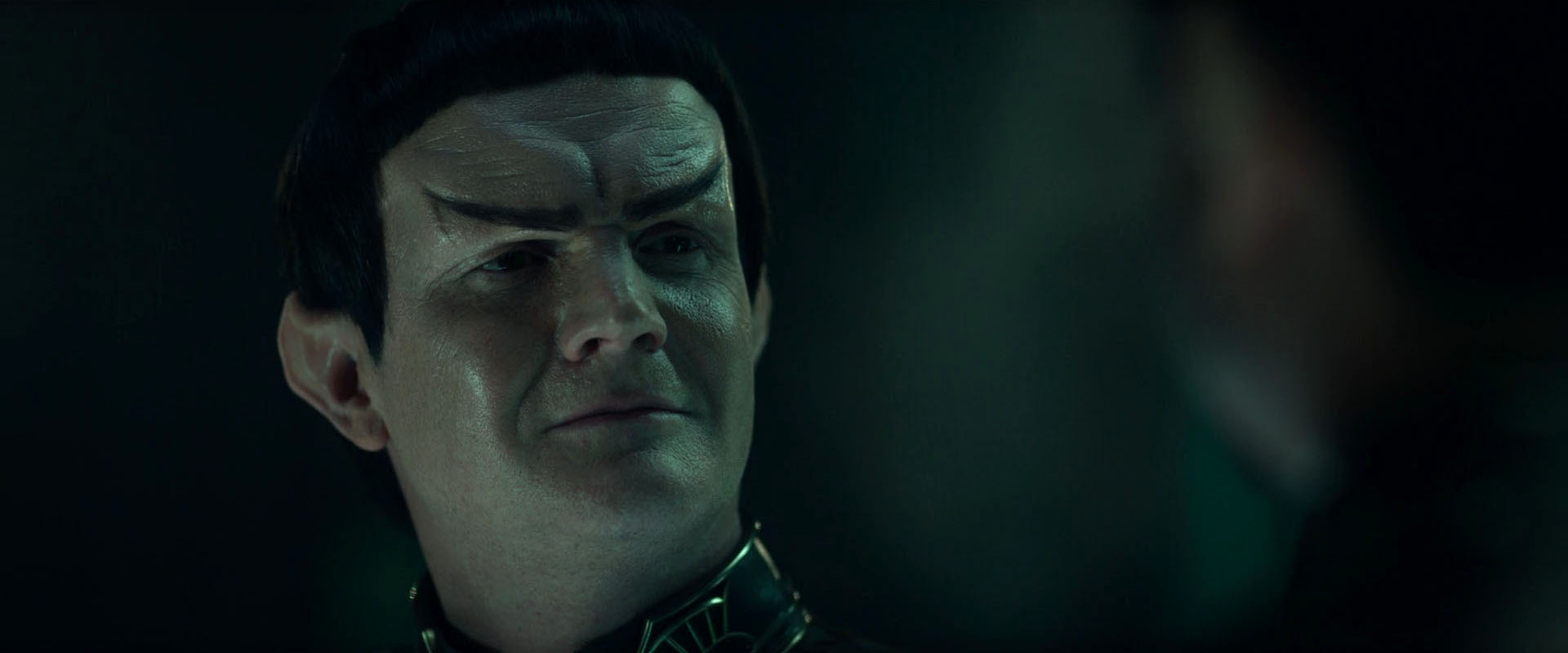
The nameless Romulan commander in TOS: "Balance of Terror" is a memorable character played by Mark Lenard despite having relatively little screen time. We get a brief glimpse of life aboard the cramped Romulan ship and learn that he is a disciplined officer who takes his duty seriously, even when it means carrying out a mission from which he may never return.
SNW revisits the commander in "A Quality of Mercy", played by Matthew MacFadzean, in an alternative timeline that parallels the events of "Balance of Terror". Since the episode deliberately reimagines the same confrontation rather than extrapolating from the original, the commander's characterization remains largely consistent with TOS. He is again a capable and determined commander who respects his opponent, Pike in this case, and is prepared to fulfill his duty at any cost. The most conspicuous difference is his appearance. Whereas Mark Lenard's original commander belongs to the Romulan variety with an even forehead, the SNW version has the the pronounced ridges associated with the so-called Northerners. This breaks visual continuity, although it also reinforces the distinction between the two Romulan varieties established in Star Trek: Picard. From the perspective of the newer series, the recasting may therefore seem consistent with its own approach to Romulan diversity, even if it does not match the original depiction. In the larger context of SNW's character changes, this is a relatively minor problem.
Kor
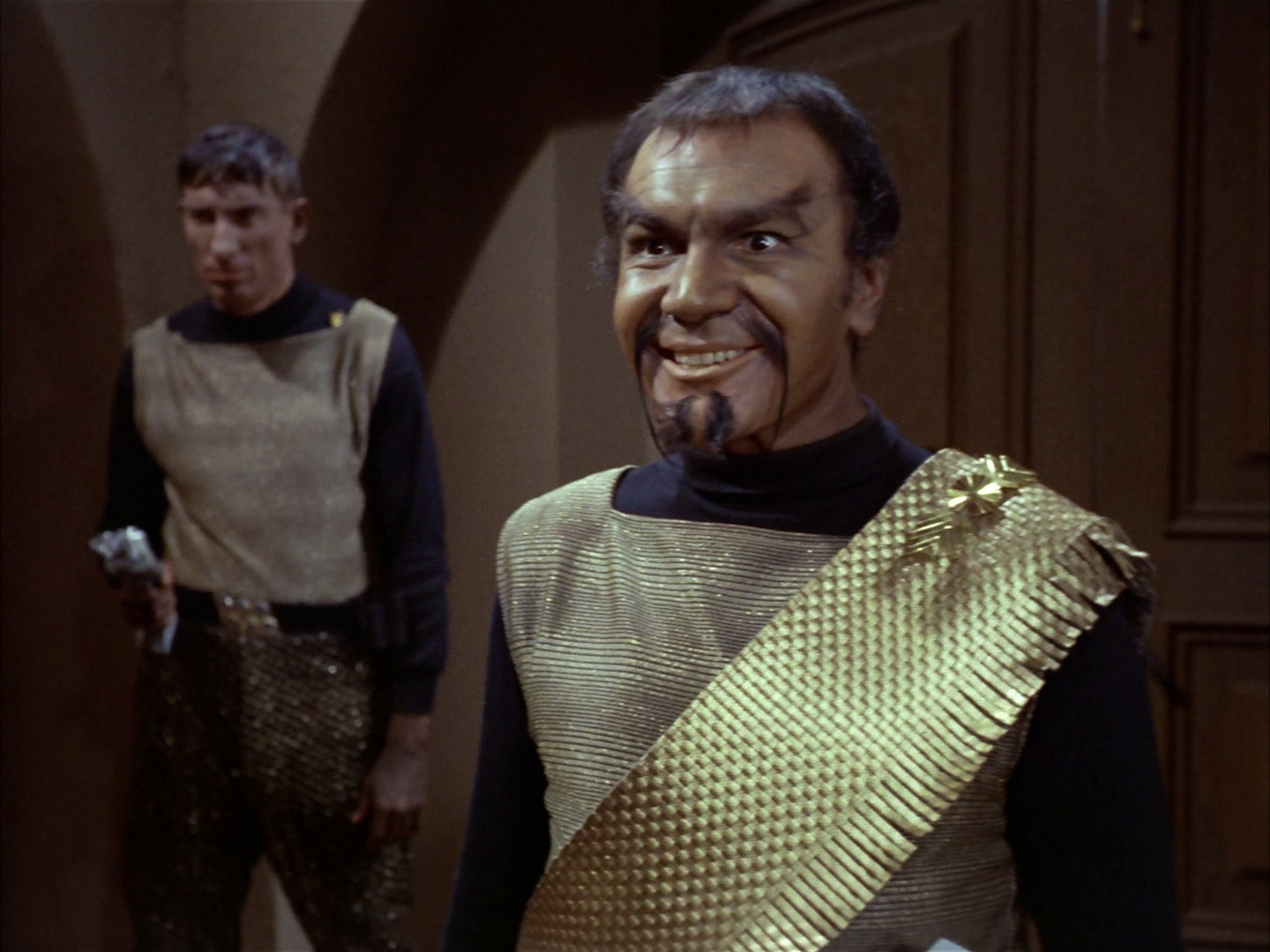
Kor (John Colicos) appears in TOS: "Errand of Mercy", the episode that also introduces the Klingons to Star Trek. Although he is not overtly violent himself, he is a formidable opponent who seeks to impose Klingon rule on Organia with brute force, through repression and executions. At the same time, he remains open to reason and negotiation, ultimately accepting the peace imposed by the Organians between the Federation and the Klingon Empire.
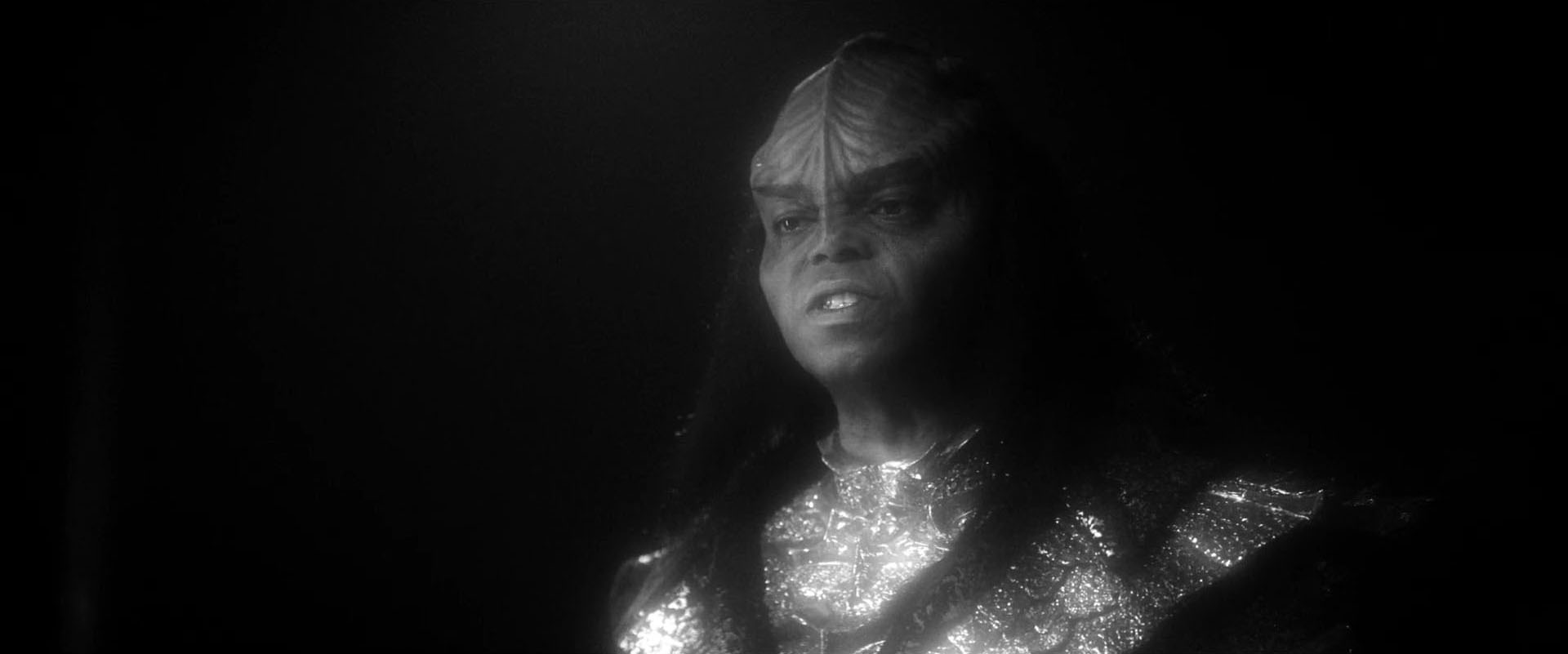
A high-ranking officer named Kor (Demore Barnes) also appears in SNW: "A Case of Chiaroscuro", serving as the Klingon governor on Mat'Aar XII a few years before the events of "Errand of Mercy". His personality is consistent with the Kor known from TOS. Strictly speaking, this need not be the same individual, as Klingon families have been shown to reuse names across generations. However, in keeping with SNW's tendency to reimagine characters rather than introduce new ones, the clear intention is that this is the Kor of TOS. Memory Alpha follows that interpretation, prioritizing authorial intent over a stricter canon analysis. The most obvious difference is his appearance: this version of Kor has the ridged forehead associated with modern Klingons. The real-world explanation is obvious, as the smooth-foreheaded Klingons of TOS simply don't exist in the Discoverse. This only becomes problematic if one insists on both versions depicting the same individual while maintaining visual continuity. Kor, of course, would later appear with forehead ridges in DS9, set more than a century after TOS, but there is no good explanation for why he would undergo such a transformation twice.
Khan Noonien Singh
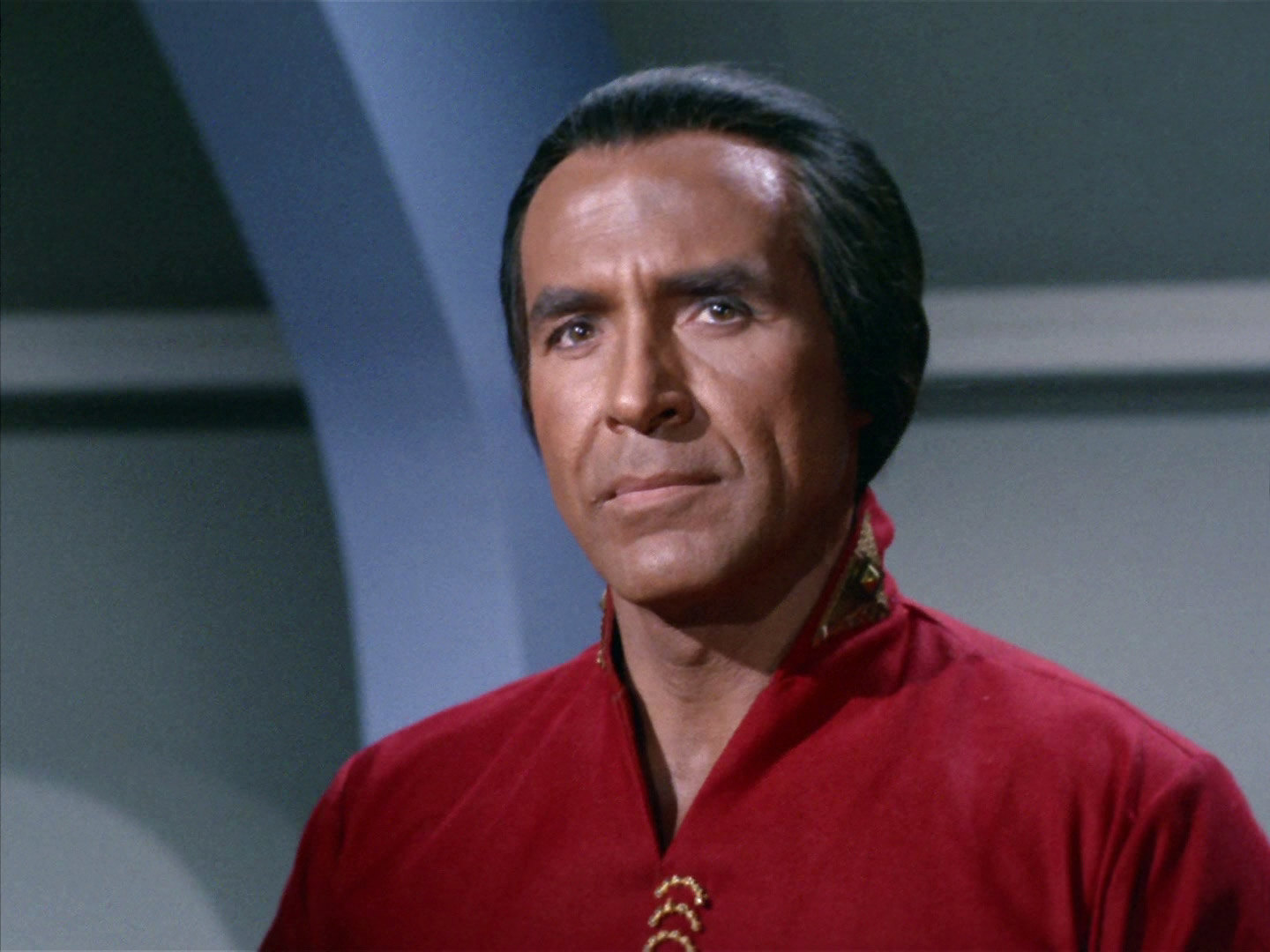
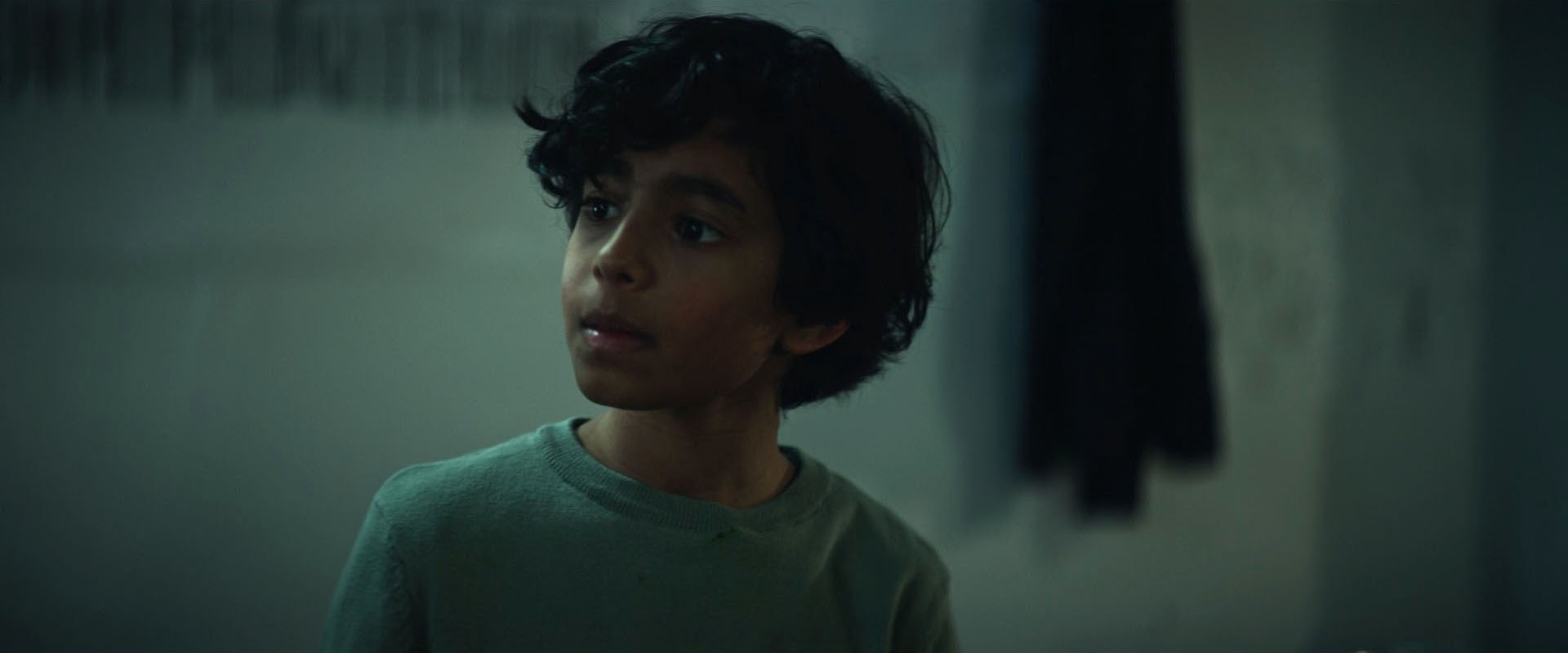
In TOS: "Space Seed", Khan Noonien Singh is introduced as a genetically engineered superhuman who once ruled over a substantial part of Earth during the Eugenics Wars. After escaping Earth aboard the sleeper ship Botany Bay with his fellow Augments, they spent centuries in suspended animation before being discovered by the Enterprise. Khan is intelligent, charismatic, ambitious and ruthless, with an enormous sense of superiority and a willingness to use others to achieve his goals. His return in "Star Trek II: The Wrath of Khan" turns him into an even more formidable adversary, driven by his desire for revenge against Kirk. SNW approaches the character from a very different angle. In "Tomorrow and Tomorrow and Tomorrow", we encounter Khan (Desmond Sivan) as a child in the 2020s, so there is little point in comparing his personality or appearance directly with Ricardo Montalban's adult portrayal.
The episode also places Khan within a much larger web of connections involving La'an Noonien-Singh and the Soong family, which is associated with several major developments in Star Trek history. These additions make the backstory increasingly convoluted, although the wider implications are discussed elsewhere, in my separate examination of Discoverse continuity. Khan's age is another particularly conspicuous issue. "Space Seed" established that he had been an adult ruler during the Eugenics Wars of the 1990s, whereas SNW depicts him as a child three decades later. However, this discrepancy should not simply be blamed on SNW. The chronology of the Eugenics Wars had already been revised as soon as in TNG and Voyager, and SNW's depiction essentially confirms a retcon that had existed for years. The episode is therefore less responsible for creating this contradiction than for making the revised timeline explicit. More about this in the article on 21st Century Earth History. Khan remains an important part of Star Trek's history, but the newer series' attempt to connect him to its existing characters adds another layer to an already complicated continuity.
Vina
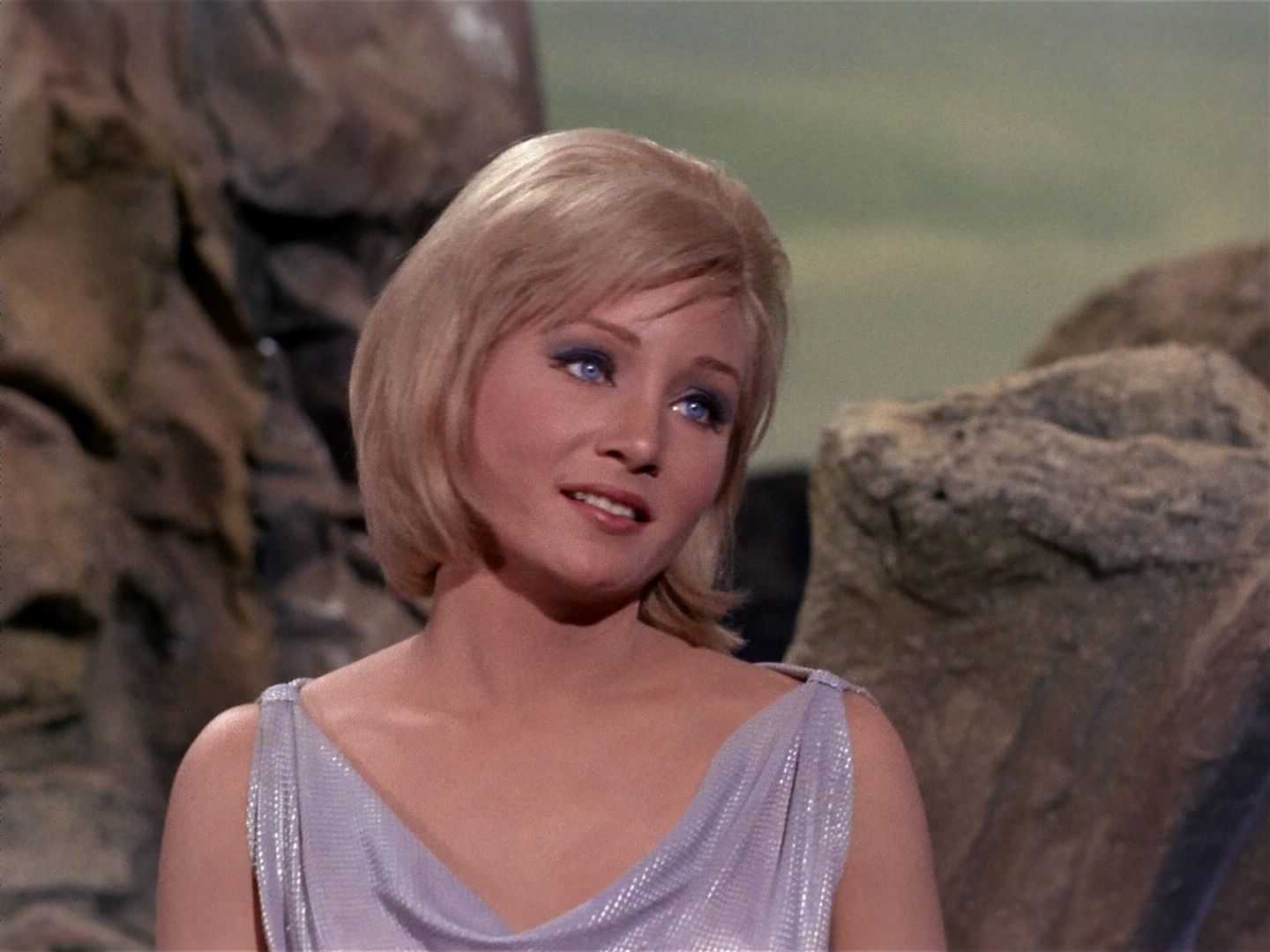
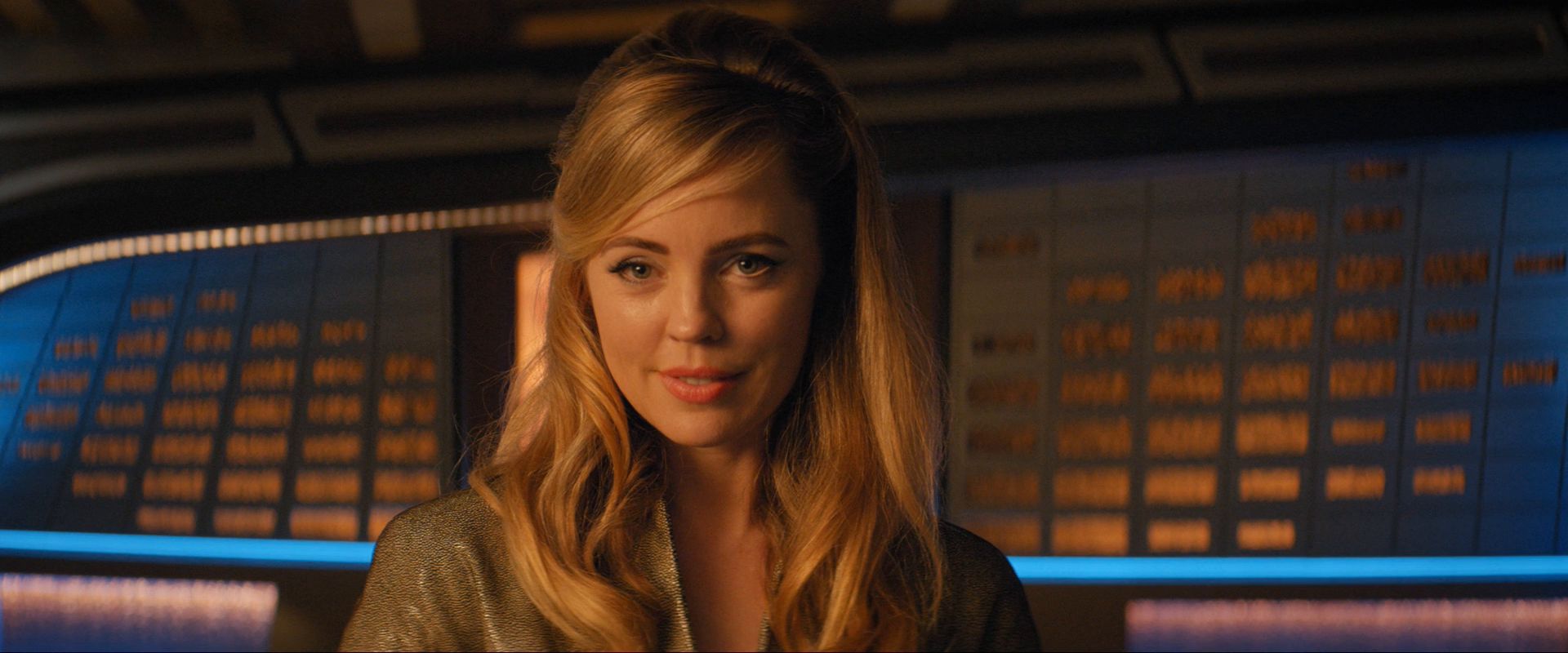
Vina, played by Susan Oliver, appears in the original Star Trek pilot, "The Cage", as the sole survivor of a crashed survey ship. Although she appears to be a beautiful young woman, she was severely injured in the crash many years earlier. The Talosians, who possess powerful telepathic abilities and can create convincing illusions, have kept her alive and provide her with an imaginary life in which she can appear as she wishes. Her story is a tragic one: the Talosians genuinely want to help her, but their methods also make her a prisoner of their world. Vina's situation is revisited in TOS: "The Menagerie", when Spock arranges for the radiation-poisoned Pike to spend the rest of his life on Talos IV, where he can experience an illusory existence with Vina.
Discovery returns to this story in its second season, when Spock and Burnham visit Talos IV in DIS: "If Memory Serves". Vina appears to Pike again, now played by Melissa George. Naturally, she looks different, and the new portrayal also reflects more contemporary ideas of appearance. There is little reason to make too much of this, since the episode is primarily revisiting a familiar story rather than trying to redefine Vina as a character. Vina's appearance is part of this broader tribute to "The Cage".
Harcourt Fenton Mudd
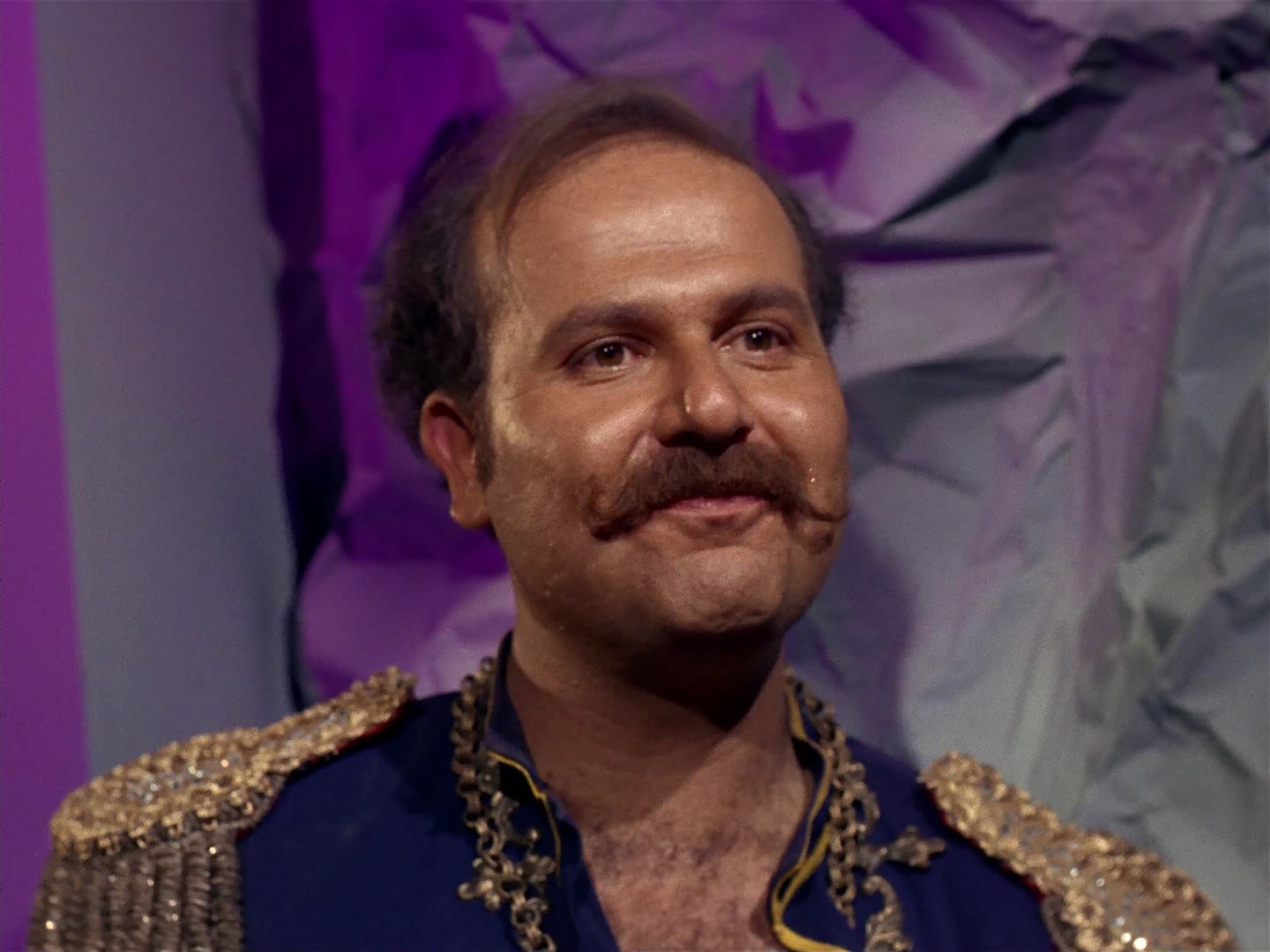
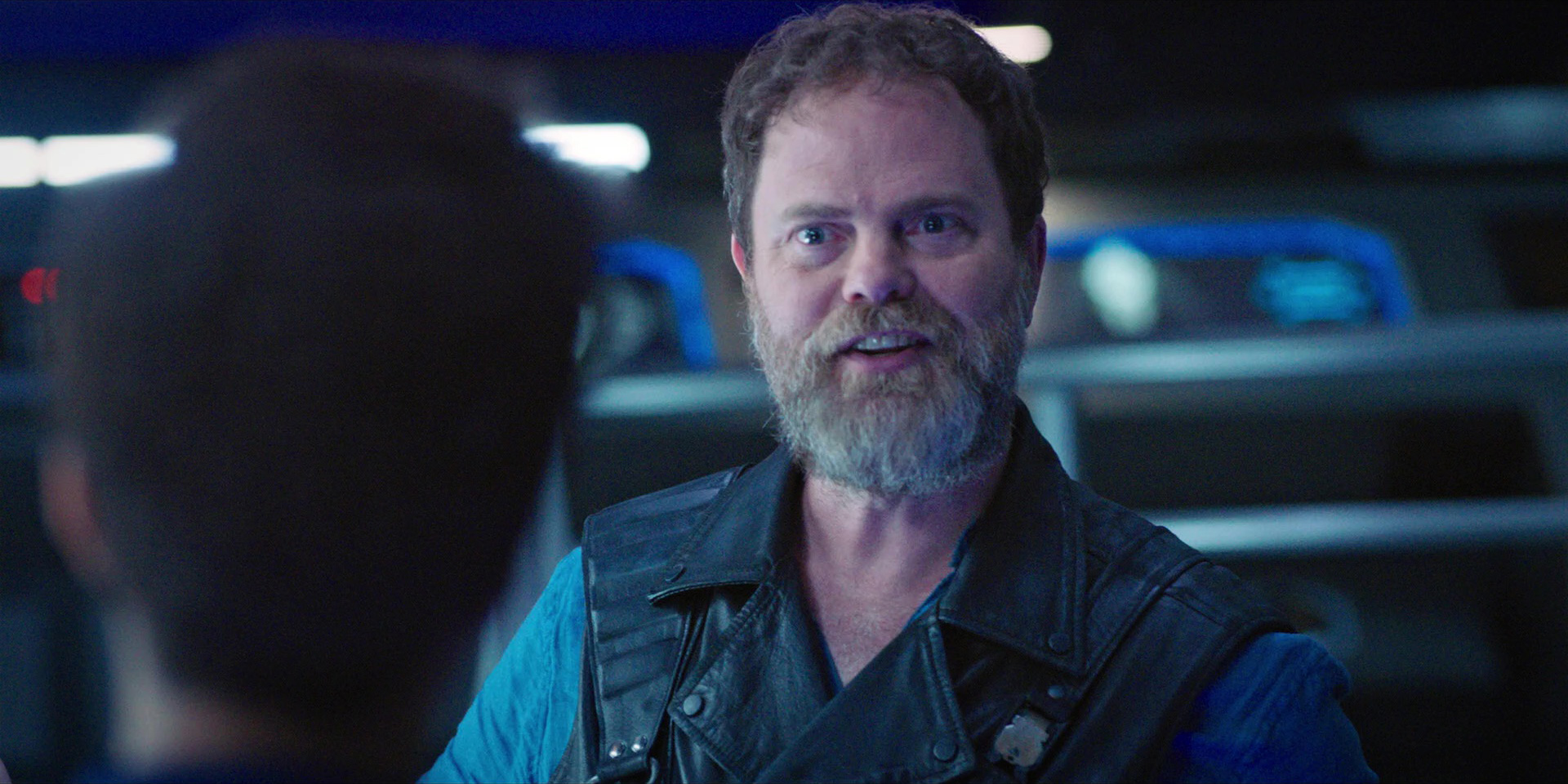
Harcourt Fenton Mudd, better known as Harry Mudd, is a charming rogue and conman who appears in the TOS episodes "Mudd's Women" and "I, Mudd". In both, Roger C. Carmel plays him as a flamboyant and lighthearted yet thoroughly unscrupulous character. He is not above exploiting other people for personal gain. "Mudd's Women" is dated in its treatment of the women he attempts to sell to a group of miners. Nevertheless, Kirk and Spock respond to him with a mixture of annoyance and amusement rather than treating him as a truly dangerous criminal. In "I, Mudd", he has become the leader of a civilization of androids, only to discover that they are only interested in the Enterprise as a means to escape from their planet. The episode is one of the silliest in TOS, with Kirk and his companions resorting to increasingly absurd behavior to confuse the androids. Mudd's own scheme ultimately backfires, and he is left on the planet with hundreds of replicas of his not-so-beloved wife, Stella.
Discovery brings Mudd back in three appearances: "Choose Your Pain", "Magic to Make the Sanest Man Go Mad" and the Short Treks episode "The Escape Artist". Rainn Wilson has the right look for the character and can be entertaining in the role, but the writing takes Mudd in a very different direction. In "Choose Your Pain", he is helping the Klingons, and the playful rogue from TOS is largely absent. His next appearance makes the change even more disturbing. "Magic to Make the Sanest Man Go Mad" is an enjoyable time-loop story. Yet Mudd repeatedly murders members of the crew and blows up the ship over and over again as he exploits the time loop to perfect his plan. He has become a sadistic serial killer rather than a relatively harmless, if unscrupulous, conman. His playful manner does not make these actions any less appalling; if anything, the contrast makes them more disturbing. The ending compounds the problem by treating his punishment as a joke that is supposed to align with "I, Mudd". Rather than facing consequences commensurate with his crimes, he is handed over to Stella and her father, with the prospect of spending his life with the wife he dislikes.
"The Escape Artist" brings back more of the comic trickster familiar from TOS. Mudd has arranged for android duplicates of himself to be captured by bounty hunters, allowing him to collect the rewards while remaining free. The idea is amusing enough, but it introduces another continuity problem. In "I, Mudd", he encounters a civilization of androids that he didn't build and whose capabilities he obviously doesn't understand. He simply takes advantage of the situation until the androids turn against him. In "The Escape Artist", by contrast, he is suddenly capable of constructing sophisticated android copies of himself and using them in an elaborate fraud. This is not inherently impossible, but there is little reason to believe that the man who stumbled upon the android civilization in TOS had already become an accomplished engineer.
Overall, Discovery retains some of Mudd's recognizable mannerisms and comic tricks, and Wilson's performance is not a problem. The issue is that the character's moral boundaries and capabilities change according to the needs of each story. The charming rogue becomes a mass murderer in one episode and an ingenious engineer in another, without a convincing bridge to the character established in TOS.
Stella Mudd
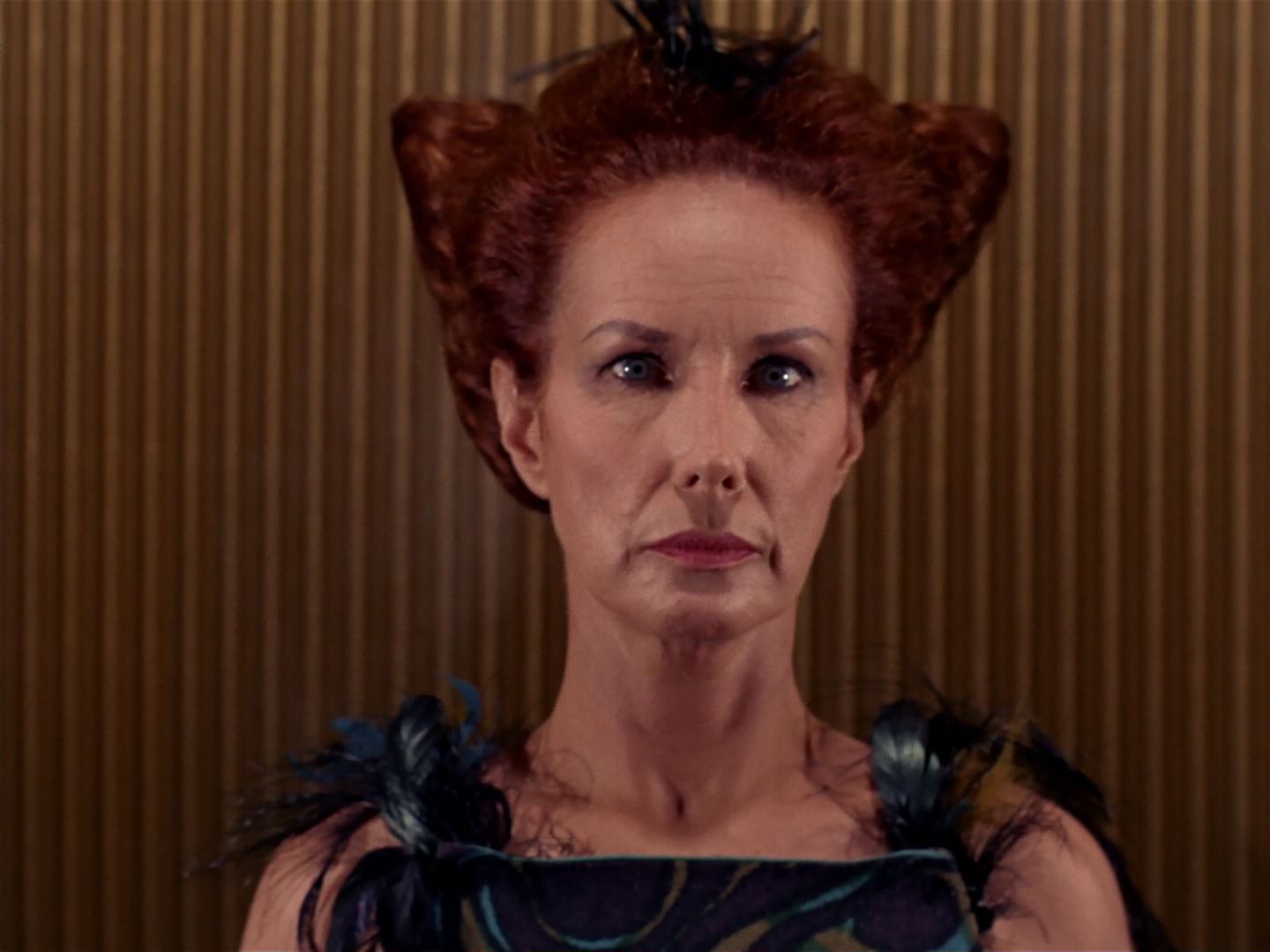
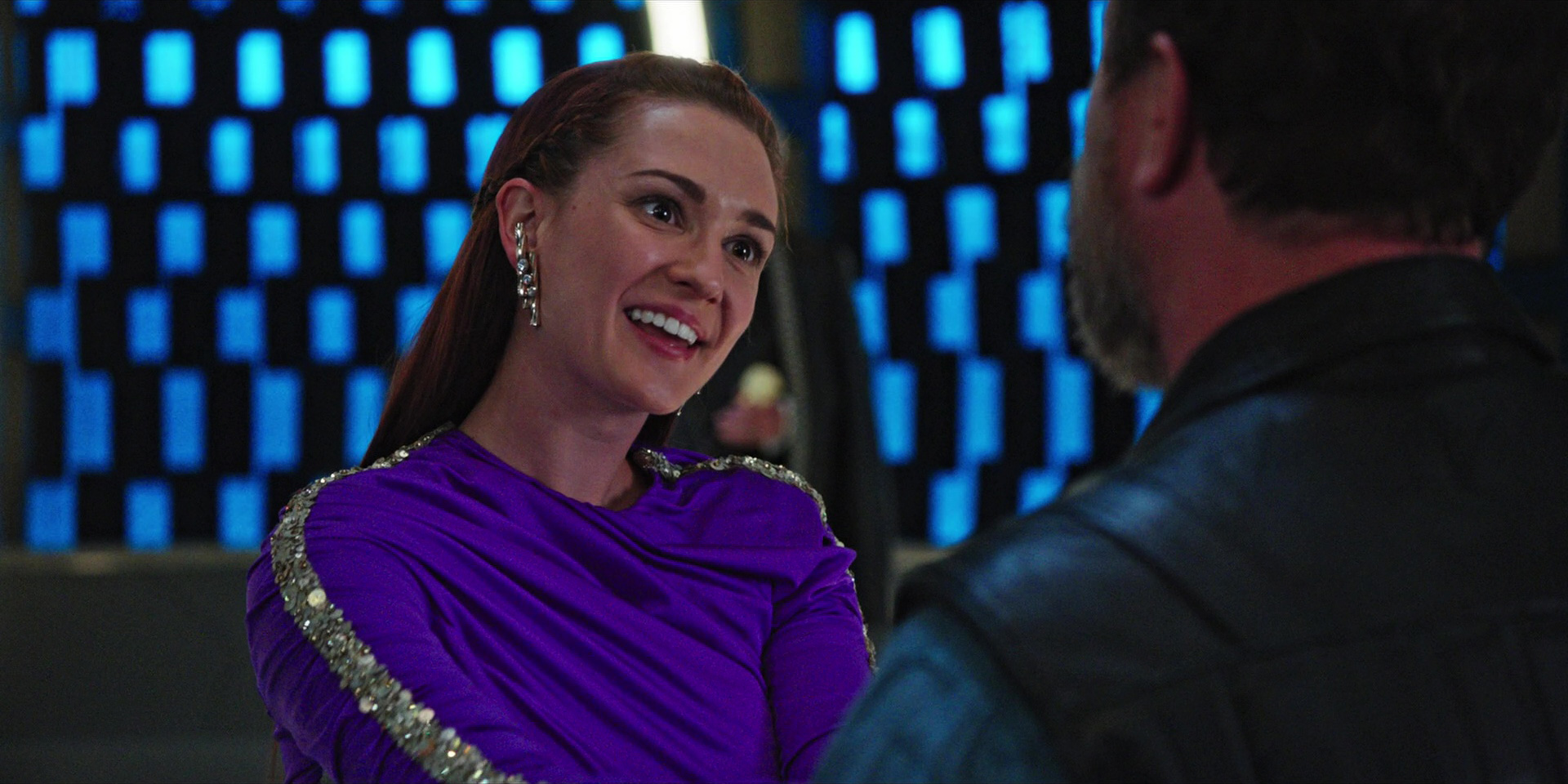
Stella appears at the end of TOS: "I, Mudd" as an android replica of Harry Mudd's wife, created by the androids to punish him. She is intended to nag and torment him for the rest of his life. The real Stella never shows up in TOS, so we cannot tell how closely the android resembles her in personality. The exaggeratedly unpleasant wife is best understood as part of the episode's broad comedy, which ends by turning Mudd's own schemes against him.
Discovery brings Stella back in DIS: "Magic to Make the Sanest Man Go Mad", where she appears alongside her father to take Mudd away after his repeated murders aboard the Discovery. She looks considerably more attractive than the android version from TOS. We may argue that Discovery's version is simply less of a grotesque caricature, although the joke remains essentially the same: Mudd's punishment is to be handed over to the wife he cannot stand. Given the comic nature of both appearances, the differences are easy to accept, although the outcome arguably doesn't work so well in this story, in which Mudd has mutated to a cynical mass murderer.
Commentary
To put it bluntly, I would never have made a prequel to TOS in the first place. But if one had to be made, I would have preferred it to stake out its own territory. I neither care for Discovery's tendency to disregard its source material nor Strange New Worlds' apparent determination to bring back each and every TOS character, main cast and guests alike. SNW thus suffers from small-universe syndrome: wherever the story goes, we keep running into familiar faces.
I also object to the idea of updating every aspect of TOS to modern standards, whether by enlarging the Enterprise, introducing anachronistic technology or modernizing its characters. That's not what a prequel should do. The Original Series has its own style, limitations and sensibilities, all of which are part of what makes it unique. SNW's altered characters may work within the newer series, but they make it harder to believe that we are watching the same world. Individual differences in age, appearance, personality and personal history might be easy to overlook, but together they can make the familiar crew almost unrecognizable.
Putting these fundamental objections aside, however, there is much to appreciate about SNW's characters. Jess Bush's modern reinterpretation of Chapel is arguably much more interesting than her TOS counterpart, and I can accept a young Scotty romantically involved with Uhura if I treat them as reimagined versions rather than the people we know from TOS. I enjoy the relationships between the crew when they develop naturally instead of feeling imposed by the writers. Pike and Una work well for me, perhaps partly because TOS gave us so little information about them, leaving room for expansion without contradicting established facts.
Other relationships, by contrast, seem designed to foreshadow familiar settings rather than to tell convincing stories in their own right. Kirk and Spock are a case in point. Their friendship should have been given time to develop, rather than being forced by having Kirk visit his future ship every other week. Spock's romantic affairs also cross a line for me, as does the repeated back-and-forth in his emotional development. A prequel can show how a person changes, but that development should lead somewhere. At some point, the excuse that he is "not there yet" wears thin.
I also have reservations about some casting choices. I'm all for color-blind casting when it comes to new roles. But I think established characters should generally be played by actors who resemble their original counterparts. Uhura and Pike are good examples of recasting that works for me. Robert April's change in ethnicity, by contrast, is conspicuous enough to feel more like a deliberate statement than a natural reinterpretation. My principle is simple: visuals are canon, and canon comes first. I apply it to characters just as I do to other continuity issues. Unfortunately, some online forums have treated objections to casting choices as inherently racist or have shut down such discussions altogether. Casting, like any other creative decision, should remain open to criticism on its merits, just like changes to the Enterprise or its technology.
This brings me back to the distinction made at the beginning of the article. An actor can give a good performance, and a reimagined role can work within SNW, even though the portrayal isn't faithful to TOS. I can enjoy a new interpretation while finding its background, personality or relationships incompatible with what follows. There's no contradiction here: these are different criteria by which to judge a portrayal, and the series on the whole.
SNW is free to reinterpret some aspects of Star Trek, but the more it changes established personalities, relationships and appearances, the more it becomes a reboot disguised as a prequel. Some of its reimaginings are engaging in their own right; others seem designed to make familiar names fit a different vision of Star Trek. I want Star Trek to be entertaining and engaging, too. But when a series presents itself as a prequel, I also ask myself whether I can believe that its characters will eventually become the people we met in TOS. Too often, I cannot.
See Also
The Visual Continuity of Star Trek - examples of if and how visual continuity was maintained through the generations
Discoverse Continuity Problems - where DIS and SNW are not in line with classic Star Trek
Credits
Screen caps from TrekCore and Cygnus-X1.net.


