TOS Movie Guest Reviews
Star Trek: The Motion Picture
Synopsis
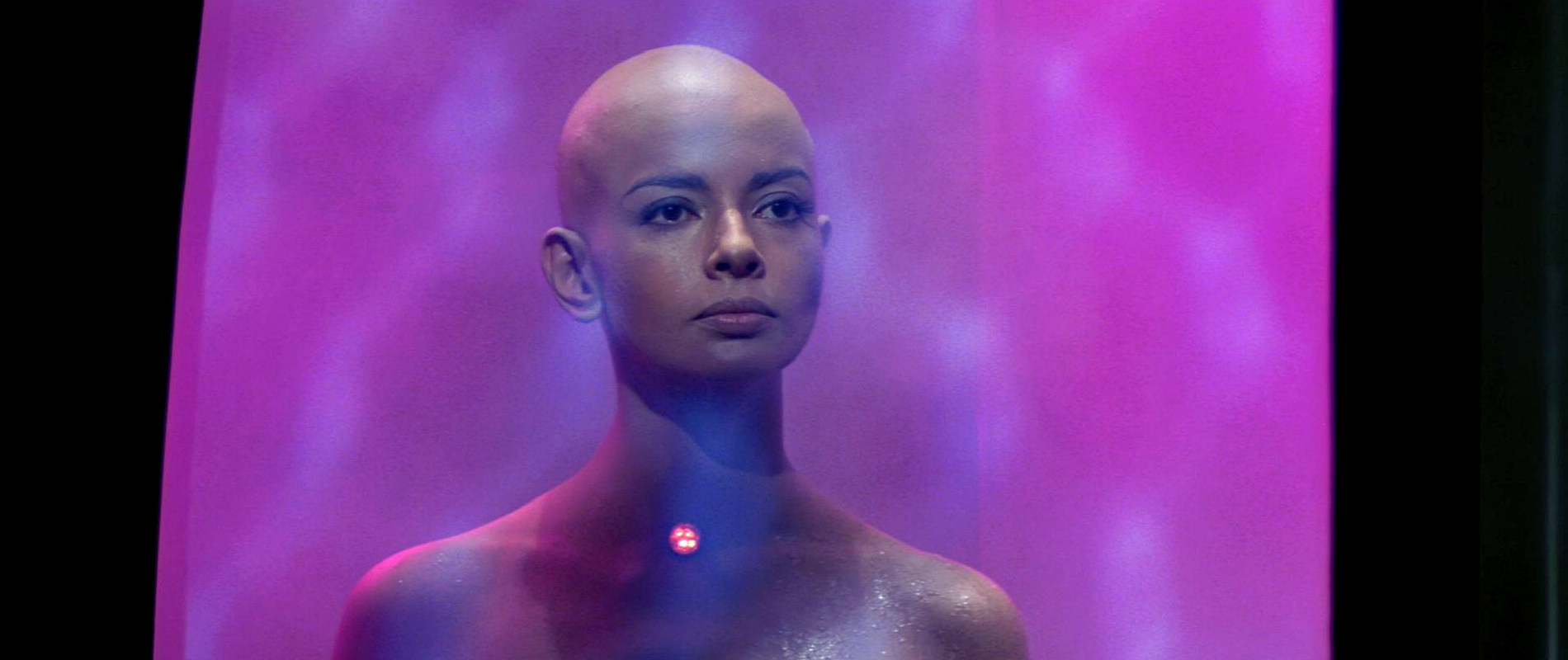
Stardate not given: Synopsis in main Movie listing
Review
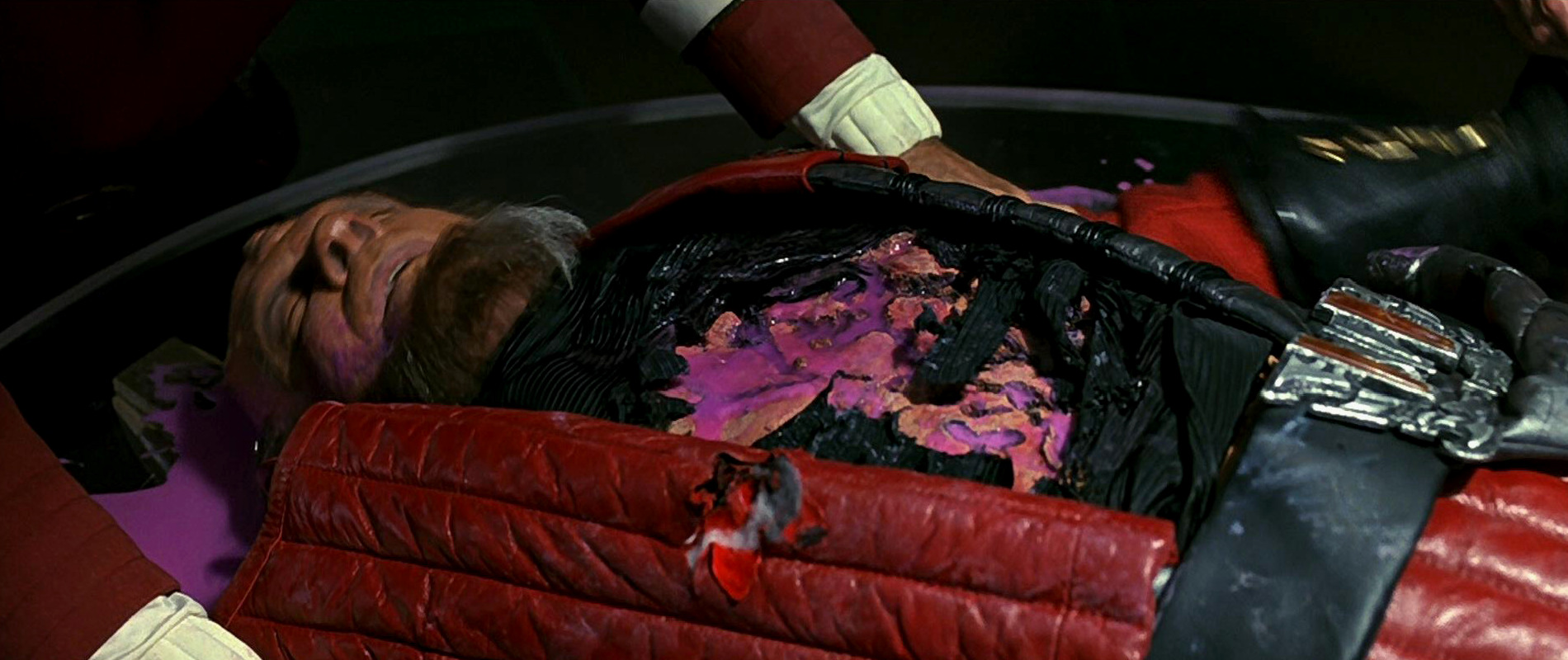
I would have to agree w/ most fans the moniker "the slow motion picture" certainly applies here and the story for this movie is at best thin. Nevertheless, the movie has grown on me considerably over the years--especially w/ the new director's cut released in November, 2001. Out of all the movies in the ST franchise, this one is probably the truest to what Gene Roddenberry intended Star Trek to be. It was criticized because of its lack of action, yet I don't think Roddenberry intended this to be action movie such as Star Wars or movies of the like, but more an exploration of the human condition like "2001: A Space Odyssey". This is certainly not a detriment.
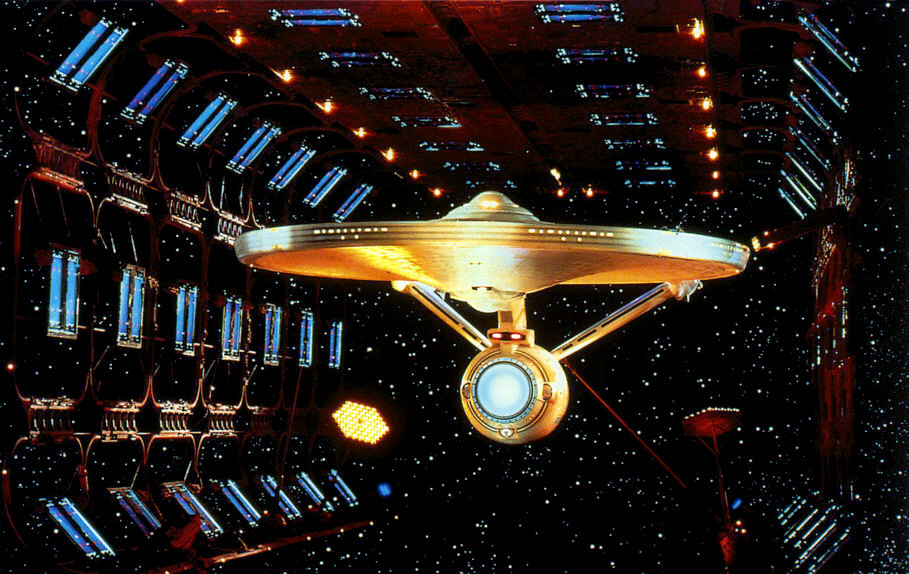
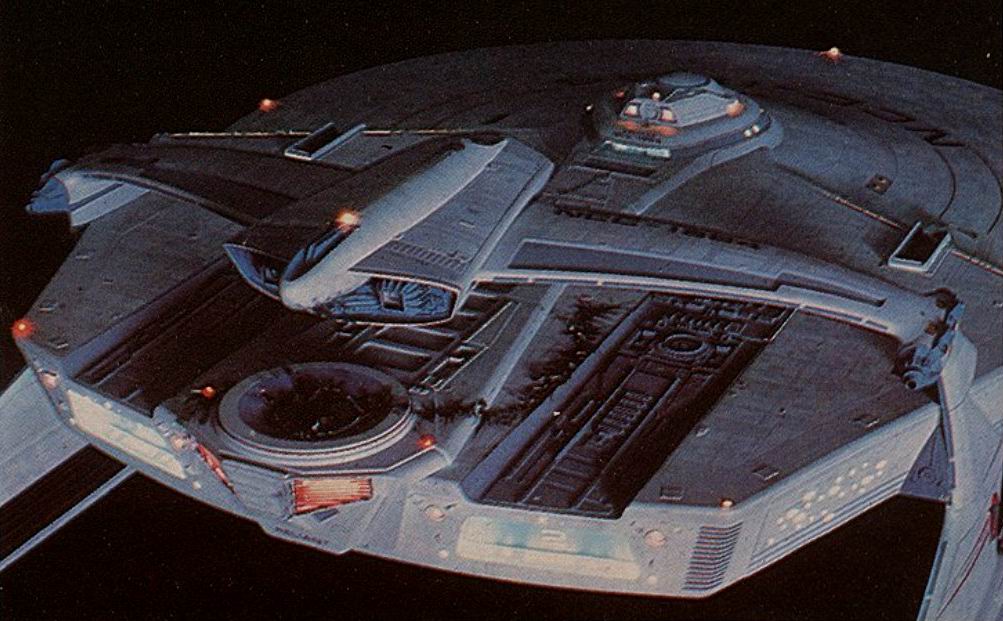
The movie does have several strengths: first the special effects were superb for the time and even better in the enhanced director's cut. The attention to detail was the best of all TOS movies. The long visuals of the space stations and the Enterprise are astounding and the refit Enterprise is probably my favorite of all them (even the very cool and sleek 1701-E introduced in "First Contact"). Second it has one of the best screenplays. Though the dialogue does get dry at times the story still movies w/ adequate momentum. Lastly, what I like best was the idealism of the movie. The idea that we don't have to blast to bits w/ phasers and photons every threat that appears in earth's orbit. What separates Star Trek from so many other science fiction franchises is its optimism for man's future.
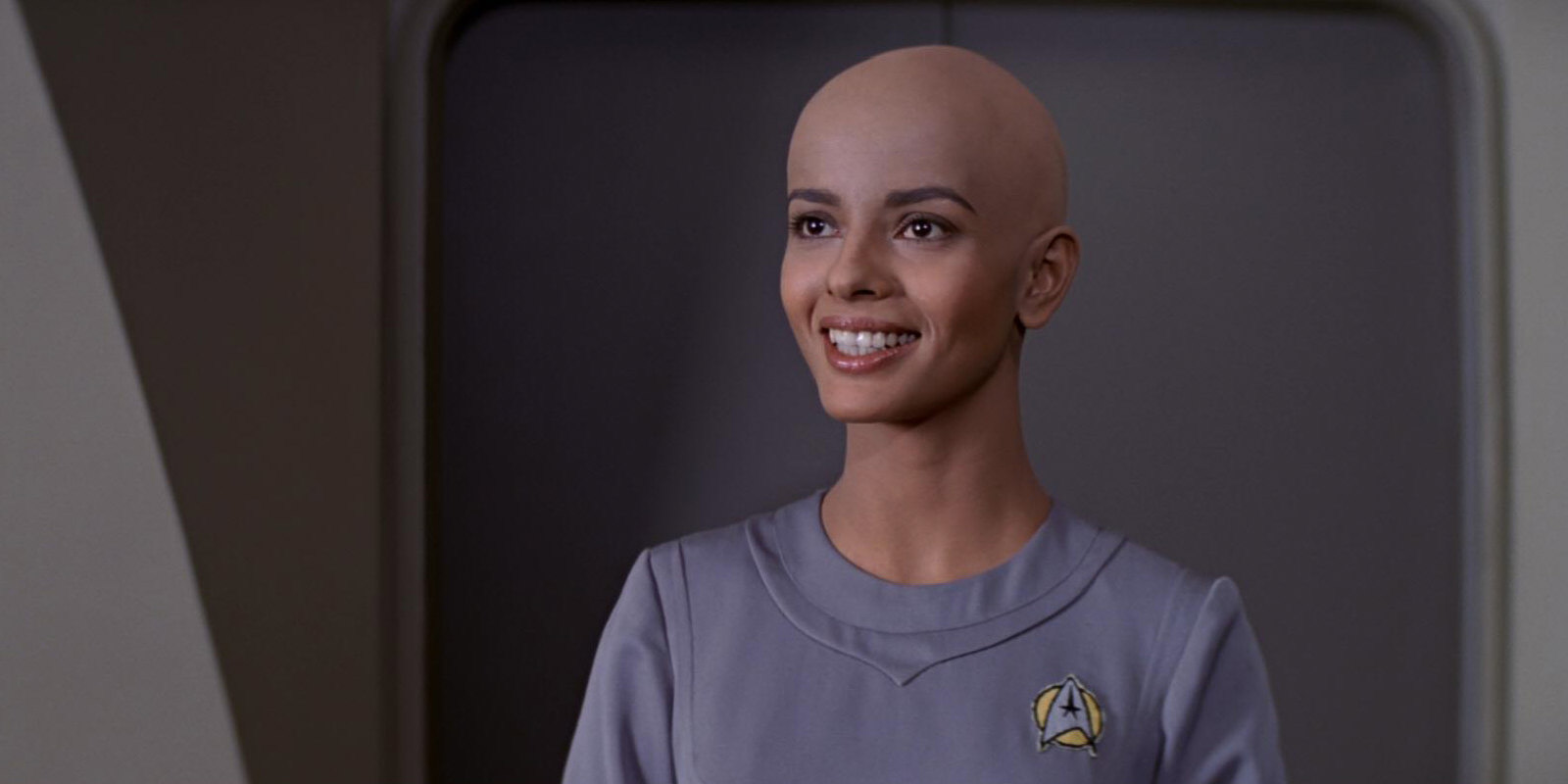
The characters are all here. None are really outstanding, nor do any of them have any detectable arc other that what was established in TOS. The only exception might be Ilia and Decker (who bear a striking similarity to Troi and Riker from TNG). We do see a more cautious and almost "Picard-ish" Kirk. Spock and McCoy show little difference and Chapel, Sulu, Chekov, Scott and Uhura are the same window dressing they have always been for TOS crew.
Annotations
- Nitpicking: With a threat like V'ger heading to Earth and all the warning the Federation has, why weren't there more ships available for Earth's defense. The Klingons were able to muster three ships.
- Remarkable quotes:
- Spock: "It knows only that it needs, Commander. But, like so many of us... it does not know what."
- Kirk: "Let's take a look. Full sensor scan, Mr. Spock. They can't expect us not to look them over now."
- Decker: "Now that we're looking down their throat.", Kirk: "Right, now that we've got them just where they want us."
- Decker: "We all create God in our own image."
- Remarkable scene: this Klingon attack on V'ger
- Remarkable ship: The refit Enterprise. By far the best of them all.
- Remarkable fact: Roddenberry once suggested that the machine world visited by V'ger could have been the Borg home world, though there is no canonical evidence of this.
Rating: 5 (J. Stewart)
Star Trek: The Motion Picture
Synopsis
Stardate not given: Synopsis in main Movie listing
Review
People who liked this movie often defend it from critics saying that people were expecting more action because of Star Wars being released only two years earlier. I would like to rebut that by saying that, in my opinion, the original Star Wars had a near-perfect mix of action, character development, drama, and a very good mix of characters. Not that the old Star Trek does not have a good mix of characters, but the drama in this movie was very overloaded. The special effects were way overdone as I had trouble staying awake while Kirk and Scotty were approaching the Enterprise in the shuttle, or when the Enterprise entered the entity V'ger. Star Wars not only had better special effects, but they were also not over used. I don't mean to anger Trek fans by comparing this movie to Star Wars, but when it comes to the "first movies", I think Star Wars wins. "The Phantom Menace" on the other hand...
I also found the plot of this movie to be very light. Such a story could have been done in a 24 minute TAS episode. Just remove all the emotional crap about Admiral Kirk taking over the ship again and recovering all his old senior crew.
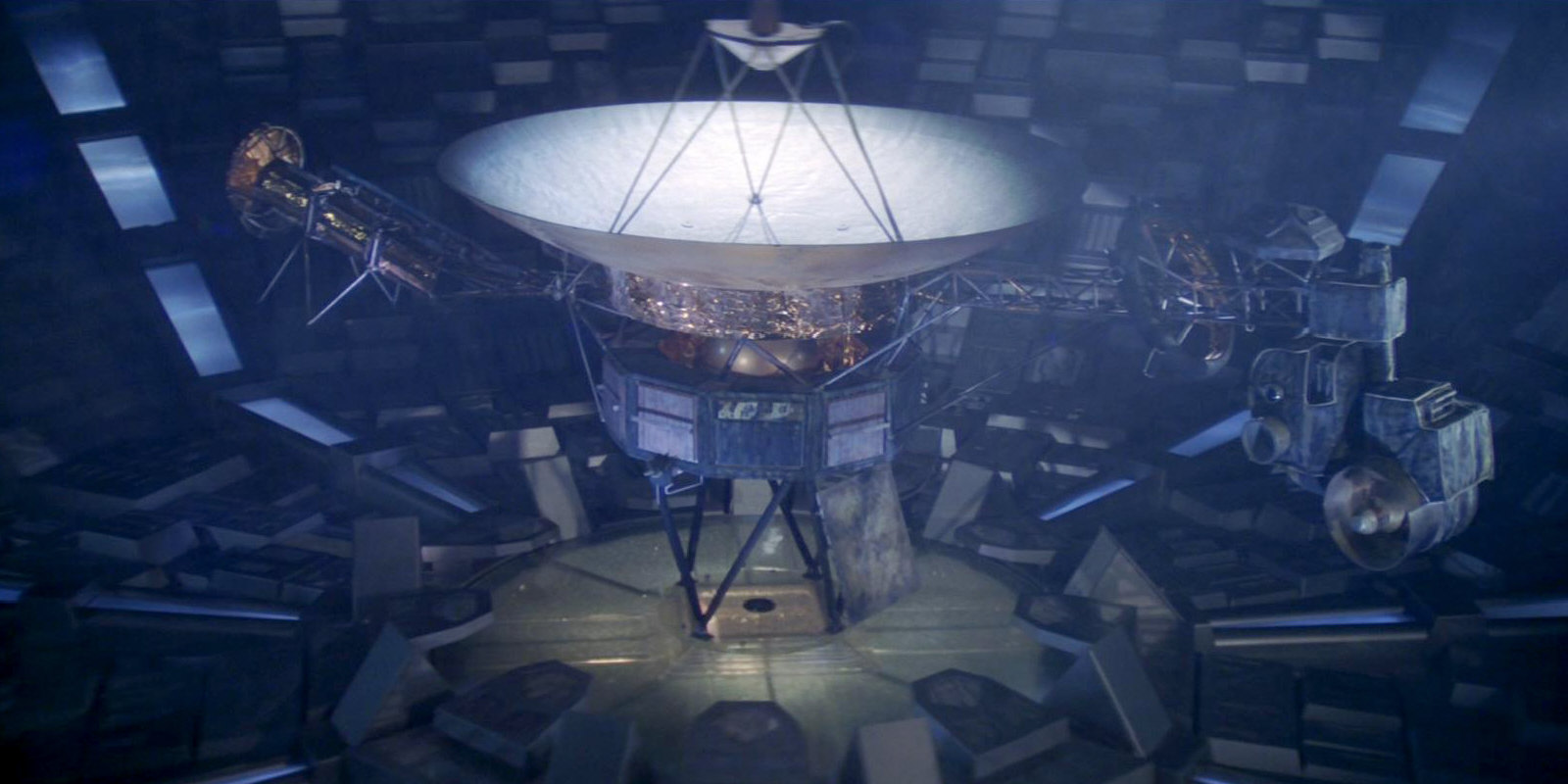
On a more positive note, the idea of V'ger evolving out of the Voyager 6 probe from the 20th century is compelling. If only the story was not stretched out into 2 hours, it would have made a more than decent regular Star Trek episode.
Annotations
- Nitpicking: I have always wondered why the new Enterprise had to look so completely different than the one from TOS. To me, it would have made more sense to keep at least some things the same. Since Kirk can't even find the turbolift on his own, the whole inside of the ship must have been gutted out and completely redone. I was also annoyed that the new bridge looks nothing like the old one.
Rating: 2 (Chris)
Star Trek: The Motion Picture
Synopsis
Stardate 7410.2: Synopsis in main Movie listing
Review
Many, MANY people have expressed their displeasure with this franchise-igniting movie. Trekkies were dying for some new Star Trek, and though many of them walked away disillusioned, I was not one of them. This film is a science-fiction revelation. It is a science-fiction masterpiece. It is in many ways a perfect movie-the story, the effects, the music-and it is an utter joy to behold its scope and venerable sanctity. While not the best Star Trek movie, it is an incredibly well-made masterstroke.
The movie's opening scenes are among the most interesting in Trek canon; the closing scenes some of the most thought-provoking. I suppose that all I can say is that not every one will like this movie, but it it my opinion that it stands proudly among the Star Trek movies as a pinnacle of science fiction mastery.
Rating: 10 (JemHadar359)
Star Trek: The Motion Picture
Synopsis
Stardate not given: A few Klingons say "hey dude" to a big, unknown robot probe, which says, after destroying the Klingon ships, "hey dude" to Enterprise and finally to Earth. But before "hey dude" the whole planet, Will Decker says "hey dude" to the probe, which is, dude, the Voyager 6 probe from earth which has occupied the body of Lt. Illia. After "hey dude" at all, the probe vanishes and everything is fine...
Review
Well....the slow motion picture...Yes, it was boring. But hey! It was really(!) the vision of Gene Roddenberry. In the future everything is fine, and no other starship than the enterprise is available when a huge probe came slowly from distant regions of the galaxy to the centerpoint of the federation, earth. Compared with the first "Star Wars" Movie, which came a few years earlier, the film seems slow, without character-development and with endless, impressing but after a while a bit boring FX scenes. But in my opinion, it should better be compared to "2001: A Space Odyssey". Everything, from the frozen characters to the endless "ship in space/a big nebula/anywhere"-scenes are a pure copy of this film. But all in all it couldn't come even near to such a Masterpiece.
But the film wasn't bad or so... It showed us a nice version of the future, gave us (but not that much) something to think about humanity and so on. The most important point of this movie is that, well, it is a movie. Star Trek was relaunched after three years of TOS and made an, a bit boring (I said that often, right?^^) but not a bad new beginning which made the following films and series possible. The only real thing that annoyed me was (next to that it was boring) that it was to much focussed on humans, human qualities and human space probes. What about all the other species in the universe? But well, the film was very early, not bad and made the rest possible.
Annotations
- Nitpicking: The uniforms! Did anyone noticed the uniforms? I hope not. These pajamas annoyed me really.... Let's hope that J.J. Abrams doesn't reuse them for the new Star Trek Movie XI!
- Remarkable dialogue: "It is big", "Wow", "It is huge", "We have never seen something like this before", "It is much bigger than we thought" and so on...
- Remarkable ship: The Enterprise! The old lady is back, and it was the best-looking Enterprise of all the times!
- Remarkable music: The score was outstanding. I think the film won an Oscar for that. We heard so many familiar melodies like the Klingon theme and the main-theme, which was reused for the next movies an TNG, for the first time.
- Remarkable facts:
- What the heck? The phasers can't be fired when the warp-core is offline? I hope not! Imagine a battle. The enemy doesn't need to destroy the weapons AND the drive, no, it is enough when they hit the nacelles...
- This was the first time earth was attacked. It should happen again in Star Trek IV, VIII, X, TNG: "Best of Both Worlds", the Xindi-arc in Enterprise, a few times in DS9 and I think nearly in Voyager (at least it was discussed there).
Rating: 6 (Raoul)
Star Trek: The Motion Picture
Synopsis
Stardate not given: Kirk decides to be a dick and take command of the Enterprise again to stop some evil cloud that's going to attack Earth. With the original TOS crew assembles they go inside the cloud and fight V'Ger. So whilst doing nothing apart from fucking people off, the ship learn V'Ger is a machine lifeform which is using the old Earth probe, Voyager 6 to send a message to Earth. It decides to destroy Earth but they stop it and some purv called Decker joins with V'Ger to a new spazzed up lifeform.
Review
TMP. It's slow. So slow. Yet one of the best films by far.
Okay, so let's go straight to the plot. It's different and the first time Star Trek had really involved Earth in the 23rd century. It worked well and despite the slow start, the Klingon investigation was well thought out and relatively pacey before Kirk joined the show. Oh dear. The whole "I've got the Enterprise, fuck off Decker" part of the plot was played down far too much. I found that despite his continual insistence that he's not after the Enterprise utter bullshit. As McCoy explained. He's been a total dick. Okay, so Decker was boring and the baldie was interesting but never expanded but this film is about characters which was the films weakest point. The next hour of film was the lowpoint. The entire section of exploring V'Ger was pointless. It never went anyway and was totally boring. The warp drive malfunction was filth. It wasn't needed and added hardly anything to an already boring film. The idea of the weapons being connected to the warp drive was crap.
The characters worked well. Kirk was crap and I hated his new personality. Spock was his usual logical self but he became more of an arse in this film. McCoy did nothing except a few good lines. Uhura, Chekov and Sulu did nothing except look good. Scotty had a few nice lines and scenes but a fattening James Doohan did not stand out. Decker appeared interesting but I couldn't stand the way he reacted to Kirk or how he acted. He was abysmal. V'ger was exemplary and had some great scenes and I liked the metal lifeforms. My only criticism is that we didn't say the lifeforms and I find it hard to believe such a being could exist.
The special effects was great for the time but there was too many and it never made sense as to why there was that many. The uniforms were crap and it didn't distinguish ranks very well.
This film failed on a character level and lacked the necessary direction and looks to secure it as the best. But it'll always be remembered as the slow motion picture. Although I would prefer it to be called "the slow motion picture until the last 40 minutes". If you can get through the slowness you will find it one of the best films and the closest to Roddenberry's vision despite the fact that its always been overshadowed by great films like "First Contact" & TWOK (both of which I aren't too keen on). So, from a 14 years old perspective - 5/10 but from my Trekkie perspective - 8 / 10.
Annotations
- Remarkable quotes:
- "I know engineers, they like to change things." (McCoy)
- "Carbon units" (V'Ger)
Rating: 8 (Darren Carver-Balsiger)
Star Trek: The Motion Picture
Synopsis
Stardate not given: Synopsis in main Movie listing
Review
I've watched the Director's Edition of the motion picture and soon after the 2009 Star Trek film. It was very much refreshing!
Most people say it's slow. And that's right, it's not fast-paced. But that's not at all a bad thing! In my opinion, TMP shows that a very good sci-fi film can be made without action packed into every single second of it. It's also very much Star Trek, showing the whole idea that conflicts can be resolved peacefully and that we fear only what we aren't familiar with. The scene with Klingons being evaporated is a nice touch to show how war is a bad option.
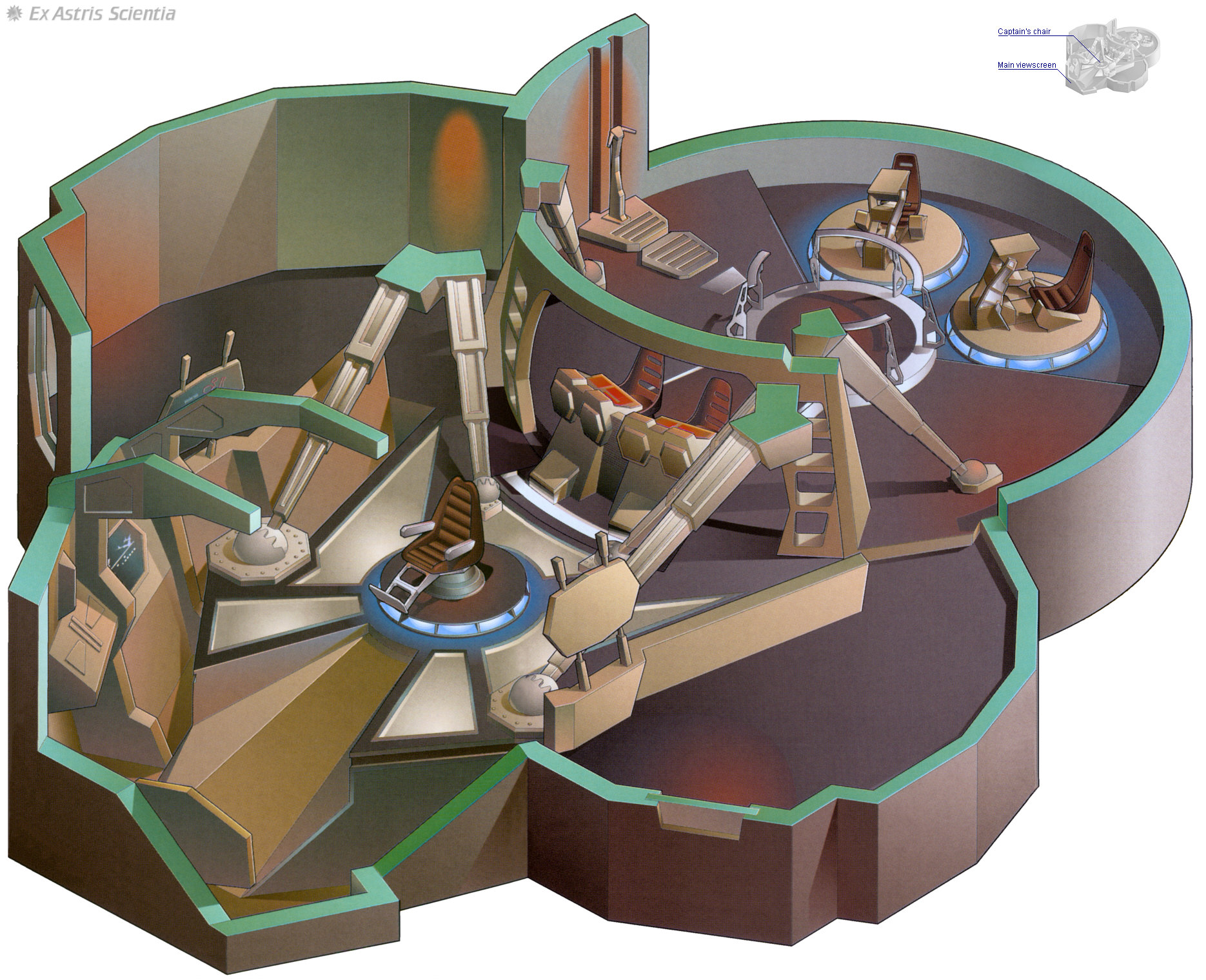
The graphics in the Director's Edition are stunning. The flyby to the centre of the cloud was very eye-pleasing, mysterious and calm. The Enterprise refit was also very nicely made. I especially like the bridge of the new ship - everything looks very modern and functional. And just look at those comfy chairs!.. The only thing I didn't really like was the funny-looking old shuttle that brought Kirk to Enterprise.
The characters are very realistic as well. I'd say McCoy had the best reaction to everything there. I kept laughing during the scene when he came aboard! And his "It's like working in a damned computer center!" line is priceless! Kirk was also very realistic - knowing how he loved the command of the Enterprise in TOS, I wasn't surprised by the conflict between him and Decker. Spock was a little let-down for me, though, he just wasn't the same somehow. Other characters didn't have many lines like in the original, and although it was a missed opportunity to show more of those characters, it was very credible. Oh, and Rand, where has she been the last few TOS seasons? :)
The music there is simply amazing. It always stood out and was always perfectly fitting! It was also interesting to hear the new versions of the original sounds, such as the intercom tone.
There were no major logic flaws in the whole story, too, and the slowness of the episode gave enough time to think things through. There were no irritating and unnecessary things in here, unlike in any films I've recently seen. Since there are only a few minor mistakes separating it from being perfect, I give the motion picture a 9/10.
Annotations
- Nitpicking: Kirk and the crew is watching the cloud disintegrate a starbase. The question is, if everything disappeared, then where is the camera that transmits this recording? It should have disintegrated along with the base.
- Remarkable dialogue: "Heading, sir?" - "Out there. Thataway!" -DiFalco and Kirk
- Remarkable prop: wrist communicators
Rating: 9 (GreatEmerald)
Star Trek: The Motion Picture
Synopsis
Stardate not given: Synopsis in main Movie listing
Review
Despite the resentment by many trekkies, it is fact that the arrival of Star Wars made Paramount summon Gene and the cast to re-launch the famed series to cash in on the success of the genre. To quote a phrase from Leonard Nimoy after seeing said film "Soon Paramount will be calling me".
The studio set into motion with 'The Great Bird of the Galaxy' to create a film about the famed series; after all there was an audience begging for its return, and there was a chance to replicate the success of Lucas's film but with a greater scope of victory due to the cult status build up over the years and around the world via the numerous repeats on TV.
The prospects were staggering.
Alas what Paramount wanted and what Gene dreamt of were two different things. Think chalk and cheese, small businessman and bank manager and you get the idea; Gene was given unlimited access to finances and technology to make Star Trek more that a film; here was a chance to see the Enterprise and his vision not seem possible but real. It was light-years away from the TV series and its cardboard cut-out sets, dodgy scenery, and naff props. In the film, the bridge seemed workable, the technology believable, and everything looking sensible. The Enterprise was no longer a simple model but appeared to be a real spaceship. To Gene, and many sci-fi fans this was like all our Christmases coming at once.
To Paramount it was the reverse - they wanted (at best) a $15 million film that was their Star Wars, but instead got something that became Gene's fantasy going into overdrive.
For a start there are numerous pointless scenes, like the transporter disaster, the warp drive failure, Spock on Vulcan with mullet, said character pontificating over V'ger, laughing, crying, sympathetic etc, the courier shuttle rendezvous with tumbling module, the travelling through the cloud only through the view screen and not seen with the Enterprise flying though it, and poor editing and re-editing to name but a few.
Then there are the characters; the usual suspects are muted, and aside of their names, could be anybody playing the roles. The so-called romance of the new characters Ilia and Decker (embryonic Riker and Deanna) is a waste of space, and even when its purpose is made clear at the end, it still feels that they have made no impact to the entire story.
The story itself is a joke too, having traces of the TOS story "The Changeling" in it, but was plagued by re-writes and re-writes, right up to the end. Despite having Robert Wise ("The Day The Earth Stood Still") directing it, the film is badly edited and acted.
Combine this with erratic writing, and over bold ambitions, and SFX that were testing the limits of what existed and often failing to be delivered on time, the budget spiralled to a whopping $45 Million.
On seeing it, I agree with what many said - it is "The Slow Motion Picture", and not much happens. Its obvious influence being that of "2001: A Space Odyssey". That is no way a detriment, but Star Trek had aliens, warp drive, shields and weaponry, and people expected something done with those elements.
Even the re-edited 2001 version improves a lot but not to great heights. The CGI scenes do not improve the movie, just makes one wish that they started from scratch, and the fact its at certain points of the film rather than the entire movie itself makes it more disappointing.
However, I always watch this when it's on. Why when I have just pointed out its flaws? Well flawed it may be, but there are a lot of amazing elements that make this film rise above almost all the others.
First off, it feels like the future - a plausible one too. The cleanliness, the style of most of the uniforms, and the technology looks plausible. Its the most futuristic film I have ever seen.
Then there are the visuals; maybe delivered late, badly edited, and even unnecessary but they are staggering. The inside of V'ger, the cloud, and the overall visual has an immense cinematic quality. I love the immensity of V'ger, the alien giant nature of it, the way its clouds are formed, and the inside is breathtaking. The sequence with Spock flying through the giant holograms is a spectacle in itself.
The orbital office is a treat, the air-trams a joy, Star Fleet HQ looked modern, the inspection pod a technical possibility, work bee modules looked excellent, the space dock appears feasible, and so much proper technology on display, internally and external, its bliss. It feels like the people who did this CARED.
Of course perhaps the greatest joy of all is the re-designed Enterprise - all true technology, no silly toys or concepts. When Kirk and Scotty flew pass to see the new ship, many have condemned the move, but I LOVE IT! Its like seeing a new concept sports car, the latest super aircraft, or the finest luxury ship. People who appreciate good design will want to look and look intensely. More, she looked like a STARSHIP, a futuristic vessel that CAN take man beyond the system. When the floodlights come on, you feel it powering up and that this thing can actually work. Plus the fact that the Enterprise is just as important a character as Kirk, Scotty, and Spock.
Unlike Star Wars, Star Trek was not about blasting things, but exploring the stars, encountering the alien, and asking deep questions. The scene with the Klingon cruisers emphasise the point - they wanted to destroy but got destroyed whereas the Enterprise rather talked, and they made it, showing the power of words over actions.
Then there is the score; its brilliant, alien, unusual and matches the scenes with perfection; you felt the mood of Kirk when he saw his ship, the heroic nature of the Federation, the entry of the cloud, the discovery of V'ger and the finale. Jerry Goldsmith was on fire here.
Finally it feels like a big adventurous film. It feels like space, it feels massive and futuristic, encountering the alien, the unknown and the amazing, and the ending maybe last moment but is true Sci-Fi in nature - that we can go further, that we can evolve, and that there is more beyond.
It felt like Science Fiction - sensible, intelligent, clever, and believable. At the time it came out I was nine, I loved this film, and I loved it more than Star Wars because it just came across as plausible. Had they not made it so long, without Ilia and Decker and all them irrelevant scenes it would be a 10/10, but that means supporting all the un-necessaries in the film. So it's a nine.
Annotations
- Remarkable musical instrument: The strange metallic sounds used to announce V'ger was a unique instrument called "The Blaster Beam". Invented by Craig Huxley, this device consisted of a number of spent artillery shells chimed by a series of electromagnets along a 15 ft mechanism! Said artist also appeared as a child actor in Star Trek The Original Series, and went on to do unusual music for the Genesis tape in "The Wrath of Khan".
- Remarkable ship: The Enterprise. Costing $1 million to make, and made of refined steel. It is a beauty to the eye and the best designed ship of the lot. Only the Enterprise-E comes close.
- Remarkable backstory: William Decker is supposed to be the son of Commodore Decker, the one who lost the Constellation in "The Doomsday Machine". According from the story, he was respected but stigmatised because many in Star Fleet saw his father a failure for "losing a starship".
- Remarkable facts:
- The score for "The Motion Picture" was up for an Oscar nomination for best soundtrack in 1979 - but was beaten by George Delerue's "A Little Romance".
- The "Motion Picture" was the second highest grossing film in 1979 - the first was Kramer Vs Kramer. Also according from a recent interview with Leonard Nimoy, everyone believed that this was going to be the only film, hence the title.
- The design of V'Ger's interior was done by science fiction master Syd Mead - who would later go on to design sets for Blade Runner, Tron, and Mission to Mars. The SFX was overseen by master of that art Douglass Trumbull, who made Silent Running, and helped on films like Blade Runner, and Close Encounters of the Third Kind. And note - NO CGI - yet the visuals are stunning!
Rating: 9 (Chris S)
Star Trek: The Motion Picture
Synopsis
Stardate not given: When three Klingon ships and a Starfleet space station are destroyed by an powerful, unknown entity, the USS Enterprise's refit project is rushed to completion so that it can be sent to investigate. James T. Kirk, now promoted to Admiral, regains command of the Enterprise from Captain Willard Decker. After a close encounter with a wormhole and a threatening asteroid, the ship docks with a small Vulcan vessel carrying Spock, who has come from Vulcan after being telepathically "touched" by the entity. When they arrive at the giant entity, Lt. Ilia is killed by an energy probe and brought back to the ship as an android. She tells the crew that the entity's name is V'Ger, and that it wishes to "join with the creator". When the ship enters V'Ger, they find out that the central "brain" of the structure is actually the Voyager VI NASA probe launched in the 1970s. Kirk and Decker speculate that the probe was taken in by a planet of machines and retrofitted with this massive body, so that it could cross the galaxy to find its creator (NASA). V'Ger comes into orbit around Earth and launches a series of energy probes that may accidentally destroy the planet. Decker and the Ilia probe join and create an energy field that destroys V'Ger.
Review
I have often criticised trekkies for being too close minded in their analysis and/or acceptance of anything Trek related that is not TOS. Obviously, this is not true for all trekkies, but it is a concern. We saw it with TNG and, most recently, we saw it with the Star Trek reboot, which I loved.
Well, I see this film as one of the very best of the entire Trek film series. When I watch a movie, a pay attention to the visuals, including directing and cinematography, and ST:TMP is a masterpiece in those fields. Robert Wise, who is a brilliant director to begin with, did an expert job in adapting Trek for the screen, and I still pull a facepalm when I remember Sheldon Cooper from the Big Bang Theory say that this movie was poorly filmed.
As for the story, I know it could have been a 45-minute TV episode, and was supposed to be, but it nevertheless is a high-concept, intellectual plot that makes Star Trek great.
In conclusion, this is simply a wonderful film.
Annotations
- Nitpicking: Even though ten literal years had passed since the last scene of TOS were filmed, it's a bit hard to imagine that Kirk would have curly-brown hair and Scotty would be grey and have a Mustache in just the two years that passed in the story.
- Remarkable dialogue: Kirk: "There's this...thing..out there." - McCoy: "Why is everything we don't understand always called a 'thing'!?"
- Remarkable scenes: The slow-motion wormhole scene; the opening Klingon battle; and the introduction of the Enterprise refit.
- Remarkable character: The brief appearance of Commander Sonak, who was a reimagining of the character of Xon, who was supposed to replace Spock on the planned "Star Trek: Phase II".
- Remarkable makeup: This was the first time Klingons received their infamous ridges. Over the years, there have been countless attempts to fit the ridge/non-ridge situation into the Trek canon, but in the end, it was just a creative decision by the makeup artist.
- Remarkable facts:
- Mark Lenard (Sarek) played the Klingon captain in the opening scene.
- The bridge of the head Klingon ship would be redesigned as the torpedo bay in "Star Trek: The Wrath of Khan".
Rating: 10 (David B.)
Star Trek: The Motion Picture
Synopsis
Stardate not given: Synopsis in main Movie listing
Review
This movie has to be the most resonating of the bunch. You either love or hate this film, as there is no one that I ever asked that stated that he had a neutral opinion on it.
You know what? I very much like it, despite the fact that its very long. The opening scene with the Klingon ships (first appearance of the famous ridged fore-heads and Klingon language) and the battle are amazing to this day. The awesome soundtrack and the sound design in general just made it perfect. The scene with the Enterprise in drydock is too long for most people, which I understand. But again, with that soundtrack its pure eye and ear candy to me as we gaze at every inch of the beautiful studio model. Fans haven't seen that ship in ages back then, so it's cool that they allowed us a good look at the "new" Enterprise.
The plot is straightforward and feels more like it would have rather fit a TV episode (or maybe a two-parter). No surprise, considering that the story was initially meant to be a pilot for Star Trek Phase II which never happened. The journey into the innards of V'Ger is even more eye-candy but even I gotta say it takes forever. For many sections of the movie, you have no dialogue or even sound effects. You just stare at the bridge crew as they in turn stare at the inside of the cloud and V'Ger itself as they travel through it.
The story of Voyager 6 and how it came back I thought was very creative and original. Its just too bad we never found out what happened to Decker/V'Ger after the fusion. Also I would have liked to know more about the living machines that sent V'Ger back. Other than non-canon media, we have no clue who they were.
Annotations
- Remarkable ships: The refitted USS Enterprise and the Klingon battlecruisers. Gorgeous ship models and some of my favorite Star Trek ships of all time.
- Remarkable SFX: In the directors edition, we got a good shot of "V'Ger" in Earth orbit. Previously, you could only see parts of the massive ship.
- Remarkable goof: Kelley and Nimoy had swapped their uniform color for the final scene.
- Remarkable re-use: The V'Ger model was re-used in "Star Trek: Online" for the Borg command ships, although with a Borg-like hull texture of course.
- Remarkable non-canon theory: The game "Star Trek: Legacy" suggests that the living machines that repaired V'Ger were the Borg.
- Remarkable cliché: One of many occasions where the hero ship is the only ship in range... in the heart of Federation space no less!
Rating: 7 (Lars)
Star Trek II: The Wrath of Khan
Synopsis
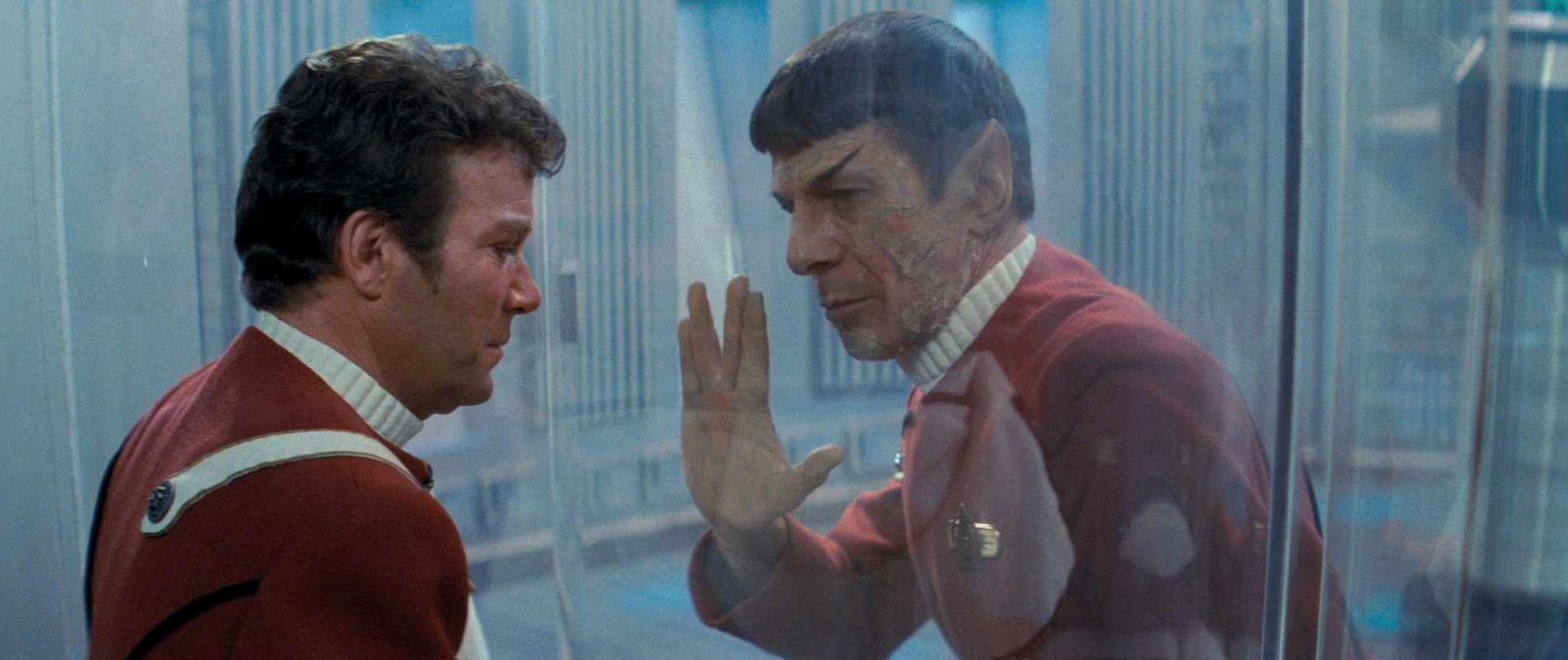
Stardate not given: Synopsis in main Movie listing
Review
Star Trek II: TWOK is full of technical and logical deficiencies and unfortunately there is a general lack of attention to detail throughout the film. Nevertheless, its achievements as a film are significant and it is still my favorite of the ST Movies. It is a much more personnel story than ST: TMP. Though it loses much of the epic sense TMP had, it makes up for this in its characters. We see a side of Kirk we've never seen before. Shatner will most likely never win an Oscar, but I think this is his best work within the ST franchise. Basically it's the story of Kirk's mid-life crisis. We know that between TMP and TWOK he retired and returned to Starfleet, his beloved Enterprise has been relegated to a training vessel and he is now struggling to find a place in a galaxy that doesn't seem to need him anymore. The best he can do is muster an observatory status on the Enterprises training cruise. It will take his confrontation with Khan, responsibility for a trainee crew and the death his best friend, for Kirk to truly find his place again -- a high price indeed. We even see Kirk make a horrendous tactical blunder in his first encounter with Khan. He fails to raise shields as Saavik advises when the Enterprise approaches the Reliant. This type of mistake would be almost unheard of by the Kirk of TOS. Yet, this very human side of Kirk is one of the finest aspects of this movie. The human factor is what makes this film great and character driven science fiction is always the most satisfying. For the first time we finally see real character arc for our main protagonists, Kirk and Spock. We see a side of their friendship that was rarely explored in TOS -- a theme that will be carried into the next two films. Even the other characters get a little more involvement than usual. The special effects aren't near up the standards of TMP, but they are more that adequate for the story.
I also enjoyed the philosophical aspect of the film introduced by Spock in his "needs of the many vs. the needs of few" dialogue. A theme Spock will emphasize best with his ultimate sacrifice and a theme that will be perfectly and appropriately reversed for the next film. This story is about anger, loss and responsibility. Most importantly: all the ways -- right or wrong
we deal with these issues. TWOK paints a much different universe than we have seen in to this point in Star Trek. It depicts an uncertain and dangerous frontier, where darkness and evil reside. The galaxy depicted here reminds me much of the one depicted in the Alien franchise. Even the ear-dwelling creatures bare some similarity to the small host creatures from the Alien movies. Truly, the theme of the unknown in this film is as the old sea-faring warning, "Here there be monsters." (This theme will also be revisited in Enterprise.) This depiction of the universe is probably the furthest from what Roddenberry had in mind for Star Trek. Yet I think the story fits perfectly into what Star Trek is all about and given the deep human aspect of this story, this theme is not inappropriate. Furthermore, the anger and rage of Khan is something we have rarely seen to date within Star Trek. By story's end we see evil thwarted by great courage and sacrifice, a family put aside their differences, a man find his place and of course the galaxy is saved all in the process. This is truly a story worthy of Star Trek.
Annotations
- Remarkable error: Khan's "I never forget a face Mr. Chekov." Seeing as how Chekov didn't come on the show until the next season.
- Remarkable dialogues:
- Spock: "Ship... out of danger?" - Kirk: "Yes." - Spock: "Don't grieve, Admiral. It is logical. The needs of the many outweigh..." - Kirk: "...the needs of the few." - Spock: "...Or the one. I never took the Kobayashi Maru test until now. What do you think of my solution?" - Kirk: "Spock..." - Spock: "I have been and always shall be your friend... Live long and prosper."
- David: "You knew enough to tell Saavik that how we face death is at least as important as how we face life." - Kirk:"Just words." - David: "But good words. That's where ideas begin. Maybe you should listen to them. I was wrong about you. And I'm sorry." - Kirk: "Is that what you came here to say?" - David: "Mainly. And also that I'm proud - very proud - to be your son."
- Remarkable scene: Spock's death. By far the best of any of the main Star Trek characters.
- Remarkable ship: the Reliant
Rating: 9 (J. Stewart)
Star Trek II: The Wrath of Khan
Synopsis
Stardate not given: Synopsis in main Movie listing
Review
When "The Motion Picture" ran its course, it may have made cash and resurrected the Star Trek franchise to the world but in the eyes of the executives, the film cost too much to make despite earning its money back - and was slammed by many for being dull. Many blamed Gene for the failings of that film and in a bold move, decided to "cut him out" of the warranted sequel.
According to the book The Art of Star Trek, Harve Bennett was called in by Paramount, reasons not stated. When asked about the Star Trek TMP his reply was cagey but honest, telling the executives that he thought the film was "alright but boring" and that "his kids kept on popping off to the john" and the only thing that was good about it was the appearance of Lt Ilia. When he was told how much it cost it's claimed he said "I could make a dozen movies for that money!" - On which Paramount said - "Do it."
The sequel had a plot that was very basic, with a budget that was meagre, with a crew who were not devoted trekkies and with restrictions to cost and production: - in short this had the hallmarks of a disaster. The result was anything but.
The film was "Star Trek Two - The Wrath of Khan" - probably the greatest Star Trek Film EVER made - and more than that - a fantastic film in its own right. So many things make this a joy to behold and created the benchmark other films in the franchise are measured, compared, inspired, and even condemned by.
First - it was going to be the opposite of "The Motion Picture" - the execs wanted it to be full of action and drive, not another slow film.
Second; the plot - as the old saying goes, keep it simple - no time anomalies, no threat to Earth, alternate dimensions or anything ridiculous. Also the story was worked on - and worked on hard. It was not a swift flash in the pan of clichéd ideas or cheap tricks. TWOK's plot was well made and thought out - and it shows.
Third, the ideas that went into the plot. The simple "super weapon threat" was dragged in and done to death, and in all fairness was seen as a surrender and a pander to basic audiences, but a clever spin came to pass that was to turn the 'bomb' into something else - a noble idea that can be misused - hence the Genesis Device - an excellent notion that made the "weapon" not a thing of destruction but something with benevolent intentions. As a result, this made part of the plot solid.
The other foundation was the idea of a villain. Anyone could have been selected as a baddie; a Klingon, Romulan, whatever, but the motives would have been predictable and would make a dull film. What they needed was a villain who not only had motive, but also the character and the manner to power it, one that would be a match for Kirk; and more importantly someone who could play that part with such panache. The resurrection of Khan Noonien Singh was inspired - and that character ticked all the boxes - motive: revenge and damaged ego; character/manner: malice, pride, megalomania; challenger to Kirk - former warlord of the Earth and VERY intelligent. This character is a really nasty charismatic piece of work. The actor Ricardo Montalban delivered the lines with such coldness, malevolence, and passion - HE was not playing Khan - HE IS KHAN. For Khan to fight Kirk he needed a ship, obviously, but if he came after Kirk in a Klingon vessel or something underpowered or some over the top machine it would not work; the idea of capturing a Federation craft was a stroke of genius - no one would suspect one of their own vessels going rogue, it would be an equal fight, and on that the film rolled like a perfect wheel.
From those ingredients the film wrote itself - the plot grew, the actions came, and all fell into the right places. It was nurtured right and the end result is a masterpiece. To me this film has EVERYTHING I want - action, sense, intelligence, good pace and planning and emotion - it drove you on and you felt part of an adventure. When I saw this aged ten in the 80's I thought it was better than Star Wars - and it still is.
The characters familiar, but now with more "human" traits - fear, pride, guilt, failure, sadness, - in short - FLAWS! Things we as humans can relate to. Something I think that still lacks in Star Trek many a time. There is great acting and there are great lines, and one line so well executed that it has elevated from this film and has become part of popular culture. "Revenge is a dish best served cold."
The action was well crafted and not shoved in for gung-ho effect or to compete with other films - they were bred by the story that made the conflicts excellent in execution. The pace is fast, it's adventurous, and it feels like an epic movie unfolding. The music is utterly brilliant - plaudits to James Horner - it has heroics, bombast, and sadness. The attack from Khan is clever in the way he allows Kirk to be fooled, the counter attack by Kirk is masterful by showing Kirk's knowledge of starships to Khan's inexperience - and that PLAUSIBLE SIMPLE FLAW creates the climax in the Mutara Nebula which is jaw dropping and has never been bettered since!
Finally a great film must have a great ending - be it a phrase, a scene, or conclusion. Think "Blade Runner", "Shawshank", "Glory", "The Maltese Falcon" and you get an idea. Here TWOK presented us with the death of Spock - it was done with such strength, nobility, dignity, and heart you could feel the pain of loss; and as for the funeral - if you are not moved - god knows.
One can say there are niggles, a few errors - but when a film like this is done this way, it matters not at all. TWOK is so good it doesn't even feel like a Star Trek film - it's a film that stands on its own merits - and as a result many have based ideas from this film in so many ways and that tells it all. Nicholas Meyer, Director of the film, said the reason why he worked so well on the film was "that it was to mean something" - a film that has some importance - something I think many films in general have forgotten.
I watched it recently and despite the level of special effects we have now, and the film's age - believe it or not its over twenty years old - TWOK still has not waned - it's still fresh, still adventurous, still strong, and watching it again does not dullen - it shines more. This IS the film that saved Star Trek.
A full deserved perfect 10/10.
Annotations
- Remarkable ship: The Reliant is a superb design and blends well into the technical world of Star Fleet. It honours the rules of Trek and creates new ones - the first true "other starship" that would inspire kitbashes and a design that would carry on in treks of the future. The beatings it takes and the blows it delivers are staggering stuff! It was originally designed with the nacelles above the saucer and the torpedo pod underneath, but the Reliant was presented to the producers upside down - and they liked the mistake and the rest is history.
- Remarkable props: The first showing of what a photon torpedo looks like, and the launcher room.
- Remarkable facts:
- The Genesis film was the first true CGI film made for the big screen - at the time this was witnessed by both George Lucas and Stephen Spielberg who hoped if it was possible to make an entire film like that. At the time they were told it would take decades to do - in an ironic twist, they were right. It did take decades for that type of film to be made.
- The original story was literally on another planet, and penned by Gene himself. It involved renegade Klingons seizing the Guardian of Forever to allow them to travel back in time to prevent the assassination of John F. Kennedy. Needless to say, Paramount execs were not enthusiastic about the idea and promoted him Executive Consultant - i.e. - kicked upstairs out of harm's way. Despite his resentment and objections to certain themes in "The Wrath of Khan", they were "taken onboard"...and no more than that.
- The Genesis Device was originally called the Omega System but was regarded as too dark for the optimistic era of Star Trek and what Starfleet was about - until Art Director Mike Minor suggested that the weapon was for terraforming purposes - on the Harve Bennett leapt up and hugged him saying that "he had saved Star Trek!"
- Sad facts: The actress Bibi Besch who played Carol Marcus also appeared in "The Day After" and alas died of cancer in 1996; Merritt Butrick who played Kirk's son died of AIDS in 1989; Paul Winfield who played Captain Tyrell died of a heart attack in 2004.
Rating: 10 (Chris S)
Star Trek II: The Wrath of Khan
Synopsis
Stardate not given: Synopsis in main Movie listing
Review
"The Wrath of Khan" is my favorite Star Trek movie. This film has an unmatched level of tension and drama that we would rarely see in the other movies. For one thing, its a much more action oriented movie than TMP, while it still manages to implement many themes that are very much "Trek". Kirk is starting to feel his age and feels as if there is nothing left for him to do, like he's a 5th wheel on the wagon and at the same time, the story is about a scientific breakthrough that could lead to the creation of new life.
The return of Khan was a great idea. We knew he survived the original episode in which he showed up, because Kirk was somewhat merciful in leaving him and his people live. Though I really have to question how the heck Starfleet can't figure out that those 2 planets have swapped orbit. Also no one seems to remember that this was the star system where Khan was stranded. You would think that Chekov (who claimed to have seen Khan) would at least mention that fact to the captain of the Reliant.
The space battles are exhilarating. From the (once again) great models and SFX to the awesome musical score by James Horner. A great villain, good deal of character development and amazing visuals make this easily the best film of the bunch.
Annotations
- Remarkable error: Chekov immediately recognizes Khan, even though Walter Koenig was not part of the cast of TOS back when "Space Seed" aired. One could explain it away by saying they met offscreen however, when Chekov probably was not part of the bridge crew yet.
- Remarkable quote: "The needs of the many, outweigh the needs of the few." (Spock)
- Remarkable scene: The opening scene with the famous Kobayashi Maru test.
- Remarkable ship: The USS Reliant, Miranda class. My favorite ship in all of Star Trek.
- Remarkable fake out: Even before the release of the film, there was a rumor going around that Spock would die in the movie. So they let it appear as if Spock dies during the Kobayashi Maru test, only to trick the audience into thinking he wouldn't die after all.
Rating: 10 (Lars)
Star Trek III: The Search for Spock
Synopsis
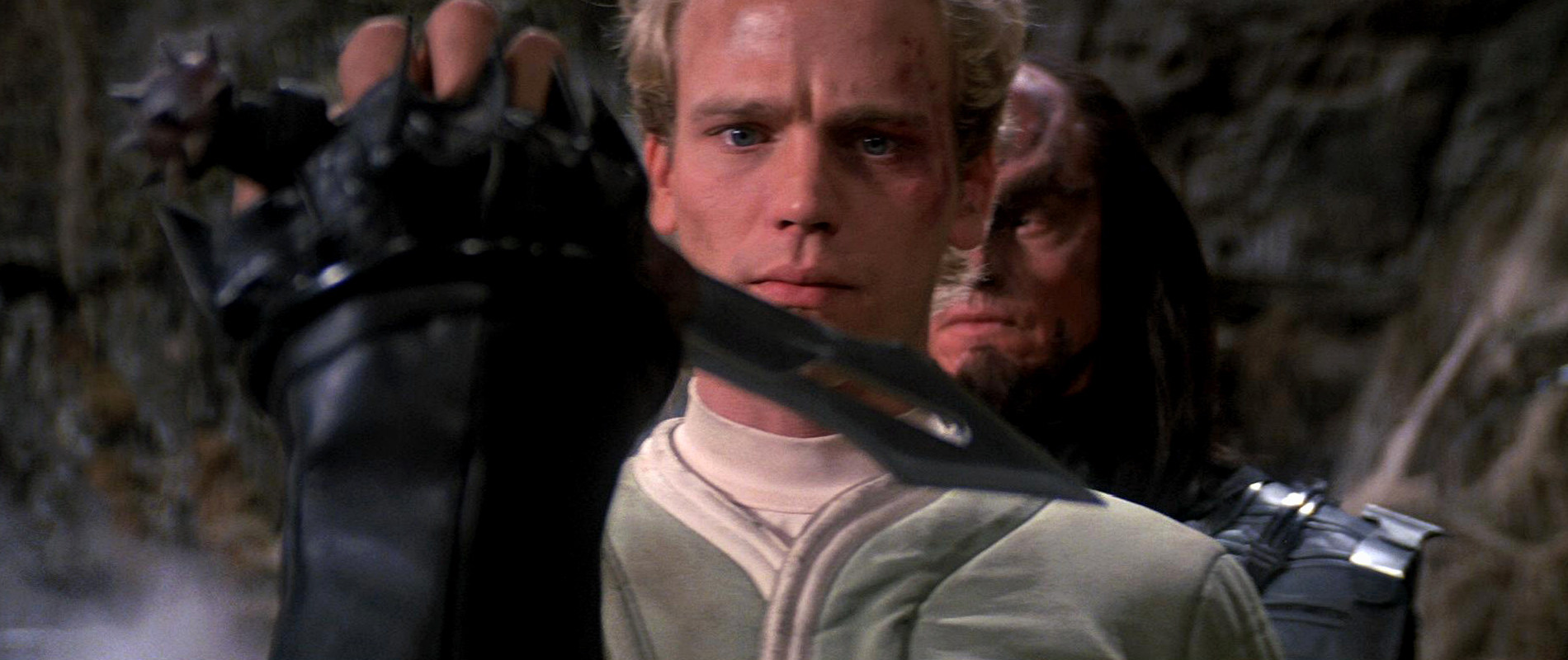
Stardate not given: Synopsis in main Movie listing
Review
Like with "Alien 3" to "Aliens", "Jedi" to "Empire", "Mad Max 3" to "MM2", the sequel to the best ever Star Trek movie shared the trend with the aforementioned - the sequel becoming a damp squib.
Where TWOK made Star Trek a great adventure, TSFS made one want to stay home. When I saw this film I was not just disappointed - I was also insulted, deflated, and cheated.
In a way TSFS was the reverse of TWOK and although it has some good moments, most of the film is a banality. It's the kind of film you may view if you have not much on, but if there is a lot to occupy you, you would not give it a second thought.
Why the resentment? Worse films in the fleet have come to pass.
Well first off - the plot. Where they could have moved on, grieved, and start a new adventure, they decided to undo EVERYTHING in the last film because Mr Nimoy had a change of heart. This must have been joy to the die hards, but to the rest of the world this only confirmed the reason why Sci-Fi is hated and Star Trek is mocked. They could have stuck to their guns, ride the storm, and say "this is life" but no. They conceded and reset everything.
Second, the villains: Klingons - cookie cutter ones to be accurate. They could have been Romulans, Orions, tax men, taxi drivers, curb crawlers, any crap plucked off the shelf because their portrayal was anything but inspiring. They were only added to bring back some "traditional villains" into the films. Rather than think out a strong menace with motive, we have a bunch of folk doing what they do because that is what they are expected to be. Nothing bold, creative, or interesting. As a result, they are a forgettable as...
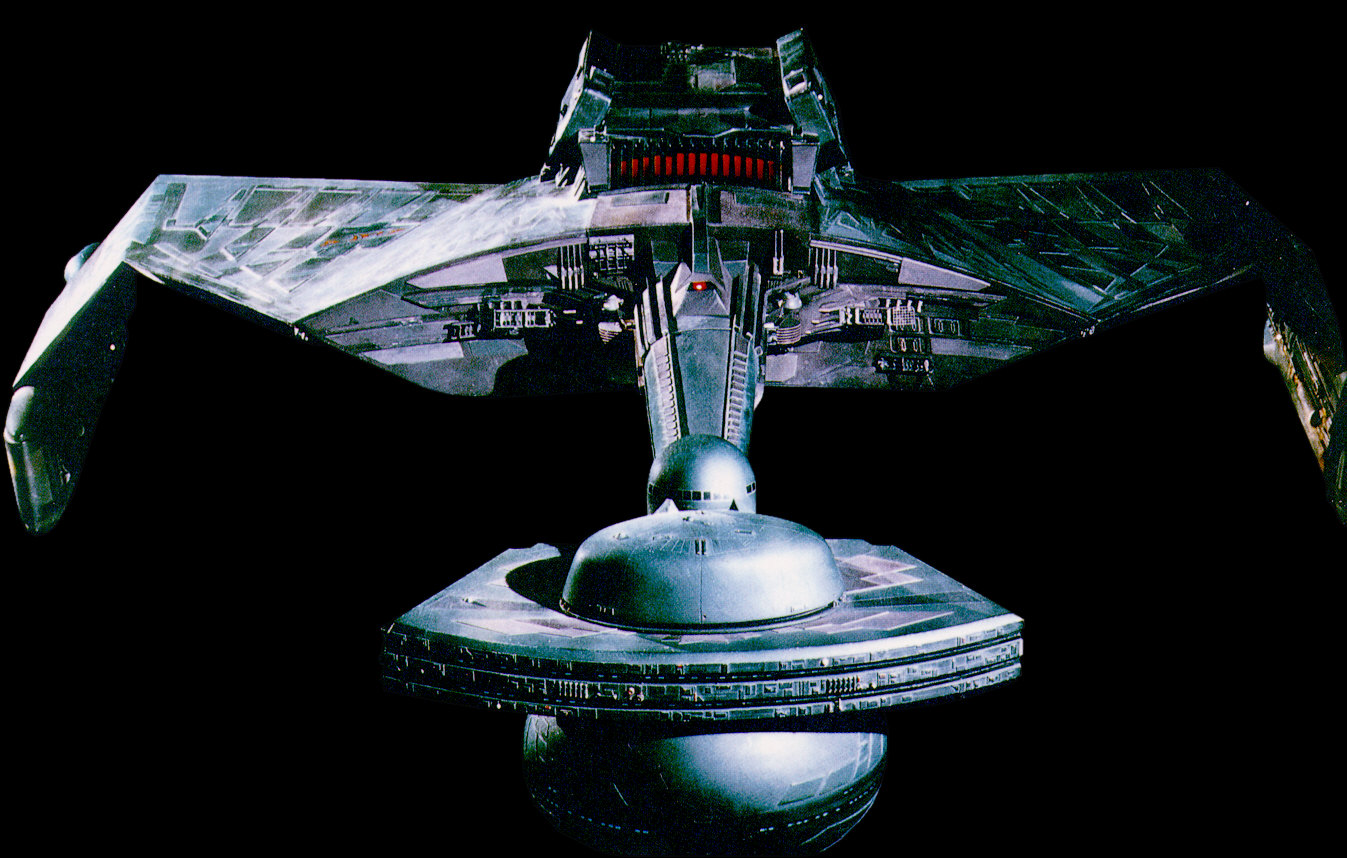
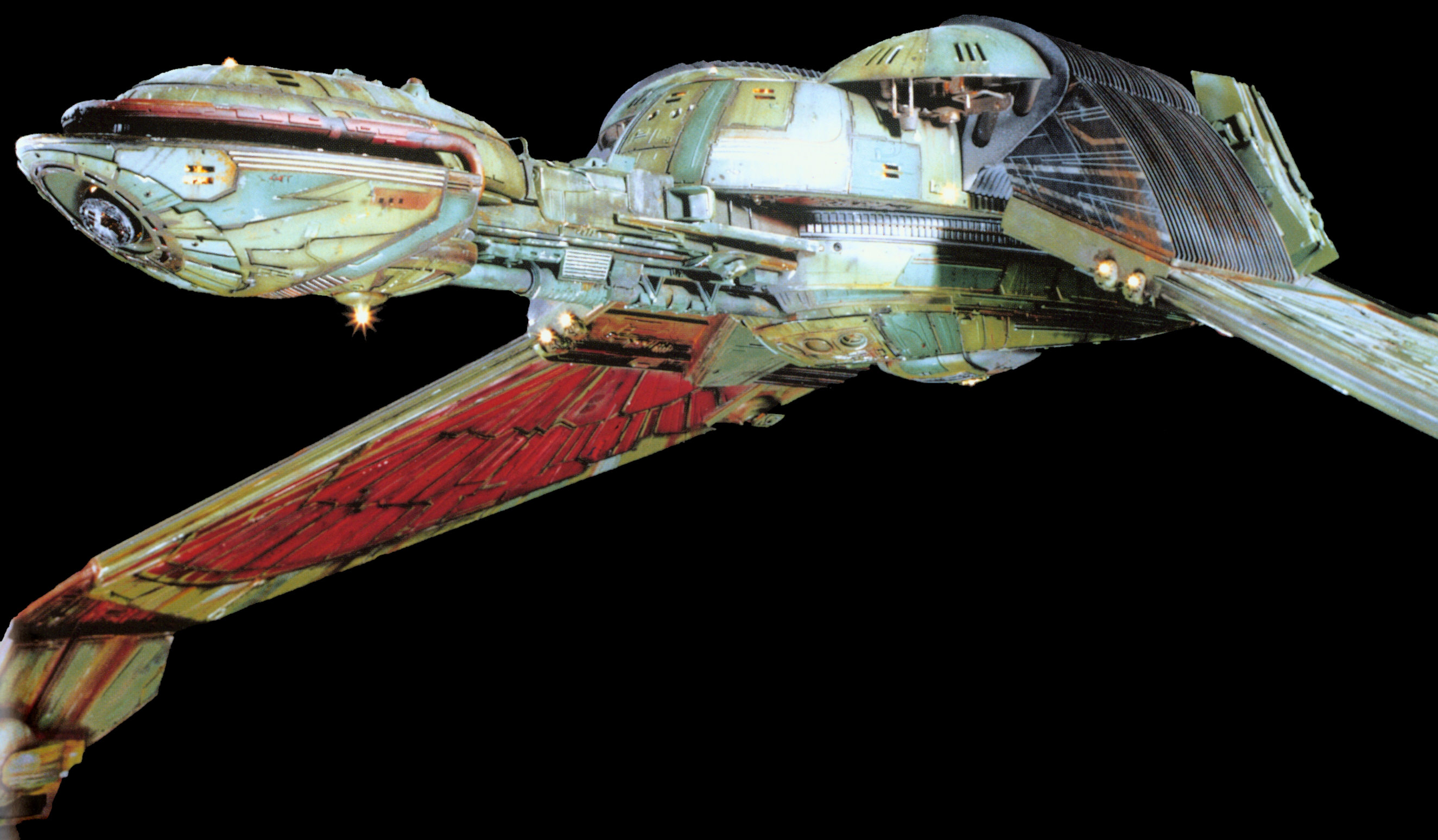
Third - the Bird-of-Prey and the Merchantman - the moment I saw these ships to me Star Trek jumped the Shark. Both ships are good designs but look like something belonging to Star Wars - rusty exterior, greebles, wear and tear, bending wings, and obvious gun batteries. For it to be in a Star Trek film is like featuring a tank at a supercar show! To me Star Trek starships are suppose to be smooth, almost featureless, and have nacelles - original Romulan and Klingon ships did, why the sudden change? These vessels ruined the Star Trek aesthetic and smashed said rule. The fact that the BoP went on the be EVERY Klingon ship since beggars belief.
Fourth, rendering Genesis to a failure - having created a superweapon, this would limit future stories so they decided to show that the device was badly designed and could not work, thus rendering an interesting idea to an afterthought. Its clear no one bothered to look further into the Genesis device, and sides, it may not be able to create a world, but does that mean it cannot destroy one? By making it a failure, the chance of looking into this idea is dead.
On the subject of death, Spock's resurrection - WHAT A COP OUT! - how convenient that there were "Genesis waves" left to re-create Spock yet Kirk's son dies and stays dead! When one loses someone that's it. It's a horrid experience and one we all have to deal with and go through, it makes us realise how precious life is, and that it tests us to move on or be crushed. This resurrection basically erases the emotion of the funeral in TWOK and in a way it to me makes a mockery of death - a stunt they would repeat in Nemesis except more blatant and more crass.
This is a disappointing film that in a way started the trend that every odd numbered Star Trek film would be a dud. This film does have a few good moments - the destruction of the Enterprise was a shock, the Spacedock was jawdropping, and the BoP landing on Vulcan was spectacular.
However these moments do not compensate for a rather dismal film whose sole purpose is to bring back Spock/Len Nimoy into the franchise.
5/10 - because of the special effects and ships
Annotations
- Remarkable scenes:
- The Enterprise's destruction - How brave is THAT!??!?!?
- The arrival and escape from Spacedock - brilliant!
- Remarkable facts:
- The Bird of Prey was going to be a Romulan ship, with a Romulan crew, but Nimoy and co suggested Klingons - the BoP was then made out to have been captured by the Klingons - but later the idea was dropped.
- Roddenberry, who had been forced out of direct creative control during production of "The Wrath of Khan", felt that the destruction of the Enterprise he had helped to create was something of a betrayal; many attributed the leak and the acrimony that followed to Roddenberry himself. Regardless, the vessel's destruction was clearly shown in a television spot that aired two weeks before the film's release. Harve Bennett tried to have the Paramount-approved commercial changed, but failed.
- Remarkable ships and stations: The Excelsior, the Grissom, and the Spacedock. - Beautiful!
Rating: 5 (Chris S)
Star Trek III: The Search for Spock
Synopsis
Stardate not given: Synopsis in main Movie listing
Review
This film is average, sort of. The story is simple, effective and worked well. But this film has a few aspects and I'll discuss them individually.
The characters. Well, we have Kirk who was normal, defiant and just the same except that his son died. Now, he didn't cry, in fact he had hardly any fucking emotion and just showed how bad Shatner is at acting. I mean, I still hate people who make it OTT but he basically sat down and surrendered. Nothing, I mean there's taking things on the chin and there's taking it on the chin. He was pathetic. So, Spock was dead, how sad but he's reborn. Oh that was an interesting idea but I don't see how it would revert him to a child. Okay, the child part worked well and the highlight of the film was the Pon-Farr scene, nicely handled and nice continuity. Spock's return at the end was nicely touching and not done over the top. McCoy had more to do and I liked the Spock / McCoy personality shown in the well directed bar scene. Uhura was normal, just a side-dressing but her scene with the gun was the most stupid scene, Uhura was hardly like that and I feel it ruined her character.
The plot itself was a mess and made no sense, they then made the Genesis device a failure which was pointless and meant any future attempt of a revival was ruined and how did it rejuvenate Spock but not David. Come on, explain that! The people who wrote this were just dicks as they abandoned a lot of decent ideas. They killed off David who could have returned. They destroyed the Genesis Device which was genius and made Spock return. Why not leave him dead? The beginning worked well and I liked when they stole the ship. It was nice and simple and looked like it worked mostly. The blowing up of the Enterprise was well worked and they actually blew it up! Good for them. The Klingons were well worked as enemies to bring back into the series as major villains. They could have been worked better but I can't see how. The fight was pathetic and the last minute rescue was slightly far fetched yet I enjoyed it. I found the Klingons motiveless but they worked very well otherwise.
The music used in TMP was exceptional yet there was none in here and it never made sense as nothing seems to speed it up. They did nothing and the direction was slightly offkey. The direction was a bit bad and during the film there was a few bad shots and it lacked the perfect shots that the other filmed sometimes possessed.
The pace was a bit weak, it started off slow and I didn't want another TMP. When they stole the Enterprise it sped up but the escape was far too slow and then it sped it and skipped through the rest of the plot. The enemies had not motive but there scenes was well written and directed and overall the story worked really well. The final fight was a disappointment but it's not that bad.
Annotations
- Remarkable quote: "Ordering poison at a bar is illogical." (McCoy)
- Remarkable dialogue: "Sir, it's controlled by a computer, the only thing on is the computer." - "What's it saying" - "10...9...8" - "Get out of there!" BOOM! (Klingon commander, Klingon soldier and Enterprise computer, how thick can you get?)
- Remarkable ships: the Enterprise
Rating: 6 (Darren Carver-Balsiger)
Star Trek III: The Search for Spock
Synopsis
Stardate not given: Synopsis in main Movie listing
Review
The stakes raised by "The Wrath of Khan" were high. So high, that in my opinion this movie was simply in a very bad spot to be the followup. Does this mean that this movie is bad? Not at all! "The Search for Spock" is the best of the odd-numbered movies in my opinion.
The Enterprise makes its way back to stardock and is supposed to be retired. Kirk of course doesn't want to stand for that and wants to take her back to the Genesis planet in the hope of finding Spock alive and well, due to the revelations made by a crazed McCoy who is affected by the mind meld. Meanwhile, a rogue Klingon wants to get his hands on the Genesis project in hope to make it a weapon for his people. Its interesting to note that there is a first hint of peace negotiations going on here, as Kruge is not acting on behalf of the Klingon council from what we can tell. He wouldn't remain the only Klingon throughout the movies for whom peace with the Federation is unacceptable.
In the end, Kirk loses not only the Enterprise, but also his son trying to help his friend. This is to me one of the movies that truly shows the comradery of the bridge crew of the Enterprise. Kirk's friends not only help him "borrow" the Enterprise, but they also stick with him all the way to end when they face off against the Klingons.
My only major nitpick is that, while the movie has a decent pacing up until the battle against the Klingons, things slow down too much after they are defeated. Those last 30 mins of the movie felt a tad too long to me, given the pace of the rest. Other than that, a good movie!
Annotations
- Remarkable dialogue: The Klingons speak a lot more in their native language here than ever again on Star Trek. I felt it added a lot of authenticity.
- Remarkable ships: This movie marks the first appearances of the Oberth class (USS Grissom) and the Klingon Bird of Prey. The latter would become one, if not the most notorious, of all alien ships in Star Trek.
- Remarkable actor: Christopher Lloyd as Kruge. A great Klingon villain.
- Remarkable trivia: The villains were originally meant to be the Romulans, hence the term "Bird of Prey" for the villain ship.
- Remarkable losses: The death of David and the destruction of the USS Enterprise. The image of the Enterprise burning in the atmosphere of the Genesis planet has always been one of the saddest moments in Star Trek history to me.
Rating: 7 (Lars)
Star Trek IV: The Voyage Home
Synopsis
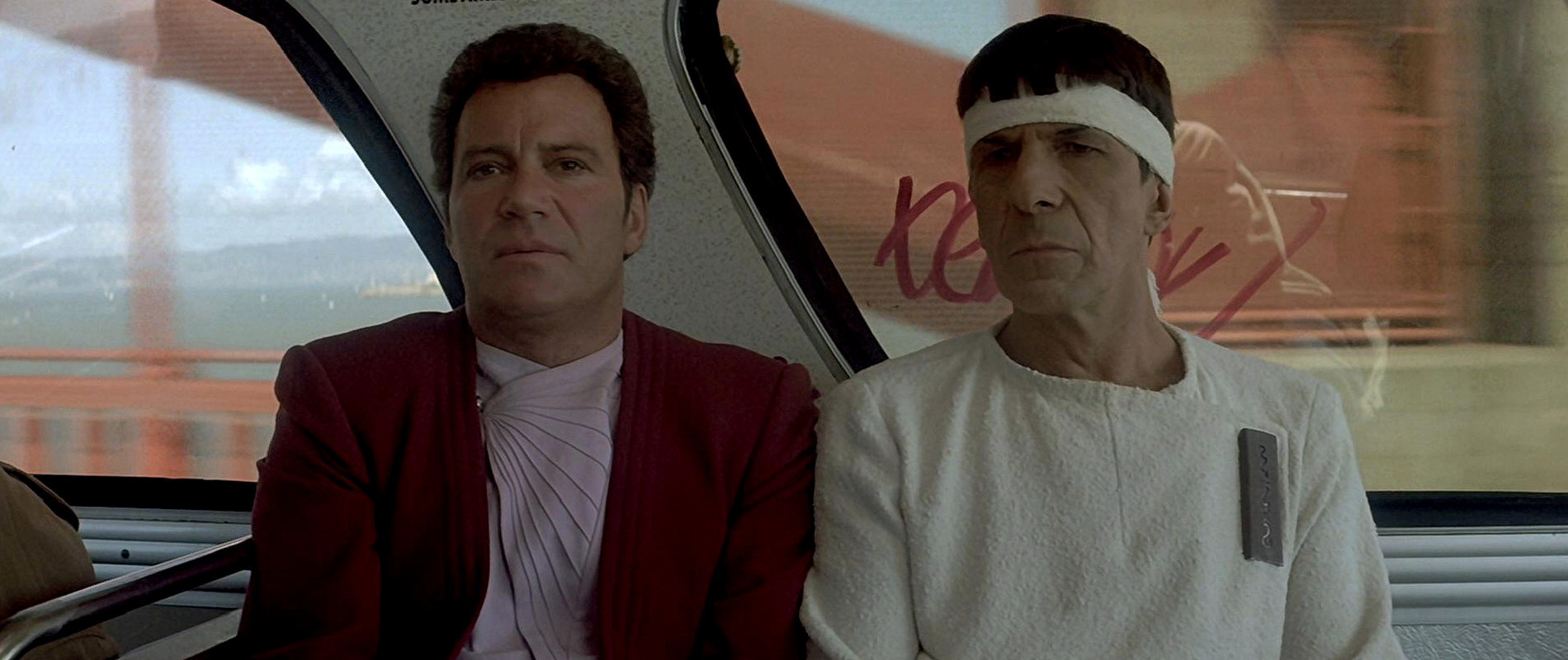
Stardate not given: Synopsis in main Movie listing
Review
When I saw the trailer to "The Voyage Home", I steered clear of this film, and its timing smacked of a cynical ploy to woo viewers - it once again had the theme of time travel, and by co-incidence it was released in the same era as "Back to the Future".
When I did see it on TV, it confirmed my reasons but it was not as bad as I thought. It is well made and directed. Having said that I am glad that I did not waste money seeing it.
Once again it was another alien probe threatening Earth, mankind/Starfleet had no chance to defend itself against it, and by luck, only the temporary exiled crew of the Enterprise can save the day. They discover that the probe (and as always by Spock) is trying to communicate with humpback whales - alas they are extinct in the 23rd century. So the crew decide to time travel back to 20th century Earth to nab a couple of whales and save the day.
The plot sounds utter bunkum - think really about it - going back in time to rescue a couple of WHALES! Only Star Trek would/could come up with a story like this.
It has some great moments though, especially the hospital scene with McCoy in full rant mode (best part of the film), the punk rocker on the bus, the con over the glasses, and Spock's profanities. The worse parts were the way they treated time travel and its consequences, and the annoying marine whale expert Gillian Taylor, someone that made the film unbearable.
The ending with Kirk reduced to rank and them returning to ANOTHER refitted Constitution class is a yawn. YET this is the biggest grossing film of the franchise until Star Trek 09. How? Why?
Well I have a theory on this based on Total Film Magazine's reasoning why James Cameron's "Titanic" is popular yet hated. The theory is thus - if a film about ordinary life and strife has a powerful but brief sci-fi element to it, then it blasts other such films out of the sky. On the other hand, if a dedicated sci-fi film spends most of its time showing nothing science fiction at all except at the last few moments, then blows big time.
Like Bernd said, for a Star Trek movie there is not much Star Trek in it and I agree. The story maybe silly but is important about the environment and life on this planet. It is well done with no violence or explosions. Yet its a film I would not make efforts to see because there is not much to look at.
6/10 - well its a lot better than "The Search for Spock" and the atrocity of "Star Trek V"!
Annotations
- Remarkable facts:
- When Nimoy was fleshing out the script of "The Voyage Home", he approached "Beverly Hills Cop" writer Daniel Petrie, Jr. to write the screenplay when a concept that executive producer Jeffrey Katzenberg described as "either the best or worst idea in the world" arose - Star Trek fan Eddie Murphy wanted a starring role. Nimoy and Murphy acknowledged his part would attract non-Star Trek fans to the franchise following the rising popularity of Murphy, but it also meant the film might be ridiculed. Steve Meerson and Peter Krikes were hired to write a script with Murphy as a college professor who believes in aliens and likes to play whale songs. Murphy disliked the part, explaining he wanted to play an alien or a Starfleet officer, and chose to make The Golden Child - a decision Murphy later said was a mistake. Murphy's character was combined with a marine biologist and a female reporter to become Gillian Taylor.
- Majel Barrett reprised her role as Christine Chapel, the director of Starfleet Command's medical services. Many of her scenes - some reportedly very large - were omitted in the final cut, angering the actress. Her final role in the film consists of one line of dialogue and a reaction shot.
- "The Voyage Home" has no principle villain! Leonard Nimoy was asked to return to direct "The Voyage Home" before the release of "The Search for Spock". Whereas Nimoy had been under certain constraints in filming the previous picture, Paramount gave the director greater freedom for the sequel. "[Paramount] said flat out that they wanted my vision," Nimoy recalled. In contrast to the drama-heavy and operatic events of previous Star Trek features, Nimoy and producer Harve Bennett wanted a lighter movie that did not have a clear-cut villain, nor any violence, explosions, phaser fire or photon explosions.
- "The Voyage Home" was the first Star Trek film shown in the Soviet Union, screened by the World Wildlife Fund on June 26, 1987 in Moscow to celebrate a ban on whaling. Nimoy and Bennett attended the screening. Bennett was amazed the film got the same laughs as it did with an American audience; he said "the single most rewarding moment of my Star Trek life" was when the Moscow audience applauded at McCoy's line, "The bureaucratic mentality is the only constant in the universe. We'll get a freighter." To him, it was a clear "messenger of what was to come."
- The Whales are in fact robots. Controlled by numerous radio operatives, they worked hard on the models to get it right. The work was so good that marine biologists and zoologists thought they were real and expressed concern for their well-being.
- Shatner described the comic quality of "The Voyage Home" as one "that verges on tongue-in-cheek but isn't, it's as though the characters within the play have a great deal of joy about themselves, a joy of living [and] you play it with the reality you would in a kitchen-sink drama written for today's life." He also was unwilling to reprise the role of Kirk until he received a salary of $2 million and the promise of directing the next film. Oops!
Rating: 6 (Chris S)
Star Trek IV: The Voyage Home
Synopsis
Stardate not given: Synopsis in main Movie listing
Review
This has to be the Star Trek movie I have seen the most back when I was a kid. I was obsessed with whales and Star Trek, so to me this was the best thing ever at the time.
Looking back at it now, it sure feels like "Back To the Future meets Star Trek". The story continues right after the end of the previous film. On their way home, awaiting a trial, the crew is in control of the captured Klingon Bird-of-Prey. An alien probe is moving through Federation space, disabling and siphoning energy from any and everything that it comes across. Immediately this makes you think of "The Motion Picture". However, this movie has a much better pace and the payoff at the end is different from TMP. It turns out, that the probe is sending signals that roughly translate out into whale songs. But here's the problem: there are no whales anywhere left on Earth! So Kirk uses the slingshot effect to go back in time and get some. They search San Francisco and after a long series of funny encounters and misunderstandings they find them and manage to bring them back and the whales and the probe have their talk. The probe leaves, giving back all the energy it had absorbed. Kirk is demoted to Captain due his actions in the previous film and becomes commanding officer of the USS Enterprise-A.
I really like this film. While most of it doesn't take place in the 23rd Century, I felt that it was still one of the better time travel plots with plenty of humor in it that didn't feel out of place. There are many memorable moments, and I really like the message about saving the whales and henceforth nature itself. This movie proves, that you can still make an entertaining Star Trek movie for the general audience, without deterring too much from what we know and still making it feel like a genuine Star Trek experience.
Annotations
- Remarkable quote: McCoy to Spock: "You mean I have to die to discuss your insights on death?"
- Remarkable ship: This is the only time where an alien ship was posing as a hero ship on the movies.
- Remarkable "landing": The Klingon ship sinks next to the Golden Gate Bridge. I always wondered what happened to it after that.
- Remarkable history change: Whales are being brought back to the 23rd century after having been hunted to extinction. It's too bad we never heard of them again later on. I would have loved to know if the species was able to survive its second chance.
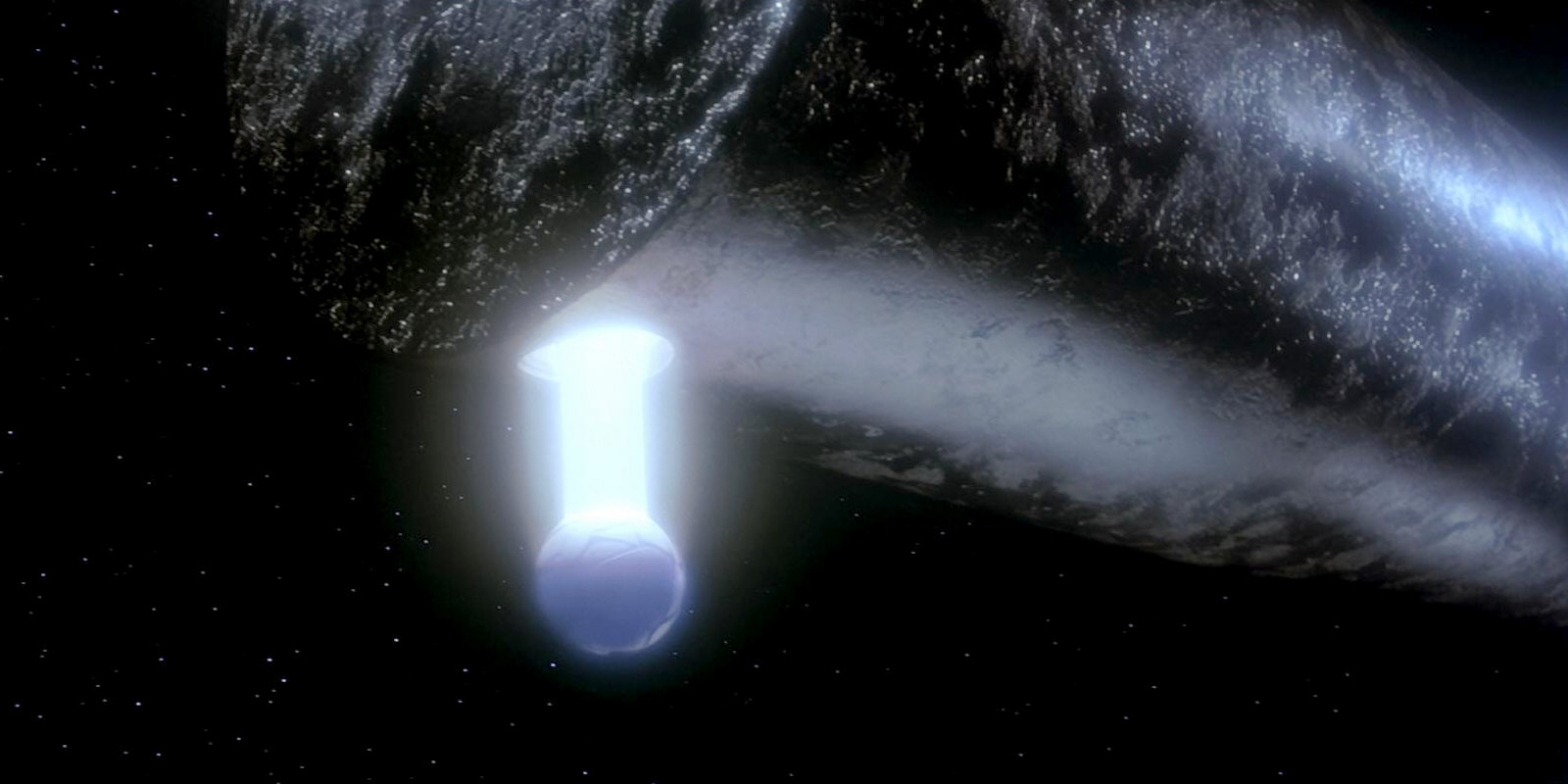
- Remarkable alien ship: The Whale Probe. Essentially a black barrel with a disco ball under it. I love its sound effect!
- Remarkable fact: This movie was dedicated to the men and women of the space shuttle Challenger, which was destroyed about 10 months before the films release.
Rating: 8 (Lars)
Star Trek V: The Final Frontier
Synopsis
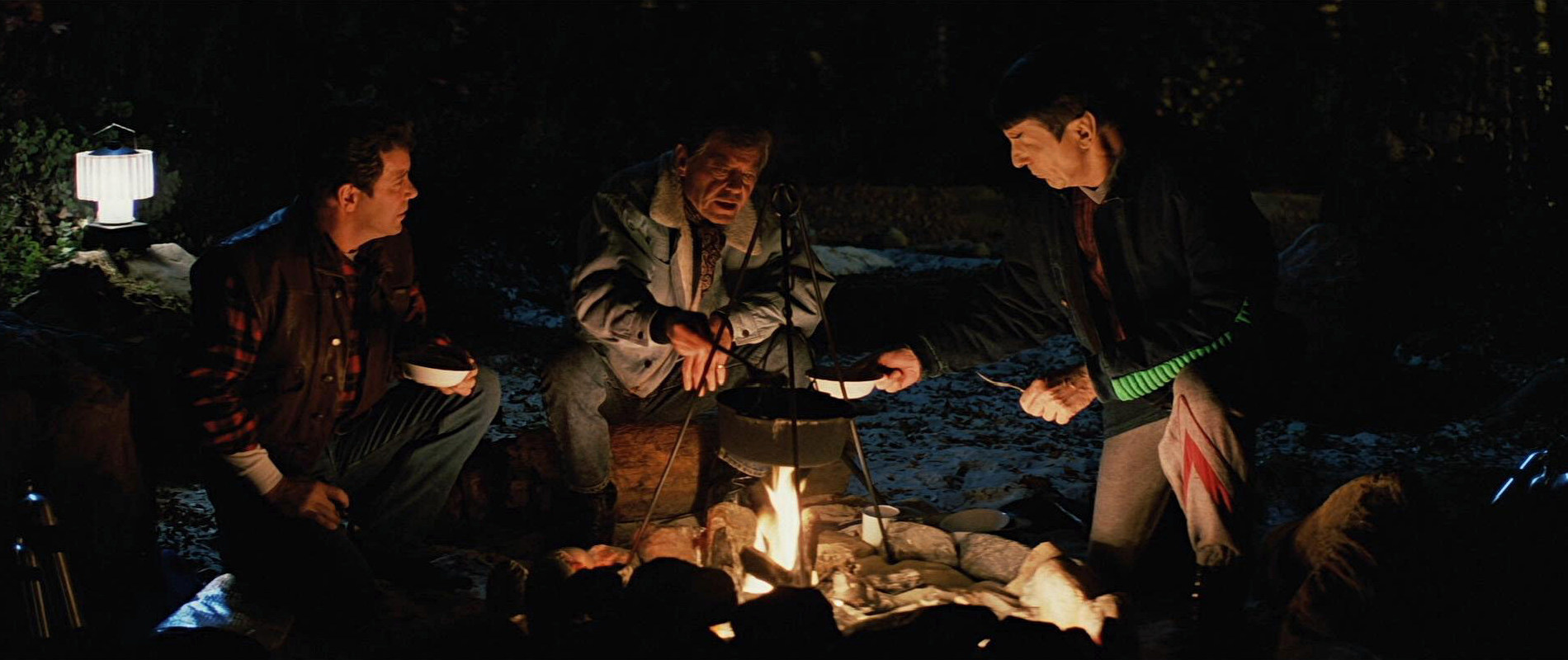
Stardate 8454.1: Synopsis in main Movie listing
Review
I love the movie's message -- that God isn't out there; it's "in here", in your heart. As Decker said in "Star Trek: The Motion Picture", "We all create God in our own image."
This is a pretty good film once you look past a few things.
Annotations
- Remarkable dialogue: After Kirk and McCoy sing "Row Row Row Your Boat", Spock argues, "Life is not a dream." Later, when the Enterprise is approaching "Sha Ka Ree", McCoy asks, "Are we dreaming?" Kirk responds, "If we are, then life IS a dream."
- Remarkable quote: "I've always known; I'll die alone." (Kirk)
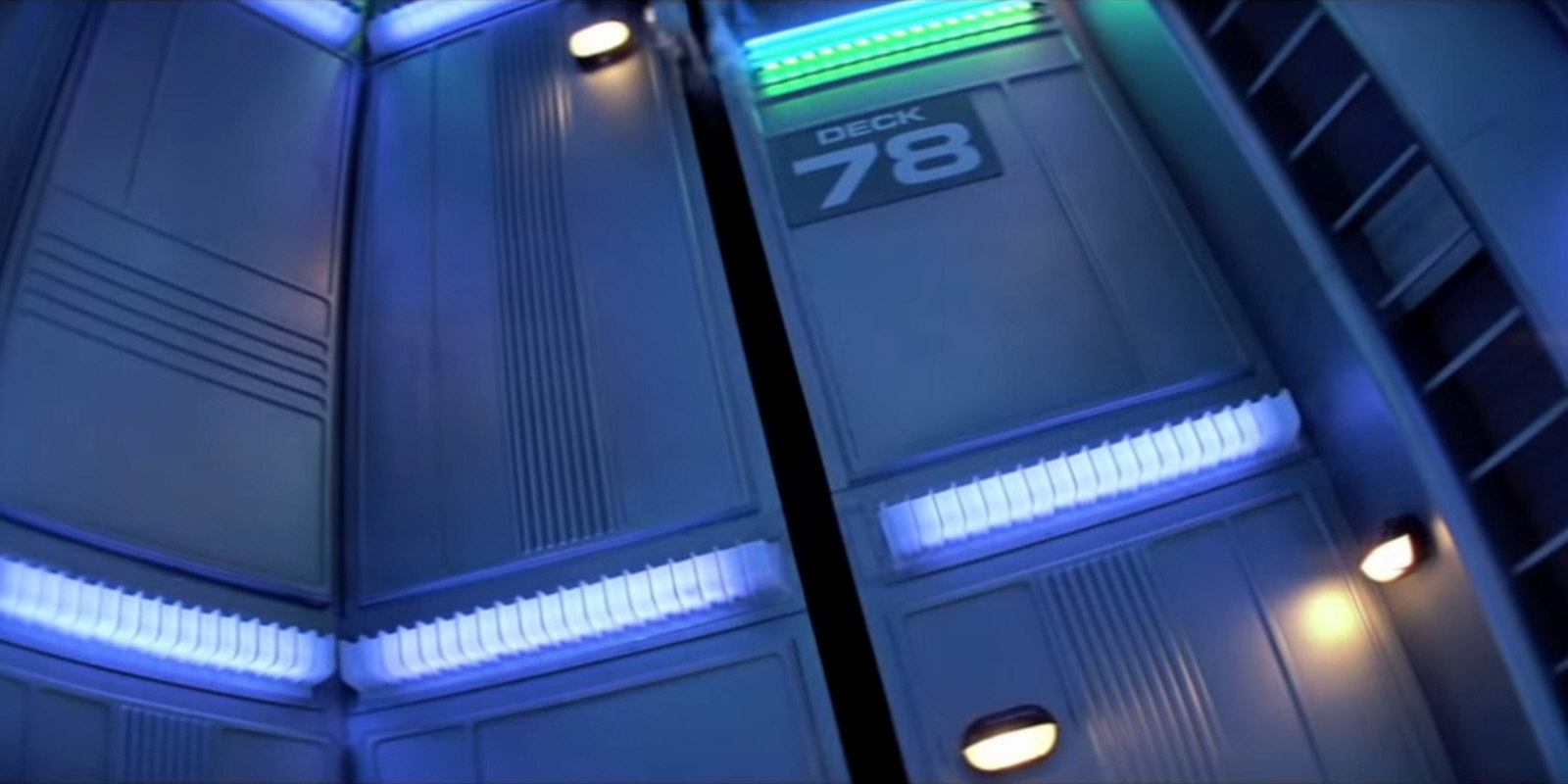
- Remarkable error: When Spock is propelling Kirk and McCoy up the Enterprise turboshaft, there are some remarkable errors in the deck numbering.
Rating: 7 (JemHadar359)
Star Trek V: The Final Frontier
Synopsis
Stardate 8454.1: Synopsis in main Movie listing
Review
If the "Wrath of Khan" was the movie that saved Star Trek, "The Final Frontier" almost destroyed the franchise. Written mainly by David Loughery and directed by William Shatner via a deal with Paramount, the plot in theory sounded interesting at best.
Looking for God. Many Sci-fi films have done or flirted with the notion of a Divinity and the intergalactic truth; many however have fallen flat on the face - and alas "The Final Frontier" was no different.
Had it the backing and support the film could have worked but numerous things were to doom the project - the 1988 Writers Guild Strike; ILM way occupied with other projects and a far cheaper unknown SFX team drafted as a replacement with obvious poor results; numerous script changes including some from Kelley and Nimoy; the need from the studio to repeat the success of "The Voyage Home" by making this film more fun and laughter than dramatic and serious; low production values; and inexperience directing from Captain Kirk himself.
The net result is one of the worse films made in 1989 - and even to this day its still an Albatross around Star Trek's neck.
Watching this is agony. The execution of the plot, the poor direction, no great moments, pointless photography and art direction, embarrassing comedy, stupid characters - especially Sybok and his entourage of gorlmess weirdoes - VERY lame action, irrelevant revelations, naff anything-but-special effects, and a climax that has a reverse effect - you knew the ending was coming and welcomed it. This is not just a crime to Star Trek - it's to celluloid in general.
When I first saw it I thought it was alright - but there is a rule of thumb about films - great films get better and better as you watch them, good films make your day, bad films can be bad but good, and dreadful films keep you away from cinema. This falls so into the last category. Whenever it's on, I avoid it - there is nothing there that makes me want to see the film - no special moment, no interesting point, no joyful scene - it's not even bad enough to be good. It is just so awful it's insulting.
They could have done a real epic or a different story - "The Voyage Home" left an idea that the Klingons would want revenge, they could have went that route or something else - but any ideas of a great film were scuppered when the studio wanted to replicate the success of "The Voyage home" with its humour - had they gone with the original plot - darker sense, betrayals, and clever revelations - it could have been interesting and may have been a nurtured classic.
Alas this film is not it. It's garbage - and the kind that cannot be recycled or turned into anything useful.
Annotations
- Remarkable ship/nitpicking: The redesigned shuttlecraft and the use of the Enterprise's hangar bay -the shuttles compliment the design style of the NCC 1701-A's inventory. Strangely in "The Motion Picture" the bay was a lot larger and could accommodate workpods = this bay can just barely fit in two shuttles. Constitution classes carried four (ref. "The Doomsday Machine") - so where are the other two?
- Remarkable facts:
- The new phasers with their powerpack "clips" were inspired from the pulse rifles in "Aliens"!
- Despite the film being marked as a stinker, "The Final Frontier" did make money - and recuperated its budget! Nevertheless this film will forever damage the franchise - its reputation is so bad that even in the TNG: "Family" episode, a reference to horse thieves from Nimbus III was cut out. In some countries the film was considered so bad it was only released as a VHS.
- In the film, the "God" was to take the form of rock monsters, but the budget was not available for a horde, but for a single beast, but the shot was so awful it was cut and only available on DVD; ironically this sequence was inspired in a scene for another Sci-fi film - "Galaxy Quest"! Even worse when the film was released on DVD, Shatner asked if the studios would remaster this scene as he originally intended - they refused.
- The film was the "winner" of the 1990 Razzie awards for "Worst Picture", "Worst Actor" (Shatner), and "Worst Director" (Shatner). It also received nominations for "Worst Picture of the Decade", "Worst Supporting Actor" (Kelley), "Worst Screenplay" (Loughery, Shatner, and Bennett). To add insult to injury this is the first Star Trek movie not to be nominated for a Hugo Award for "Best Dramatic Presentation".
- Everyone knows about the dodgy boot flight scene up the Enterprise's shaft - but the entire set was redesigned because the orignal set from "Star Trek IV" was damaged in weather. The set was designed by Herman Zimmerman - set designer for The Next Generation.
Rating: 0 (chris)
Star Trek V: The Final Frontier
Synopsis
Stardate 8454.1: Synopsis in main Movie listing
Review
Oh god, what happened here? The idea of someone being in search of the answer to the biggest question on existence by going to the center of the galaxy sounds like a great plot for Star Trek, however, the result fails to live up to the premise... big time.
The best part of the film is actually the beginning. While diplomats are being held hostage by a rogue Vulcan named Sybok on the remote planet of Nimbus III, Kirk and friends are having shore leave on Earth. They sit around the campfire, singing songs and poking jokes. And this is the only highlight of the film with the exception of the climax. Never before would I have imagined saying that a character development scene is the best a movie has to offer, especially on Star Trek. So even though the Enterprise-A is still being set up and is acting like its a broken hunk of junk for no explained reason, Starfleet thinks that its the best idea to send Kirk to rescue the diplomats... in the broken Enterprise.
WTH where they thinking!? The Enterprise (which I might add worked fine at the end of the last movie) is not at all ready for a mission, let alone one where combat could occur. What if the phasers refuse to work? What if you can't raise shields, should someone decide to fire a torpedo at it? The least Starfleet should have done was to give him a different ship. But its always gotta be the Enterprise...
So they get there and attempt to rescue the hostages only get themselves captured. And it doesn't end there! Sybok actually captures the Enterprise itself WITHOUT ANYONE STOPPING HIM. WTF?! Why didn't the Enterprise stop the boarding shuttle by tractor beam, shoot the shields, get their crew out and told Sybok to cut the crap out or he's toast? The Kazon taking over the USS Voyager in "Basics" was 10x more plausible than this takeover by a bunch of desert bandits.
And there's Klingons... for whatever reason, I guess because they were popular. Unlike in "Star Trek III", they merely feel like filler content here. The Klingon commander is just a hot shot who manages to come across as even more juvenile and stupid than the average Klingon bar thug.
So Sybok turns out to be Spock's half-brother *bad-dum-tish* and plans to find "god". For this, he needs the Enterprise and the diplomats. Why exactly all of those? I have no clue, they don't explain it very well. So he brainwashes the entire crew without resistance(!). Actually, the scene where Sybok shows our heroes "their pain" was the best scene in the film, and the only one that was done very well.
They get to the center to the galaxy without any problems at all and it turns out that this "god" is just another powerful alien being posing as one that wants a starship to get to other places to do... well something. Kirk asks the legendary line "What does god need with a starship? And to be honest, that's a very good question and unlike everyone else apparently I have no gripes with that line at all. The question was well timed and it shows that Kirk doesn't bow to anyone, not even a false god.
Sybok apparently tries to mind meld with the creature, showing remorse for what he has done and buys Kirk and his crew time to get to a shuttle. But surprise! The Klingons show up and they can't beam them all out, what a coincidence. Kirk appears to be about to die but the Klingons show up for the rescue... well sort of.
In the end, the movie is a giant mess. The plot has more holes than Swiss cheese, the special effects are the worst I have ever seen on Star Trek and even the soundtrack sounded like a lackluster composition.
One would think that this is supposed to be a satire, but it isn't... sadly its a canon film. If you are a hardcore fan, watch it. But be warned: There's so much inconsistency and randomness going on, it makes some of the worst TOS episodes look like Oscar material.
3 stars for the concept and the occasional good scene, 7 off for the rest.
Annotations
- Remarkable errors: The Enterprise having a straight up turbolift shaft with over 80 decks... ya whatever.
- Remarkable quotes:
- Spock: "Hold your horse Captain!"
- Scotty: "I know this ship like I know the back of my hand." *bumps into bulkhead*
- McCoy: "Jim, you don't ask the Almighty for his ID!"
- Remarkable SFX: Never again did special effects look so lousy on Star Trek.
- Remarkable scene: Uhura's fan dance, by far the most embarrassing scene in all the movies.
Rating: 3 (Lars)
Star Trek V: The Final Frontier
Synopsis
Stardate not given: Synopsis in main Movie listing
Review
This is without a doubt the worst movie of the Star Trek franchise, but I think that some of the fan hate regarding it is overstated. It's at least better than Star Wars has managed in its recent movies.
There are a number of big problems with it. The big one being the travel time to the galactic core. Earth is 26,700 light-years from the center of the Milky Way. In Voyager, we're told that a starship can travel about 1,000 light-years annually (that's actually way, way too slow for any interstellar organization but let's go with it). That means that this trip should take somewhere around 30 years using Janeway's ship, which is substantially faster than the Enterprise-A. This trip realistically should have taken Kirk & Company somewhere like a full century to accomplish. Two centuries if we include the travel time back. Just how close is Nimbus III to the galactic core and how in the world did Kirk get there if it's within a 7-hour travel time?
This movie is a remake of "The Way to Eden," which is a horrible TOS episode to begin with. This movie is better though since it doesn't have the space hippies and that awful music. We also do see some of the classic Trek phenotypes of "boldly going where no man has gone before."
The scenes with "God" were reasonably well done. I've seen some complaints on message boards about how weak the photon torpedo that hit him was, though. This could easily be explained by something like the photon torpedo not having its anti-matter tank (Kirk did tell the crew to "listen carefully" after all).
Sybok is actually reasonably well done as a villain, though he needs some more development. If we argue that "God" is actually the villain, that admittedly opens a can of worms but we can probably assume that he's a Q-type entity.
One thing that is annoying though is how Star Trek writers tend to resort to omnipotent beings so often. We don't see this too much in DS9, Voyager, or Enterprise but other series (namely TOS and TNG) tend to create entities that would have no interest in contacting the Federation.
Why can't the "God" entity leave the planet? This is never explained.
I'd rather watch this than Star Wars VII+ or most movies that have come out in the past five years. Honestly though, it's the worst Star Trek movie.
Annotations
- Remarkable quote: "What would God need with a starship." (Jim Kirk)
Rating: 1 (Daniel)
Star Trek VI: The Undiscovered Country
Synopsis
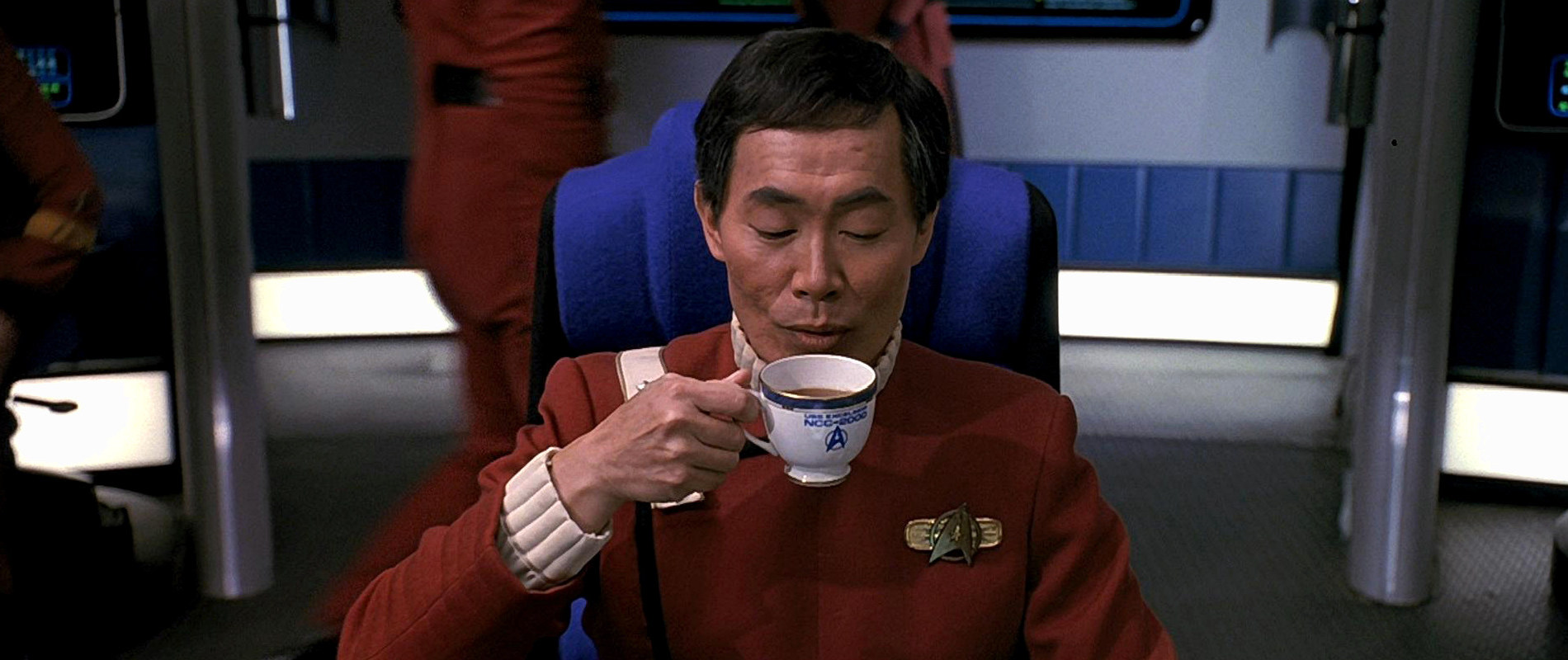
Stardate 9521.6: After the explosion of their moon Praxis that has led to an ecological disaster on their homeworld, the Klingons offer peace talks to the Federation. A joined conspiracy of Klingon and Starfleet officers, however, strives to obstruct the peace plans by all means. The Klingon chancellor Gorkon is assassinated, for which Kirk and McCoy are arrested and convicted by the Klingons. After they have been freed from the penal colony on Rura Penthe, they head for the Khitomer peace conference. Here, with the help of the USS Excelsior and Capt. Sulu, they defeat the Bird-of-Prey of the treacherous General Chang and save the life of the Federation President who was the next on the assassination list.
Review
I consider this the best Star Trek film. James Kirk has always been my favorite Enterprise captain, and he went out on a high note in this film (yes, I'm aware of "Generations", but this was the last one to feature the entire TOS cast).
The movie starts out with foreboding music, then the Praxis explosion suddenly appears out of nowhere. The scene at Starfleet Command is well-written, and demonstrates how close to retirement the crew is, and then Spock tells Kirk that he is to be the Federation's olive branch to the Klingons - a race he has loathed since the death of his son in "Star Trek III".
Enterprise then rendezvous with Kronos One, and the Klingons beam aboard. Gorkon, Azetbur, and Chang are introduced in the transporter room scene, and the tension builds right up to the dinner. General Chang steals the spotlight in the dinner scene, and the tension in the room is almost tangible. Kirk simply tries to get along, while Spock tries to be a diplomat. The cultural differences are accentuated there, with one of the Klingons warning of "the annihilation of our culture", with a quick reprisal from McCoy.
The scene ends as the conspiracy prepares for its first act - assassinating Gorkon. The Enterprise apparently fires two torpedoes into the unshielded ship. Two unknown persons beam aboard Kronos One and kill everyone in their path, including Chancellor Gorkon.
Chang frames Kirk for the murder of Gorkon, and takes command of the ship, and prepares to fire on Enterprise. Kirk surrenders, and beams aboard Kronos One to help Gorkon. McCoy tries to stabilize him with a shot, but that gives Chang grounds to frame him for the assassination.
The two are arrested, and sentenced to Rura Penthe for life, while Spock and the other crew try to figure out the torpedo mystery. They find out the truth - Chang's Bird of Prey was underneath them, and can fire when cloaked. The two assassins are found dead, and they were Starfleet personnel (part of the conspiracy, no doubt). The crew finds Kirk and McCoy on Rura Penthe, and beams them aboard. Sulu then tells the crew that the peace conference is on Khitomer, and the Enterprise and Excelsior set a course for the planet.
So does Chang. The battle at Khitomer between Chang, Kirk, and Sulu ends with Change being destroyed with photon torpedoes. Kirk prevents the assassination of the Federation President at Khitomer, and gives a final address on his final mission before going back to the Enterprise. The crew find out that they are to be decommissioned, and Kirk sets course for a final defiant cruise, while making a final log entry, a prologue to Star Trek: The Next Generation.
Chang was my personal favorite character of the film, and his Shakespeare quoting and over-the-top acting contribute to his character (in addition to his eyepatch).
The Klingons in this film not only look different than most (lighter makeup), but they act differently, and appear as a credible advanced, civilized people, in contrast to the apish Klingons sometimes seen in TNG and DS9.
The scene where the crew is to be decommissioned, and "passing the torch" to Picard, is touching, as is Kirk's dialogue with Azetbur at Khitomer, when he finally forgives the Klingons for his son's death.
The writers and director went to extra lengths to make sure there were no continuity errors in the film, which I really appreciate. They did a fantastic job at that.
Director Nicholas Meyer takes the best elements of "Star Trek II" and transfers them to this film, and I'm glad he was not the writer this time (unlike in TWOK).
The special effects in "Star Trek VI" are among the best I've seen. CGI can enhance special effects, and can do many things models can't, but there is a special realism in real models. Indeed, I believe the effects in this film to be more realistic than today's average, and that is another reason I'm attracted to "Star Trek VI", and never tire of watching it.
Annotations
- Remarkable continuity:
- There is a picture of an unknown Andorian diplomat on the Enterprise (Shran, perhaps?)
- The more human-looking Klingons could be the missing link between the TOS Klingons and later Klingons.
- Remarkable character: Lt. Valeris was ostensibly a Vulcan, but the fact that her actions (taking part in the conspiracy), her attitudes ("Klingons cannot be trusted"), and her overall emotionalism and militarism, are atypical for Vulcans leads me to doubt her status. She could be a Romulan spy in Starfleet masquerading as a Vulcan, as her behavior is more consistent with the Romulans.
- Remarkable quotes:
- "Let them die." (Kirk)
- "In space, all warriors are cold ones." (Chang)
- "Have you no shred of decency, Kirk? We come in peace, and you blatantly defile that peace. For that, I shall blow you out of the stars!" (Chang)
- "Klingons cannot be trusted." (Valeris)
- "One day, one night - Kobayashi Maru." (McCoy)
- "Cry havoc! And let slip the dogs of war!" (Chang)
- "Tickle us do we not laugh? Prick us do we not bleed? Wrong us, shall we not revenge?" (Chang)
- Remarkable dialogues:
- "Names, Lieutenant. Names!" - "I do not... remember." - "A lie?" - "A choice." (Kirk, Valeris, and Spock)
- "Still think we're finished" - "More than ever." (Kirk, McCoy)
- "I am as constant as the northern star!" - "I'd give real money if he'd shut up." (Chang, McCoy)
- "I can see you, Kirk. Can you see me?" - "Chang!" (Chang, Kirk)
- "You've restored my father's faith." - "And you've restored my son's." (Azetbur, Kirk)
- Remarkable scenes:
- Gorkon transporting to the Enterprise, and the camera panning up showing off his full costume
- Kirk and McCoy transporting up. If you listen closely, you can hear "His name is Chang", albeit distorted.
- The assassins beaming out of Kronos One, clearly showing the tracked Klingon blood that would later be found by Chekov on the Enterprise.
- Remarkable facts:
- Sulu is now commanding the Excelsior.
- The Enterprise crew is due to stand down in three months.
- Klingon blood is pink.
- Klingons have no tear ducts.
Rating: 9 (Pat Damato)
Star Trek VI: The Undiscovered Country
Synopsis
Stardate not given: Synopsis in main Movie listing
Review
Well after the epic catastrophe that was "The Final Frontier", and the death of Star Trek's creator, this film came to pass and in a way ended the mission of the most famous fictional space crew on a good note.
Overall the film is in a way daft, silly, and a tad foolish but it somehow works. There are numerous flaws with it but what compensates is a good story that is more about people that technology, anomalies, and nonsensical science farce.
Its a redeemer of a film compared to the many that have come since "The Wrath of Khan" - like with that film, this is about people in a situation made by people - and in this case it is the sudden change of power in known space, and the possible side effects.
The bad points are few but they exist - for a start, the name of the Klingon leader who wants to change the Klingons see the Federation - GORKON!
GORKON!! PLUEASE!! Everytime I hear that name I wince because its such a cartoon reference to Gorbachev, a SO obvious plot point the only thing missing was a blood mark on his head. Had they come up with another name - fine - but that? LORD! Even when Spock uttered the name - you could see him wince.
Then there is the conspiracy - a thing that falls flat by a review I saw about ST:VI - there would be NO WAY that members of the Federation and the Empire would work together to do this - its like the IRA working with MI6 to bring down the Good Friday Agreement in Ireland, or Hamas and MOSAD working together to destablise the Middle East, or the ANC working with white supremacists - is does not happen. Had the plot been inspired by say Romulans, that would have been better.
Finally the BoP that can shoot whilst cloaked - so when it died, all the knowhow, development and so forth died with it? No. Also a guided photorp? What happened to them since?
However, overall the film was good, the plot worked albeit with the flaws, the action fast and furious, the battle a battle - and its the kind of film you can watch on autopilot; also the cast contributed - and contributed a lot. The ending where they are made to retire was moving, and they were not blown up or killed in a Blake's 7 sort of way. They retired doing their duty - and as they head off, we salute. It did not pretend to be something major - just a film reflecting a time.
And it did it well.
Annotations
- Remarkable facts:
- Where the conference is held on Khitomer, it is also the HQ for the Power Rangers in their first few series!
- Christian Slater is in the film as the ensign who wakes up Captain Sulu.
- "The Undiscovered Country" in Shakespeare is not about change - its about Death.
Rating: 7 (Chris)


Back to Star Trek Movies index