The Animated Series (TAS) Season 2
Season 1Season 2
The Pirates of OrionBemThe Practical JokerAlbatross
How Sharper Than A Serpent's ToothThe Counter-Clock Incident
The Pirates of Orion
Synopsis
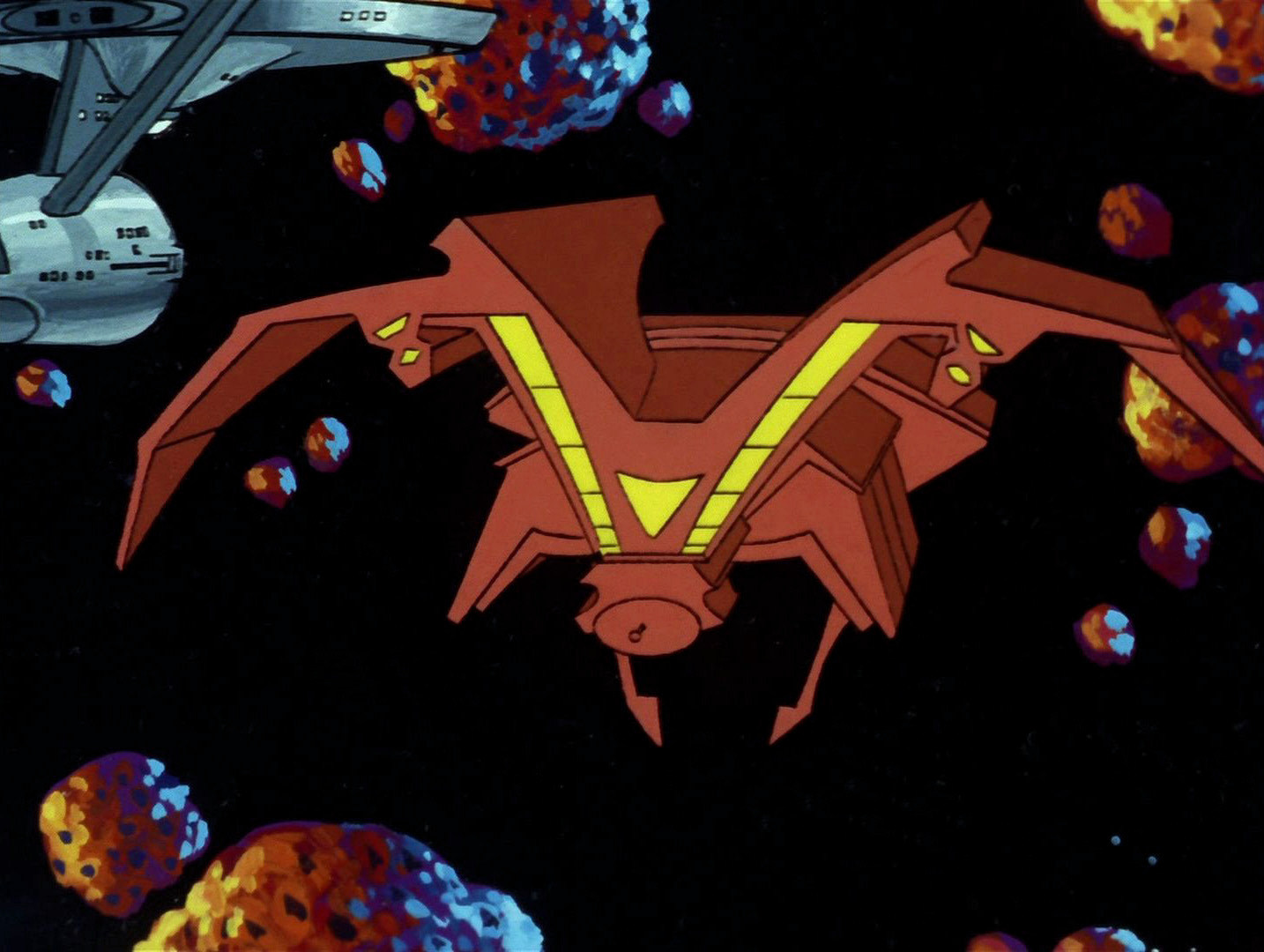
Stardate 6334.1: Spock is infected with choriocytosis, a disease that is deadly to Vulcans. The only known cure is strobolin. The Enterprise is on a rendezvous course with the S.S. Huron to receive strobolin, but the cargo ship is intercepted by Orion pirates. The Enterprise pursues the Orions. In an asteroid field, the Orion captain sets up a trap to destroy the Enterprise along with the Orion vessel, as the incident would endanger his planet's neutrality. Kirk, however, can avert the detonation of the bomb and retrieve the strobolin.
Commentary
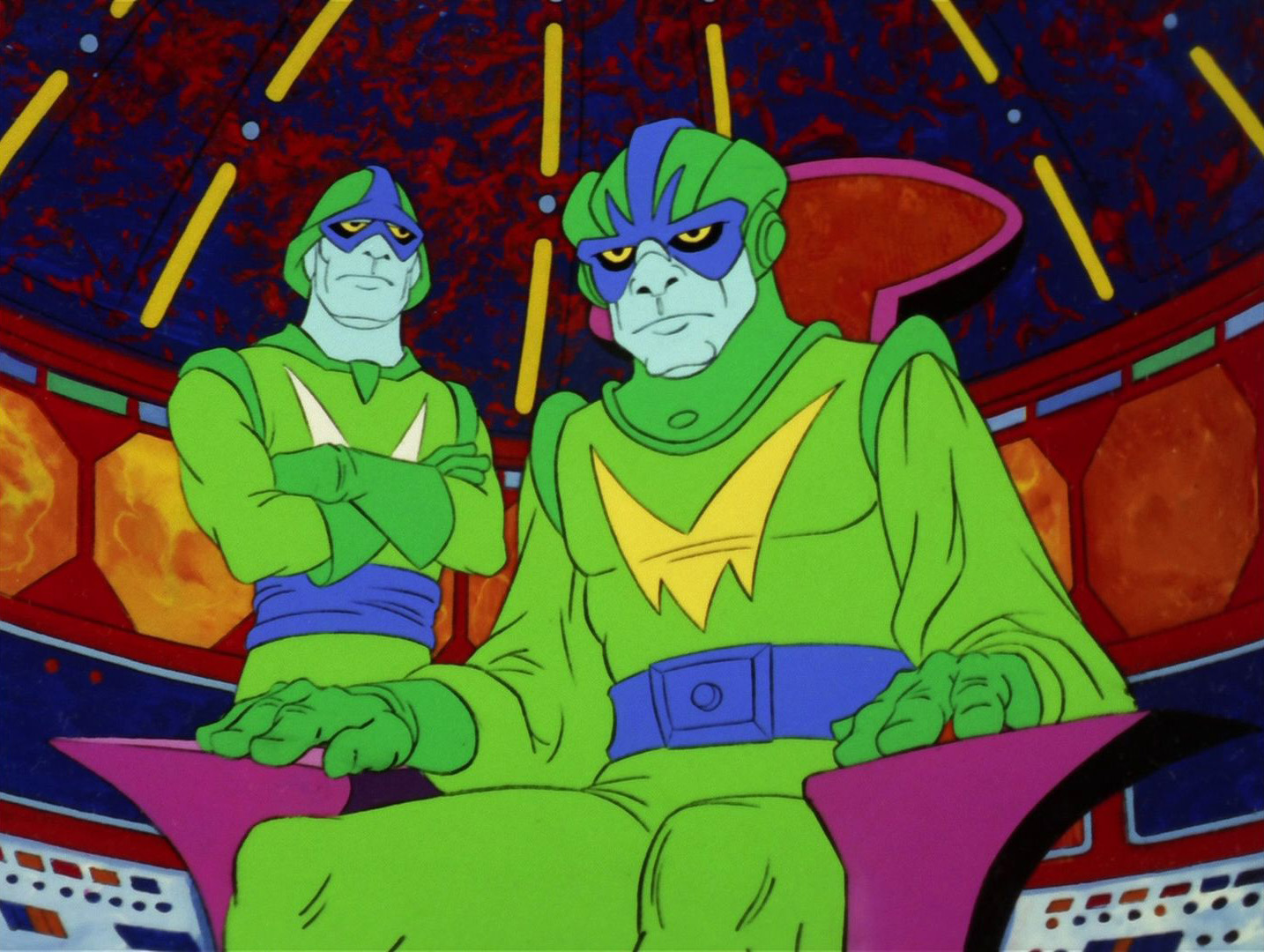
There is not much special about this episode, but nothing really annoying either. The melodramatic concept of an urgently needed life-saving medicine is worn out, and the fact that this time it's about Spock's life doesn't make it more interesting. Since he is running around all the time, it doesn't even look as if the illness can be that threatening. Aside from this observation, what little plot development takes place is mostly consistent. Furthermore, rather than most TAS episodes, this one has a serious undercurrent. The silly kiddie humor of TAS is largely missing. The characters, most of all Spock and McCoy, are acting more like they have done in TOS. Unfortunately it is once again Kirk who saves the ship all alone - without any interesting plot twist, but by simply discovering that the Orion is carrying a bomb which was just too easy to anticipate. The Orions are depicted with a bit more profoundness than usual aliens-of-the-week, although we don't learn much about them, except that they value their neutrality above all and have to commit suicide after a failed mission. Their look, unlike the basic theme of the episode, is quite silly. Actually, their costumes remind me more of Marvel Comics than of Star Trek aliens (by which I don't mean that Marvel Comics are primitive, but it is just a different genre).
Annotations
- Remarkable error: When a phaser blast hits the ship from starboard, Kirk incorrectly orders "hard to port" to face the enemy ship head on. The Enterprise then veers to port as ordered, where the Orion vessel comes into sight!
- Remarkable fact: The Orions are pronounced "Or-ee-on" in this episode, whereas it is "Or-I-on" on every other occasion in Star Trek.
- Remarkable ship: We see the S.S. Huron, a manned cargo ship similar to the cargo drones of "More Tribbles, More Troubles" and the Orion ship (which looks a bit as if it could have been designed by John Eaves, had he already worked for Star Trek back then).
Rating: 3
Bem
Synopsis
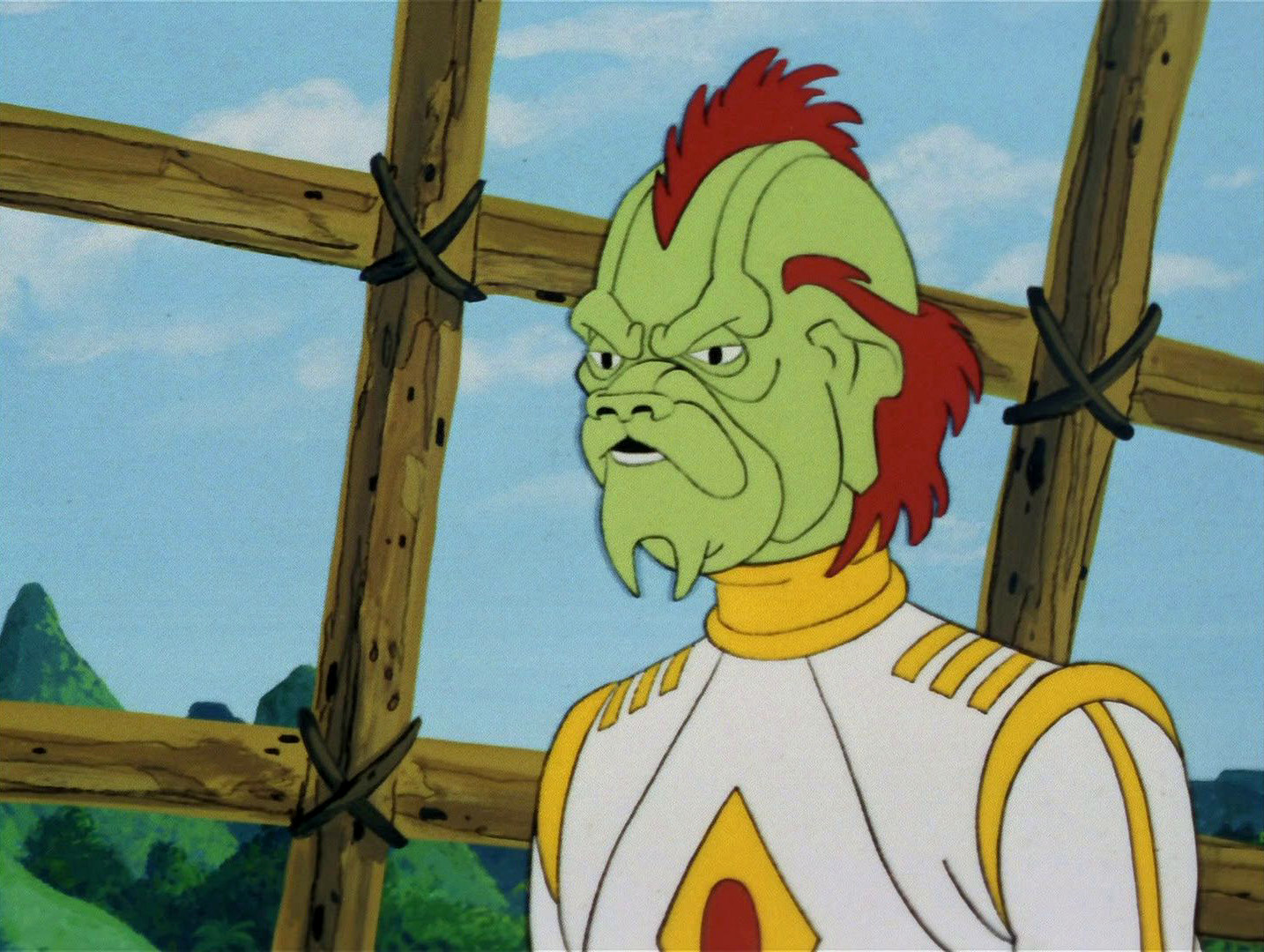
Stardate 7403.6: Honorary Commander Ari bn Bem of planet Pandro is aboard the ship as an independent observer. After not showing much interest in previous missions, Bem is suddenly eager to join a landing party on Delta Theta III. Bem dislikes violence and has his own philosophy of exploration. Being able to split his body into multiple parts, he manages to steals the landing party's weapons and communicators and to explore the Reptilian native population on his own. When he is captured, Kirk and Spock come to the rescue. An energy lifeform, however, appears and demands that her "children" must not be harmed. While Bem escapes once again and hides in the woods, Kirk and Spock convince the entity to let them go, but not without their fellow crew member. After Bem is found, he recognizes his failure and strives to commit suicide. The entity, however, tells him that he must stay alive and learn from his errors.
Commentary
I liked the basic idea, but the execution of the episode was rather poor. Focusing on a guest character is unusual for TAS, and Bem is interesting, yet not always credible, with his strictly peaceful yet quite eccentric nature. Bem would have definitely been more realistic without the ability of splitting up which was visualized in very awkward way. Why should his parts be able to hover above the ground? Something I didn't like either was always hearing James Doohan's voice - as Scotty, Arex and Bem. He lent his voice to most TAS aliens, but this time it was simply too much of it.
Concerning the course of the story, I didn't really understand it at times. Like so often in TAS, the 25 minutes were used to show as much action and as many turning points as possible. It became tiresome to see Kirk and Spock being repeatedly captured and released. The unnecessary complications of the story were done at the expense of necessary explanations. Why of all planets was Bem concerned about this one - considering that he didn't show interest in the previous six missions? What was the purpose of his mission anyway - to observe the natives or rather the Enterprise landing party? Aside from that, Bem's attitude and actions seemed very arrogant, and he never appeared likable to me until the very end. For instance, it was quite hypocritical that he didn't concede phasers at stun setting to Kirk and Spock, while he himself, with his superior abilities, could escape with ease. Moreover, for an enlightened species he was incredibly careless about his crewmates as well as the native aliens. It was clear that he would have to face the consequences of his deeds, but not before Kirk too did something condemnable. Just after agreeing to the alien entity not to disturb the peace on the planet any longer, her ordered armed security officers to beam down and get Bem, and this made things much worse.
Annotations
- Remarkable quote: "How come we always end up like this?" (Kirk, after he and Spock have been captured by the natives - maybe the best line of all TAS!)
- Remarkable fact: Kirk mentions his second name Tiberius even twice.
Rating: 3
The Practical Joker
Synopsis
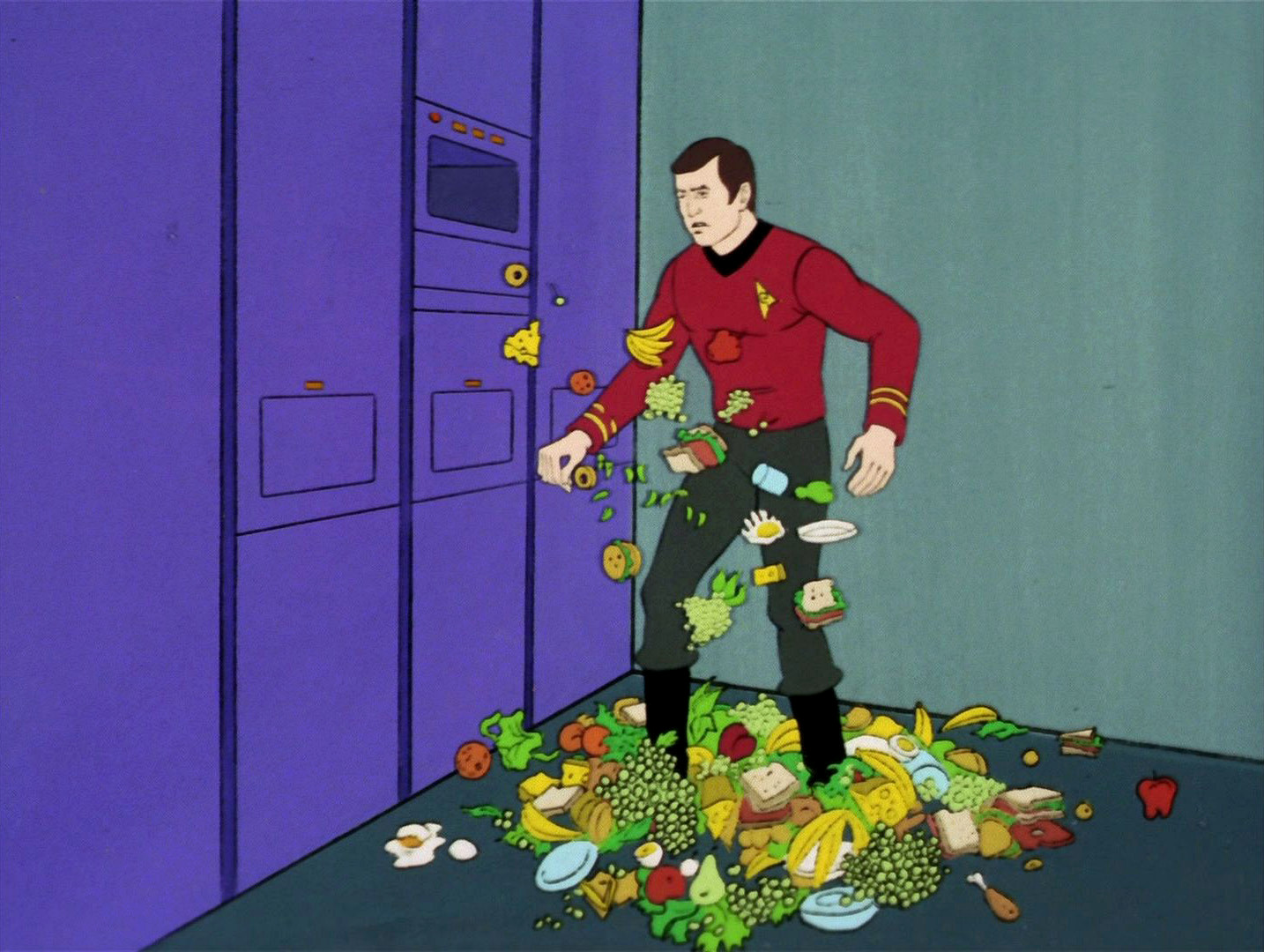
Stardate 3183.3: The Enterprise is attacked by three Romulan vessels and hides in a gaseous energy field. Upon leaving the cloud, someone begins to play practical jokes on the crew, and outrageous laughter comes from the intercom. It turns out that the ship's computer was affected by the cloud and is now suffering a "nervous breakdown". When the Romulans return, the Enterprise even creates an inflatable duplicate of itself to fool them. Kirk tricks the Enterprise back into the cloud, and all systems return to normal, while the Romulans now have the practical joker on their ships.
Commentary
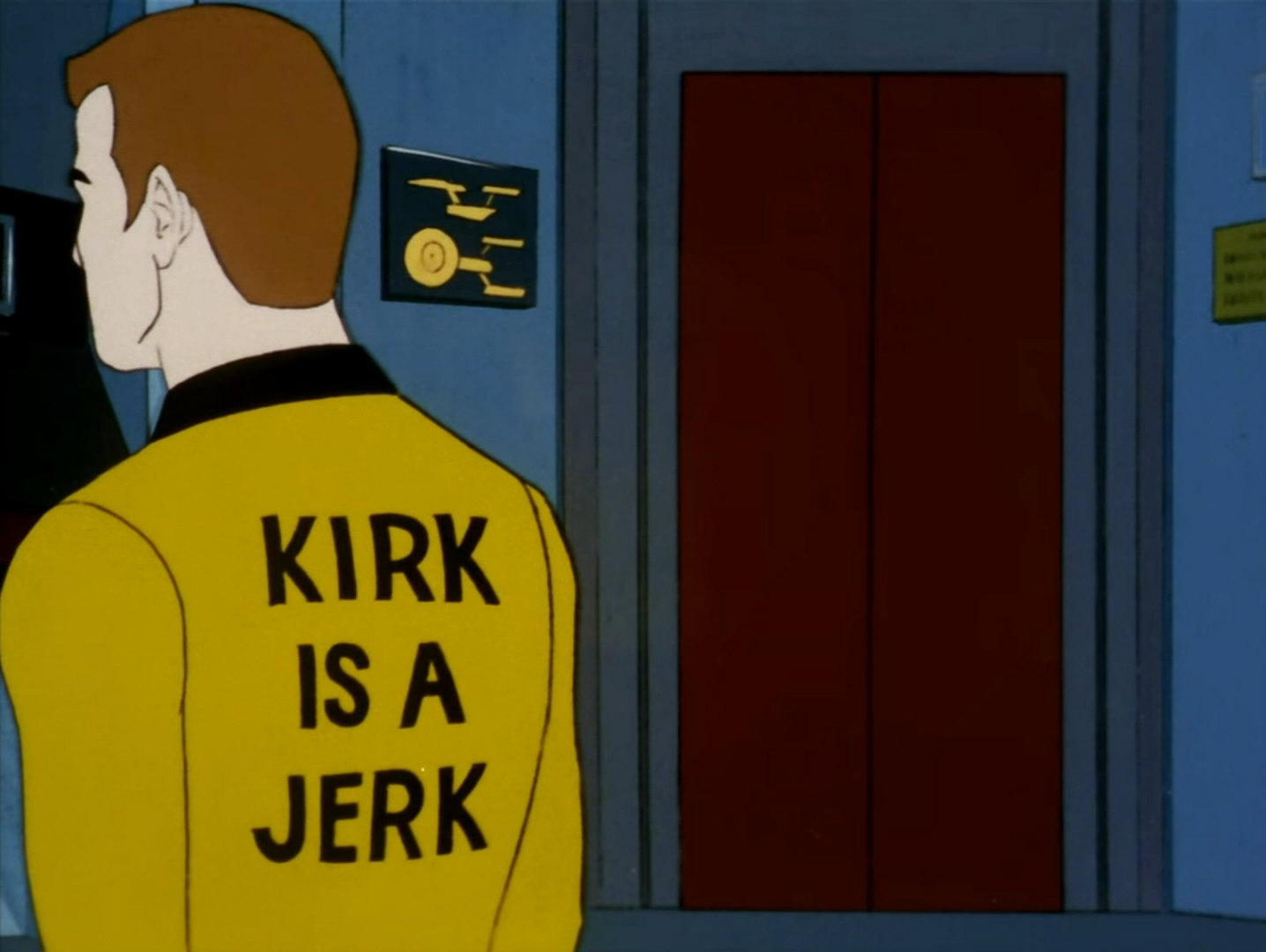
The topic alone makes this episode very comic-like. An inflatable Enterprise? Come on! The countless practical jokes were not really funny (well, maybe except for "Kirk is a jerk" ;-)), and too much time was wasted on them, leaving only about two minutes for a rushed conclusion. On the other hand, the execution was quite convincing. What I liked most is that we were shown much more about life on the ship than in other TAS episodes, and more about different characters.
Annotations
- Remarkable fact: In retrospect, the certainly most fascinating aspect is the fully operational holodeck, here still designated as "Rec Room". It already has all the features that will make it an indispensable part of the later Trek series. We can even witness the original, the first holodeck malfunction ever!
Rating: 4
Albatross
Synopsis
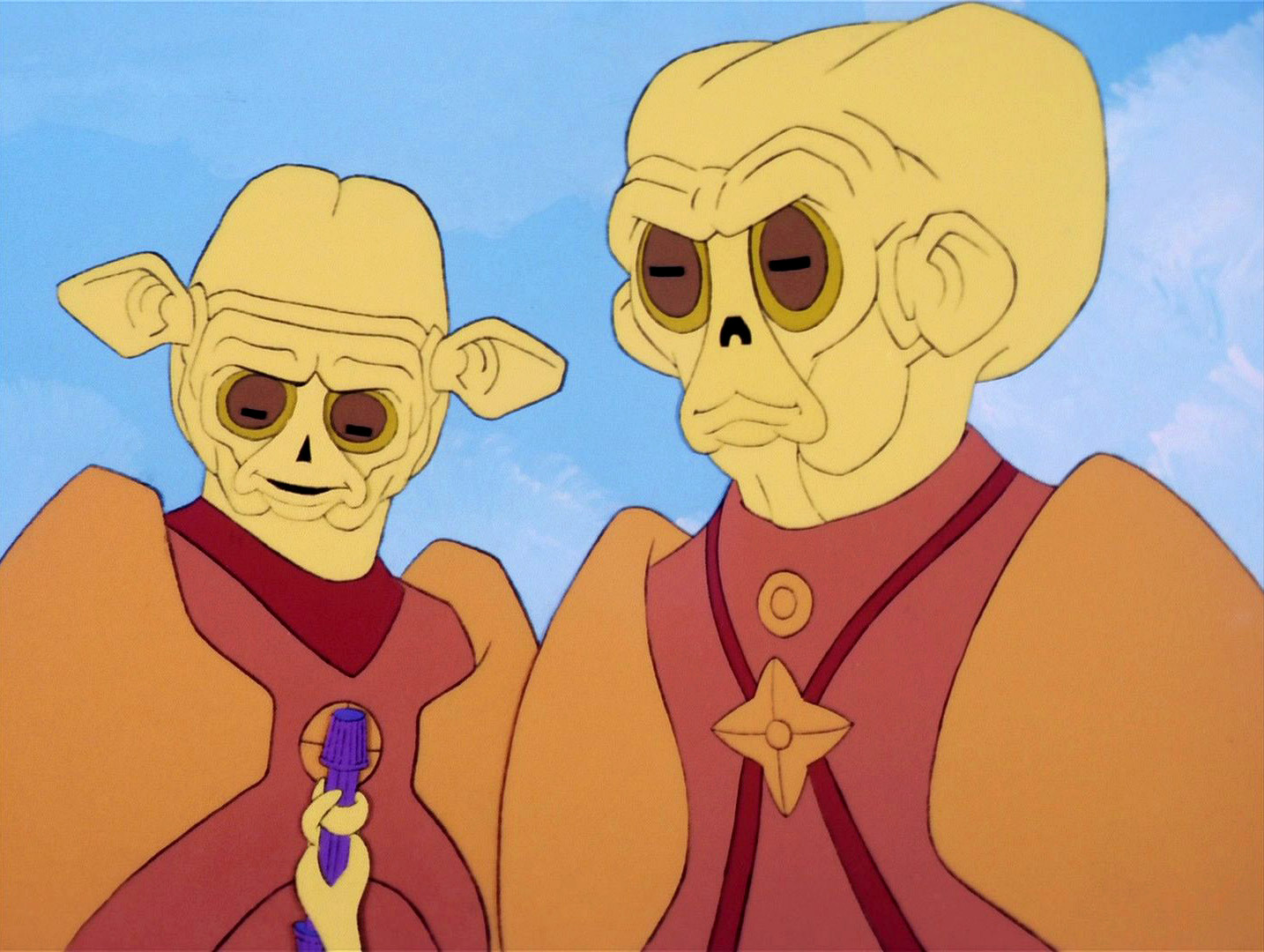
Stardate 5275.6: The USS Enterprise delivers medical supplies to Dramia when Dr. McCoy is arrested for mass slaughter and imprisoned. Nineteen years prior, Bones had created an inoculation program for a Saurian virus on Dramia II, but immediately following his departure a plague wiped out most of the population. A survivor named Kol-Tai is going to testify for McCoy, but the whole ship is infected when it crosses an aurora. Spock frees the doctor from the prison who then discovers that an aurora was the reason for the first plague too and that Kol-Tai was immune because he had been treated with Saurian antibodies. With this knowledge, McCoy succeeds in developing a cure for the plague.
Commentary
This episode may have been out of the ordinary - if only McCoy had been given the chance to defend himself. But he is not even on screen for most part of the episode. When he eventually reappears, there is nothing left to do for him but the usual "find-a-cure-in-one-day" job. Speaking of overused clichés, it is no surprise that Spock is once again immune to an illness which otherwise affects humans as well as Dramians.
One more reason why the episode is bad lies in the many stupid details. For instance, Demos, the Dramian security chief, is incredibly naive when he thinks he could infiltrate the Enterprise through the hangar deck without anyone noticing. Later, Kol-Tai, the survivor, is beamed aboard without any security measure and as if there were no biofilters, forcefields or anything. It turns out that he is not responsible for spreading the illness, but it is still careless and short-sighted. Finally, the illness with its pigmentation changes from blue, then green and finally red is a silly concept, although the different colors, previously mentioned by Kol-Tai may have been deemed necessary to tell the story. The only half-way intelligent twist is that Kol-Tai, as he once carried the Saurian antibodies and is now immune, suddenly becomes the key to the cure. And, for what it's worth, the Spock/McCoy tickling in the end worked well here. :-D
Annotations
- Remarkable dialogue: McCoy: "And I'm ready to get back to some of that monotonous all-routine sickbay work." - Spock: "Including, I would hope, some of that monotonous all dispensing irregular vitamin rations to the crew." - "What is that supposed to mean?" - "Well, you have been derelicting your duties of late, Doctor." - "Spock, you know as well as I do what we've all just been through." - "Hippocrates would not have approved of lame excuses, Doctor." - "Why is that... Jim, whenever I'm in jail again, don't send that Vulcan. Let me rot."
Rating: 2
How Sharper Than A Serpent's Tooth
Synopsis
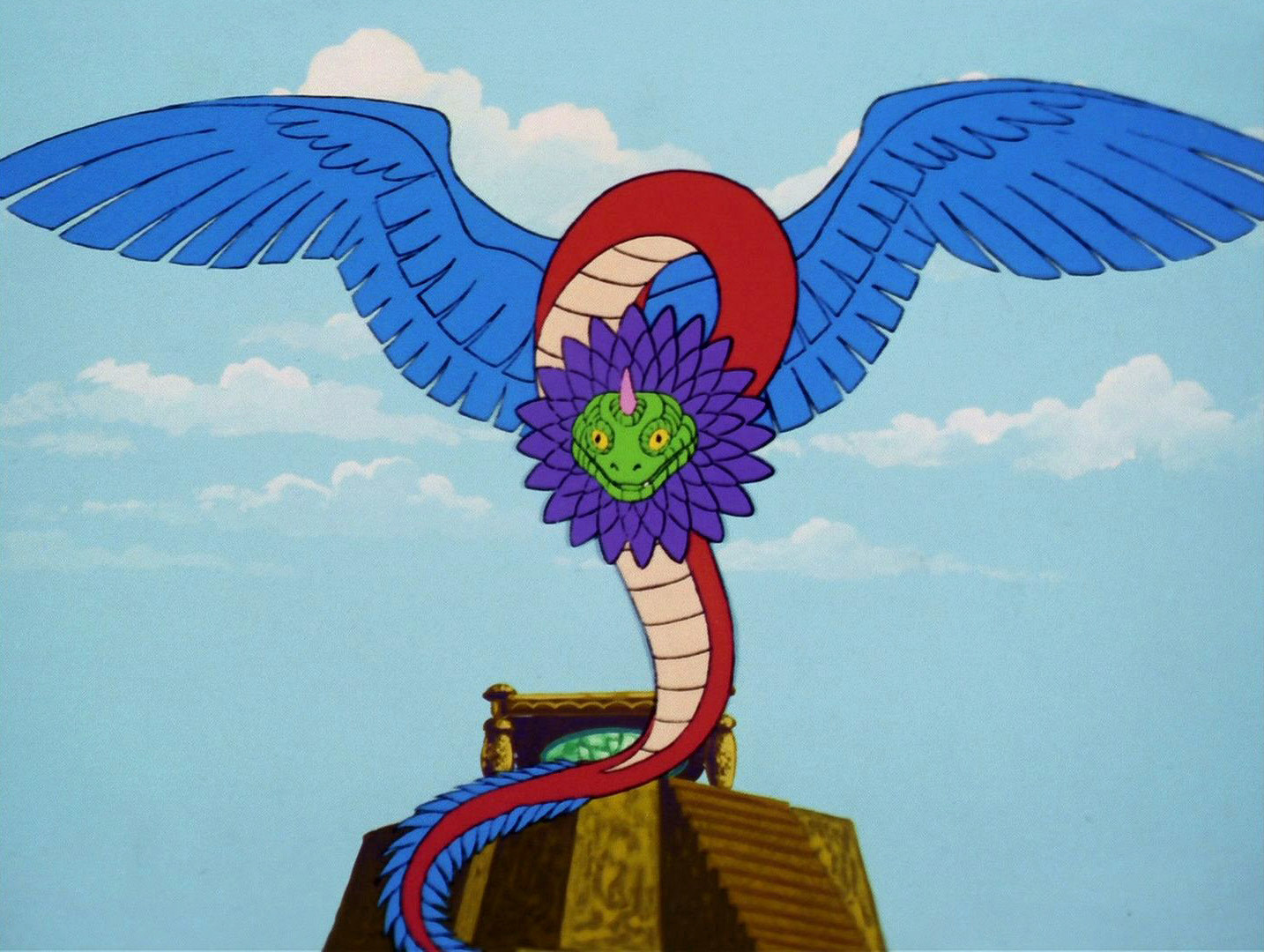
Stardate not given: Following the trail of an alien probe, the Enterprise encounters an alien vessel that is surrounded by a magnificent energy field which proceeds to encompass the Federation ship. The alien ship transforms itself into the shape of a large feathered serpent looking like Kulkukan of ancient Mayan-Aztec legend. Kulkukan transports Kirk, Scott, McCoy, and Ensign Walking Bear to his ship to solve an enigmatic puzzle in an ancient Earth-like city. Then the crew members find themselves in a room with a variety of tamed creatures from around the galaxy in cages. When the Enterprise breaks free, the men release the Capellan power cat to distract Kulkulkan. Seeing that he is not omnipotent and that humans must be allowed to make their own decisions, Kulkulkan leaves.
Commentary
The episode is well above TAS average because it succeeds in making a point without too much distraction by silly action. It avoids nearly all the mistakes previously made in "The Magicks of Megas-Tu" which had a similar theme. The concept that aliens have interfered with human cultures is anything but new, still it is realized in an unusually intelligent fashion here. The story is built around the concept, with the latter being not just a gratuitous idea like in most TOS episodes along similar lines. Even the notion that Kulkulkan appeared in various incarnations is nicely reflected in the Maya/Egyptian/Chinese style mix of the ancient city.
Kulkulkan's motivation, however, never becomes quite clear. He complains that his name is forgotten and obviously expects the humans to worship and fear him like in ancient times. He then builds the (holographic?) city as a sort of intelligence test. But what does he want to prove with that, considering that the subjects pass the test and are still accused of being violent and not worth living their lives on their own? In this light it is ironical that the Enterprise crew would finally convince Kulkulkan of their worthiness by applying violence (albeit of the mild kind) when Spock breaks the ship free and Kirk releases the dangerous power cat. Unfortunately this resolution leaves just the same bad taste as in "The Magicks of Megas-Tu".
Annotations
- Remarkable quote: "How sharper than a serpent's tooth it is to have a thankless child." (Shakespeare)
- Remarkable character: Ensign Walking Bear is a Cherokee, and he has studied the customs of several native American cultures. Quite contrived that he is on Sulu's station just when Kulkulkan appears...
Rating: 5
The Counter-Clock Incident
Synopsis
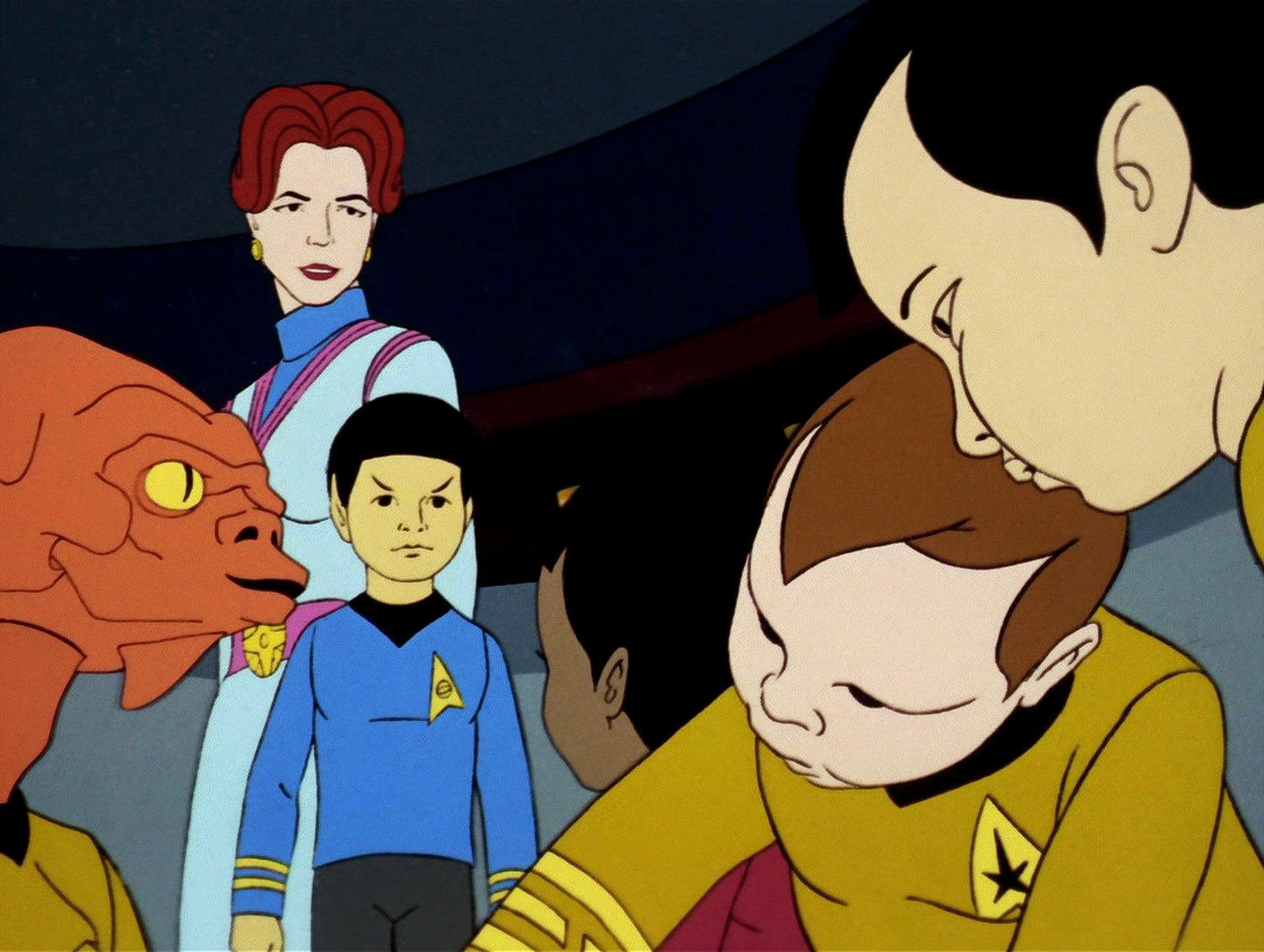
Stardate 6770.3: The USS Enterprise is escorting Commodore Robert April and his wife Dr. Sarah April, the first captain and chief medical officer of the ship, to Commodore April's retirement ceremony on Babel. While en route, Kirk attempts to rescue an alien vessel which is heading towards the Beta Niobe nova at Warp 36. But the alien ship drags the Enterprise inside the nova too, and they end up in a universe where everything works in reverse order. The alien from this negative universe, Karla Five, agrees to sacrificing her ship to ignite a star in her negative universe that corresponds to a nova in the positive universe which could then serve as a gateway. While everyone aboard is growing younger, Commodore April assumes command and the Enterprise safely returns to its own universe.
Commentary
The episode is remarkable for two reasons. Firstly, it introduces us to Captain Robert April, the first captain of the Enterprise, named like in Gene Roddenberry's first draft of Star Trek. Secondly, the story is original and, like already TAS: "The Terratin Accident", would have been hard to produce as a live-action episode. I liked the nifty details details as a foreshadowing of what would happen, like the reversed language of Karla Five and the short-lived flower which is rejuvenated.
While this part was skillfully written, the episode is unfortunately full of gross inconsistencies. Certainly by TOS standards Warp 36 is possible; it would correspond to 1 light-year in 11 minutes which does not seem too fast. But most likely the vessel would be too fast for the Enterprise's sensors. And definitely too fast to lock a tractor beam on it. And at the speed of at least Warp 22 that the Enterprise herself achieved when entering the nova the ship normally couldn't have survived. Inside the negative universe time is running backwards. But how can people there not only be born at an old age (like Karla's "son") and die as infants (like her "father"), but also ancestors be born after their descendants, as Spock illogically assumed? In this case there would be either a flawed causality, or everything would be exactly like in our universe, except that who is logically the son would be called "father" and vice versa. Why is the brightness of space inverted and only the ships are flying backwards, while everything else looks like in our universe? Why does Kirk even call it an antimatter universe? Why is the aging of the crew towards the end suddenly a lot faster than it had been before in the negative universe? We could make up an explanation, but the problem was not even hinted at. How can the Enterprise move so fast across either galaxy, as we can clearly see on the map that the destinations are on opposite sides in either case?
Annotations
- Remarkable quote: "Our trip into the negative universe gave it [the flower] a second life. It gave all of us a second life." (Sarah April)
- Remarkable facts:
- Sarah April's flower from Capella IV (from TOS: "Friday's Child") has a lifespan of only a few hours.
- Robert April was the name of the captain in Gene Roddenberry's very first outline of Star Trek.
- According to Robert April, the USS Enterprise was built in the San Francisco Navy Yards.
- His wife says that she was the medical officer on the first ship equipped with warp drive. It may have been the intention that she referred to the Enterprise, but that would be blatantly inconsistent with TAS: "The Time Trap" where we learn that this honor goes to the Bonaventure (not to mention many contradictory accounts from the live action series).
Rating: 6