


Bad Ethics in Star Trek
RecklessnessIntoleranceHypocrisyCriminal DemeanorAddendum: Bad Attitude
Star Trek is renowned for discussing ethical subjects more profoundly, and its main characters for acting with more deliberation and less preconception than in most other TV shows, and especially than in almost all other science fiction. Still, a few episodes include ethical flaws in the overall tone or in the conclusion, although they may have been made with high ambitions and with only the best intentions in the tradition of Trek.
Whenever Starfleet officers face a moral dilemma, they are expected to act according to the laws of the Federation, the regulations of Starfleet and their own judgment. However, the world of Star Trek is not perfect, nor are the characters. More than once their efforts fail, or they make controversial or downright wrong decisions. This deficiency may suit the show as a mirror of the real world, and I wouldn't rate all failings of characters as "bad ethics" per se.
For instance, Archer's order to destroy the defenseless Xindi outpost in ENT: "Azati Prime" may qualify as a war crime. But in the episode itself it was shown as accordingly controversial, and his crew didn't execute the command without a certain resistance, and if only in the faces of Reed and T'Pol. The problem was neither denied nor was the deed played down or even glorified in any fashion, so "Azati Prime" wouldn't belong into the category of bad ethics. On some other occasions, however, the story denies, obscures or re-evaluates clear mistakes through plot twists. A prime example is Phlox and Archer's decision not to help the dying Valakians in ENT: "Dear Doctor". Here they do not only bend the laws of science, but they also pull out of thin air a parallel to the not yet existing Prime Directive, to justify what is quite possibly criminal misdemeanor.
The number of episodes with really bad ethics is comparatively small, and they rather reaffirm than bring down the otherwise high standard of the discussion of ethical problems in Star Trek.
Important notice The following is just a selection of occurrences and is not supposed to be objective or complete. I am open to corrections and supplements. But please save me and yourself the nuisance of a debate if you should find your favorite episode listed here.
Recklessness
Here are several examples where delicate problems, especially of alien worlds, are overly simplified and rashly solved or even new interstellar conflicts are raised without a sufficient justification. As if the galaxy had only been waiting for them, Starfleet officers overstep their authority by far and fail to recognize the other side of the medal. Clearly this is basically the case in numerous TOS and some TNG and Voyager episodes. Often meant as allegories and therefore intentionally kept simplistic, they sometimes fail in this respect.
TOS: Metamorphosis
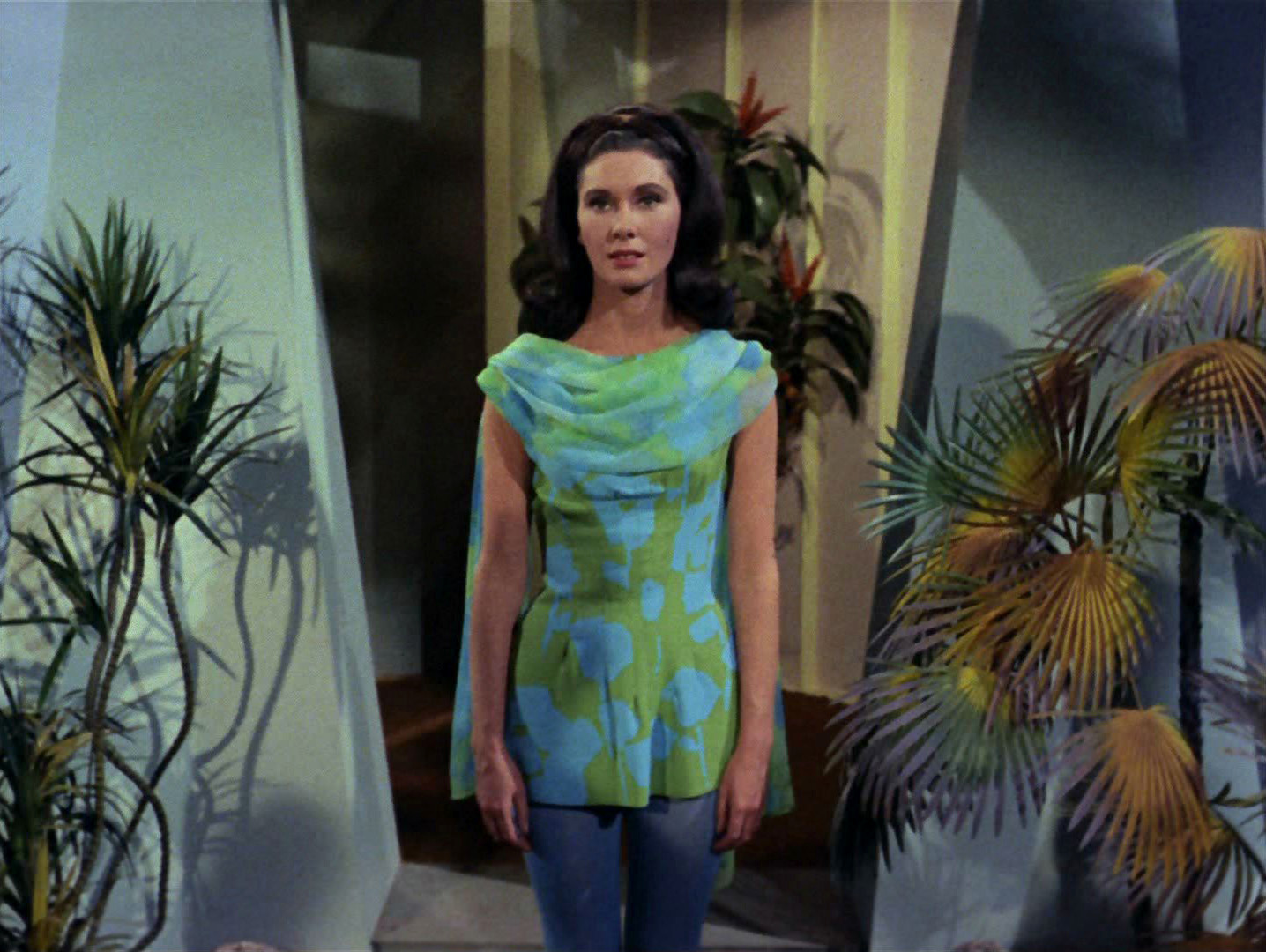
Everything is fine in the end. The Companion turns out to be female, and in order to experience human emotions and to stay with Zefram Cochrane she takes over the body of the terminally ill Federation official Nancy Hedford. Hedford was rather unlikable anyway, and it's not a big loss. But wait. If I understand it correctly, it is Hedford's body and not her consciousness that is dying from Sakuro's disease and the Companion allegedly can't help her. So why is the Companion able to take over the dying body and heal it but not save the mind of Hedford that was completely intact the last time we saw her? Well, the Companion says that Nancy Hedford is still alive in some fashion (she refers to herself as "we"), but the facts disprove her, as the entity in Nancy's body suddenly speaks with the Companion's voice and does not behave at all like Nancy Hedford. In my opinion Nancy Hedford's consciousness is gone.
In any case it should make McCoy suspicious because there is obviously something wrong with the Companion's "healing" of Nancy Hedford. Well, the doctor can't help Hedford anyway as he says, but even this is the Companion's fault for the most part. The Companion kills her one way or another. And now the alien entity rewards herself with Hedford's body, and everyone accepts it as if a superior lifeform had the right to kill or to take into account the death of a human being to create something "new" or "better". McCoy, Kirk and Spock are quite content with the outcome, and they don't ask any unpleasant questions. They don't seem to be troubled at all although they would have to lie to their superiors about what happened to Nancy Hedford. And as if there had not yet been enough disrespect of her life, Kirk says that "another woman somewhere" could do her work just as well!
With a bit more carefulness, the script may have been changed in a way that Nancy Hedford was suffering from something like cumulative brain damage, which would have made plausible that her body was still intact. Still, the dilemma of not revealing Cochrane's whereabouts and the Companion's existence would have remained.
TOS: The Apple
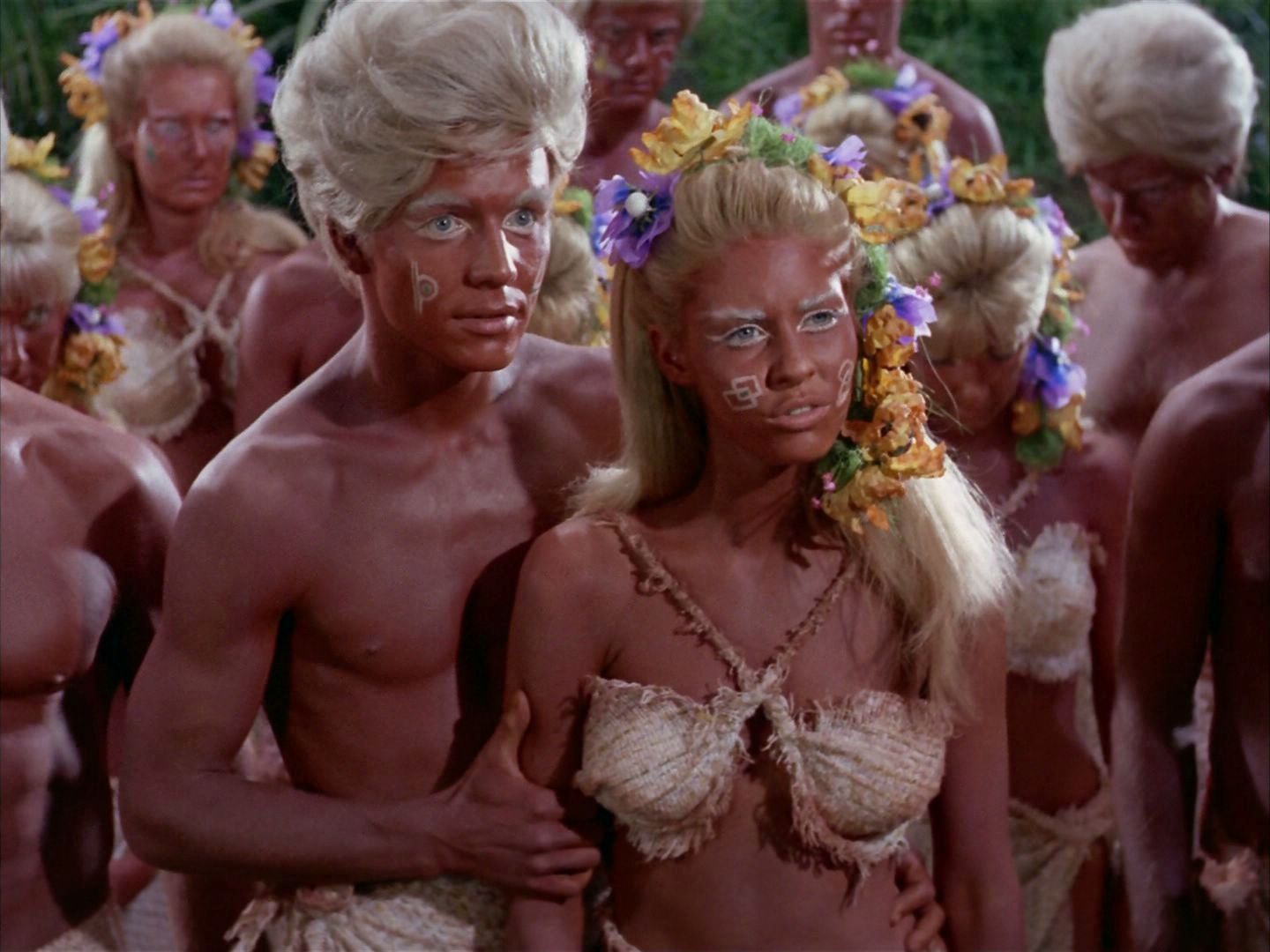
This episode is representative of the countless times that Kirk and his crew interfered with (usually primitive) alien cultures. Clearly Vaal, as a machine and the planet's "false god", was holding back the native population. Yet, Starfleet's intrusion in this case is particularly severe because the culture of the Vaal people was completely and ultimately ruined when Vaal was destroyed. It is not really an excuse that, thanks to a plot twist, the ship was in danger because of the machine's powers. We have to wonder how the crew would have acted if Vaal had not posed a danger, considering how big a deal Kirk made of the people's free will, of the joy of sex and of having children. There was definitely no remorse from the part of the crew that they had destroyed an innocent paradise.
TNG: Up the Long Ladder
The resolution in this episode is that Picard brings together the snobbish, prude and technology-obsessed Mariposans with the proletarian, hedonistic and backward Bringloidi. As if t would be better to force them to merge than to integrate either group into a much larger and much more diverse human society. Only the fact that both settler groups originate from the same ship, the Mariposa, is cited as a weak justification for this stupid plan. Moreover, the two groups are expected to practice polygamy or at least promiscuity to achieve a new stable DNA pool, which is an additional moral issue. I doubt that the Federation would officially endorse that policy even if it is not against any laws. But I wonder still more how this idea could ever pass Hollywood's self-censorship.

TNG: Suddenly Human
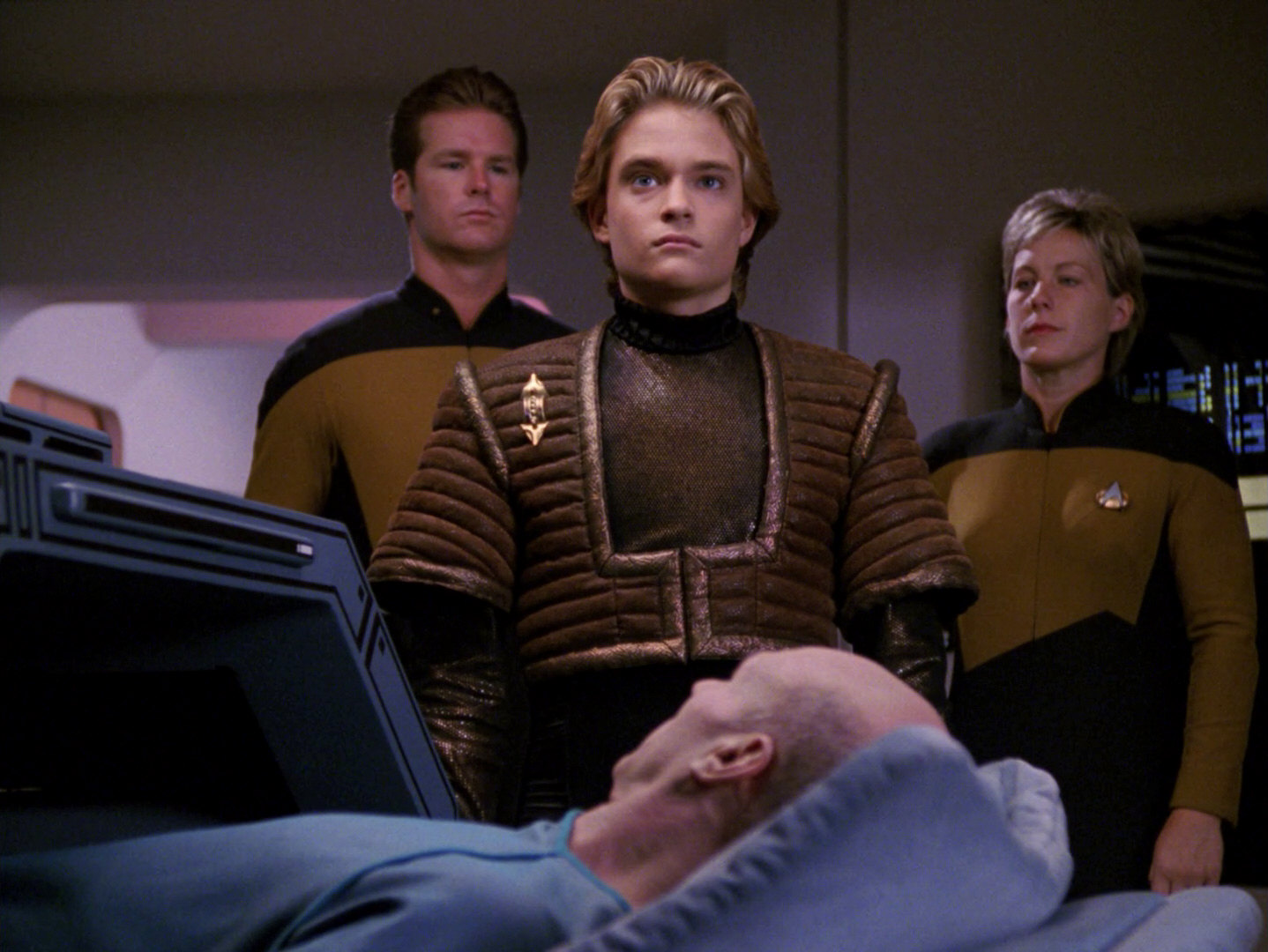
Picard decides to return the young Jeremiah Rossa, now called Jono, to the Talarian Captain Endar who abducted the boy years ago after killing his parents in an attack on a Federation outpost. This qualifies as a controversial issue, and it wouldn't be fair to condemn the ethical impact of the episode altogether, given that the necessary considerations do take place. Only that Picard swiftly throws most of them overboard in the end, just because it is his personal impression that the human boy would be better off with the Talarians. Picard thinks that the boy would rather want to stay with the only family he ever knew. He even says that it was a "crime" to try to convince Jeremiah or Jono to stay with the Federation because that would have troubled the boy too much.
First of all, it is a positive aspect that the writer intended to let Picard act without a racial or even racist bias. There is nothing like a preferable home for the boy just because of his descent. On the other hand, several counter-indications are cited but completely neglected in the outcome. At any rate the legal situation in the Federation should be obvious: Jeremiah is still a Federation citizen and has always been, regardless of his whereabouts. The Federation has an obligation to care about their citizens, to keep away harm from them, and even to decide for them if the citizens are not capable of doing so themselves. It is just too obvious that the latter would apply to an adolescent who doesn't know the whole truth and who, as Picard has suspected, may have been brainwashed.
Concerning the brutality of the Talarian society, this is naturally the first reason that comes to mind for Picard not to leave the boy to Captain Endar. Clearly the youth welfare on Earth would intervene if they found out that human parents mistreated their child. Not that this issue was ever tackled in Star Trek, but we wouldn't expect it to change so much from now. On the other hand, the Enterprise crew would not attempt to save a real Talarian boy like this, unless he applied for asylum. As dissatisfactory as it may seem, it would be neither diplomatically wise to interfere with alien empires by bribing or forcing their citizens to enter the peaceful and democratic Federation, nor could it really help the bulk of aliens who may or may not suffer under their political and social system. Anyway, the fact that Jeremiah lives in a warrior culture literally without many of his human rights is just a secondary aspect. If they were a benevolent society, yet for some reasons an enemy of the Federation, the situation wouldn't have been that different. So we have to concede that, as usual, the legal side of the matter is quite cold.
But speaking of legal issues, what about the rights of the contenders? Regarding Endar, the answer is as simple as it could be, once we confirm that Jeremiah is a Federation citizen. The Talarian's claim to be the boy's father or only his foster father has absolutely no ground. On the contrary. Didn't he or his soldiers kill Jeremiah's parents, in an act that clearly establishes a war crime? Even if bilateral treaties prevent Endar from being immediately arrested, there is no obligation from Picard's part to even let him see his "son". But on an extremely cynical note, it almost seems that murdering Jeremiah's parents helped corroborate Endar's claim in the end, as Picard may have rather decided in favor of the boy's real parents had they still been alive. The way it is we have just Jeremiah's grandmother as the closest living relative who for some reason is an admiral and therefore Picard's superior. But we should leave out any considerations that Picard would feel obliged to fulfill the grandmother's wishes as if it were an order. Fortunately this manufactured coincidence has no further impact on the story. Anyway, she is undoubtedly the natural choice when it comes to decide about a new home for her grandson. Picard, however, ignores her wishes and her feelings and hands over the boy to Endar without even giving her the opportunity to see him.
Last but not least, Picard surely has to take into account Jeremiah's or Jono's own wishes and this is what ultimately leads him to give in. One thing that becomes blatantly obvious is that Jono is seeking a father figure, and that Picard is unwittingly entering in a direct competition with Endar, which is why the boy even attacks Picard with a knife. This is the actual incentive for Picard to let the boy go. Is it that Picard thinks that Jono needs a strict authority, and just one? It almost seems so. But Picard fails to take into account that the boy has been aboard the Enterprise for just a few days, so it is far from saying that he could have become accustomed to his new home. Ironically the ship isn't even supposed to be his actual home, neither is Picard supposed to ever become his father. Moreover, has Picard ever heard that human adolescents are obstinate and rebellious? That it may be actually Jeremiah's *human* nature that is protesting, and not his Talarian education? By any means, Picard's assessment to act in the boy's interest is at least very premature. Maybe we can excuse this part of the failure as Picard has no children. But he should have sought the advice of parents like Dr. Crusher, and not given so much credence to Endar.
The diplomatic aspect is under discussion in the episode too. After all, the peace between the Federation and the Talarians is fragile. On the other hand, it is obvious that the Talarians don't really pose a threat but to weakly armed outposts. And with even Endar being cautious we may doubt that the Talarians would turn a diplomatic incident into a war. After all, even if it is their tradition, they must recognize that abducting their enemies' children is even worse than "only" killing their parents in the battle. Picard ought to have demonstrated to them that Starfleet officers love their children too.
On a more positive note, TNG: "Suddenly Human" is just one bad example among many good ones where the Federation or Starfleet gives in to alien threats rather than defending their interests with violence. Particularly in early TNG we find many episodes along these lines, with "Home Soil", "Evolution" and "The Ensigns of Command" being other obvious examples.
VOY: Unimatrix Zero
What can I say? Recklessness is taken to an insane level here. Voyager conducts what has to be rated as a suicide attack against a heavily armed tactical cube. Janeway, B'Elanna and Tuvok have no problems with allowing themselves to be assimilated, in an act of self-mutilation. We have seen Voyager in many extreme situations, but this time they go totally over the top, and even fully voluntarily. There should have been fierce controversies among the crew whether the goal justifies all these sacrifices, but unlike it was the case in similar situations in earlier episodes (most notably in "Scorpion"), there is nothing like that here. There are only three brief and not really controversial discussions between Chakotay and Janeway, B'Elanna and Tom, Tom and Chakotay, ending with everyone assuring their support for everything. It is undeniable that the crew has grown together in their six years on the ship, but I wonder if this includes following their leader into death when she begins her private little war. Keeping in mind that the original intention was just to maintain Unimatrix Zero, Janeway's extended plan to destabilize the Borg Collective does much more than violate "half a dozen of Starfleet protocols". Even before it becomes obvious that there would be no way of preserving Unimatrix Zero, she already has in mind to use this weakness against the Borg instead of just letting things go. She doesn't really seem to realize that the drones in Unimatrix Zero are individuals and maybe not all of them would like to die in her fight against the Collective. It is much of Janeway's very own feud with the Borg, and the Borg Queen gladly takes up the gauntlet.
Intolerance
These are incidents where Starfleet officers take arrogant or dogmatic positions and vehemently defend them against alien civilizations or "backward" individuals, although they are supposed to represent neutrality or pluralism. Roddenberry's anti-religious attitude, as well as other aspects of the utopian society of the Federation are occasionally used to cast doubt on or humble other ways of life.
TNG: The Neutral Zone
Some members of the Enterprise crew exhibit a finger-wagging and overall condescending attitude towards the three people from 20th century Earth and to the time in which they lived. It is to the episode's benefit that Deanna Troi tends to the survivors with the due empathy, and Data with the due curiosity. But to Riker the old satellite where they were found is "just a piece of space debris", much like the Pioneer probe to the Klingon captain, who used it for target practice in "Star Trek V". Even though he couldn't anticipate there were still working cryonic chambers aboard, unlike Data he gives a damn on its historical value. As the executive officer of a ship of exploration! Furthermore, Beverly calls cryonics "a kind of fad in the late 20th century". She is visibly amused that people of that era were afraid of death and would try many things to avert it. Well, in the real world cryonics doesn't work (the cell damage because of ice is irreversible), but the story proves those people from the 20th century right. They essentially claim the same right to live as the people of the lucky 24th century, and unlike Beverly I can find nothing amusing about it.
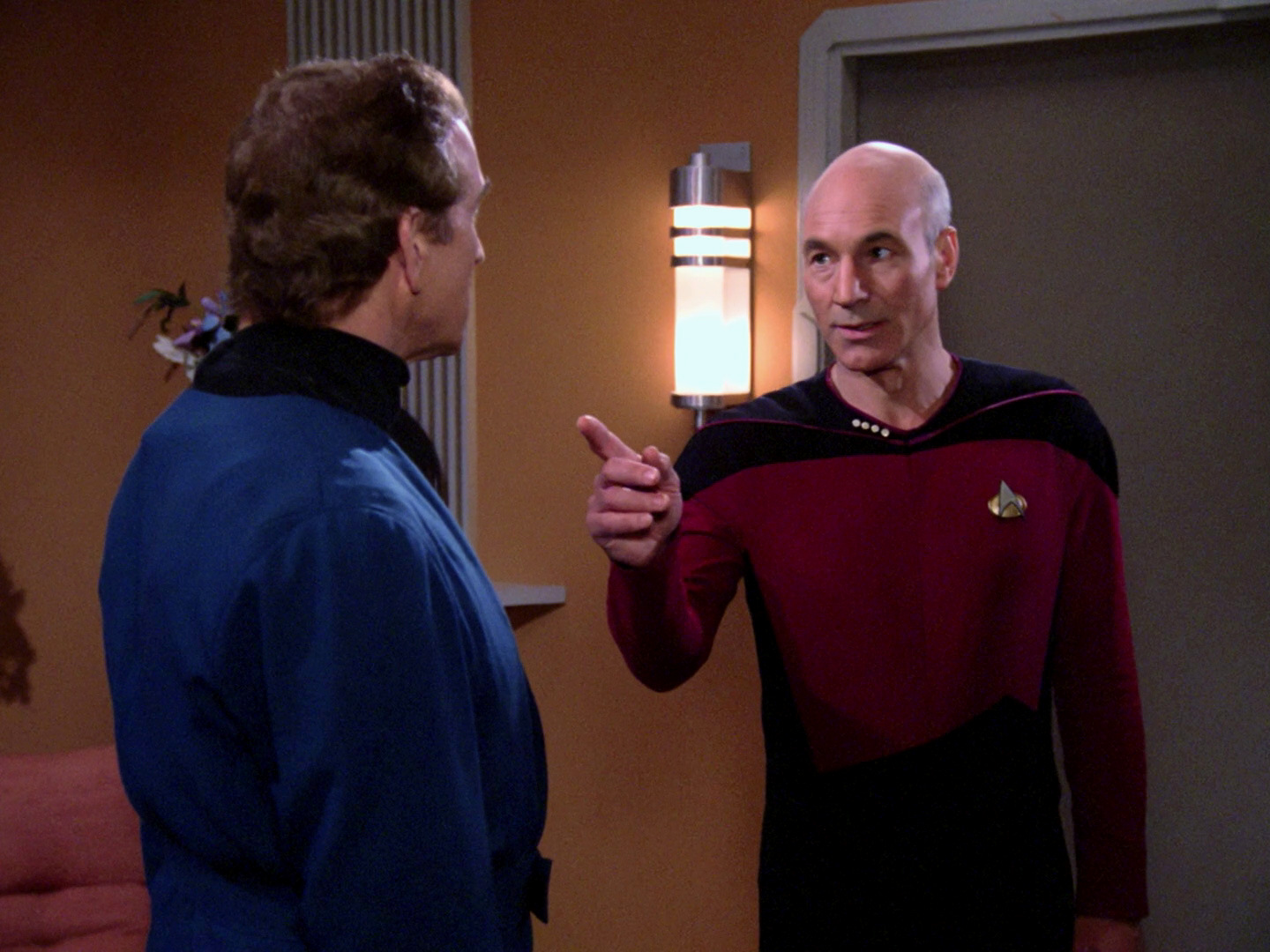
Of all regular characters Picard has the most objectionable attitude towards the three relics from what he seems to believe was a barbaric time: "But Data, they were already dead. I mean, what more could have happened to them?" - "Number One, keep them out of my way." Why does this man refuse to meet humanity's history and learn from it first-hand, although his passion is to explore the unknown (which includes history at least in the form of ancient ruins, as we learn in later episodes). And even if those people are in no way interesting to him, he should treat them with more respect. Picard may be excused to some extent by the psychic strain because of his dangerous and delicate mission on which he does not want to be distracted. But in some way it looks to me that he never wanted to give them a chance, because he expected them to be uncivilized people who don't obey the rules. My impression is that he subconsciously even wanted Offenhouse to annoy him, to give him a reason to go and lecture him - which he eventually does by leaving a vital meeting, instead of sending someone else or simply switching the comm line off!
While the depiction of Clare Raymonds is quite sympathetic, the country musician L.Q. "Sonny" Clemonds with his overdone slang and the greedy financier Ralph Offenhouse are more like caricatures of 20th century people. Their weirdness also serves to prove Picard right about them in hindsight. We have to keep in mind that Picard was apparently put off by the 20th century before even meeting them in person.
TNG: Who Watches the Watchers
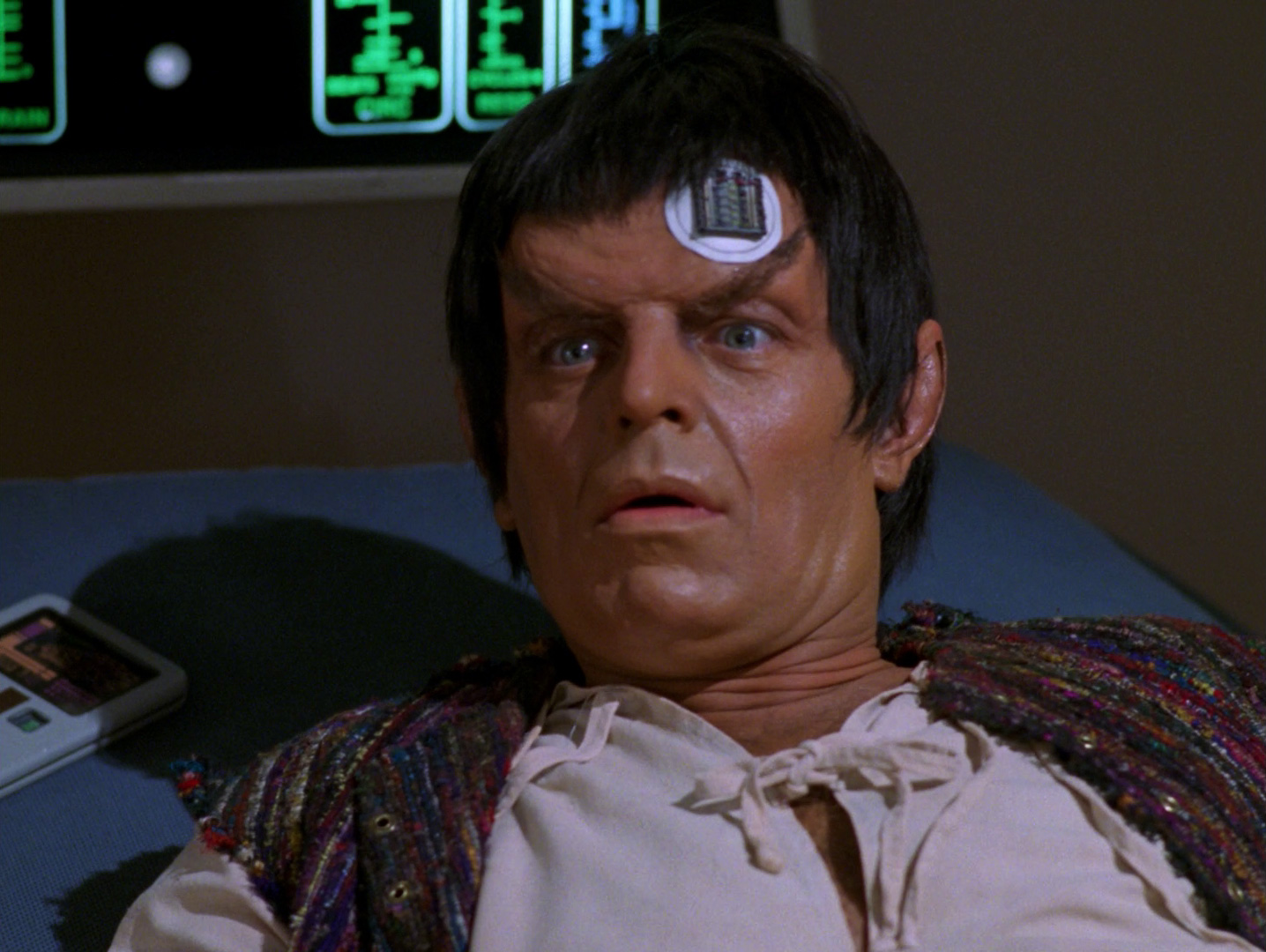
Jean-Luc Picard leaves a problematic impression here. When the Mintakan patient Liko is in sickbay, Picard doesn't care about him or ask how he is doing at all. At least he is consequential, as he treats him like the other "savages" (the ones from 20th century Earth) he met in "The Neutral Zone". The only thing Picard has in mind is quoting the Prime Directive, and he doesn't really accept Beverly's valid objection that this man was hurt in the first place on behalf of (or by the fault of) the Prime Directive. I wouldn't have expected him to be such a cold-hearted bureaucrat.
When the native population begin to worship him because they coincidentally witness the miracles of his technology, Picard rejects any kind of religion and equates it with superstition. Barron insinuates that a religion could give rise to "inquisitions, holy wars, chaos", which Picard finds "horrifying". The two, however, just look at the negative effects of religion in human history, neglecting that the same level of intolerance and violence may exist and does exist in a secular world just as well. Moreover, rather than obeying the letters of the Prime Directive that would forbid any intervention with alien civilizations in any direction, they give a personal one-sided interpretation of why it exists. Picard's attitude is consistent with "Justice" though, where he tried to secularize the Edo culture likewise.
Picard apparently doesn't want to *allow* the people to believe in something supernatural, not only because he is the subject of their religion and he knows that he is not supernatural, but because of his stance that any form of religion must be backward. While his actions may or may not comply with the Prime Directive, he doesn't give the Mintakans the benefit of the doubt. The discovery of "miracles" could spark a something like religious revolution on Mintaka III, but more likely the events would fall on deaf ears elsewhere on the planet. And who knows whether all the efforts to "repair the damage" don't have just the contrary effect. Actually, I couldn't imagine anything more counterproductive in Picard's situation than showing Nuria around on the Enterprise and then trying to explain to her the difference between caves, huts and starships! Well, the other members of the crew contribute their share of mistakes too that only aggravate the situation.
ENT: Chosen Realm
The episode does a solid job in condemning bigotry like already the classic TOS: "Let That Be Your Last Battlefield". But this is taken one step too far. In two or maybe more remarks throughout the episode, Archer explicitly blames faith for D'Jamat's misdeeds. Not inflexibility or fanaticism, but the very basic idea of their religion. We are supposed to believe him, witnessing how Archer is right about everything else and how D'Jamat is evil all over (he even claims to be merciful when he says he would kill only one crew member for the crime of desecration). The outcome of the episode is that, instead of keeping a bit of a controversy, we are readily served a preconception that any religion will ultimately end up in conceit and in persecution of "heretics".
While there is some truth in that stance regarding the history of Christianity and Islam, neither religion is based on intolerance or hatred. It is actually quite the contrary, and only ruthless leaders have misused faith for their own purposes. Millions or even billions of religious but peaceful human beings prove that there is nothing intrinsically wrong about their religion. D'Jamat repeatedly makes silly claims that his "truth" should be the only one, but Archer's stance that there must not be anything besides science is not really better. Only that it is easy to show that you are morally right when a bad guy is pointing a phase pistol at your head.
Hypocrisy
In addition to the above motives of rashness and intolerance, a couple of episodes are written in a way that intrinsically makes the heroes look morally superior although they are anything but acting like that. Unrealistic plot twists are used to distract from a main character's failings, or a scapegoat is blamed for an ethical failure.
TNG: Silicon Avatar
It may not be immediately evident, but this episode comes with one of the worst examples of hypocrisy in Star Trek. The crew of the Enterprise-D witness how the Crystalline Entity devastates a whole planet, killing all life (including two human settlers) and leaving it uninhabitable. The entity subsequently kills the crew of an alien freighter. While the Starfleet crew is continuing their attempts to communicate with it, Dr. Marr (who lost her son in a previous attack) secretly seeks to destroy the Crystalline Entity. I have to concede that no rash decision is made whether the Crystalline Entity is intelligent and/or sentient or not and would thus have deserved to live or not. This is one of the few positive aspects of the episode because limited understanding could have prevented the crew from recognizing it (such as in TNG: "Home Soil", "Evolution" or "The Quality of Life"). Maybe the communication would have even been fruitful. But essentially, no matter if it was "evil" or just acted instinctively, the Crystalline Entity posed a lethal threat to the Federation, not unlike the Borg. But while the Borg were quickly labeled as mortal enemies and fought ardently, the outlandish Entity gained the status of something that is precious and would need to be preserved. I simply don't agree with Picard's comparison that the entity is like a sperm whale that devours cuttlefish, unless he wants to degrade human beings to cuttlefish. Realistically, what could Picard have told the Entity? "Please go away and eat Romulan planets?"
I can hear the objections. Sure, that there may have been other options to solve the dilemma, and Starfleet should not resort to unnecessary violence. The particular problem I have with the ethics of "Silicon Avatar" is with the extremely biased plot and character development. The crew is alienated by Marr's behavior because she pulled the trigger just a few moments earlier than Picard may have been forced to do anyway. Putting the whole blame on a scapegoat is a cheap trick to let the Starfleet crew appear in a bright light. Moreover, Marr is disagreeable from the outset, she is clearly obsessed with her mission, and she turns out to be mentally unstable above all, which lets her act erratically and immorally. She is nothing more than a token mad character, in the worst habit of some TOS and TNG episodes where especially dignitaries and scientists (most obviously Daystrom and only recently Norah Satie in "The Drumhead") were prone to break down. The bottom line of the episode, as a consequential antithesis to Marr's allegedly despicable actions, is that any righteous and sane human being would need to act like the gallant Starfleet crew. Maybe even as far as a Starfleet captain would rather have to sacrifice his ship with all hands and perhaps a couple of inhabited planets along with it, than ever harm an alien lifeform - the more exotic the lifeform the better for it.
TNG: The Masterpiece Society
This episode contrasts the society of the Federation with an undesirable way of life that is dictated by total conformism. The society on Moab IV even exhibits traits of fascism, considering that they would not tolerate anything that could disturb the "balance" in their self-declared "perfect society". The people on Moab IV wouldn't allow embryos with defects to live for that matter. And we can only speculate what may happen to deviant citizens who refuse to take their predetermined place in the society.
In light of the above points that are worked out quite clearly I am disappointed that the way of life of the colony is first criticized by everyone (even Deanna is skeptical), only to become something precious in the course of the story, something that has to be preserved, a bit like the Crystalline Entity in the very unfortunate episode "Silicon Avatar". I wish it had been the other way round, that the Enterprise runs into a human colony that seems to be a paradise at first but gradually shows its ugly face. The way the story actually unfolds it throws overboard many of the totally justified concerns, and even common sense. In the end it almost seems that Picard agrees with the bigoted colonist Martin, who complains about the loss of the genetic balance in the colony, which unpleasantly reminds me of Picard's equally unwarranted change of mind in "Suddenly Human". This stance is clearly hypocritical, because the colony would hardly need a genetic balance if everyone has to die. The lives of the colonists are more valuable than the oh-so-precious foundations of the colony. Period.
TNG: Homeward
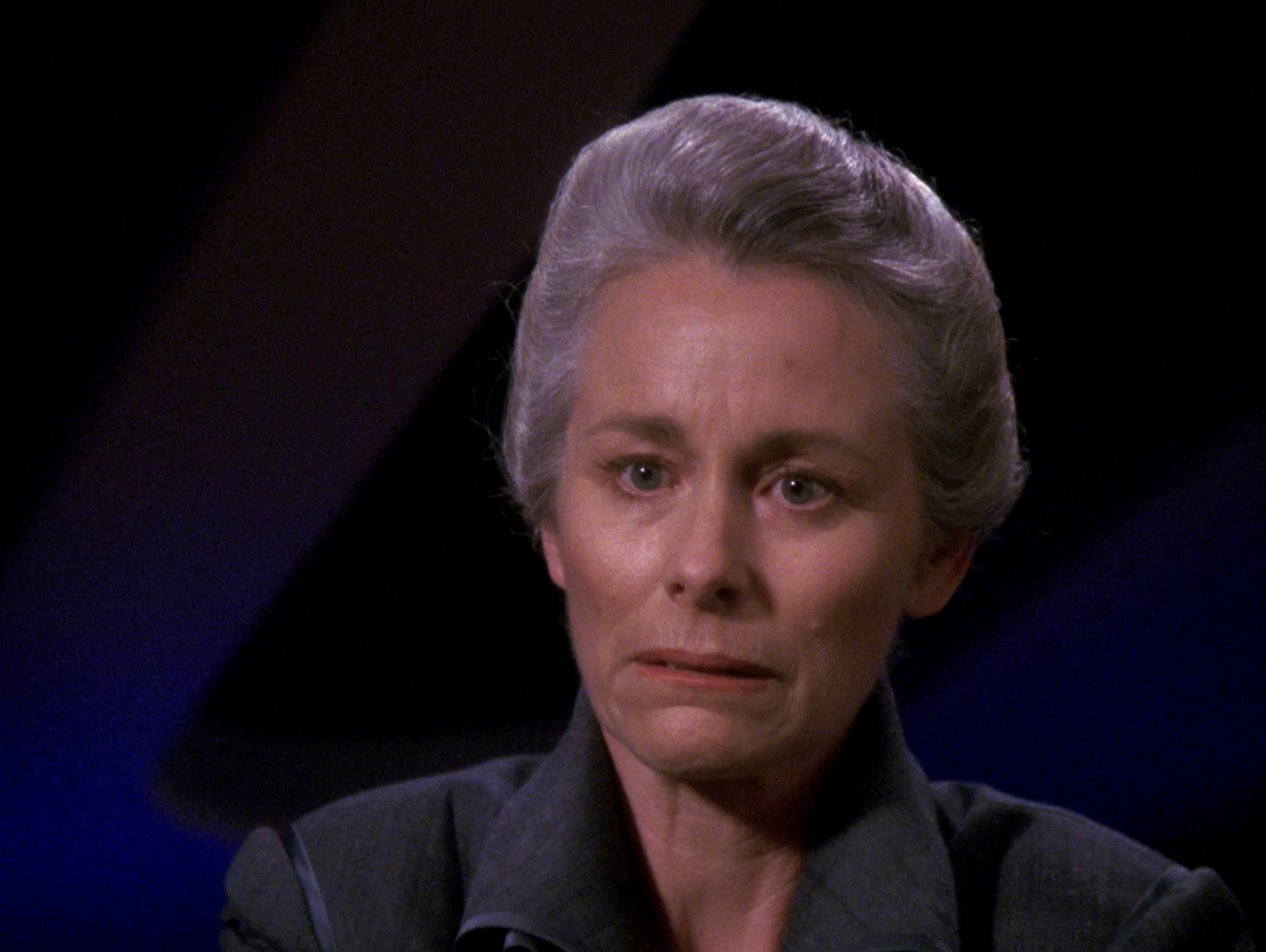
I still can't believe they ever made this episode with its incredible outbursts of hypocrisy. The first one is when Picard raises from his seat to "honor" the people whom he has condemned to death by refusing to rescue them from their planet when the atmosphere dissolves. Agreed, the Enterprise could have rescued only a rather small fraction of the population. But Picard cites the actual reason for saving rather none at all than at least a few hundred of them. It is because their civilization falls under the Prime Directive, and the non-interference with "primitive" cultures obviously implies that they should better be killed than be spoiled through a contact with the advanced Federation. In even more drastic words, it is a question of technological progress if people have a right to live or have to die. By any standard, this part of the directive is highly unethical. Picard may have taken the comfortable position that he is just following orders, but in the course of the episode he repeatedly agrees with the "spirit" of the law that it would be better for the natives to die. Ironically, in "Star Trek: Insurrection" he will passionately fight for the rights of the Ba'ku who (albeit they once had the technology) are in a similar situation.
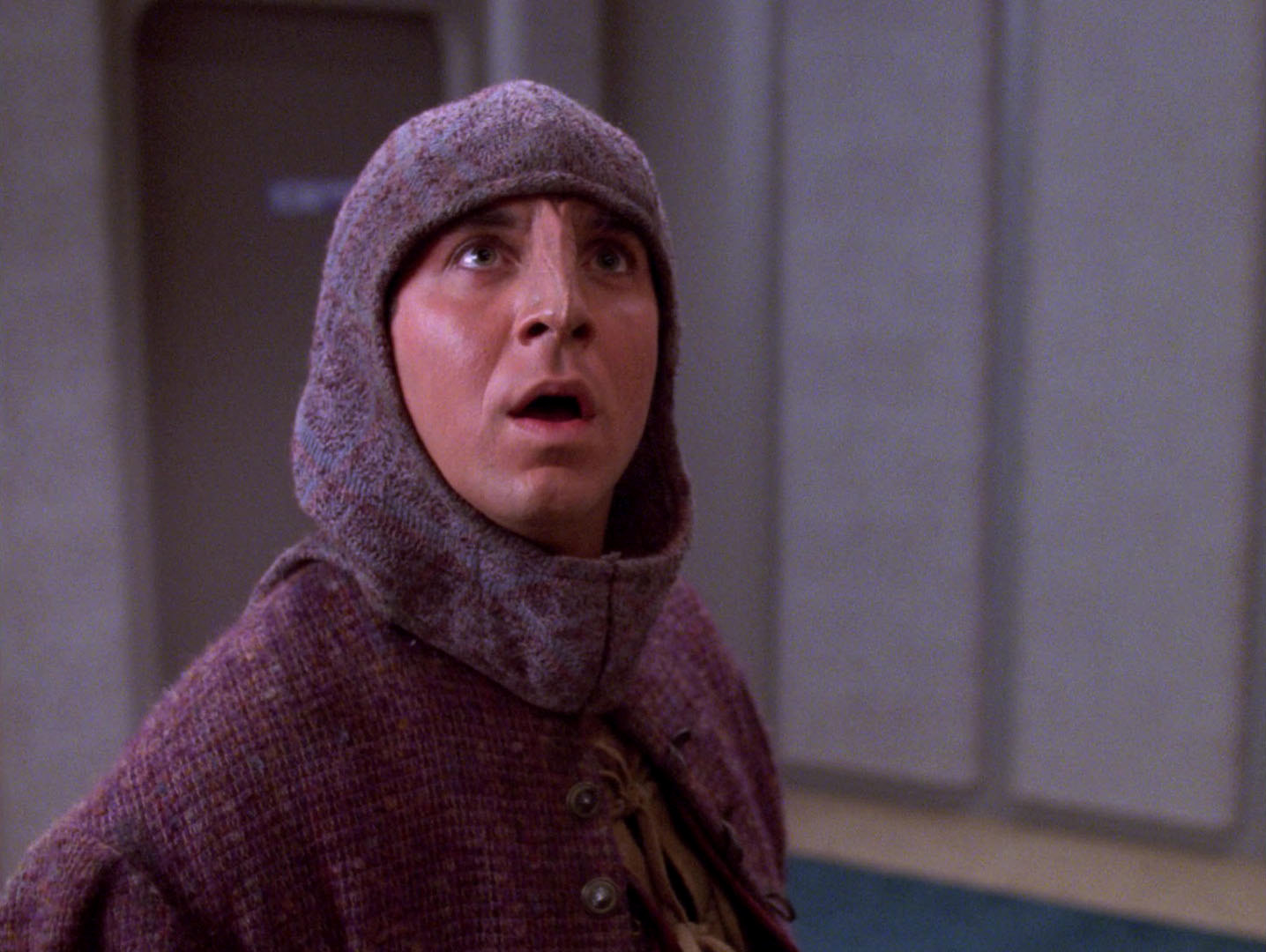
Only Nikolai Rozhenko doesn't care for the inflexible and inhumane paragraphs of the Prime Directive. We may say he is in part acting out of personal interests as he is married to one of the native women, still he is the only one to respect the natives' wish to breathe and live. He saves one tribe by secretly beaming them up. Secretly because quite obviously Picard would never have agreed. It is one of the few pleasant aspects of "Homeward" that Nikolai appears as an overall positive character and that in the end nearly everyone can be content with what he has achieved for his new-found people. Yet, his demeanor is repeatedly criticized by the crew as reckless. Considering that he may have even been punished for saving a civilization, he ends up as an pariah -- he is let down even though it is his intention to stay with his people anyway. The hypocrisy is obvious when Picard and virtually everyone else blames Nikolai for the inconvenience he has caused. They behave like monarchs who complain that a servant has opened the window and they can't avoid hearing the cries of their starving subjects.
But the worst part of the episode is still to come. One member of the tribe finds the exit of the holodeck where Nikolai has created a natural environment for them. The confrontation with the miracles of the starship comes like a shock to him. When he has the choice to stay or to return to his people and reveal nothing about the world outside, he commits suicide. What does this insidious twist tell us? That the Prime Directive is there for a good reason. To save "primitive" people from civilization, as the shock would destroy them anyway. So better let them die the natural way than make them unnecessarily suffer. Which is used to confirm Picard's stance and ultimately disprove Nikolai.
DS9: Children of Time
The Defiant crew members are surprised when they discover a planet that is inhabited by their own descendants from an altered past. Sisko eventually decides to let the time travel happen, willing to leave the crew trapped in the past of the planet. Only through sabotage by Odo (the one from the planet) the crew and most importantly Kira's life are saved (she would have died without medical aid), whilst the population of the planet disappears.
Regardless of this actual outcome, Sisko's decision is highly doubtful for three reasons. Firstly, from an ethical viewpoint it is equivalent to abandoning his duty and family purposely and condemn his first officer to death. Moreover, he orders his crewmates to do the same. Secondly, the fact that the crew have learned about their future in the past will almost certainly change the course of history of the planet, considering various possibilities of female/male relationships that cannot be controlled and will almost definitely develop in a completely different fashion. In this case the known descendants would never come to existence, so what could be the point in a desperate attempt to save these very people? Maybe the population of the planet would even become extinct only a few decades later. Thirdly, even if we accept that the timeline with the Defiant crashed on the planet is the original one, it is created through a temporal anomaly, and this is not possible in the natural course of time. In this respect it should be generally the right decision to alter history in a way that the time travel and its effects are avoided or compensated for.
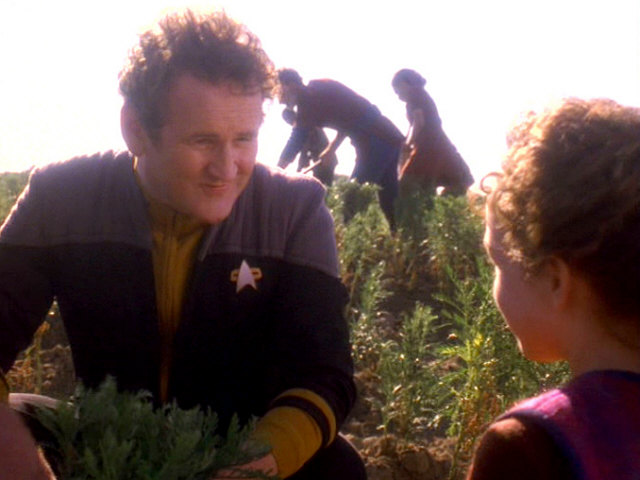
There is one more thing that disturbs me in the episode. When the crew have unanimously arrived at their earlier decision to escape from the planet without traveling to the past, the natives are accordingly sad that they would cease to exist soon. I do not contest that it would have been a loss. But then the idyllic farm work and the cute faces of the children cause a weird kind of a collective emotional unrest that encompasses everyone of the crew without exception. Within just a few minutes the will to return to their families and their duties dies away just as unanimously as it previously governed their thoughts and actions. The herd instinct that prevails over a sound self-preservation and rationality irritates me.

ENT: Dear Doctor
This episode could have become a classic of its kind, but with many plot twists it fabricates a dilemma that realistically wouldn't exist and lets a plain wrong decision appear as the only possible option. My first problem is with the obvious allusion that the Valakian dilemma should be the origin of the Prime Directive. The Prime Directive was always meant to protect civilizations that were little advanced and would have been impaired if they had learned of "gods" who were able to travel at warp speed and other miraculous things (just like the Mintakans in TNG: "Who Watches the Watchers"). In a broader sense, the non-interference would apply to all alien civilizations that didn't seek contact or ask for help, be they warp-capable or not (just like the Malcorians in TNG: "First Contact" and even the Klingons in TNG: "Redemption"). Neither reason to "protect" the inhabitants from Starfleet's interference applies here. On the contrary, the Valakians have gone into space for the only purpose to contact aliens and ultimately obtain exactly the help that Archer and Phlox deny them. Of all people who have received or will receive help from Starfleet, the Valakians should not be worthy of it only because they are a few decades behind an arbitrary standard? The attitude that Starfleet shouldn't determine the destiny of the planet is hypocritical, and it doesn't even apply here. As the incentive for the familiar Prime Directive the situation of the Valakians just doesn't work out.
In "Dear Doctor", the fact that there are two intelligent humanoid races on the same planet obviously serves only as an excuse of Archer's and Phlox's attitude. If they wouldn't let one half of the population die, they would deny the other half, namely the Menk, their so-called "natural evolution". The Valakians are simply said to have "bad genes". The Valakians have not tampered with them or unconsciously or obtained them through a war with nuclear weapons. However, the question must be allowed if Archer might have helped if the Valakians had been responsible for their misery themselves, because then he wouldn't have interfered with a "natural" process - how paradoxical and cynical! There is also no point in stating that it was predestined that another species, namely the Menk, was to become dominant. Actually, no one could have predicted whether the Neandertaler or the Cro Magnon human would survive, even if one had known of the climate changes to come. Ironically, it is stated in the episode itself that the development on the planet and therefore ultimately the evolution would be a matter of coincidences, but even this doesn't change anything about Phlox's belief that the Menk are designed to survive while the Valakians are not. Overall, the twisted ethics along with bad science ruins this episode.
"Their culture is different. It's their way." That is how Phlox still defends the Valakians when Hoshi criticizes their treatment of the apparently less intelligent Menk. It seems he is impartial about the situation on the planet. But then he finds out that the Menk have the "better genes", and he decides that he should let the Valakians be extinguished in their favor. His stance is totally misunderstood Darwinism and almost racism. The Prime Directive is on the way, but as good as it may prove later, I think it has the worst possible start if it is based on one doctor's personal ethics.
Criminal Demeanor
These are some examples where Starfleet officers cross the line to becoming criminal, but without legal consequences and without their deeds being sufficiently condemned by others in the course of the story. Sometimes the offense or crime isn't even mentioned as such, let alone criticized or persecuted.
TNG: Up the Long Ladder
Riker and Dr. Pulaski discover that the Mariposans (who need new DNA for their colony of clones) have made clones of the two officers against their explicit wishes. Riker pulls a phaser and kills the clone modeled after him. When Pulaski nods in agreement, he shoots her clone likewise. The laws applicable in the Federation do not become clear in the episode. Still, we may bring forth in favor of Riker and Pulaski that cloning them was definitely a theft and a misuse of genetic material. The Federation may also have laws that grant the individuality of every person, as a supplement to the (sometimes insufficiently monitored) ban on genetic manipulation and cloning. Still, if a court had been to decide about the future of the two illegal clones, would the verdict have been that they must be or may be killed? Most likely not. In an obvious comparison, the illegal clones are not unlike children that were conceived using sperms or an ovum against the will of the man or woman, respectively. And even a bit like Thomas Riker, the result of a transporter accident who will be discovered in TNG: "Second Chances" and who is a perfectly legitimate second Riker. I don't want to incite a discussion about abortion, so I just concede that it may be or may be not a matter of the stage of the development of clones whether it is allowed to let them die or actively kill them. But by any means, Riker's deed and Pulaski's support for it was wrong, and it is sad that it remained without consequences and wasn't brought up again in the further course of the episode.
TNG: Time Squared
When Picard 2 (the one from the future) climbs into the shuttlepod, about to repeat the error that led to the destruction of the ship, Picard 1 (the present version) takes a phaser and kills the doppelganger, saying that "the cycle must end". Was this necessary? Wouldn't it have sufficed to just hold him back with a minimum of violence? With the phaser on stun? Does it matter that once the timeline is fixed Picard 2 would vanish anyway? Or would Picard 1's action even qualify as a weird form of suicide? We can see in a couple of later episodes how sensitively the moral issues of time travel are dealt with, but just like the flawed logic of the plot that isn't limited to just the inexplicable predestination paradox everything is crude here. It's most likely rash writing that makes Picard 1 appear criminal here.
DS9: For the Uniform
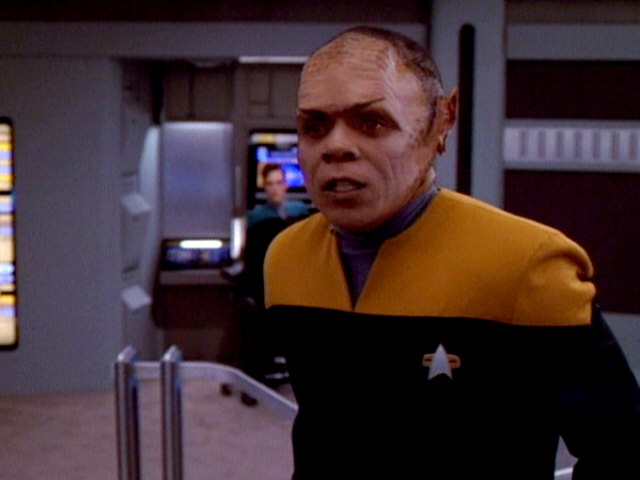
Movie clichés correspond with real-world experience when it comes to the persecution of traitors who are commonly hunted more fervently and more relentlessly than intrinsic enemies. Here Sisko is going after Eddington who used to be his security officer and who is now with the Maquis. Sisko is blinded by his personal struggle with Eddington, which may explain but never excuse the unspeakable crime that the Starfleet captain commits when he orders a Maquis planet to be poisoned, thereby rendering it uninhabitable for humans. Three plot twists are obviously meant to ease his guilt, but they must strike us as manufactured.
The first one is that the Maquis already poisoned a Cardassian planet, and that Sisko's action would compensate them for that injustice. The Maquis can conveniently take over the former Cardassian settlements, and vice versa. However, what seems like a fair deal is "eye for an eye" type retaliation at best. Two wrongs don't make a right. The second twist is the allegedly precisely limited effect of the bioweapon. The Maquis has developed an agent that would only inflict Cardassians but not humans to drive the Cardassians off their planet. Now we are supposed to believe that Benjamin Sisko knows that trilithium resin (which is an explosive on other occasions) has exactly the opposite effect, and can be "successfully" released in an atmosphere using quantum torpedoes? Without running any tests? Thirdly, what a relief, all the Maquis manage to escape from the planet. What did Sisko expect, that they were waiting in shuttles with their engines already warmed up? Did it never occur to him that even if the effect was just as restricted as desired he would kill more or less innocent people? Speaking of innocent people, we know that the Maquis is not just a military organization, but that it includes families. He is destroying their home. Sisko is a father himself, but he mercilessly fires a bioweapon on an inhabited planet. There may have been no children on the planet, but he couldn't be sure about that.
What is Sisko's motivation? To preserve the peace treaty with the Cardassians? Superficially, yes. At least that is what he could have pretended if he had been on a court-martial. Yet, we know that when he conceived his nearly insane plan he gave a damn on the Cardassians. Sisko had been hurt and humbled by Eddington more than once, and it was just too convenient an opportunity to pay him back. Eddington was all correct in his estimation that Sisko had become just like him, only that even Eddington didn't anticipate that Sisko would go all the way and become a true criminal. One who is driven by lower instincts of personal satisfaction and vengeance. Sisko: "You betrayed your uniform!" - Eddington: "And you're betraying yours, right now! The sad part is, you don't even realize it." By any means, not Eddington but Sisko is the traitor here. To say the least, Sisko vastly oversteps his authority and probably violates a large number of regulations, Starfleet and interstellar. Sisko betrays his superiors by weakening Starfleet's position in the Neutral Zone, he betrays the principles of peace and justice that the Federation and Starfleet stand for and he betrays the human settlers of the Neutral Zone who would have deserved neutrality from his part at the very least, and not help for the Cardassian oppressors. I doubt that the Cardassians cherish this favor.
There was no controversial discussion about Sisko's crime, and it obviously didn't entail any serious consequences for him. If there was ever an investigation about the case, he must have come out largely unscathed. But even if all of his crew made morally supportive testimonials and played down the incident, they could hardly have denied the pure facts. Sisko ordered a bioweapon to be fired, he consciously poisoned a planet and may have killed hundreds. Under no circumstances and in no situation of a war there would have been a necessity that would have permitted to do that. There is simply no way for Starfleet Justice to overlook or ignore that, unless they were bending the laws and protecting Sisko. And his crew likewise, for in any modern military there must be regulations for the crew that they have to disobey obviously criminal orders.

DS9: In the Pale Moonlight
This episode is listed here only as a placeholder. "In the Pale Moonlight" is generally considered the darkest episode of Star Trek until 2017, but I don't see it as an example of bad ethics. Yes, Sisko covers up a murder and drags the Romulans into a war they would otherwise have no business with. But unlike it was still in "For the Uniform", Sisko has no primarily personal motive and does it for the greater good. And perhaps even more notably, the episode doesn't gloss over Sisko's guilt but ends with him feeling very bad about what he did. It is a point of criticism that there are no repercussions in the one and a half seasons that follow, but for that I wouldn't blame the original episode. Star Trek certainly should do such a dark episode only on very rare occasions, but in the case of "In the Pale Moonlight" it isn't a waste like it was one in "For the Uniform".
VOY: Tuvix
I admit I only included this episode after it had repeatedly been suggested to me. However, I don't think it necessarily qualifies ad bad ethics.
The science of this episode is very shaky to start with, considering that Tuvok and Neelix were fused to one individual on one hand (as if they had a common child), yet they both still exist, or could come to life again if Tuvix were split up. This is genetically impossible for all I know, as you can't clone the two parents from their common child. Only the contrived setup that Tuvix stands in Tuvok's and Neelix's way creates the ethical dilemma, the choice between keeping Tuvix alive or killing him to retrieve Tuvok and Neelix. Realistically, the transporter accident should have been irreversible, and would not have left the option to restore Tuvix's "parents". Well, TOS: "The Enemy Within" set a precedent of some sort, although the order was reversed, as two Kirks were combined to one in the end.
There seems to be another precedent for Tuvix in the Star Trek Universe in the form of joined Trill. Once the host and the symbiont form a connection, their personalities are merged but they don't form an entirely new person. If in DS9: "Invasive Procedures" it had been possible to remove the Dax symbiont without any harm, Dax and Jadzia could both have lived on. It would still be a crime to separate them by force, but no one would possibly say that Jadzia Dax was killed in the separation of Jadzia and Dax. The case is somewhat different with Tuvix.
In my view, different interpretations are possible of whether or not Janeway committed a crime when she retrieved Tuvok and Neelix at the expense of Tuvix. We have to recall that according to the premise, as scientifically dubious as it is, Tuvok and Neelix are alive and perhaps even conscious inside Tuvix in some fashion. Retrieving them would reactivate the very two people and not only replicate them. If Tuvok and Neelix still exist in some fashion in Tuvix's genes, his body and mind, we could argue that the two have the older right to live. They never asked to be joined in the first place. If Tuvix, as a completely new person, is perfectly content with it, it still doesn't mean that Tuvok and Neelix would agree with him. They can't speak for themselves, unlike Tuvix.
This appears to be a quite cold argument considering that it still means to kill a living and sentient being without his consent. I agree that Janeway killed Tuvix in some fashion, because he had a consciousness of his own that ceased to exist. But technically she may not have killed him, considering that the transporter routinely dissolves and reassembles a human body. Technically she may have just transformed the living body of Tuvix into the ones of Tuvok and Neelix. Considering that it is apparently possible to retrieve Tuvok and Neelix at a comparably low risk, we may also argue that two lives are saved at the expense of one life.
So what is the worth of Tuvix's life? Let me play the advocatus diaboli. It is made a big deal in the episode that Tuvix is such a valuable person, one who could replace both Tuvok and Neelix. Now imagine that Tuvix had been a wholly different person than in the actual episode and had inherited only the worst from Tuvok and Neelix. It was an accident after all. Such a Tuvix could have been mentally unstable or seriously handicapped. Or he could have been a complete asshole, and not at all the charming person that everyone likes. Would Voyager's crew care as much for such an alternate Tuvix, or wouldn't they rather want Tuvok and Neelix back? Would fans still accuse Janeway of murder, had she killed such an unfavorable Tuvix?
 In a sequel (sort of) to the VOY episode, multiple crew members of the Cerritos get fused in LOW: "Twovix". In order to clean up the mess, Vulcan ensign T'Lyn combines them all to a single meatball that is purportedly non-sentient and accordingly isn't considered a lifeform that needs to be preserved.
The episode is set up in a way that it remains controversial, because many of the crew are opposed to Janeway's course of action and most notably because Tuvix protests against it until the bitter end. So even if it is contrived because of the bad science and because of the fact that Tuvix fully replaces Tuvok and Neelix in any respect, the issue is not played down in the episode. It remains controversial, and the outcome leaves a bad taste no matter if we rate Janeway's action as murder or only as a tough decision. In this regard the episode is successful in inciting a discussion on its ethics, unlike some other episode that present a ready-made (but sometimes wrong) solution we are supposed to accept.
VOY: Equinox
What the hell is Janeway thinking when she exposes the poor Lessing of the Equinox crew to the deadly aliens? Aside from breaking about every Starfleet regulation she is allegedly so proud of, is it moral to kill someone to achieve her goals? I'm quite sure that Lessing wouldn't have survived if Chakotay hadn't stopped her. This episode may have the worst spirit of the whole series.
ENT: Anomaly
Much like Janeway in "Equinox", Archer plays the madman and puts an alien into an airlock to make him talk. He was not bluffing and he was close to killing the alien until Reed arrived at the scene.
ENT: Damage
Well, the most obvious crime in this episode is that a so-called "warp coil" is supposed to be a small and universally applicable component here. But sarcastic remarks aside, Archer steals the "warp coil" from an alien ship that might never reach a safe planet without it.
Star Trek Discovery
 There are many ethical problems in Star Trek Discovery, and unfortunately all of them are denied or glossed over in some fashion. The conspiracy with Emperor Georgiou from the Mirror Universe to commit genocide on the Klingons? Never happened. Her true identity? She is officially Captain Georgiou, who miraculously survived the Battle at the Binary Stars. Section 31's wrongdoings? All forgiven. The Sphere, spore drive, Red Angel, Control? Never existed. Discovery leaves a web of lies for future generations to deal with.
Addendum: Bad Attitude
This category may not qualify as "bad ethics" because nothing condemnable happens (even if it is just because of good luck). Anyway, here are a few examples of obsessive behavior, stupid herd instinct or hero worship, illogical decisions or plain silliness of characters.
TNG: Descent
Data has been kidnapped by the renegade Borg. When the Enterprise traces him to a planet that the sensors can't search, Picard orders most of the crew to beam down and search for him. For one crew member. He leaves Crusher in charge of the ship with an inexperienced skeleton crew that doesn't even trust her. While a Borg ship is around and could attack any time! When the Borg ship actually appears, they clearly act less competently than if Picard or Riker were present. Only Dr. Crusher's reckless maneuver of protecting the ship with the (untested!) metaphasic shield inside the star's corona saves everyone's life on board and on the planet.
VOY: Concerning Flight
Aliens have stolen vital technology from Voyager, including irreplaceable parts such as the computer core and the Doctor's mobile emitter. We would expect Janeway to set out on a mission to retrieve all this by any means necessary. After all, not only the ship's safety is at stake, Janeway also has to enforce the Prime Directive. But what does Janeway actually do? Instead of beaming the rediscovered mobile emitter back to the ship (where the EMH could need it) and then go and look for the computer core, she has endless discussions with Leonardo da Vinci, a hologram created for her mere enjoyment. In terms of today's technology, she's playing a video game while on a crucial mission. She treats Leonardo like a real person, and even better than if he were one because she definitely wouldn't engage in long-winded conversations with her real crew while there are much more pressing things to tend to. I pity Tuvok when he is ordered to leave the two alone. He looks irritated, maybe even hurt. The climax of absurdity is when Janeway discusses the sense of his existence with Leonardo while they are being pursued by the pirates.
VOY: 11:59
This almost completely pointless episode mainly takes place in present-day Indiana without any relevance for what is happening in the Delta Quadrant. Still, what little is shown about the crew of Voyager is that they exchange knowledge so trivial as if they would rehearse for "Jeopardy" and that they are all suddenly fascinated by genealogy. In this episode I have the impression that we're not dealing with a Starfleet ship but with an elementary school.
DS9: Take Me Out to the Holosuite
Come on, Ben. It's only a game. By accepting the baseball challenge the good captain proves nothing but that he is just as arrogant as the evil Vulcan captain, and infantile on top of that. If Sisko's motley crew had won the match, it would have had no significance except that their egos would have been bolstered to the extreme. But surprisingly and ironically just the same happens although they actually lose. Sorry, but I don't share the feelings that the would-be champions have about their "fabricated victory". It would have been a moral victory to forego the whole thing. "Take Me Out to the Holosuite" is a fun episode that was certainly meant to be taken with a grain of salt. But I didn't enjoy it. Not because I have objections to the crew playing baseball but because they invoke and celebrate a kind of team spirit that I don't like.
See Also
Enterprise Continuity Problems - where the series is in contradiction to established history
Credits
Some screen caps from TrekCore and Jörg Hillebrand. Thanks to [email protected] who made me aware of a misinterpretation in "Dear Doctor".


